Employee Evaluation Form for Promotion
Overview of this form
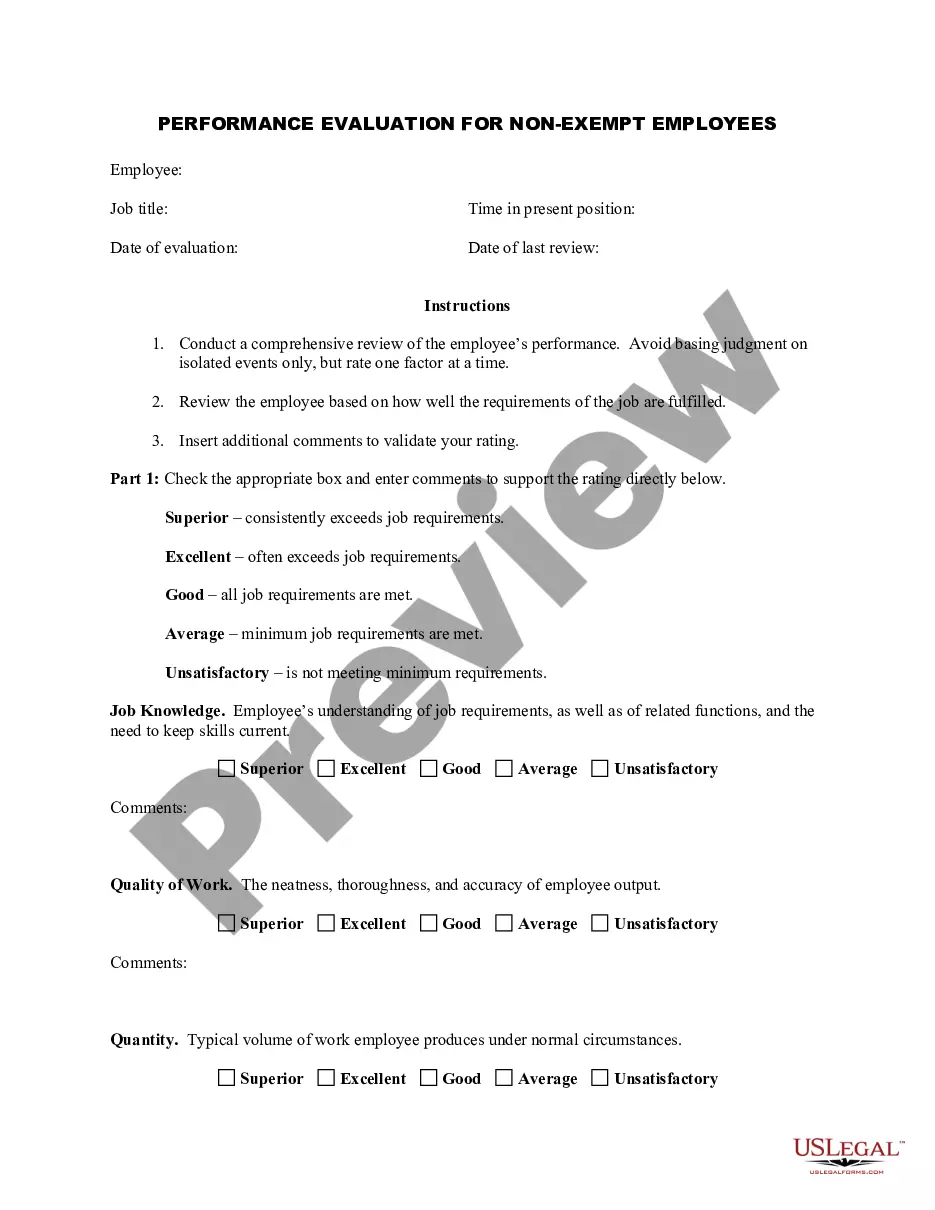
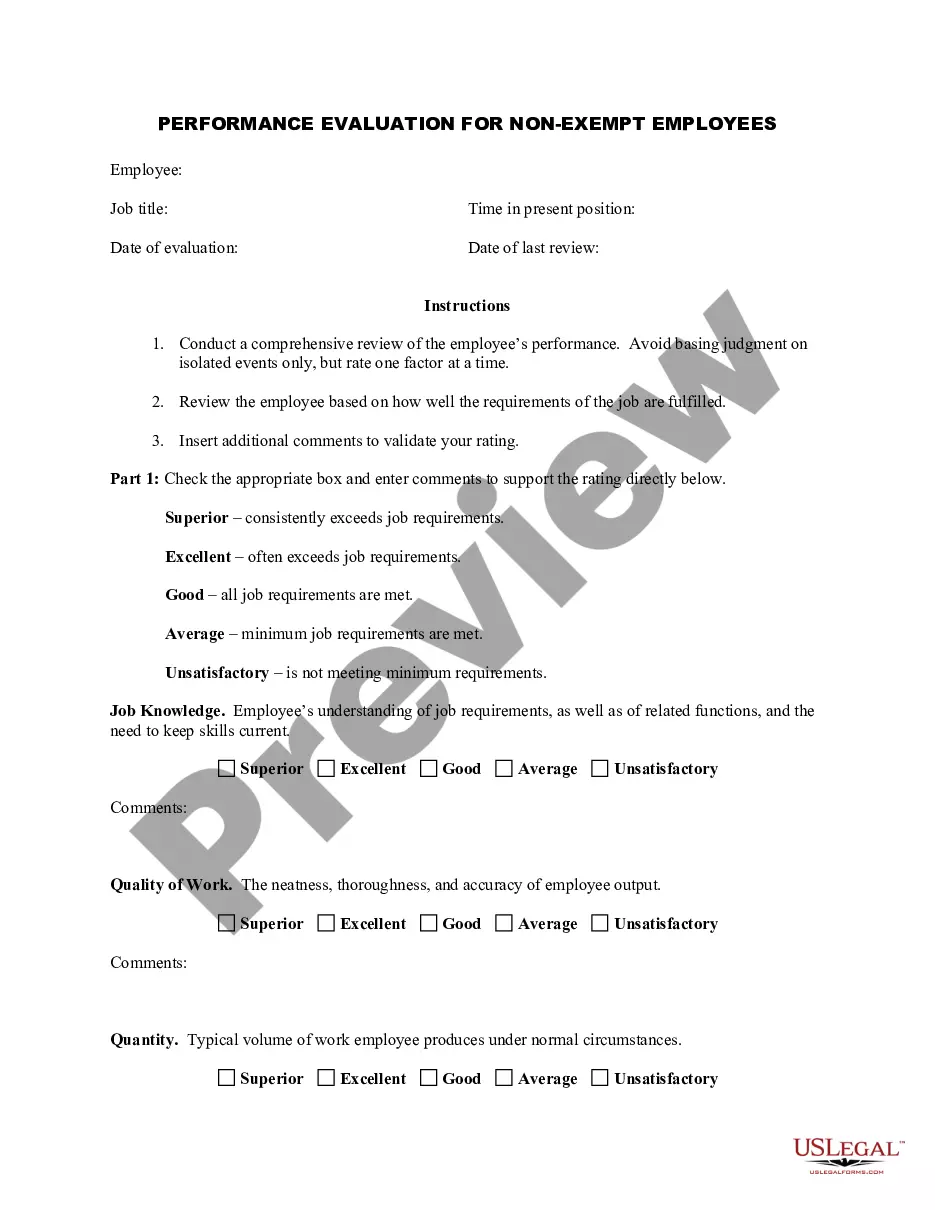
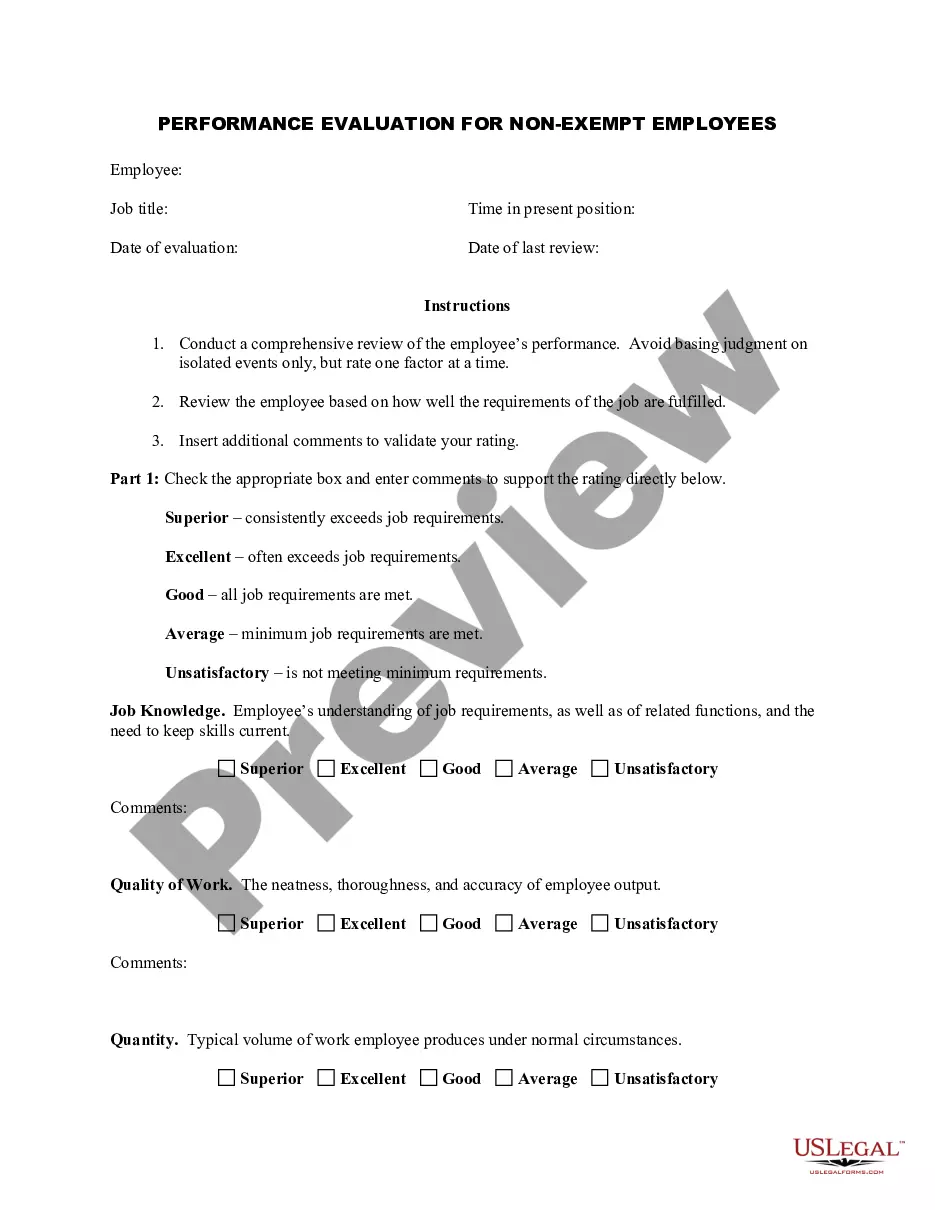
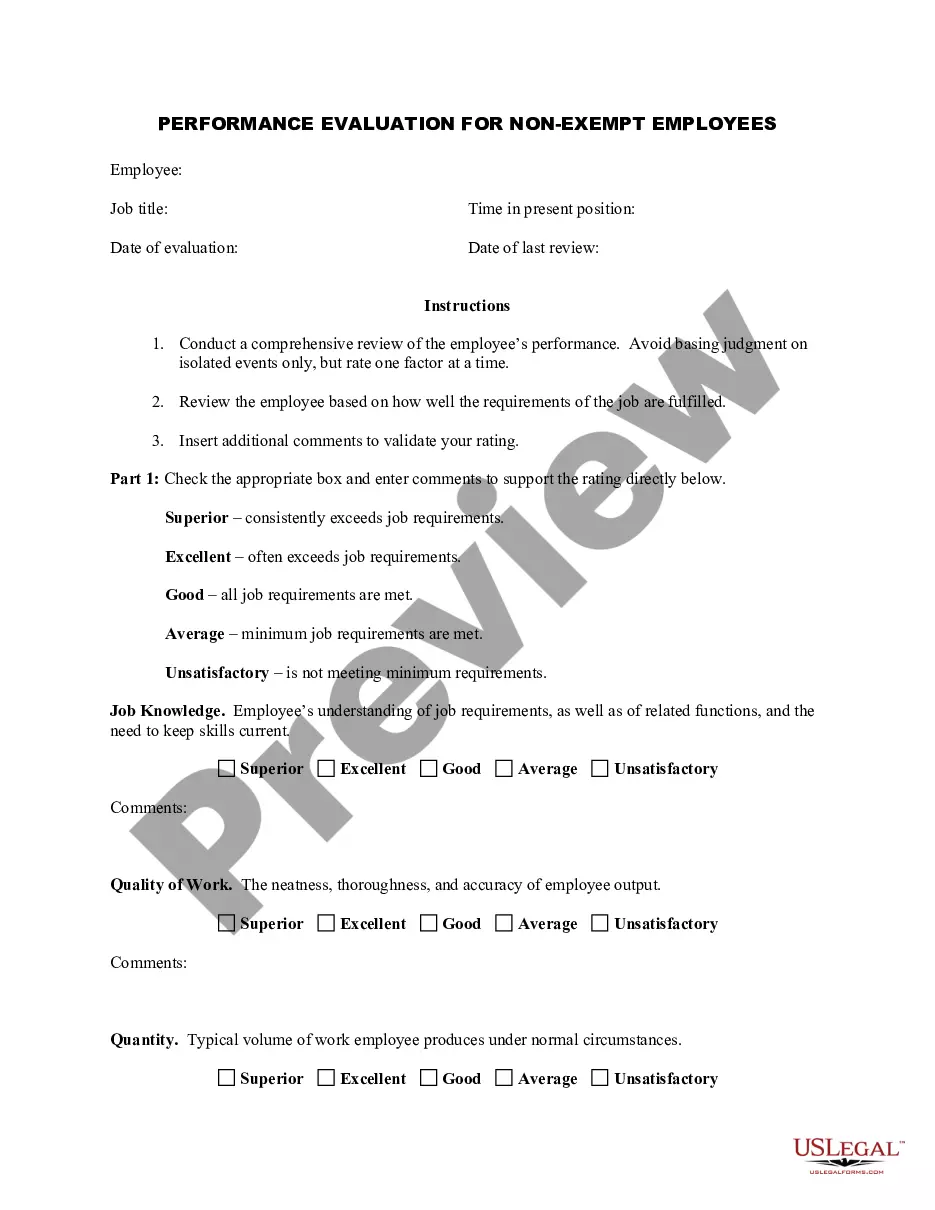
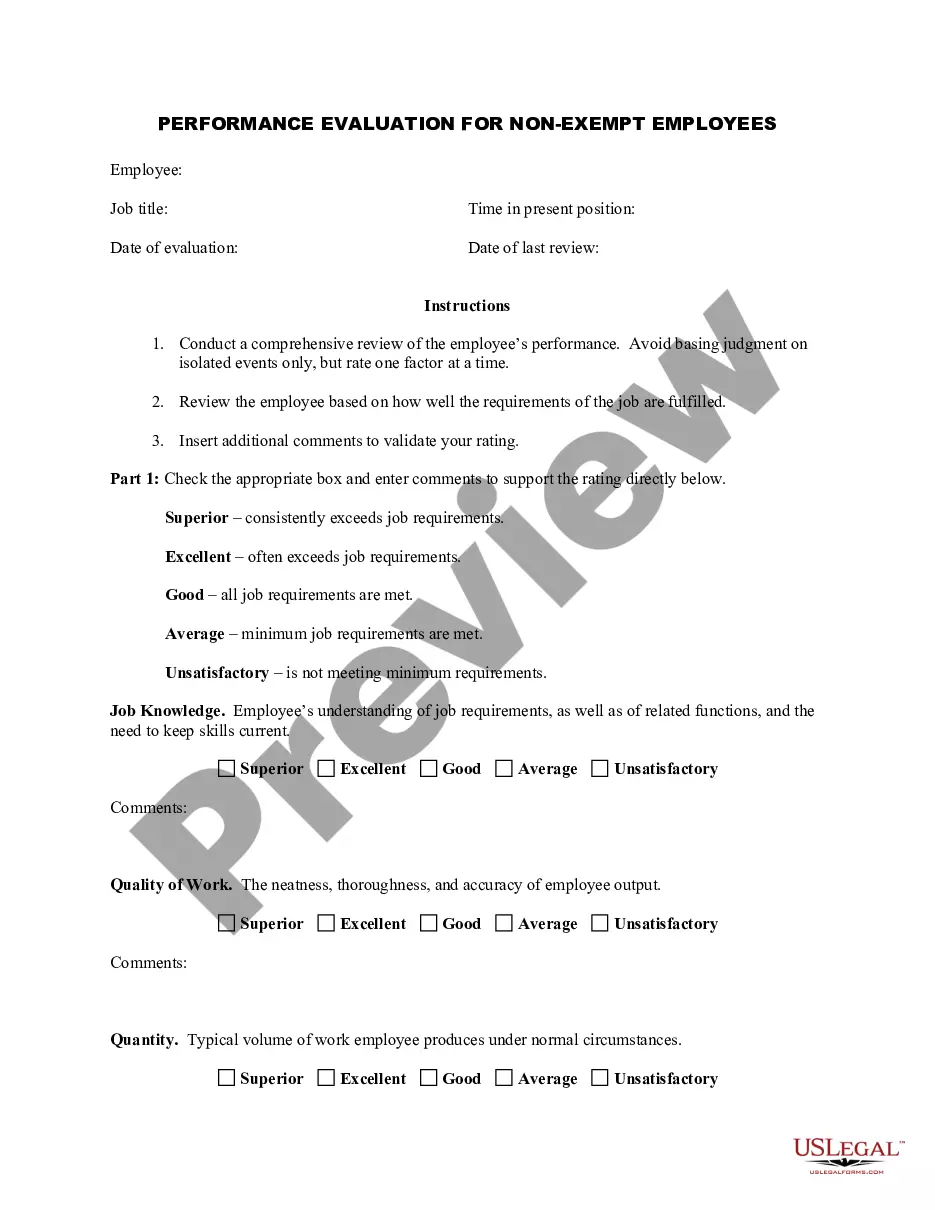
The Employee Evaluation Form for Promotion is a crucial tool designed to review the performance of non-exempt employees who are being considered for a promotion. This form helps organizations assess job performance based on various metrics, ensuring that personnel decisions are made based on merit and quantified feedback. By utilizing this performance evaluation, employers can gain valuable insights into an employee's readiness for a higher position and ensure the most suitable candidates advance within the organization.
Form components explained
- Employee Information: Includes job title, length of time in the current position, and date of evaluation.
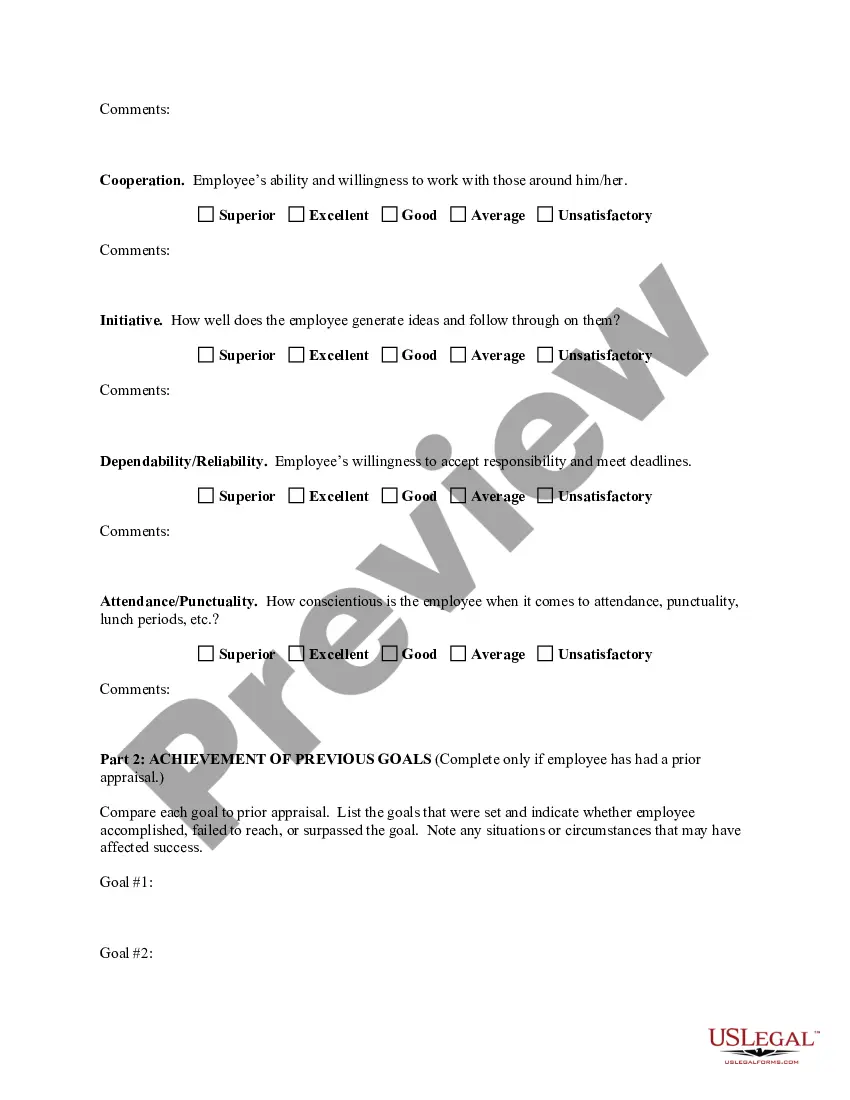
- Performance Ratings: A section for rating job knowledge, quality of work, cooperation, initiative, and reliability using defined categories from superior to unsatisfactory.
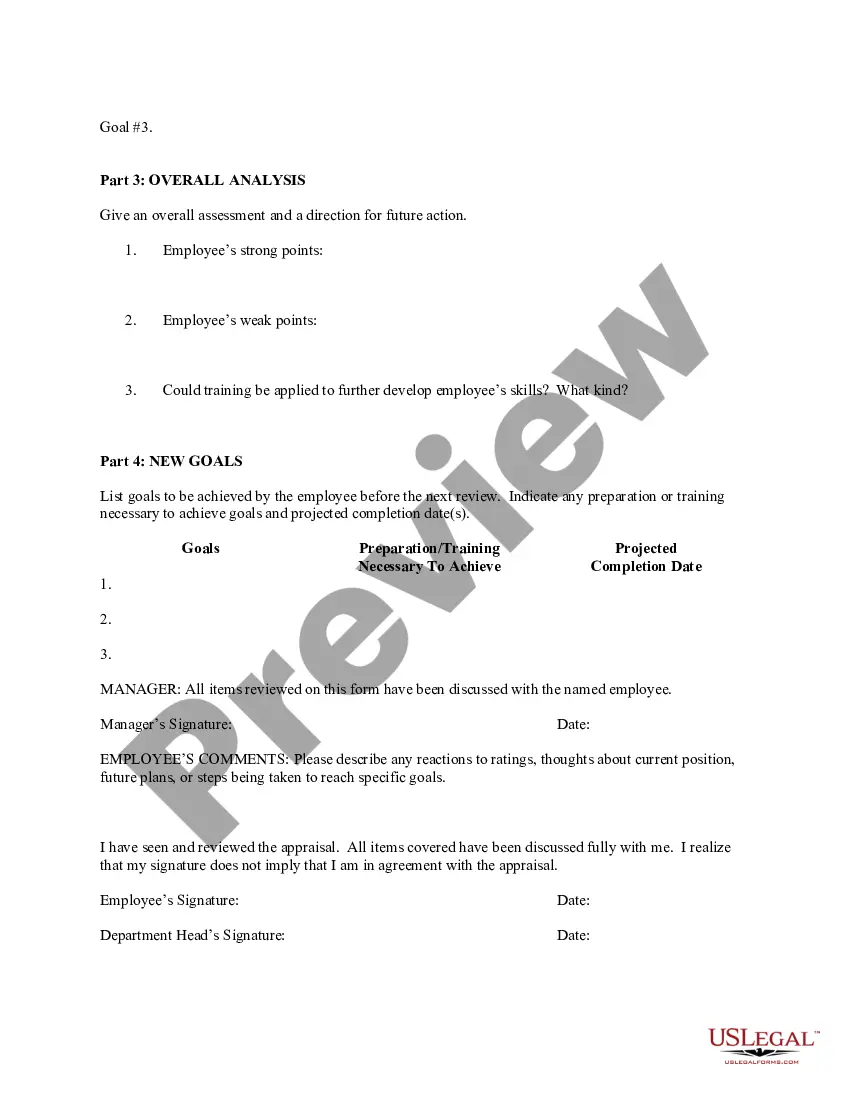
- Goals and Achievements: Tracking of previous goals set during prior evaluations and measures of their accomplishment.
- Overall Analysis: A summary assessment discussing the employee's strengths, weaknesses, and suggestions for further development.
- Signatures: Sections for both the manager and employee to sign, confirming the evaluation has been discussed.
Common use cases
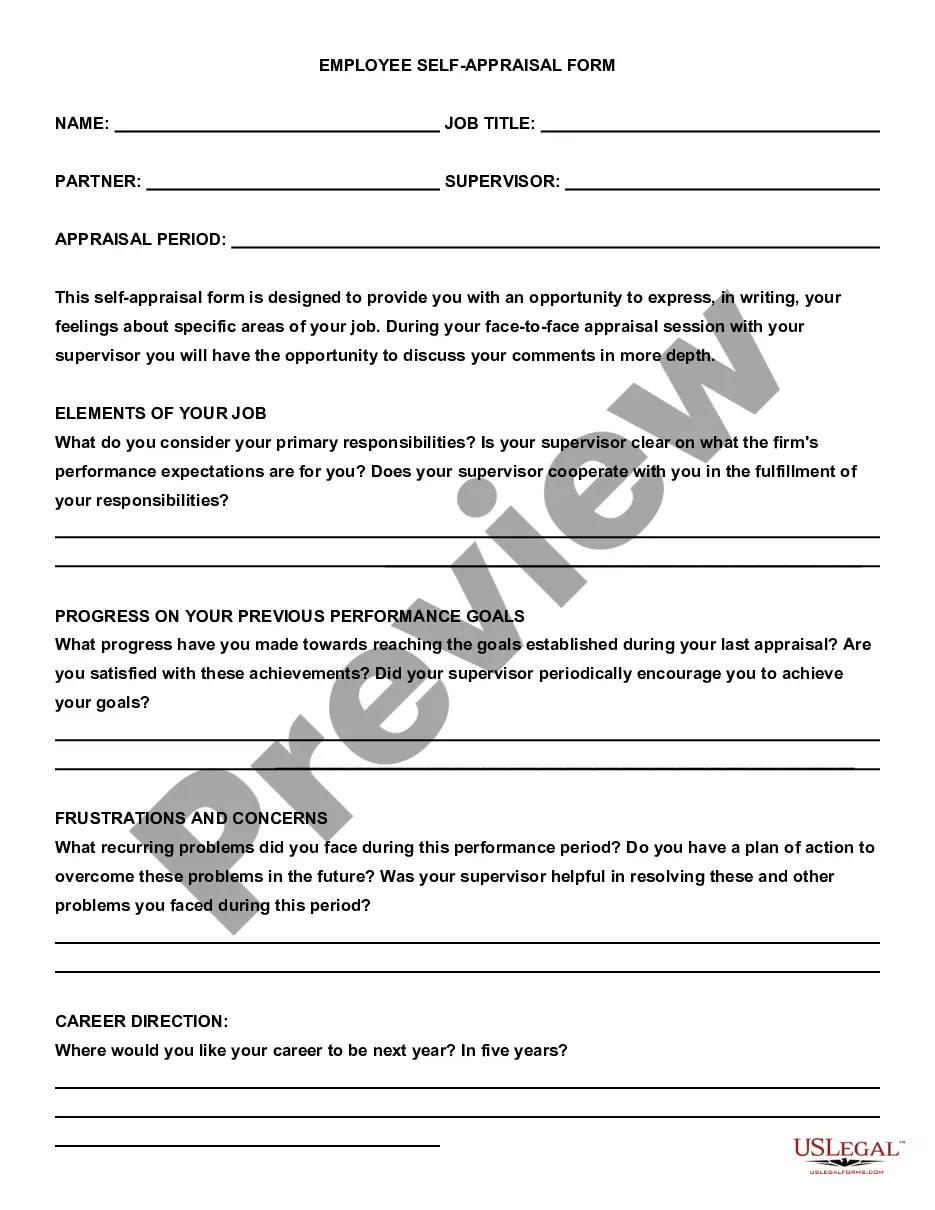
This form should be utilized during employee performance review periods, specifically when assessing an employeeâs qualification for a promotion. It serves as a structured method to evaluate past performance, gauge current competencies, and outline future goals. The form should be completed prior to any discussions about potential promotions to ensure that feedback is fair, well-documented, and reflects the employee's contributions to the organization.
Who needs this form
Intended Audience
- Human Resource professionals responsible for employee evaluations and promotions.
- Managers or supervisors tasked with conducting employee performance reviews.
- Department heads overseeing team performance and promotions.
- Employees seeking promotions and wishing to understand their performance feedback.
Steps to complete this form
Steps to Complete the Evaluation Form
- Gather necessary employee information, such as job title and duration in the position.
- Conduct a comprehensive performance review using the defined categories to assess the employeeâs abilities.
- Document specific examples for each performance category to support the ratings given.
- Discuss the previous goals and assess the employeeâs success in achieving them.
- Provide an overall assessment and outline future goals along with necessary training.
- Ensure both the evaluator and the employee sign the form to confirm the evaluation discussion.
Notarization guidance
This form does not typically require notarization unless specified by local law.
Get your form ready online
Our built-in tools help you complete, sign, share, and store your documents in one place.
Make edits, fill in missing information, and update formatting in US Legal Forms—just like you would in MS Word.
Download a copy, print it, send it by email, or mail it via USPS—whatever works best for your next step.
Sign and collect signatures with our SignNow integration. Send to multiple recipients, set reminders, and more. Go Premium to unlock E-Sign.
If this form requires notarization, complete it online through a secure video call—no need to meet a notary in person or wait for an appointment.
We protect your documents and personal data by following strict security and privacy standards.

Make edits, fill in missing information, and update formatting in US Legal Forms—just like you would in MS Word.

Download a copy, print it, send it by email, or mail it via USPS—whatever works best for your next step.

Sign and collect signatures with our SignNow integration. Send to multiple recipients, set reminders, and more. Go Premium to unlock E-Sign.

If this form requires notarization, complete it online through a secure video call—no need to meet a notary in person or wait for an appointment.

We protect your documents and personal data by following strict security and privacy standards.
Common mistakes
- Failing to provide specific examples to support performance ratings.
- Relying on recent performance instead of considering the entire evaluation period.
- Neglecting to have the employee sign the evaluation, which may lead to disputes later.
- Omitting notes on previous goals and lacking clarity on future objectives.
Why use this form online
- Streamlined process for evaluating employee performance with clear criteria.
- Documented evidence of performance reviews to support promotion decisions.
- Enhanced communication between employers and employees regarding feedback and development.
- Accessibility and ease of use with online download options for immediate use.
Looking for another form?

Form popularity
FAQ
Pull out your annual goals. Include additional achievements. Pore over the next level's JD. Stay objective and honest. Mindfully highlight the mistakes. Don't be a know-it-all. Ask for that promotion already!
Job Satisfaction. The first consideration for any promotion should be job satisfaction. Skill Level. Working Under Pressure. The Importance Of Being A Team Player.
Communication. Collaboration and teamwork. Problem-solving. Quality and accuracy of work. Attendance, punctuality and reliability. The ability to accomplish goals and meet deadlines.
Make it easy to use. Ensure that the information your evaluation form seeks is clear and concise. Determine the focus of the form. There needs to be a clear purpose. Establish a clearly defined rating scale.
Be proud. One major goal of the self-evaluation is to highlight your accomplishments and recollect milestones in your professional development. Be honest and critical. Continuously strive for growth. Track your accomplishments. Be professional.
They understand the business beyond their role. Tweet me! They have a good relationship with their manager. They offer solutions. They work beyond the requirements of their job description. They're comfortable celebrating their achievements.
Level of execution. Quality of work. Level of creativity. Amount of consistent improvement. Customer and peer feedback. Sales revenue generated. Responsiveness to feedback. Ability to take ownership.
Typically, it's going to be the time or the tenure in the current job or in the current grade. For example, you need to have a minimum of three years in your current position in order to be eligible or to make the list for consideration. And then the second criteria comes in, that's performance.
Make it easy to use. Ensure that the information your evaluation form seeks is clear and concise. Determine the focus of the form. There needs to be a clear purpose. Establish a clearly defined rating scale.