Retaliation
What this document covers
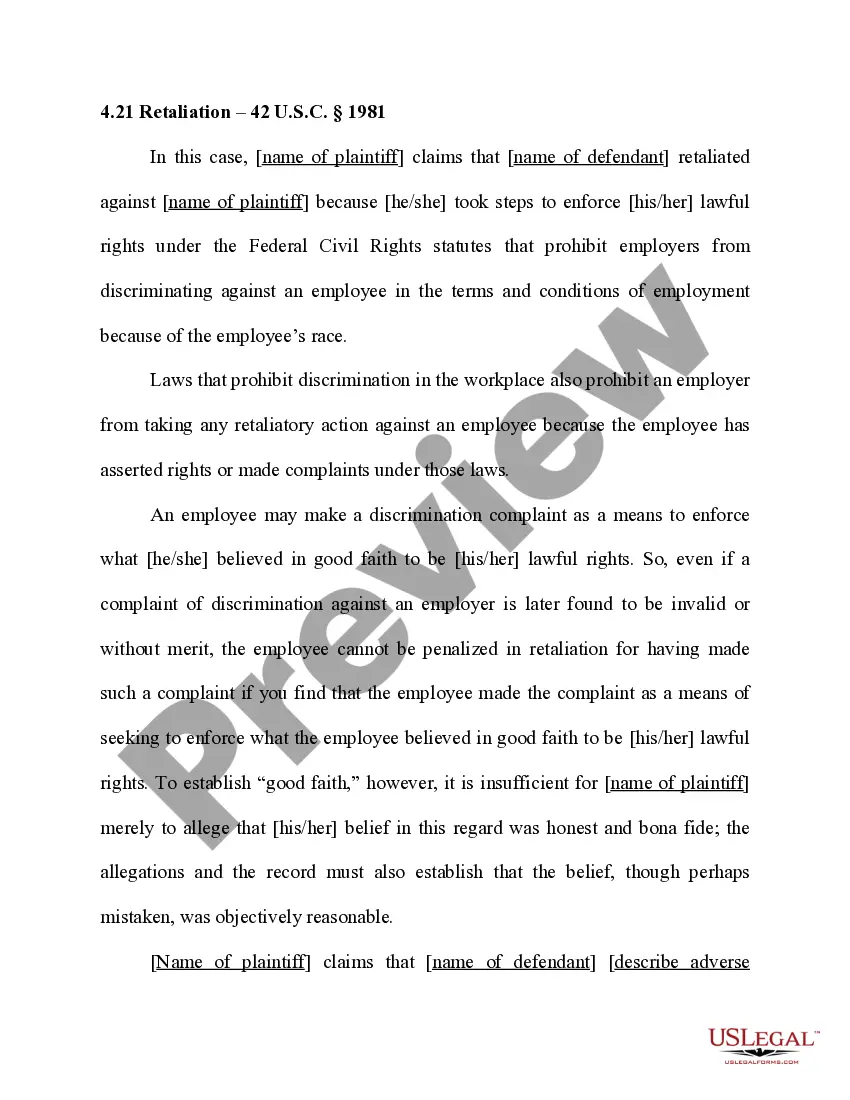
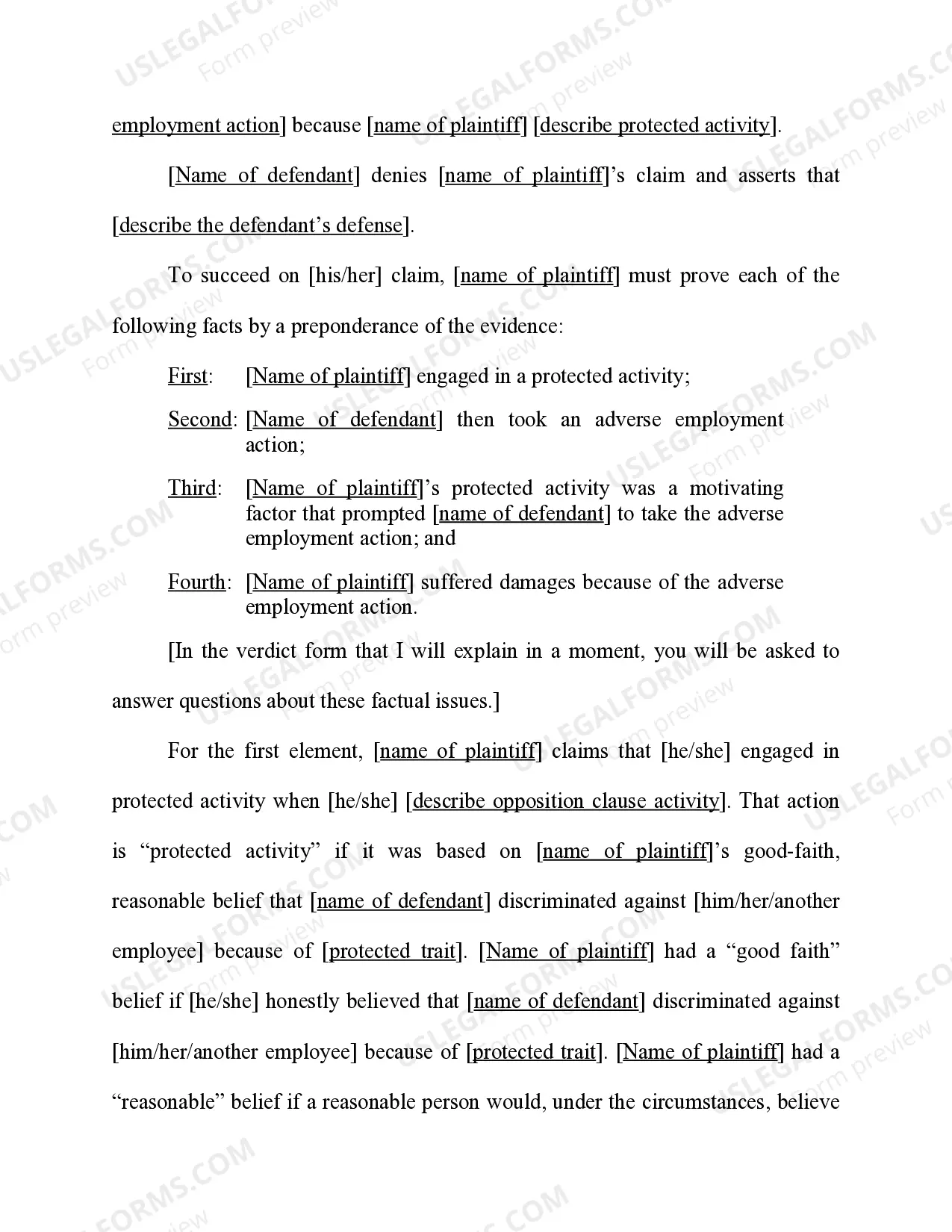
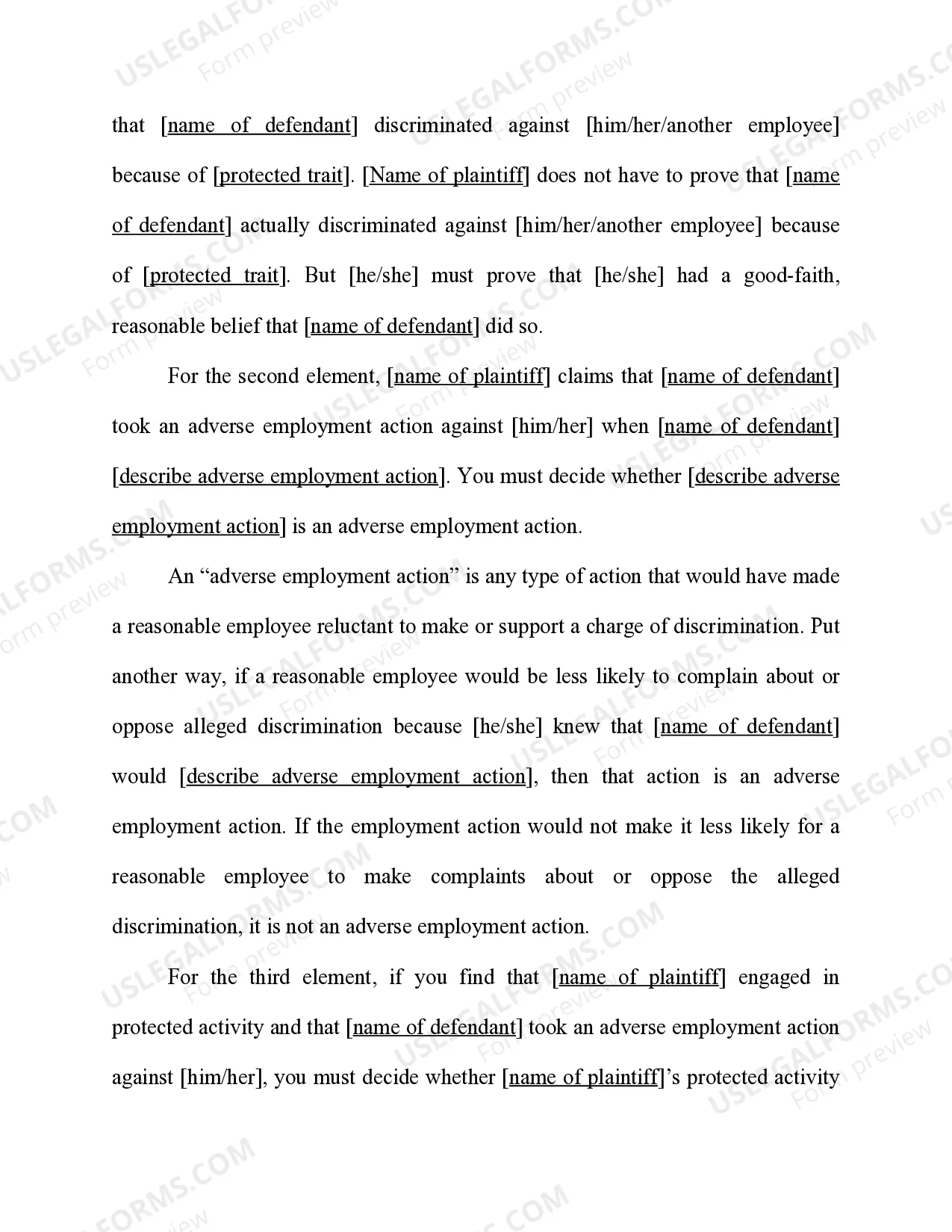
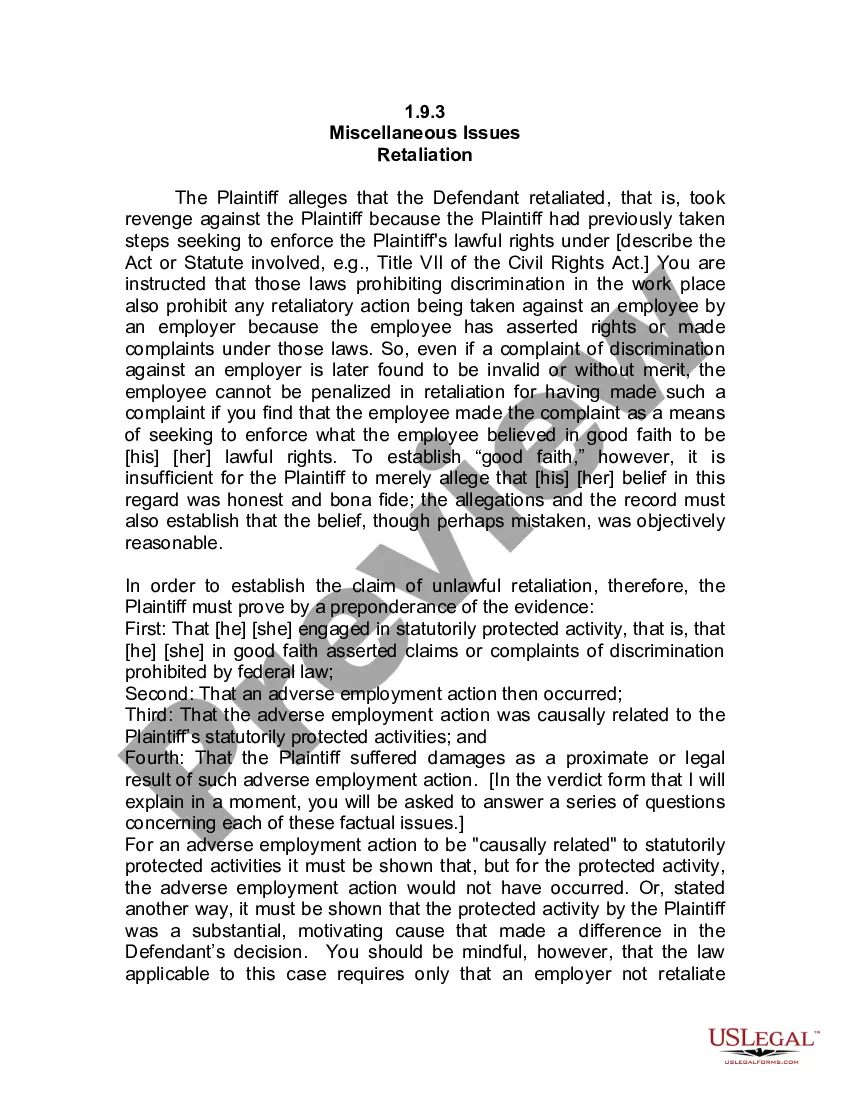
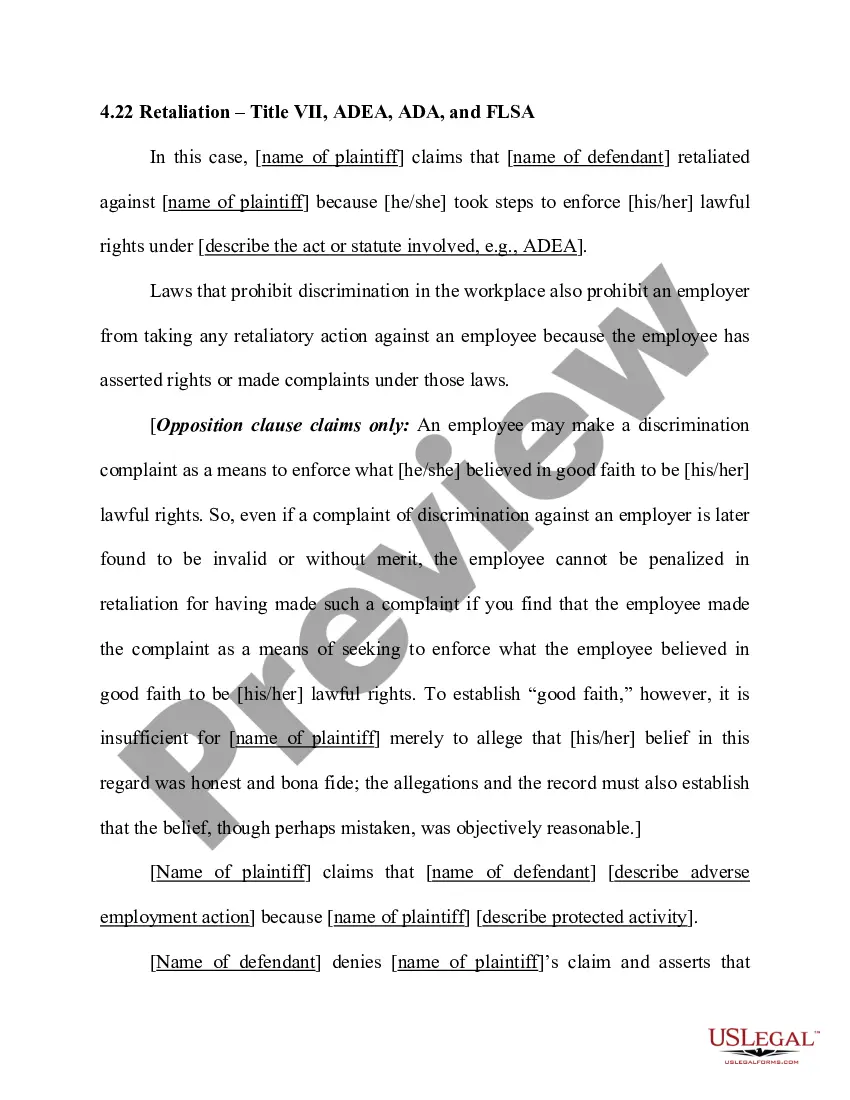
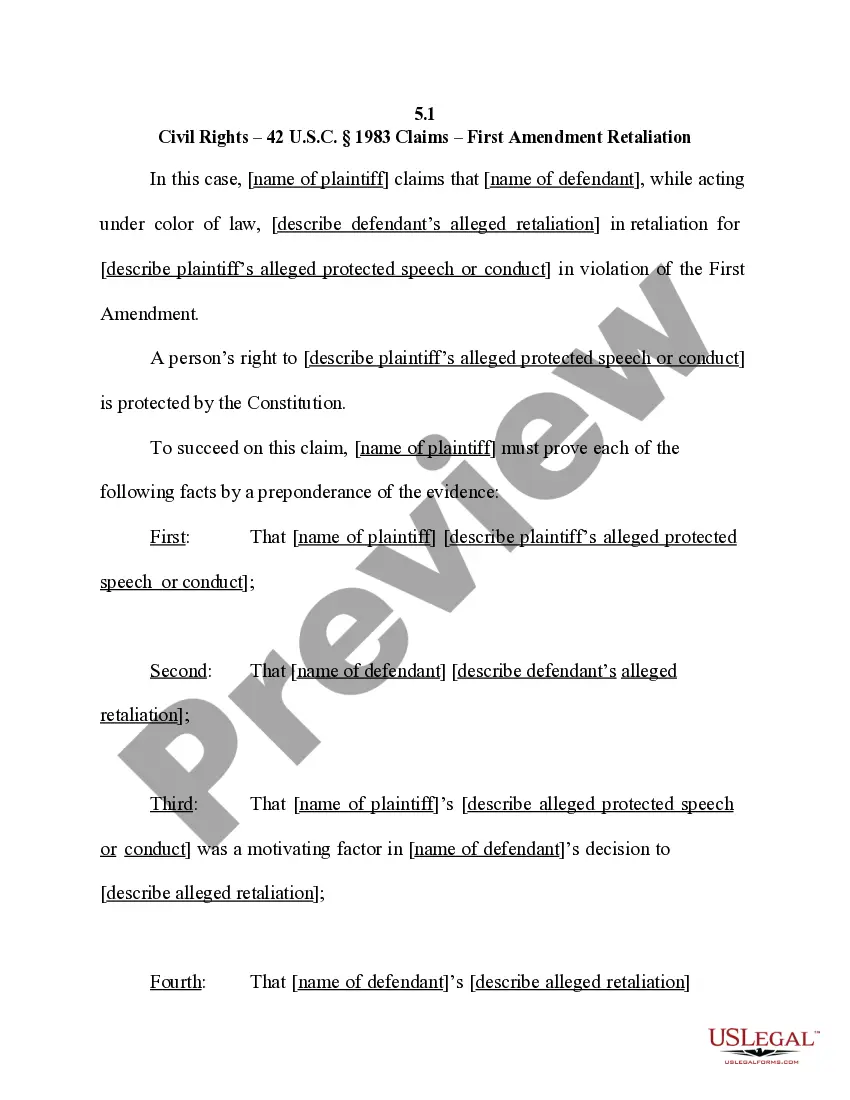
The Retaliation form serves as a legal tool for individuals who believe they have suffered negative actions from their employer due to asserting their rights under federal civil rights laws. This form is essential for those pursuing claims related to workplace retaliation, as it outlines the legal criteria required to establish such a claim. It is distinct from other employment-related forms, focusing specifically on retaliation claims under 42 U.S.C. § 1981.
Key components of this form
- Definition of protected activity: Actions taken by the employee to assert their legal rights.
- Adverse employment actions: Specific actions by the employer that could deter a reasonable person from making a discrimination complaint.
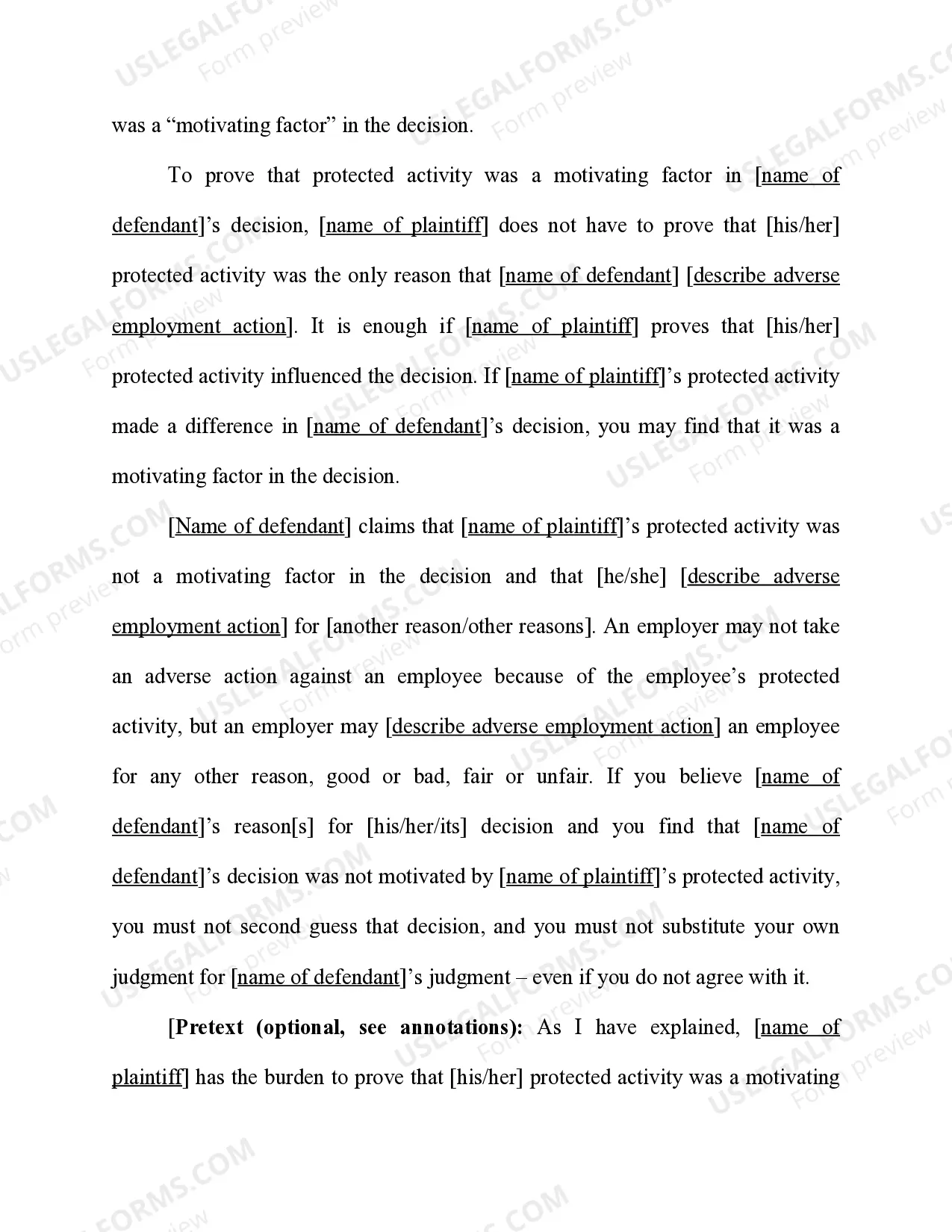
- Motivating factors: Conditions that establish a connection between the protected activity and the adverse action taken.
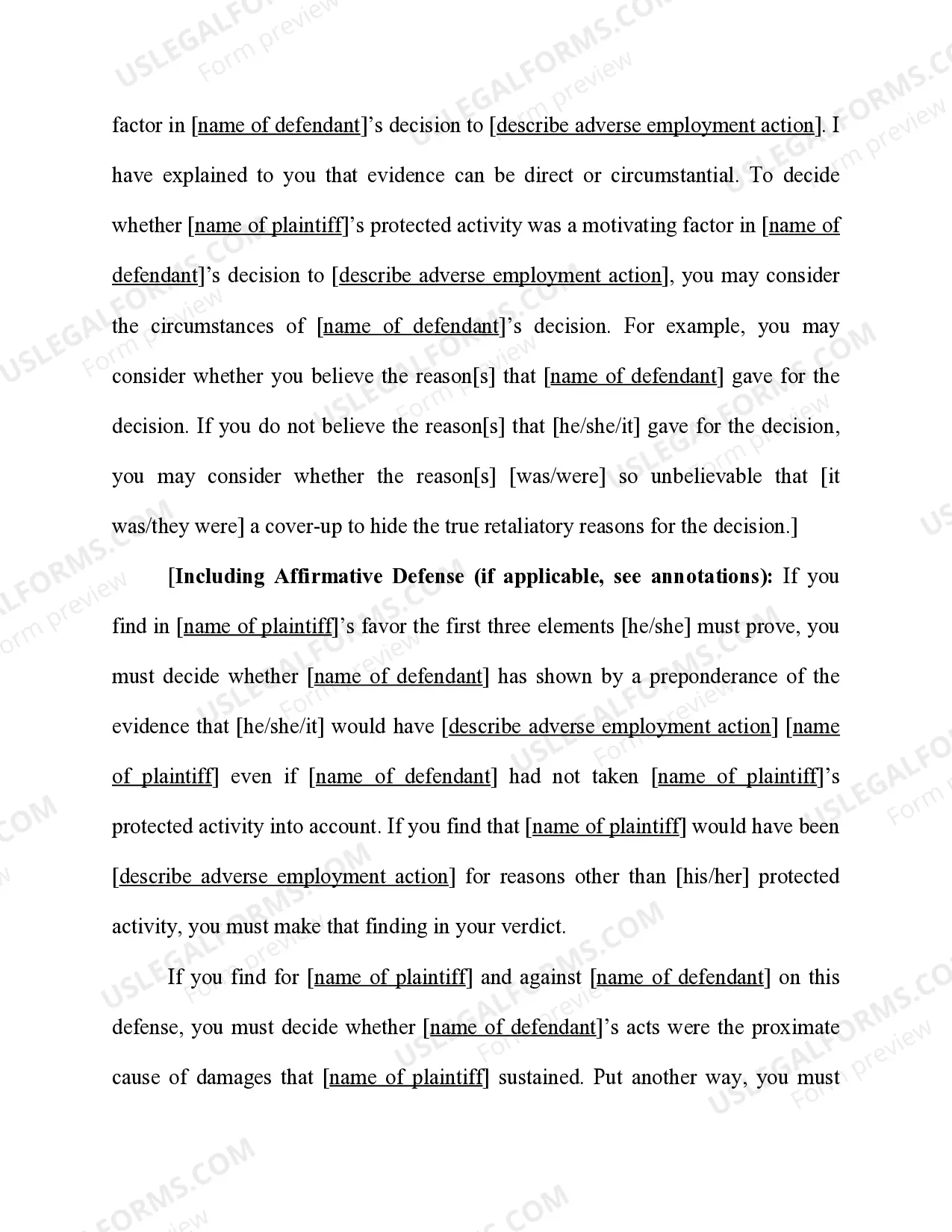
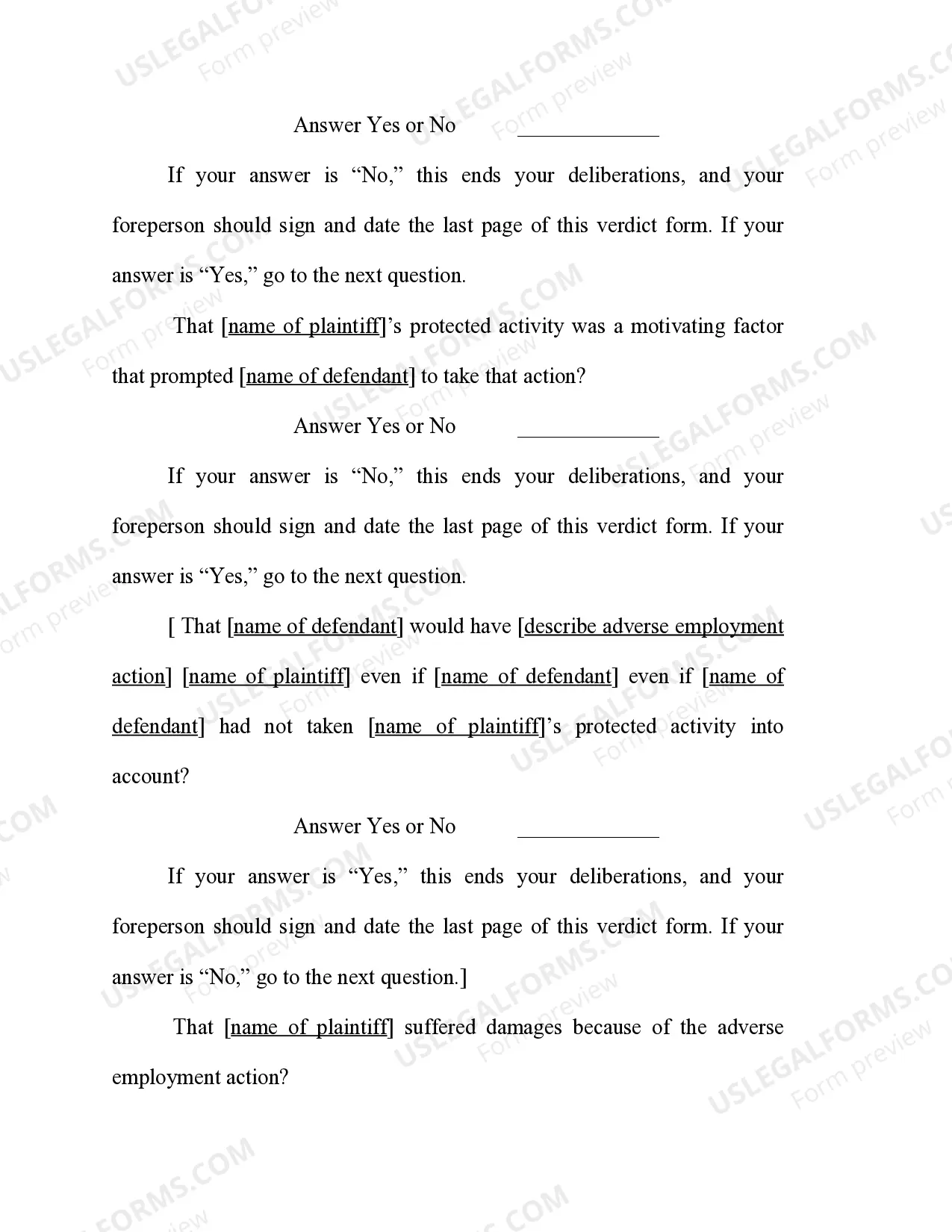
- Burden of proof: Requirements for the plaintiff to prove each element of their claim by a preponderance of the evidence.
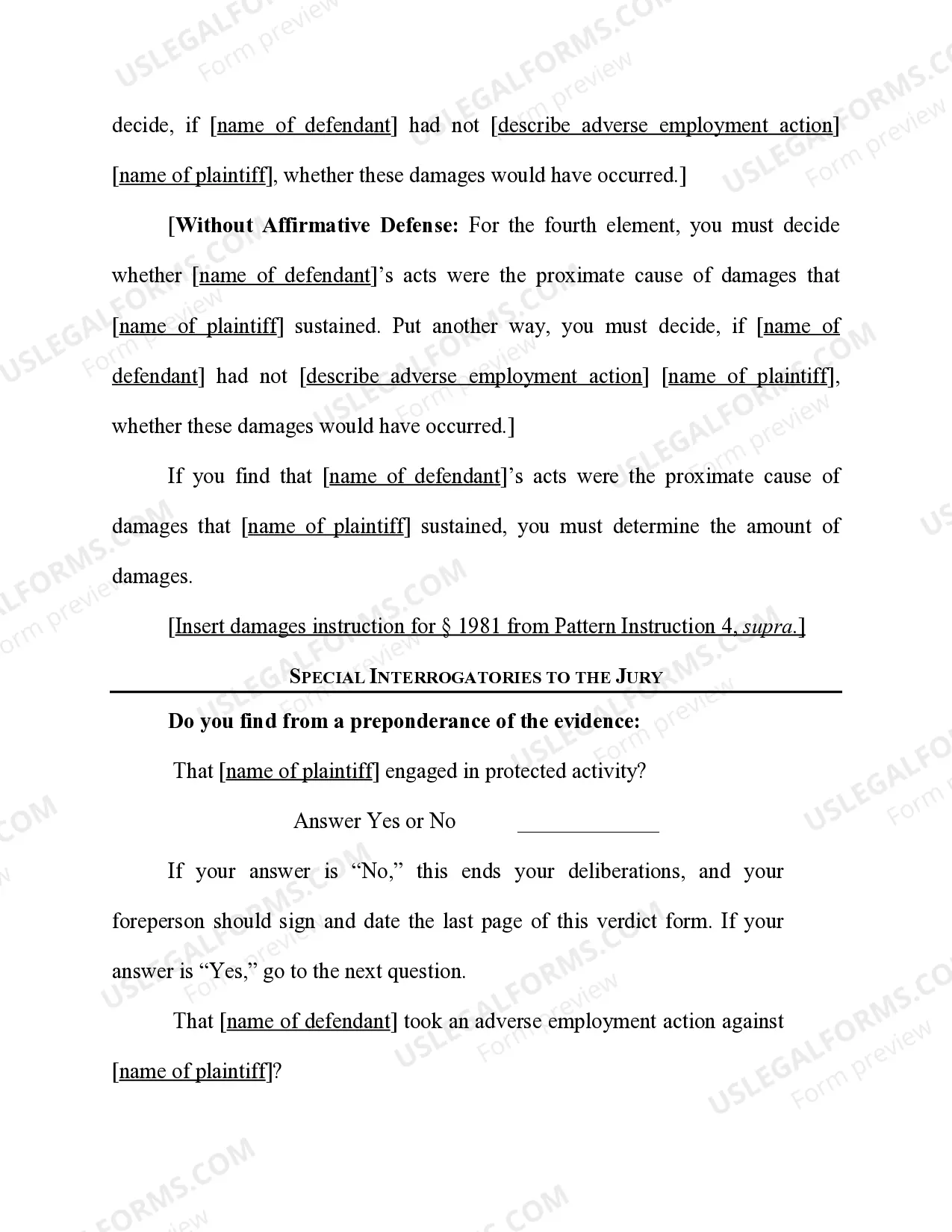
- Damages: Information on how to determine the damages resulting from retaliation.
When to use this form
This form is utilized when an employee has experienced retaliation by their employer for engaging in protected activities, such as filing a discrimination complaint or supporting another employee's claim. Common scenarios include cases where an employee is demoted, terminated, or subjected to hostile work conditions after voicing concerns about workplace discrimination.
Who this form is for
This form is intended for the following individuals:
- Employees who believe they have faced retaliation for asserting their rights under civil rights laws.
- Legal representatives advocating for clients involved in retaliation claims.
- Individuals who have made complaints about workplace discrimination and have faced adverse employment actions as a result.
Completing this form step by step
- Identify the parties involved: Fill in the names of the plaintiff and the defendant.
- Describe the protected activity: Specify the actions taken by the plaintiff that qualify as protected activities.
- Detail the adverse employment action: Provide a description of the employment action taken against the plaintiff.
- Establish the connection: Indicate how the protected activity influenced the employer's decision.
- Determine damages: Specify the types of damages suffered as a result of the retaliation.
Is notarization required?
This form usually doesn’t need to be notarized. However, local laws or specific transactions may require it. Our online notarization service, powered by Notarize, lets you complete it remotely through a secure video session, available 24/7.
Get your form ready online
Our built-in tools help you complete, sign, share, and store your documents in one place.
Make edits, fill in missing information, and update formatting in US Legal Forms—just like you would in MS Word.
Download a copy, print it, send it by email, or mail it via USPS—whatever works best for your next step.
Sign and collect signatures with our SignNow integration. Send to multiple recipients, set reminders, and more. Go Premium to unlock E-Sign.
If this form requires notarization, complete it online through a secure video call—no need to meet a notary in person or wait for an appointment.
We protect your documents and personal data by following strict security and privacy standards.

Make edits, fill in missing information, and update formatting in US Legal Forms—just like you would in MS Word.

Download a copy, print it, send it by email, or mail it via USPS—whatever works best for your next step.

Sign and collect signatures with our SignNow integration. Send to multiple recipients, set reminders, and more. Go Premium to unlock E-Sign.

If this form requires notarization, complete it online through a secure video call—no need to meet a notary in person or wait for an appointment.

We protect your documents and personal data by following strict security and privacy standards.
Avoid these common issues
- Filing the form without adequate evidence supporting the claim of retaliation.
- Failing to clearly define the adverse employment actions experienced.
- Not establishing a clear link between the protected activity and the employer's actions.
- Omitting necessary details about the damages resulted from the retaliation.
Benefits of completing this form online
- Convenience: Access the form from anywhere, at any time.
- Editability: Easily customize the form to fit specific circumstances.
- Reliability: Use forms developed by licensed attorneys for accuracy and compliance.
Legal use & context
- The form is supported by federal civil rights laws prohibiting retaliation.
- Foster a workplace environment where employees can freely assert their rights.
- Legal precedents affirm the necessity of proving a causal link between protected activities and adverse actions.
Quick recap
- This form is vital for employees who believe they have been retaliated against in the workplace.
- Understanding the elements of retaliation claims is essential for successfully completing this form.
- Consulting with a legal professional can enhance the effectiveness of the form and improve the likelihood of a successful claim.
Looking for another form?


Form popularity
FAQ
The law makes it illegal for an employer to make any employment decision because of a person's race, color, religion, sex (including gender identity, sexual orientation, and pregnancy), national origin, age (40 or older), disability or genetic information.
Retaliation is the most frequently alleged basis of discrimination in the federal sector and the most common discrimination finding in federal sector cases. As EEOC works to address this issue, you can help. Learn more about what constitutes retaliation, why it happens, and how to prevent it.
Retaliation occurs when an employee makes a complaint regarding discrimination, or helps another employee assert a complaint of discrimination, and the employer retaliates against the employee for making a complaint (i.e., firing the employee, demoting the employee, denying a promotion, decreasing pay, disciplining the
Retaliation Definition Unlawful retaliation occurs when a person or an institution takes an adverse action against an individual either in response to the exercise of a protected activity or to deter or prevent protected activity in the future.
Retaliation in the workplace may be defined as a form of unlawful discrimination that occurs when an employer, employment agency or labor organization takes an adverse action against an employee, applicant or other covered individual because he or she engaged in a protected activity, including filing a charge of
Some examples of retaliation would be a termination or failure to hire, a demotion, a decrease in pay, a decrease in the number of hours that you've worked. The cause will be obvious things such as a reprimand, a warning or lowering of your evaluation scores.
Retaliation is, by definition, an intentional act. It is a form of ?discrimination? because the complainant is being subjected to differential treatment. Moreover, retaliation is discrimination ?based on sex? because it is an intentional response to the nature of the complaint: an allegation of sex discrimination.
Retaliatory actions are broadly defined to harassing behavior, significant changes to job duties or working conditions, and even threats to take personnel actions. Retaliation against employees who engage in protected activities under Personnel Bulletin 18-01 is also prohibited by that policy.