Response to Notice of Title Defect by Seller to Buyer in Response to Notice
What is this form?
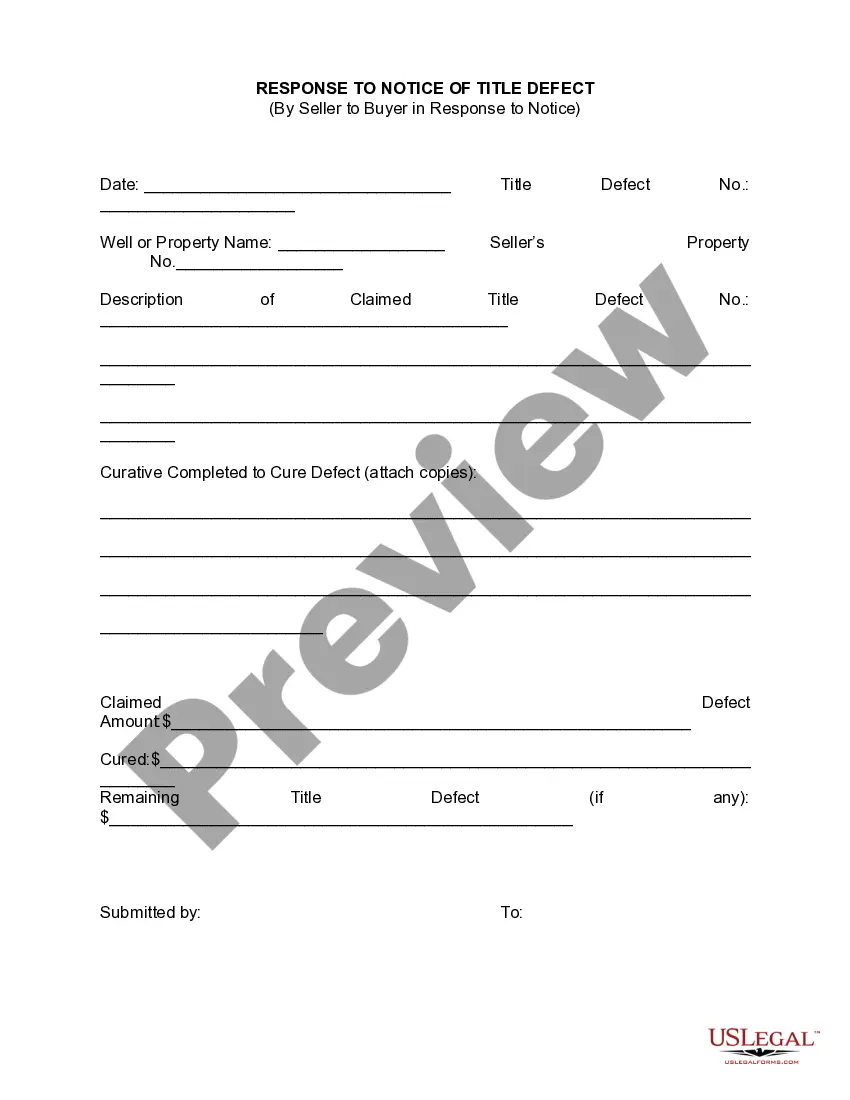
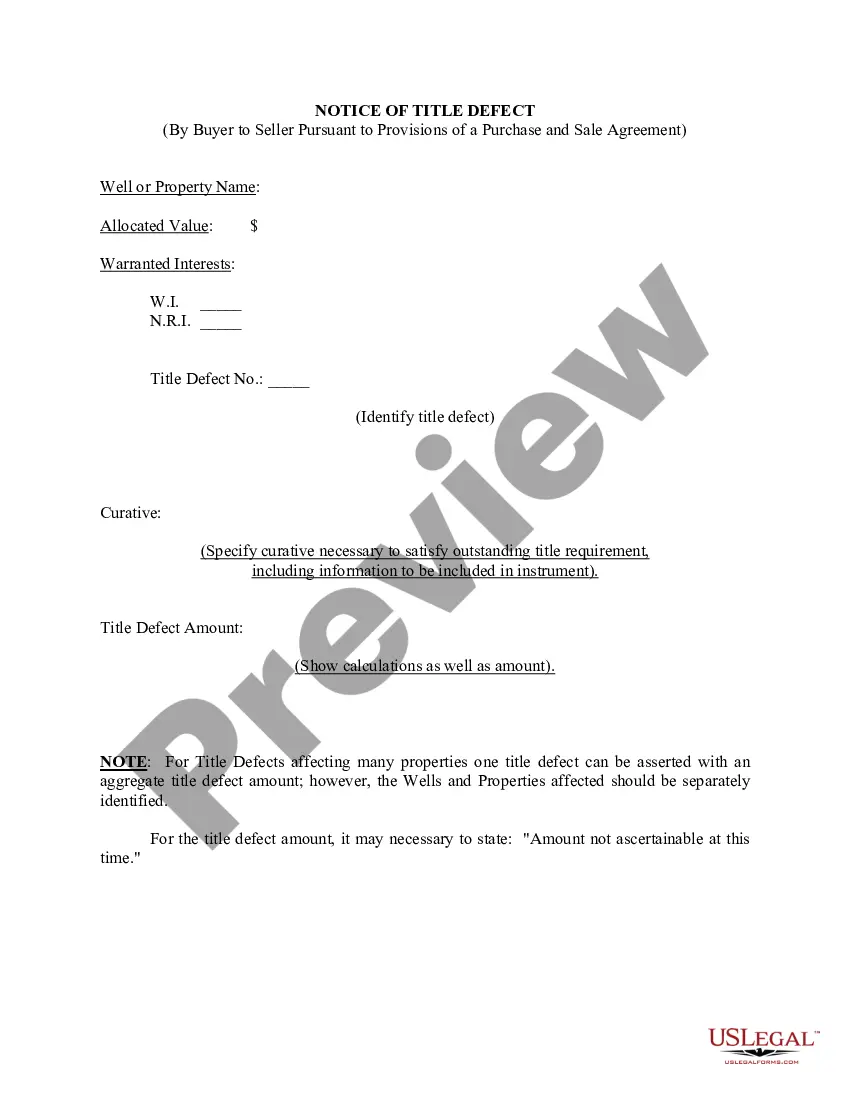
The Response to Notice of Title Defect by Seller to Buyer is a legal document used by sellers to formally respond to a buyer's notice regarding claimed defects in the title of a property. This form is crucial for addressing title issues or concerns that may affect the sale of real estate, providing a structured way for sellers to communicate how they intend to remedy these defects or respond to the claims made by the buyer.
What’s included in this form
- Date of notice
- Title defect number
- Name of the well or property
- Seller's property number
- Description of the claimed title defect
- Details of curative actions taken to address the defect
- Claimed defect amount
- Confirmation of whether the defect has been cured
- Information on any remaining title defects
- Signature of the submitter
When to use this form
This form should be used when a buyer notifies the seller of defects in the title to a property. It allows the seller to formally address the claims made by the buyer, outline any corrective actions they have completed, and specify any ongoing issues. This response is essential in maintaining clear communication about title conditions and ensuring the transaction can proceed smoothly.
Who this form is for
- Sellers of real estate who have received a notice of title defect from a buyer.
- Buyers who have concerns regarding the title of a property they intend to purchase.
- Real estate agents or attorneys representing either the buyer or seller in a transaction.
How to prepare this document
- Identify the date on which the notice is being sent.
- Enter the title defect number referenced in the buyer's notice.
- Provide the well or property name and seller's property number.
- Describe the nature of the claimed title defect.
- Document any corrective actions taken to cure the defect and attach copies if necessary.
- Specify the claimed defect amount and indicate whether the defect has been cured or if any remain.
- Sign the form as the seller and submit it to the buyer.
Does this form need to be notarized?
Notarization is generally not required for this form. However, certain states or situations might demand it. You can complete notarization online through US Legal Forms, powered by Notarize, using a verified video call available anytime.
Get your form ready online
Our built-in tools help you complete, sign, share, and store your documents in one place.
Make edits, fill in missing information, and update formatting in US Legal Forms—just like you would in MS Word.
Download a copy, print it, send it by email, or mail it via USPS—whatever works best for your next step.
Sign and collect signatures with our SignNow integration. Send to multiple recipients, set reminders, and more. Go Premium to unlock E-Sign.
If this form requires notarization, complete it online through a secure video call—no need to meet a notary in person or wait for an appointment.
We protect your documents and personal data by following strict security and privacy standards.

Make edits, fill in missing information, and update formatting in US Legal Forms—just like you would in MS Word.

Download a copy, print it, send it by email, or mail it via USPS—whatever works best for your next step.

Sign and collect signatures with our SignNow integration. Send to multiple recipients, set reminders, and more. Go Premium to unlock E-Sign.

If this form requires notarization, complete it online through a secure video call—no need to meet a notary in person or wait for an appointment.

We protect your documents and personal data by following strict security and privacy standards.
Avoid these common issues
- Failing to include all required information, such as the title defect number or property details.
- Not attaching necessary documentation proving corrective actions taken.
- Using incorrect dates or being vague in the description of the claimed defect.
Benefits of completing this form online
- Convenience of downloading and completing the form at your own pace.
- Editability allows for easy updates to accurate information.
- Reliability of using attorney-drafted templates ensures legal compliance.
Quick recap
- This form is essential for sellers responding to title defect notices from buyers.
- Completing the form accurately can help facilitate smoother transaction processes.
- Understand local regulations and ensure compliance in your state when using this form.
Looking for another form?

Form popularity
FAQ
If a seller fails to disclose, or actively conceals, problems that affect the value of the property; they are violating the law, and may be subject to a lawsuit for recovery of damages based on claims of fraud and deceit, misrepresentation and/or breach of contract.
As a last resort, a homeowner may file a lawsuit against the seller within a limited amount of time, known as a statute of limitations. Statutes of limitations are typically two to 10 years after closing. Lawsuits may be filed in small claims court relatively quickly and inexpensively, and without an attorney.
Many title issues can be resolved by filing one of three common documents: A quit claim deed removes an heir and clears up title among co-owners or spouses. A release of lien/judgment removes a paid mortgage or spousal or child support lien. A deed of reconveyance records payment of a mortgage under a deed of trust.
In general, if the defect existed before you bought the home and the seller failed to disclose the defect, and you incurred monetary damages as a result, you can sue the seller or another party for breach of contract. A successful lawsuit could result in payment for the cost of repairs.
If a seller fails to disclose, or actively conceals, problems that affect the value of the property; they are violating the law, and may be subject to a lawsuit for recovery of damages based on claims of fraud and deceit, misrepresentation and/or breach of contract.
As a last resort, a homeowner may file a lawsuit against the seller within a limited amount of time, known as a statute of limitations. Statutes of limitations are typically two to 10 years after closing. Lawsuits may be filed in small claims court relatively quickly and inexpensively, and without an attorney.
Use common sense. Look to your state for guidance. Be ready to share your remodeling history. Expect a lot of yes/no checkboxes but elaborate when necessary. You can't disclose what you genuinely don't know.
The typical seller disclosure form is several pages long, and it asks the seller to report known defects in the home. This will include the appliances, as well as information about electrical, heating, sewer, water or other mechanical systems.
Who Must Make These Seller Disclosures in California. As a broad rule, all sellers of residential real estate property containing one to four units in California must complete and provide written disclosures to the buyer.