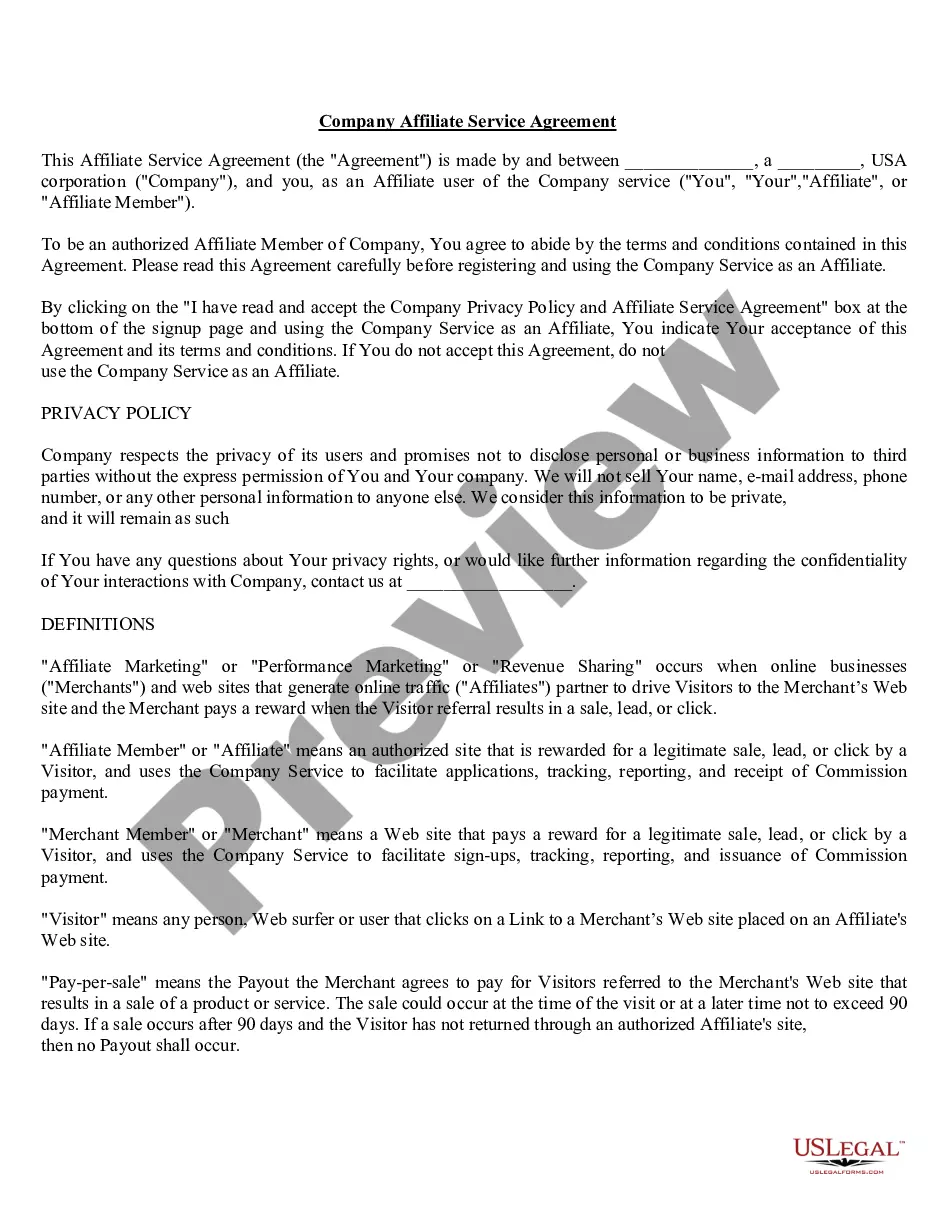
Accounts Receivable - Assignment
What is this form?
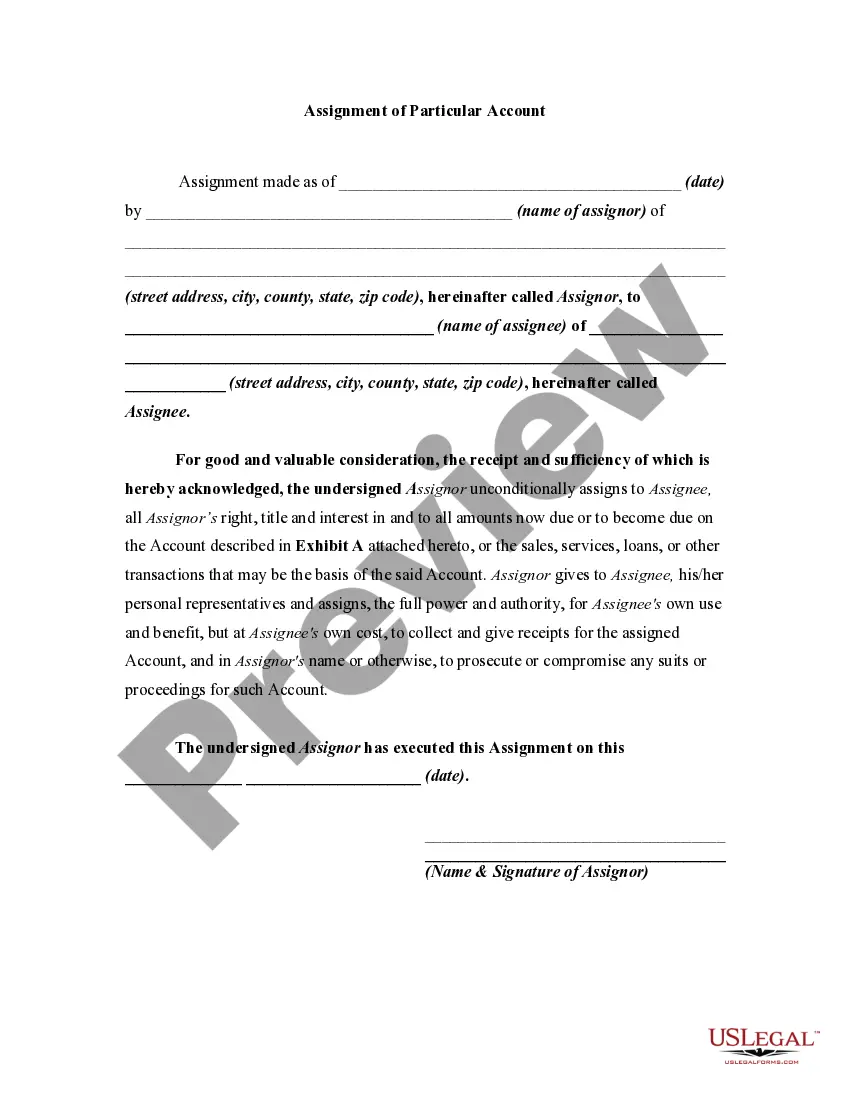
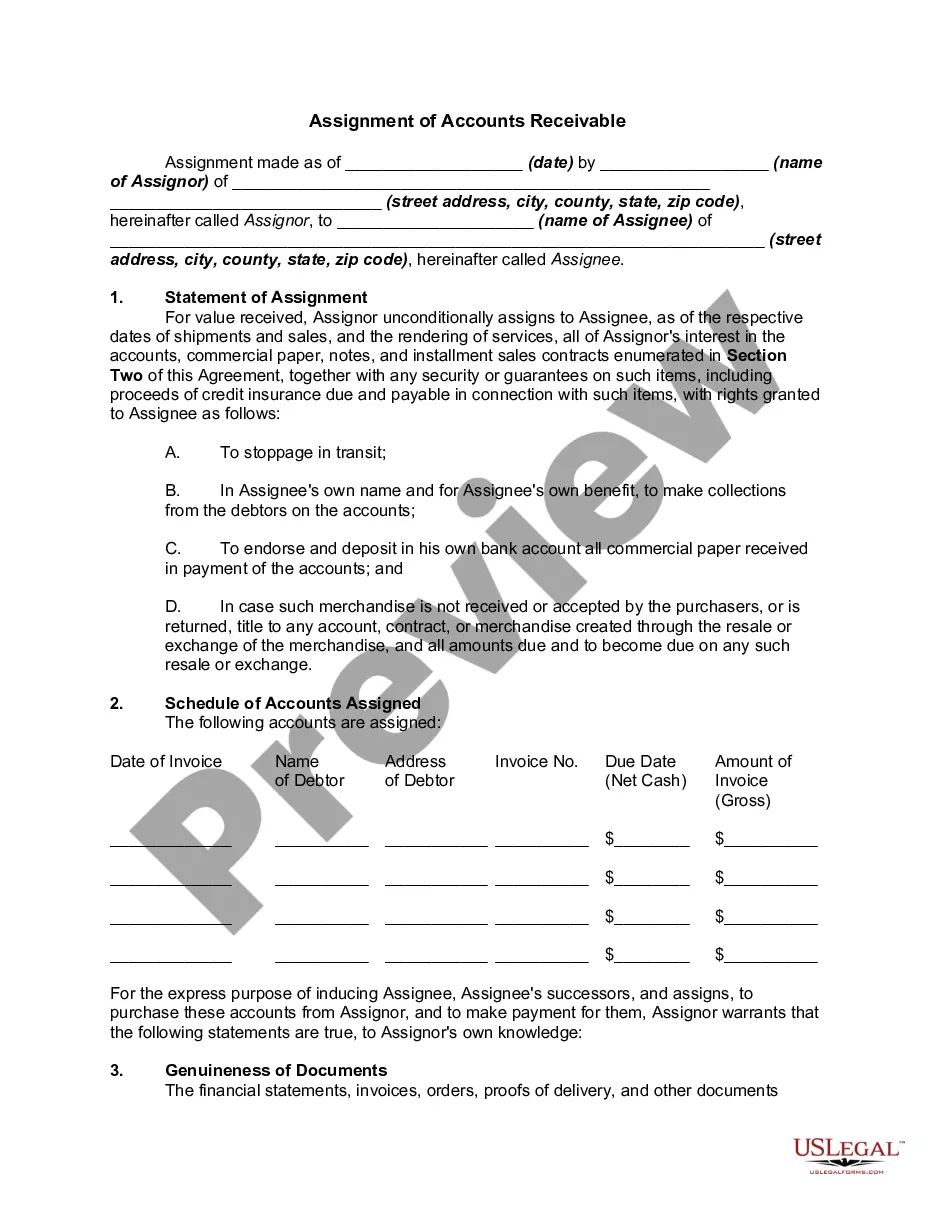
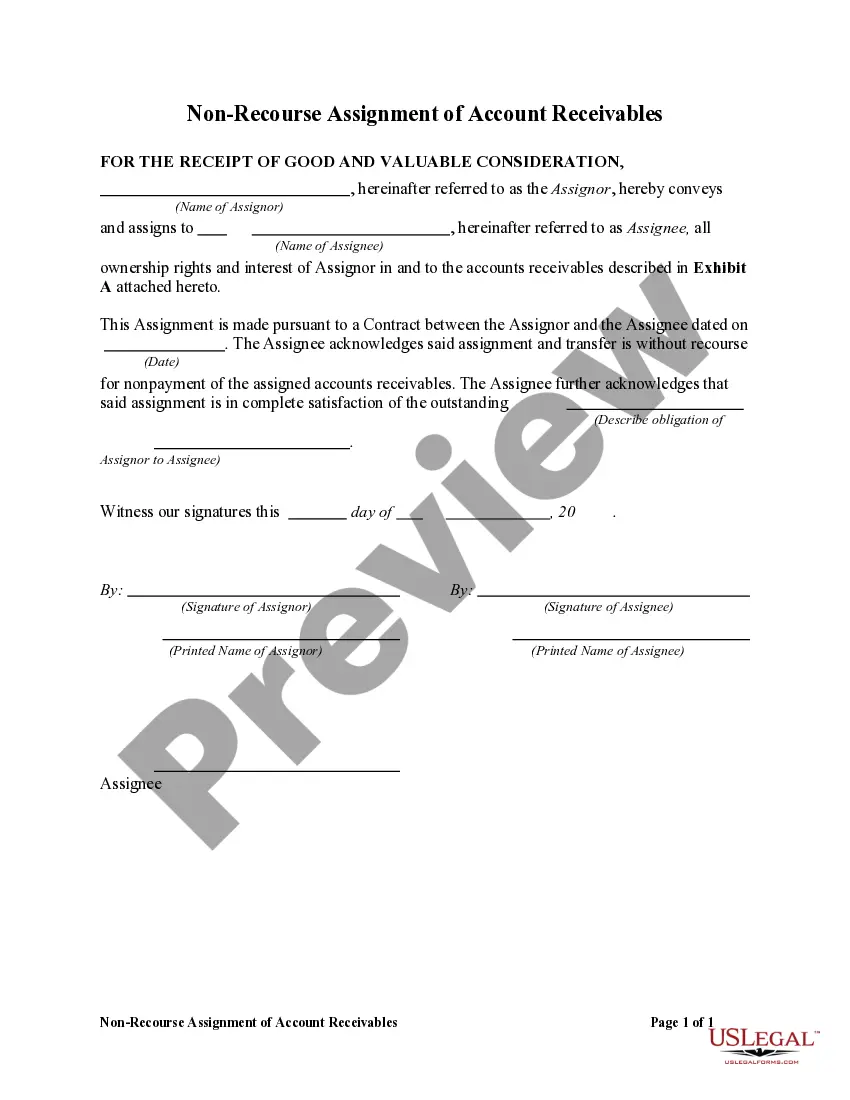
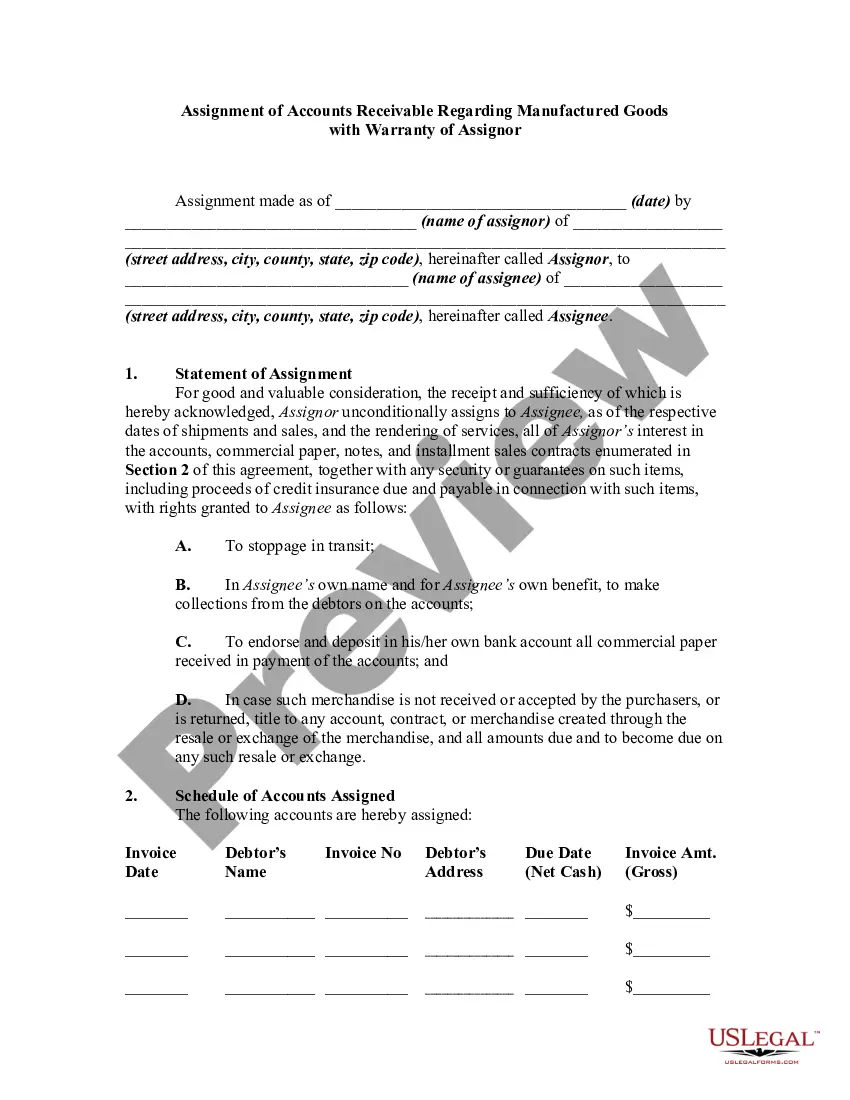
The Accounts Receivable Assignment form is a legal document that facilitates the transfer of rights to outstanding receivables from one party (the Assignor) to another (the Assignee). Unlike other financial agreements, this form specifically outlines the accounts being assigned and ensures that all necessary details regarding those accounts are documented. It serves to formally recognize the transfer of claim over future payments due from customers.
What’s included in this form
- Identification of the Assignor and Assignee.
- Clear listing of assigned accounts in the attached Exhibit A.
- Representations regarding the status of accounts, including balances and payment contingencies.
- Warranties about the absence of defenses, counterclaims, or offsets.
- Details on post-assignment proceedings, including repayment obligations if accounts default.



When this form is needed
This form is essential in scenarios where a business needs to transfer accounts receivable to improve cash flow or facilitate financing. It is commonly used when a company sells its rights to collect payments from customers to another entity, often as part of a factoring arrangement or securing a loan. It is also applicable when consolidating accounts under a new management strategy.
Intended users of this form
- Business owners looking to assign their receivables to access immediate funds.
- Financial institutions or investors acquiring receivables as part of a financing arrangement.
- Account managers responsible for managing accounts receivable and ensuring lawful transfers.
Steps to complete this form
- Identify the Assignor and Assignee by entering their names and addresses in the designated fields.
- Attach Exhibit A, listing all accounts to be assigned, along with their current balances.
- Fill in the required details regarding the accounts' status, including the start dates and any credits.
- Ensure there are no contingencies impacting the payments on the assigned accounts.
- Sign and date the document, ensuring both parties have copies for their records.
Is notarization required?
This form usually doesn’t need to be notarized. However, local laws or specific transactions may require it. Our online notarization service, powered by Notarize, lets you complete it remotely through a secure video session, available 24/7.
Get your form ready online
Our built-in tools help you complete, sign, share, and store your documents in one place.
Make edits, fill in missing information, and update formatting in US Legal Forms—just like you would in MS Word.
Download a copy, print it, send it by email, or mail it via USPS—whatever works best for your next step.
Sign and collect signatures with our SignNow integration. Send to multiple recipients, set reminders, and more. Go Premium to unlock E-Sign.
If this form requires notarization, complete it online through a secure video call—no need to meet a notary in person or wait for an appointment.
We protect your documents and personal data by following strict security and privacy standards.

Make edits, fill in missing information, and update formatting in US Legal Forms—just like you would in MS Word.

Download a copy, print it, send it by email, or mail it via USPS—whatever works best for your next step.

Sign and collect signatures with our SignNow integration. Send to multiple recipients, set reminders, and more. Go Premium to unlock E-Sign.

If this form requires notarization, complete it online through a secure video call—no need to meet a notary in person or wait for an appointment.

We protect your documents and personal data by following strict security and privacy standards.
Common mistakes
- Failing to list all accounts in Exhibit A, which can lead to disputes over what was assigned.
- Not verifying the absence of liens or security interests on the accounts.
- Neglecting to update the form if the status of accounts changes after the assignment.
Why complete this form online
- Easy access to customized templates drafted by licensed attorneys.
- Ability to download, edit, and fill out the form conveniently from any device.
- Quick turnaround ensures faster processing for assigning accounts.
Legal use & context
- Enforcement of the assignment depends on proper documentation and validity of the accounts.
- Assignees must verify the condition of the accounts to avoid liabilities.
- This form serves as a transfer of rights and includes protections for both parties.
Summary of main points
- The Accounts Receivable Assignment form facilitates the transfer of collection rights from one party to another.
- Completing the form accurately is crucial to ensuring the enforceability of the assignment.
- This form is useful for businesses looking to enhance cash flow without extensive processing delays.
Looking for another form?
Form popularity
FAQ
It is not uncommon that companies with cash flow problems or those that have a desire to be paid on expedited terms assign their accounts receivables as collateral for a secured loan or they factor them.In the case of factoring, the contractor sells its accounts receivable to the financial institution or the factor.
Accounts Receivable (A/R) is the money owed to a business by its clients. The main objective in Accounts Receivable management is to minimise the Days Sales Outstanding (DSO) and processing costs whilst maintaining good customer relations.
Assignment of accounts receivable is a lending agreement whereby the borrower assigns accounts receivable to the lending institution.The borrower pays interest and a service charge on the loan and the assigned receivables serve as collateral.
The purpose of assigning accounts receivable is to provide collateral in order to obtain a loan. To illustrate, let's assume that a corporation receives a special order from a new customer whose credit rating is superb.
Basics of Accounts Receivables Accounts receivable (or debtors) represent money owed to a business by its clients (customers). It is shown on its balance sheet as an asset. It is one of a series of accounts dealing with the billing of a customer for goods and services that the customer has ordered.
Accounts receivable is any money your customers owe you for goods or services they purchased from you in the past. This money is typically collected after a few weeks, and is recorded as an asset on your company's balance sheet. You use accounts receivable as part of accrual basis accounting.
Accounts receivable is a common account used by company accountants to track revenue earned but not yet collected. It is a balance of money owed to the business by buyers who make purchases on account and agree to pay later.
An example of accounts receivable includes an electric company that bills its clients after the clients received the electricity. The electric company records an account receivable for unpaid invoices as it waits for its customers to pay their bills.