Nonrecourse Assignment of Account Receivables
What is this form?
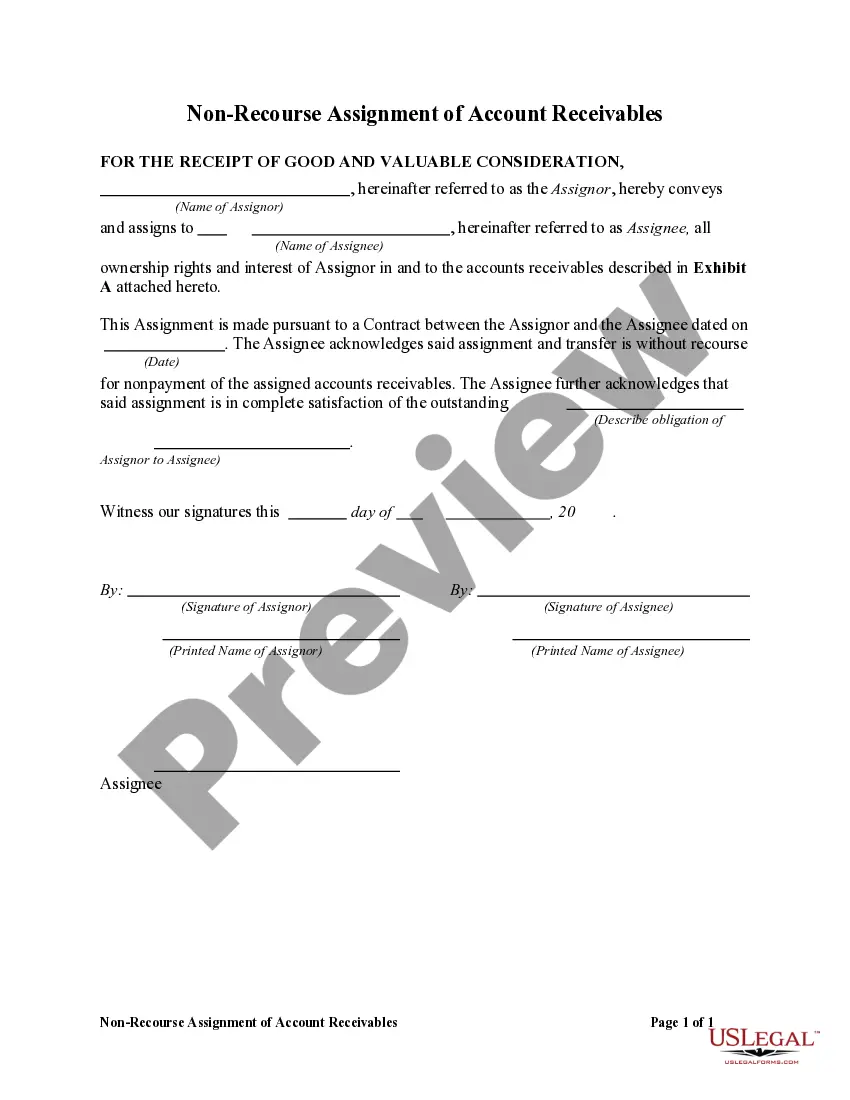
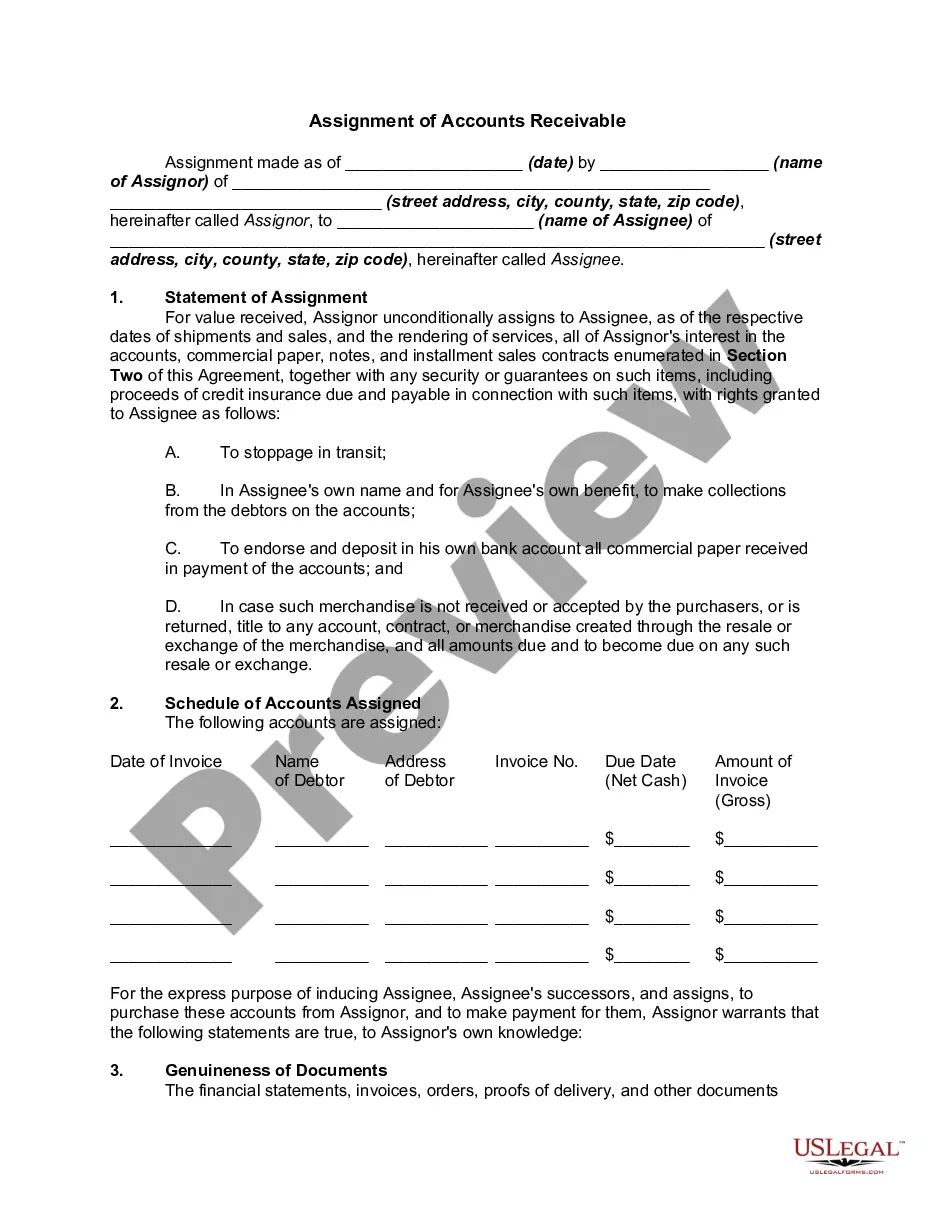
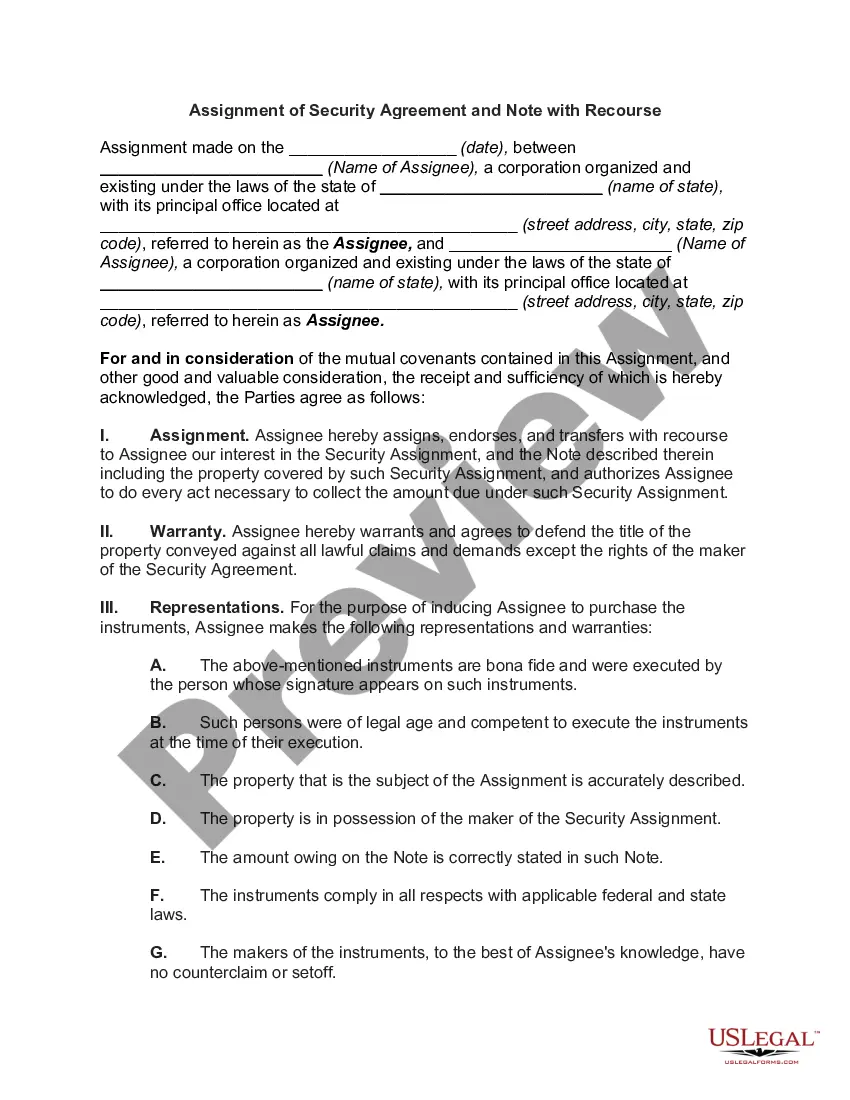
The Nonrecourse Assignment of Account Receivables is a legal document that allows an assignor to transfer their rights to specific account receivables to an assignee without recourse. This means that if the account receivables are not collected, the assignee cannot pursue the assignor for any losses. This form is essential for businesses looking to manage their cash flow by converting unpaid invoices into immediate funds while limiting their liability.
Key components of this form
- Details of the assignor and assignee, including names and addresses.
- A specific list of account receivables that are being assigned, typically included as Exhibit A.
- Statement of nonrecourse assignment, clarifying that the assignee has no claim against the assignor for unpaid receivables.
- Date of the contract that governs the assignment between the parties.

When to use this form
This form is commonly used in scenarios where a business needs to improve its cash flow by selling its accounts receivables. For example, if a company has outstanding invoices that are not likely to be paid soon, they may use this form to sell those receivables to another business or financier. It is particularly useful in situations where the assignor wants to avoid the risk of future liability related to those receivables.
Who needs this form
- Business owners who have accounts receivables they wish to convert into cash.
- Accounts receivable managers looking to streamline cash flow.
- Financial professionals involved in asset management or debt financing.
- Entities seeking to minimize risk associated with unpaid invoices.
Completing this form step by step
- Identify the assignor and assignee by entering their names and addresses in the designated sections.
- List all account receivables being assigned in Exhibit A, providing clear descriptions and amounts.
- Clearly state the nonrecourse nature of the assignment, confirming the assignee's rights and limitations.
- Include the date of the initial agreement or contract between the assignor and assignee.
- Both parties should sign the document to finalize the assignment.
Does this document require notarization?
In most cases, this form does not require notarization. However, some jurisdictions or signing circumstances might. US Legal Forms offers online notarization powered by Notarize, accessible 24/7 for a quick, remote process.
Get your form ready online
Our built-in tools help you complete, sign, share, and store your documents in one place.
Make edits, fill in missing information, and update formatting in US Legal Forms—just like you would in MS Word.
Download a copy, print it, send it by email, or mail it via USPS—whatever works best for your next step.
Sign and collect signatures with our SignNow integration. Send to multiple recipients, set reminders, and more. Go Premium to unlock E-Sign.
If this form requires notarization, complete it online through a secure video call—no need to meet a notary in person or wait for an appointment.
We protect your documents and personal data by following strict security and privacy standards.

Make edits, fill in missing information, and update formatting in US Legal Forms—just like you would in MS Word.

Download a copy, print it, send it by email, or mail it via USPS—whatever works best for your next step.

Sign and collect signatures with our SignNow integration. Send to multiple recipients, set reminders, and more. Go Premium to unlock E-Sign.

If this form requires notarization, complete it online through a secure video call—no need to meet a notary in person or wait for an appointment.

We protect your documents and personal data by following strict security and privacy standards.
Common mistakes
- Failure to accurately list all account receivables being assigned.
- Not clarifying the nonrecourse terms properly, leading to potential misinterpretations.
- Omitting signatures or dates, which may invalidate the agreement.
Advantages of online completion
- Convenient access to legal forms anytime without the need for an attorney appointment.
- Edit and customize the form to fit specific needs before downloading.
- Reliable templates drafted by licensed attorneys to ensure legal compliance.
Looking for another form?

Form popularity
FAQ
Assignment of accounts receivable is a lending agreement whereby the borrower assigns accounts receivable to the lending institution.The borrower pays interest and a service charge on the loan and the assigned receivables serve as collateral.
Factoring is a financial transaction in which a company sells its receivables to a financial company (called a factor). The factor collects payment on the receivables from the company's customers. Companies choose factoring if they want to receive cash quickly rather than waiting for the duration of the credit terms.
Non-recourse factoring allows a company to sell its invoices to a factor without the obligation of absorbing any unpaid invoices. Instead, if the customers renege on their payments or pay their invoices late any losses are absorbed by the factor, leaving the business unscathed.
When accounts receivable are factored "with recourse", it means: A special purpose entity is created. The risk of bad debts is transferred to the buyer. The buyer guarantees the seller will be paid.
The purpose of assigning accounts receivable is to provide collateral in order to obtain a loan. To illustrate, let's assume that a corporation receives a special order from a new customer whose credit rating is superb.
Step 1 Adding Required Accounts to the QuickBooks Chart of Accounts. Step 2- Selling Invoices to the Factoring Company. Step 3- Factored and Non-Factored Invoice Collection. Step 4- Dealing with Uncollectible Factored Invoices. Step 5 Recording Account Charges and Fees.
What Is a Due From Account? A due from account is an asset account in the general ledger used to track money owed to a company that is currently being held at another firm. It is typically used in conjunction with a due to account and is sometimes referred to as intercompany receivables.
Credit Accounts receivable for the amount sold. Debit Cash account for the amount of cash advance received. Debit Loss on factoring for the amount of fee charged by factor.