Employee Evaluation Form for Software Developer
Understanding this form
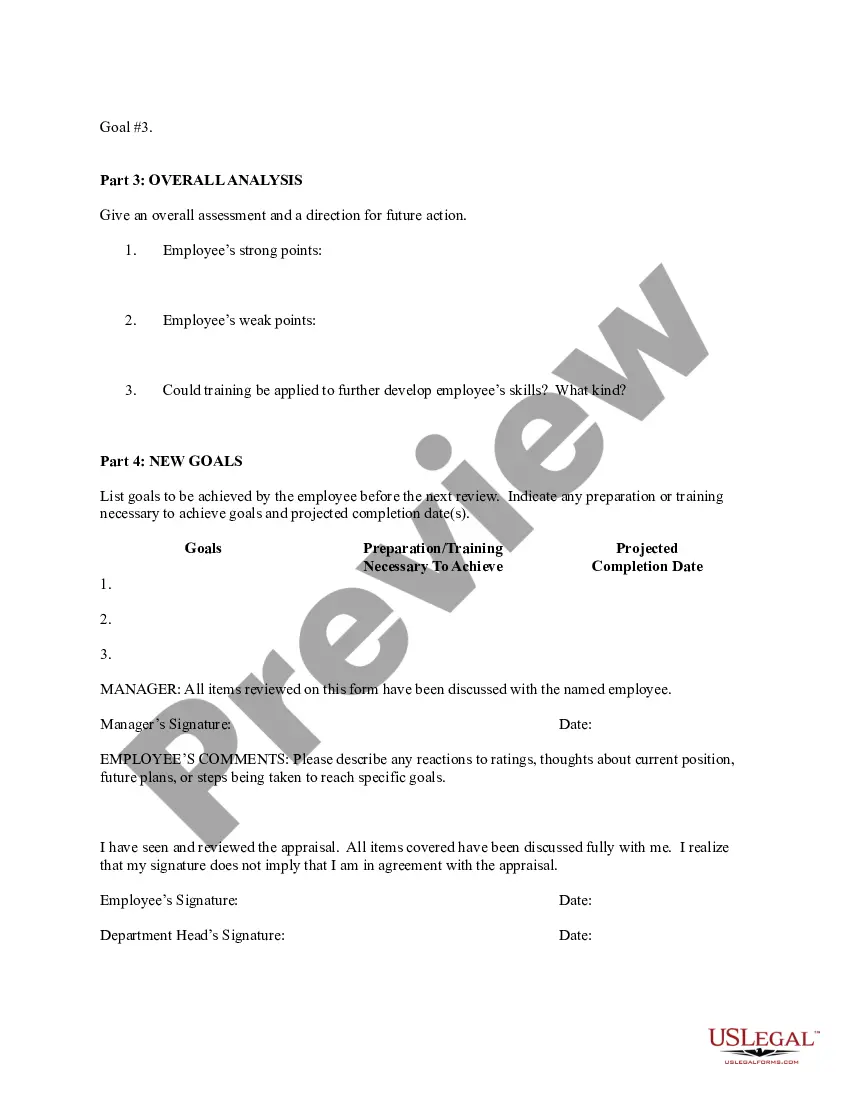
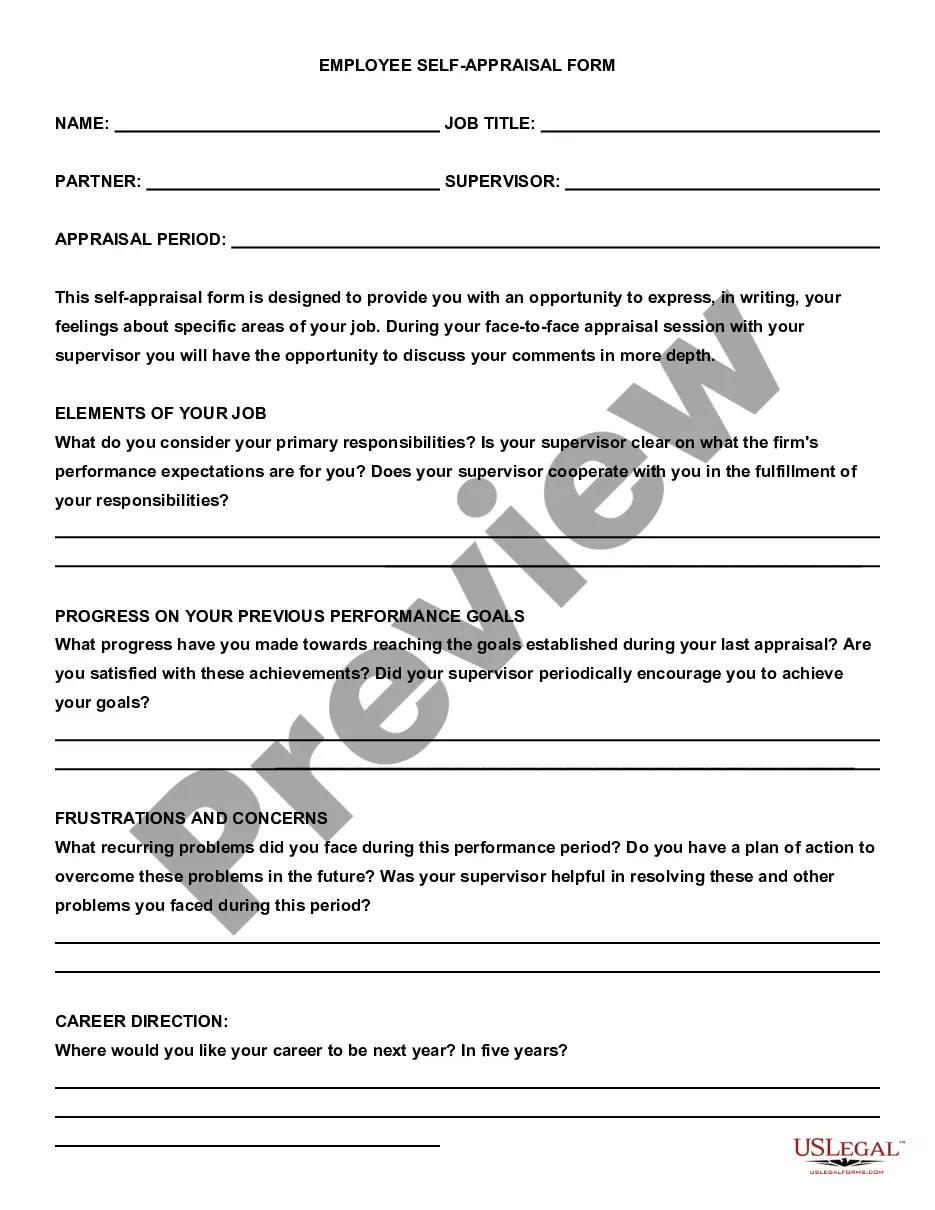
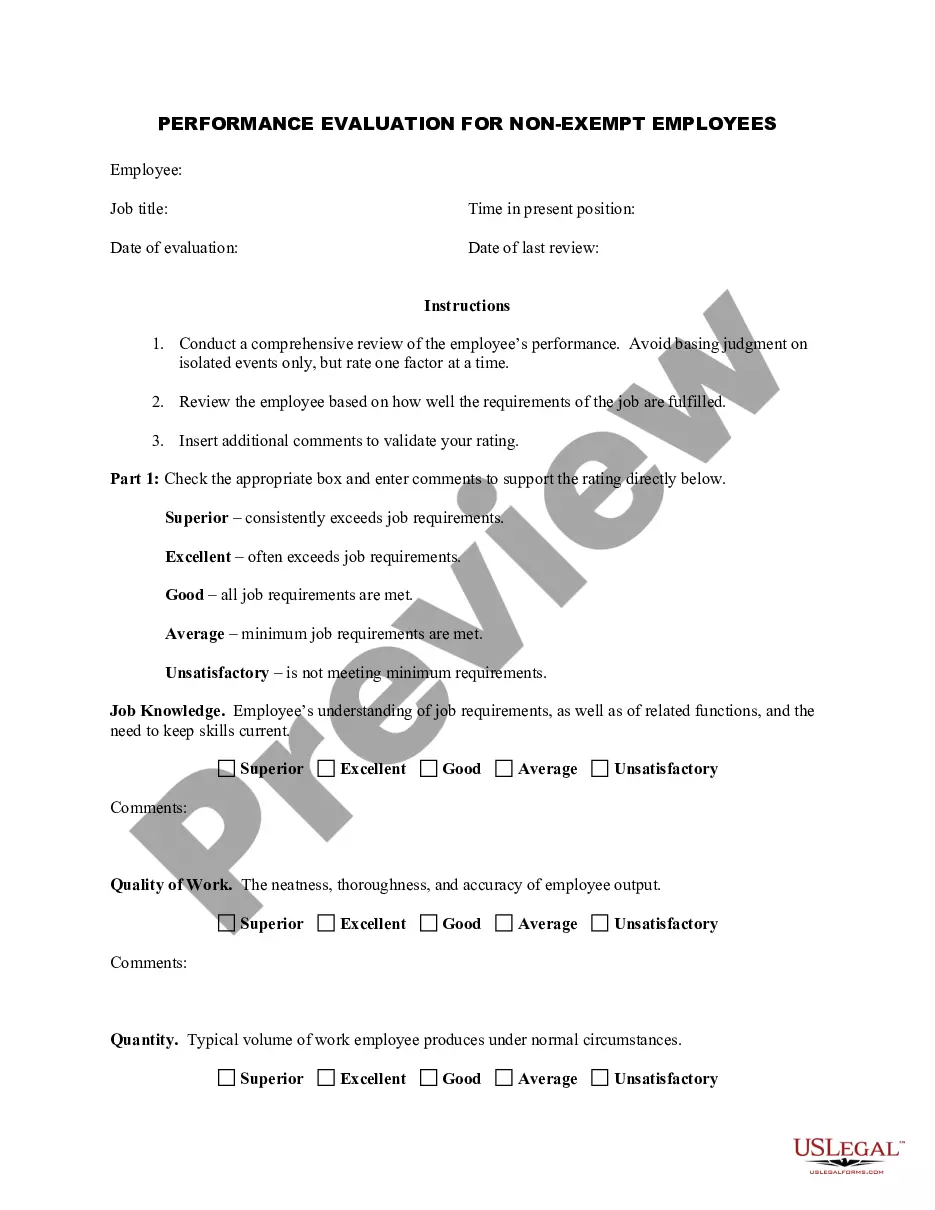
The Employee Evaluation Form for Software Developer is a structured document used to assess the performance of a software developer within an organization. This form is designed to review how well the employee fulfills their job responsibilities, providing a clear assessment of their strengths and areas for improvement. Unlike generic employee evaluation forms, this one is specifically tailored for software developers, enabling managers to rate their skills in coding, problem-solving, and collaboration effectively.
Main sections of this form
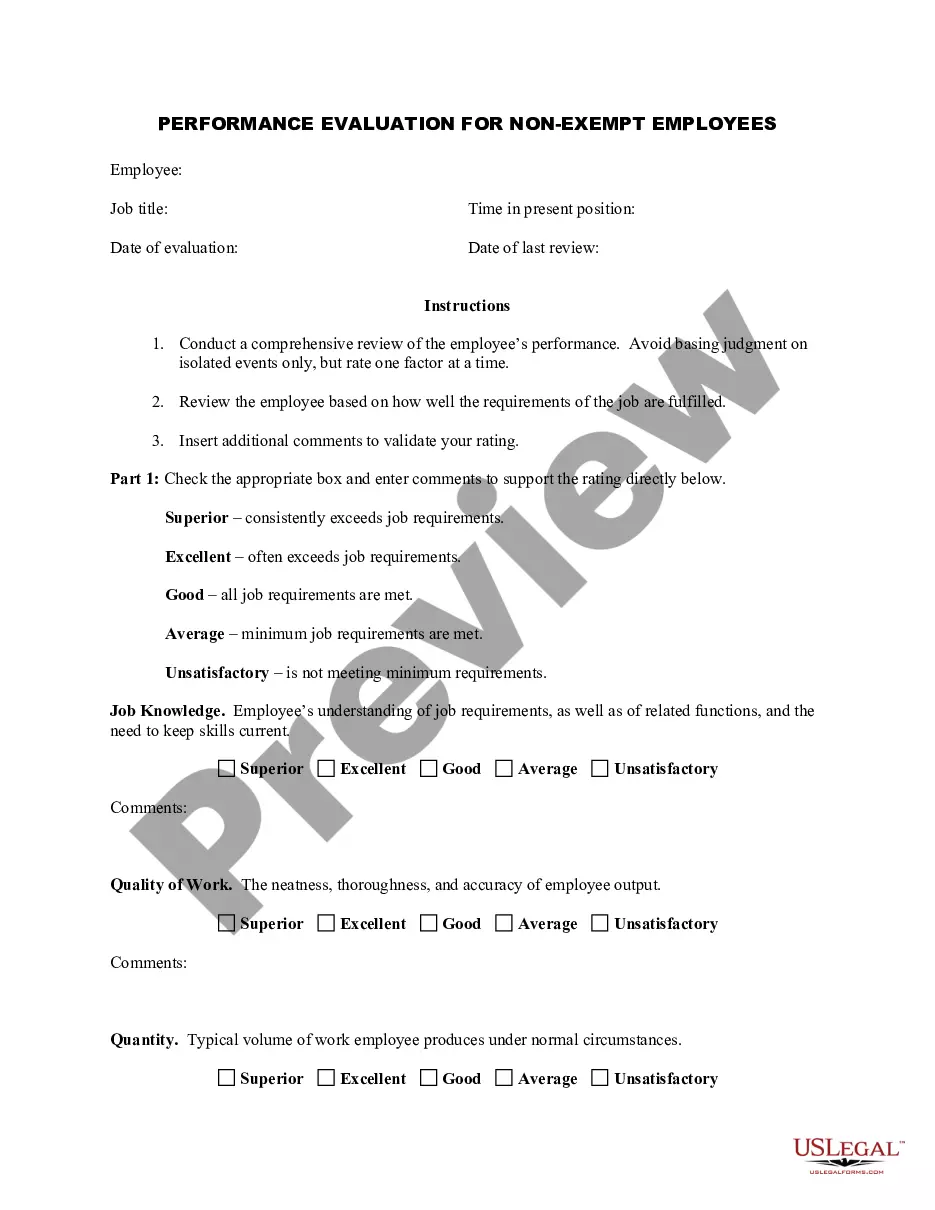
- Employee Information: Details such as the employee's job title, department, and evaluation dates.
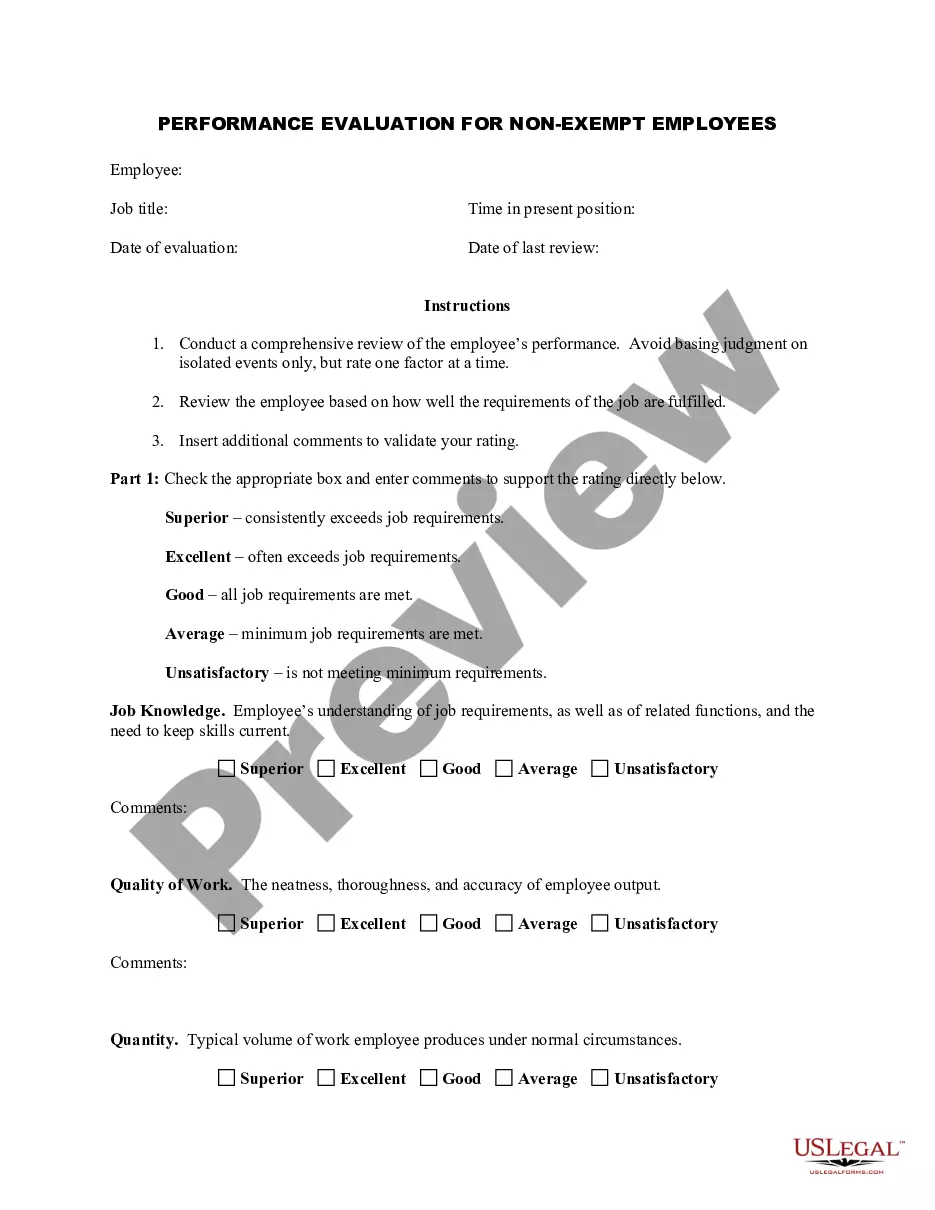
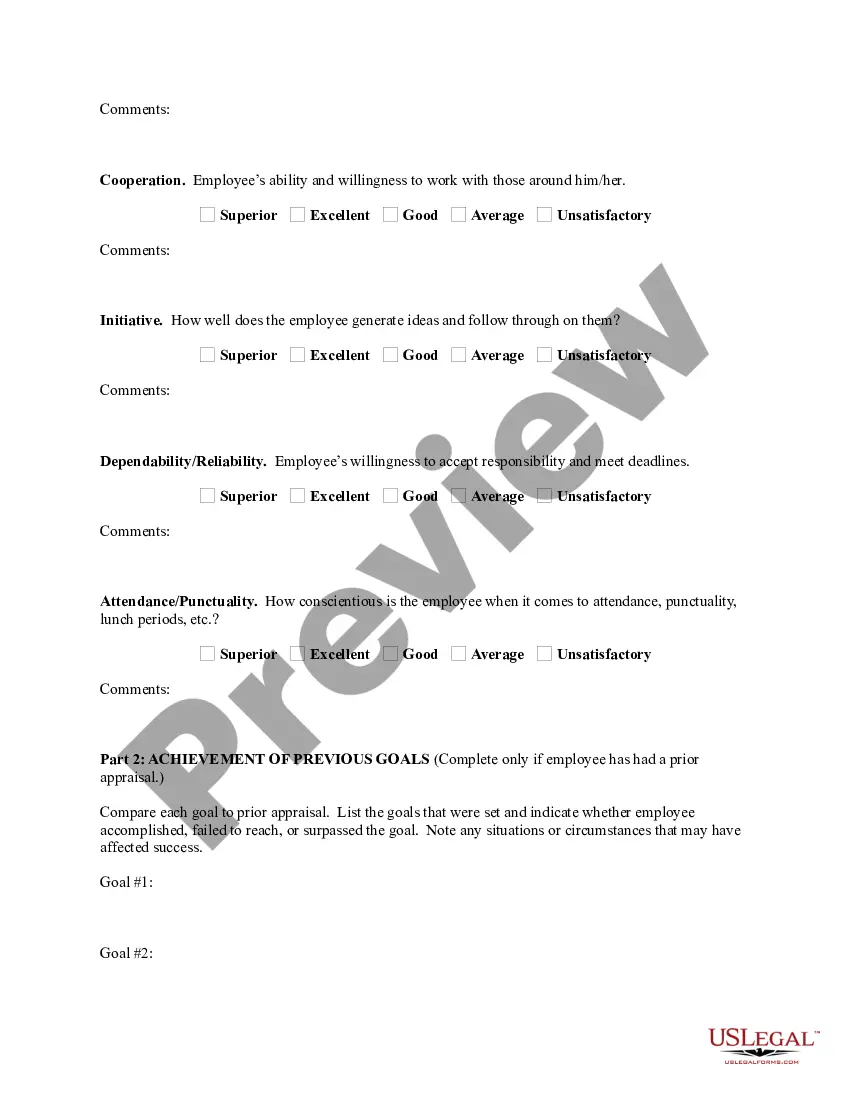
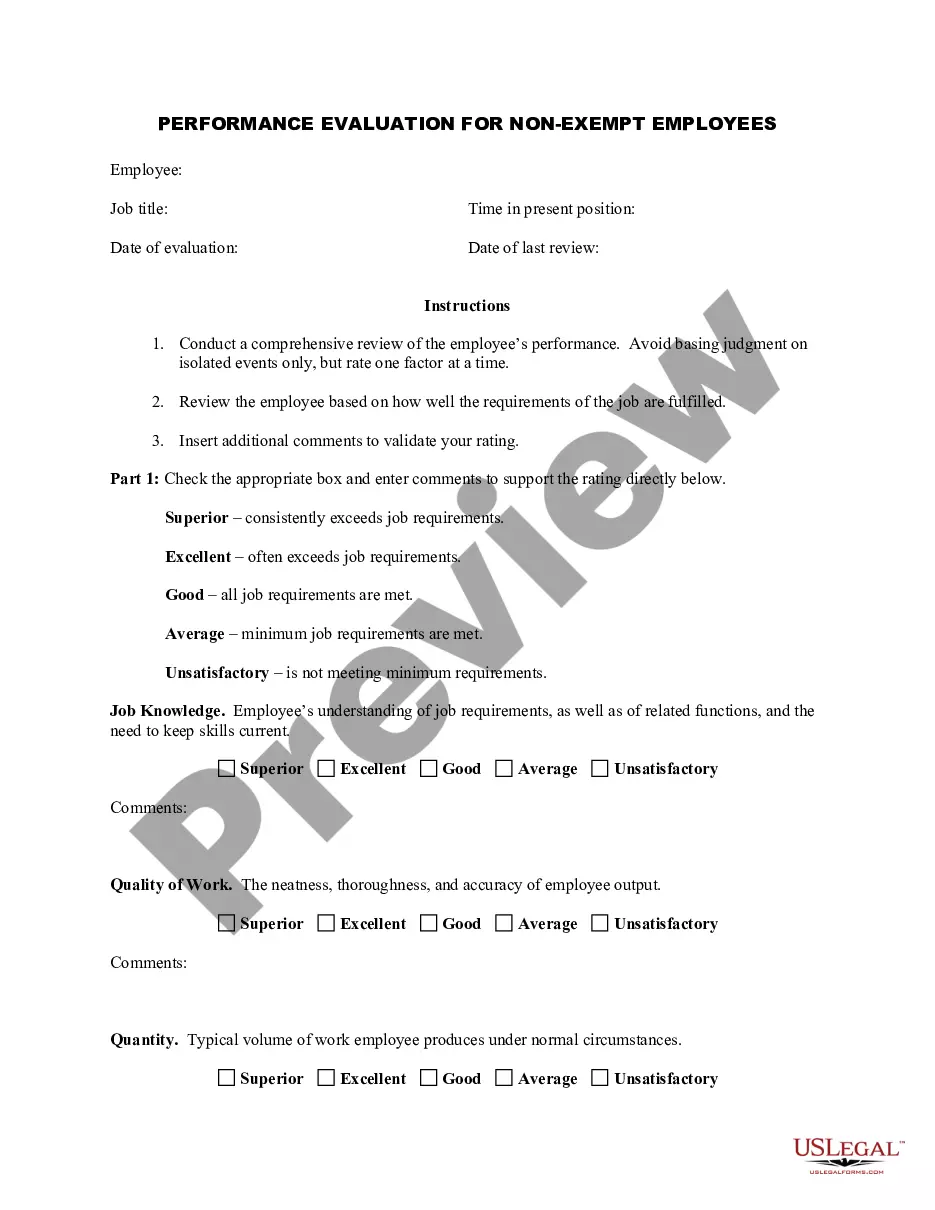
- Performance Ratings: Sections to rate key attributes like job knowledge, quality of work, quantity of work, cooperation, initiative, reliability, and attendance.
- Comments Sections: Areas for specific feedback supporting the ratings, allowing managers to provide detailed insights on performance.
- Goal Setting: A section for recording previous goals and outlining new objectives for future performance evaluations.
- Signatures: Includes spaces for signatures of the manager and employee, indicating that the evaluation has been discussed.
When to use this document
This evaluation form should be used during scheduled performance reviews, typically annually or bi-annually, to assess a software developerâs performance. It is also useful for onboarding processes or when setting new performance goals after significant project completions.
Who needs this form
- Supervisors: Managers who oversee software development teams and need to assess individual performance.
- Human Resources Professionals: HR staff involved in performance management processes within the organization.
- Team Leaders: Leaders within agile teams who require feedback on team members' contributions.
Completing this form step by step
- Identify and enter the employee's information, including their job title and evaluation date.
- Review the employee's performance on each key attribute and rate them accordingly from "Superior" to "Unsatisfactory."
- Provide comments for each rating to support evaluations with specific examples.
- Set new goals for the employee based on their current review and previous goals.
- Both the manager and the employee should sign to acknowledge that the evaluation has been reviewed.
Notarization guidance
This form does not typically require notarization unless specified by local law.
Get your form ready online
Our built-in tools help you complete, sign, share, and store your documents in one place.
Make edits, fill in missing information, and update formatting in US Legal Forms—just like you would in MS Word.
Download a copy, print it, send it by email, or mail it via USPS—whatever works best for your next step.
Sign and collect signatures with our SignNow integration. Send to multiple recipients, set reminders, and more. Go Premium to unlock E-Sign.
If this form requires notarization, complete it online through a secure video call—no need to meet a notary in person or wait for an appointment.
We protect your documents and personal data by following strict security and privacy standards.

Make edits, fill in missing information, and update formatting in US Legal Forms—just like you would in MS Word.

Download a copy, print it, send it by email, or mail it via USPS—whatever works best for your next step.

Sign and collect signatures with our SignNow integration. Send to multiple recipients, set reminders, and more. Go Premium to unlock E-Sign.

If this form requires notarization, complete it online through a secure video call—no need to meet a notary in person or wait for an appointment.

We protect your documents and personal data by following strict security and privacy standards.
Common mistakes
- Not providing specific examples to justify ratings.
- Failing to include feedback for each performance category.
- Overlooking the opportunity to set and discuss new goals for the employee.
- Not allowing the employee to add their comments and feelings about the evaluation.
Why complete this form online
- Convenient access from anywhere, enabling remote evaluations.
- Editability allows for customization based on individual performance needs.
- Digital storage ensures easy retrieval for future reference during subsequent reviews.
Looking for another form?

Form popularity
FAQ
Some examples of positive feedback are contractions in child birth and the ripening of fruit; negative feedback examples include the regulation of blood glucose levels and osmoregulation.
They Talk First. Balancing Developmental Feedback Positives and Areas for Improvement. Increase the Amount of Positive Feedback Upfront. Have Courage. Be Specific. Focus on a Few Key Things Don't Overload. Close the Door. Be Open and Honest.
Assess the Achievements of Objectives: Suggest areas for professional development: Identify areas for Improvement: Demonstrate the behavior of company core values:
Be positive. Focus on the behavior, not the person. Be specific. Be timely. Make sure you are clear on why you are delivering the feedback. Don't use judgment as a means for feedback. Provide feedback from a neutral place. Make it a two-way conversation.
Don't Try to Use Objective Measurements. Do Use Performance Evaluations. Do Know Your Team. Do Make Sure They Always Know Where They Stand. Make Sure Your Good People Are Happy. Do Divide Team Members Into One of Four Categories.
Avoid Textual Forms of Communication. Carefully Plan the Meeting. Don't Give Feedback That's Too Indirect or Too Direct. Be Specific, Not Blurry. Apply the Situation, Behavior, Impact (SBI) Framework. End on a Question.
Communication. Collaboration and teamwork. Problem-solving. Quality and accuracy of work. Attendance, punctuality and reliability. The ability to accomplish goals and meet deadlines.
Something I really appreciate about you is2026. I think you did a great job when you2026 I would love to see you do more of X as it relates to Y I really think you have a superpower around X One of the things I admire about you is2026 I can see you're having a positive impact in2026
Collaboration and teamwork. Positive option: "I believe that my skills and my ability to work in a team have been valuable during this period. Motivation. Leadership. Problem-solving. Decision-making skills. Working under pressure. Communication. Adaptability.