Employee Evaluation Form for Website Developer
What is this form?
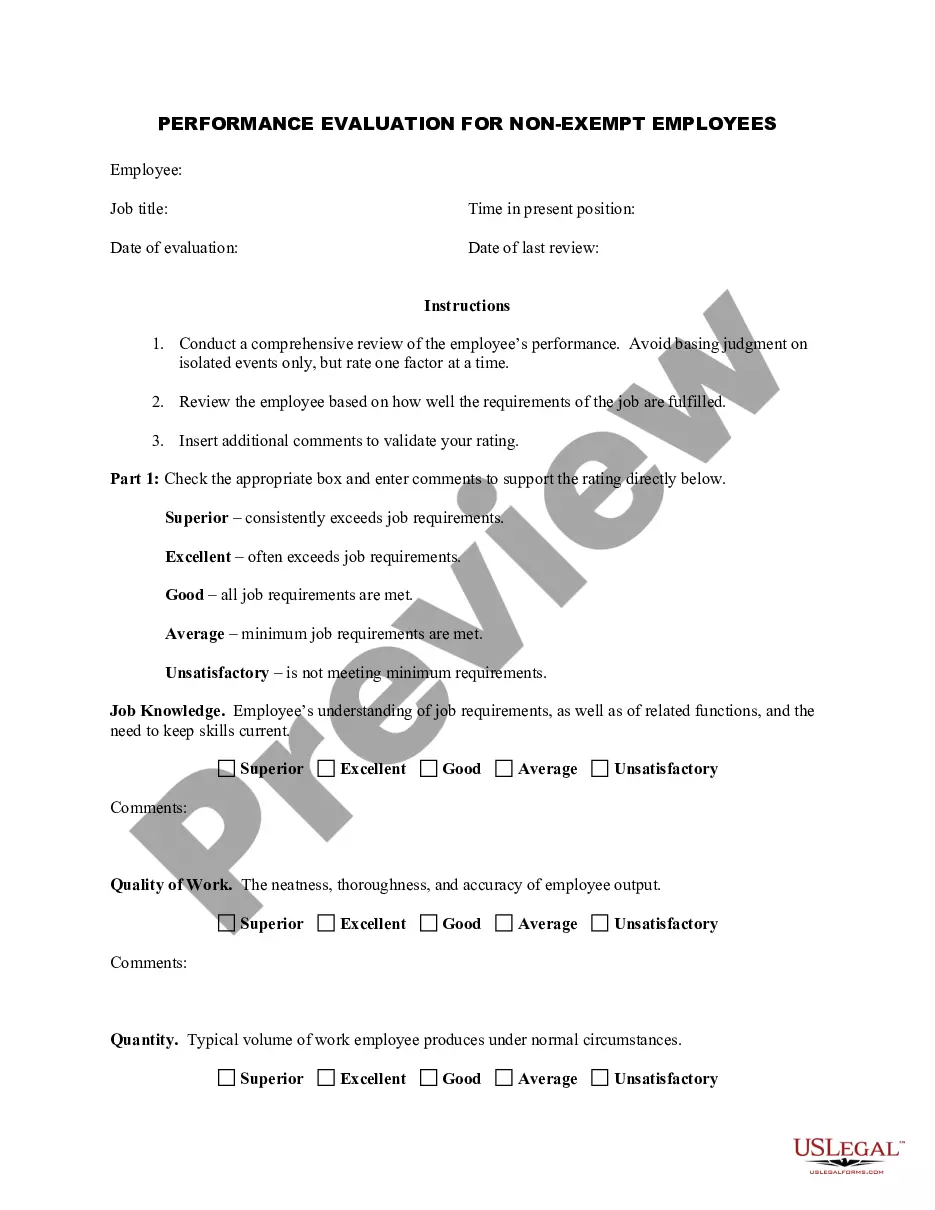
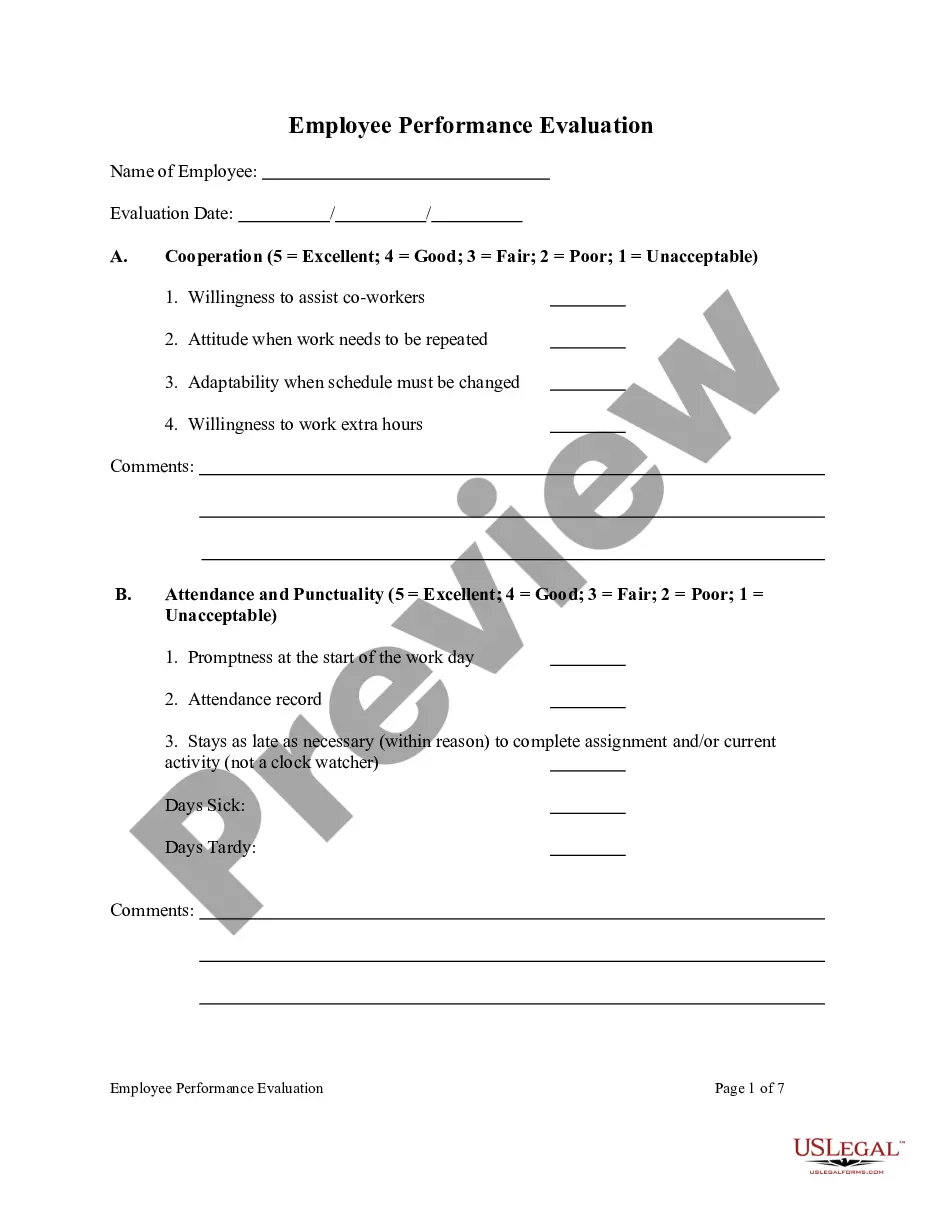
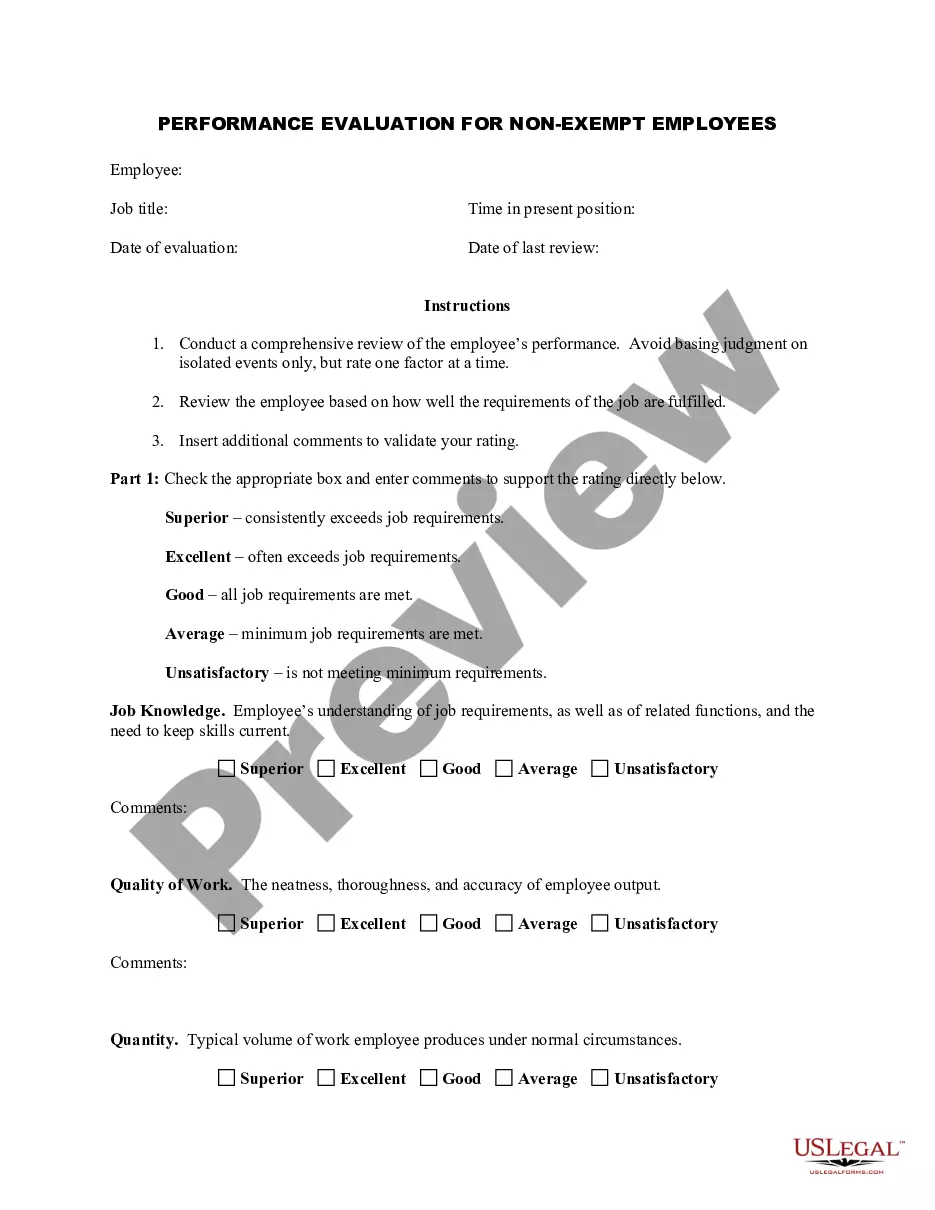
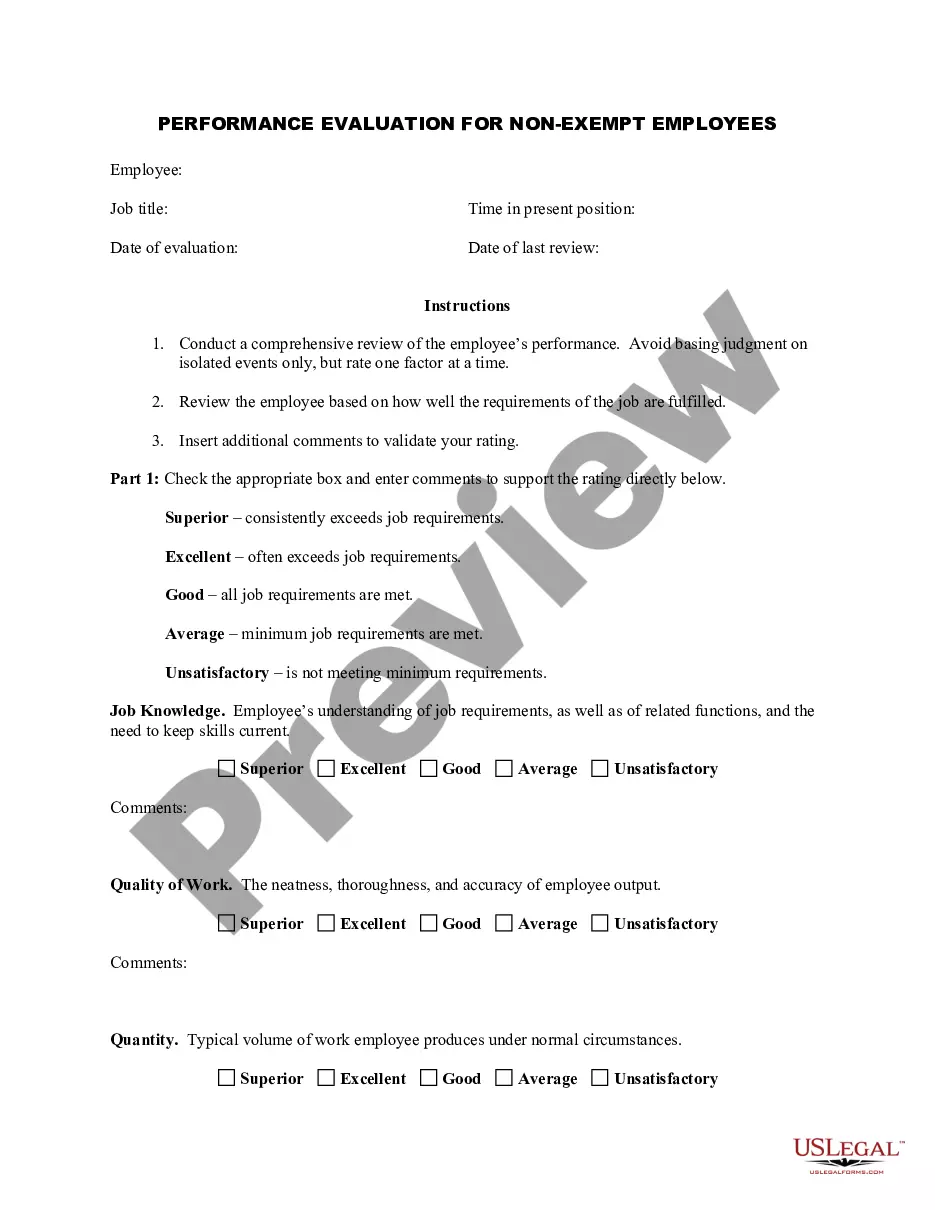
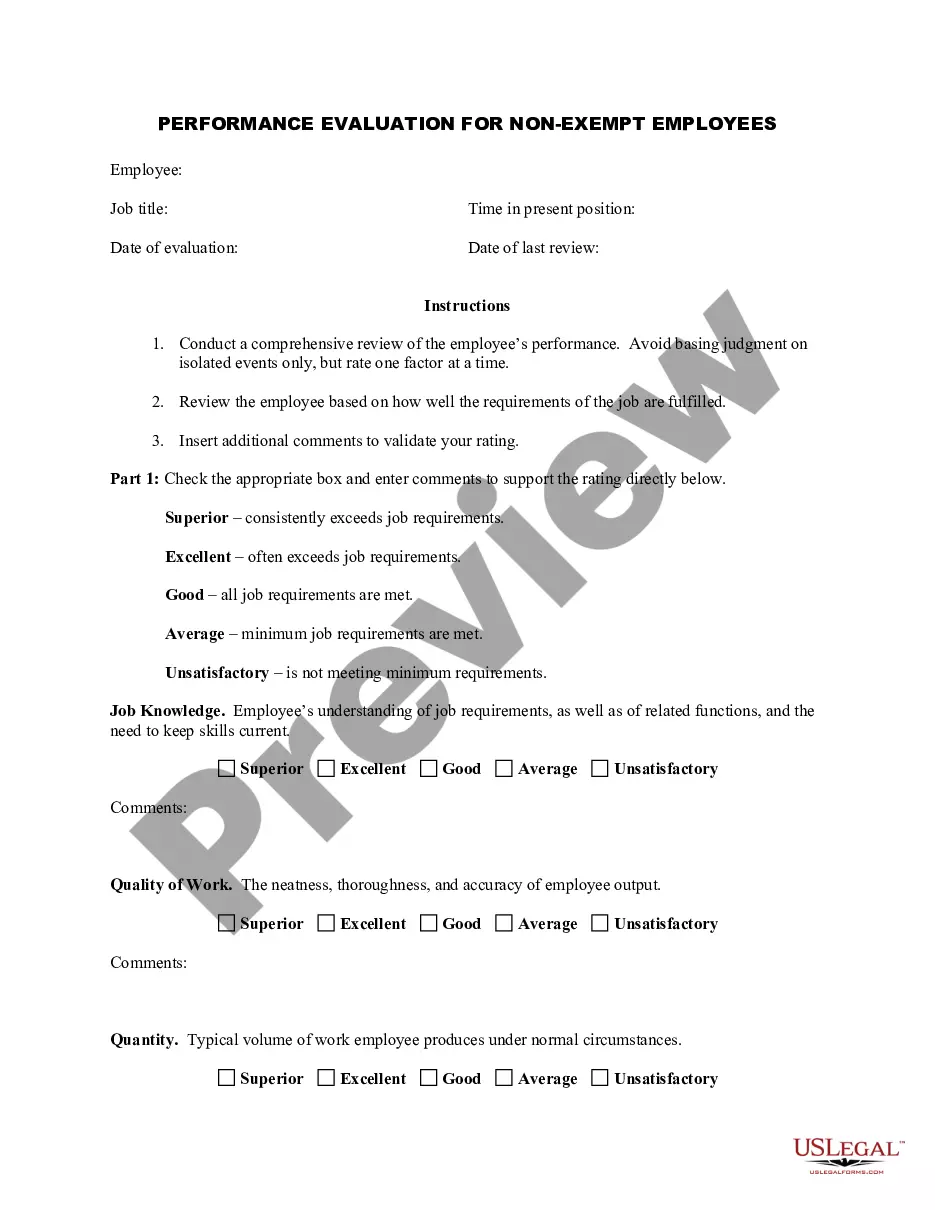
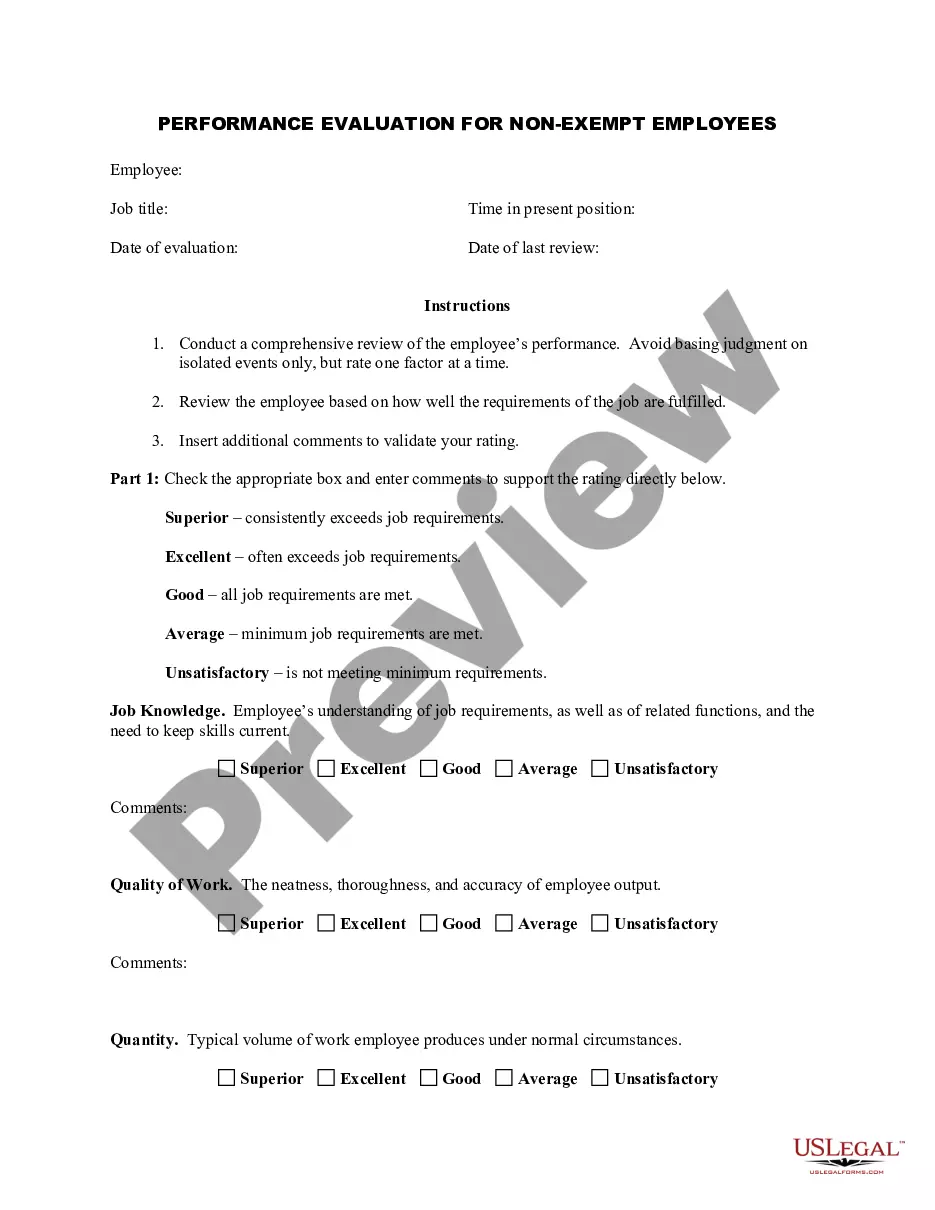
The Employee Evaluation Form for Website Developer is a critical tool used by employers to review the performance of web development employees. This formal assessment allows supervisors to evaluate an employeeâs job performance based on various metrics, enabling structured feedback and constructive dialogue. It differs from informal feedback mechanisms by providing a standardized format that ensures comprehensive evaluation criteria are consistently applied.
Key components of this form
- Employee details: Name, job title, and evaluation dates.
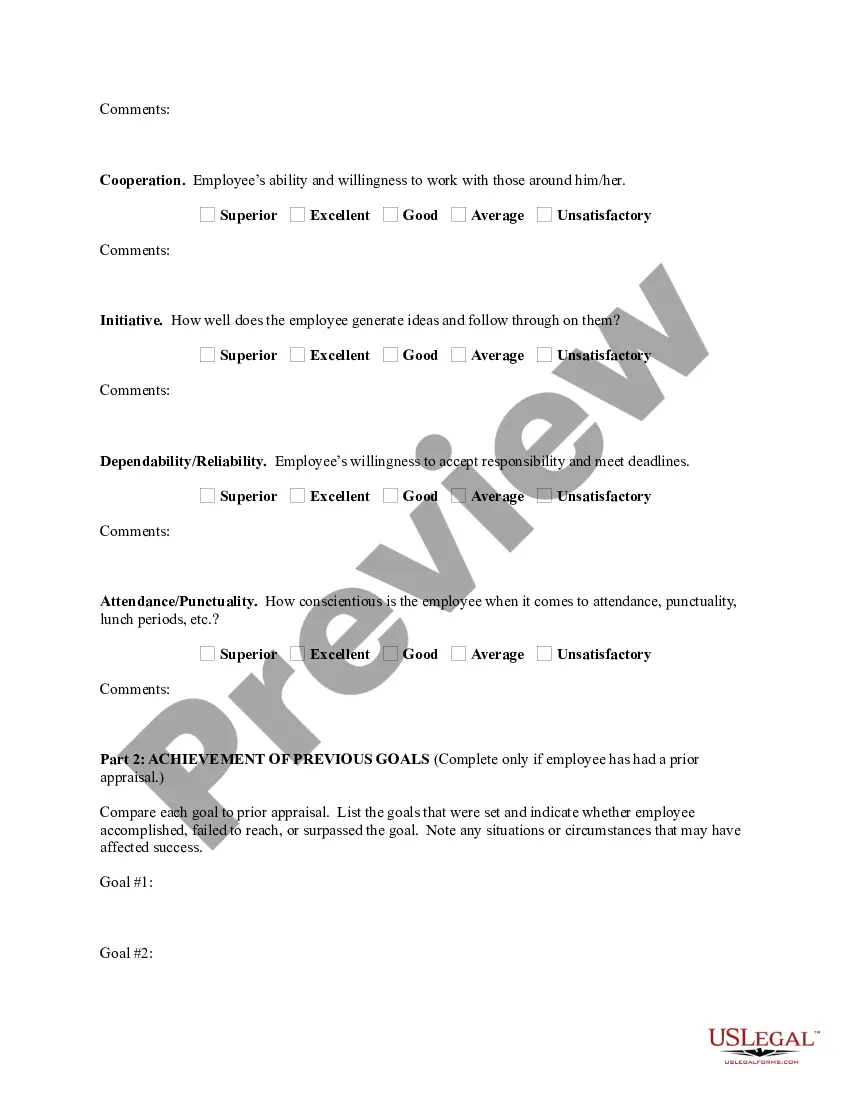
- Performance categories: Sections to assess job knowledge, quality of work, quantity, cooperation, and initiative.
- Rating scale: Options for superior, excellent, good, average, or unsatisfactory, along with space for comments.
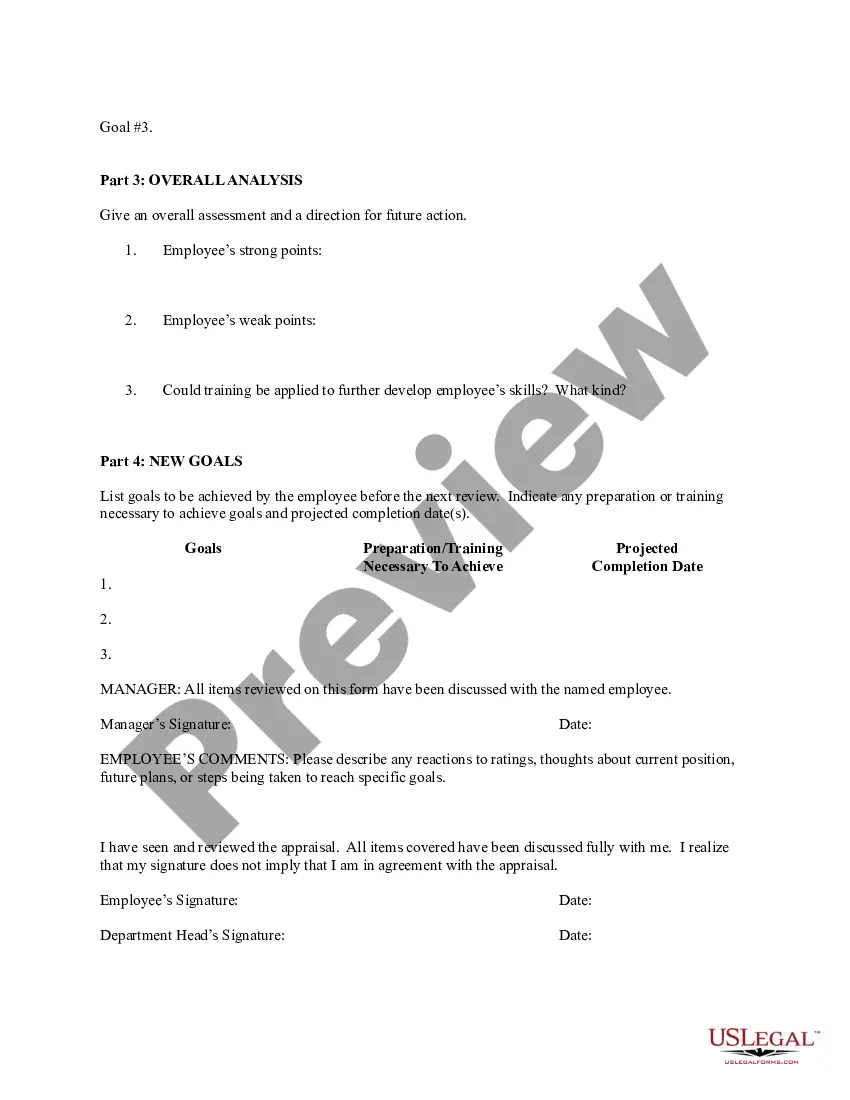
- Goal setting: Sections for reviewing previous goals and setting new objectives.
- Signatures: Area for the employee and manager to sign, confirming the evaluation has been discussed.
Common use cases
This form is typically used during scheduled performance reviews or when significant performance changes occur. Employers may utilize this evaluation tool to ensure employees meet their job performance standards, identify areas needing improvement, and establish goals for professional development.
Who needs this form
- Managers and supervisors responsible for employee evaluations.
- Human resources departments overseeing performance management processes.
- Business owners aiming to formalize feedback and performance assessments for their web development team.
Steps to complete this form
- Identify the employee who is being evaluated and fill in their personal and job details.
- Assess the employeeâs performance in each category using the rating scale provided.
- Provide comments to support each rating, including specific examples as necessary.
- Set new goals for the employee based on the evaluation results.
- Ensure both the employee and the manager sign the document after discussing the assessment.
Notarization guidance
This form usually doesn’t need to be notarized. However, local laws or specific transactions may require it. Our online notarization service, powered by Notarize, lets you complete it remotely through a secure video session, available 24/7.
Get your form ready online
Our built-in tools help you complete, sign, share, and store your documents in one place.
Make edits, fill in missing information, and update formatting in US Legal Forms—just like you would in MS Word.
Download a copy, print it, send it by email, or mail it via USPS—whatever works best for your next step.
Sign and collect signatures with our SignNow integration. Send to multiple recipients, set reminders, and more. Go Premium to unlock E-Sign.
If this form requires notarization, complete it online through a secure video call—no need to meet a notary in person or wait for an appointment.
We protect your documents and personal data by following strict security and privacy standards.

Make edits, fill in missing information, and update formatting in US Legal Forms—just like you would in MS Word.

Download a copy, print it, send it by email, or mail it via USPS—whatever works best for your next step.

Sign and collect signatures with our SignNow integration. Send to multiple recipients, set reminders, and more. Go Premium to unlock E-Sign.

If this form requires notarization, complete it online through a secure video call—no need to meet a notary in person or wait for an appointment.

We protect your documents and personal data by following strict security and privacy standards.
Common mistakes
- Failing to provide specific examples for ratings, which can weaken feedback validity.
- Not discussing the evaluation with the employee before submission.
- Leaving sections incomplete, which can lead to misunderstandings about expectations.
Advantages of online completion
- Convenient access to an organized structure for performance evaluations, ensuring all areas are covered.
- Allows for easy documentation and tracking of employee performance over time.
- Encourages clarity and direct communication between managers and employees.
Looking for another form?

Form popularity
FAQ
CURRENCY: the timeliness of the information. RELEVANCE: the importance of the information for your needs. AUTHORITY: the source of the information. ACCURACY: the reliability, truthfulness, and correctness of the content. PURPOSE: the reason the information exists.
Look for Established Institutions. Look for Sites with Expertise. Steer Clear of Commercial Sites. Beware of Bias. Check the Date. Consider the Site's Look. Avoid Anonymous Authors. Check the Links.
Communication. Collaboration and teamwork. Problem-solving. Quality and accuracy of work. Attendance, punctuality and reliability. The ability to accomplish goals and meet deadlines.
1) Open the site. The first thing students need to do is open the site. 2) Skim read. 3) Look for the answer to your question. 4) Consider the credibility of the author or website. 5) Consider the purpose of the site. 6) Look for the date. If the site is no good, bounce back2026 Crosscheck.
Employee and reviewer information. The form must have basic information about both parties involved. Review period. An easy-to-understand rating system. Evaluation points. Goals. Extra space for comments. Signatures. Scorecard.
1 Know how the self-evaluation is going to be used. 2 Write out a list of your accomplishments. 3 Gather analytics if you can. 4 Write out a list of your struggles. 5 Narrow your accomplishments list down. 6 Don't forget to align your review with your manager's or team's goals.
Make it easy to use. Ensure that the information your evaluation form seeks is clear and concise. Determine the focus of the form. There needs to be a clear purpose. Establish a clearly defined rating scale.
Authority: Who created the site? What is their authority? Objectivity: Is the purpose and intention of the site clear, including any bias or particular viewpoint? Accuracy: Is the information presented accurate? Currency: Is the information current? Usability: Is the site well-designed and stable?
Develop an evaluation form. Identify performance measures. Set guidelines for feedback. Create disciplinary and termination procedures. Set an evaluation schedule.