Model Lease for Subsidized Programs
What this document covers
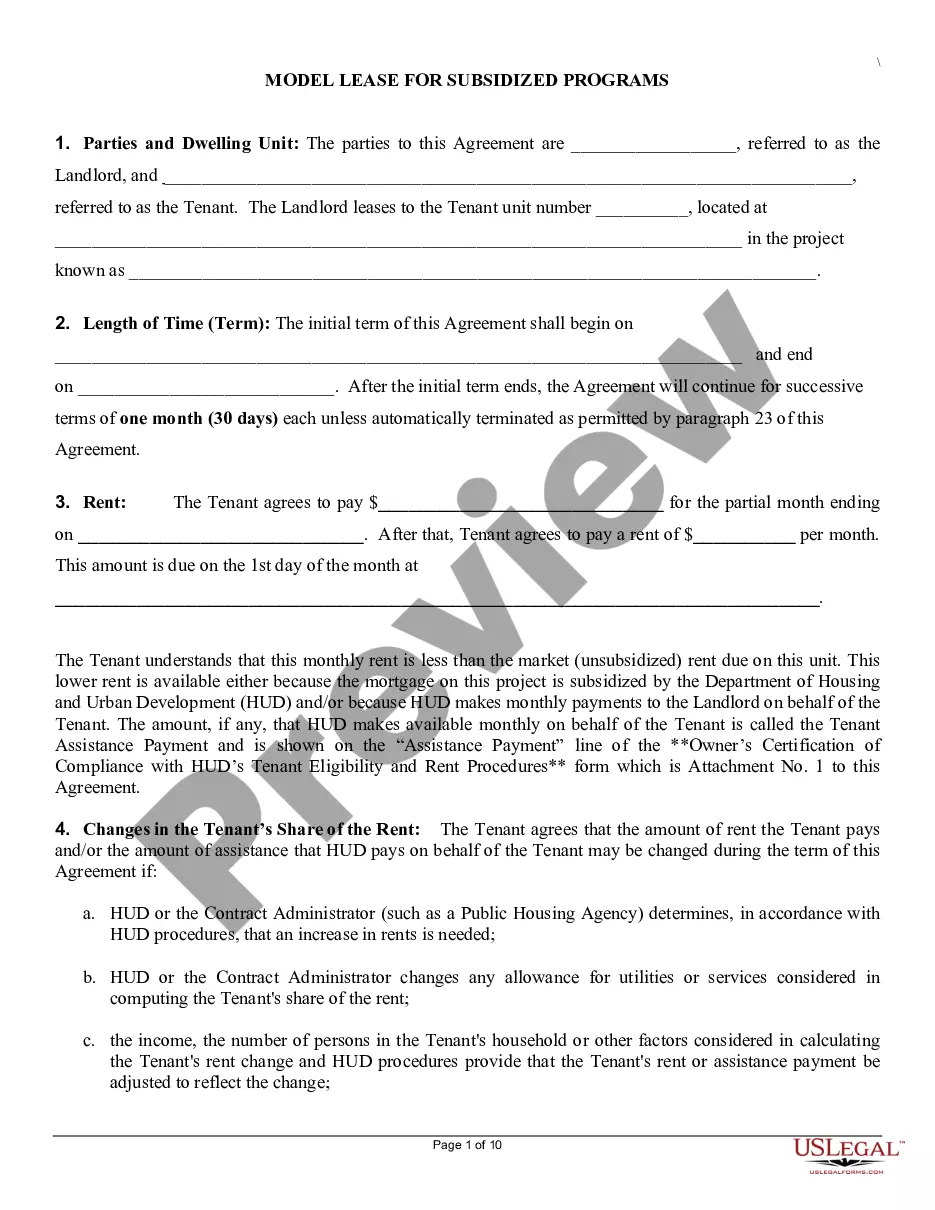
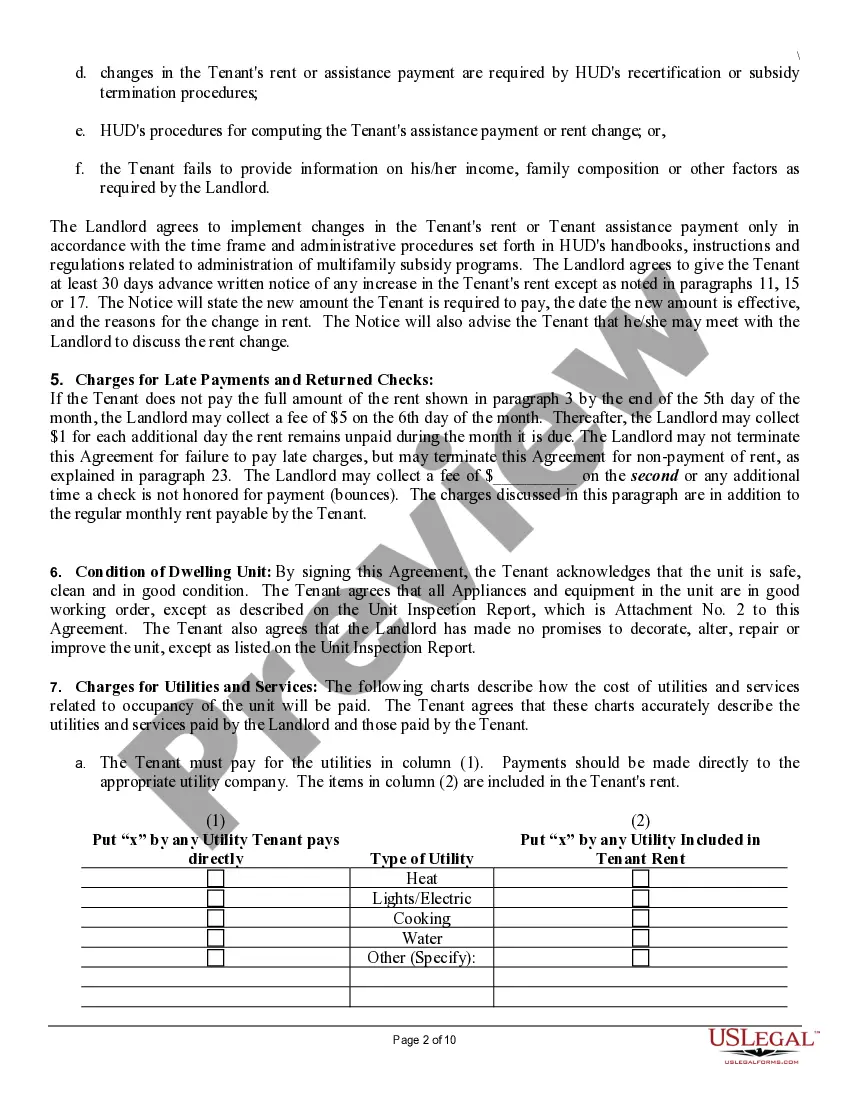
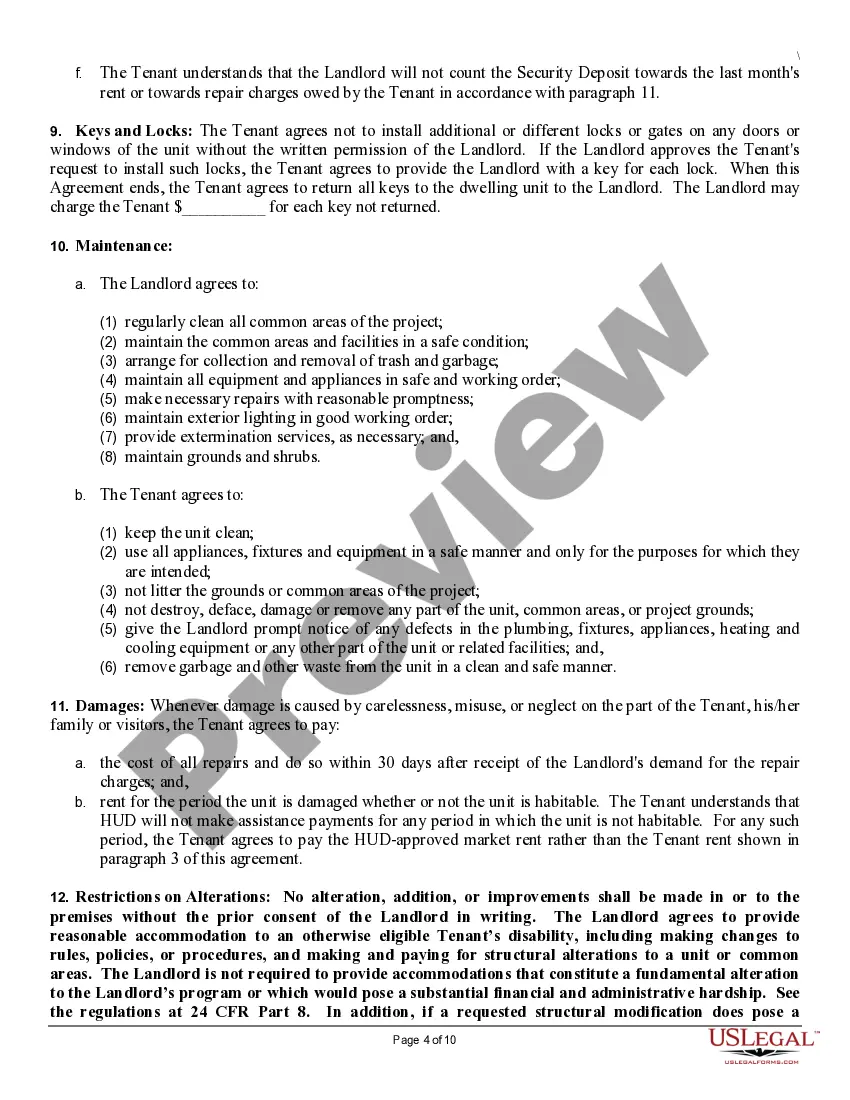
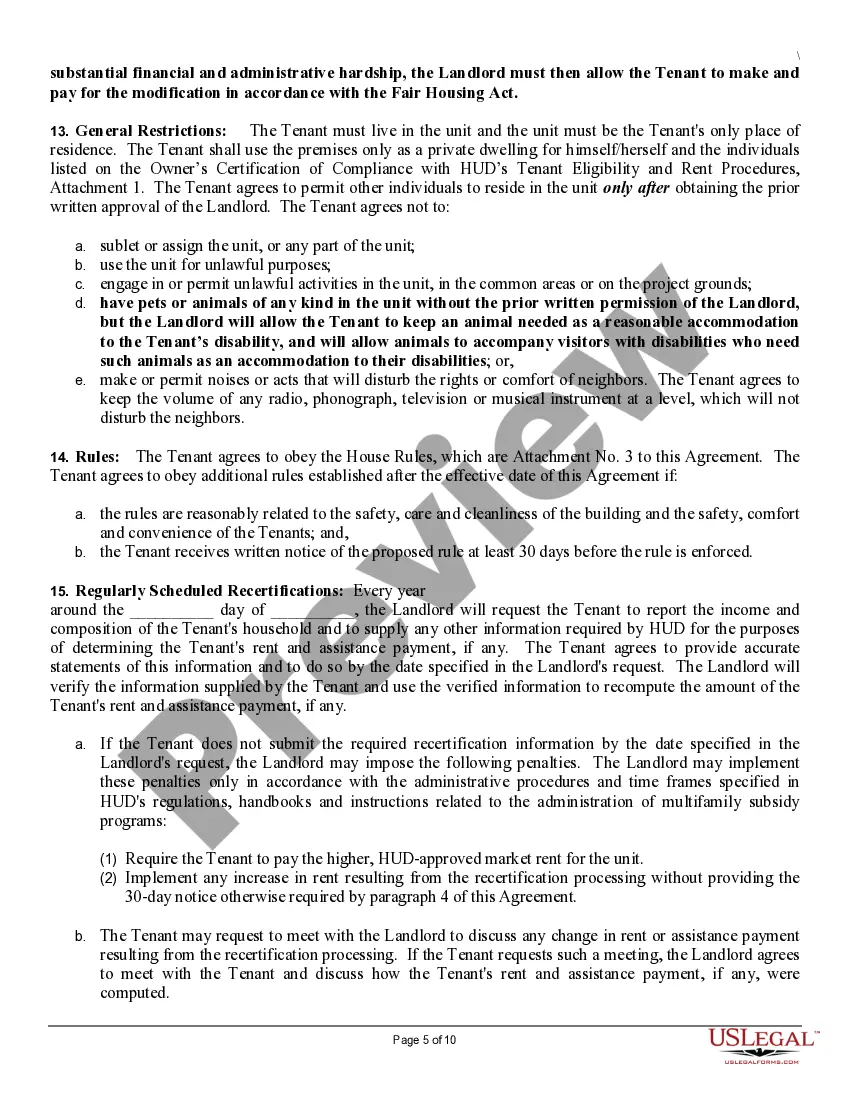
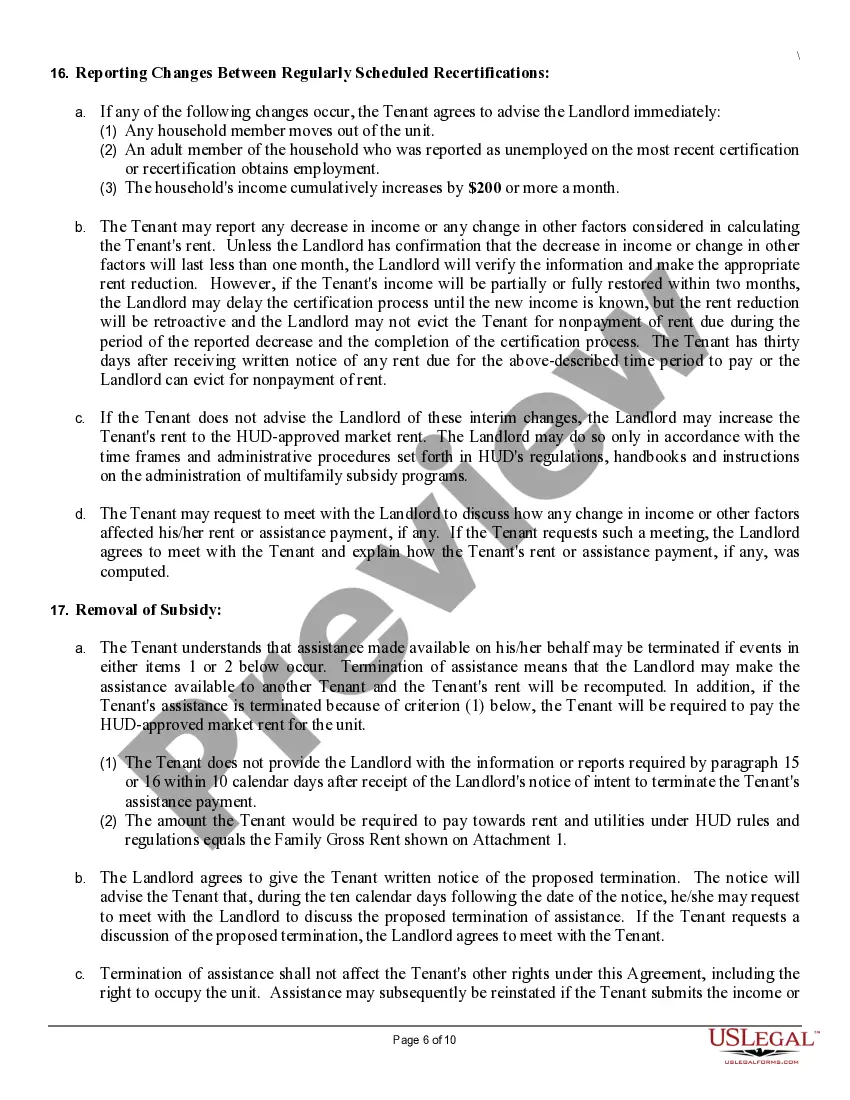
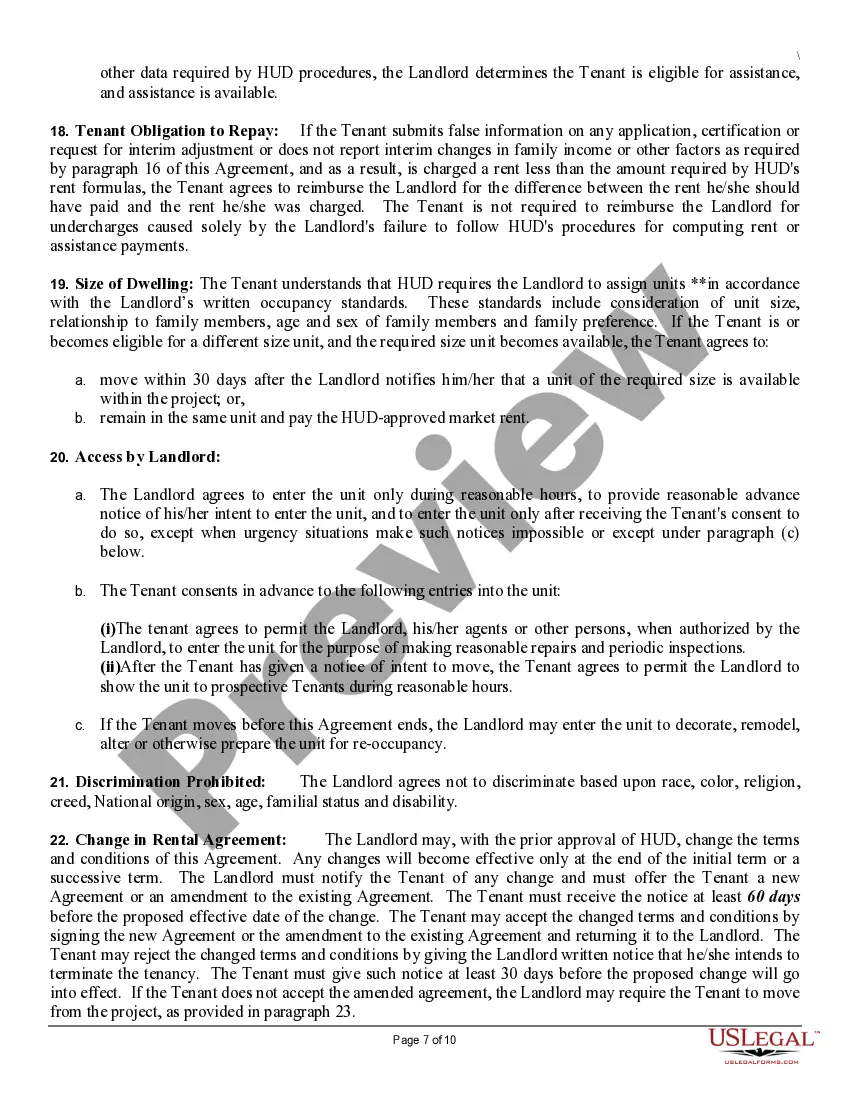
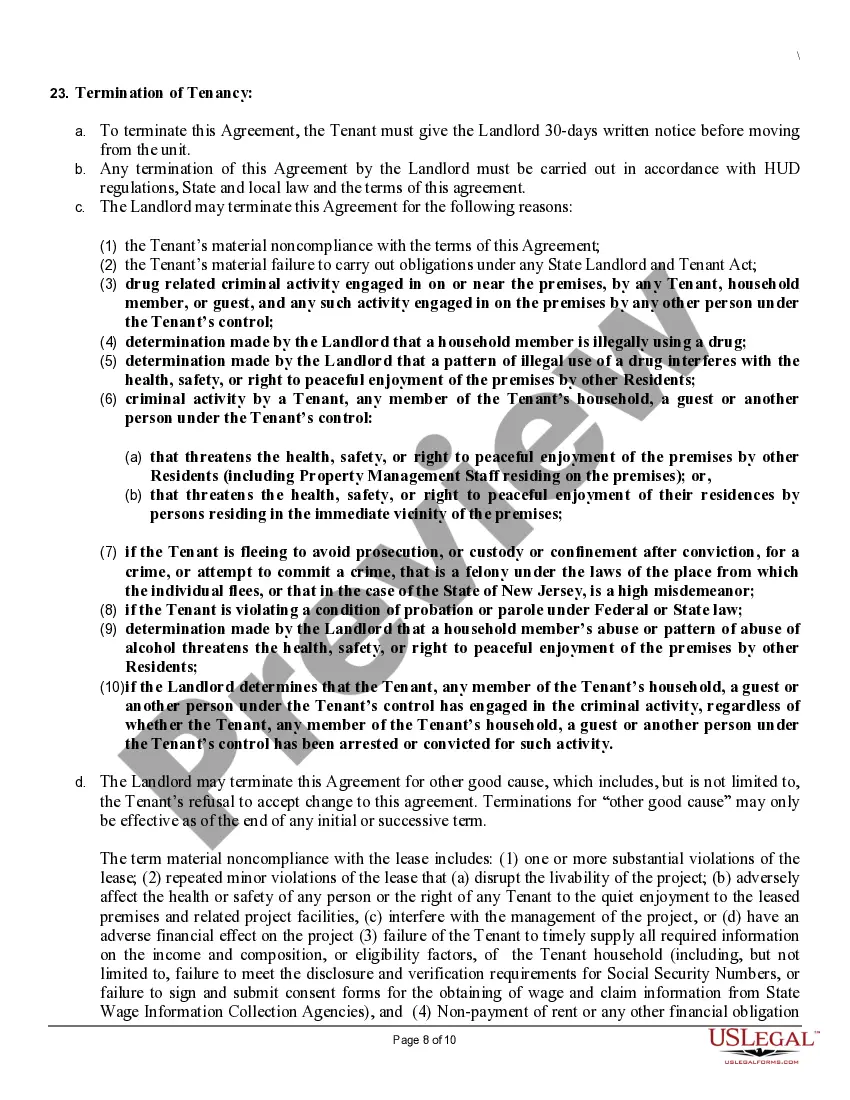
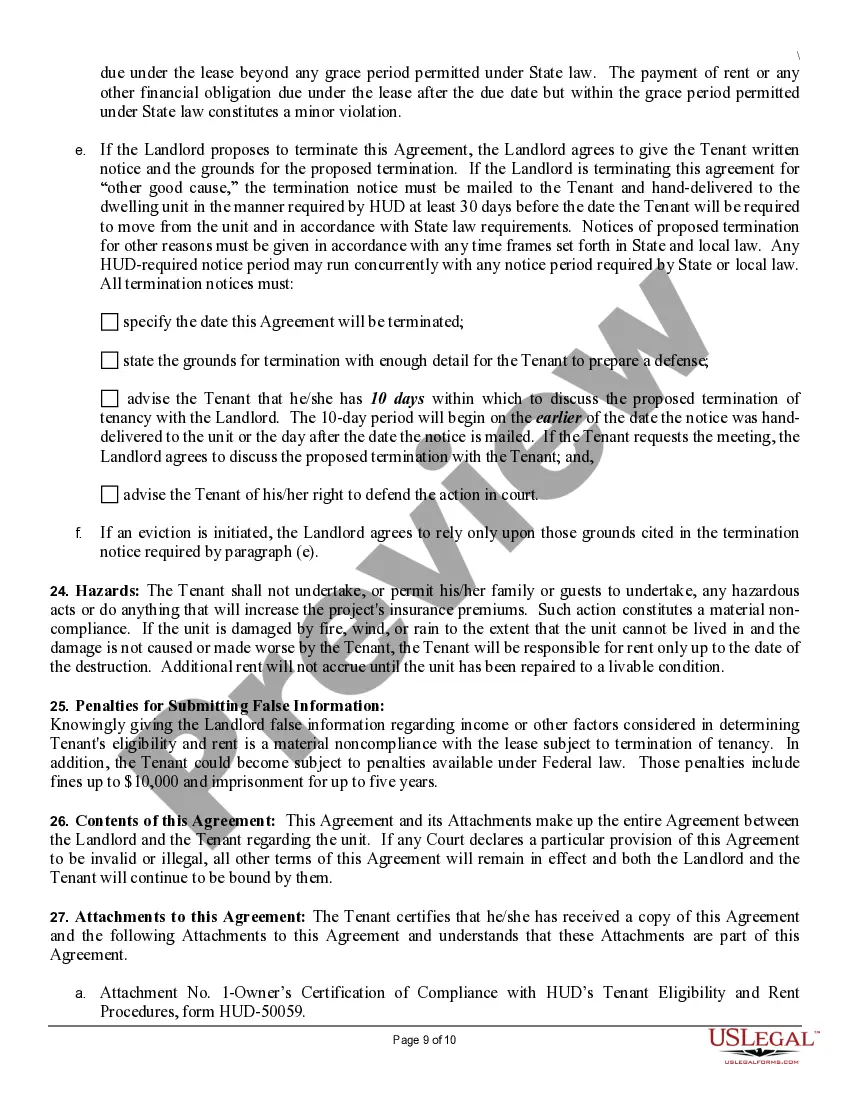
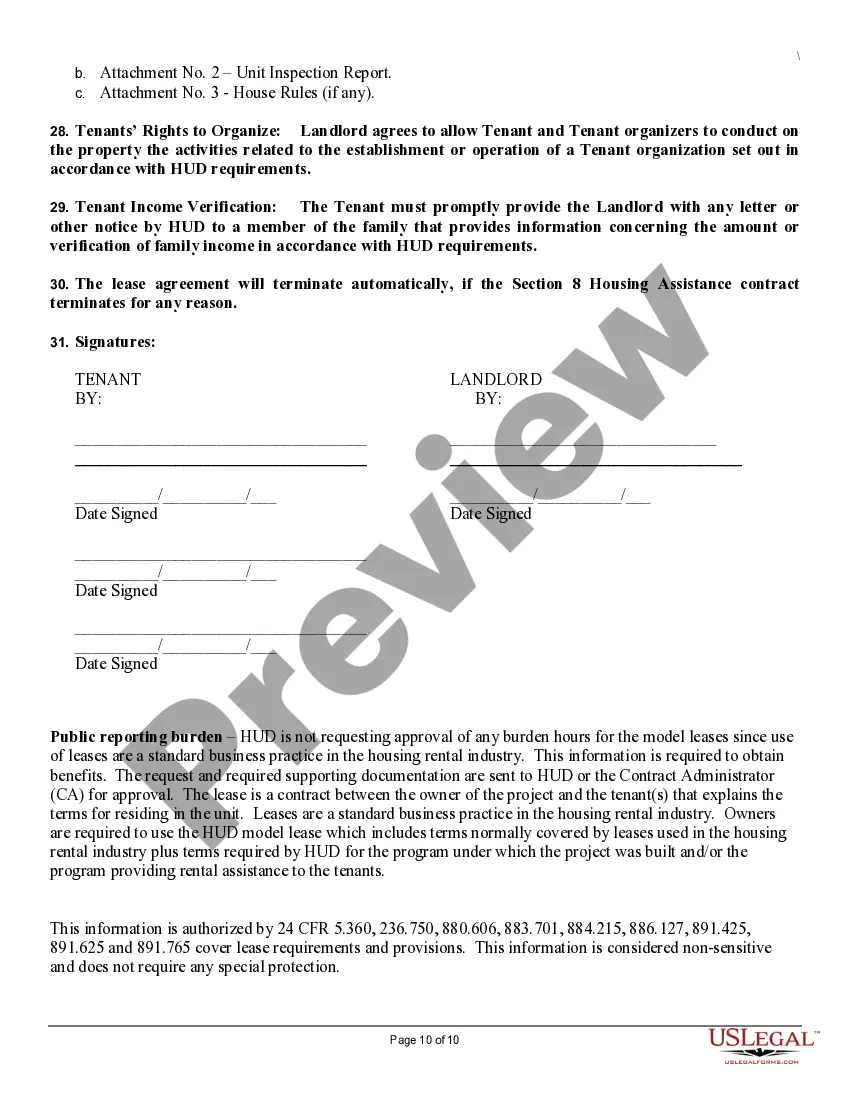
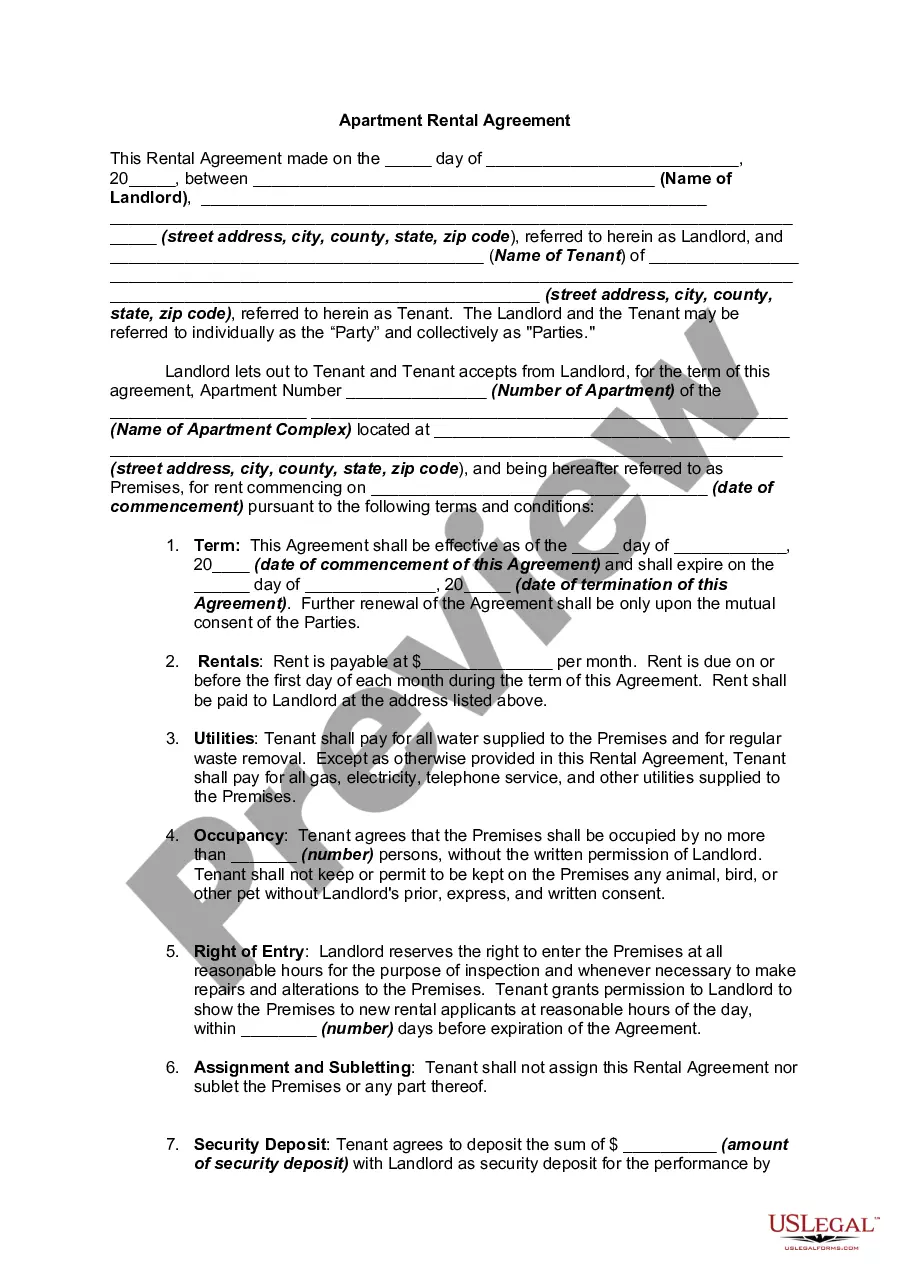
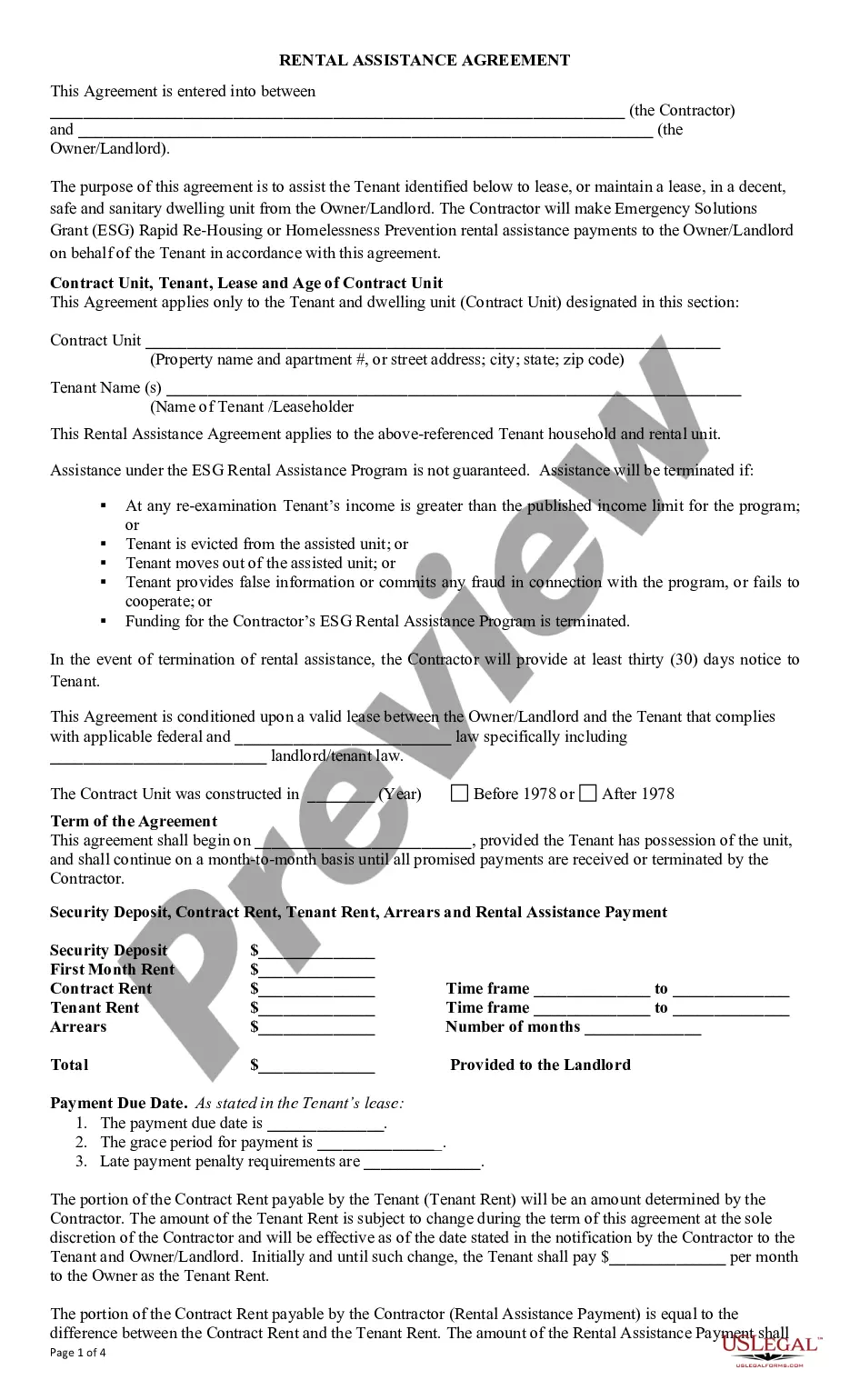
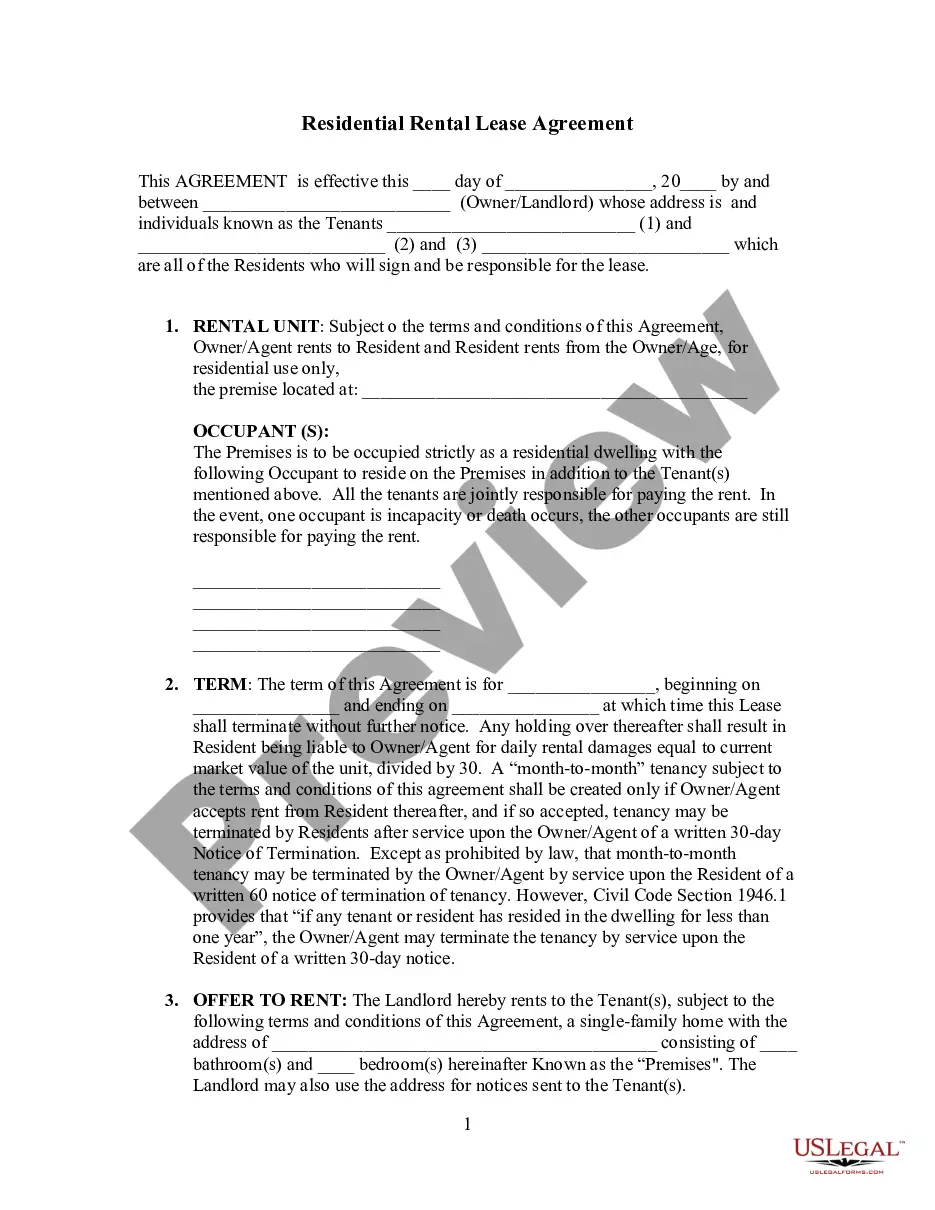
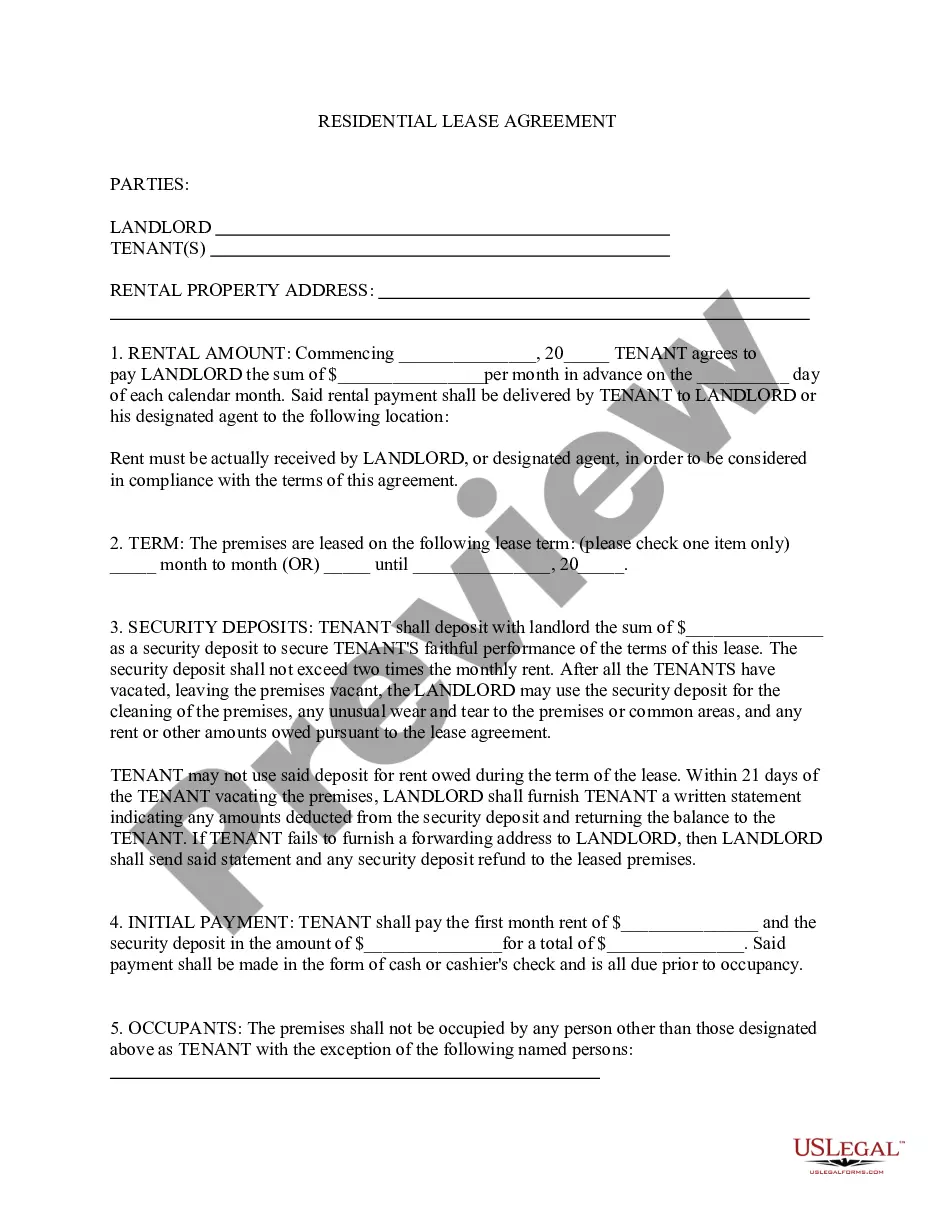
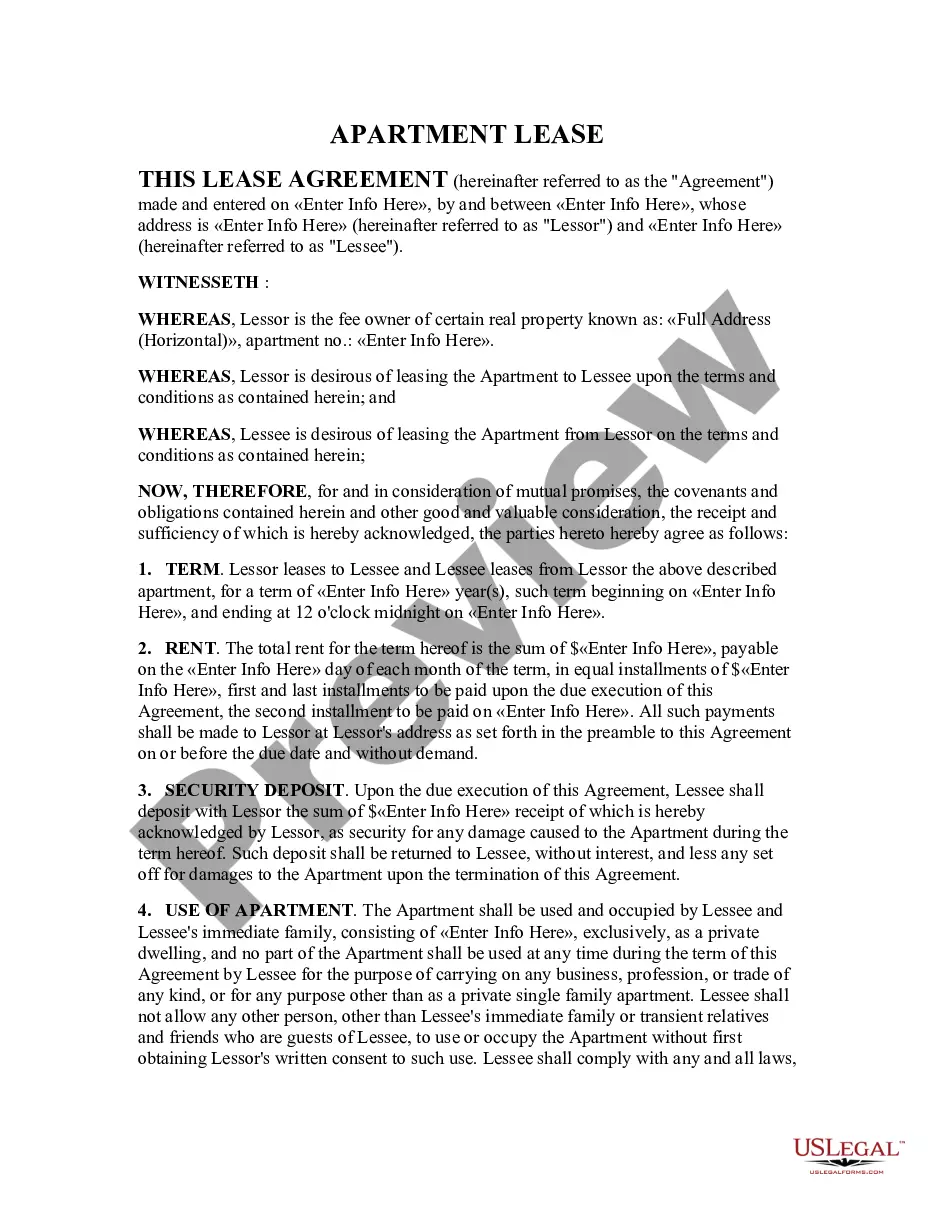
The Model Lease for Subsidized Programs is a legal document that outlines the agreement between a landlord and a tenant for rental assistance housing. This form details the terms of tenancy, including rental payments, responsibilities of both parties, and conditions specific to subsidized housing programs. Unlike standard rental agreements, this lease incorporates provisions mandated by the Department of Housing and Urban Development (HUD) to ensure compliance with subsidy guidelines.
Key parts of this document
- Parties and Dwelling Unit: Identifies the landlord and tenant, and the specific rental unit
- Length of Time (Term): Specifies the duration of the lease and its renewal terms
- Rent: Details the rent amount, payment due dates, and any subsidy information
- Changes in Tenant's Share of Rent: Explains conditions under which rent may change
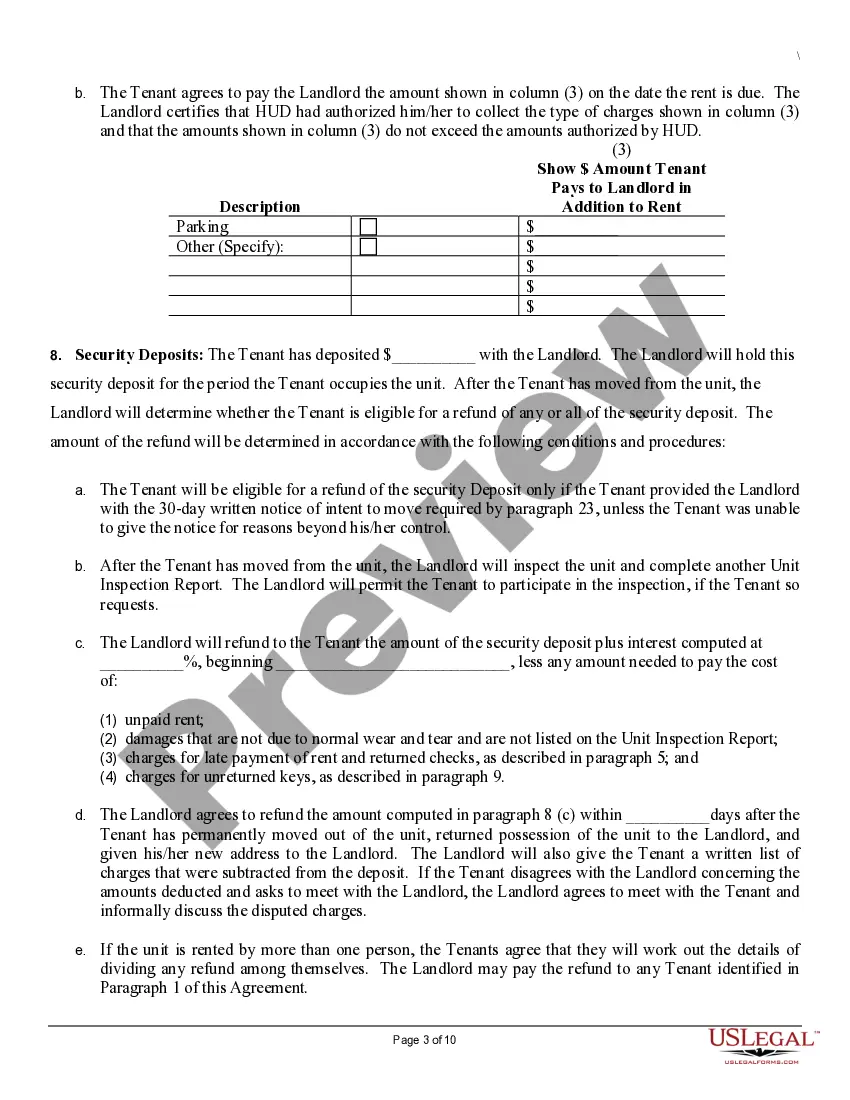
- Security Deposits: Outlines the rules for deposit amounts, conditions for refunds, and deductions
- Regularly Scheduled Recertifications: Describes annual income reporting requirements for tenants
When to use this form
This form is used when a landlord and tenant agree to rent a unit in a housing program subsidized by HUD. It is essential for situations where rental payments are adjusted based on tenant income and other factors, ensuring both parties are aware of their rights and responsibilities. Use this model lease when establishing a new rental relationship or renewing an existing lease in a federally assisted housing project.
Intended users of this form
- Landlords renting units under HUD-subsidized programs
- Tenants receiving rental assistance and seeking secure housing
- Property managers overseeing government-assisted housing projects
Steps to complete this form
- Identify the parties: Enter the names of the landlord and tenant.
- Specify the property: List the unit number and address of the rental property.
- Enter dates: Fill in the lease start and end dates.
- Detail the rent: Clearly state the rental amount and payment schedule.
- Complete additional clauses: Provide information for any sections related to utilities, security deposits, and changes in the tenant's share of rent.
Does this form need to be notarized?
This form does not typically require notarization unless specified by local law.
Get your form ready online
Our built-in tools help you complete, sign, share, and store your documents in one place.
Make edits, fill in missing information, and update formatting in US Legal Forms—just like you would in MS Word.
Download a copy, print it, send it by email, or mail it via USPS—whatever works best for your next step.
Sign and collect signatures with our SignNow integration. Send to multiple recipients, set reminders, and more. Go Premium to unlock E-Sign.
If this form requires notarization, complete it online through a secure video call—no need to meet a notary in person or wait for an appointment.
We protect your documents and personal data by following strict security and privacy standards.

Make edits, fill in missing information, and update formatting in US Legal Forms—just like you would in MS Word.

Download a copy, print it, send it by email, or mail it via USPS—whatever works best for your next step.

Sign and collect signatures with our SignNow integration. Send to multiple recipients, set reminders, and more. Go Premium to unlock E-Sign.

If this form requires notarization, complete it online through a secure video call—no need to meet a notary in person or wait for an appointment.

We protect your documents and personal data by following strict security and privacy standards.
Common mistakes to avoid
- Failing to fill in key details such as names and property address.
- Not providing accurate rent amounts or subsidy information.
- Forgetting to specify the terms regarding security deposits and conditions for refunds.
Why use this form online
- Convenient access for immediate download and use.
- Editability allows customization to specific tenant and property details.
- Reliability in using a legally recognized document developed by licensed attorneys.
Looking for another form?

Form popularity
FAQ
A person may be evicted from a property if s/he is considered to be an unlawful occupier. An unlawful occupier is a person who: stays on a property without the consent of the landlord; stays on a property without having any right in law to do so; or.
You cannot decide unilaterally (on your own) ? and without the courts ? to withhold rent or take a portion of the rent for repairs, no matter how justified you feel. If you do not have an order from the courts, and it is not in your rental contract, it is not legal.
Both the landlord and tenant must give at least one month's notice to the other party when wanting to cancel the lease. (See Rental Housing Act 1999.) The Consumer Protection Act (CPA) gives additional rights to the tenant by allowing them to cancel the lease provided 20 business days' notice is given.
HB 4350.3 Rev .1. HUD-50059. Owner's Certification of Compliance. with HUD's Tenant Eligibility. and Rent Procedures.
Yes, a properly drafted lease agreement will have a clause explicitly dealing with the termination of the agreement if the tenant has breached the lease agreement. Usually, the party in breach will be given notice of the breach and a certain number of days to rectify the breach.
First and foremost, tenants in South Africa have the right to live in a property that is safe and in good condition. This means that the landlord is responsible for making sure the property is free from any hazards or defects that could affect the tenant's health or safety.
They must pay the rent and services on time. They must use rental property only for the purposes agreed in the lease agreement. If they say that they are only going to live there, then they can't suddenly start running a business without agreement from the landlord.
Ing to South Africa's Rental Housing Act, a landlord's rights include: ?Prompt and regular payment of a rental or any charges that may be payable in terms of a lease. Recover unpaid rental or any other amount that is due and payable after obtaining a ruling by the Tribunal or an order of a court of law.