Sample Organizational Minutes for an Indiana Professional Corporation
What this document covers
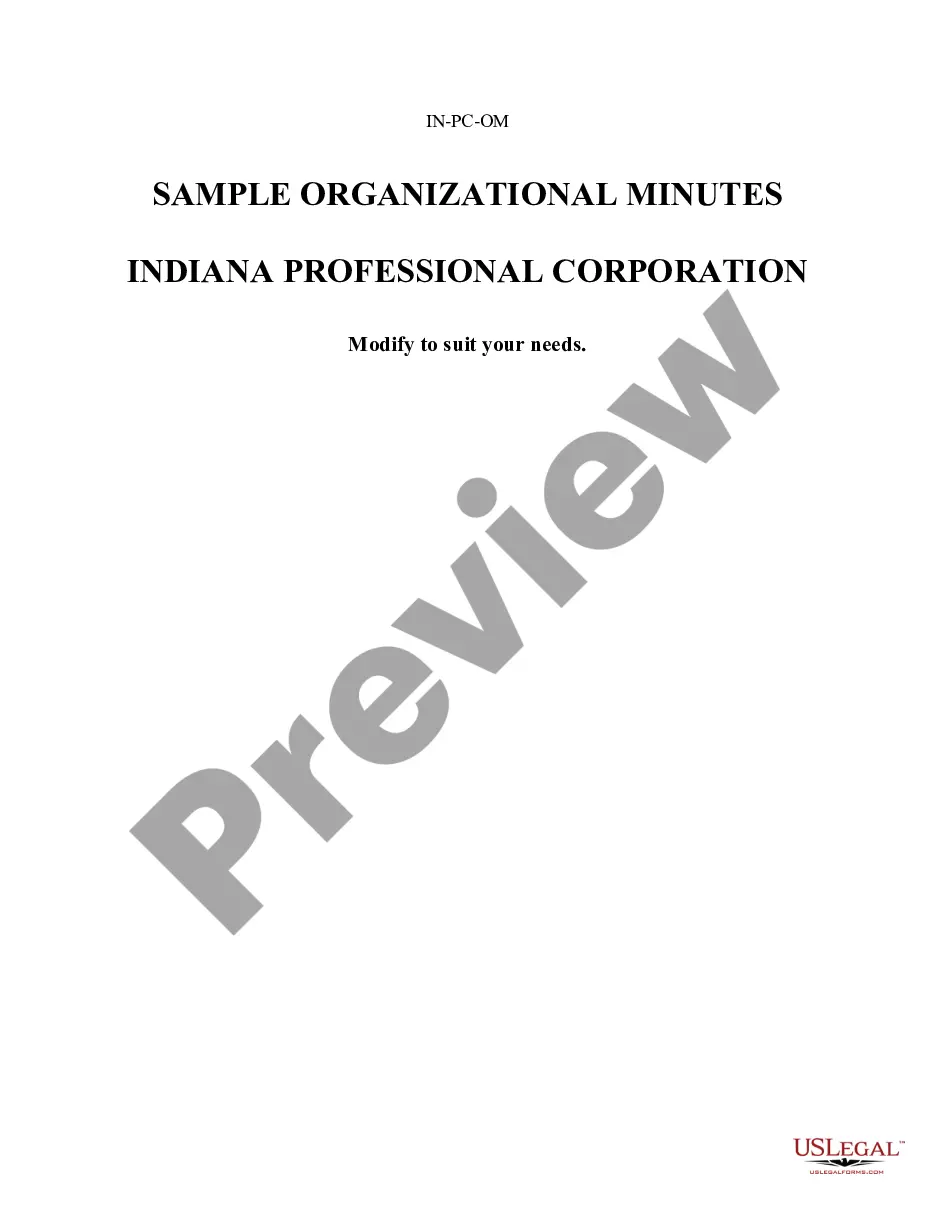
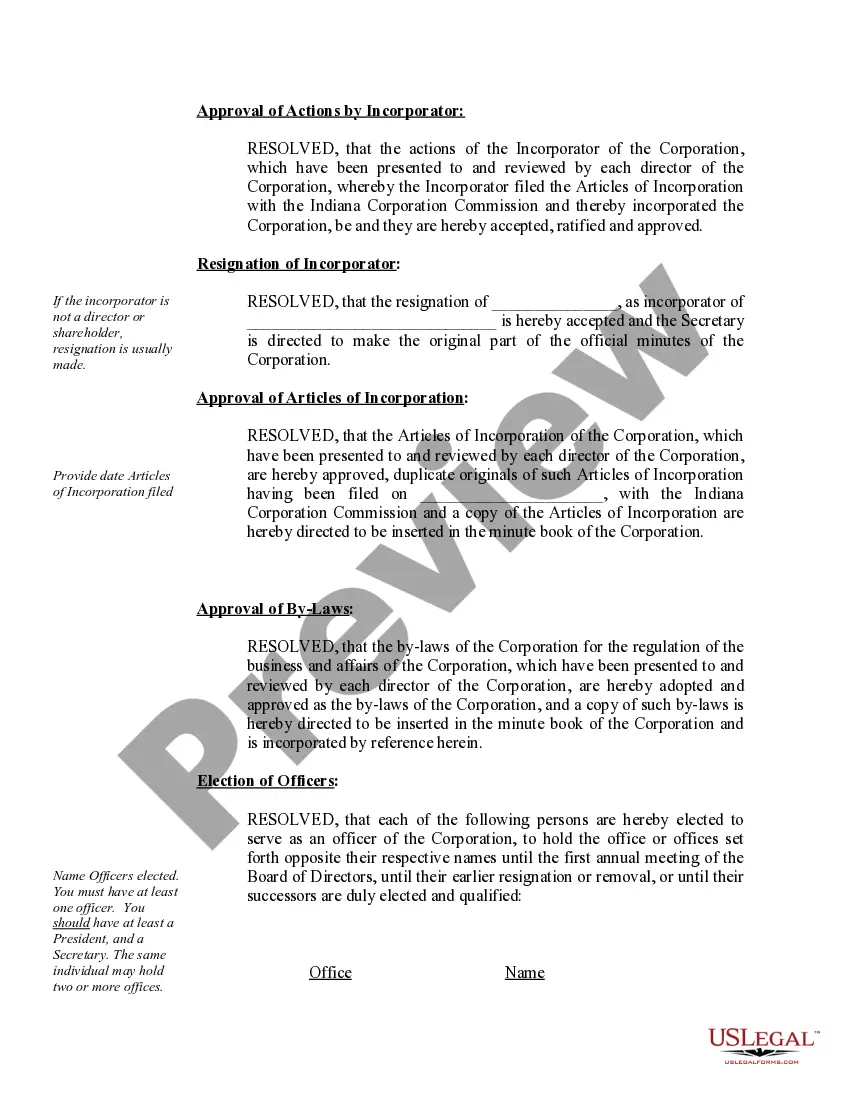
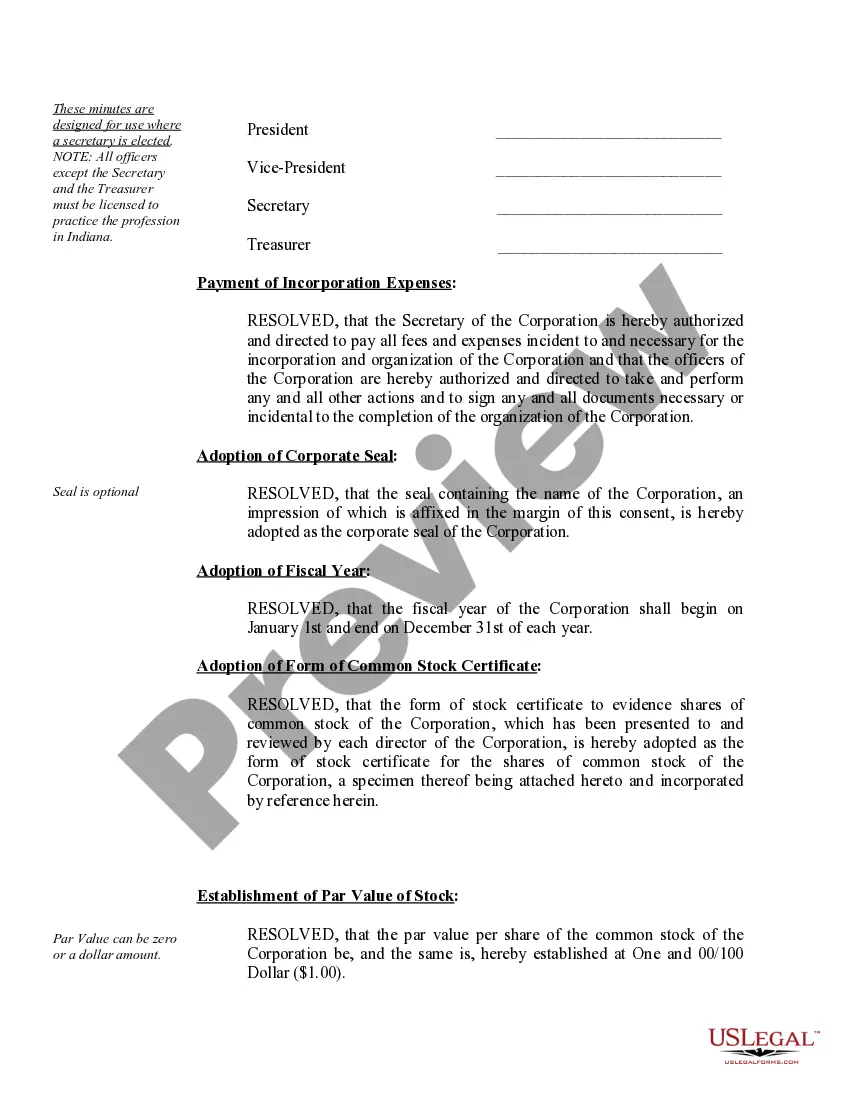
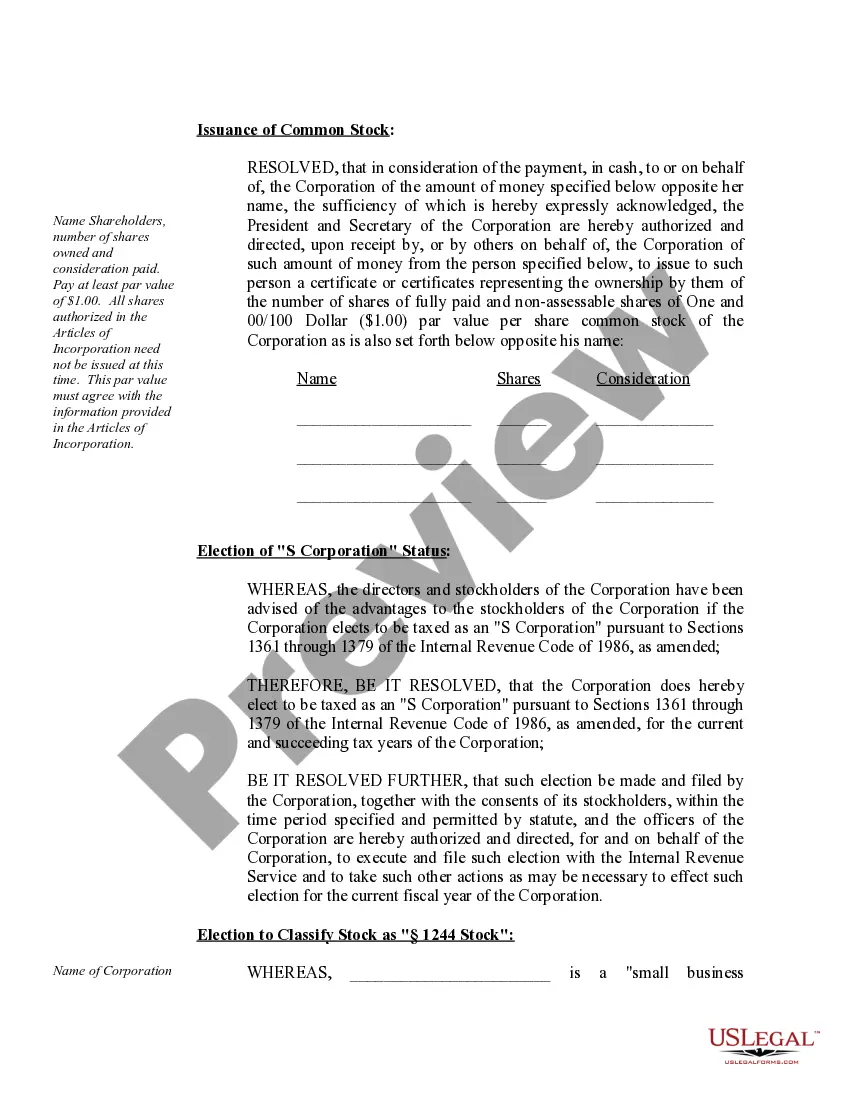
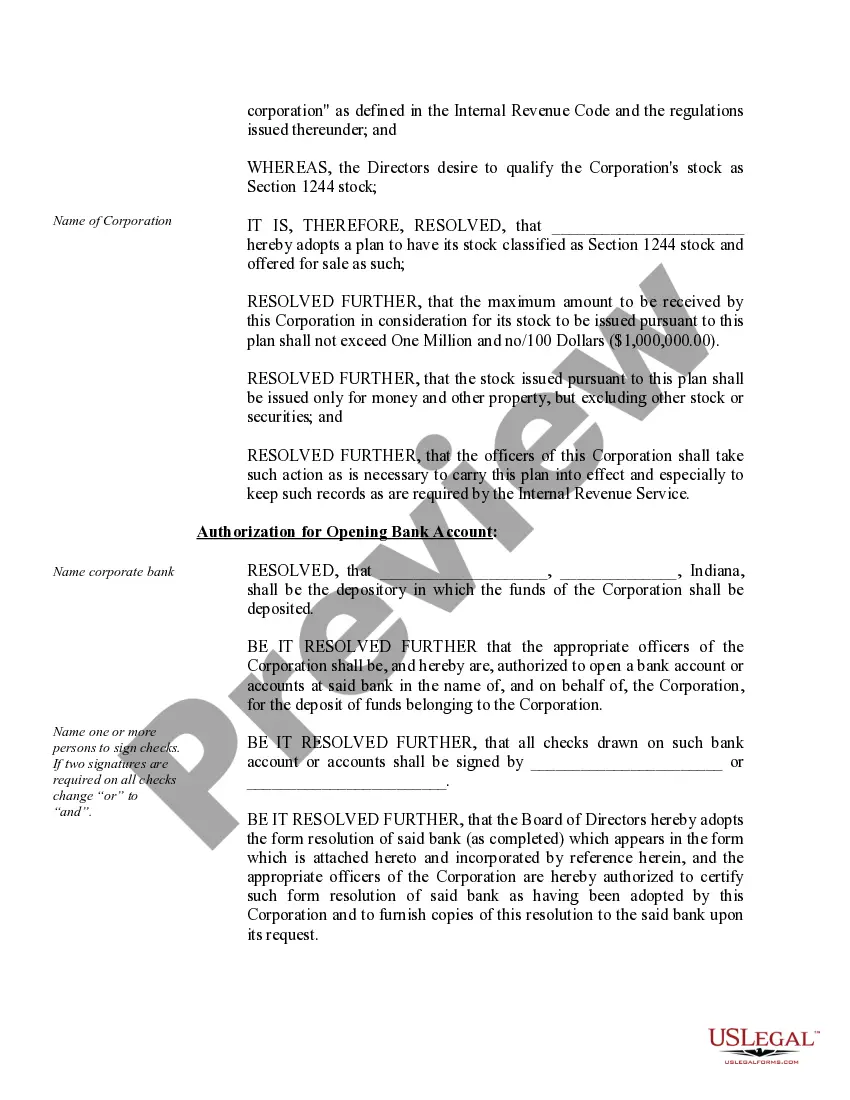
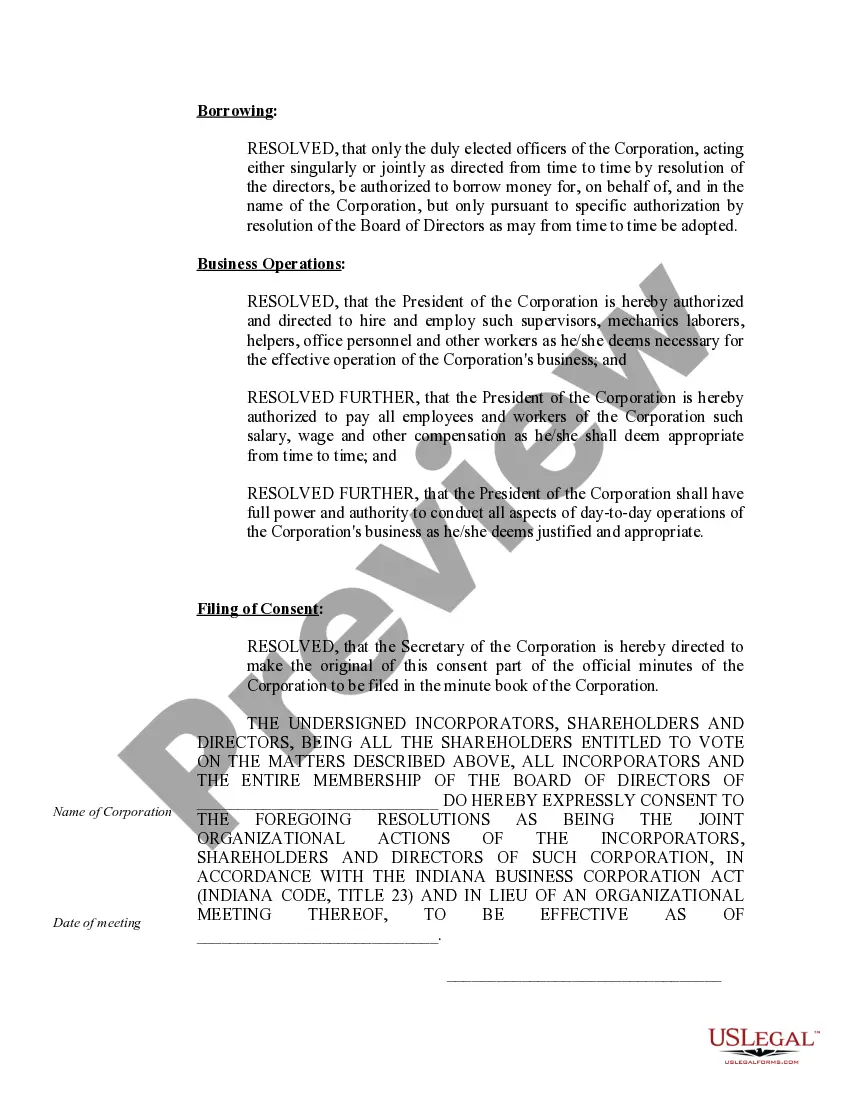
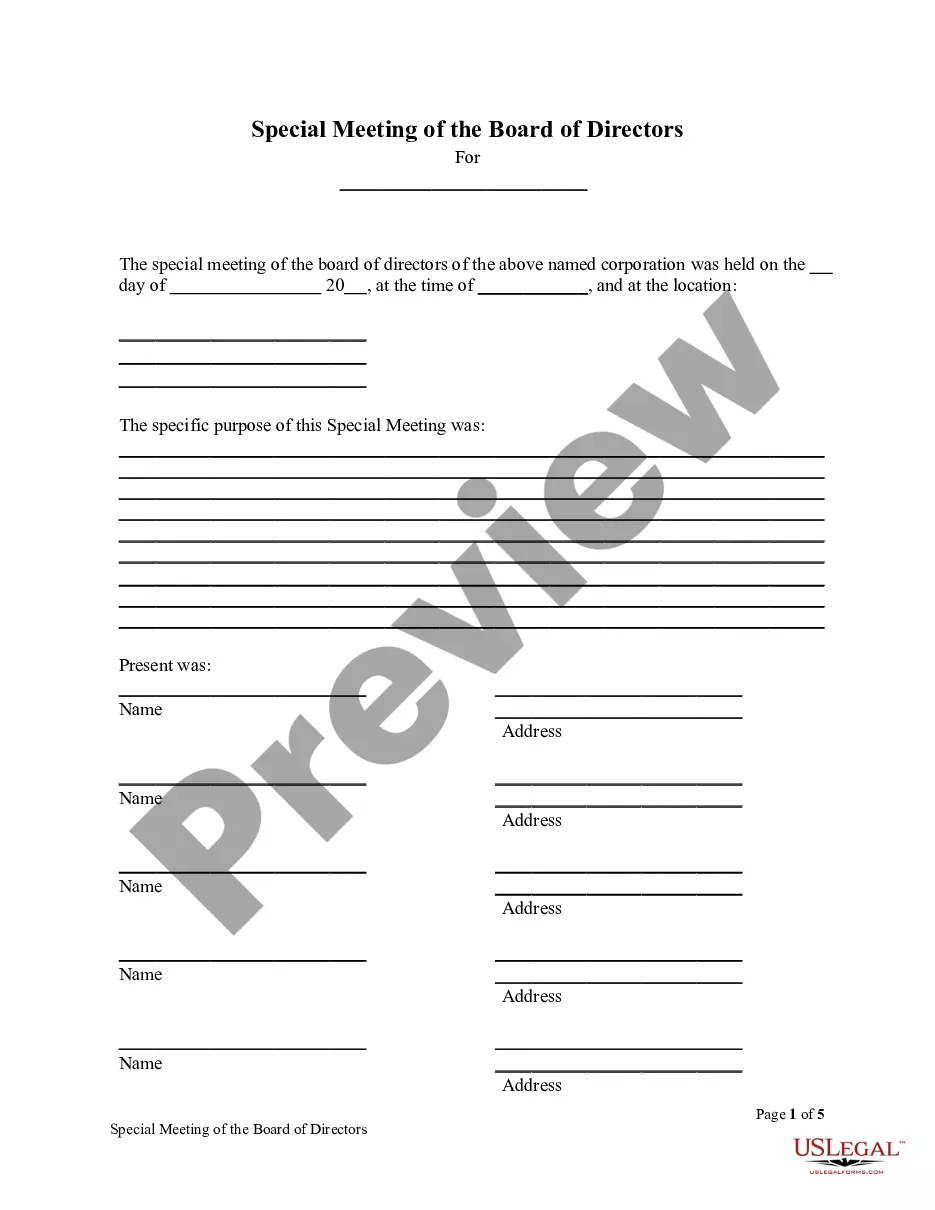
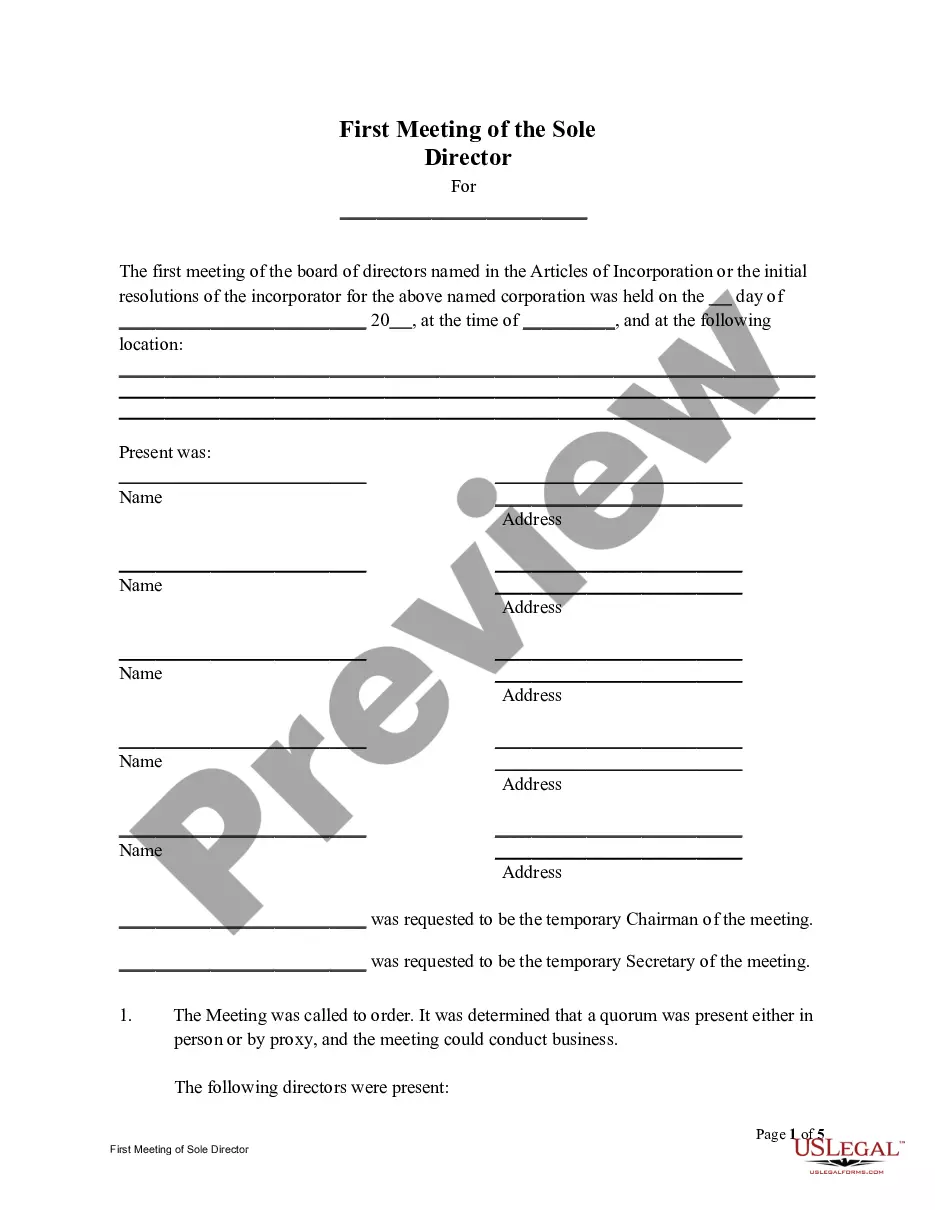
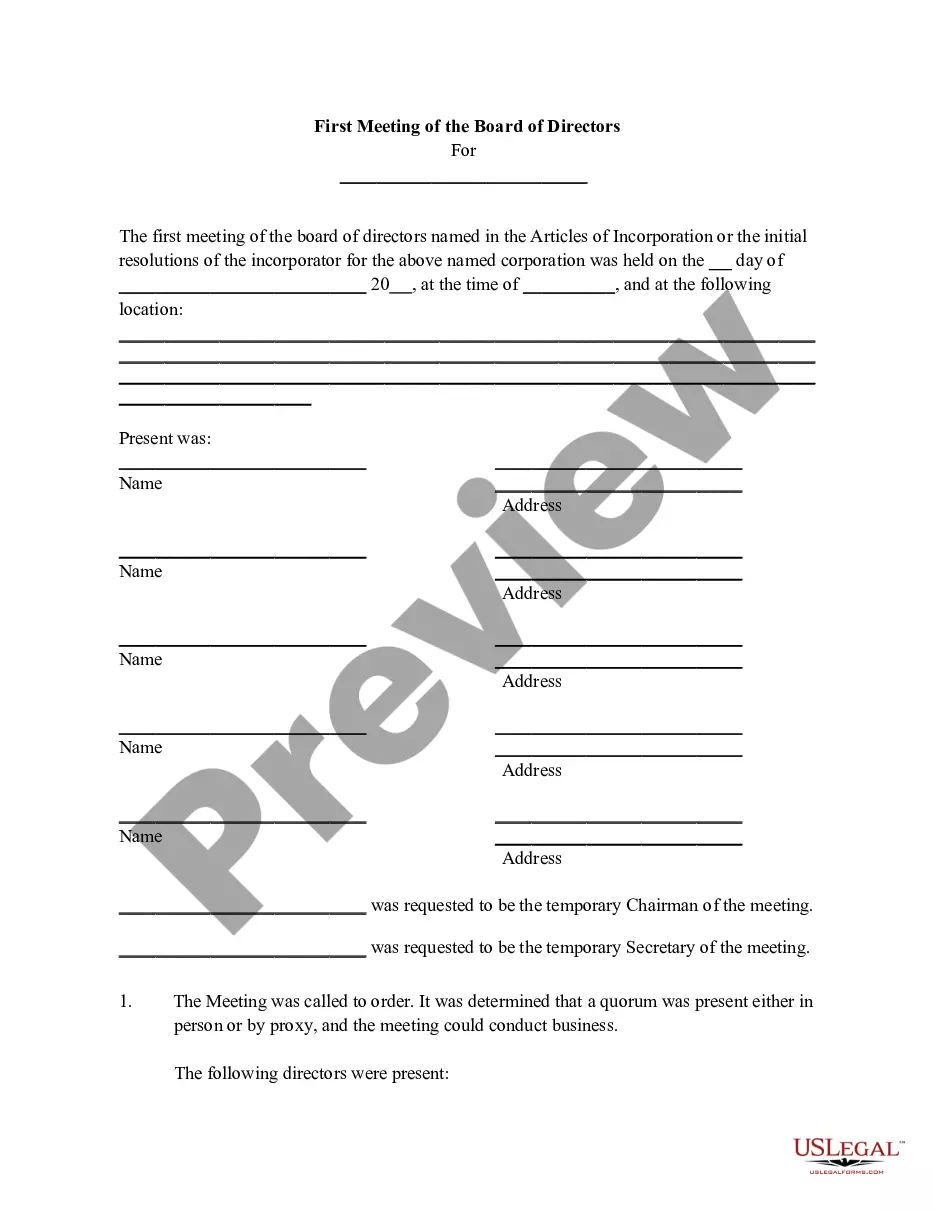
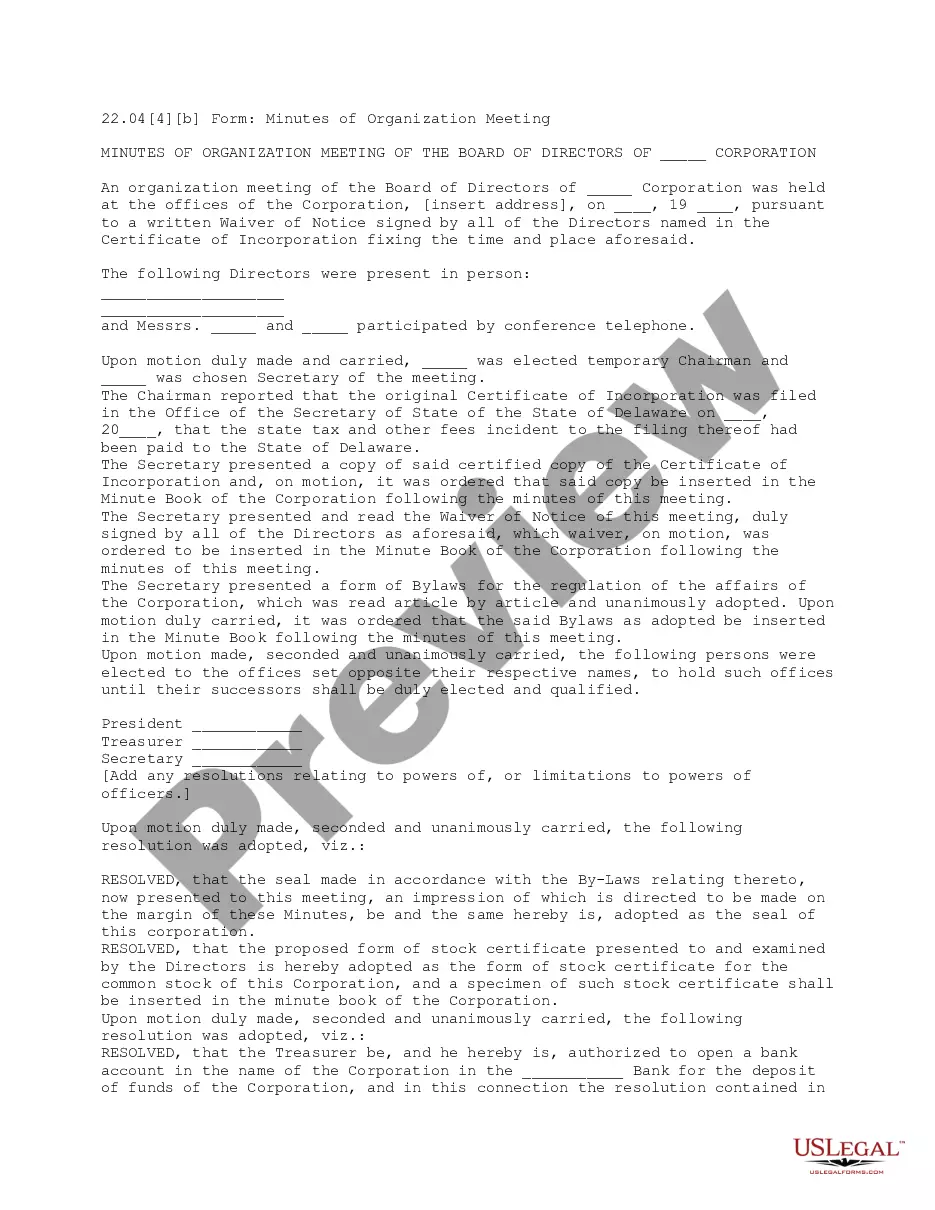
The Sample Organizational Minutes for an Indiana Professional Corporation is a critical legal document that records the initial actions taken by the incorporators, shareholders, and directors in the formation of a professional corporation. This form is essential for establishing the structure, management, and operations of your corporation, ensuring compliance with Indiana laws. It differs from other forms by specifically documenting organizational meetings and decisions made during the formation process, tailored to meet Indiana's statutory requirements for professional corporations.
Main sections of this form
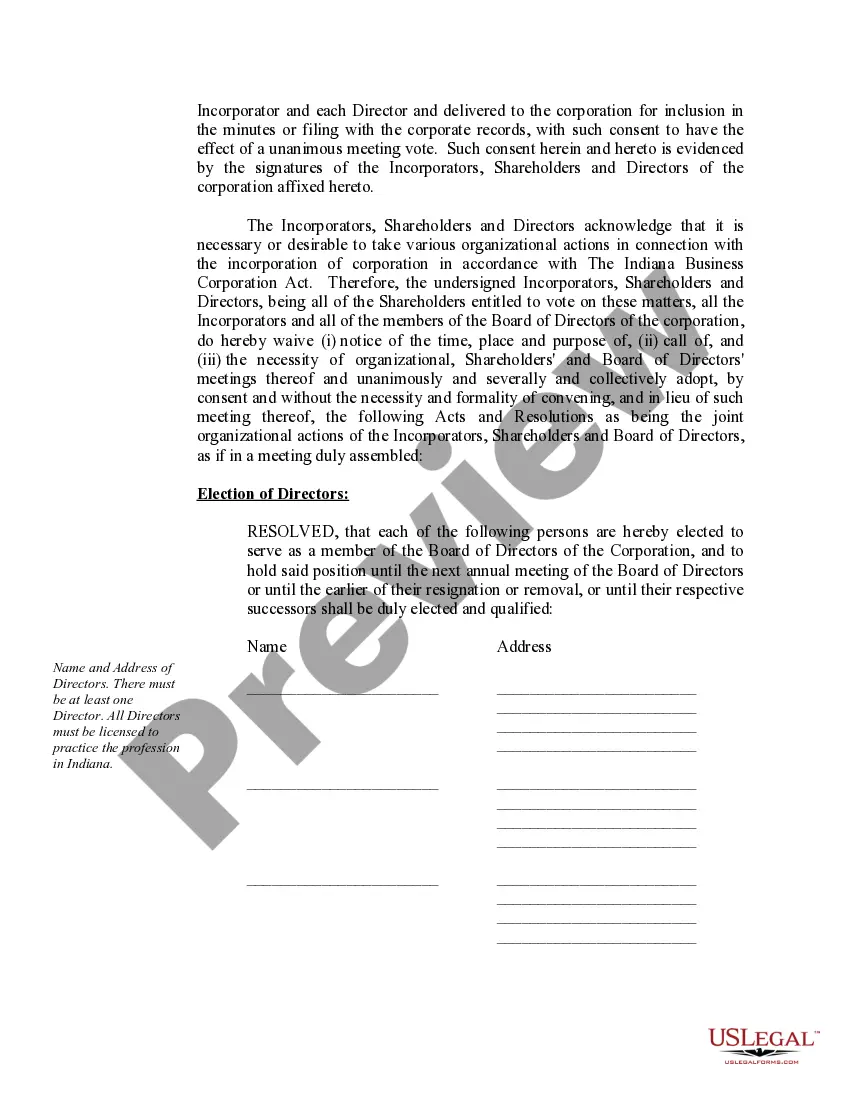
- Name of the corporation and its directors
- Elections of officers like President and Secretary
- Approval of Articles of Incorporation and By-Laws
- Details about shareholder ownership and share distribution
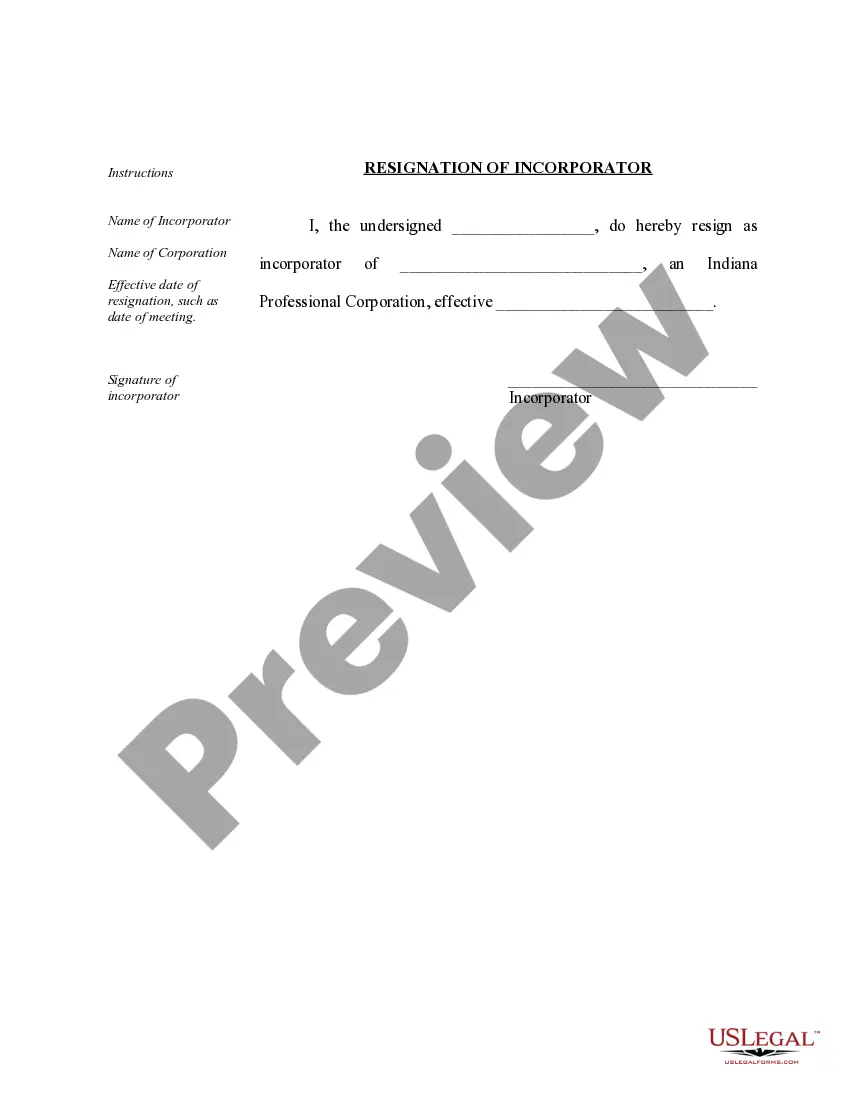
- Resignation of incorporator if applicable
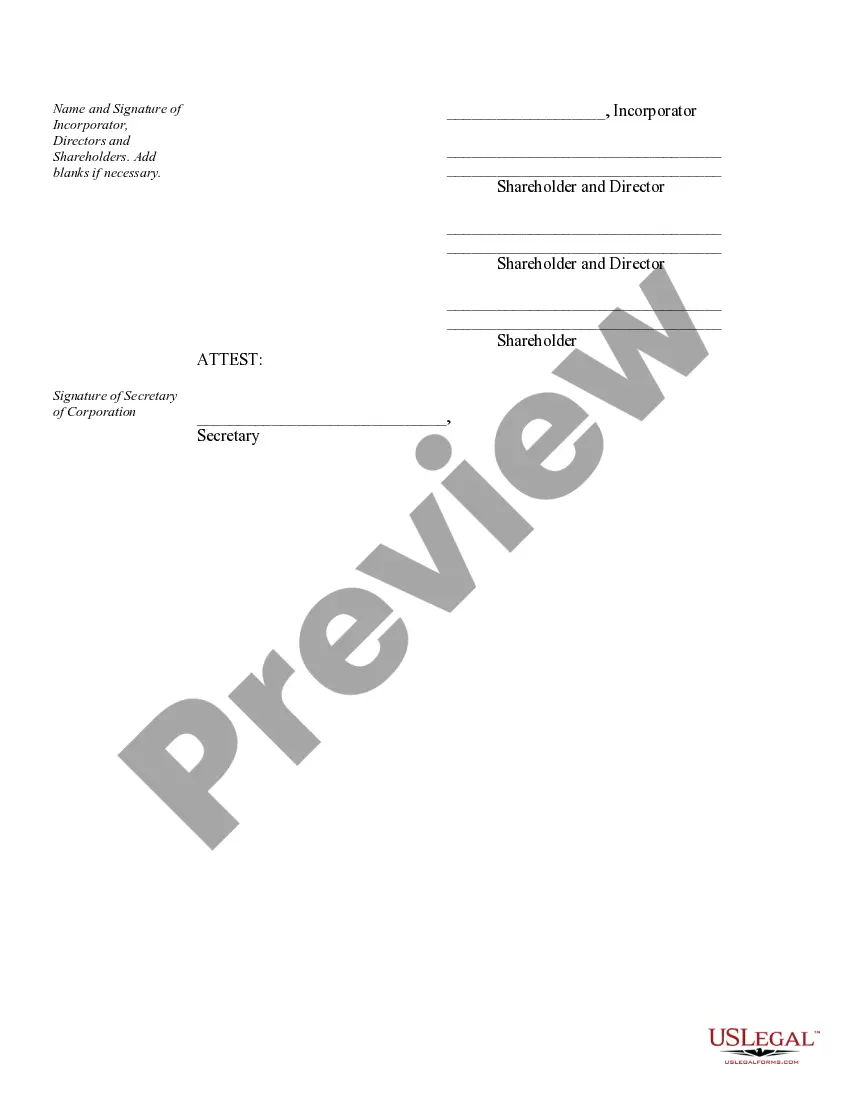
- Signature section for incorporators, directors, and shareholders
Situations where this form applies
This form should be used when forming a new professional corporation in Indiana. It is required during the initial meeting to ensure all appointments, approvals, and corporate resolutions are officially documented. The organizational minutes can also serve as a reference for future corporate meetings and decisions, capturing critical foundational information about ownership, management, and corporate structure.
Who needs this form
The following individuals should consider using this form:
- Incorporators who are establishing a professional corporation in Indiana
- Shareholders involved in the formation of the corporation
- Directors who will oversee the operations of the corporation
- Legal professionals assisting clients with incorporation procedures
Steps to complete this form
- Enter the name of the corporation at the beginning of the document.
- List the names and addresses of all directors, ensuring they are licensed in Indiana.
- Document the date when the Articles of Incorporation were filed.
- Elect officers by naming individuals for at least the positions of President and Secretary.
- Include shareholder details, including their names, number of shares owned, and the paid consideration.
- Have all appropriate parties sign and date the minutes to validate the document.
Notarization requirements for this form
This form does not typically require notarization unless specified by local law. However, it's advisable to confirm with a legal professional if notarization is needed for specific corporate actions.
Get your form ready online
Our built-in tools help you complete, sign, share, and store your documents in one place.
Make edits, fill in missing information, and update formatting in US Legal Forms—just like you would in MS Word.
Download a copy, print it, send it by email, or mail it via USPS—whatever works best for your next step.
Sign and collect signatures with our SignNow integration. Send to multiple recipients, set reminders, and more. Go Premium to unlock E-Sign.
If this form requires notarization, complete it online through a secure video call—no need to meet a notary in person or wait for an appointment.
We protect your documents and personal data by following strict security and privacy standards.

Make edits, fill in missing information, and update formatting in US Legal Forms—just like you would in MS Word.

Download a copy, print it, send it by email, or mail it via USPS—whatever works best for your next step.

Sign and collect signatures with our SignNow integration. Send to multiple recipients, set reminders, and more. Go Premium to unlock E-Sign.

If this form requires notarization, complete it online through a secure video call—no need to meet a notary in person or wait for an appointment.

We protect your documents and personal data by following strict security and privacy standards.
Common mistakes
- Failing to include all required director information, such as licenses and addresses.
- Not properly documenting the election of officers or missing signatures.
- Inaccurate representation of share distribution or ownership values.
- Omitting the date of the meeting or filing of the Articles of Incorporation.
Why use this form online
- Convenient access to a professionally drafted template specifically for Indiana professional corporations.
- Editability allows customization to fulfill organizational needs and specific legal requirements.
- Immediate availability for download ensures quick initiation of the incorporation process.
- Reliable, attorney-drafted content provides peace of mind using accurate and compliant legal language.
Legal use & context
- Establishes an official record of the corporation's formation activities.
- Serves as evidence of compliance with state laws governing professional corporations.
- Facilitates the functioning and management of the corporation by documenting key decisions.
What to keep in mind
- The Sample Organizational Minutes are essential for setting up a professional corporation in Indiana.
- Completing this form accurately is crucial for future corporate governance and legal compliance.
- This document provides a template that can be customized based on specific corporate needs.
- All signatures and necessary information must be complete to ensure validity.
Looking for another form?
Form popularity
FAQ
Meeting name and place. Date and time of the meeting. List of meeting participants. Purpose of the meeting. For each agenda items: decisions, action items, and next steps. Next meeting date and place. Documents to be included in the meeting report.
Date, time, and location. Minutes should include this basic information about when and where the meeting was held and how long it lasted. Creator. List of persons present. Topics list. Voting record. Review and approval.
A corporation's organizational meeting is meant to be the initial meeting of the owners of the corporation and management. Typically, the items on the meeting agenda include: The appointment of corporate officers. The acquisition of a minute book to record meeting minutes and actions. The approval of Corporate Bylaws.
Use a template. Check off attendees as they arrive. Do introductions or circulate an attendance list. Record motions, actions, and decisions as they occur. Ask for clarification as necessary. Write clear, brief notes-not full sentences or verbatim wording.
Note the subject of the discussion. Include the name of the person who led the discussion. Include motions. Note voting outcomes. Include any decisions made.
Meeting Requirements for Corporations. State laws and a corporation's bylaws will dictate specific meeting requirements for corporations. In general, however, most corporations are required to have at least one shareholders' meeting per year. Corporations are also required to prepare and retain minutes of these meeting
Taking Meeting Notes. Type Meeting Notes - Type up a full version of the meeting minutes. Circulate a Draft - Follow your corporation's policy about who must review the draft notes. Distribute Minutes to Board - Usually in advance of the next meeting.
Prepare corporate minutes. Notes kept at each shareholder and board meeting held by a corporation provide a written record of what occurred at the meeting. Approve corporate minutes. File the minutes with internal corporate records. In limited circumstances, file the corporate minutes with the state.