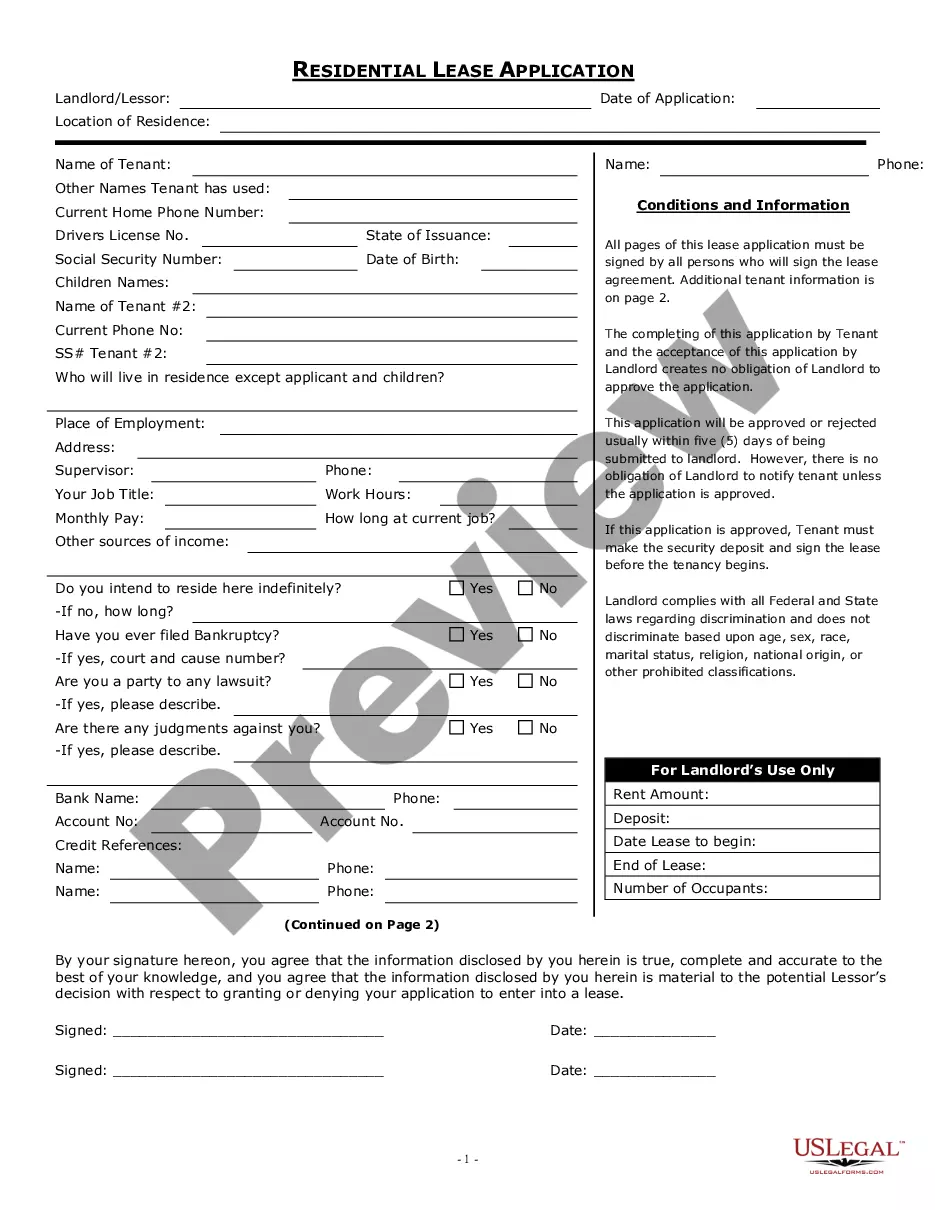
Hawaii Residential Rental Lease Application
Understanding this form
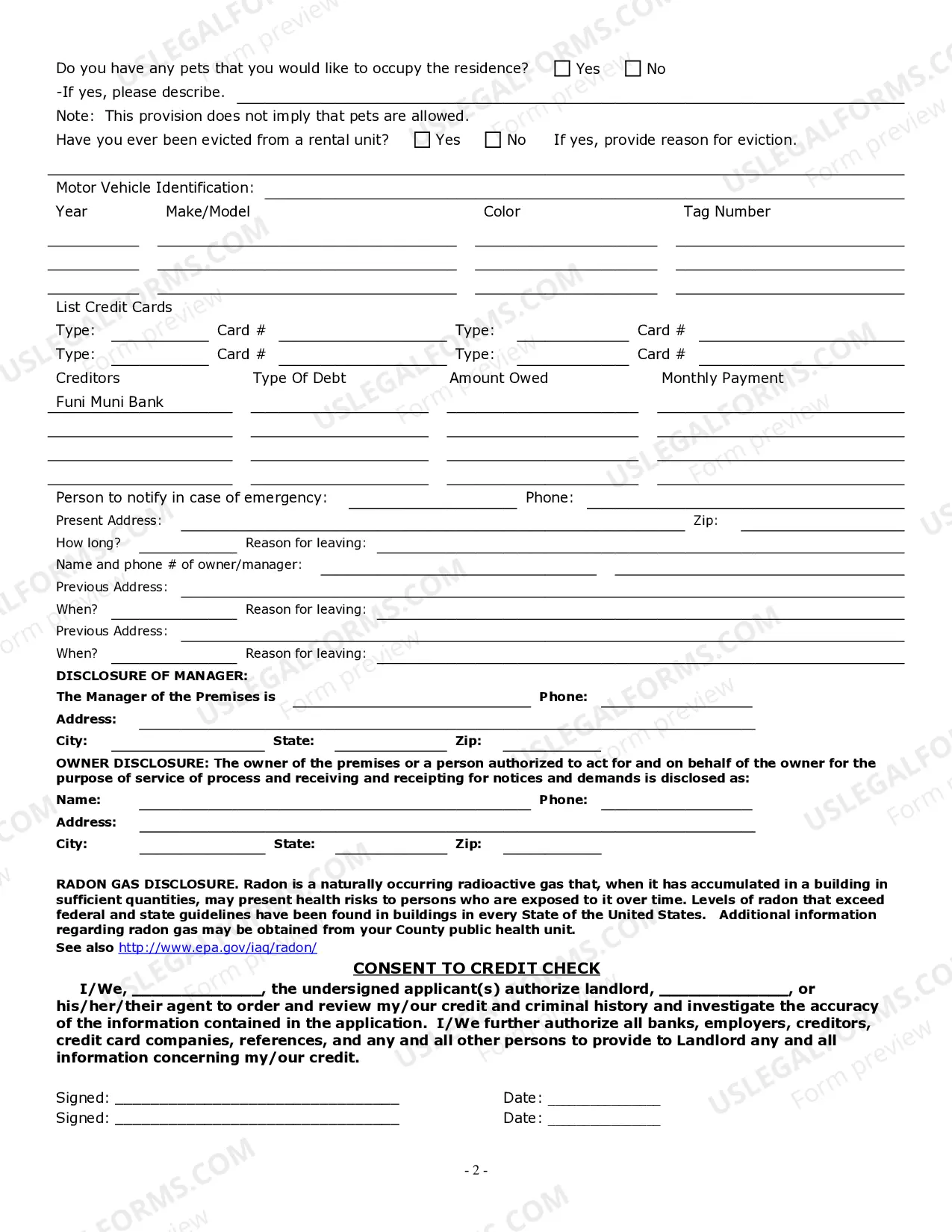
The Residential Rental Lease Application is a document used by landlords to gather essential information from prospective tenants. This form helps landlords assess the suitability of applicants prior to entering into a lease agreement. Unlike other rental forms, this application specifically includes required disclosures and authorizations for the release of personal information, which are crucial for tenant evaluation.
What’s included in this form
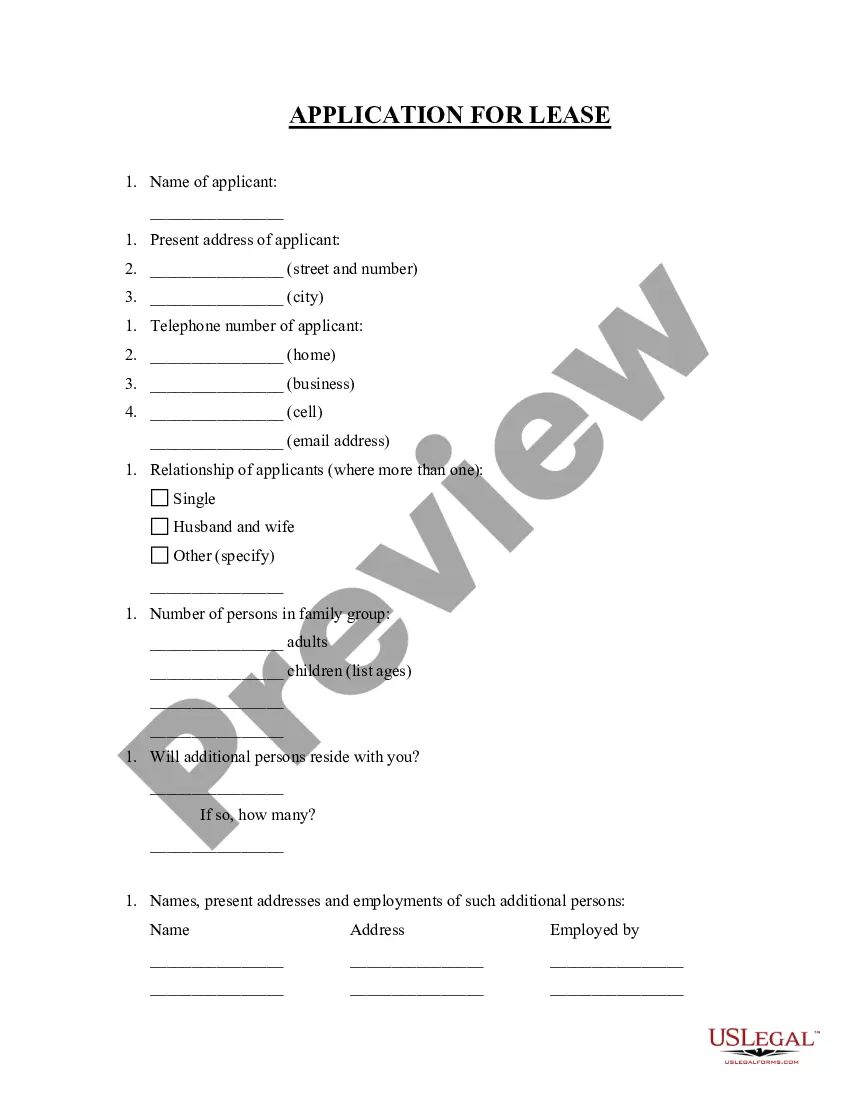
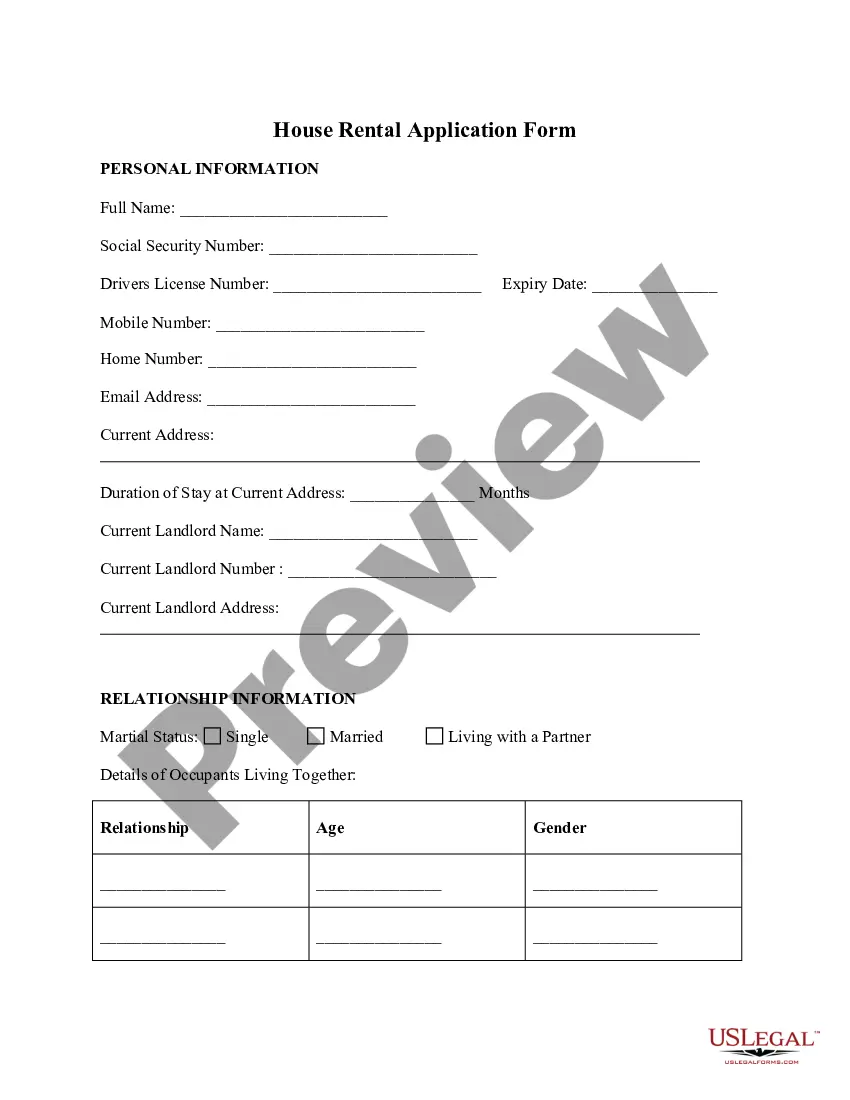
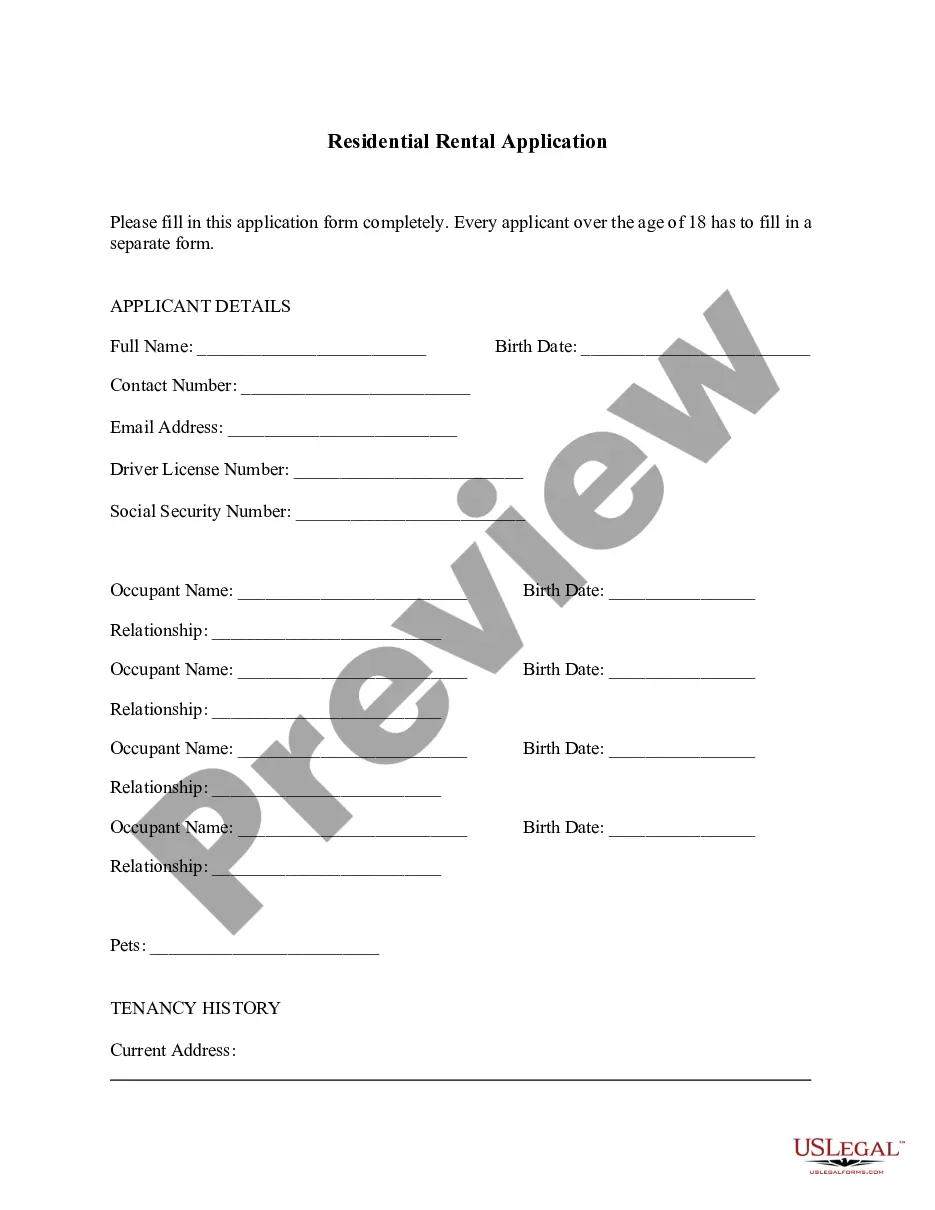
- Personal information section for the tenant, including name, contact details, and social security number.
- Consent for credit checks and background investigations to verify the tenant's financial eligibility.
- Information about the intended lease terms, including proposed rental amount and lease duration.
- Declarations regarding the truthfulness of the information provided by the tenant.
- Signatures and date fields for both the tenant and landlord, confirming the application submission.

Situations where this form applies
This form should be used by landlords when screening potential tenants for residential rental properties. It is particularly useful when a landlord wants to formalize the application process and ensure that all applicants provide consistent information for evaluation. Common scenarios include renting an apartment, a single-family home, or any rental property where tenant qualifications need to be assessed.
Intended users of this form
- Landlords or property management companies seeking to rent residential properties.
- Tenants looking to apply for rental housing and needing to provide detailed information to landlords.
- Real estate professionals involved in tenant placements for rental properties.
How to prepare this document
- Identify the parties involved by entering the tenant's full name and contact information at the beginning of the form.
- Complete the personal information section, including references and employment history.
- Review and sign the consent for credit checks and background checks, ensuring understanding of what information may be released.
- Specify the proposed rent amount and terms of tenancy, including intended move-in dates and lease durations.
- Both the tenant and landlord should sign and date the application to formalize the submission.
Does this form need to be notarized?
This form does not typically require notarization unless specified by local law. Ensure to check specific state regulations that may apply.
Get your form ready online
Our built-in tools help you complete, sign, share, and store your documents in one place.
Make edits, fill in missing information, and update formatting in US Legal Forms—just like you would in MS Word.
Download a copy, print it, send it by email, or mail it via USPS—whatever works best for your next step.
Sign and collect signatures with our SignNow integration. Send to multiple recipients, set reminders, and more. Go Premium to unlock E-Sign.
If this form requires notarization, complete it online through a secure video call—no need to meet a notary in person or wait for an appointment.
We protect your documents and personal data by following strict security and privacy standards.

Make edits, fill in missing information, and update formatting in US Legal Forms—just like you would in MS Word.

Download a copy, print it, send it by email, or mail it via USPS—whatever works best for your next step.

Sign and collect signatures with our SignNow integration. Send to multiple recipients, set reminders, and more. Go Premium to unlock E-Sign.

If this form requires notarization, complete it online through a secure video call—no need to meet a notary in person or wait for an appointment.

We protect your documents and personal data by following strict security and privacy standards.
Common mistakes
- Failing to provide complete and accurate information, which can lead to delays or rejection.
- Not signing the consent section, making the application invalid for processing.
- Submitting the application without understanding the financial implications of a credit check.
Why use this form online
- Convenience of downloading and completing the form at your own pace.
- Editability allows tenants to adjust their information easily as needed.
- Access to professionally drafted templates ensures compliance with legal standards.
Legal use & context
- This application serves as a preliminary step in the rental process and is not a binding lease agreement.
- Landlords must comply with fair housing laws and other regulations when evaluating applicants.
- Approval of this application does not automatically grant the tenant tenancy; a lease must still be signed afterward.
What to keep in mind
- Use the Residential Rental Lease Application to facilitate proper tenant screening.
- Complete all sections accurately to avoid application issues.
- Understand that the application does not guarantee rental approval.
Looking for another form?

Form popularity
FAQ
There is no specific limit on how much a landlord can raise rent in Hawaii. Instead, rent adjustments depend on various factors like market trends and rental agreements. With the Hawaii Residential Rental Lease Application, you can gain a clearer understanding of rent guidelines and how they may affect your lease.
The maximum amount a landlord can increase rent is not standardized in Hawaii, allowing for flexibility based on market conditions. However, reasonable increases can help retain tenants and maintain good relationships. Using a Hawaii Residential Rental Lease Application enhances transparency in discussing any potential rent changes.
Hawaii does not have statewide rent control laws, but some local jurisdictions may impose regulations. Landlords and tenants should be aware of the local laws that might impact rental agreements. The Hawaii Residential Rental Lease Application can help clarify applicable regulations in your area, ensuring compliance.
The standard lease in Hawaii usually spans a 12-month period, although month-to-month leases are also common. It includes essential terms such as rent payment schedules, maintenance responsibilities, and termination clauses. A thorough Hawaii Residential Rental Lease Application ensures all parties understand and agree to these terms.
While there is no cap on rent increases in Hawaii, the most a landlord can raise rent often depends on market demand and supply. Landlords must adhere to fair notice periods, which typically ranges from 30 to 60 days. Utilizing a Hawaii Residential Rental Lease Application can help clarify these terms and conditions.
To rent an apartment in Hawaii, you generally need to provide identification, proof of income, and rental history. Additionally, landlords often require a completed Hawaii Residential Rental Lease Application to assess your suitability as a tenant. Being prepared with these documents helps streamline the application process.
In Hawaii, there is no statewide limit on how much a landlord can raise rent. However, landlords must provide proper notice, typically 45 days, before implementing any increases. The Hawaii Residential Rental Lease Application allows tenants to understand their rights regarding rent hikes, ensuring a better rental experience.
To fill out a rental inspection checklist, start by itemizing all rooms and areas in the property. Inspect and note the condition of each item, focusing on cleanliness, safety, and functionality. For those submitting a Hawaii Residential Rental Lease Application, be detailed and accurate on this checklist, as it reflects your attention to property management. You can find templates and assistance through platforms like uslegalforms.
Typically, the landlord or property manager fills out the rental verification form. They provide details about current and previous tenants using information from the Hawaii Residential Rental Lease Application. This process helps verify if the applicant meets all the rental requirements. Ensuring accurate and honest input from both sides fosters a successful rental agreement.
To fill out a rental verification form, begin by gathering essential documents like proof of income and previous rental agreements. Ensure that you provide accurate and complete information that corresponds with your Hawaii Residential Rental Lease Application. Filling it out correctly can enhance your credibility and make the rental process smoother for both parties. Using a reliable platform, such as uslegalforms, can help simplify this process.