Bankruptcy Guide and Forms Package for Chapters 7 or 13 for Eastern District of Missouri
About this form
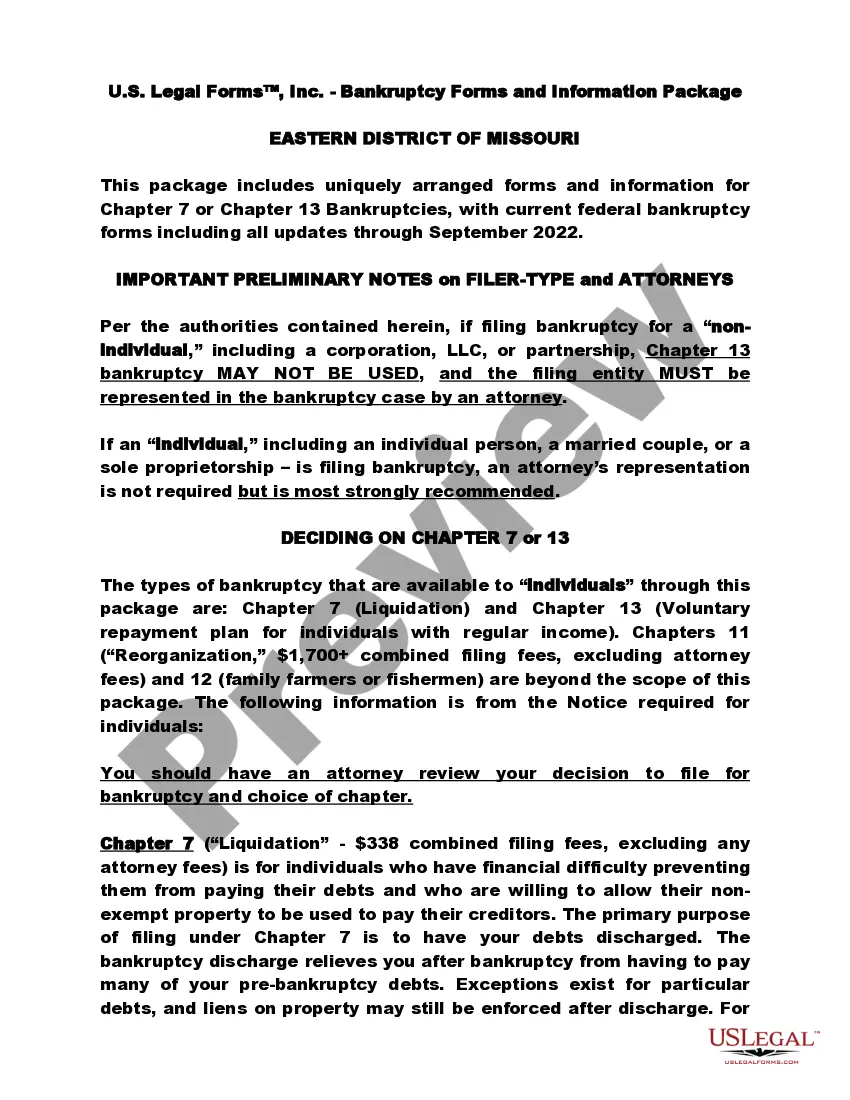
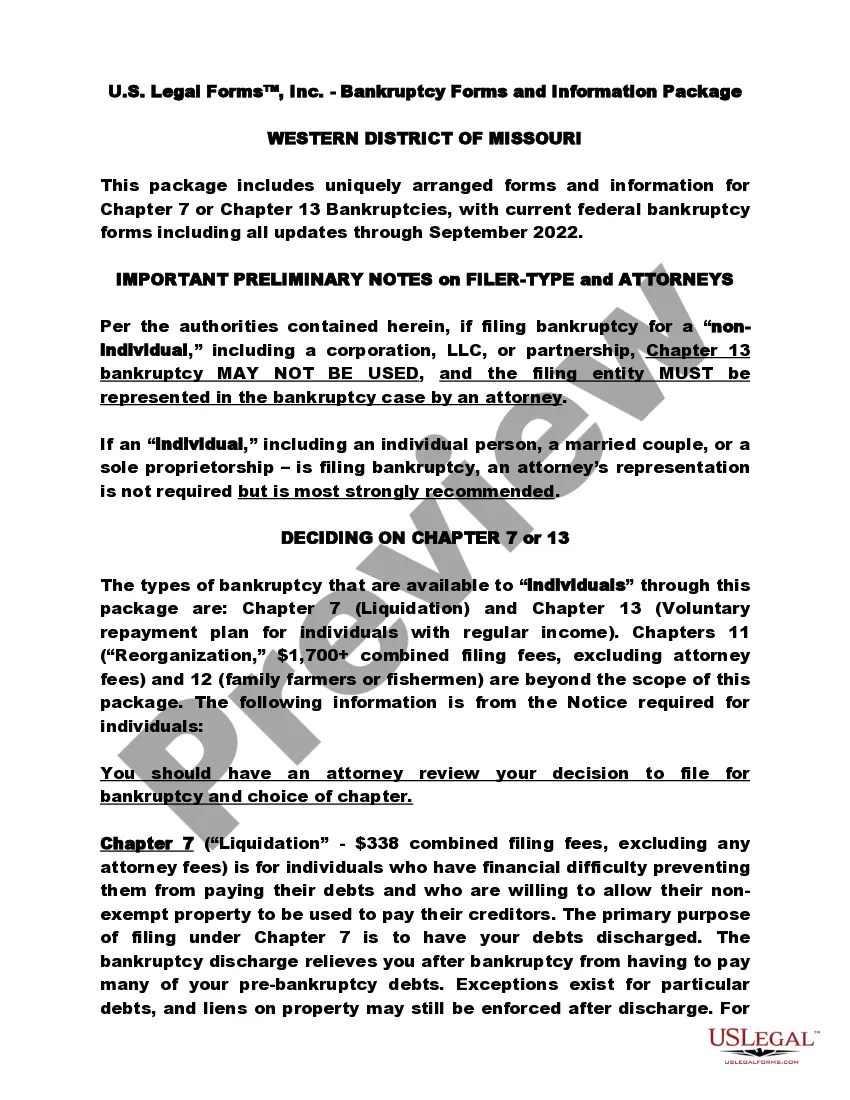
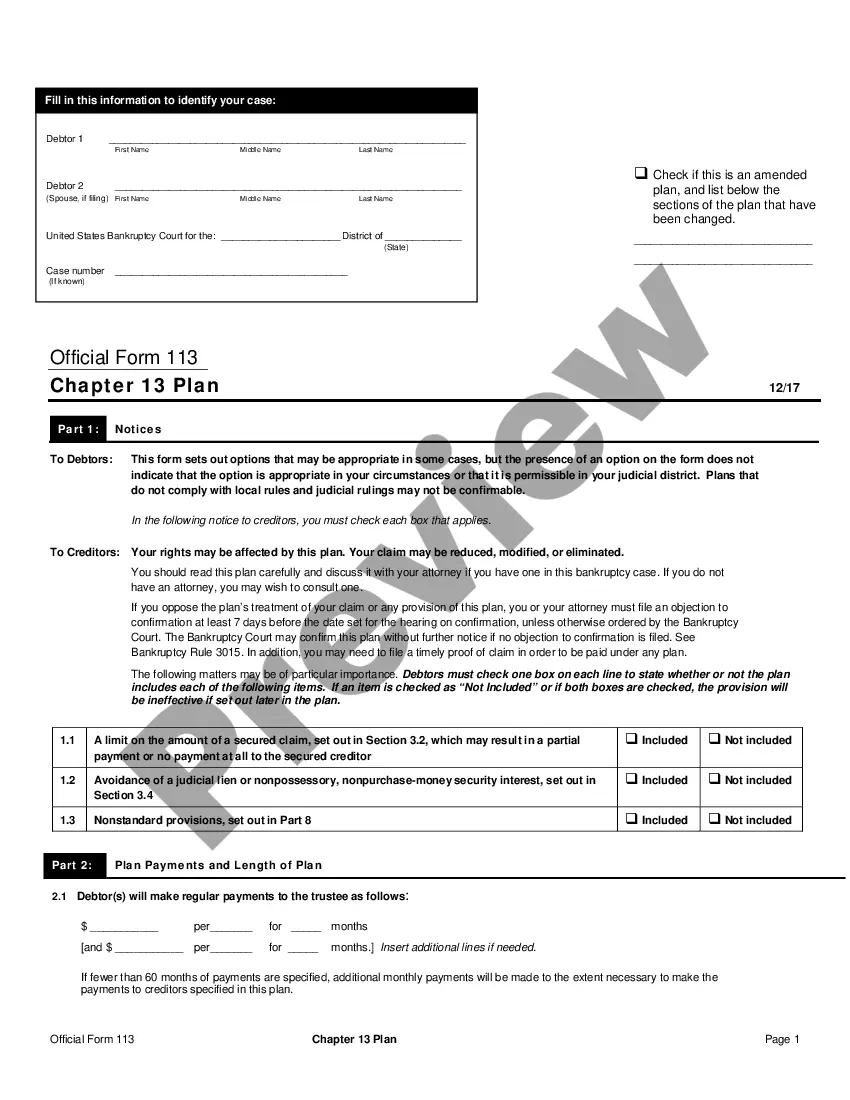
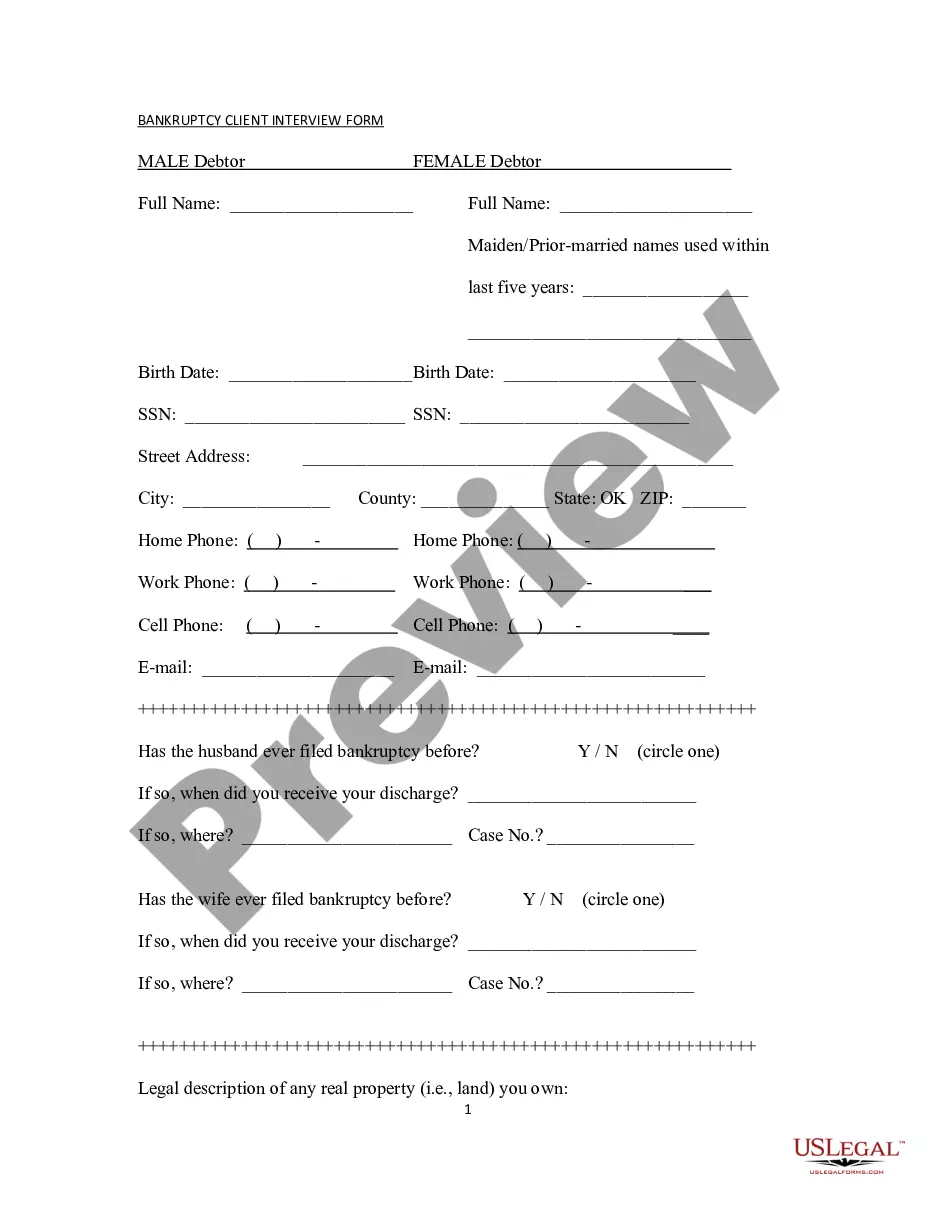
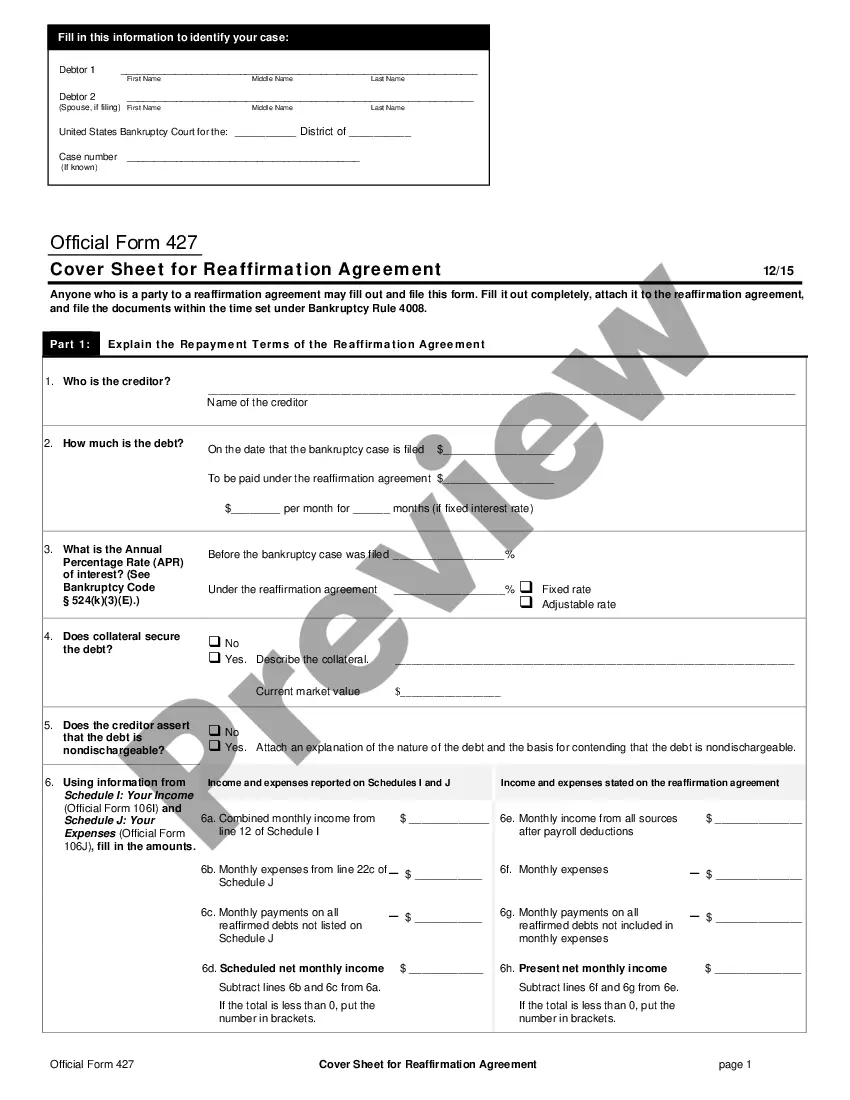
The Bankruptcy Guide and Forms Package for Chapters 7 or 13 for the Eastern District of Missouri provides essential templates and resources for individuals considering bankruptcy. This package is specifically designed to assist in completing the necessary forms for either Chapter 7 liquidation or Chapter 13 repayment plans, distinguishing it from other general bankruptcy materials. It includes detailed instructions to help users navigate the complex bankruptcy process confidently.
Main sections of this form
- Important preliminary notes on filer types and attorneys.
- Guidance on deciding between Chapter 7 and Chapter 13 bankruptcy.
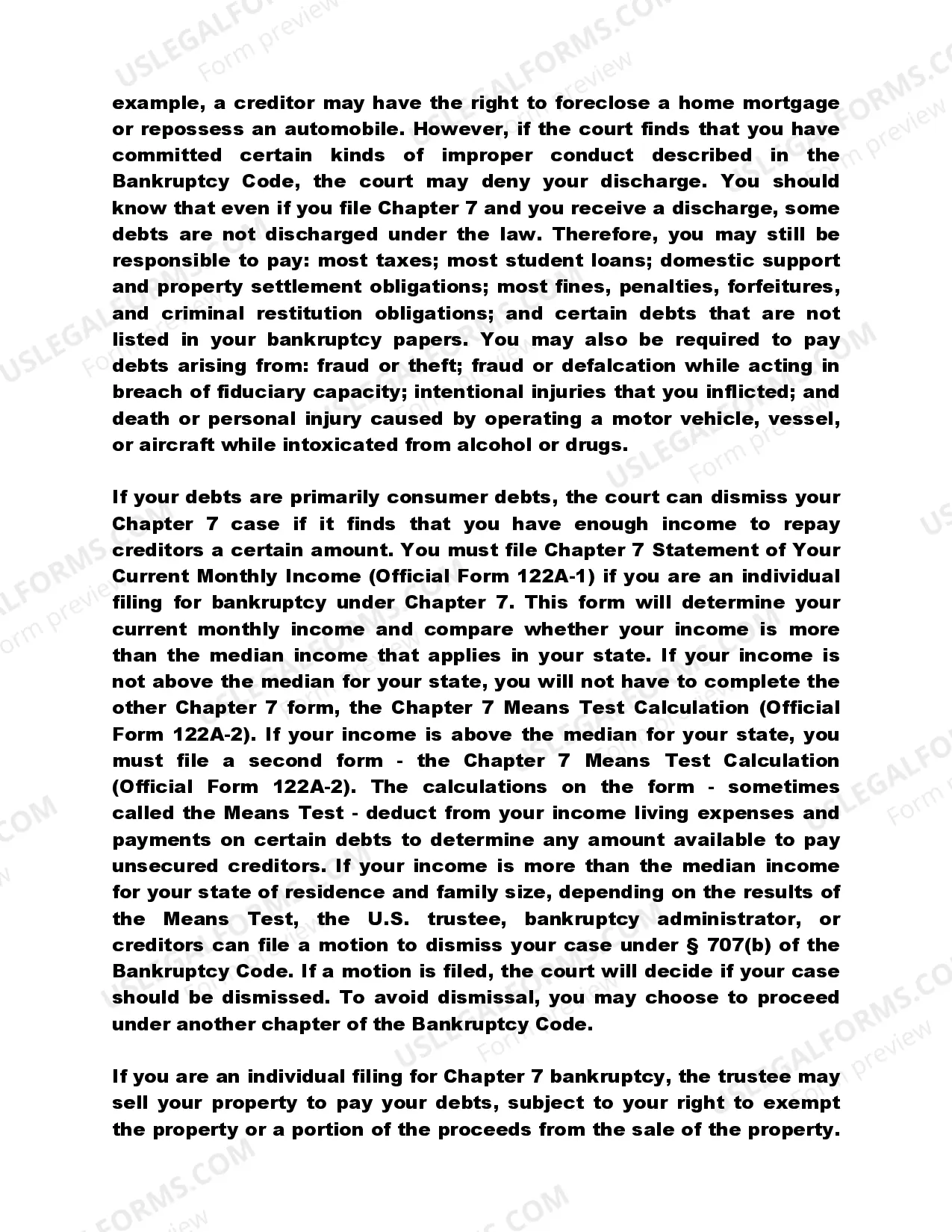
- Instructions for completing the Chapter 7 Statement of Your Current Monthly Income.
- Details on the Chapter 7 Means Test Calculation for income assessment.
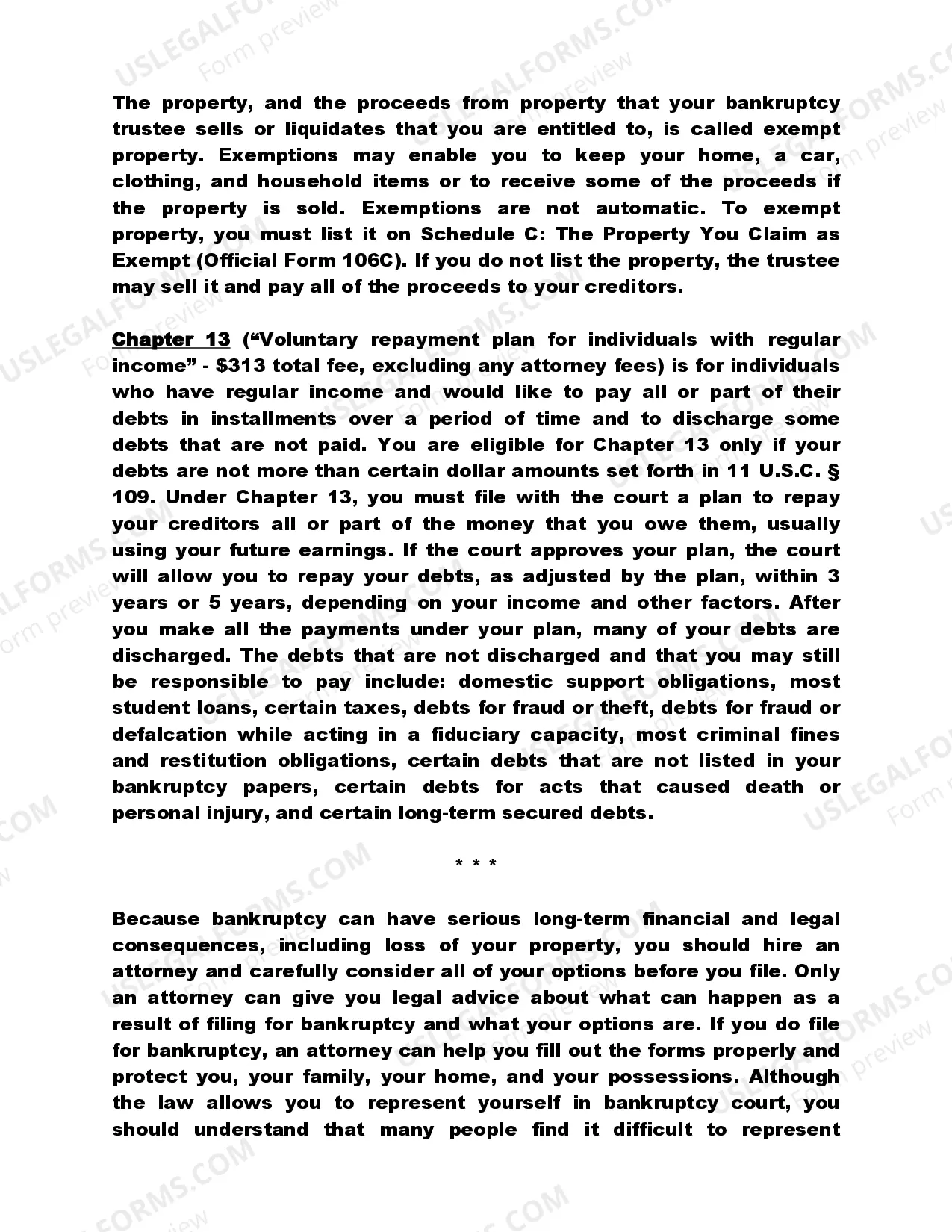
- Explanation of the repayment plan required for Chapter 13 bankruptcy.
Common use cases
This form package is necessary when an individual faces overwhelming debt and is considering filing for bankruptcy protection. It is suitable for those unsure about which bankruptcy chapter to file under, whether they need a liquidation of debts under Chapter 7 or a structured repayment plan under Chapter 13. Using the forms appropriately can help protect assets while effectively managing financial obligations.
Who should use this form
- Individuals seeking relief from unmanageable debts.
- Married couples wanting to file for bankruptcy together.
- Sole proprietors who meet the personal bankruptcy eligibility criteria.
- Individuals currently facing financial hardship with steady income considering a repayment plan.
Instructions for completing this form
- Determine your eligibility for either Chapter 7 or Chapter 13 based on your income and debt.
- Fill out the Chapter 7 Statement of Your Current Monthly Income to assess your median income.
- Complete the Chapter 7 Means Test Calculation if your income exceeds the state median.
- Prepare your Chapter 13 repayment plan detailing the proposed amounts and repayment timeline.
- Ensure all property you wish to exempt is appropriately listed on Schedule C.
Does this document require notarization?
This form does not typically require notarization to be legally valid. However, some jurisdictions or document types may still require it. US Legal Forms provides secure online notarization powered by Notarize, available 24/7 for added convenience.
Get your form ready online
Our built-in tools help you complete, sign, share, and store your documents in one place.
Make edits, fill in missing information, and update formatting in US Legal Forms—just like you would in MS Word.
Download a copy, print it, send it by email, or mail it via USPS—whatever works best for your next step.
Sign and collect signatures with our SignNow integration. Send to multiple recipients, set reminders, and more. Go Premium to unlock E-Sign.
If this form requires notarization, complete it online through a secure video call—no need to meet a notary in person or wait for an appointment.
We protect your documents and personal data by following strict security and privacy standards.

Make edits, fill in missing information, and update formatting in US Legal Forms—just like you would in MS Word.

Download a copy, print it, send it by email, or mail it via USPS—whatever works best for your next step.

Sign and collect signatures with our SignNow integration. Send to multiple recipients, set reminders, and more. Go Premium to unlock E-Sign.

If this form requires notarization, complete it online through a secure video call—no need to meet a notary in person or wait for an appointment.

We protect your documents and personal data by following strict security and privacy standards.
Typical mistakes to avoid
- Failing to include all debts or income on bankruptcy forms.
- Neglecting to list exempt property, risking its liquidation.
- Not consulting a legal professional before deciding on the bankruptcy chapter.
- Submitting forms without ensuring all necessary signatures and dates are complete.
Advantages of online completion
- Immediate access: Download forms and resources at your convenience.
- Editable templates: Customize forms to fit your specific circumstances.
- Comprehensive guidance: Included instructions streamline the completion process.
- Reliable updates: Access the latest revisions and legal specifications.
Looking for another form?

Form popularity
FAQ
To file for Chapter 7 bankruptcy, you will need specific paperwork to ensure a smooth process. This includes the bankruptcy petition, schedules of assets and liabilities, and a statement of financial affairs. Additionally, you must provide proof of income, tax returns, and any relevant financial documents. Using our Bankruptcy Guide and Forms Package for Chapters 7 or 13 for Eastern District of Missouri simplifies this process by offering all necessary forms and detailed instructions tailored to your situation.
In both cases, the bankruptcy court can discharge certain debts. Once a debt has been discharged, the creditor can no longer take action against the debtor, such as attempting to collect the debt or seize any collateral. Not all debts can be discharged, however, and some are very difficult to get discharged.
Chapter 7 is the most common type of bankruptcy and is often referred to as a straight bankruptcy. Under Chapter 7, you can eliminate most of your unsecured debts and some secured debts by surrendering your assets. Unsecured debts are debts not secured with collateral, including most personal loans and credit cards.
The potential disadvantages of bankruptcy include: Loss of credit cards. Many credit card companies automatically cancel any cards you hold when you file. You will probably receive numerous offers to apply for unsecured credit cards after filing.
Bankruptcy is a legal status that usually lasts for a year and can be a way to clear debts you can't pay. When you're bankrupt, your non-essential assets (property and what you own) and excess income are used to pay off your creditors (people you owe money to). At the end of the bankruptcy, most debts are cancelled.