Revocable Trust for Minors
About this form
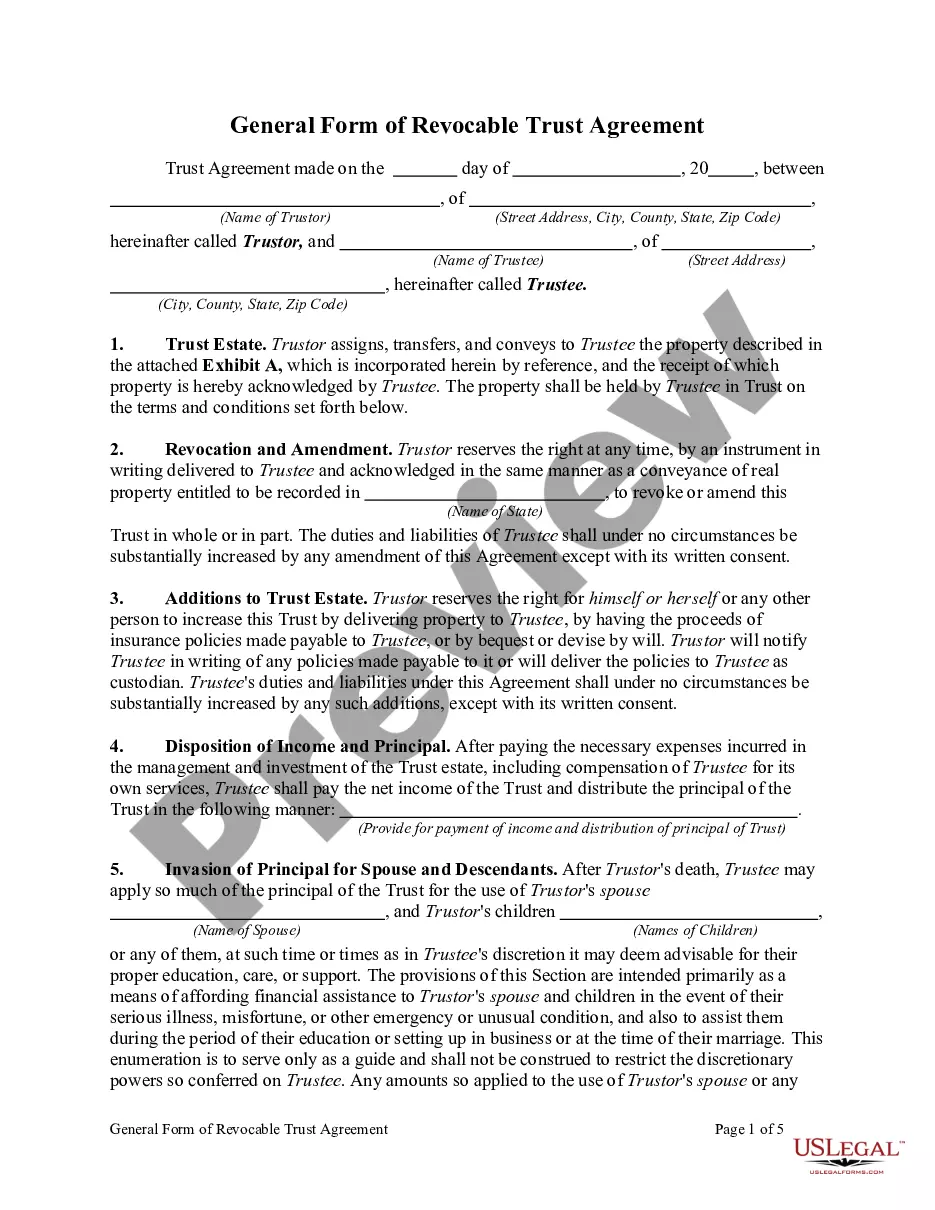
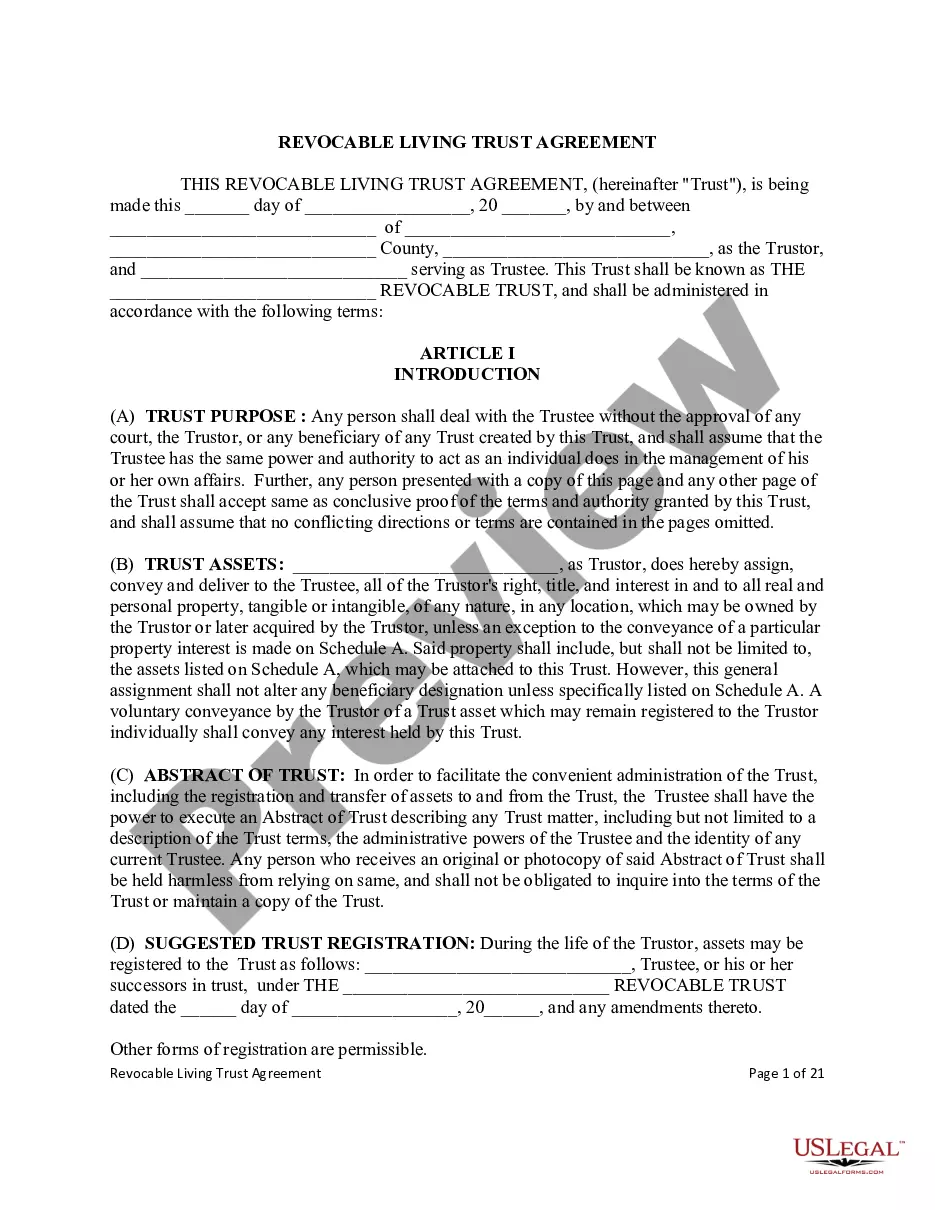
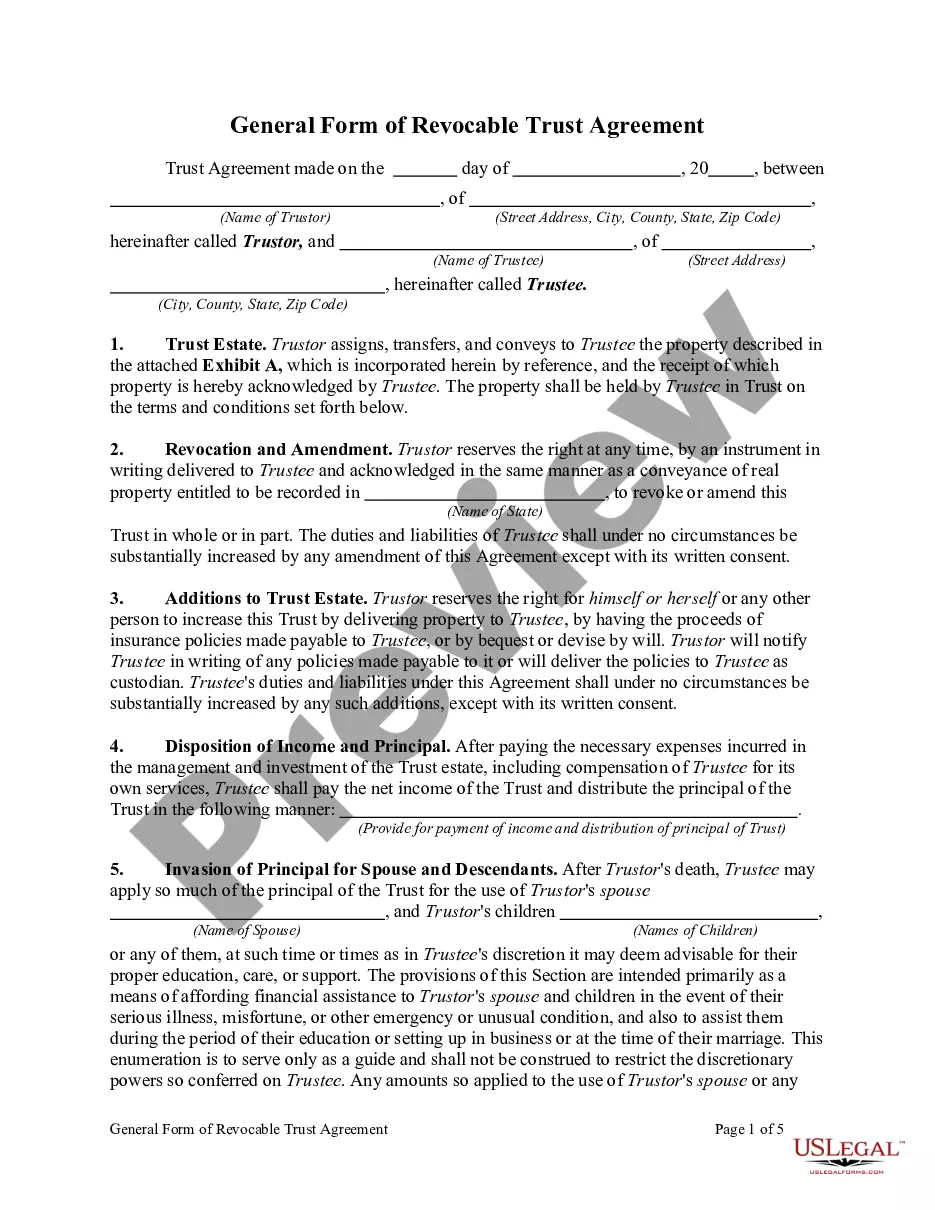
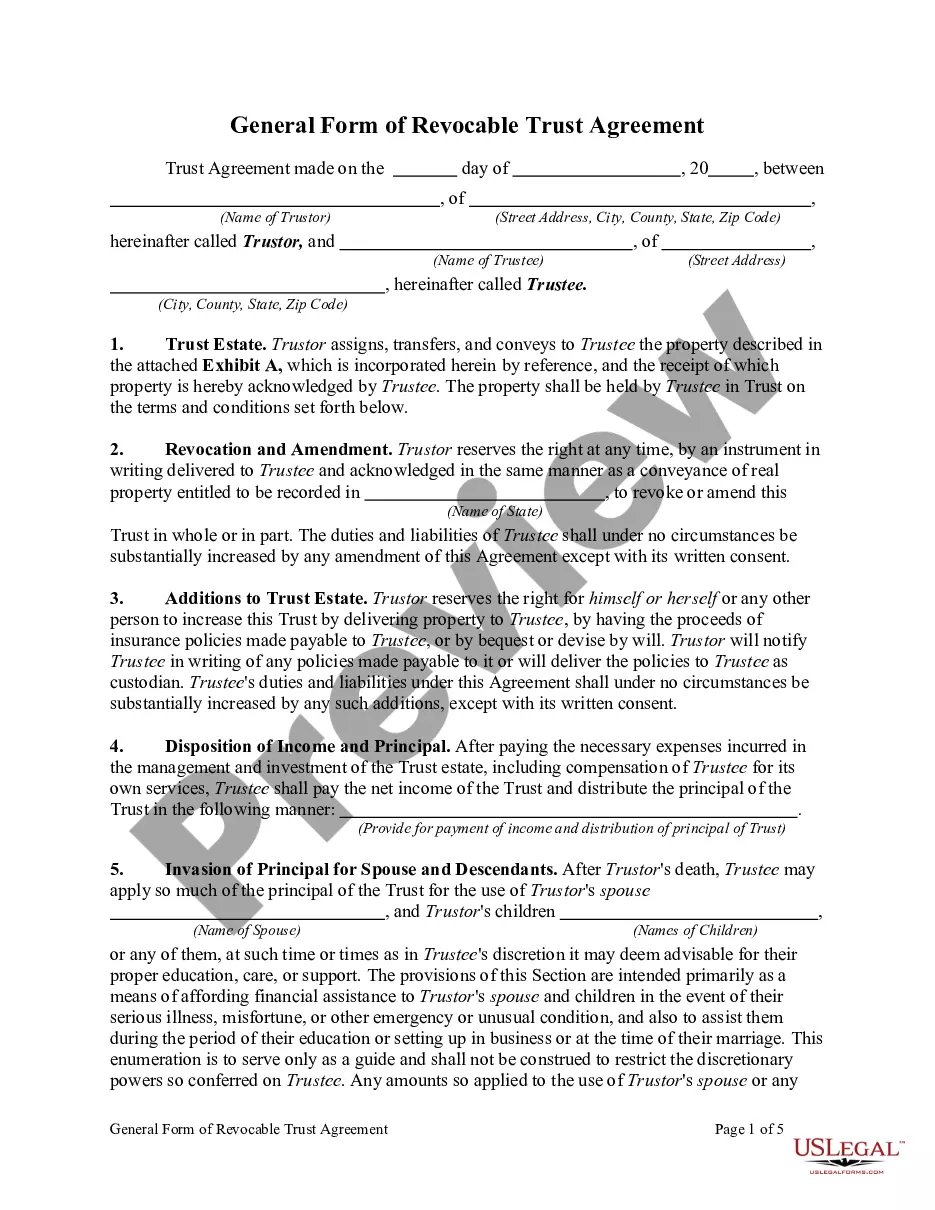
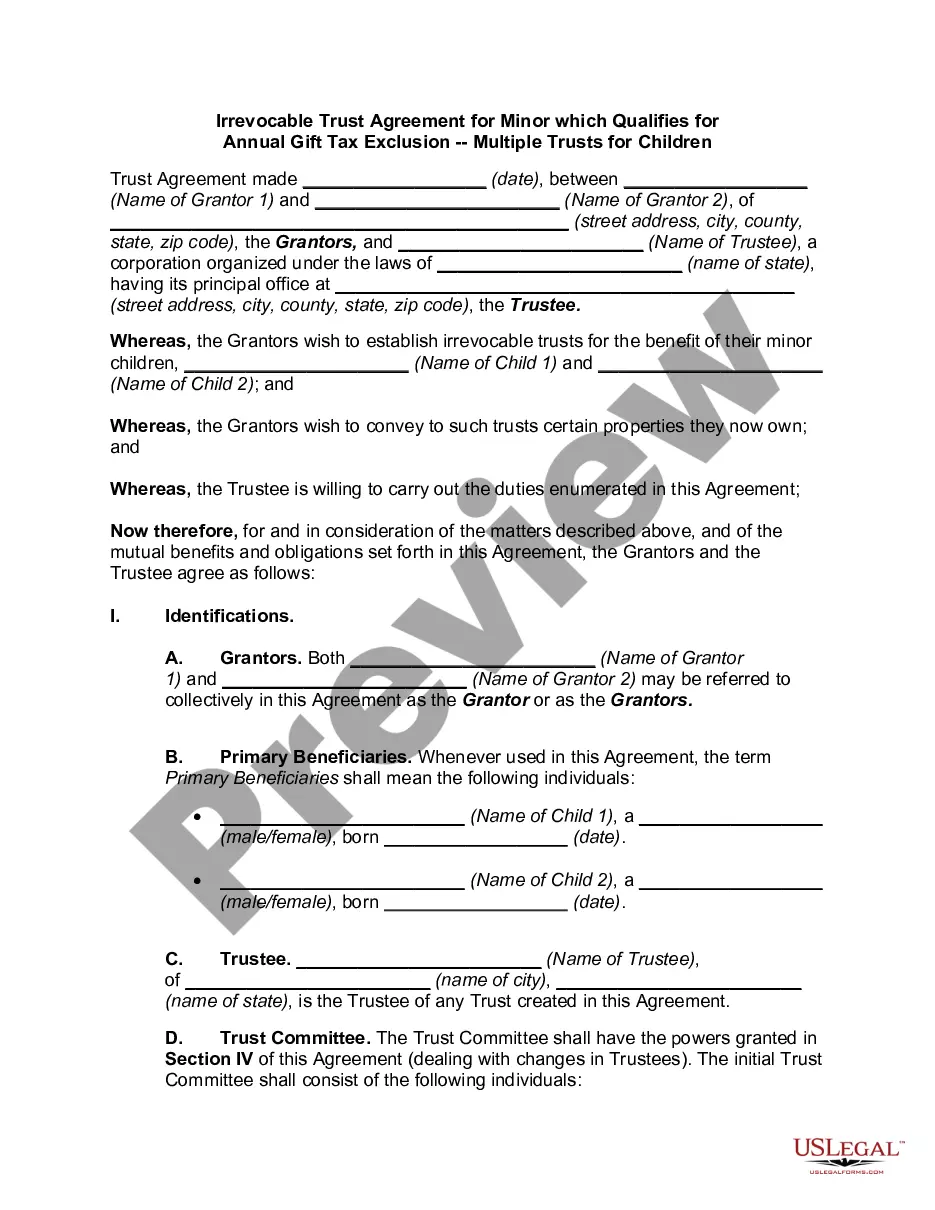
The Revocable Trust for Minors is a legal document that establishes a trust for the benefit of minor children. This form allows the creator, known as the Trustor, to manage and distribute assets to minors in a controlled manner. Unlike irrevocable trusts, which cannot be altered after creation, a revocable trust can be modified or terminated at any time by the Trustor. This flexibility is particularly advantageous for ensuring that minorsâ needs are met while also allowing for future changes in circumstances or intent.
Main sections of this form
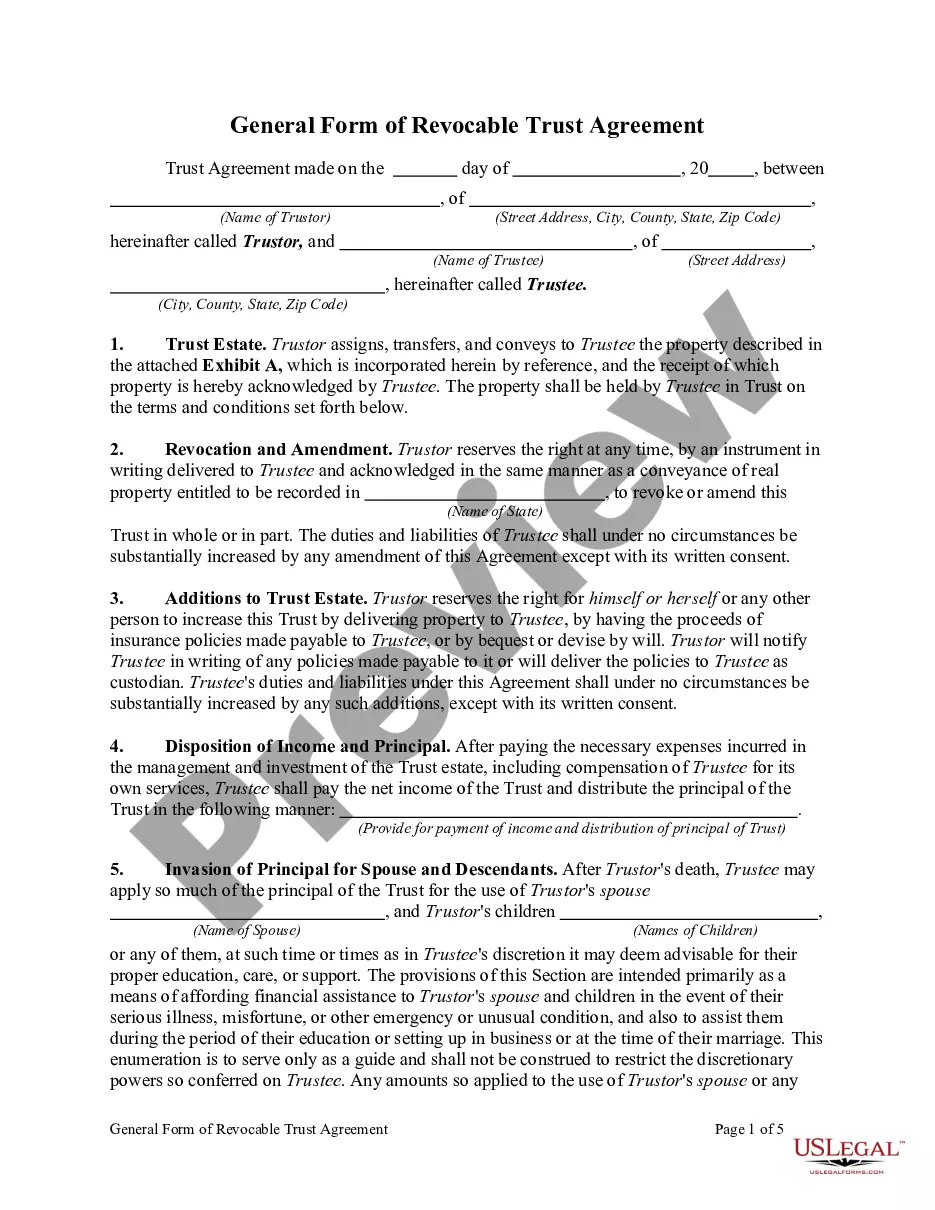
- Additions to Trust Estate: Allows the Trustor to add property to the trust at any time.
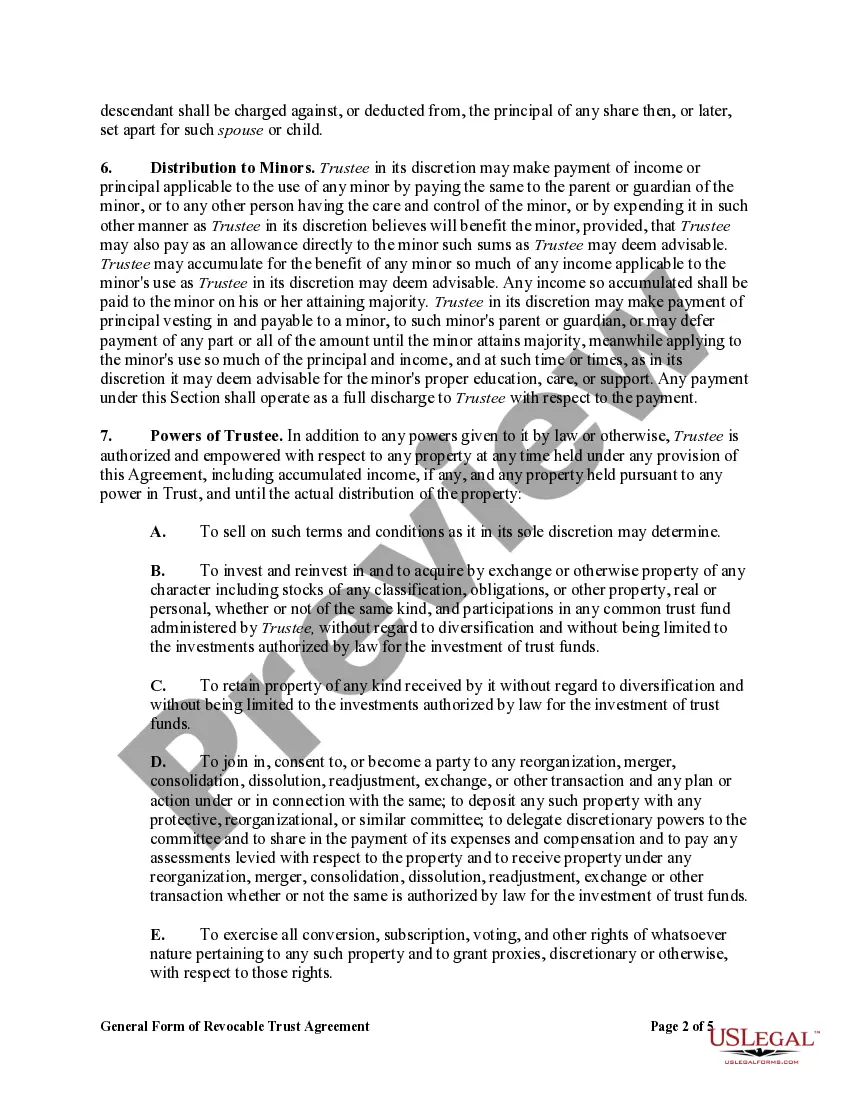
- Distribution to Minors: Grants the Trustee discretion over how and when to distribute funds to minors or their guardians.
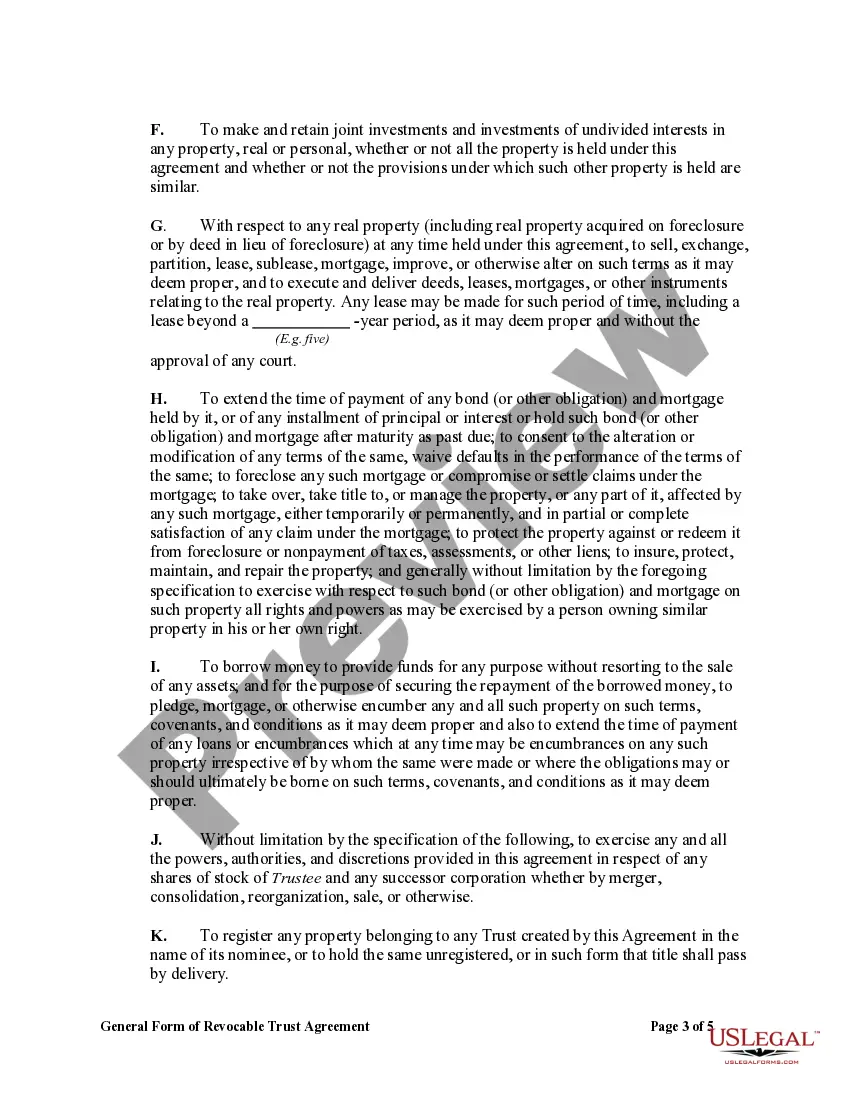
- Powers of Trustee: Outlines the authority given to the Trustee, including selling assets or making investments.
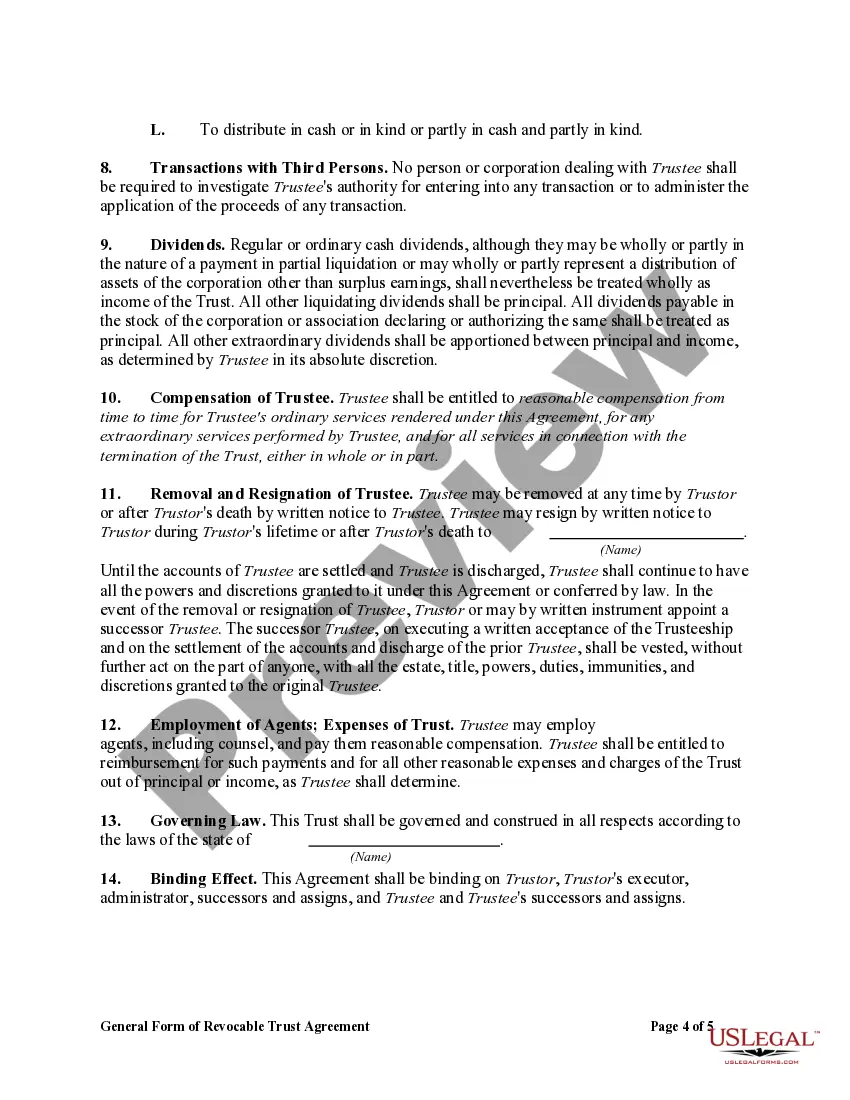
- Transactions with Third Persons: Protects the Trustee in transactions by not requiring verification of authority.
- Compensation of Trustee: Discusses the right of the Trustee to receive reasonable payment for services rendered.
Situations where this form applies
This form can be utilized when a person wants to ensure that their assets are managed and distributed according to their wishes for the benefit of minor children. It is particularly useful for parents or guardians who want to set aside funds for educational expenses, healthcare, or general support, while retaining the ability to adjust the trust as their circumstances change. It is an ideal option for those who want to control their assets during their lifetime and ensure proper usage after their passing.
Who can use this document
- Parents or guardians looking to establish a trust for their minor children.
- Individuals wanting to manage their assets flexibly while providing for minors.
- Anyone seeking to protect their children's inheritance until they reach adulthood.
How to prepare this document
- Identify the Trustor: Fill out the name and details of the person creating the trust.
- Choose a Trustee: Select an individual or institution responsible for managing the trust assets.
- Specify the Trust Assets: List the property or assets that will be placed in the trust.
- Describe Distribution Terms: Outline how and when the Trustee can distribute funds to the minors.
- Sign and Date: Ensure that all parties involved sign the document, and verify that it complies with state laws.
Is notarization required?
This form does not typically require notarization unless specified by local law. However, verifying your stateâs requirements is recommended to ensure the trust's validity.
Get your form ready online
Our built-in tools help you complete, sign, share, and store your documents in one place.
Make edits, fill in missing information, and update formatting in US Legal Forms—just like you would in MS Word.
Download a copy, print it, send it by email, or mail it via USPS—whatever works best for your next step.
Sign and collect signatures with our SignNow integration. Send to multiple recipients, set reminders, and more. Go Premium to unlock E-Sign.
If this form requires notarization, complete it online through a secure video call—no need to meet a notary in person or wait for an appointment.
We protect your documents and personal data by following strict security and privacy standards.

Make edits, fill in missing information, and update formatting in US Legal Forms—just like you would in MS Word.

Download a copy, print it, send it by email, or mail it via USPS—whatever works best for your next step.

Sign and collect signatures with our SignNow integration. Send to multiple recipients, set reminders, and more. Go Premium to unlock E-Sign.

If this form requires notarization, complete it online through a secure video call—no need to meet a notary in person or wait for an appointment.

We protect your documents and personal data by following strict security and privacy standards.
Common mistakes
- Not clearly defining how funds will be distributed to minors.
- Failing to properly name the Trustee or alternative Trustees.
- Omitting to list all trust assets accurately.
- Not updating the trust when personal circumstances change.
Why complete this form online
- Convenience of completing the form at your own pace without in-person meetings.
- Editability allows users to make changes as needed before finalizing the document.
- Access to reliable templates drafted by licensed attorneys, ensuring legal validity.
Looking for another form?
Form popularity
FAQ
Select a custodian and a trustee. Decide when and how you want the child to receive the funds from the trust. Start drafting your trust documents. Consult with a trust fund attorney.
Yes, of course. In fact, most people create Trusts when their children are under the age of 18 (referred to as a minor).The Trustee must be an adult to legally manage Trust assets. But the Trust beneficiaries can be minors because the beneficiaries are not expected to manage the Trust assets.
If your child inherits property or money of substantial value, the court may appoint a guardian or custodian to hold and manage the inheritance for the child until they reach the age of majority.However, in some states the age of majority could be 21 years old, depending on the amount of the inheritance.
When property is left directly to a minor beneficiary, such as through joint ownership of property or a payable-on-death account, the minor won't have the legal authority to take control of it because of their age.Typically, the closest kin will inherit the property.
Children who are under the age of 18 are deemed to lack legal capacity to receive a gift. Where a gift in your will is going to a child under 18 (which may be a child of a deceased beneficiary), you can give your executors and trustees the option to make the gift to the child's parent or guardian.
As of 2019, attorney fees can range from $1,000 to $2,500 to set up a trust, depending upon the complexity of the document and where you live. You can also hire an online service provider to set up your trust. As of 2019, you can expect to pay about $300 for an online trust.
What happens to the death benefit if you name a minor as a beneficiary? If your beneficiary is under the age of majority when you die, the death benefit will be given to a custodian of the funds to hold on to. This guardian can be court-appointed, but the court will most likely choose the surviving parent.
Minors to inherit at age 18 (or younger) In a bare trust situation, the only issue preventing the minor from taking their inheritance at your death is their minority. At 18, the minor would be able to call for their inheritance. In addition, the inheritance would belong to the minor in all senses from your death.
Trusts for minors, or minor's trusts, are very specific types of trusts that are used to hold and distribute property or assets to minors. They typically provide instructions that the money or property assets will be held in trust until the minor reaches the age of majority.