Revocable Living Trust for Minors
Understanding this form
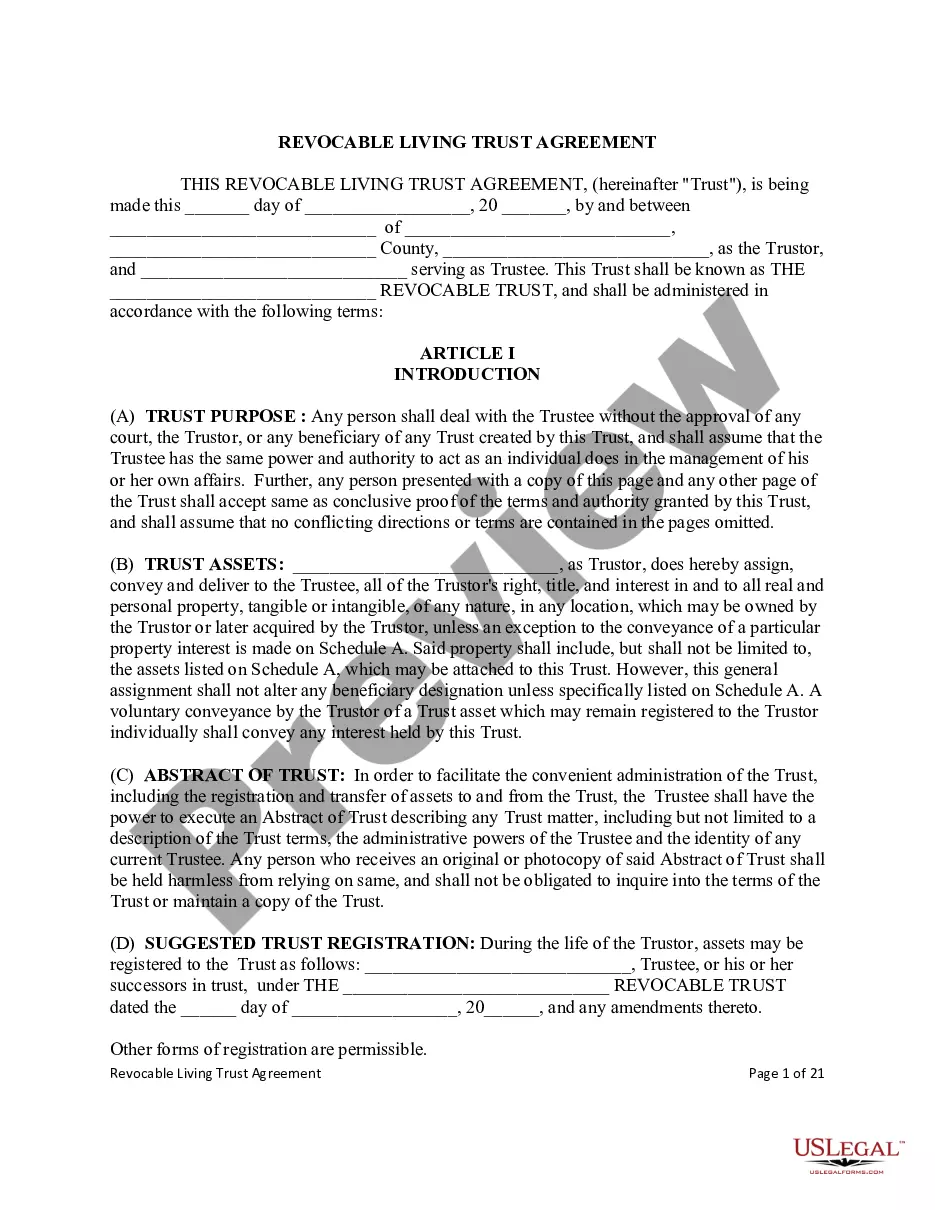
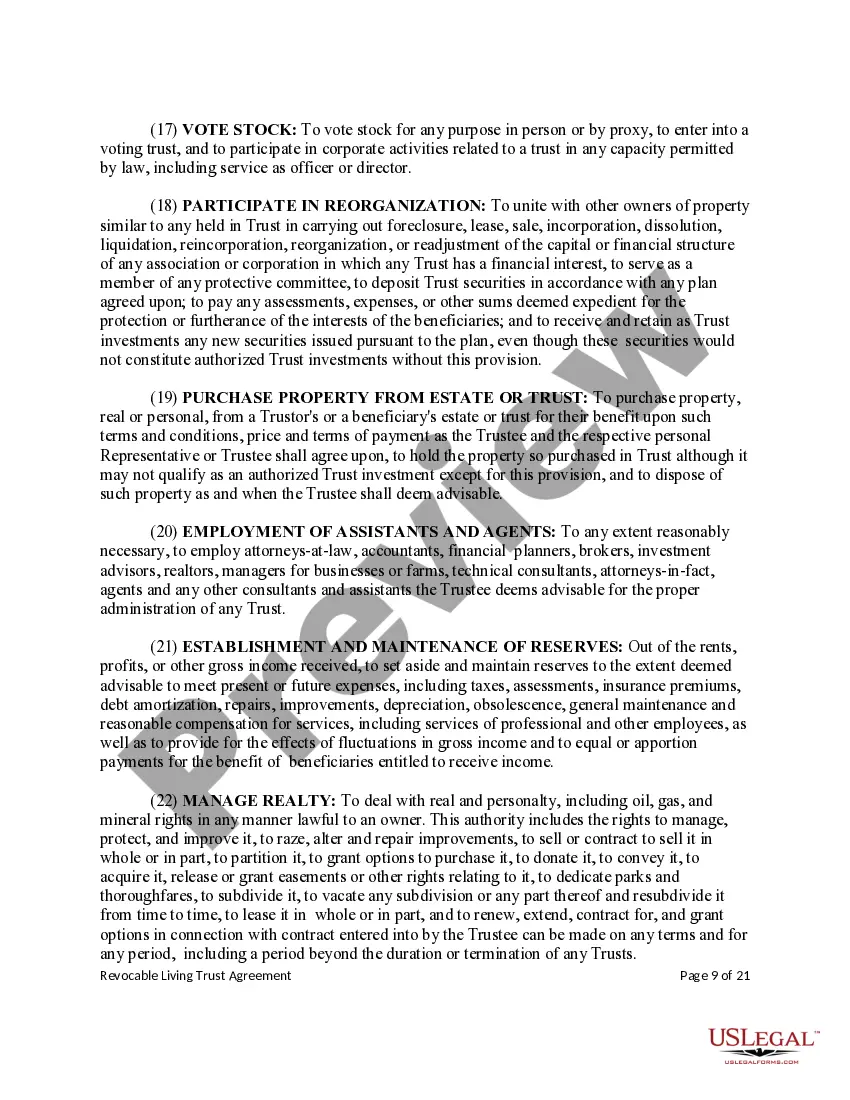
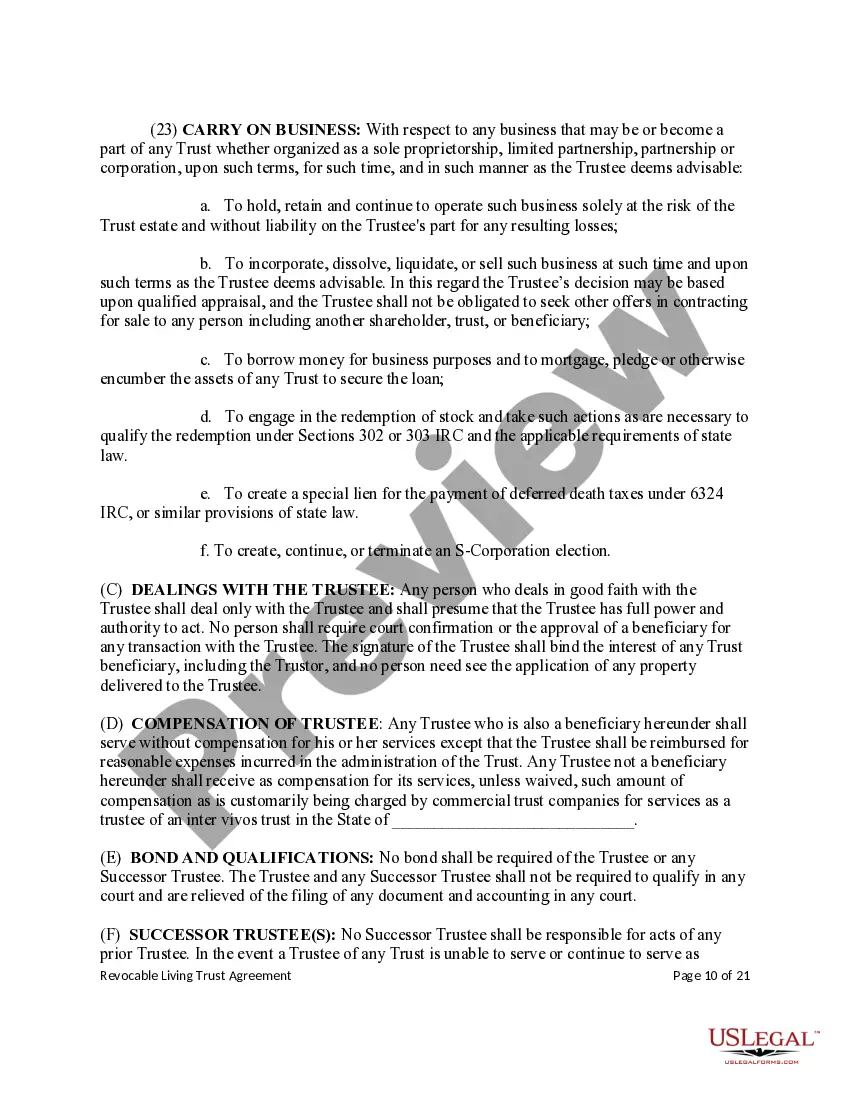
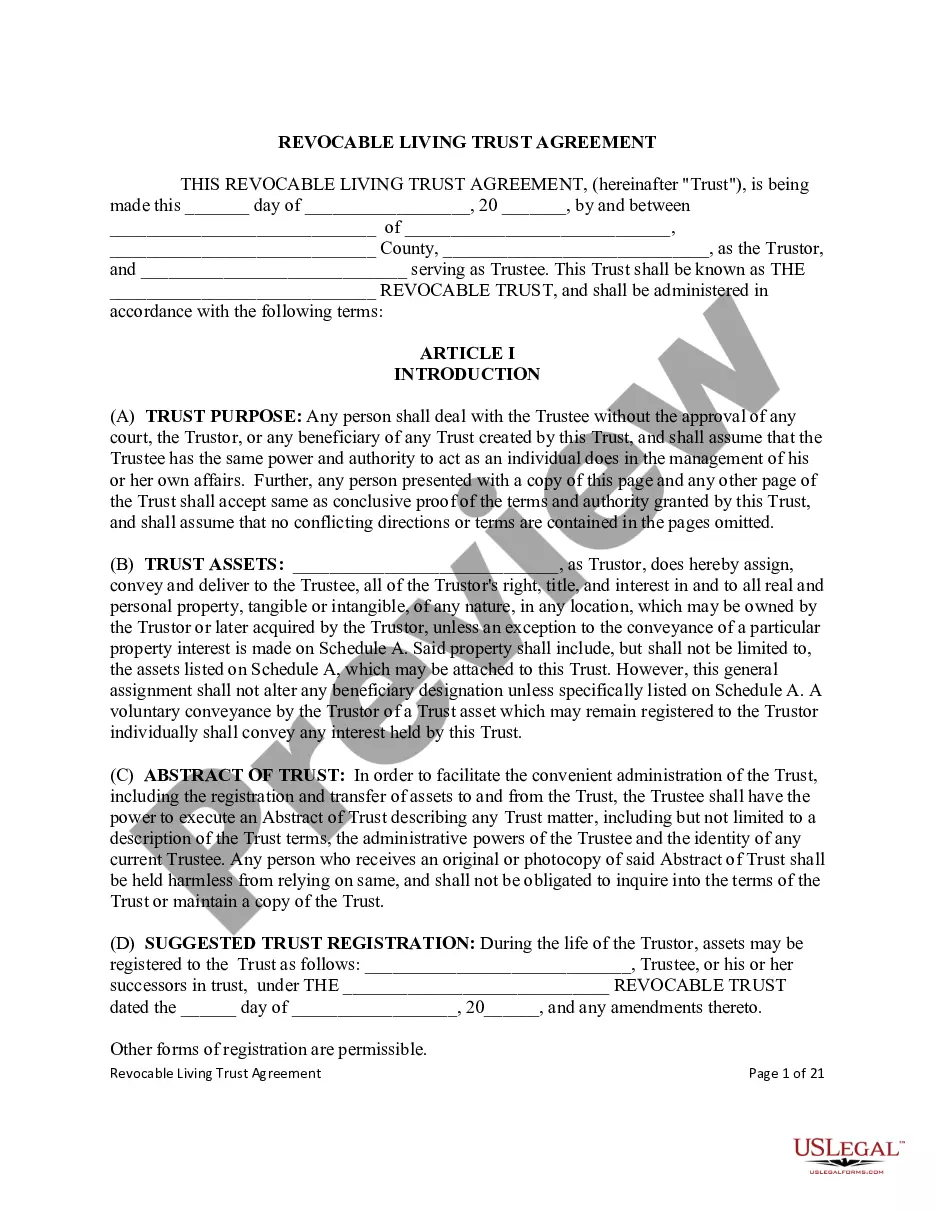
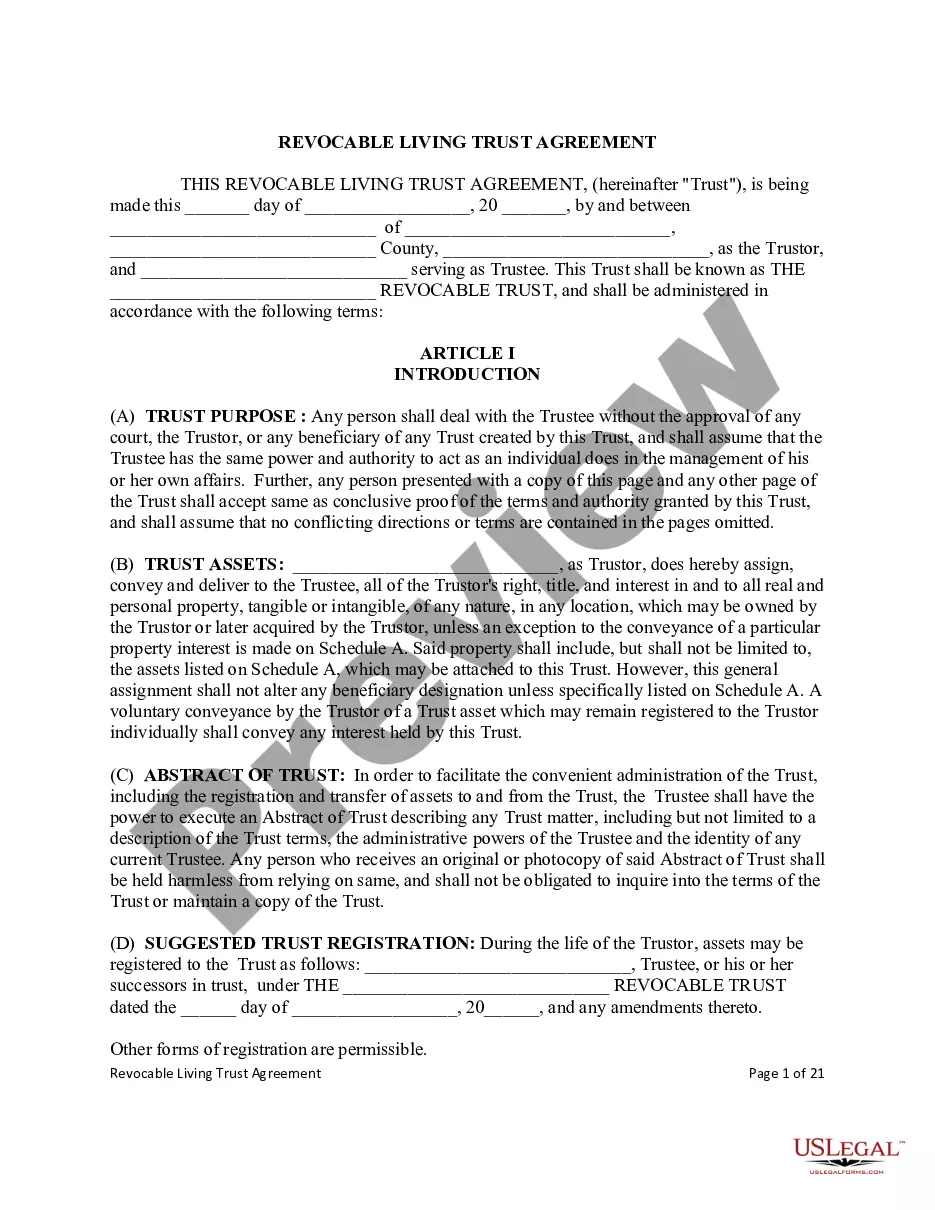
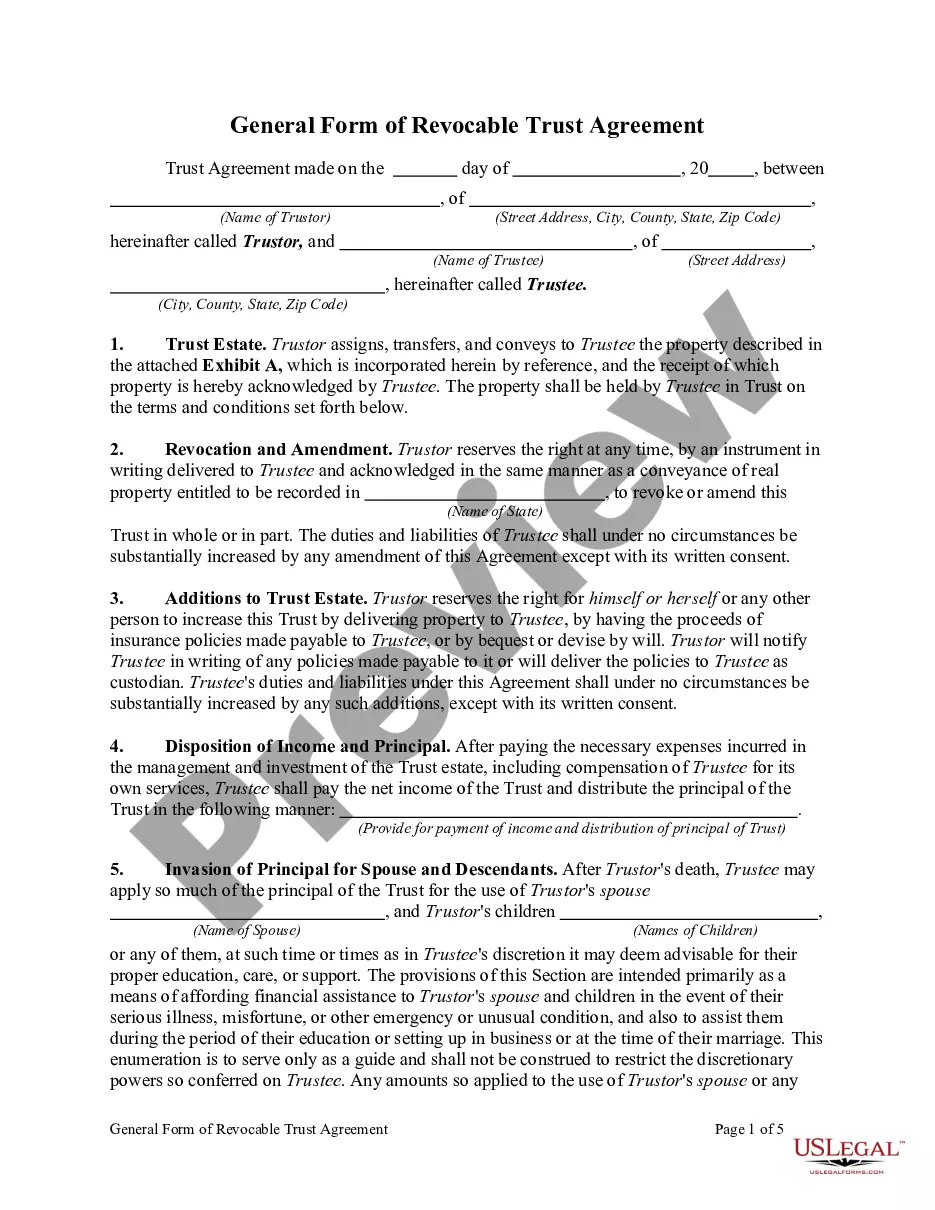
The Revocable Living Trust for Minors is a legal agreement that establishes a trust to manage and distribute assets for a minor child. This form allows parents to create a trust that provides for the child's financial needs without the requirement of court oversight during the parents' incapacity or after their passing. Unlike other estate planning tools, this trust can be revoked or altered by the trustor (the person who creates the trust) while they are still alive, offering flexibility in managing assets and ensuring they are used for the minor's benefit.
Key parts of this document
- Trustor and Trustee Identifications: Names and addresses of the individuals establishing and managing the trust.
- Trust Purpose: Explanation of the trust's goals, including asset management without court intervention.
- Trust Assets: Comprehensive listing of all assets included in the trust.
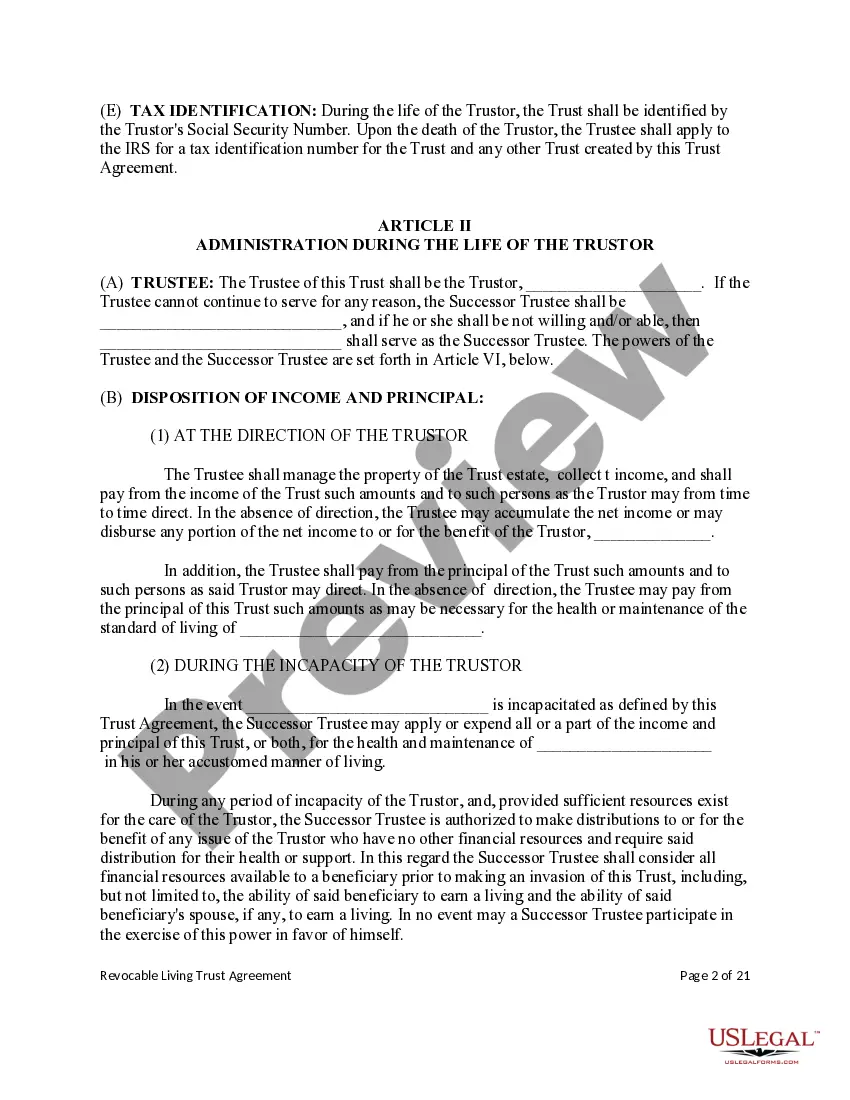
- Successor Trustee Provisions: Designation of an alternate trustee if the primary cannot serve.
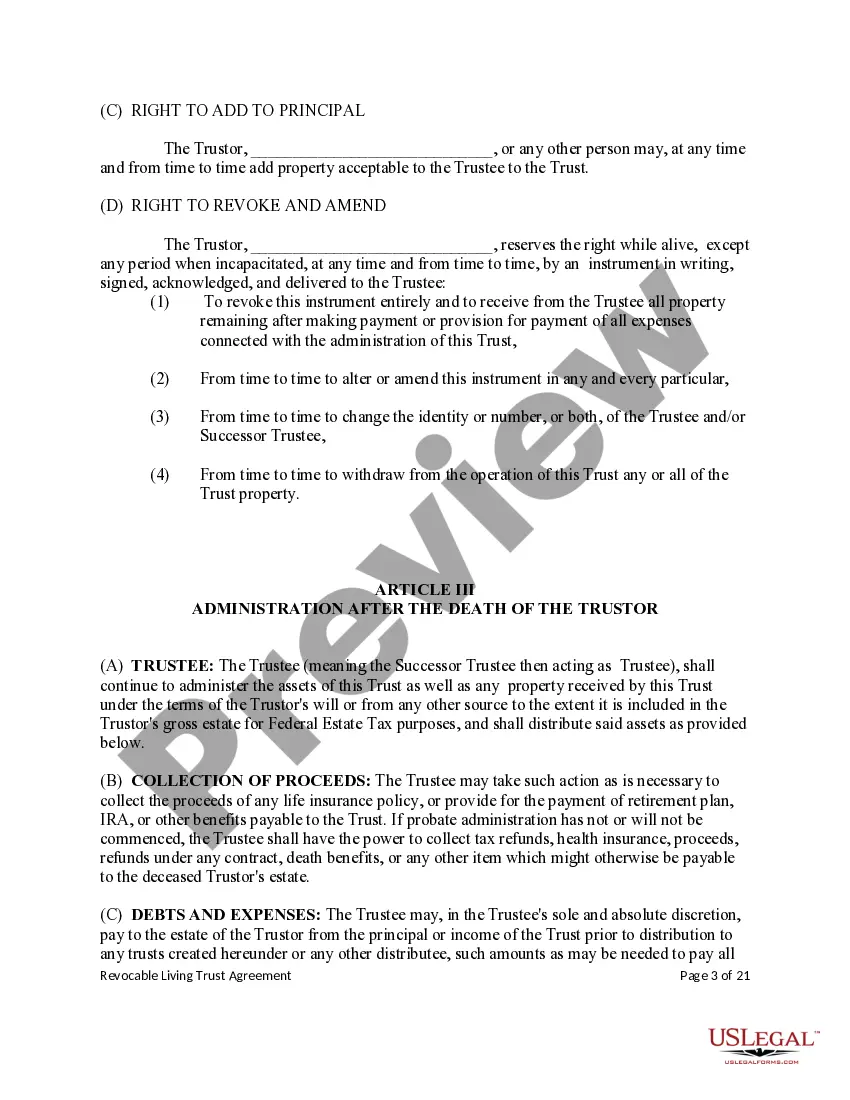
- Instructions for Revocation and Amendment: Details on how the trust can be changed or terminated.
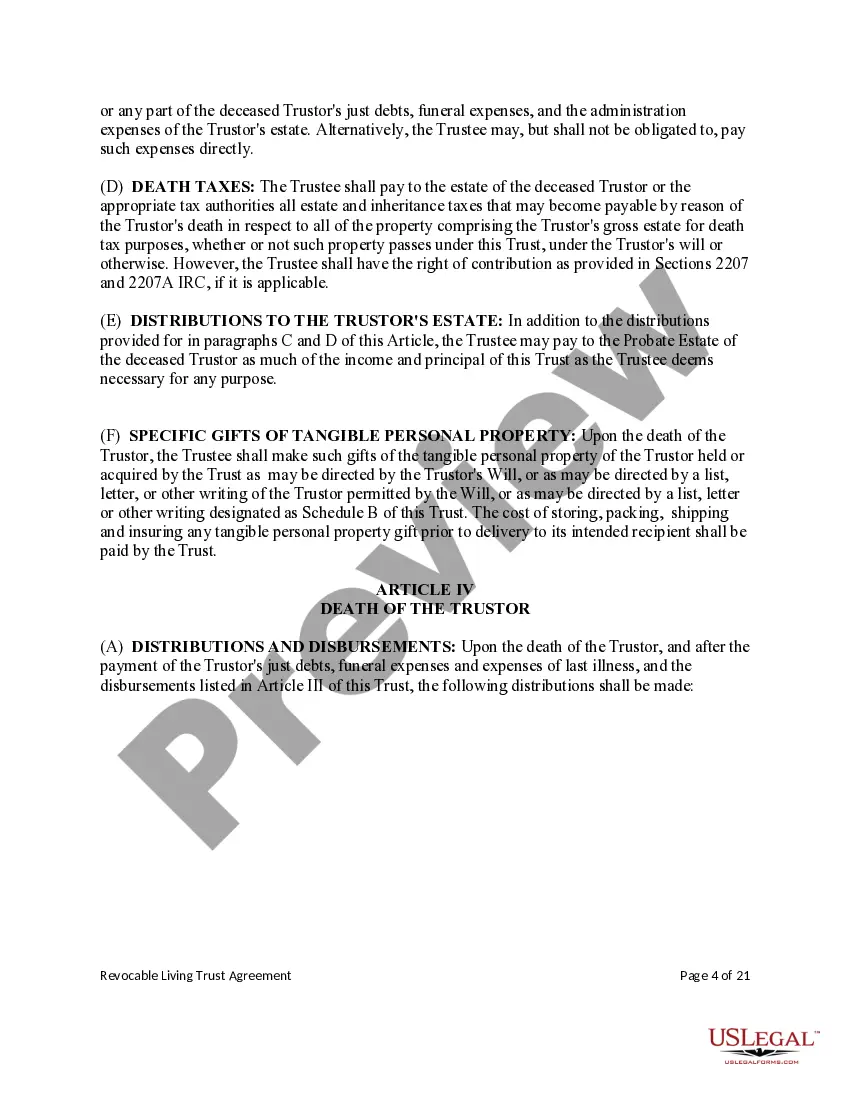
- Distribution Instructions: Guidelines for how assets are to be divided and when distributions to the minor will occur.

Situations where this form applies
This form is particularly useful in various situations, such as when parents wish to ensure that assets are managed responsibly for their minors in case of their passing or incapacity. It is ideal for families looking to provide long-term financial security for their children while avoiding probate court. Additionally, it can be employed when parents want to dictate how their children's inheritance is used, ensuring that funds are allocated for health, education, and welfare.
Who this form is for
- Parents or legal guardians of minor children looking to establish a financial safety net.
- Individuals seeking to avoid probate for assets intended for minors.
- Those who wish to exercise control over how their assets will be used for their minors in the event of incapacity or death.
Completing this form step by step
- Identify the parties involved: Name the trustor and trustee in the appropriate sections of the document.
- Specify the trust purpose: Clearly outline the goals of the trust and how it will benefit the minor.
- List all trust assets: Detail the property and financial assets you plan to include in the trust.
- Choose a successor trustee: Designate an alternate trustee to manage the trust if the primary trustee is unable to do so.
- Document any special instructions: Provide any conditions or specific rules regarding the distribution of assets.
- Sign and date the form: Ensure that the trustor and trustee sign the agreement in the presence of a notary if required by state law.
Does this document require notarization?
Yes, this form must be notarized to be legally valid. Notarization ensures that the signatures on the document are legitimate and helps prevent fraud. US Legal Forms offers integrated online notarization services for 24/7 availability, secure video calls, and legal equivalence without the need for travel.
Get your form ready online
Our built-in tools help you complete, sign, share, and store your documents in one place.
Make edits, fill in missing information, and update formatting in US Legal Forms—just like you would in MS Word.
Download a copy, print it, send it by email, or mail it via USPS—whatever works best for your next step.
Sign and collect signatures with our SignNow integration. Send to multiple recipients, set reminders, and more. Go Premium to unlock E-Sign.
If this form requires notarization, complete it online through a secure video call—no need to meet a notary in person or wait for an appointment.
We protect your documents and personal data by following strict security and privacy standards.

Make edits, fill in missing information, and update formatting in US Legal Forms—just like you would in MS Word.

Download a copy, print it, send it by email, or mail it via USPS—whatever works best for your next step.

Sign and collect signatures with our SignNow integration. Send to multiple recipients, set reminders, and more. Go Premium to unlock E-Sign.

If this form requires notarization, complete it online through a secure video call—no need to meet a notary in person or wait for an appointment.

We protect your documents and personal data by following strict security and privacy standards.
Typical mistakes to avoid
- Failing to clearly define the trust assets, leading to confusion during asset distribution.
- Not designating a successor trustee, creating uncertainty if the original trustee cannot serve.
- Neglecting to update the trust document after significant life changes, such as marriage or divorce.
- Overlooking state-specific requirements that may affect the validity of the trust.
Benefits of completing this form online
- Convenience: Access and complete the form from the comfort of your home at any time.
- Editability: Easily make changes to your trust as your circumstances evolve.
- Reliability: Ensure you are using a form created by licensed attorneys, minimizing legal risks.
Looking for another form?

Form popularity
FAQ
A well-planned, well-managed trust can give your child or heir a solid head start on adulthood. It can also provide them with guaranteed financial security later in life, or ensure your assets are distributed only to certain family members in the unlikely event of your child's untimely death.
Family trust cost between $100-$700 to set up (depending who you get to do it and which state you live in NSW charge a $500 fee whereas most states like QLD charge nothing, see here for details). When setting up a family trust, either get your solicitor to fix you up or use cheaper online legal services.
A trust fund is a legal entity established for the purpose of holding assets for the benefit of specific people, or even for an organization. Children are frequent beneficiaries of trust funds because trust funds can safeguard your assets and make sure they are used for your children's stewardship.
What happens to the death benefit if you name a minor as a beneficiary? If your beneficiary is under the age of majority when you die, the death benefit will be given to a custodian of the funds to hold on to. This guardian can be court-appointed, but the court will most likely choose the surviving parent.
Children who are under the age of 18 are deemed to lack legal capacity to receive a gift. Where a gift in your will is going to a child under 18 (which may be a child of a deceased beneficiary), you can give your executors and trustees the option to make the gift to the child's parent or guardian.
A Minor's Trust is designed to manage and protect assets for a child until they reach a specified age. Some minor trusts are intended to provide funds to benefit a minor during childhood. Others may not allow any expenditure, with the goal being simply to hold and protect funds until the minor reaches adulthood.
Trusts for minors, or minor's trusts, are very specific types of trusts that are used to hold and distribute property or assets to minors. They typically provide instructions that the money or property assets will be held in trust until the minor reaches the age of majority.
As of 2019, attorney fees can range from $1,000 to $2,500 to set up a trust, depending upon the complexity of the document and where you live. You can also hire an online service provider to set up your trust. As of 2019, you can expect to pay about $300 for an online trust.
Select a custodian and a trustee. Decide when and how you want the child to receive the funds from the trust. Start drafting your trust documents. Consult with a trust fund attorney.