Purchase Agreement: Residential Property (Caveat Emptor State)
Overview of this form
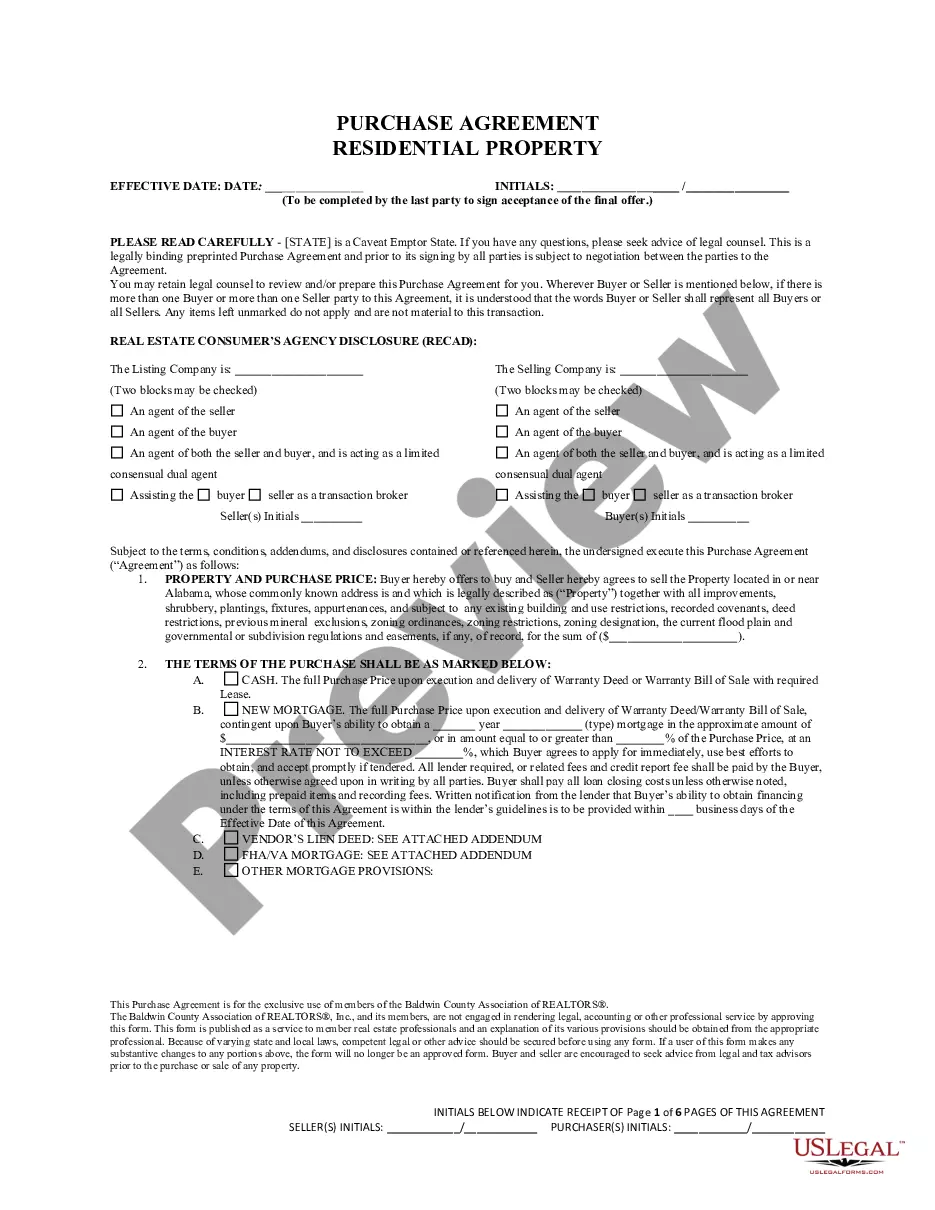
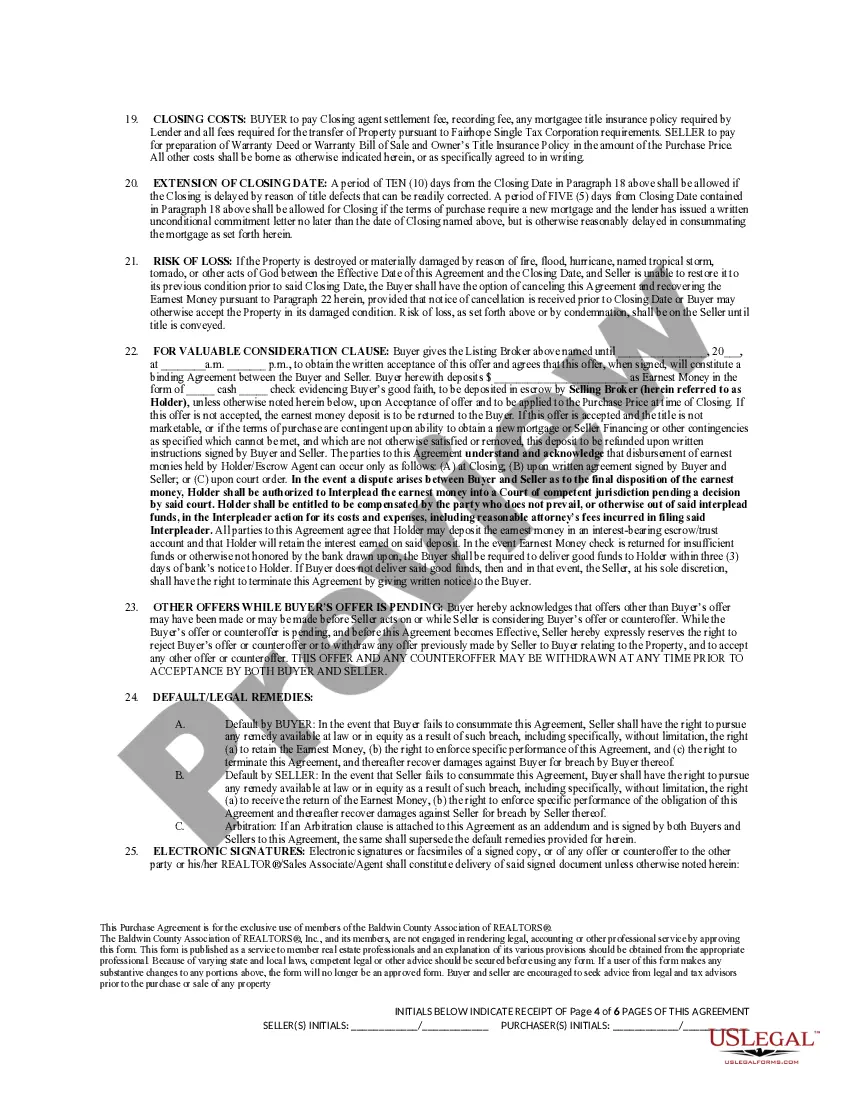
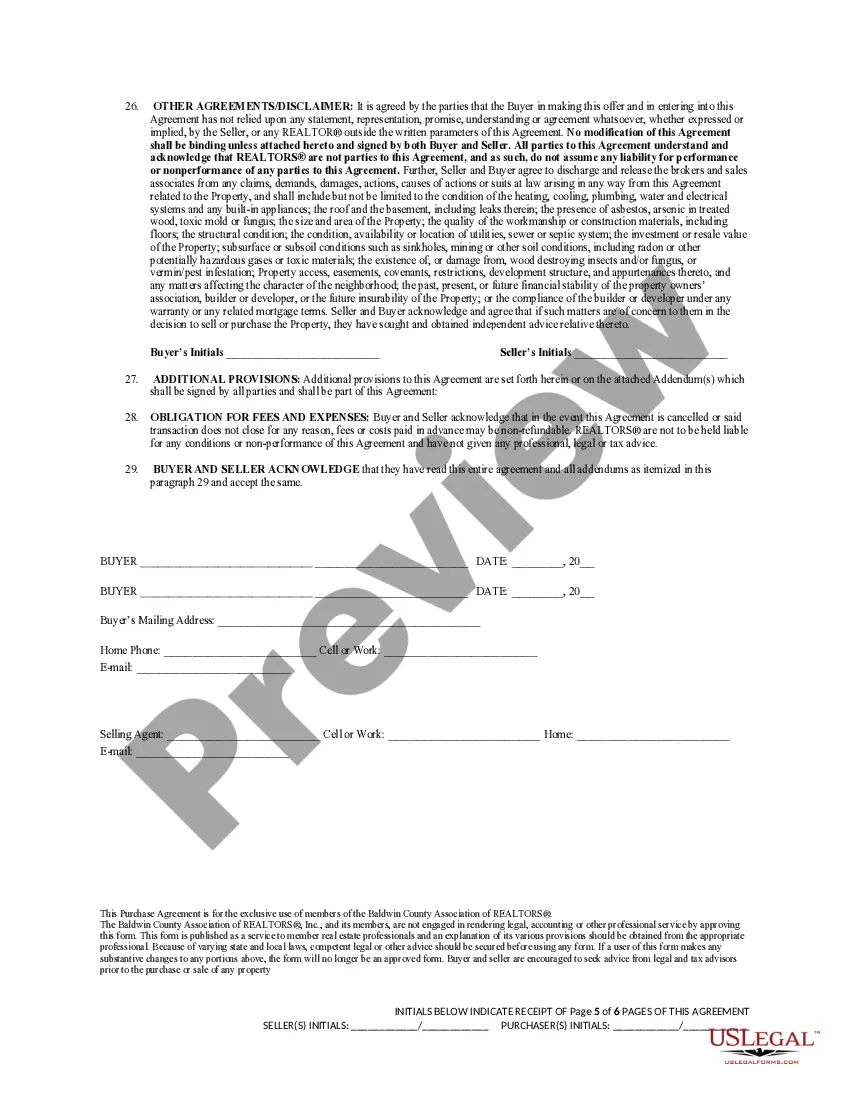
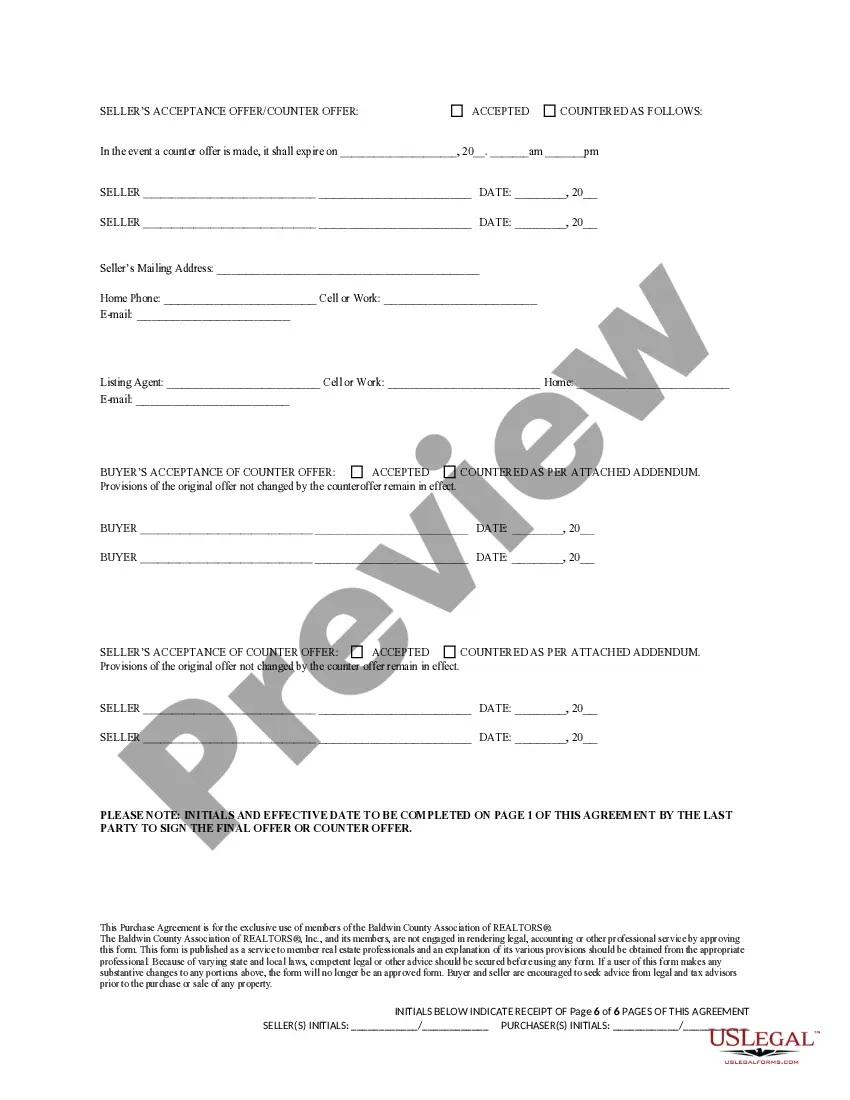
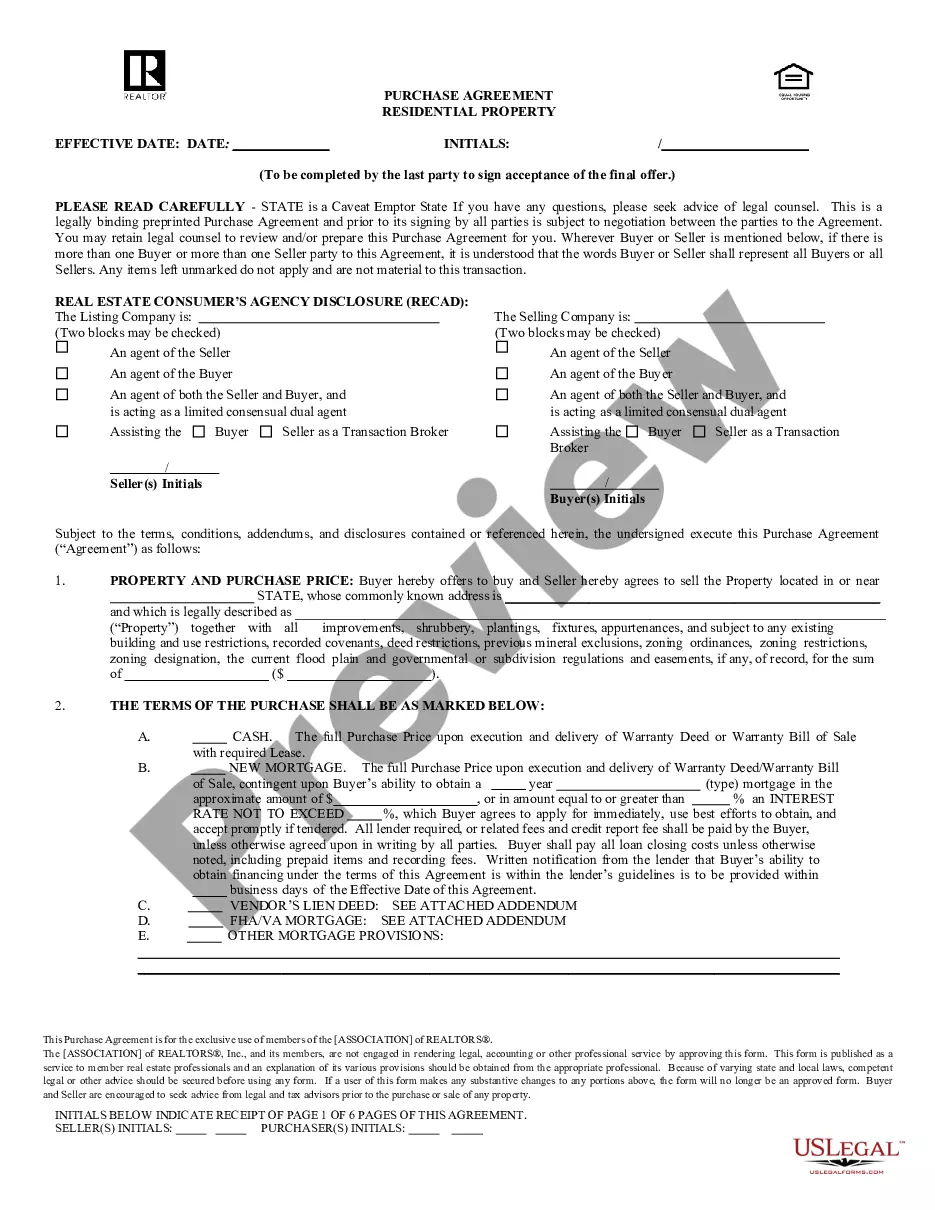
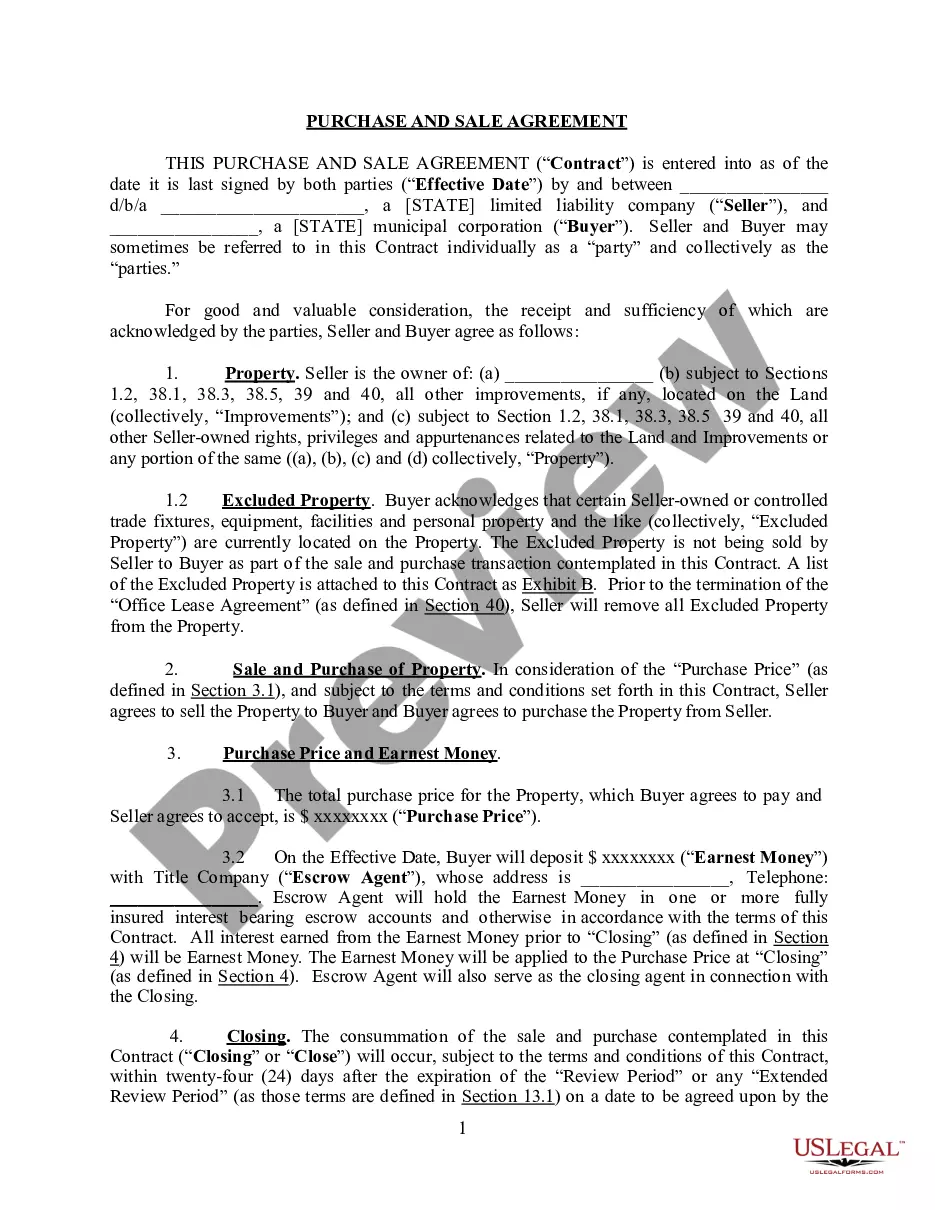
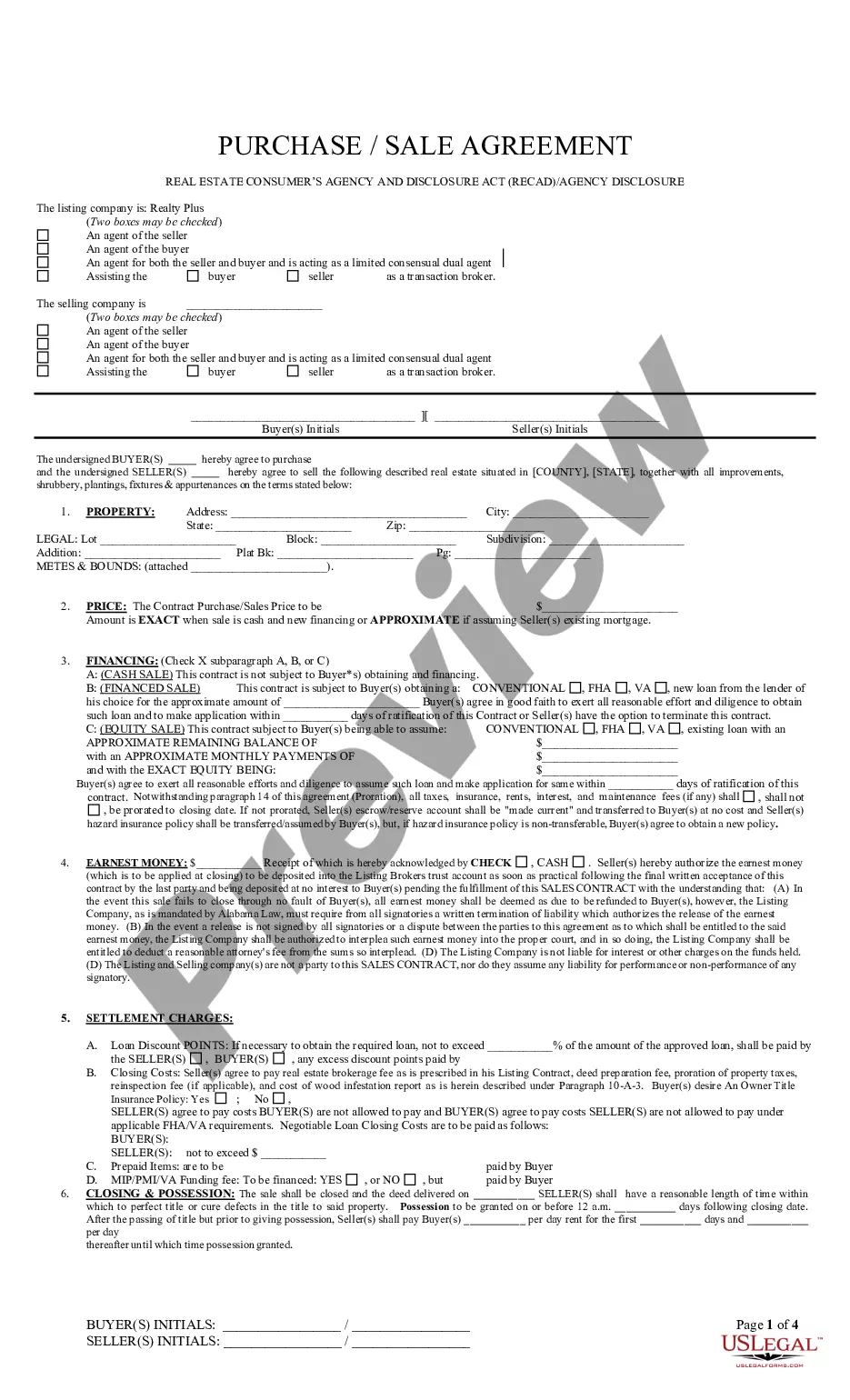
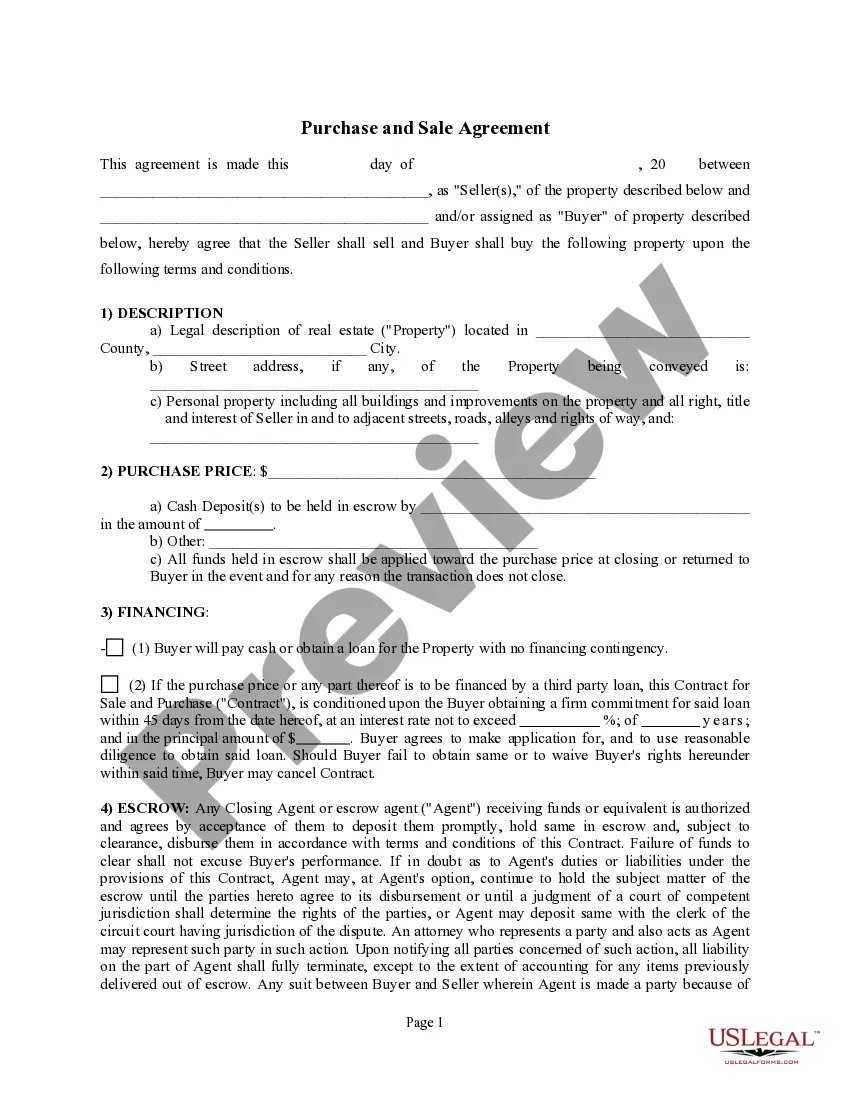
The Purchase Agreement: Residential Property (Caveat Emptor State) is a legal document used for the sale of residential real estate in states where the principle of âcaveat emptorâ applies, meaning "let the buyer beware." This form establishes the terms of the sale, including the purchase price and property condition, and should be completed by both the buyer and seller to protect their rights and obligations during the transaction.
Main sections of this form
- Effective Date: The date when the agreement becomes binding.
- Property Description: Details about the property being sold, including its location and legal description.
- Purchase Price: The agreed amount for the property, and terms of payment including cash or mortgage details.
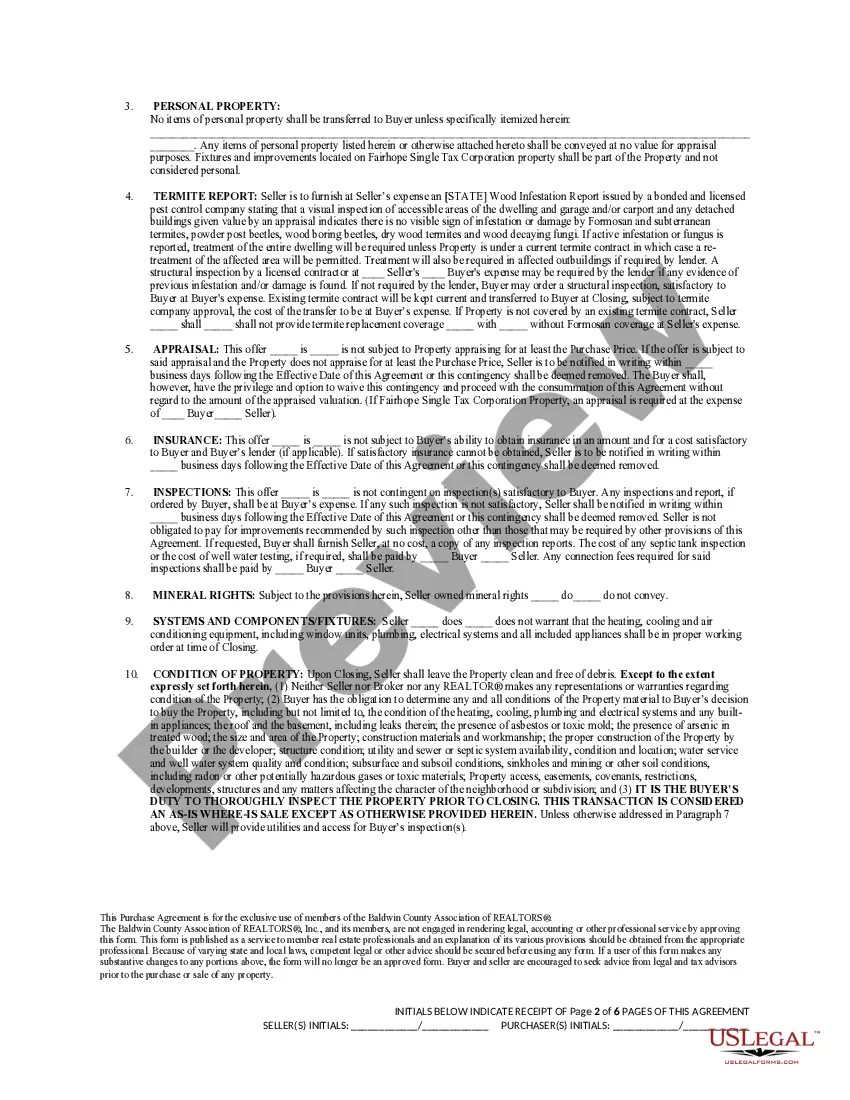
- Disclosure Statements: Requirements for termite inspections, property condition, and any warranties.
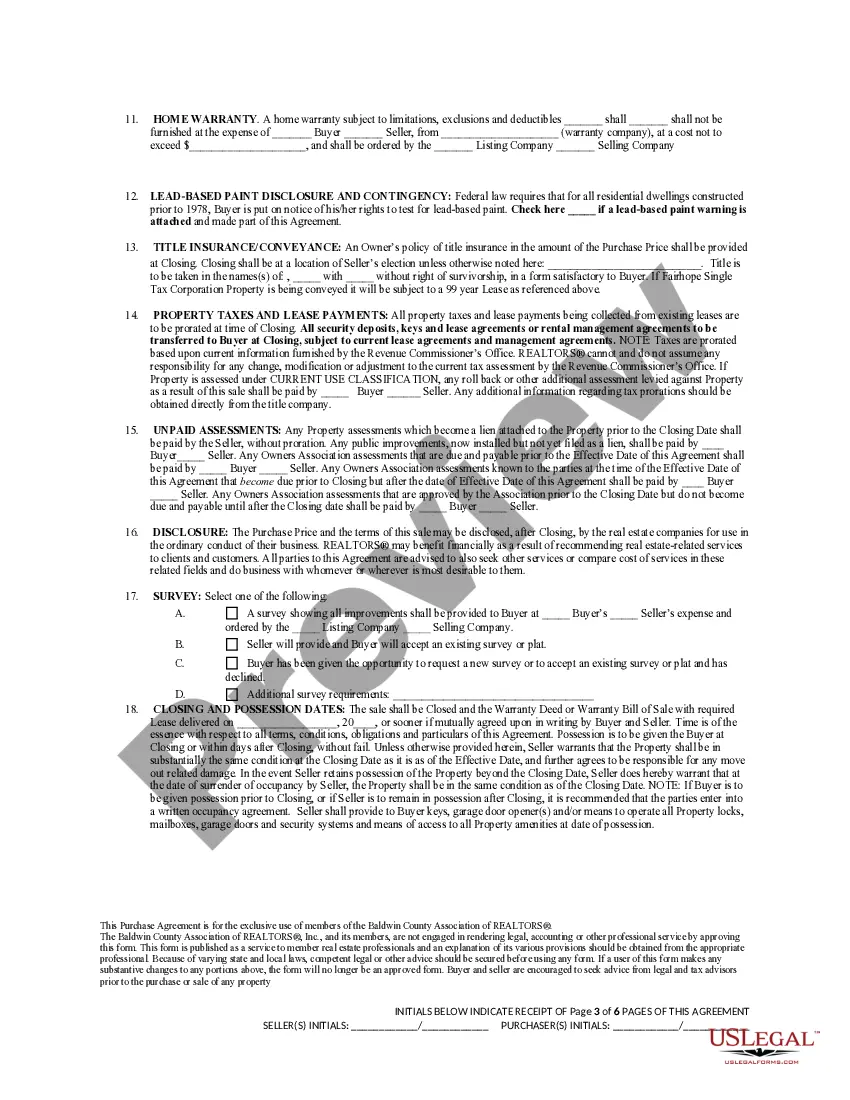
- Closing Procedures: Information related to the closing date, possession, and payment of closing costs.
- Default Terms: Outlines the remedies available in case either party fails to meet their obligations.

When this form is needed
This form should be used when a buyer wishes to purchase residential property in a caveat emptor state. It is appropriate for agreements where buyers are willing to accept the property in its current state with limited warranties from sellers. This is common in real estate transactions involving older homes or properties that have not undergone recent renovations.
Who should use this form
This form is intended for:
- Individual homebuyers looking to purchase property in caveat emptor states.
- Real estate agents representing buyers or sellers in residential property transactions.
- Property sellers who are selling their homes without warranties on the condition of the property.
- Investors purchasing residential real estate for rental or resale purposes.
Steps to complete this form
- Identify the parties: Enter the names of the buyer and seller.
- Specify the property: Provide the legal description and address of the property being sold.
- Enter purchase price: Fill in the total agreed-upon price for the property.
- Detail payment terms: Indicate whether payment will be made in cash or through a mortgage.
- Sign and date: Ensure both parties sign and date the agreement to confirm acceptance of all terms.
Notarization requirements for this form
This form does not typically require notarization unless specified by local law. However, it's always a good idea to check with your local regulations or consult with legal professionals.
Get your form ready online
Our built-in tools help you complete, sign, share, and store your documents in one place.
Make edits, fill in missing information, and update formatting in US Legal Forms—just like you would in MS Word.
Download a copy, print it, send it by email, or mail it via USPS—whatever works best for your next step.
Sign and collect signatures with our SignNow integration. Send to multiple recipients, set reminders, and more. Go Premium to unlock E-Sign.
If this form requires notarization, complete it online through a secure video call—no need to meet a notary in person or wait for an appointment.
We protect your documents and personal data by following strict security and privacy standards.

Make edits, fill in missing information, and update formatting in US Legal Forms—just like you would in MS Word.

Download a copy, print it, send it by email, or mail it via USPS—whatever works best for your next step.

Sign and collect signatures with our SignNow integration. Send to multiple recipients, set reminders, and more. Go Premium to unlock E-Sign.

If this form requires notarization, complete it online through a secure video call—no need to meet a notary in person or wait for an appointment.

We protect your documents and personal data by following strict security and privacy standards.
Typical mistakes to avoid
- Failing to provide a complete legal description of the property.
- Not specifying payment terms clearly, which can lead to misunderstanding.
- Overlooking essential disclosures, such as the condition of the property.
- Not signing the form, thereby rendering it unenforceable.
Advantages of online completion
- Convenience: Easily fill out and download the form from anywhere.
- Editability: Make changes quickly without the need for physical copies.
- Accessibility: Access templates drafted by licensed attorneys, ensuring legal compliance.
- Time-saving: Complete the process faster than traditional paper forms.
Looking for another form?
Form popularity
FAQ
Caveat emptor is a common law doctrine that places the burden on buyers to reasonably examine property before making a purchase.
Caveat emptor is a Latin phrase that translates to "let the buyer beware." It means that an individual buys at their own risk. Potential buyers are warned by the phrase to do their research and ask pointed questions of the seller.
Example of Caveat Emptor (Buyer Beware) Before the purchase, John asked the seller about the defects in the house. Adam told him that there was a leak in the bathroom upstairs, but it was fixed already. However, Adam also warned him that despite the repairs, a small leak could occur from time to time.
If the seller obtains the consent of the buyer by fraud then caveat emptor will not apply. Also if the seller conceals any material defects of the goods which are later discovered on closer examination then again the buyer will not be responsible. In both cases, the seller will be the guilty party.
Caveat emptor is a Latin phrase that means "let the buyer beware." The principle of caveat emptor is sometimes used in legal contracts as a type of disclaimer. A caveat emptor disclaimer precludes post-purchase disputes despite the seller having more information than the buyer about the quality of a good or service.
Which States Allow Caveat Emptor Home Sales? Alabama. Arkansas. Georgia. North Dakota. Virginia. Wyoming.
The Doctrine of Caveat Emptor means that the responsibility lies on the buyer of goods and he must perform due diligence before the purchase of the goods. It is expected from the buyer to be alert in a contract of sale. He cannot hold the seller responsible for inferior goods unless the contact is based on fraud.