Revocable Trust for Child
About this form
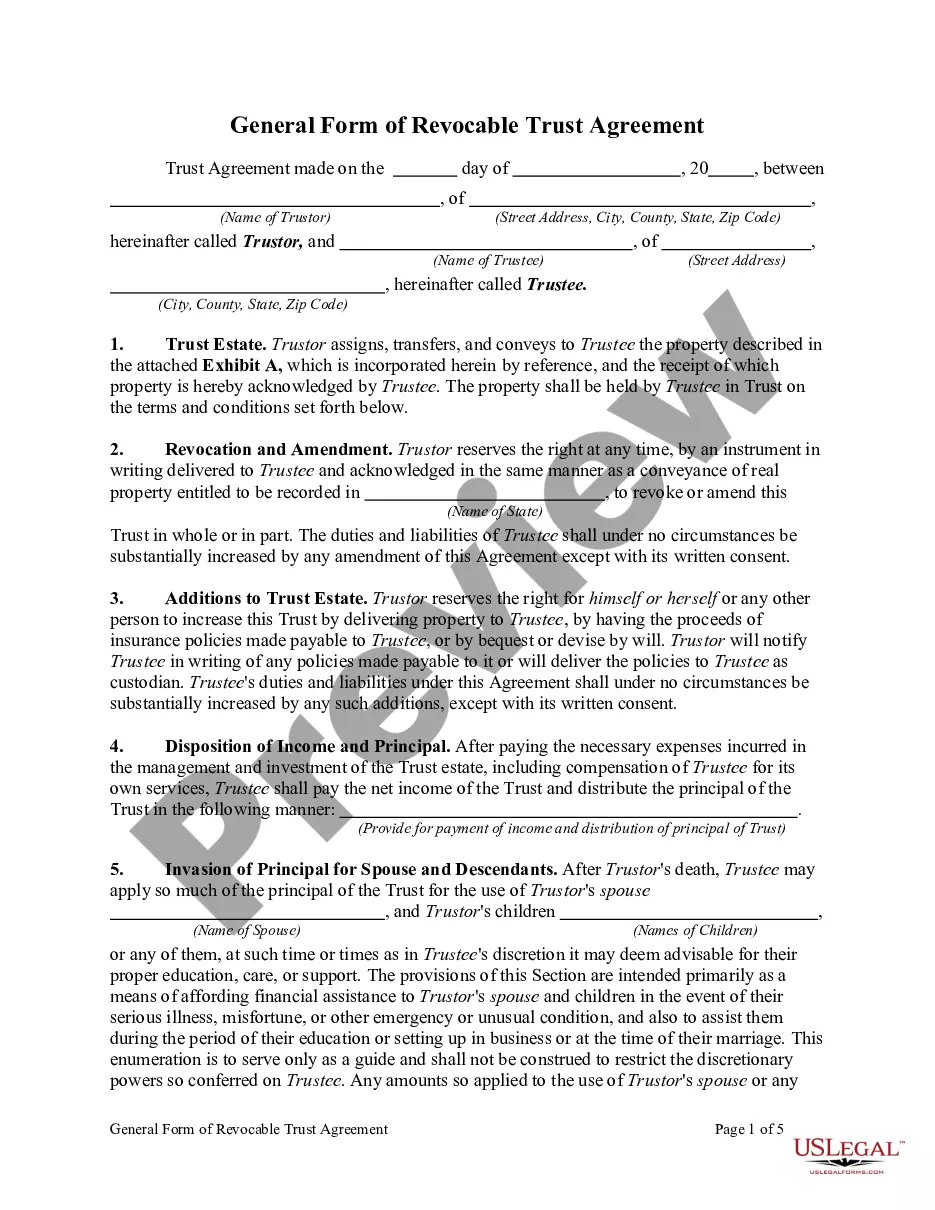
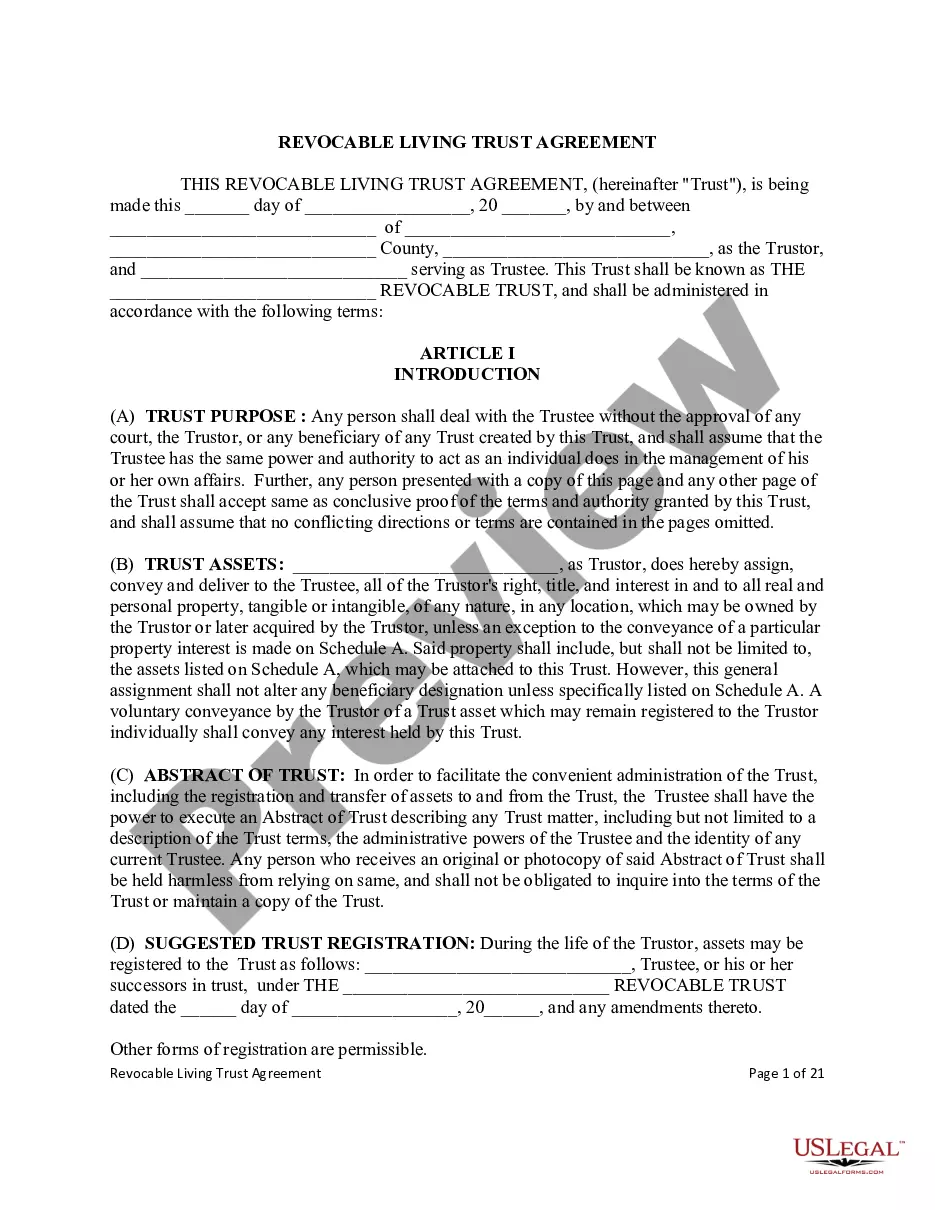
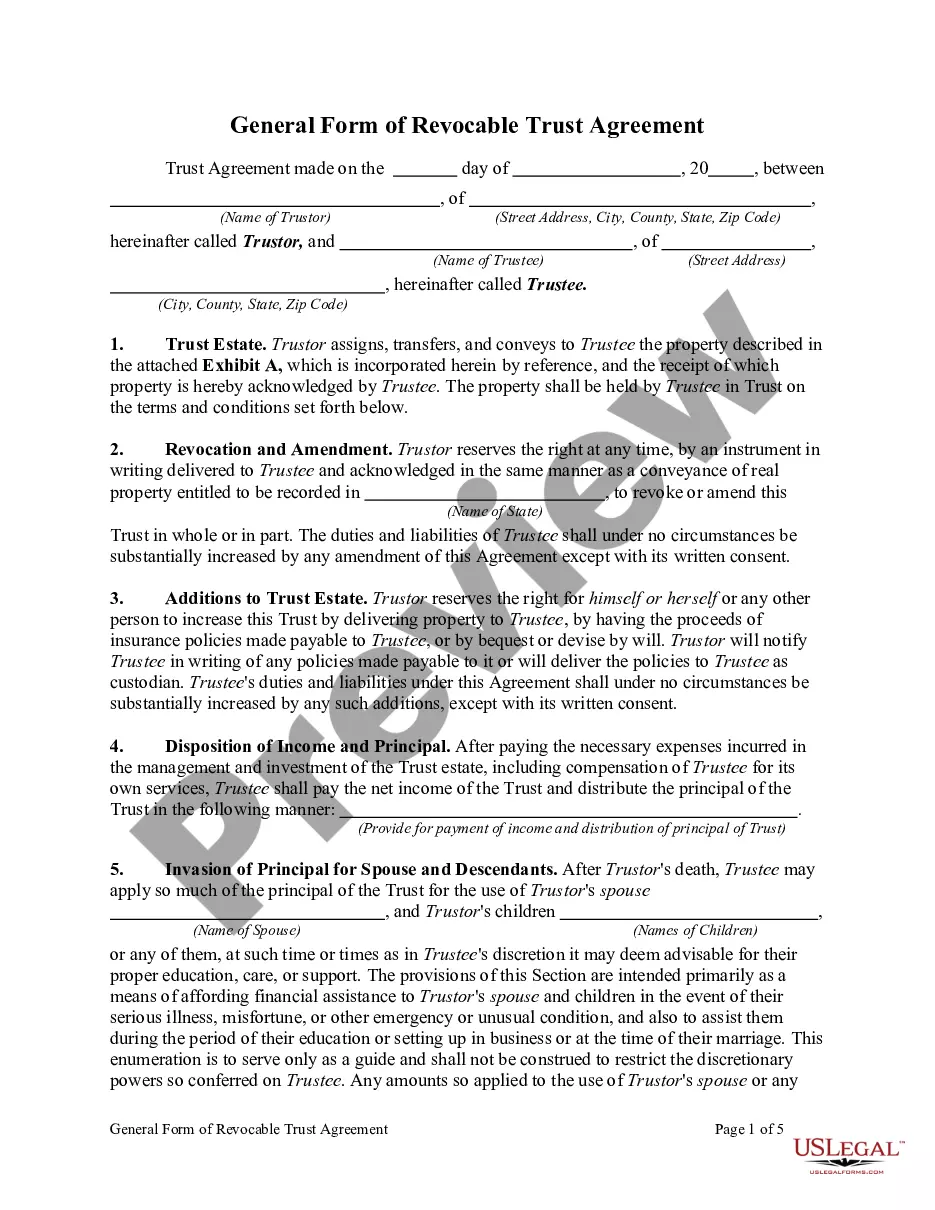
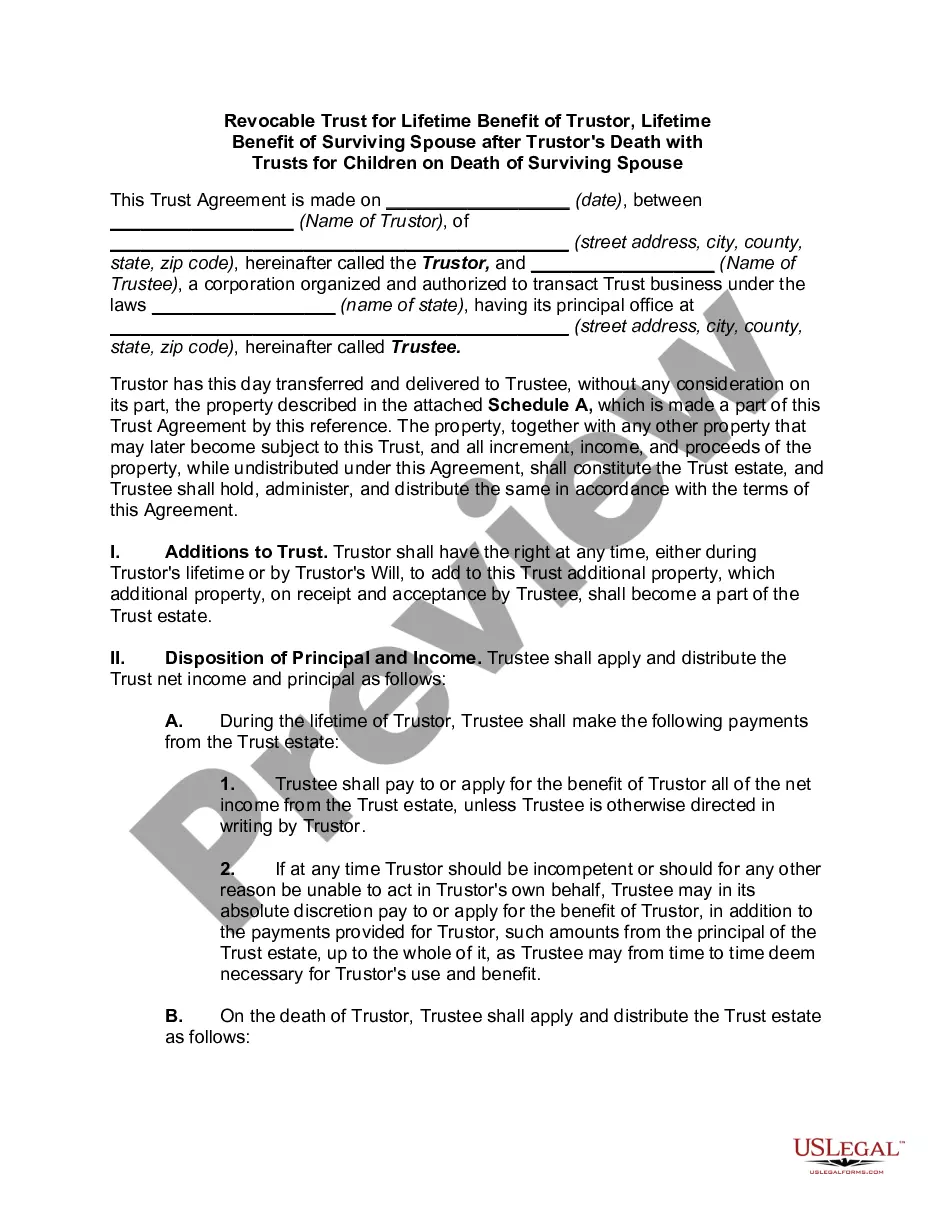
This Revocable Trust for Child is a legal document that establishes a trust specifically for the benefit of a child. Unlike irrevocable trusts, which cannot be changed once established, a revocable trust allows the creator (trustor) to amend or dissolve the trust at any time. This flexibility makes it particularly suitable for parents wanting to manage their child's inheritance while retaining control over the assets during their lifetime.
Key parts of this document
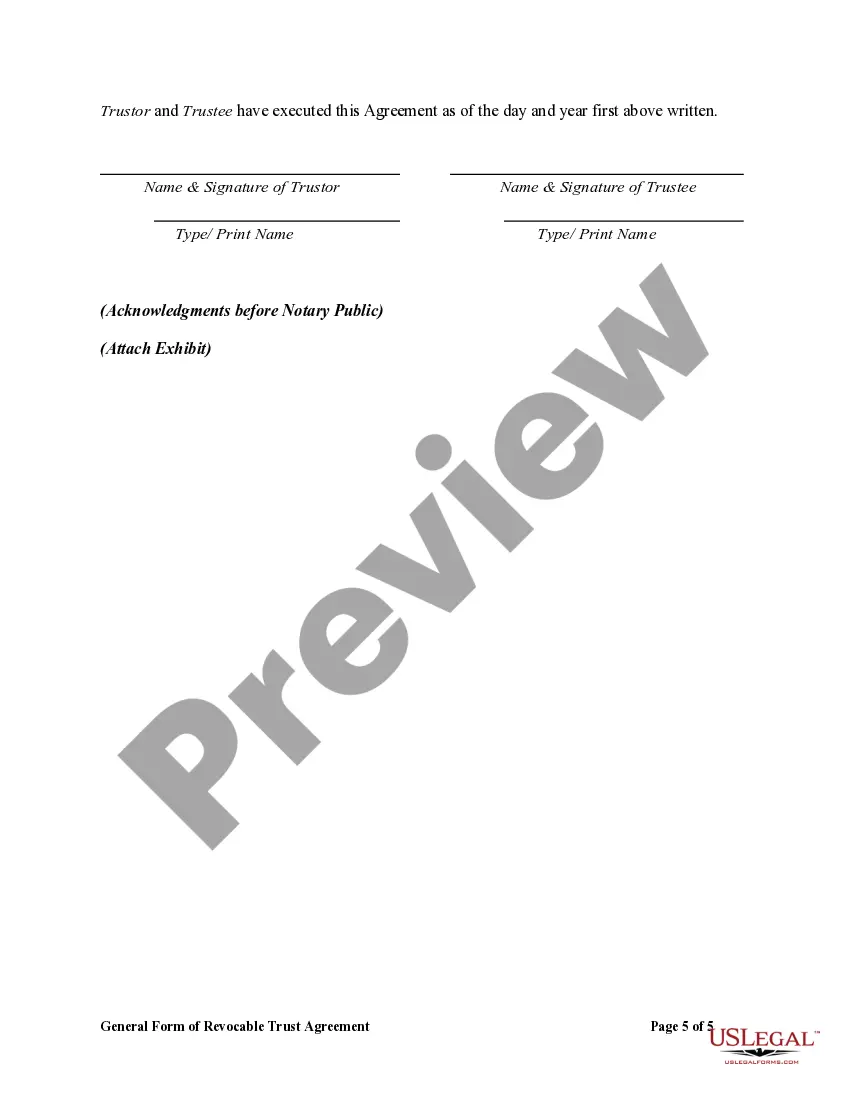
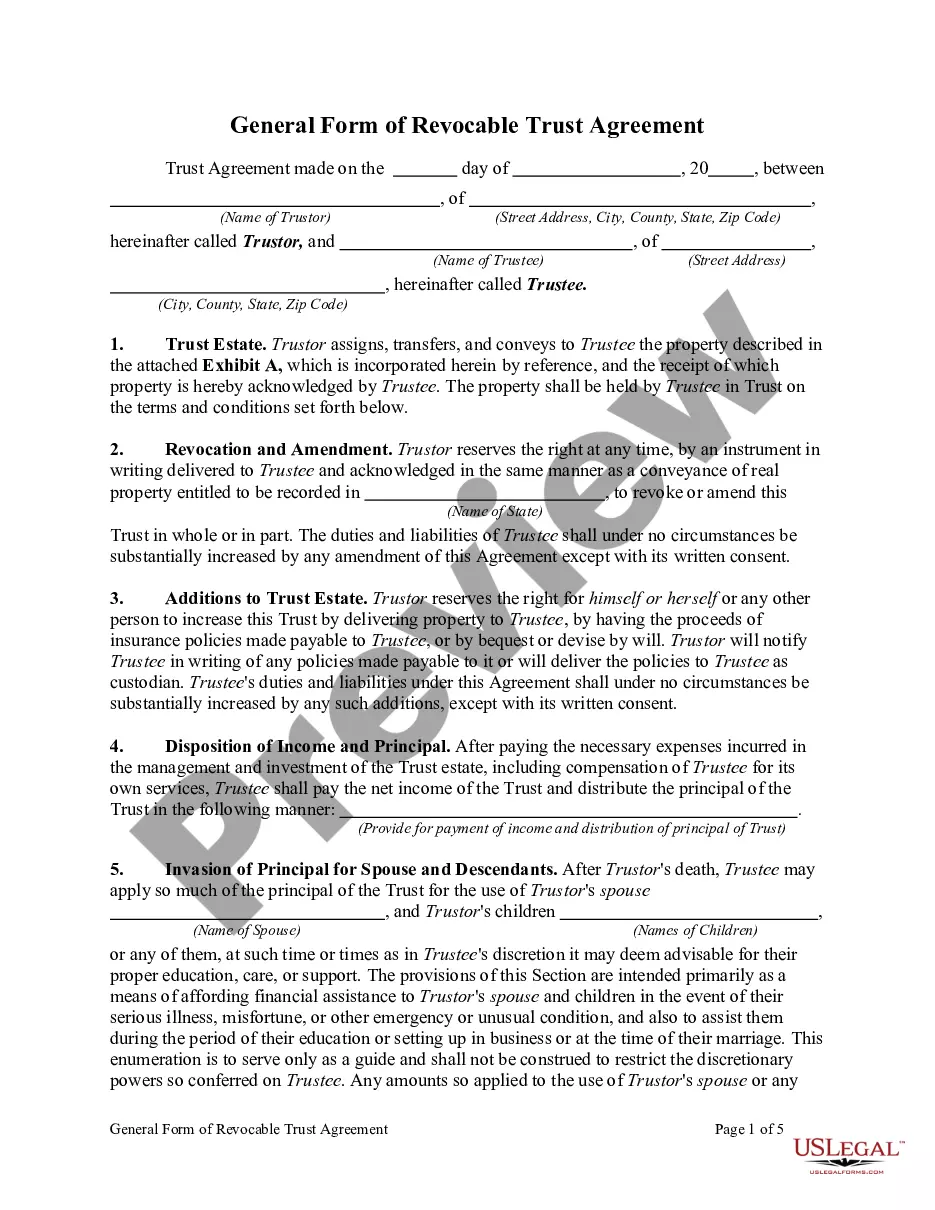
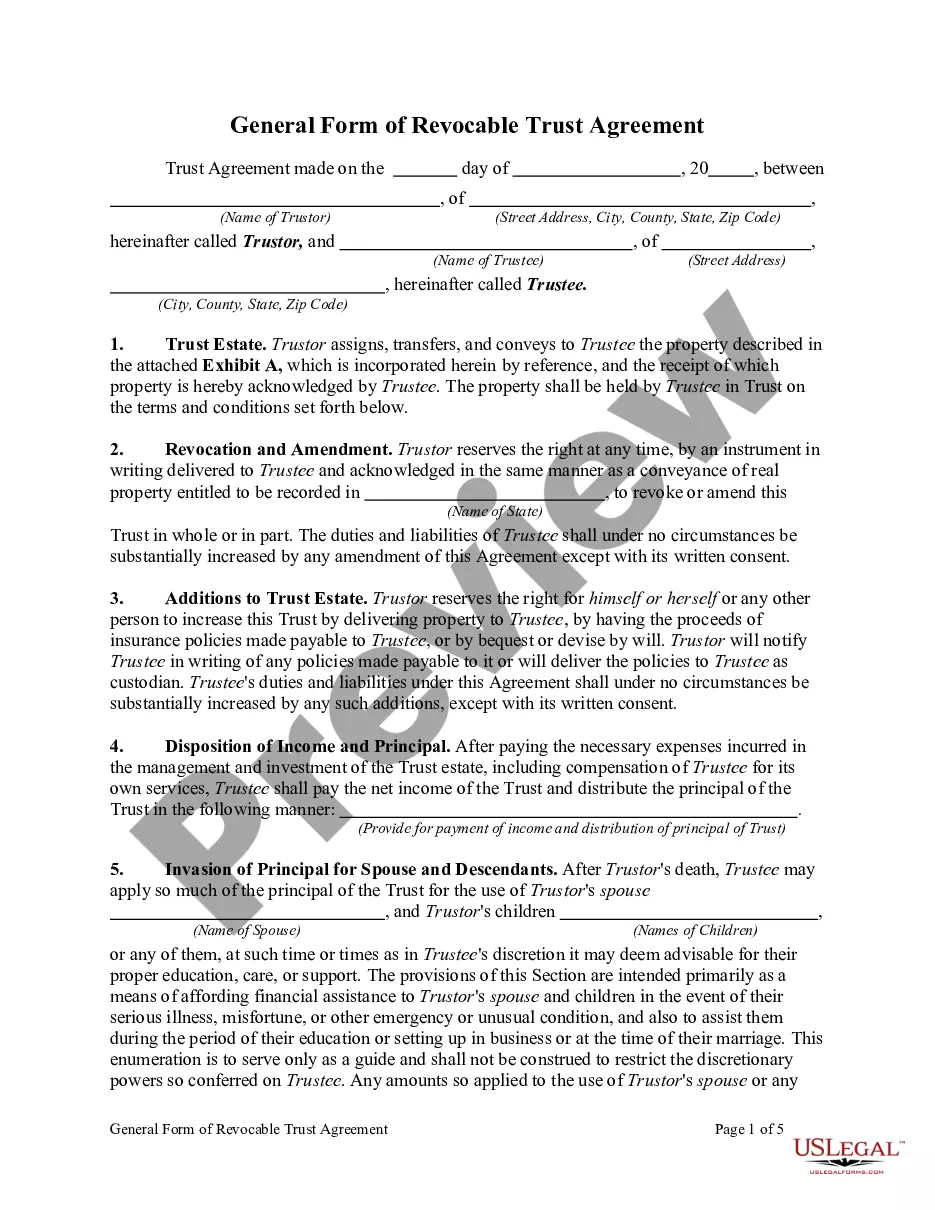
- Additions to trust estate: Allows the trustor to increase the trust by transferring property or insurance proceeds.
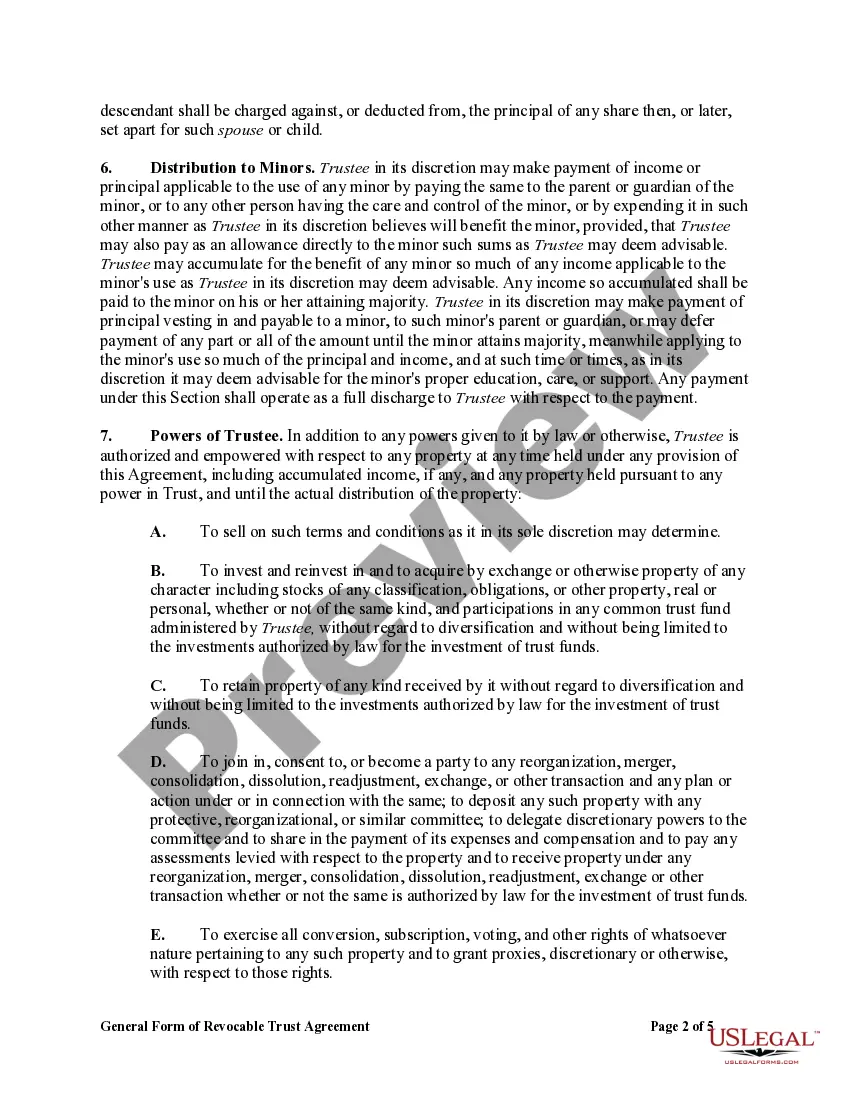
- Distribution to minors: Outlines how the trustee can manage and distribute funds for the benefit of the minor.
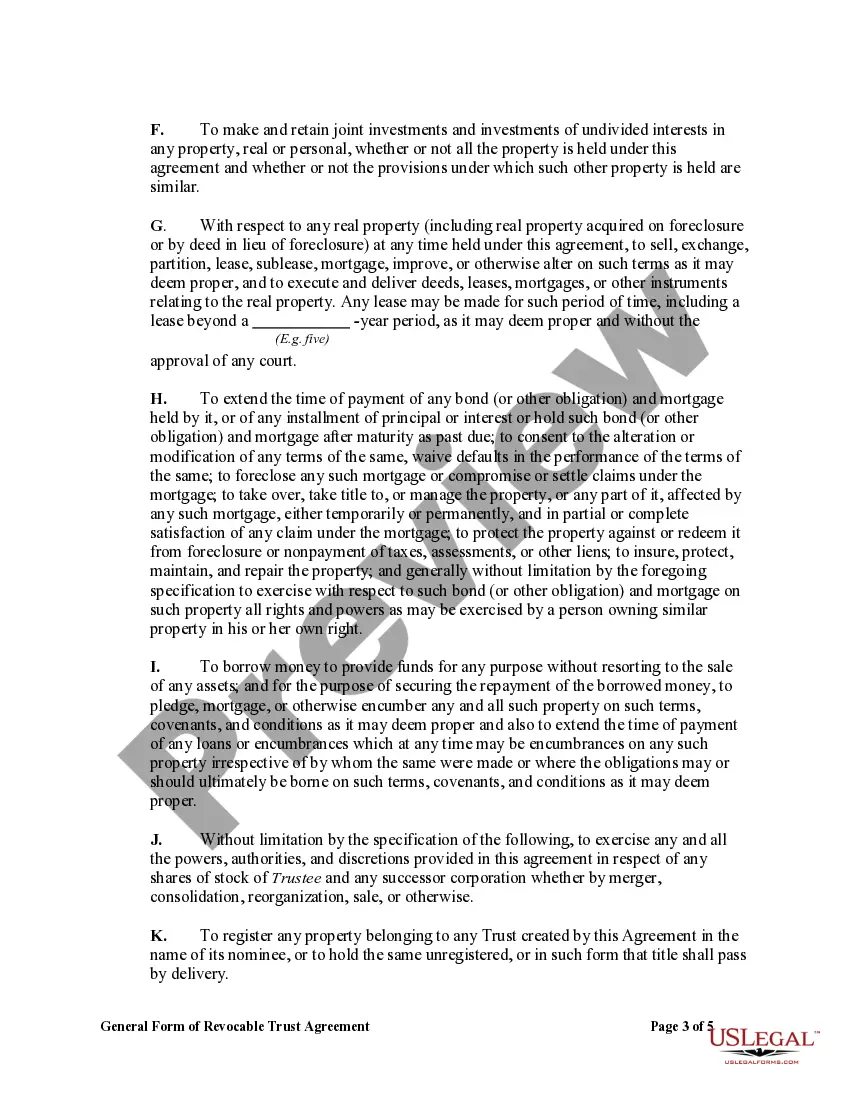
- Powers of trustee: Specifies the extensive powers that a trustee has in managing trust assets.
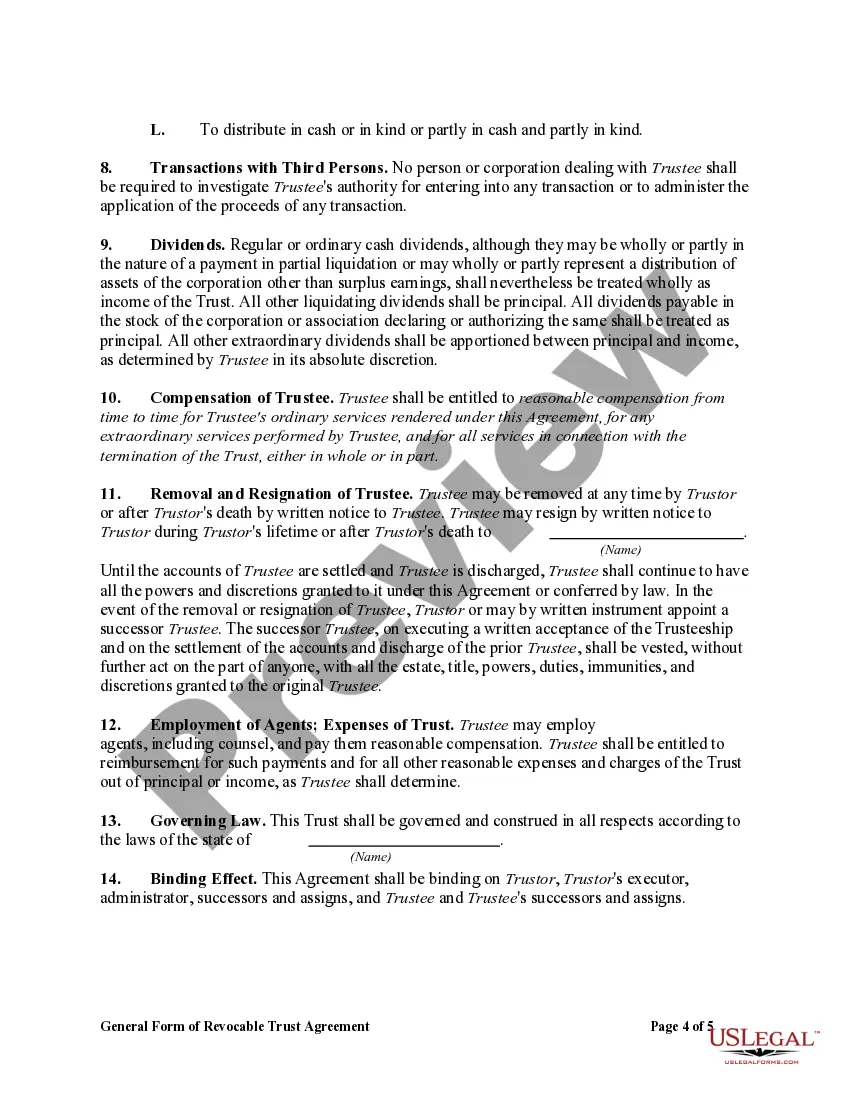
- Compensation of trustee: Details the reasonable compensation the trustee can receive for managing the trust.
- Transactions with third persons: Clarifies that third parties do not need to verify the trustee's authority in transactions.
When to use this document
This form is ideal when a parent or guardian wants to create a trust to manage assets intended for a child's future. It can be used when arranging for a child's education, healthcare, or general welfare. Additionally, this trust can be beneficial in scenarios where parents wish to control how and when their child receives assets, especially if the child is a minor or if specific conditions must be met before distribution.
Intended users of this form
- Parents or guardians planning for their child's financial future.
- Individuals wanting to specify how assets will be managed for minors.
- Anyone seeking a flexible estate planning solution that can be adjusted over time.
- People looking to protect their children's inheritance until they reach adulthood.
How to complete this form
- Identify the parties involved: Fill in the names of the trustor and trustee.
- Specify the assets: List the property and assets being transferred into the trust.
- Outline distribution preferences: Detail how and when the trustee should distribute funds to the minor.
- Sign and date the document: Ensure that all parties sign the trust agreement, adhering to any specific state requirements.
- Consider notarization: Although typically not required, check if notarization is necessary in your state.
Is notarization required?
This form does not typically require notarization unless specified by local law. However, it's advisable to check your stateâs regulations to confirm.
Get your form ready online
Our built-in tools help you complete, sign, share, and store your documents in one place.
Make edits, fill in missing information, and update formatting in US Legal Forms—just like you would in MS Word.
Download a copy, print it, send it by email, or mail it via USPS—whatever works best for your next step.
Sign and collect signatures with our SignNow integration. Send to multiple recipients, set reminders, and more. Go Premium to unlock E-Sign.
If this form requires notarization, complete it online through a secure video call—no need to meet a notary in person or wait for an appointment.
We protect your documents and personal data by following strict security and privacy standards.

Make edits, fill in missing information, and update formatting in US Legal Forms—just like you would in MS Word.

Download a copy, print it, send it by email, or mail it via USPS—whatever works best for your next step.

Sign and collect signatures with our SignNow integration. Send to multiple recipients, set reminders, and more. Go Premium to unlock E-Sign.

If this form requires notarization, complete it online through a secure video call—no need to meet a notary in person or wait for an appointment.

We protect your documents and personal data by following strict security and privacy standards.
Mistakes to watch out for
- Failing to update the trust as circumstances change, such as the birth of additional children or changes in financial status.
- Not properly specifying the assets or their distributions, which can lead to confusion later.
- Overlooking the need for the trust to be properly funded after creation.
- Neglecting to inform the trustee of any relevant details regarding the trust assets or beneficiary needs.
Advantages of online completion
- Convenience: Download and complete the form at your own pace from home.
- Editability: Easily revise the document as your circumstances or preferences change.
- Reliability: Access forms drafted by licensed attorneys, ensuring legal compliance.
Looking for another form?



Form popularity
FAQ
A well-planned, well-managed trust can give your child or heir a solid head start on adulthood. It can also provide them with guaranteed financial security later in life, or ensure your assets are distributed only to certain family members in the unlikely event of your child's untimely death.
A trust gives you the ability to name specific beneficiaries, and once you do, your intentions cannot be changed after the fact. This means that you will be able to specifically name your children as beneficiaries of the trustand even exclude certain children if that is your choiceand your wishes will be carried out.
Paperwork. Setting up a living trust isn't difficult or expensive, but it requires some paperwork. Record Keeping. After a revocable living trust is created, little day-to-day record keeping is required. Transfer Taxes. Difficulty Refinancing Trust Property. No Cutoff of Creditors' Claims.
Paperwork. Setting up a living trust isn't difficult or expensive, but it requires some paperwork. Record Keeping. After a revocable living trust is created, little day-to-day record keeping is required. Transfer Taxes. Difficulty Refinancing Trust Property. No Cutoff of Creditors' Claims.
Select a trustee. As stated above, when a grantor creates a trust, they must name a trustee. Decide the terms of the trust. Create the necessary trust documents. Transfer assets into the trust.
To manage and control spending and investments to protect beneficiaries from poor judgment and waste; To avoid court-supervised probate of trust assets and be private; To protect trust assets from the beneficiaries' creditors;To reduce income taxes or shelter assets from estate and transfer taxes.
A well-planned, well-managed trust can give your child or heir a solid head start on adulthood. It can also provide them with guaranteed financial security later in life, or ensure your assets are distributed only to certain family members in the unlikely event of your child's untimely death.
Beneficiaries of a trust typically pay taxes on the distributions they receive from the trust's income, rather than the trust itself paying the tax. However, such beneficiaries are not subject to taxes on distributions from the trust's principal.
A Revocable Living Trust DefinedAssets can include real estate, valuable possessions, bank accounts and investments. As with all living trusts, you create it during your lifetime.