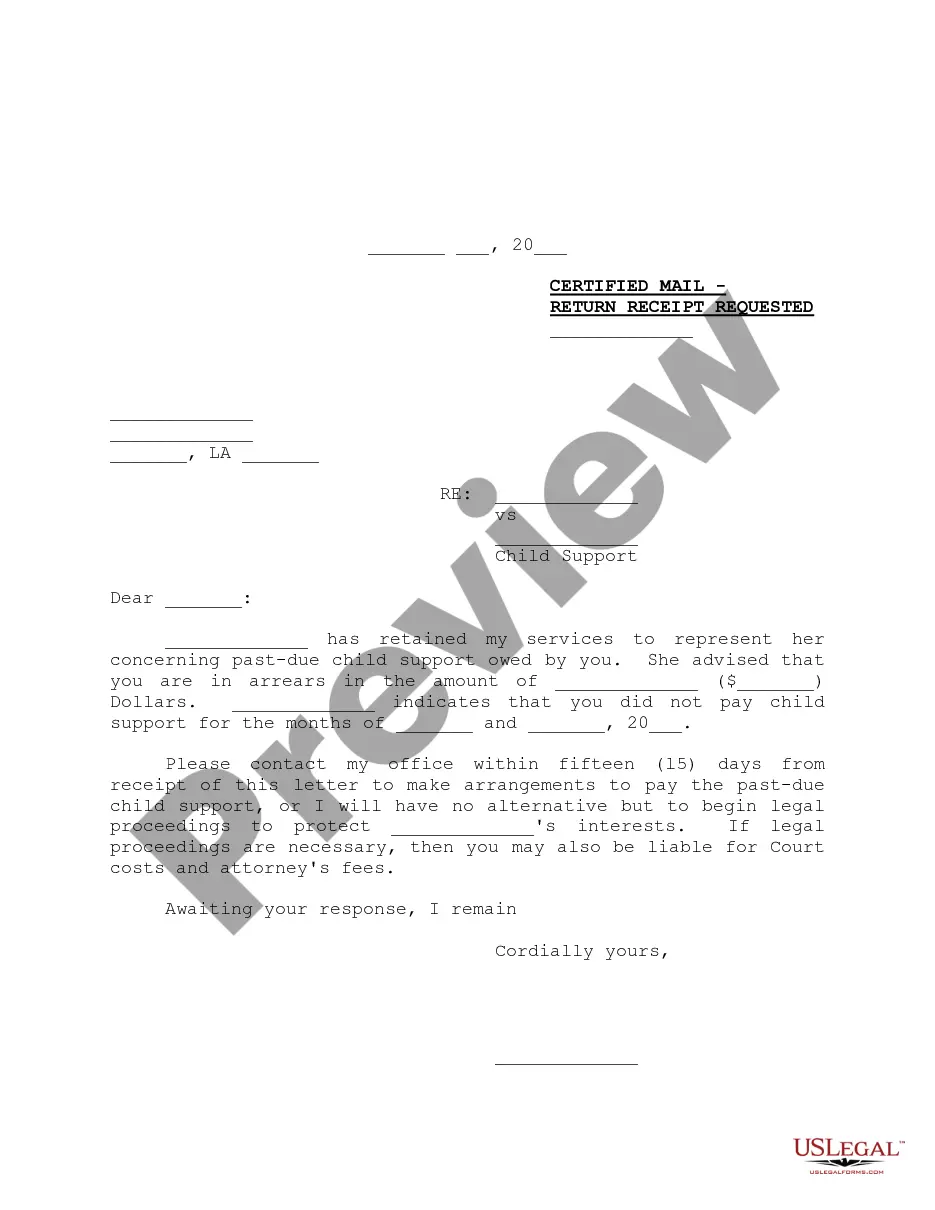
Louisiana Letter from Attorney regarding Past Due Child Support Payments
About this form
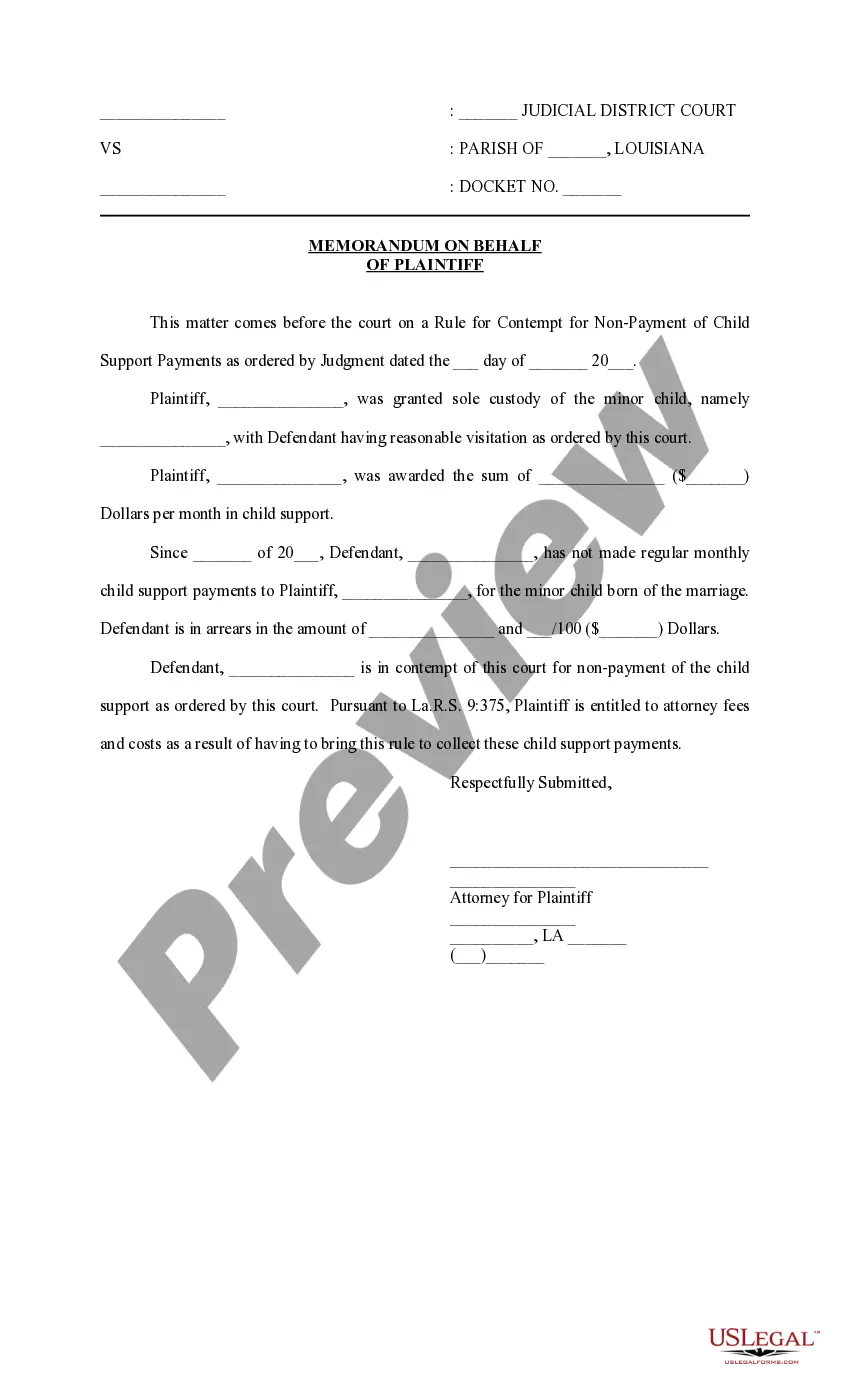
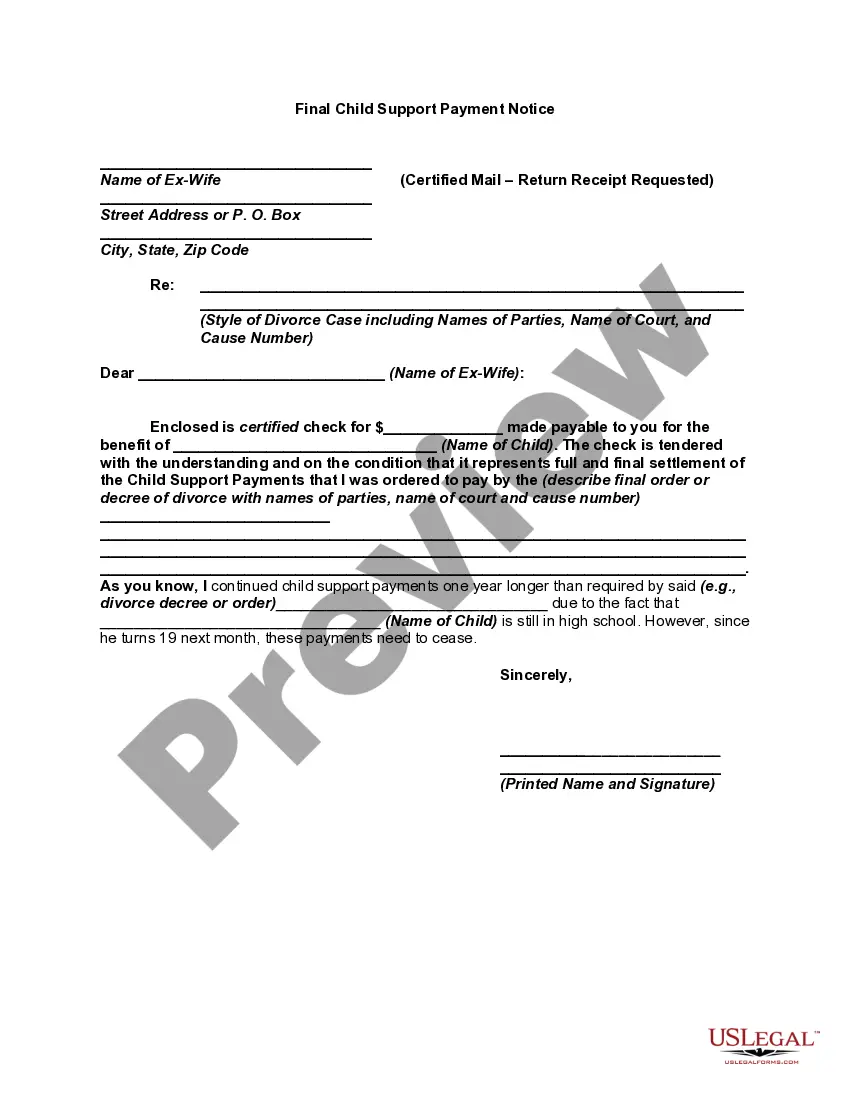
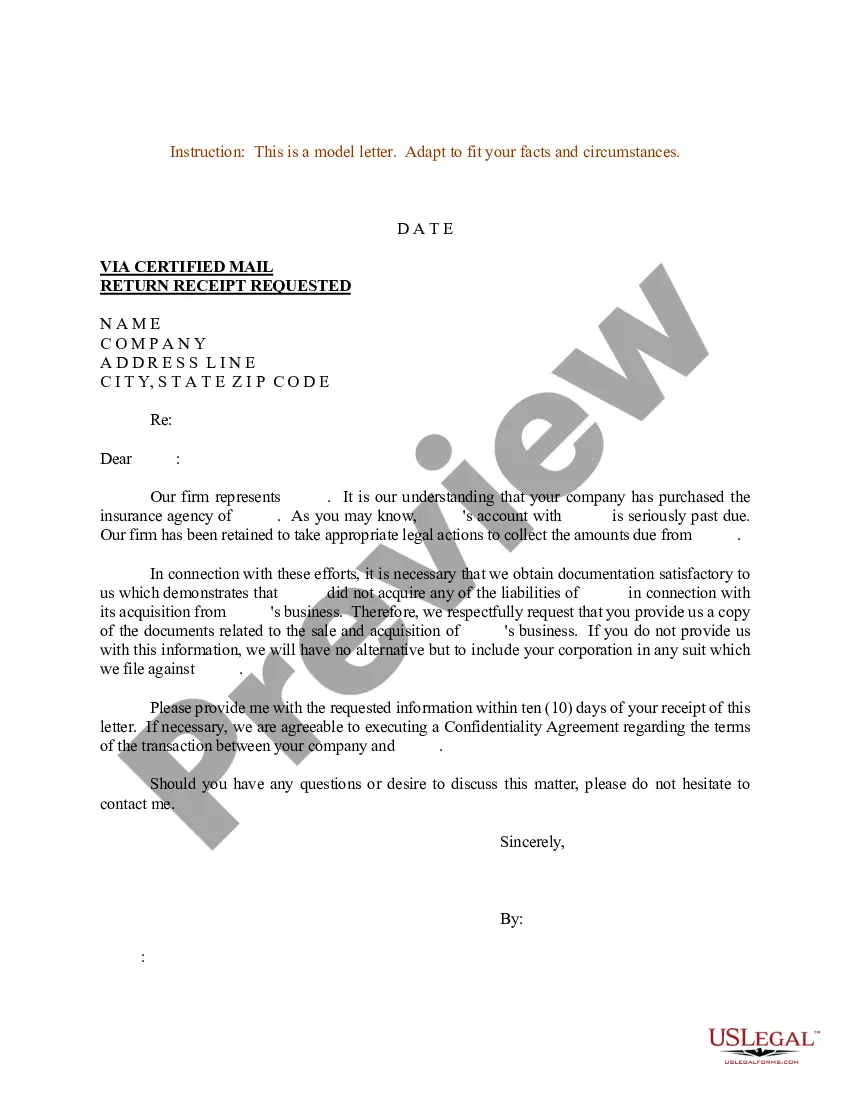
The Letter from Attorney regarding Past Due Child Support Payments is a formal demand letter prepared by an attorney to address overdue child support obligations. Unlike other general communication methods, this letter specifies the amount owed and the time frame for payment, clearly outlining potential legal actions that may follow if the payments are not made. This form is crucial for effectively communicating financial obligations in a legal context.
Main sections of this form
- Date of the letter
- Address of the recipient
- Details of the child support case
- Amount of past due support
- Time frame for response
- Attorney's contact information

When to use this form
This form should be used when a parent has not received child support payments and has retained an attorney to address the issue. It serves as an official reminder for the non-paying parent about their financial obligations. If previous attempts to resolve the matter directly have failed, this letter may prompt action or lead to legal proceedings to enforce payment.
Who should use this form
- Parents who are owed child support and wish to seek legal assistance.
- Attorneys representing clients in child support cases.
- Individual seeking to formalize a demand for payment of overdue support.
Instructions for completing this form
- Enter the date at the top of the letter.
- Fill in the recipient's address and case details.
- Indicate the total amount of past due child support.
- Specify the months for which payments are overdue.
- Provide a deadline for the recipient to respond.
- Sign the letter and include the attorney's contact information.
Does this document require notarization?
This form does not typically require notarization to be legally valid. However, some jurisdictions or document types may still require it. US Legal Forms provides secure online notarization powered by Notarize, available 24/7 for added convenience.
Get your form ready online
Our built-in tools help you complete, sign, share, and store your documents in one place.
Make edits, fill in missing information, and update formatting in US Legal Forms—just like you would in MS Word.
Download a copy, print it, send it by email, or mail it via USPS—whatever works best for your next step.
Sign and collect signatures with our SignNow integration. Send to multiple recipients, set reminders, and more. Go Premium to unlock E-Sign.
If this form requires notarization, complete it online through a secure video call—no need to meet a notary in person or wait for an appointment.
We protect your documents and personal data by following strict security and privacy standards.

Make edits, fill in missing information, and update formatting in US Legal Forms—just like you would in MS Word.

Download a copy, print it, send it by email, or mail it via USPS—whatever works best for your next step.

Sign and collect signatures with our SignNow integration. Send to multiple recipients, set reminders, and more. Go Premium to unlock E-Sign.

If this form requires notarization, complete it online through a secure video call—no need to meet a notary in person or wait for an appointment.

We protect your documents and personal data by following strict security and privacy standards.
Common mistakes to avoid
- Failing to include the exact amount owed.
- Not providing a clear deadline for response.
- Missing important case details, such as relevant dates.
- Forget to sign the letter.
Why complete this form online
- Convenient access to a legally compliant template.
- Quick download and editing options available.
- Prepared by licensed attorneys, ensuring reliability and legal accuracy.
Looking for another form?
Form popularity
FAQ
So, how far back can you go? Generally, the Supreme Court indicated you can usually go back 3 years for retroactive child support (based primarily on the timeline for financial disclosure obligations set out in the federal and provincial Child Support Guidelines).
As with other types of government debt, the consequences can be severe if you don't pay. The Child Support Agency (CSA) or Child Maintenance Service (CMS) have the powers to deduct arrears and ongoing payments straight from your earnings or bank account.
Child support back pay cannot be totally forgiven or waived, but there are a few situations that can help you handle it. Double-check the amount the court states you are in arrears. You can always ask the court to recalculate this amount to make sure it is correct.You can request a manageable payment schedule.
The statute of limitations for child support enforcement in Louisiana is 10 years.
For certain outstanding debts -- including past-due child support and unpaid student loans -- the IRS can withhold some or all of your unpaid stimulus payment issued as a Recovery Rebate Credit when you file your taxes.
Generally and specifically under some state laws, the parent to whom support was awarded retains the right to collect support arrearages even if the child is now an adult.In most cases, an adult child does not have legal standing to directly sue his or her parent for unpaid child support.
A custodial parent can waive or forgive all arrears owed to him or her directly. Use the Account Summary from the SCU to determine what arrears are owed to the parent, and what arrears are owed to the state (if the custodial parent ever received Public Assistance).
We can collect overdue payments going back: up to 3 months in normal circumstances. up to 9 months in exceptional circumstances.