Revocable Living Trust for Grandchildren
Overview of this form
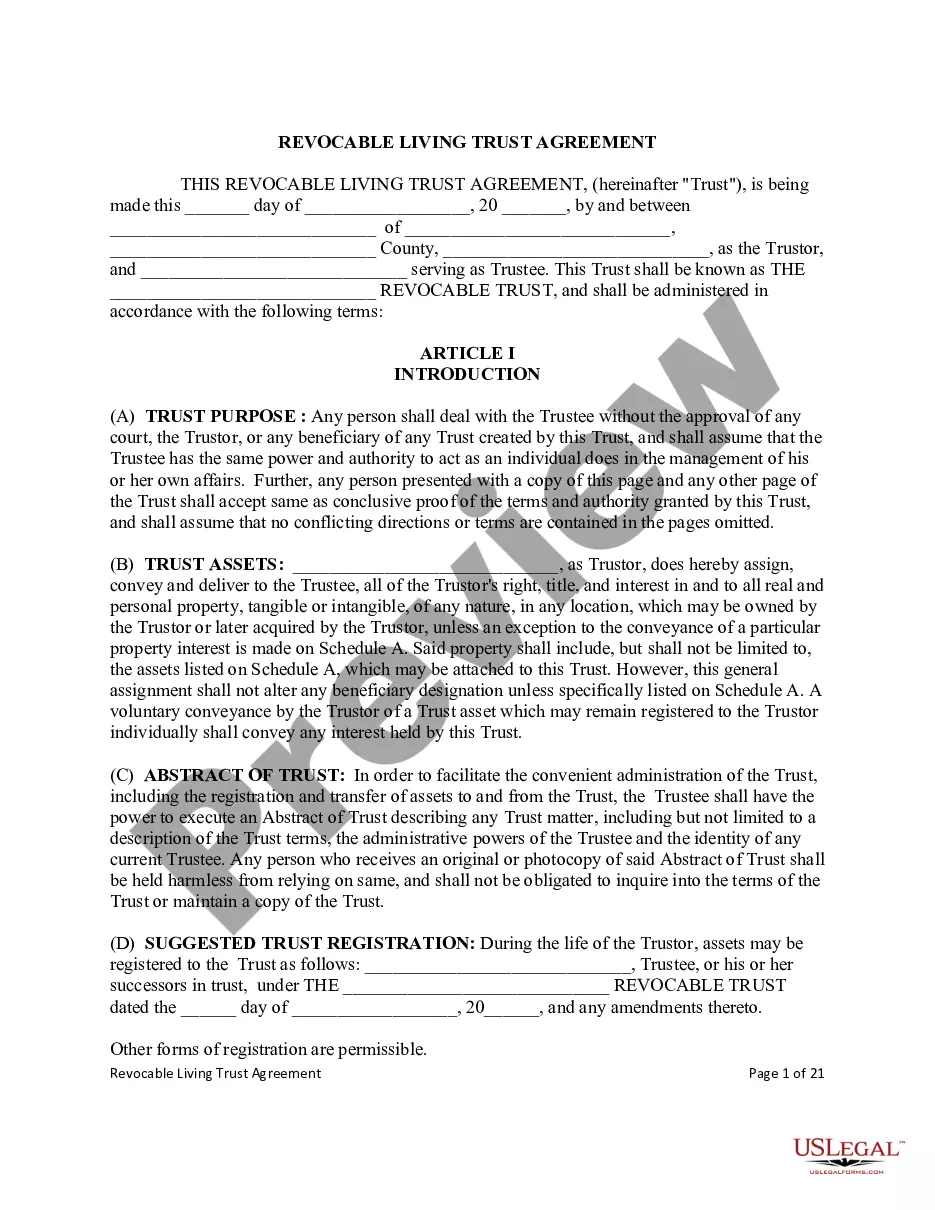
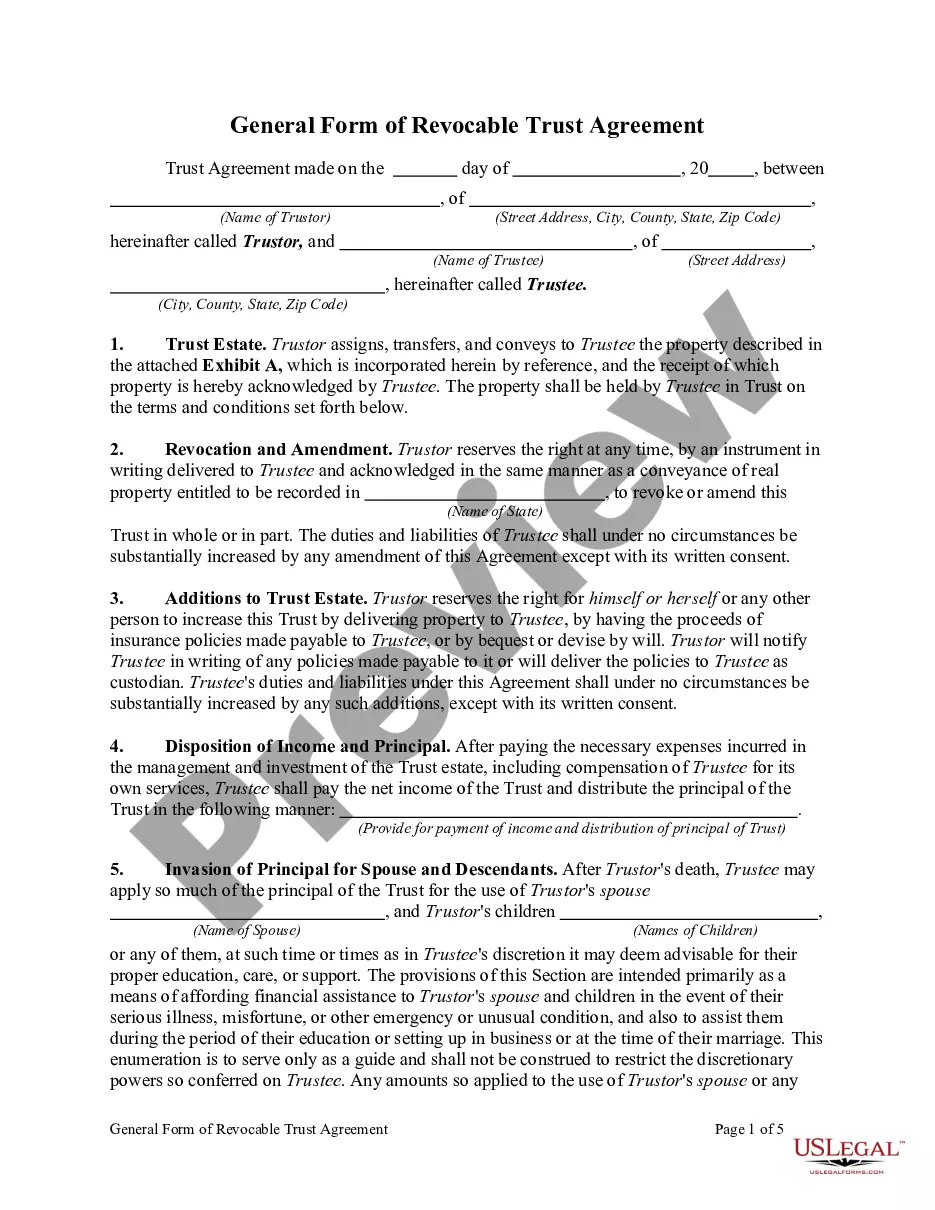
The Revocable Living Trust for Grandchildren is a legal document created by a Trustor and Trustee, establishing a trust that can be altered or revoked during the Trustor's lifetime. This type of trust helps manage and distribute the Trustorâs assets efficiently, especially for the benefit of grandchildren, without the need for court supervision. Unlike other estate planning documents, such as wills, this trust allows for flexible management of assets, particularly in the event of the Trustor's incapacity or death.
Key components of this form
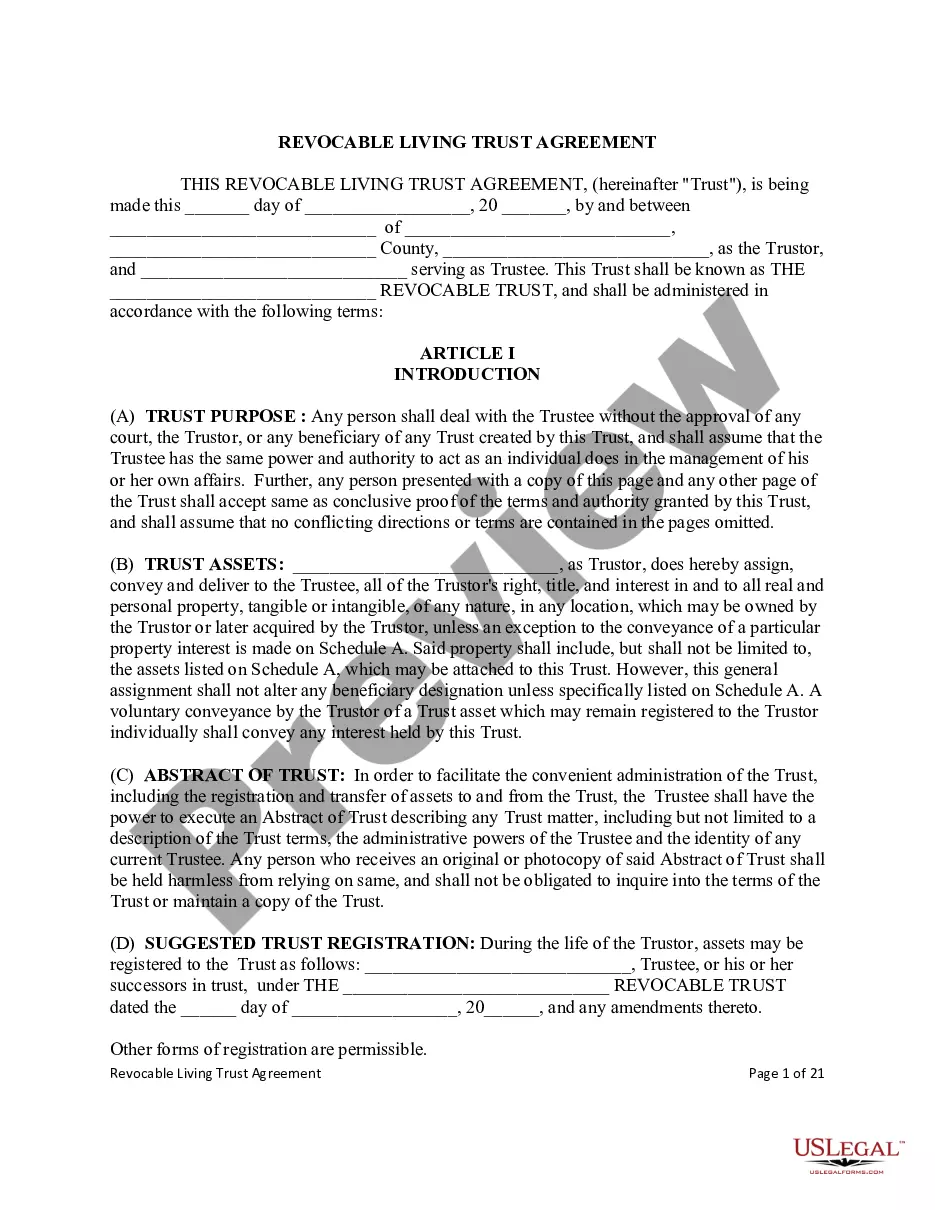
- Identification of the Trustor and Trustee, including their addresses and the name of the trust.
- Assignment of assets to the trust, detailing what property is included.
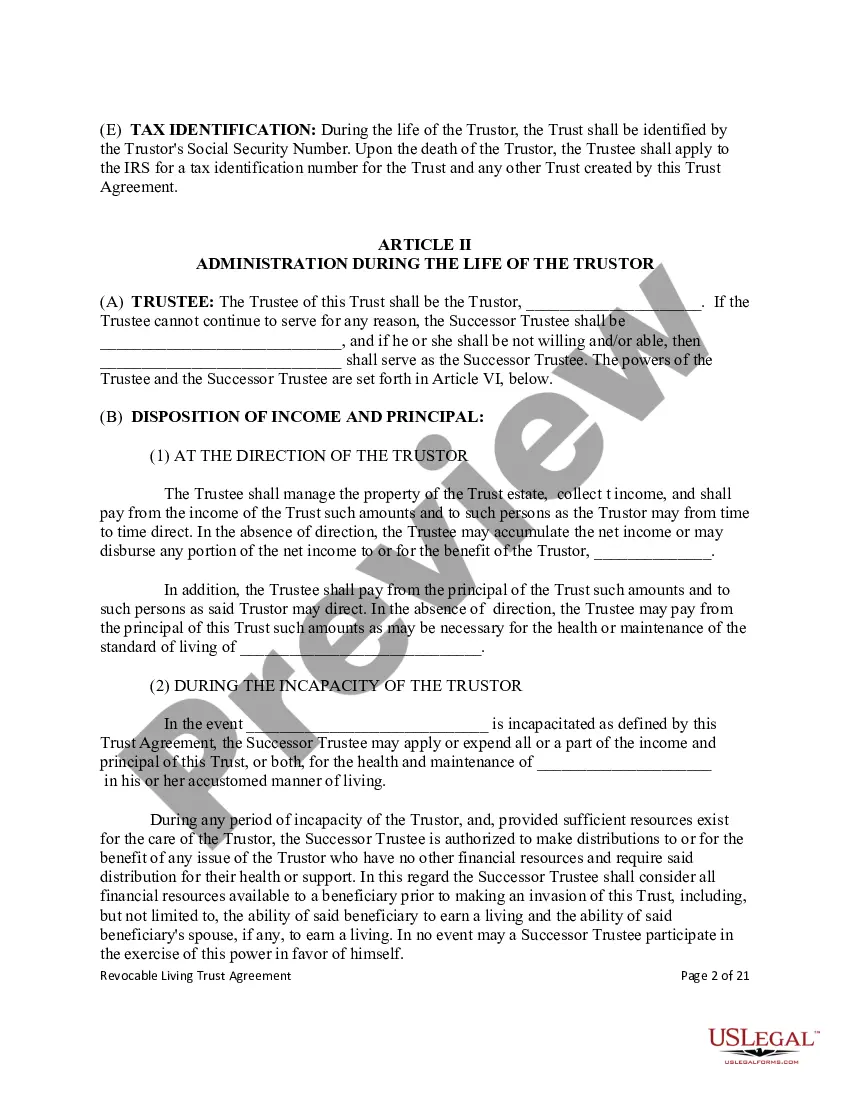
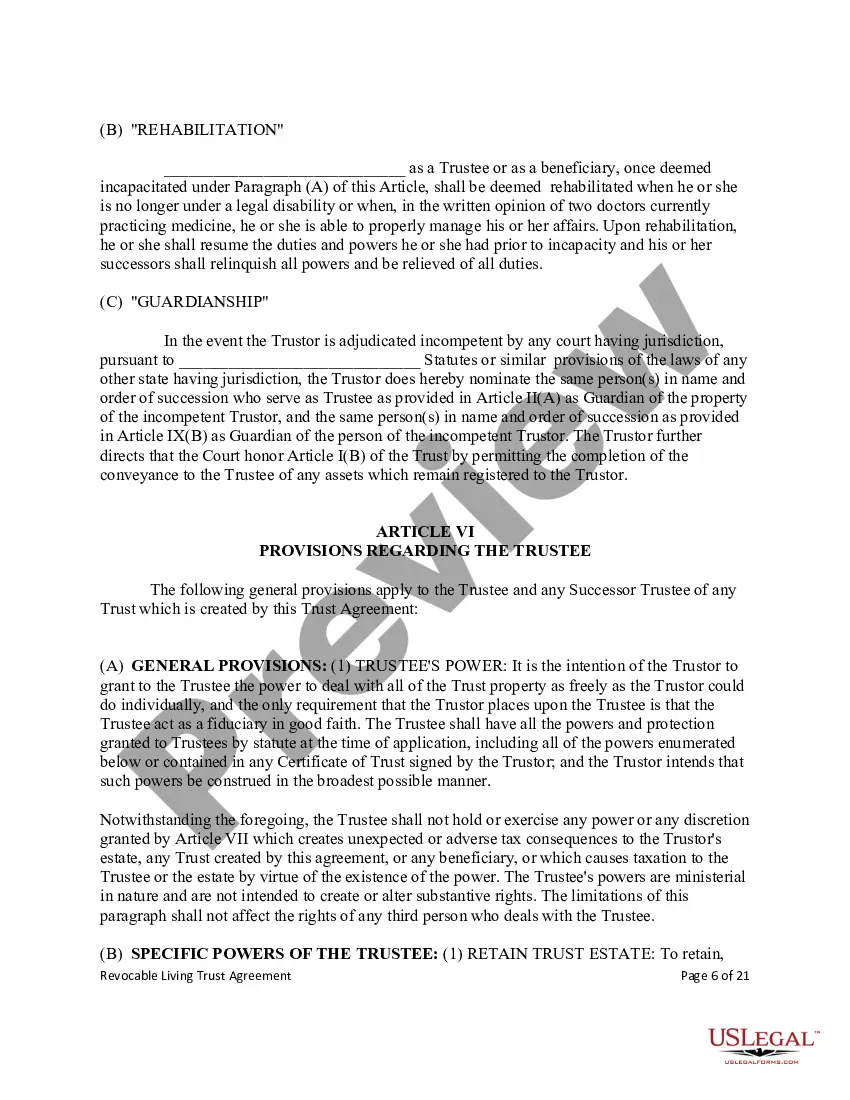
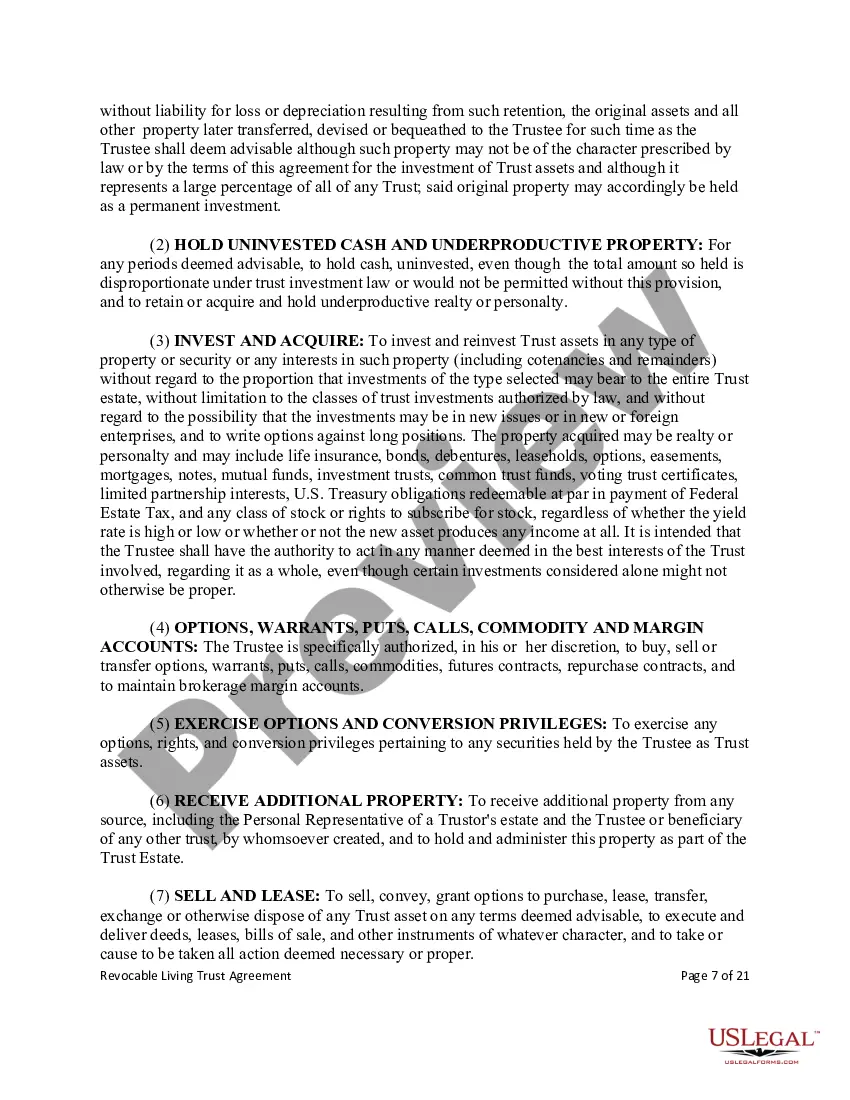
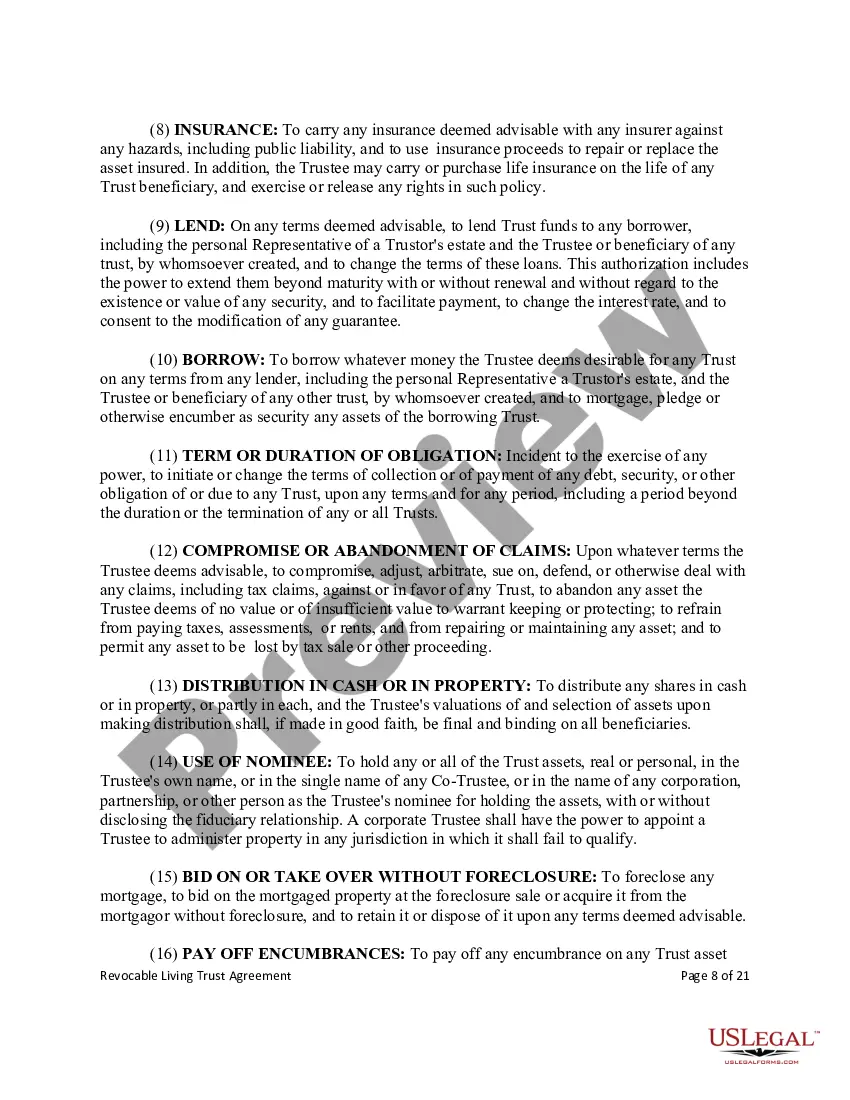
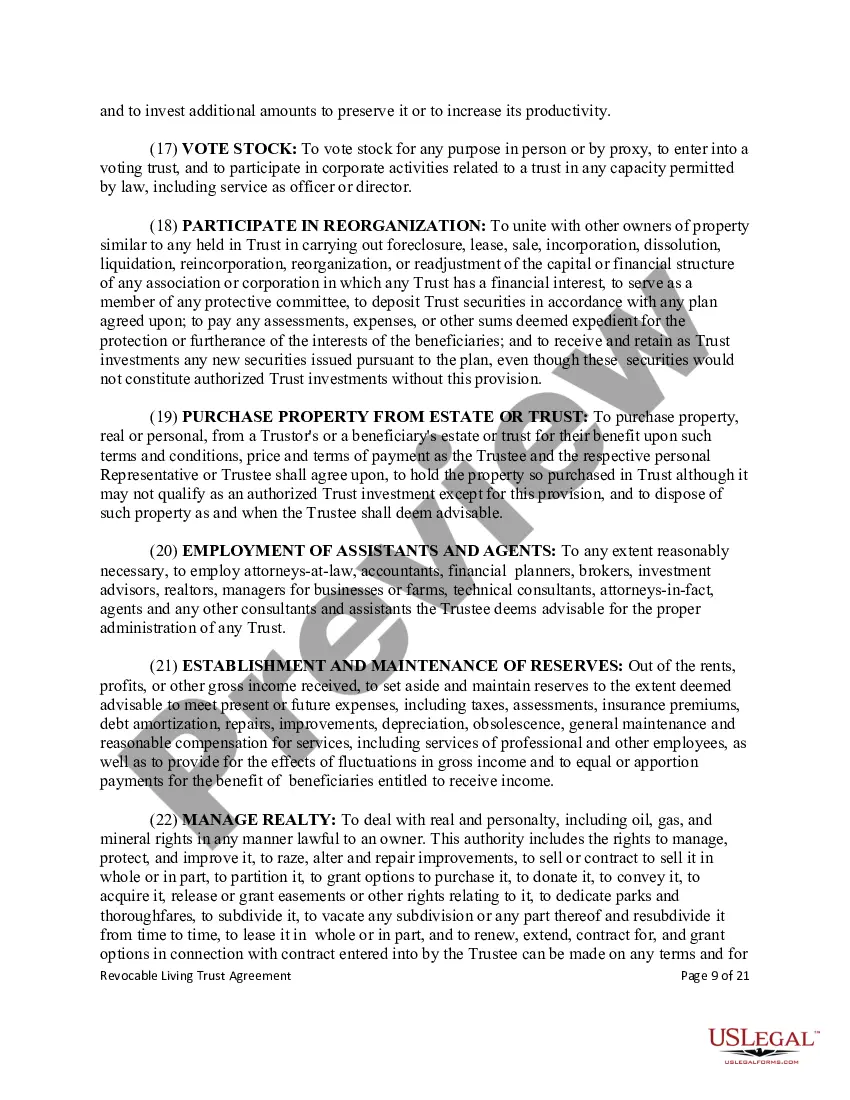
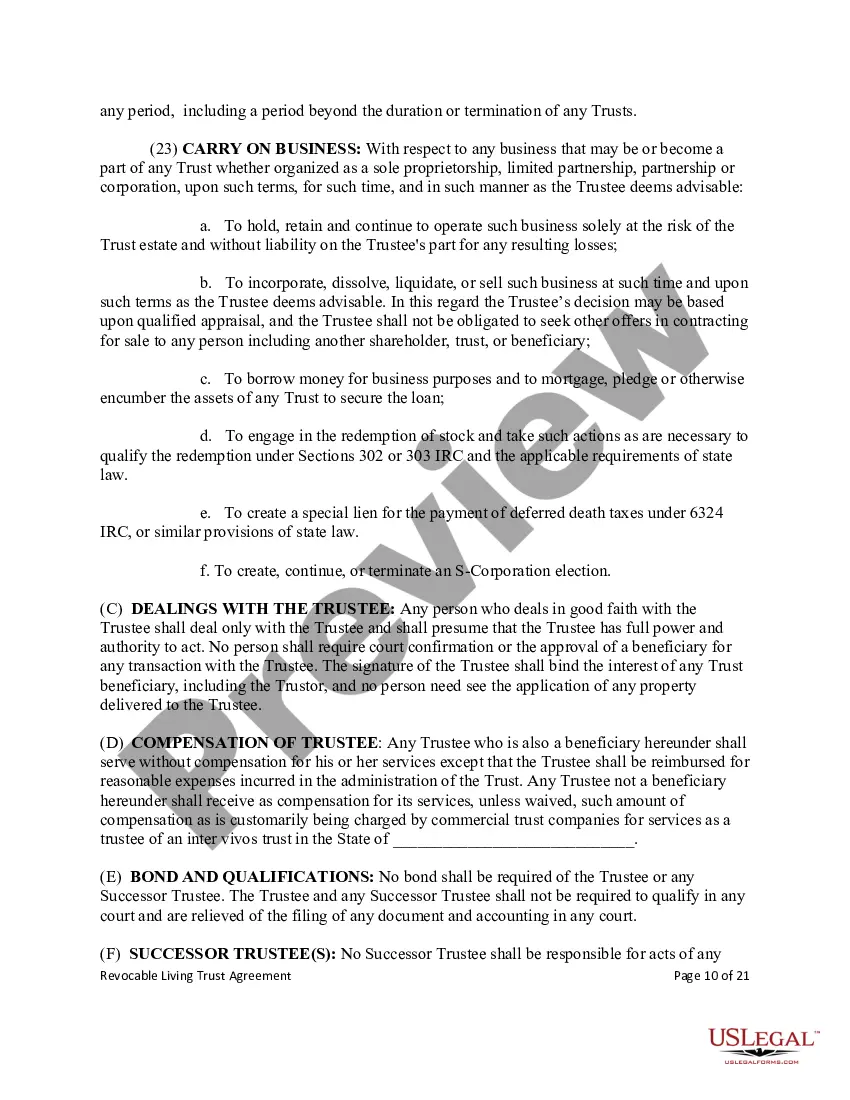
- Provisions for the Trustee's powers, responsibilities, and rights to manage the assets during the Trustor's life.
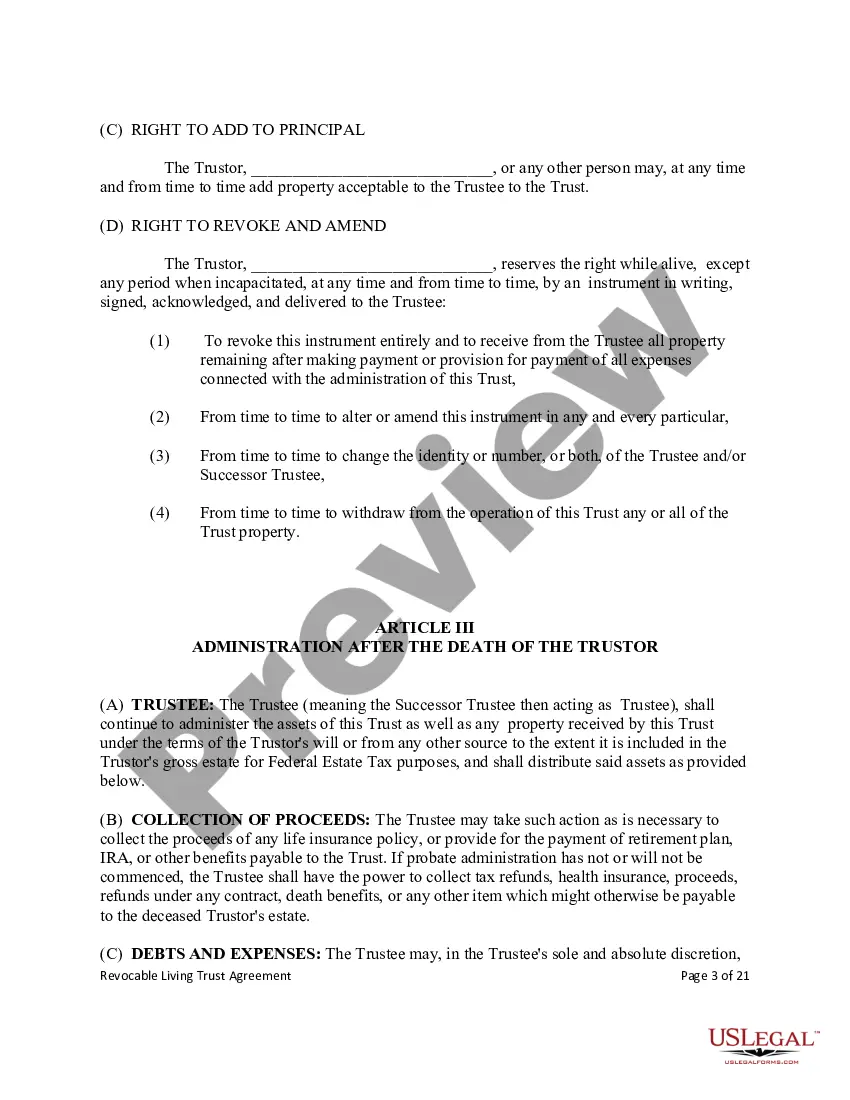
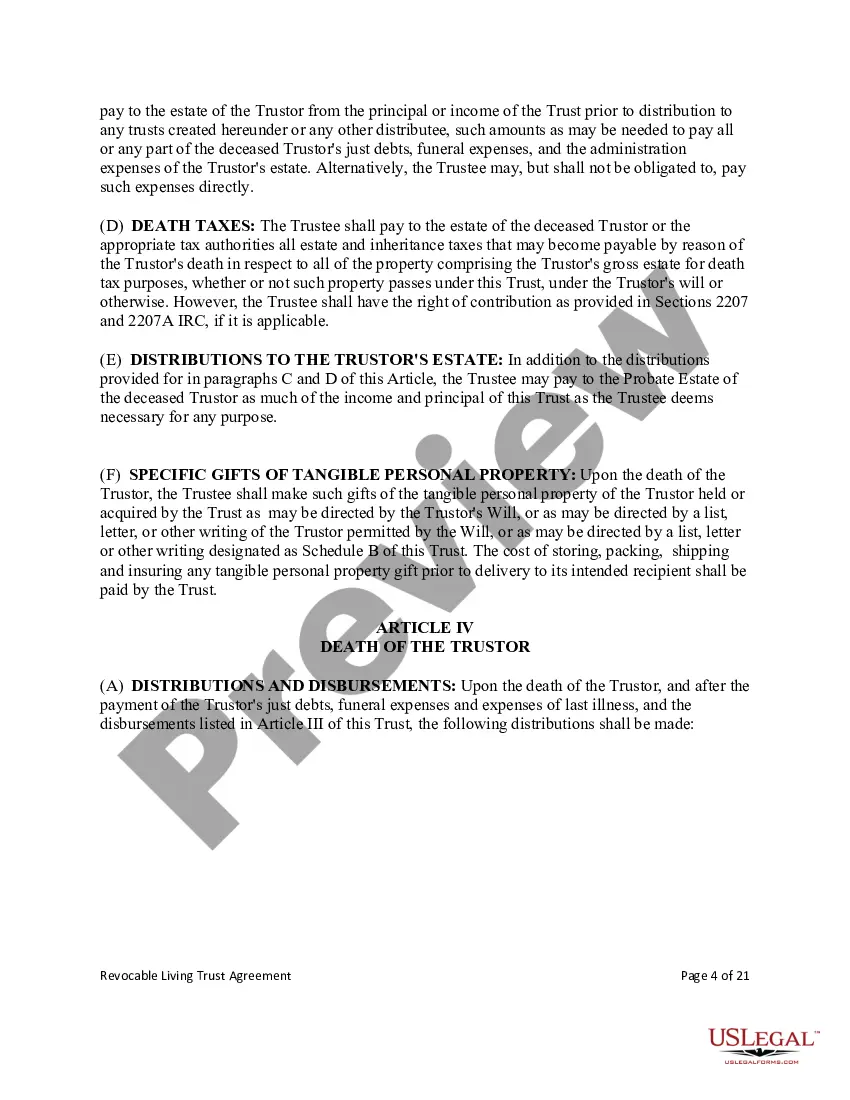
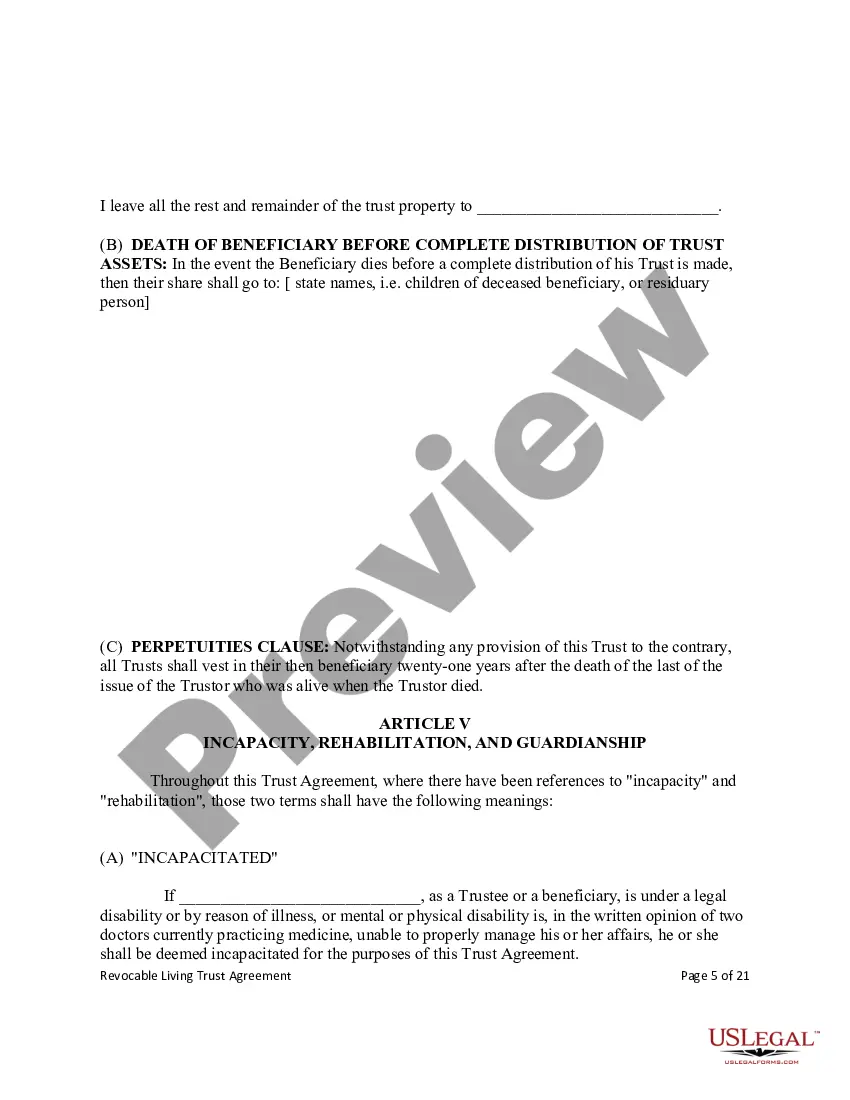
- Instructions for handling the trust assets upon the Trustor's death, including the distribution process.
- Rights of the Trustor to amend or revoke the trust at any time prior to death.


When to use this form
This form should be used when a person (the Trustor) wishes to set up a revocable living trust specifically for the benefit of their grandchildren. It is ideal for managing assets and ensuring that the Trustor's wishes are honored efficiently without the need for judicial intervention. Scenarios may include planning for future incapacity, addressing the management of assets if the Trustor becomes unable to do so, or facilitating the distribution of assets according to specific wishes after passing.
Who should use this form
- Individuals who want to ensure their grandchildren are the beneficiaries of their estate.
- Trustors seeking a flexible estate planning tool that can be changed as circumstances evolve.
- Those looking to avoid the probate process for their assets after death.
Completing this form step by step
- Identify and provide the names and addresses of the Trustor and Trustee.
- Clearly designate the name of the trust and specify its assets in Schedule A.
- Outline the powers and duties of the Trustee, including instructions for asset management.
- Specify conditions regarding the management of assets during the Trustorâs incapacity.
- Sign the trust agreement in front of a notary public and retain a copy for personal records.
Notarization requirements for this form
Yes, this form must be notarized to be legally valid. US Legal Forms provides an integrated online notarization service, available 24/7, allowing you to securely complete the notarization via a video call, ensuring legal equivalence without the need for travel.
Get your form ready online
Our built-in tools help you complete, sign, share, and store your documents in one place.
Make edits, fill in missing information, and update formatting in US Legal Forms—just like you would in MS Word.
Download a copy, print it, send it by email, or mail it via USPS—whatever works best for your next step.
Sign and collect signatures with our SignNow integration. Send to multiple recipients, set reminders, and more. Go Premium to unlock E-Sign.
If this form requires notarization, complete it online through a secure video call—no need to meet a notary in person or wait for an appointment.
We protect your documents and personal data by following strict security and privacy standards.

Make edits, fill in missing information, and update formatting in US Legal Forms—just like you would in MS Word.

Download a copy, print it, send it by email, or mail it via USPS—whatever works best for your next step.

Sign and collect signatures with our SignNow integration. Send to multiple recipients, set reminders, and more. Go Premium to unlock E-Sign.

If this form requires notarization, complete it online through a secure video call—no need to meet a notary in person or wait for an appointment.

We protect your documents and personal data by following strict security and privacy standards.
Avoid these common issues
- Failing to clearly identify assets assigned to the trust.
- Not specifying alternate Trustees in case the primary Trustee cannot serve.
- Omitting healthcare or financial directives if desired, which can complicate management during incapacity.
- Not regularly updating the trust as life circumstances change, such as new grandchildren or changed financial situations.
Why use this form online
- Convenience of completing the document at your own pace and from any location.
- Editability allows you to personalize the trust to meet specific needs.
- Access to templates and guidance from legal professionals, ensuring accuracy and compliance.
Looking for another form?

Form popularity
FAQ
Savings Account. One of the easiest ways to save money for your grandchild is a savings account. Certificates of Deposit. Brokerage Account. UGMAs/UTMAs. 529 Education Savings Plans. 529 Prepaid Tuition Plans.
Trusts can be especially beneficial for minor children, as they allow more control of the assets, even after your death. By setting up a trust, you can state how you want the money you leave to your grandchildren to be managed, the circumstances under which it can be distributed, and when it should be withheld.
Options to save towards your grandchild's future A Junior ISA can only be opened by someone with parental responsibility (the Registered Contact). Although Child Trust Funds can no longer be opened, existing accounts can be transferred to Forester Life.
Discretionary trust the trustees have absolute power to decide how the assets in the trust are distributed. You could set up this kind of trust for your grandchildren and leave it to the trustees (who could be the grandchildren's parents) to decide how to divide the income and capital between the grandchildren.
A grandparent can open a savings account for their grandchild in the child's name as long as they have documentation, such as the child's birth certificate.An advantage for grandparents is that no amount of interest earned on money they put in is subject to tax.
The Revocable Trust tax implications, following the death of the Grantor, impact both the Grantor's Estate and the Beneficiaries'.However, any income earned by the Trust assets or principal after the date of the Grantor's death is reported in a separate tax return for the Trust.
Set guidelines on how you'd like the money to be used. Release funds at key milestoneslike graduating college, getting married, or turning 35over your grandchild's lifetime, rather than all at once. Help protect the inheritance from potential depletion due to lack of financial literacy or other financial challenges.
Beneficiaries of a trust typically pay taxes on the distributions they receive from the trust's income, rather than the trust itself paying the tax. However, such beneficiaries are not subject to taxes on distributions from the trust's principal.
A trust is a legal entity that you transfer ownership of your assets to, perhaps in order to decrease the value of your estate or to simplify passing on assets to your intended beneficiaries after you die. An estate planning attorney may charge at least $1,000 to create a trust for you.