Alabama Executor's Deed
What is this form?
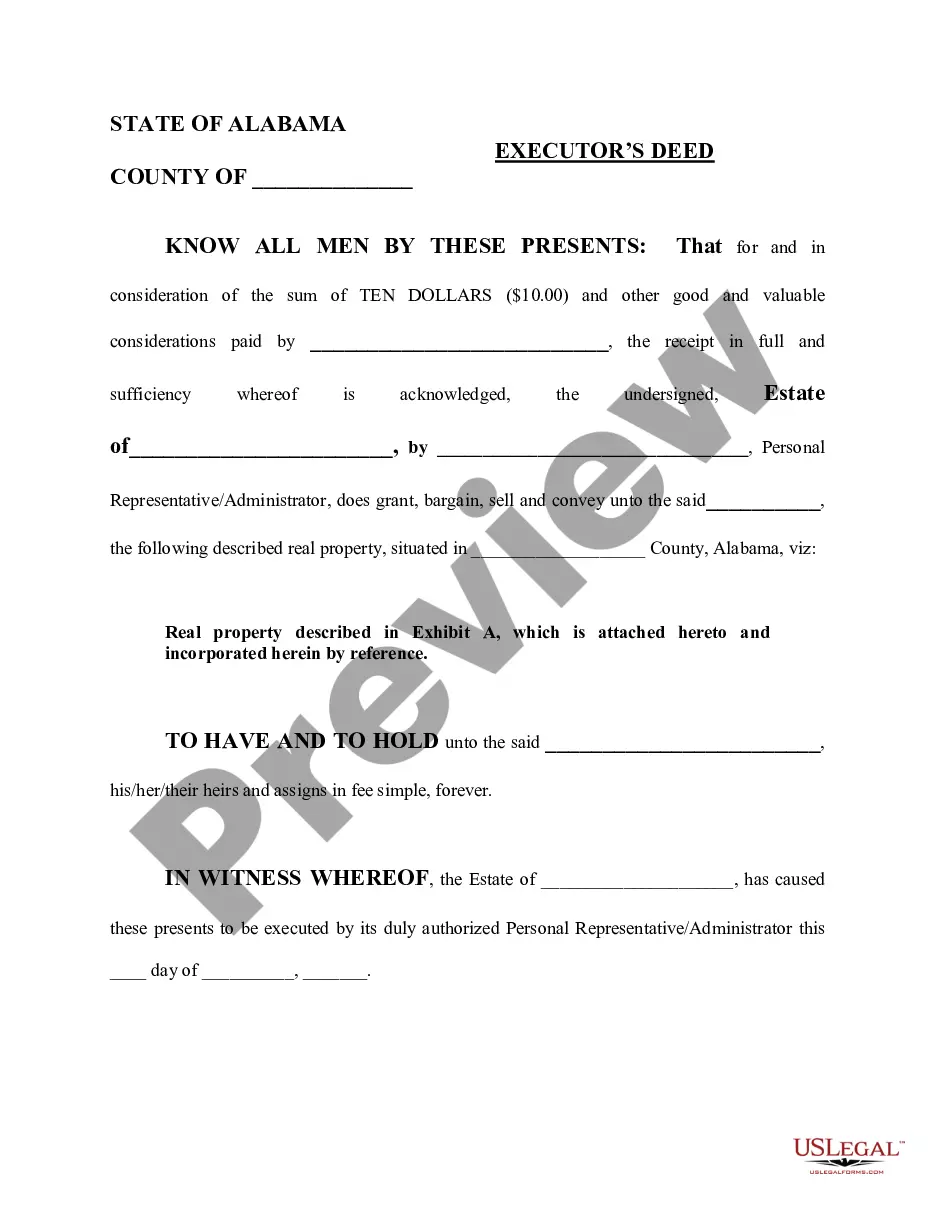
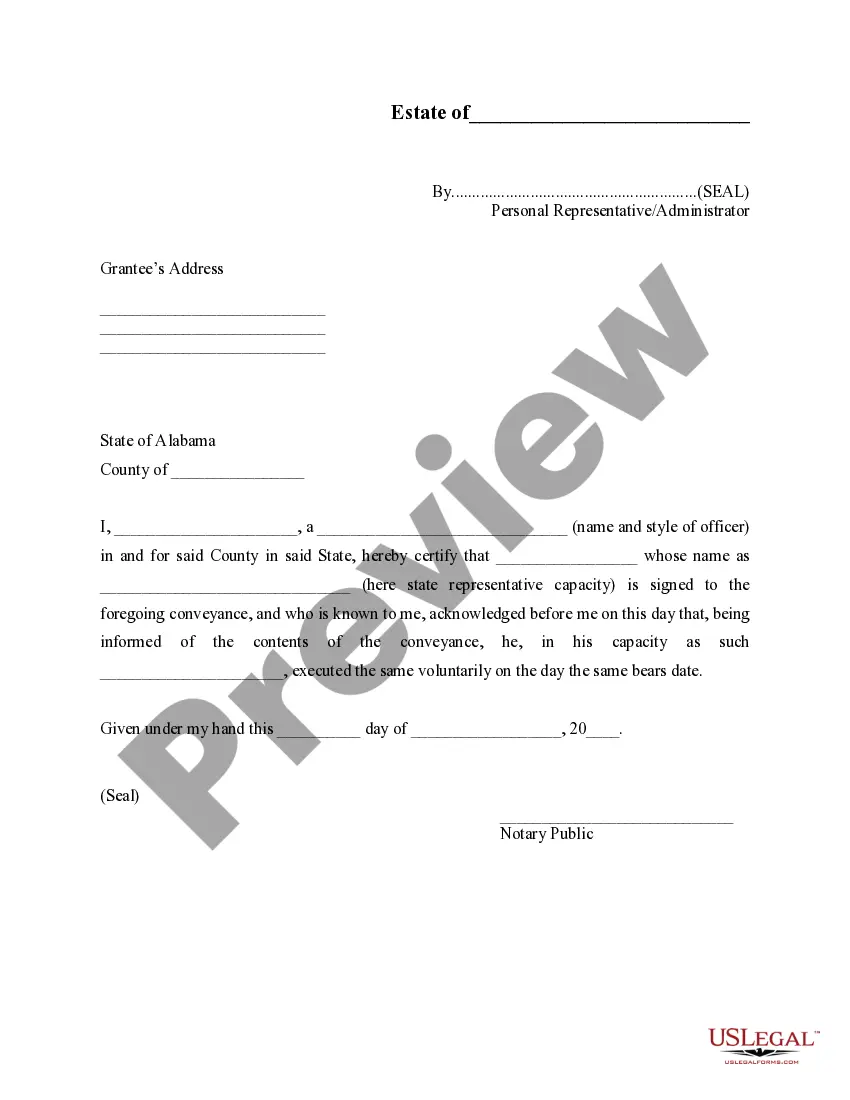
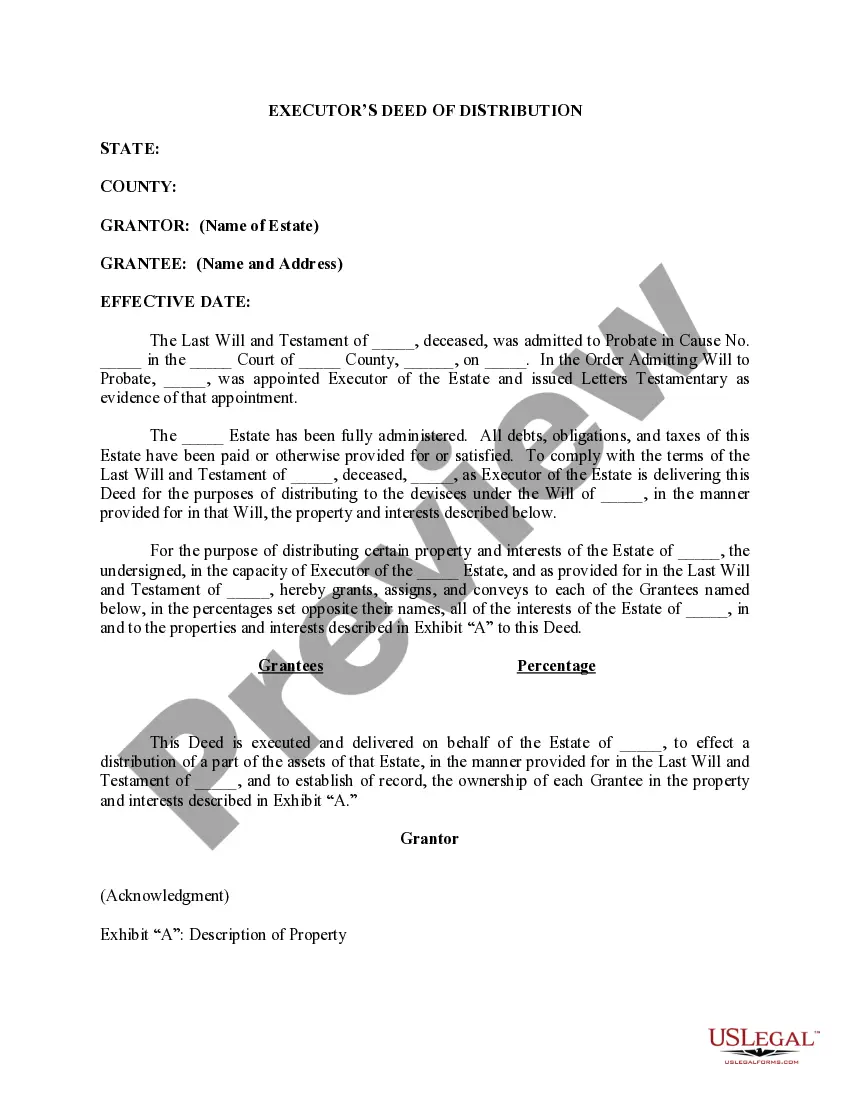
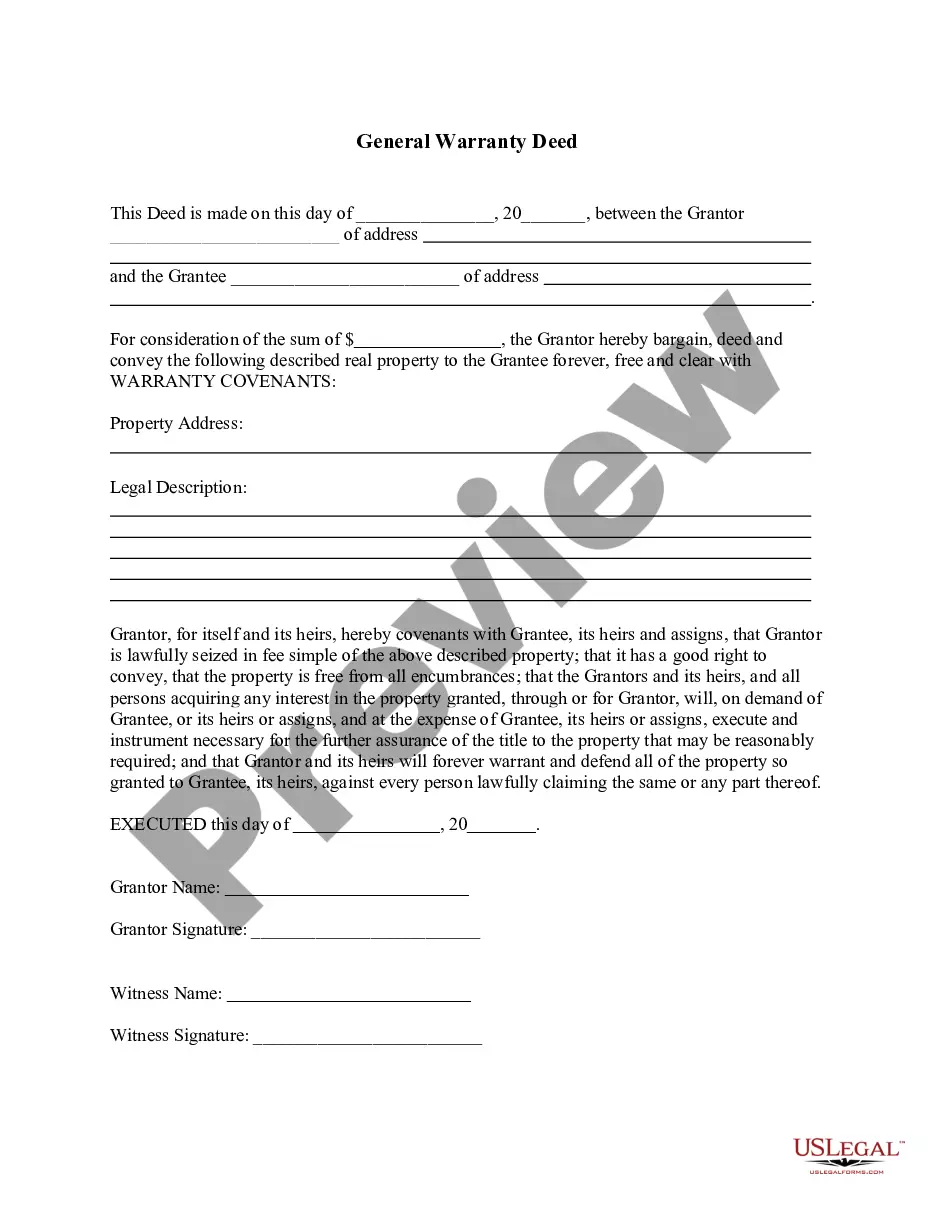
The Executor's Deed is a legal document used to transfer real estate property when the grantor acts in their official capacity as an executor of an estate. This form ensures the proper transfer of property after the owner's death, distinguishing it from standard deeds that do not involve estate administration.
Main sections of this form
- Identification of the executor as the personal representative of the estate.
- Specification of the consideration amount for the property transfer.
- Description of the property being transferred.
- Execution section for the signature of the executor and a notary public.

When this form is needed
This form is typically used during the probate process when an executor is required to transfer estate property to a beneficiary or buyer. It is essential after a property owner passes away, serving to formally document the change of title in the estate's assets.
Who can use this document
- Executors or administrators of an estate managing the deceasedâs assets.
- Beneficiaries receiving property as part of the estate distribution.
- Real estate agents facilitating property transfers from estates.
How to prepare this document
- Identify the parties involved, including the executor and the recipient of the property.
- Enter the name of the estate being represented by the executor.
- Specify the property being transferred, ensuring it aligns with the description in Exhibit A.
- Complete the date and sign the document in the presence of a notary public.
- Have the notary public complete their certification section to validate the deed.
Notarization requirements for this form
Yes, this form must be notarized to be legally valid. US Legal Forms provides integrated online notarization services, offering 24/7 availability through secure video calls, making the process efficient and hassle-free without the need for travel.
Get your form ready online
Our built-in tools help you complete, sign, share, and store your documents in one place.
Make edits, fill in missing information, and update formatting in US Legal Forms—just like you would in MS Word.
Download a copy, print it, send it by email, or mail it via USPS—whatever works best for your next step.
Sign and collect signatures with our SignNow integration. Send to multiple recipients, set reminders, and more. Go Premium to unlock E-Sign.
If this form requires notarization, complete it online through a secure video call—no need to meet a notary in person or wait for an appointment.
We protect your documents and personal data by following strict security and privacy standards.

Make edits, fill in missing information, and update formatting in US Legal Forms—just like you would in MS Word.

Download a copy, print it, send it by email, or mail it via USPS—whatever works best for your next step.

Sign and collect signatures with our SignNow integration. Send to multiple recipients, set reminders, and more. Go Premium to unlock E-Sign.

If this form requires notarization, complete it online through a secure video call—no need to meet a notary in person or wait for an appointment.

We protect your documents and personal data by following strict security and privacy standards.
Typical mistakes to avoid
- Failing to provide accurate property descriptions, leading to potential disputes.
- Not having the deed notarized, which can invalidate the document.
- Leaving out the consideration amount, which is necessary for the legality of the transfer.
Benefits of using this form online
- Convenience of downloading the form at any time without the need for in-person visits.
- Editability allows users to tailor the document to their specific needs quickly.
- Access to forms drafted by licensed attorneys, ensuring accuracy and reliability.
What to keep in mind
- The Executor's Deed is crucial for officially transferring property from an estate.
- Proper completion and notarization of the deed ensure its legality.
- Understanding the specifics of the form can prevent common errors during the transfer process.
Looking for another form?

Form popularity
FAQ
In Alabama, the estate executor is known as a "personal representative". Executors for Alabama estates are entitled to reasonable compensation of up to 2.5% of assets received, and 2.5% of disbursements.
Executor's Deed: This may be used when a person dies testate (with a will). The estate's executor will dispose of the decedent's assets and an executor's deed may be used to convey the title or real property to the grantee.
In most states, an executor's deed must be signed by a witness and notarized. An executor's deed should be recorded in the real estate records of the county in which the property being conveyed is located.
During the administration of the estate those Executors who have obtained a Grant of Probate (more of which later) must act jointly. That is to say that they must all agree on a course of action and each sign any documents, etc. Clearly there may be problems if those appointed do not get on.
By law, the probate of an estate in Alabama will take at least six months. This period gives creditors and others with a claim on the estate time to receive notice that the estate is being probated and to submit a claim.
Generally, an executor has 12 months from the date of death to distribute the estate. This is known as 'the executor's year'. However, for various reasons the executor may have been delayed and has not distributed the estate within this time frame.
The court will force the executor to return the property to the estate or pay restitution to the beneficiaries of the estate.The executor cannot transfer estate property to himself because the property belongs to someone else unless he pays the full price for it.
Once the COURT appoints you as executor, you will record an affidavit of death of joint tenant to get your mother's name of the property. Then, when you get an order for final distribution, you will record a certified copy to get the property into the names of the beneficiaries under the will.