• US Legal Forms

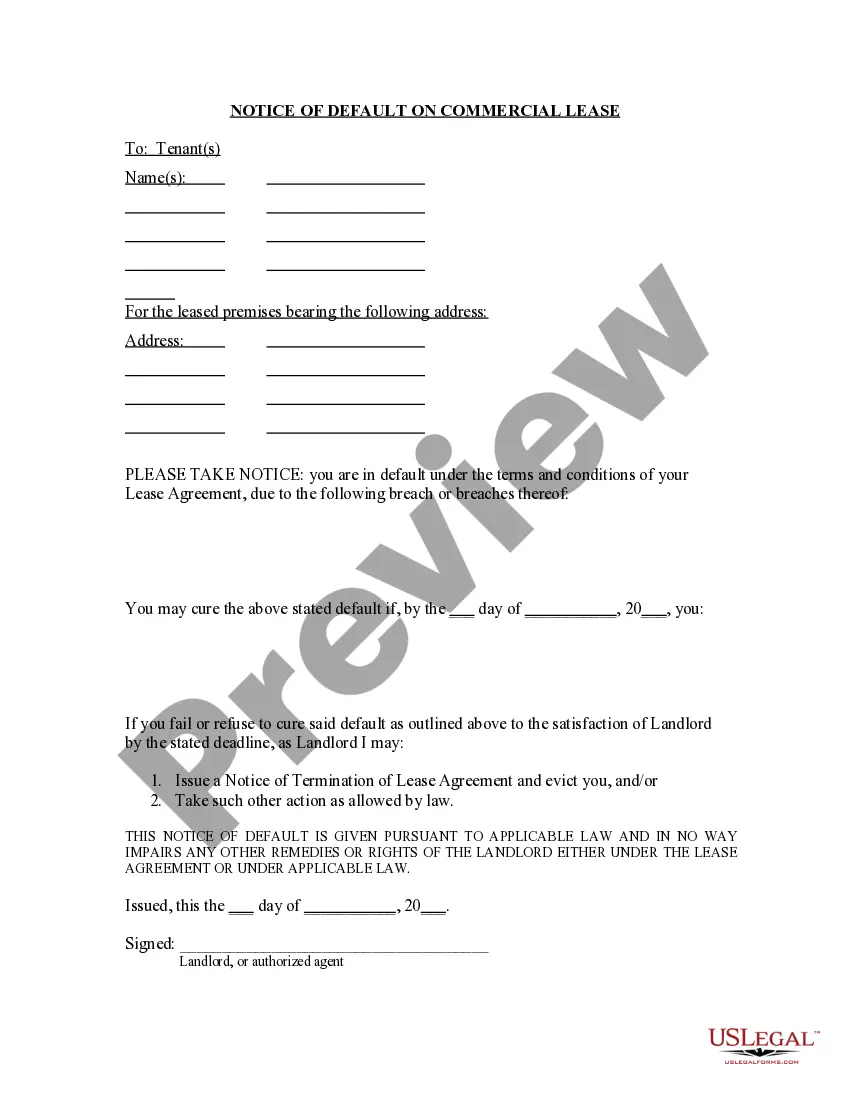
Colorado Letter from Landlord to Tenant as Notice of Default on Commercial Lease

State:
Colorado
Control #:
CO-824LT
Format:
Word; 
Rich Text
Instant download

Description

This is a notice between a Tenant and Landlord. It is a Notice of Default to Tenant, listing specific breaches and deadline for cure of breaches. If tenant refuses to cure the breach then landlord may execute his/her rights under applicable law, including the right to evict tenant.


In landlord-tenant law, default refers to the failure of a tenant to timely pay rent due. In anticipation of such an occurence, landlords commonly require a new tenant to pay a security deposit, which may be used to remedy defaults in payment of rent and other monetary obligations under the rental agreement. In general, the landlord is required to give the tenant notice of the default before bringing eviction proceedings or applying security deposit proceeds to the payment in default. The fixing of a definite default date for payment of rent can be critical if it becomes necessary to evict a tenant for a default in the payment of rent. Landlords often require a background and/or reference check on prospective tenants in an attempt to minimize defaults in rent payments.
How to fill out Colorado Letter From Landlord To Tenant As Notice Of Default On Commercial Lease?

The greater the number of documents you need to produce - the more anxious you become.

You can locate a vast array of Colorado Letter from Landlord to Tenant as Notice of Default on Commercial Lease templates online, yet you are uncertain which ones to trust.

Remove the difficulties of finding samples by using US Legal Forms to make the process more straightforward. Obtain professionally prepared documents that comply with state regulations.

Input the requested information to create your account and process your payment via PayPal or credit card. Select a suitable document format and download your template. Access all templates you receive in the My documents section. Just navigate there to create a new copy of the Colorado Letter from Landlord to Tenant as Notice of Default on Commercial Lease. Even with professionally crafted forms, it's still advisable to consult a local attorney to verify that your document is correctly completed. Achieve more for less with US Legal Forms!

  1. If you already have a US Legal Forms membership, sign in to your account, and you will find the Download button on the Colorado Letter from Landlord to Tenant as Notice of Default on Commercial Lease’s page.
  2. If you’ve not utilized our service before, complete the registration process by following these steps.
  3. Verify whether the Colorado Letter from Landlord to Tenant as Notice of Default on Commercial Lease is valid in your state.
  4. Confirm your selection by reviewing the description or by utilizing the Preview mode if available for the chosen document.
  5. Click Buy Now to begin the registration process and select a pricing plan that meets your needs.
Decorative icon for this block

Commercial Lease and Related Forms

Get good Commercial Lease and related forms fast! Answer a few simple questions and receive professionally drafted templates that fit your case.

Form popularity

FAQ

For a tenant to default means they have failed to meet the terms outlined in their lease agreement, which can include nonpayment, lease violations, or improper use of the rented property. Defaulting can lead to legal actions such as eviction and potential financial liability. Understanding this term is critical for both tenants and landlords to avoid conflicts and ensure compliance. Resources like the Colorado Letter from Landlord to Tenant as Notice of Default on Commercial Lease can help clarify steps to take.

A default notice letter alerts a party that they have not upheld their contractual obligations. In the context of a commercial lease, it may specify issues like late rent or lease violations. This letter aims to elicit a response and indicates potential legal consequences if the default is not resolved. Use the Colorado Letter from Landlord to Tenant as Notice of Default on Commercial Lease to craft an appropriate and clear communication.

The purpose of a notice of default is to formally inform the tenant that they have not complied with their lease terms. This document serves as a warning and provides the tenant with an opportunity to correct the issue before further action takes place. In Colorado, this step is legally required in certain situations and protects the landlord’s legal rights. For an effective template, consider the Colorado Letter from Landlord to Tenant as Notice of Default on Commercial Lease.

Writing a letter to a tenant for nonpayment of rent should be straightforward and factual. Start by addressing the tenant by name and state the amount of rent due along with the due date. Clearly explain the consequences of continued nonpayment, which may include eviction or termination of the lease. Using the Colorado Letter from Landlord to Tenant as Notice of Default on Commercial Lease will help ensure you address all necessary points.

When a tenant defaults on a commercial lease, several outcomes may follow. The landlord can issue a notice of default, initiate eviction proceedings, or seek damages for financial loss. It is essential to understand your rights and responsibilities under Colorado law, as failing to address a default can lead to significant legal complications. A proper notice using the Colorado Letter from Landlord to Tenant as Notice of Default on Commercial Lease can help clarify the situation.

A letter of default on a contract notifies the other party that they have failed to meet their contractual obligations. This should detail the specific areas where the default occurred and may serve as a precursor to legal action. Effectively, it aims to prompt a remedy or response from the defaulting party, offering a chance to rectify the situation. Crafting a letter using the Colorado Letter from Landlord to Tenant as Notice of Default on Commercial Lease can be immensely beneficial.

When writing a commercial lease termination letter to your landlord, start by including your contact information and lease details. Clearly state the intention to terminate the lease, provide the effective termination date, and mention any relevant lease clauses. It is wise to remain professional and to include a request for confirmation of the termination. Resources like the Colorado Letter from Landlord to Tenant as Notice of Default on Commercial Lease can guide you through this process.

The best excuses for breaking a lease often involve compelling circumstances. Examples include job relocation, health issues, or unsafe living conditions. It's essential to document your situation clearly in your communication with your landlord. If you’re facing a Colorado Letter from Landlord to Tenant as Notice of Default on Commercial Lease, this can be a significant factor, so consider consulting a platform like uslegalforms for guidance.

To draft a letter aimed at getting out of a lease, start with key details such as your name, address, and lease specifics. Clearly state your intention to vacate and the date you plan to leave. Providing valid reasons can strengthen your letter, especially if there's a Colorado Letter from Landlord to Tenant as Notice of Default on Commercial Lease involved. Always review your lease terms for any requirements about notice.

Yes, in Colorado, landlords are generally required to provide notice before entering a tenant’s premises. Most lease agreements specify a minimum notice period, often 24 hours, to respect tenant privacy. This practice helps maintain a good landlord-tenant relationship and ensures clear communication. Be aware of your rights and responsibilities regarding entry to prevent misunderstandings.

Trusted and secure by over 3 million people of the world’s leading companies

Colorado Letter from Landlord to Tenant as Notice of Default on Commercial Lease