5.80 GENERAL VERDICT FORM
What this document covers
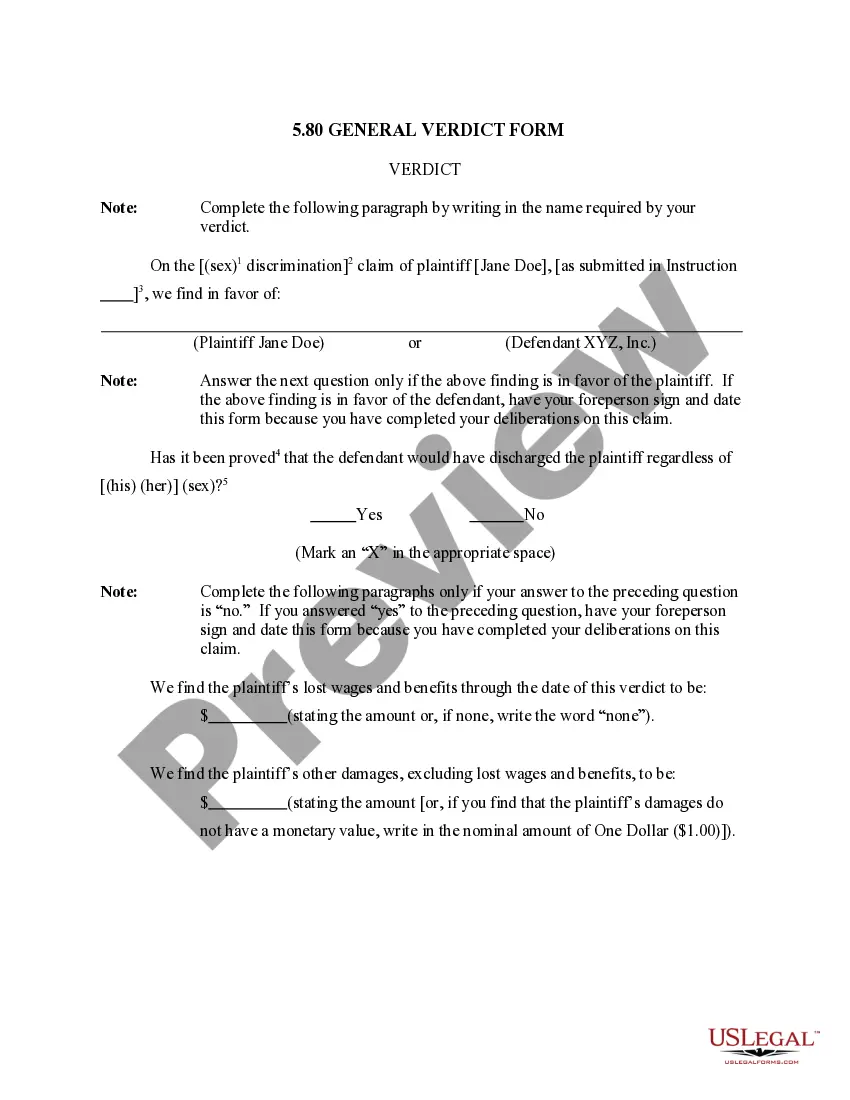
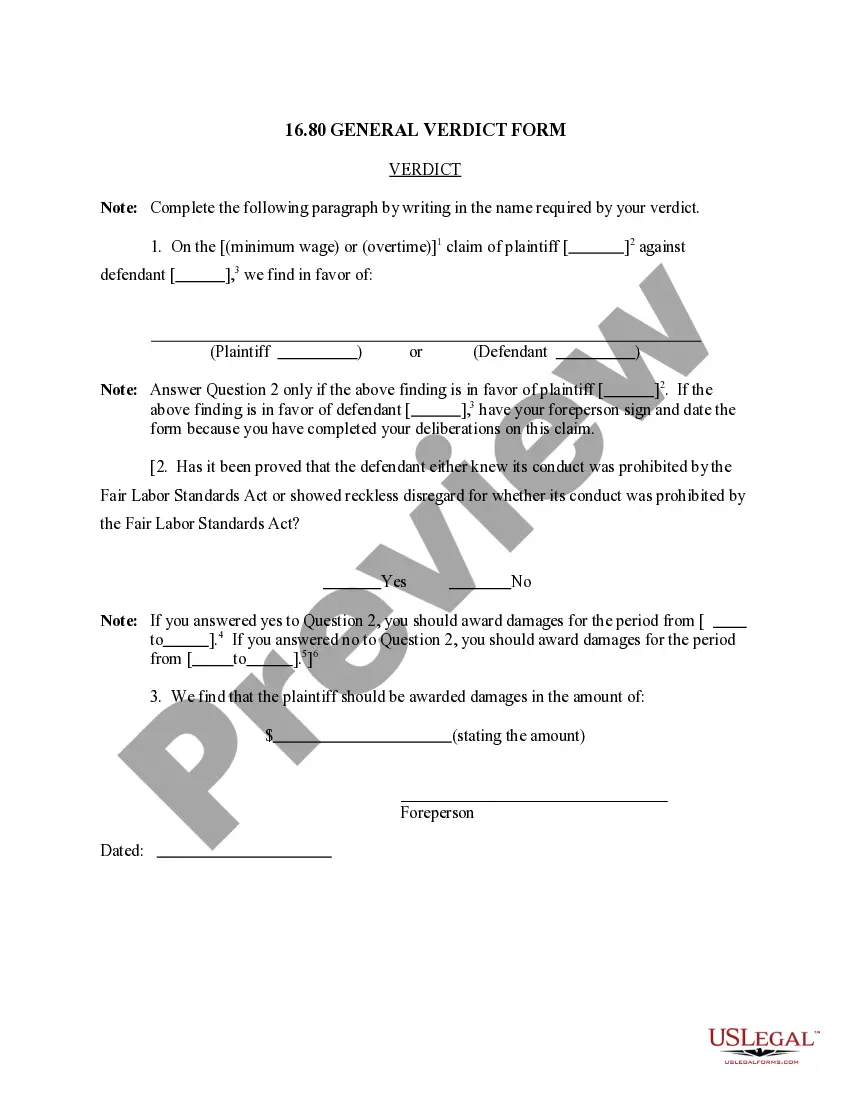
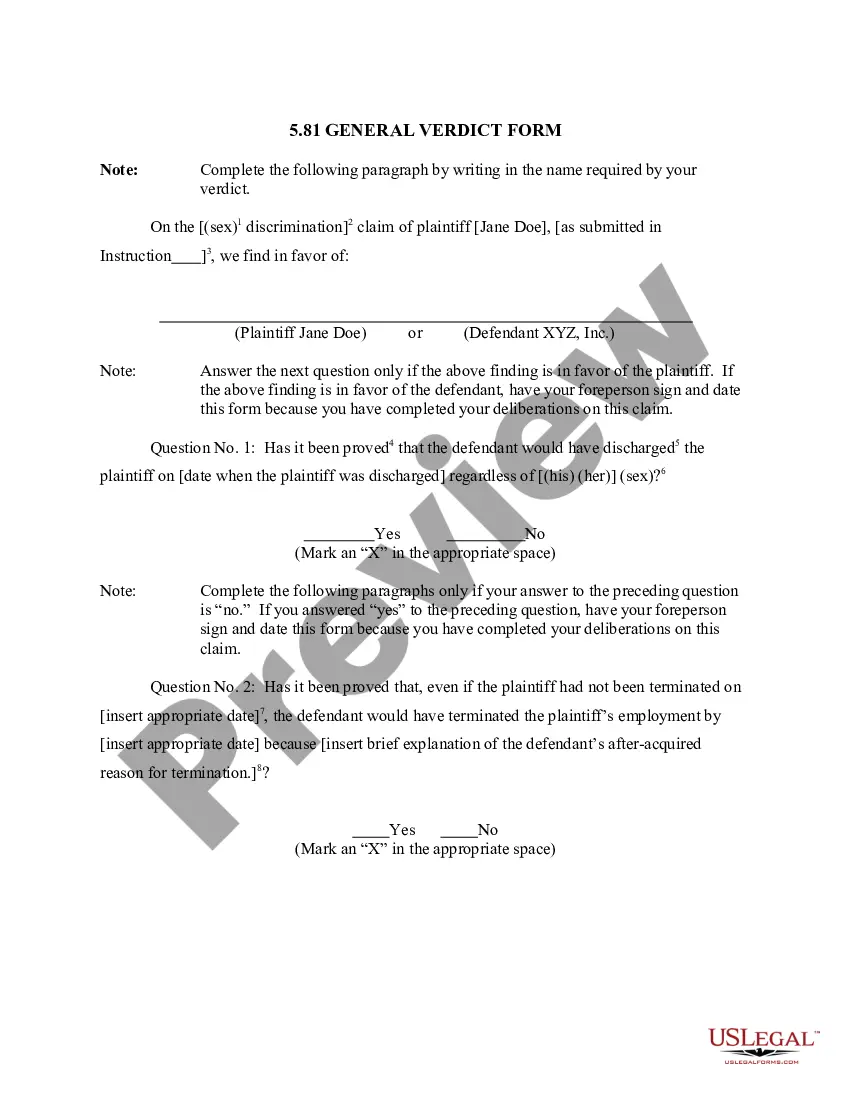
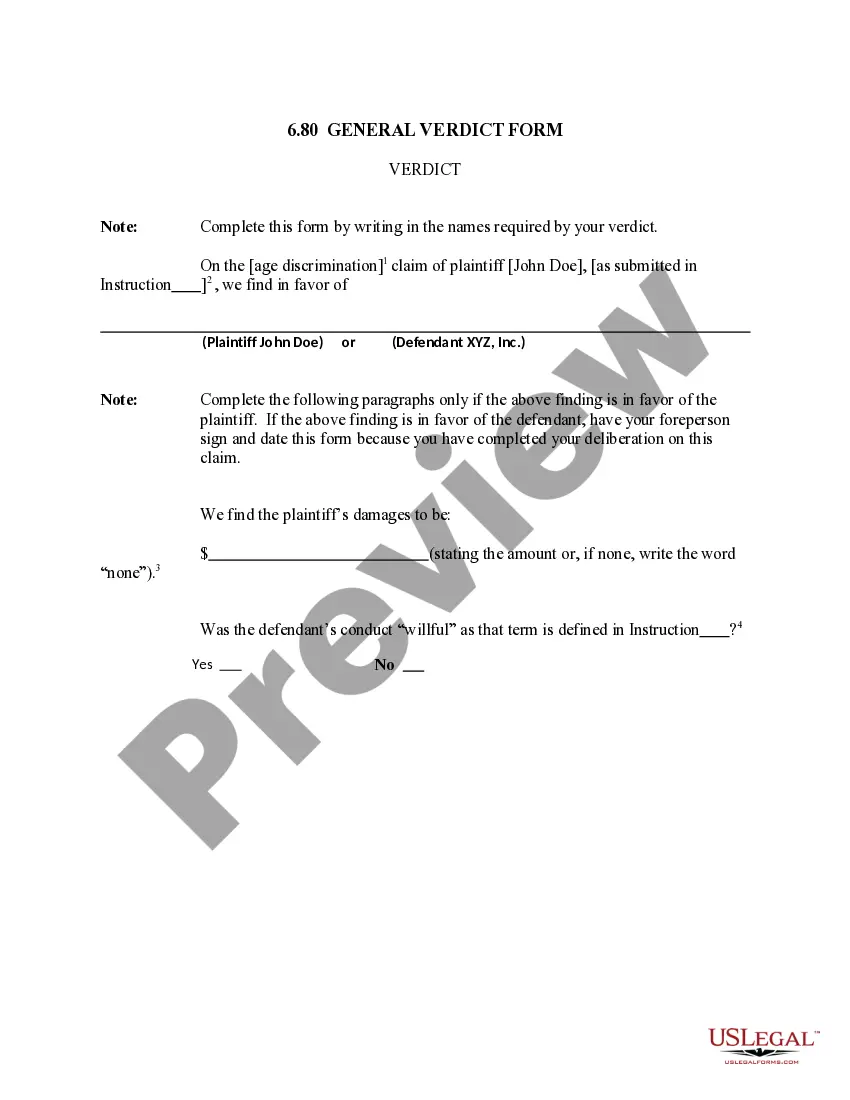
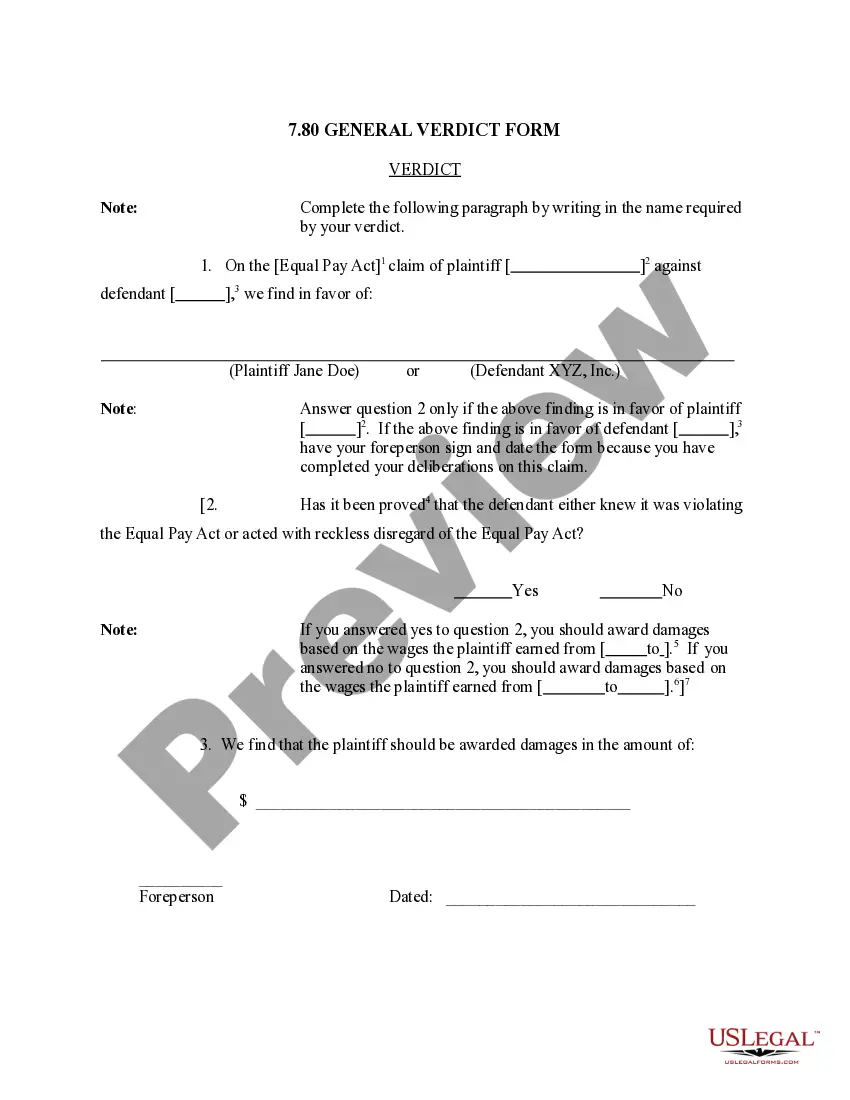
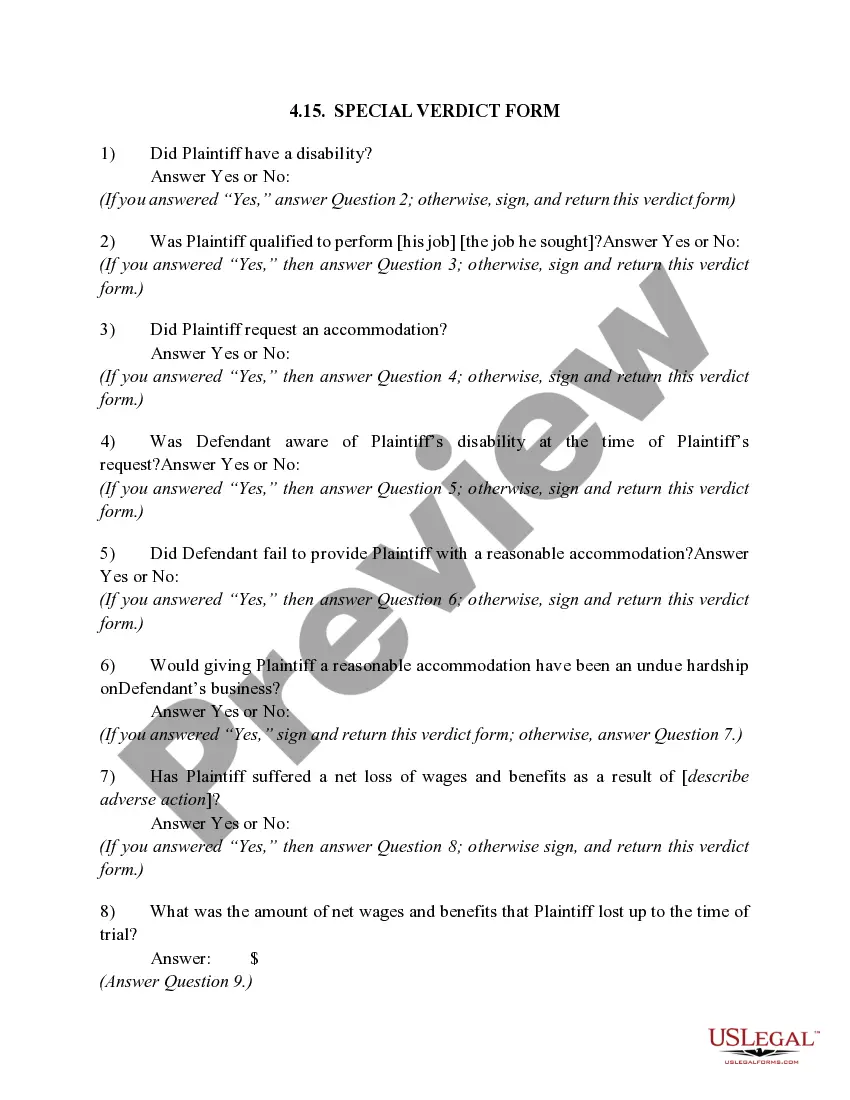
The General Verdict Form is a legal document used in civil jury trials, particularly in cases involving discrimination claims such as gender discrimination. This form is specifically designed for jurors to record their verdict on whether the plaintiff has proven their case. It facilitates the jury's decision-making process by providing clear options to indicate their findings regarding liability and damages. The General Verdict Form differs from specialized verdict forms typically used for defining specific damages or instructions in narrower case types.
Key parts of this document
- Section for identifying the plaintiff and defendant.
- Verdict selection options for jurors in favor of either party.
- Follow-up questions regarding evidence of potential discrimination.
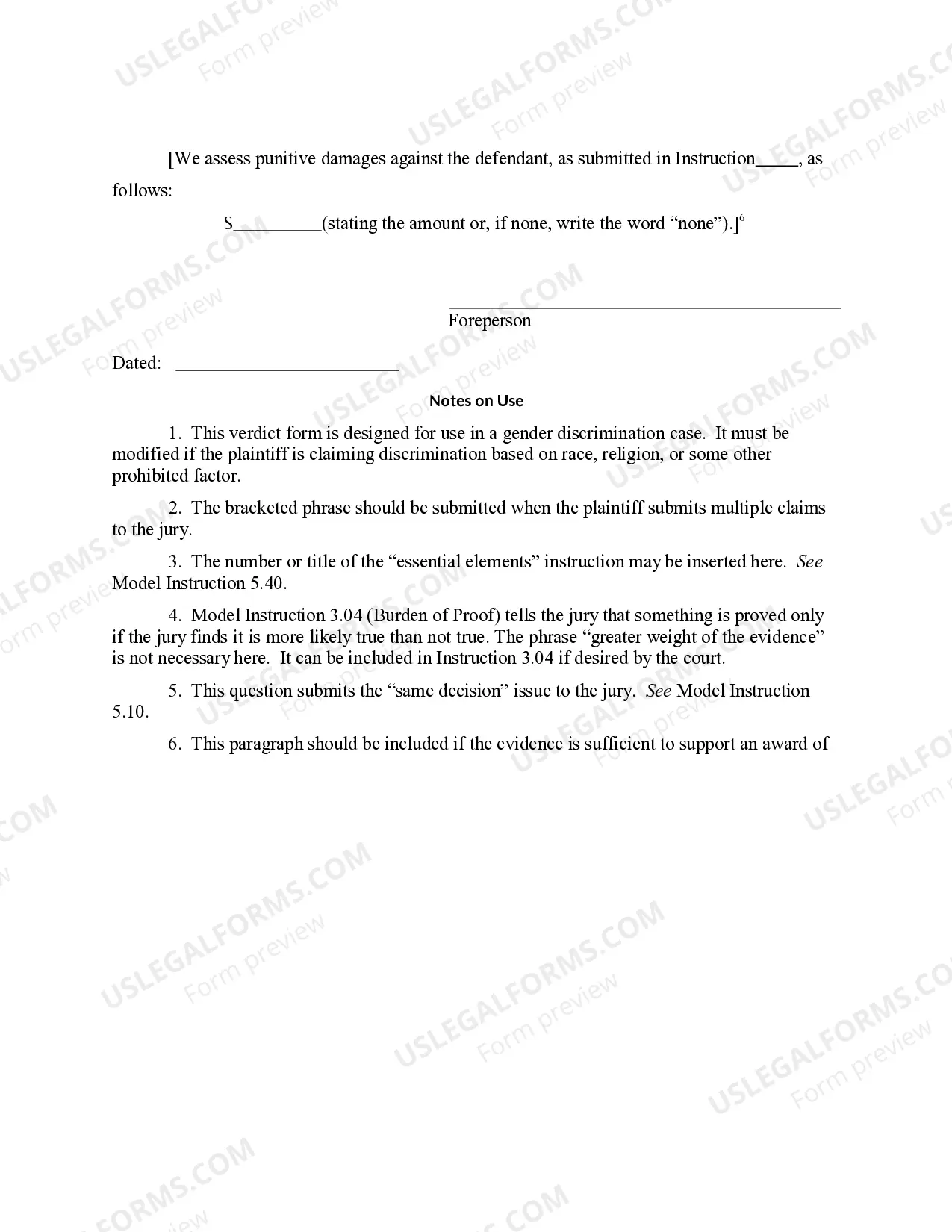
- Fields to record any awarded lost wages, damages, or punitive damages.
- Signature line for the foreperson of the jury.

When to use this form
This form is used when a jury is tasked with delivering a verdict in a civil case involving discrimination claims, most commonly gender discrimination. It is applicable when the jury has deliberated on the evidence presented and is ready to formally record their decision regarding liability and any potential damages awarded to the plaintiff.
Who this form is for
- Jurors involved in civil litigation cases regarding discrimination.
- Judges facilitating jury instructions in such cases.
- Lawyers representing either plaintiffs or defendants in discrimination lawsuits.
Completing this form step by step
- Identify the plaintiff and defendant involved in the case.
- Select the finding of the jury, indicating whether the verdict is for the plaintiff or defendant.
- If the verdict is for the plaintiff, respond to the question regarding whether the defendant would have discharged the plaintiff regardless of their sex.
- If applicable, enter amounts for lost wages, other damages, and punitive damages.
- Ensure the foreperson signs and dates the form upon completion of deliberations.
Notarization guidance
In most cases, this form does not require notarization. However, some jurisdictions or signing circumstances might. US Legal Forms offers online notarization powered by Notarize, accessible 24/7 for a quick, remote process.
Get your form ready online
Our built-in tools help you complete, sign, share, and store your documents in one place.
Make edits, fill in missing information, and update formatting in US Legal Forms—just like you would in MS Word.
Download a copy, print it, send it by email, or mail it via USPS—whatever works best for your next step.
Sign and collect signatures with our SignNow integration. Send to multiple recipients, set reminders, and more. Go Premium to unlock E-Sign.
If this form requires notarization, complete it online through a secure video call—no need to meet a notary in person or wait for an appointment.
We protect your documents and personal data by following strict security and privacy standards.

Make edits, fill in missing information, and update formatting in US Legal Forms—just like you would in MS Word.

Download a copy, print it, send it by email, or mail it via USPS—whatever works best for your next step.

Sign and collect signatures with our SignNow integration. Send to multiple recipients, set reminders, and more. Go Premium to unlock E-Sign.

If this form requires notarization, complete it online through a secure video call—no need to meet a notary in person or wait for an appointment.

We protect your documents and personal data by following strict security and privacy standards.
Avoid these common issues
- Failing to adequately complete all sections of the form.
- Not signing or dating the form by the foreperson.
- Misunderstanding the implications of the jury's findings on the follow-up questions.
- Overlooking to provide damage amounts if the verdict favors the plaintiff.
Why use this form online
- Easy access to a structured format that ensures all necessary components are included.
- Ability to fill out the form digitally and save progress.
- Convenience of downloading and printing for use in court without requiring specialized software.
- Reliable templates drafted by licensed attorneys ensure compliance with legal standards.
Legal use & context
- This form is essential for properly documenting jury findings in discrimination cases.
- It helps to ensure clear communication of the jury's decision, which is necessary for the legal process.
- Incorrectly filled forms can lead to ambiguity or challenges to the verdict.
Looking for another form?
Form popularity
FAQ
?We, the Jury, find the defendant, (guilty; not guilty; not guilty by reason of mental disease or defect; or not guilty and not guilty by reason of mental disease or defect) of , as charged in Count 1 of the Indictment/Complaint.?
The verdict of a jury is either general or special. A general verdict is that by which they pronounce generally upon all or any of the issues, either in favor of the plaintiff or defendant; a special verdict is that by which the jury find the facts only, leaving the judgment to the Court.
The verdict of a jury is either general or special. A general verdict is that by which they pronounce generally upon all or any of the issues, either in favor of the plaintiff or defendant; a special verdict is that by which the jury find the facts only, leaving the judgment to the Court.
Primary tabs. A directed verdict is a ruling entered by a trial judge after determining that there is no legally sufficient evidentiary basis for a reasonable jury to reach a different conclusion. The trial court may grant a directed verdict either sua sponte or upon a motion by either party.
A general verdict is a verdict in which the jury decides which party should win the case, without listing its specific findings on any disputed issues. Juries issuing a general verdict are not required to provide the court with the justifications or reasonings underlying their decision.
General verdict with interrogatories refers to a general verdict accompanied by answers to written interrogatories on one or more issues of fact that bear on the verdict. A interrogatory is submitted by the judge to a jury when the court asks for a general verdict and wants to know the basis of the decision.
(b) General Verdict Accompanied by Answer to Interrogatories. The court may submit to the jury, together with appropriate forms for a general verdict, written interrogatories upon one or more issues of fact the decision of which is necessary to a verdict.
The verdict form, in turn, formalizes the jury's decisions on the case, telling us how it will answer the claims and defenses. Its structure and language could influence the jury's ultimate answers. It may also control what issues may be raised on appeal.