7.80 GENERAL VERDICT FORM
Overview of this form
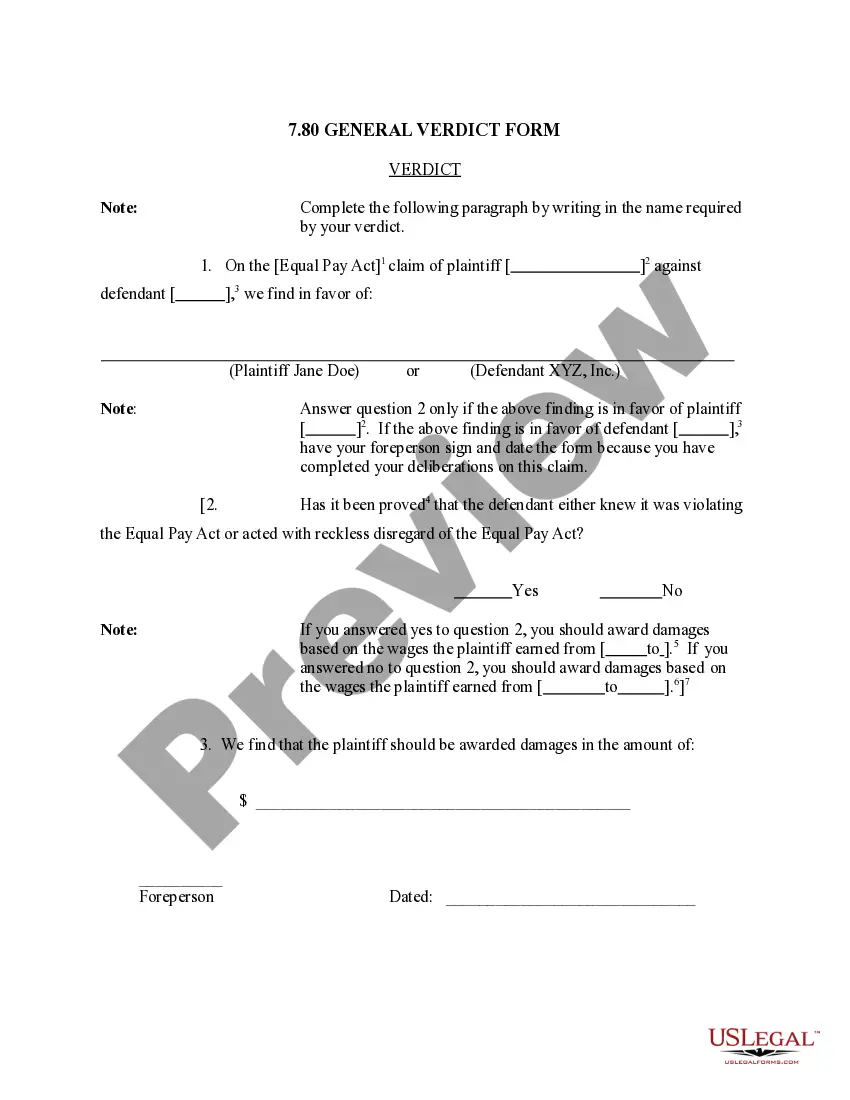
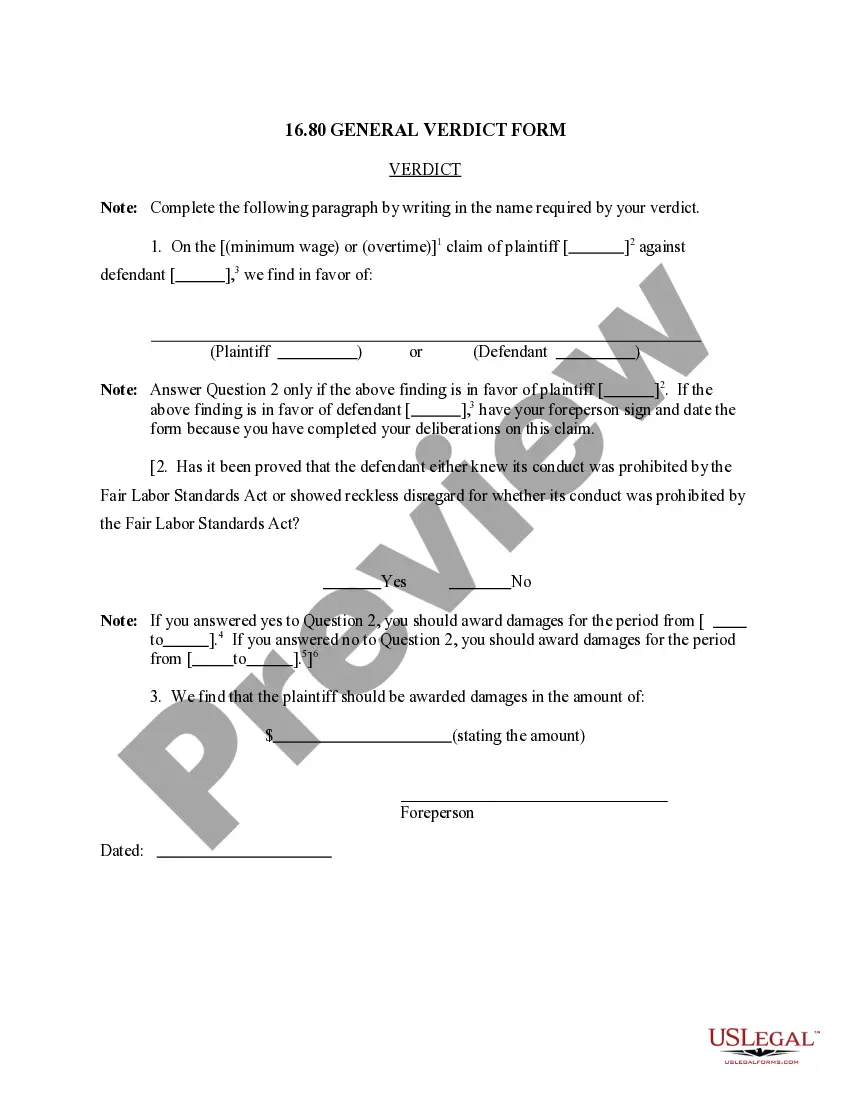
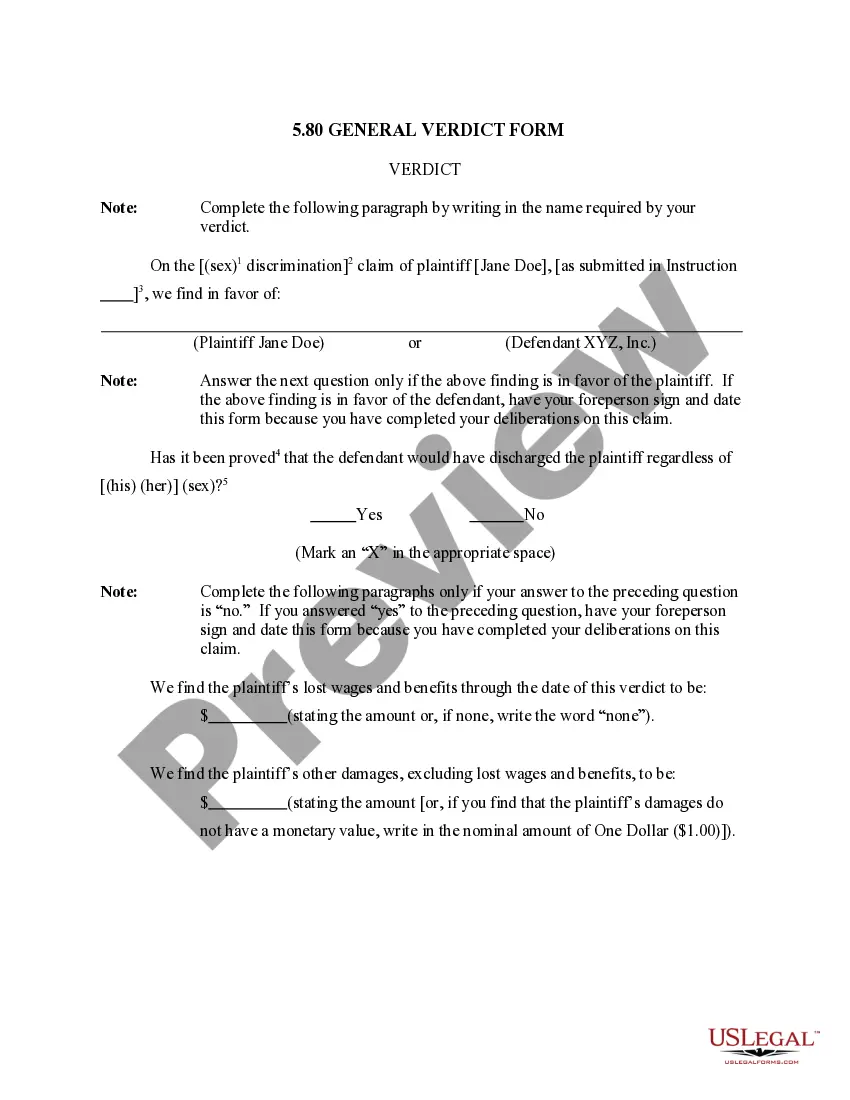
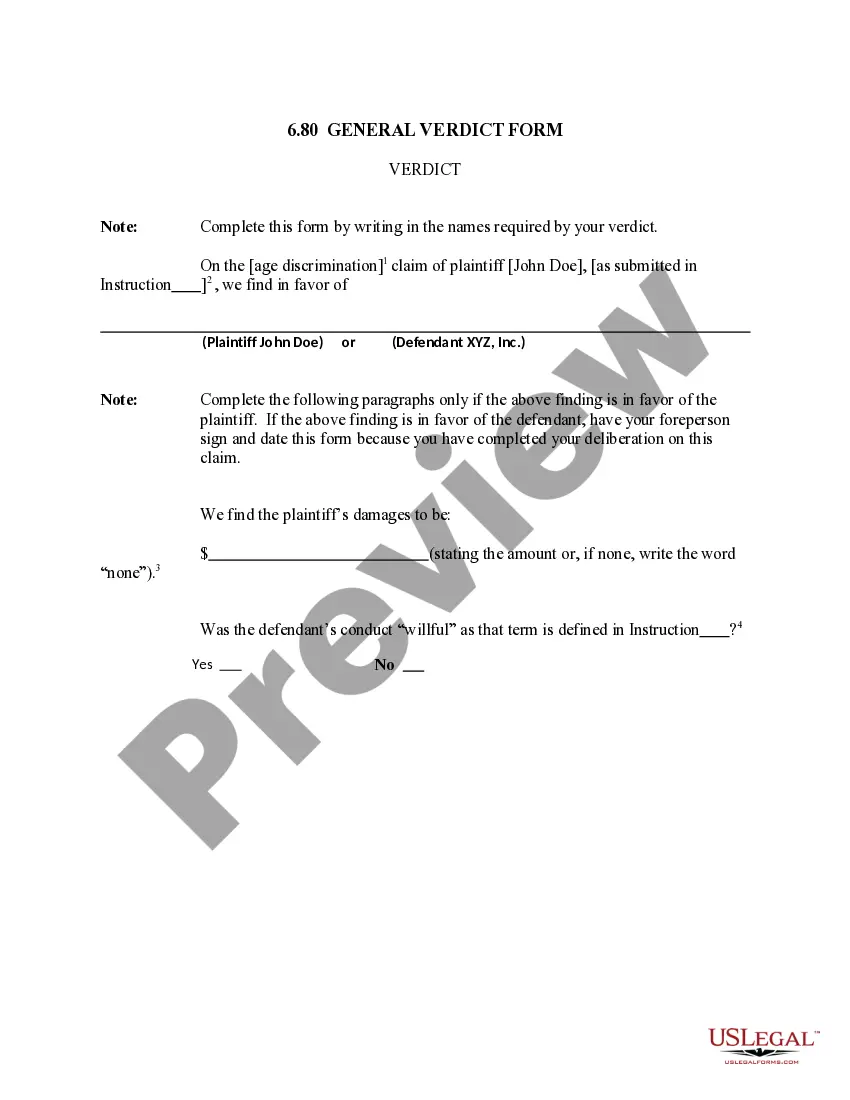
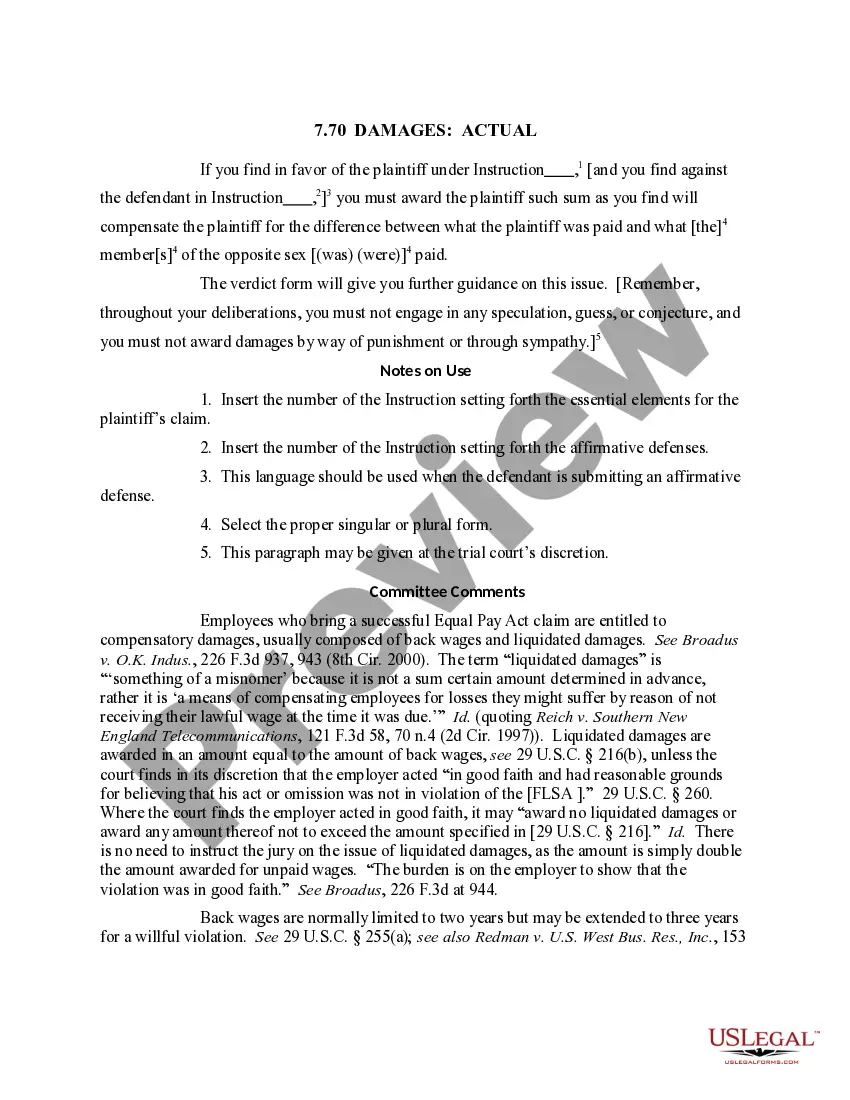
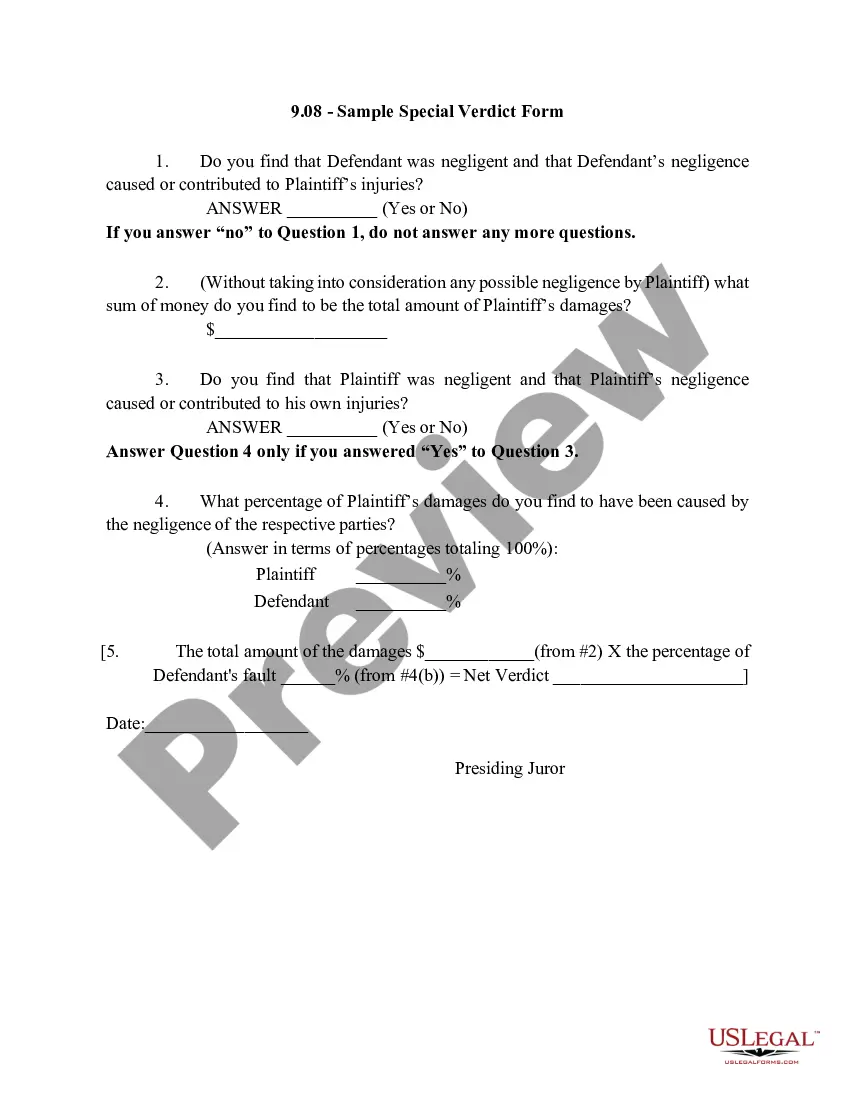
The General Verdict Form is a legal document used by juries to communicate their final decision on a case, particularly in civil trial scenarios involving claims like those under the Equal Pay Act. This form serves to clearly indicate whether the jury finds in favor of the plaintiff or the defendant and details any damages awarded. It differs from other forms by being specifically tailored to summarize jury findings during a court trial, providing a structured yet concise format for the verdict.
Key components of this form
- Verdict section to declare the decision in favor of either the plaintiff or the defendant.
- Space for the jury foreperson to sign and date the form, confirming completion of deliberations.
- Questions regarding the defendant's knowledge or recklessness in violating the Equal Pay Act.
- Field for entering the amount of damages to be awarded to the plaintiff if applicable.
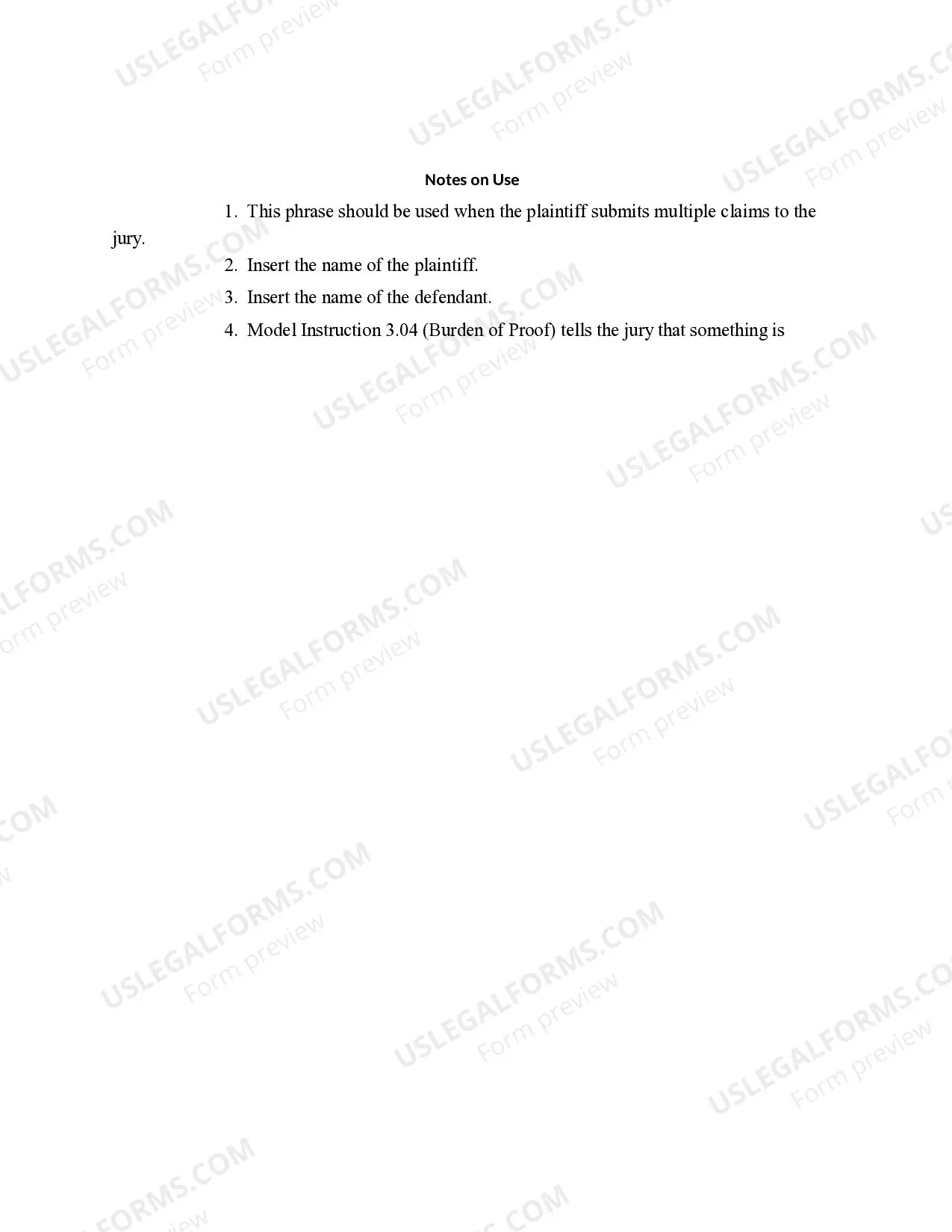
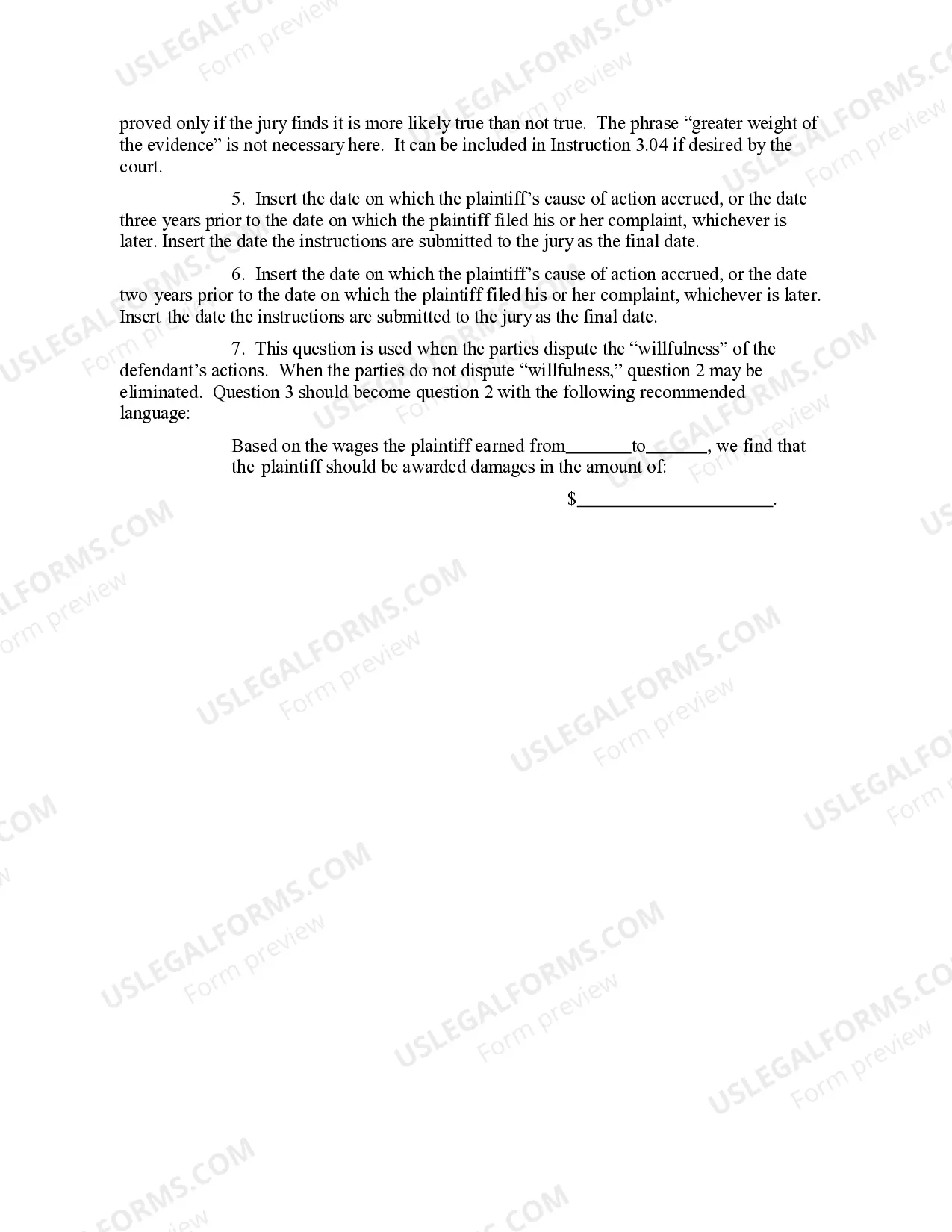
- Instructions for the submission dates relevant to the case.
When to use this document
This form is utilized during civil trials when a jury is tasked with determining the outcome of a case involving claims under the Equal Pay Act. It is particularly relevant when the jury needs to express their verdict after evaluating evidence and testimony presented during the trial. Use this form when the jury has reached a consensus on the findings of fact surrounding the case, including whether the defendant acted willfully in violation of employment laws.
Who needs this form
- Jury members involved in a trial concerning claims under the Equal Pay Act.
- Court personnel who require a formal record of the jury's verdict.
- Legal teams monitoring the trial's outcomes and verdict documentation.
How to complete this form
- Identify the plaintiff and defendant in the case and write their names in the designated spaces.
- Decide if the jury finds in favor of the plaintiff or defendant and mark the appropriate option.
- If the verdict is in favor of the plaintiff, answer whether the defendant acted with knowledge or reckless disregard of the law.
- Record the amount of damages to be awarded if the jury finds for the plaintiff.
- Ensure the foreperson signs and dates the form to finalize the decision.
Is notarization required?
This form does not typically require notarization to be legally valid. However, some jurisdictions or document types may still require it. US Legal Forms provides secure online notarization powered by Notarize, available 24/7 for added convenience.
Get your form ready online
Our built-in tools help you complete, sign, share, and store your documents in one place.
Make edits, fill in missing information, and update formatting in US Legal Forms—just like you would in MS Word.
Download a copy, print it, send it by email, or mail it via USPS—whatever works best for your next step.
Sign and collect signatures with our SignNow integration. Send to multiple recipients, set reminders, and more. Go Premium to unlock E-Sign.
If this form requires notarization, complete it online through a secure video call—no need to meet a notary in person or wait for an appointment.
We protect your documents and personal data by following strict security and privacy standards.

Make edits, fill in missing information, and update formatting in US Legal Forms—just like you would in MS Word.

Download a copy, print it, send it by email, or mail it via USPS—whatever works best for your next step.

Sign and collect signatures with our SignNow integration. Send to multiple recipients, set reminders, and more. Go Premium to unlock E-Sign.

If this form requires notarization, complete it online through a secure video call—no need to meet a notary in person or wait for an appointment.

We protect your documents and personal data by following strict security and privacy standards.
Avoid these common issues
- Failing to clearly indicate the verdict choice between the plaintiff and defendant.
- Leaving the damages amount section blank when applicable.
- Not signing or dating the form, which could invalidate the intent of the verdict.
Legal use & context
- The General Verdict Form is legally recognized for documenting jury decisions on civil cases.
- It provides an official account essential for post-trial motions and appeals.
- Incorrect or incomplete documentation may lead to complications in executing the jury's decision.
What to keep in mind
- This form is vital for conveying jury verdicts in civil cases, particularly under the Equal Pay Act.
- Accurate completion ensures the integrity of the jury's decision and its enforceability.
- Understanding how to fill out this form correctly can prevent common mistakes and legal issues.
Looking for another form?

Form popularity
FAQ
Primary tabs. A directed verdict is a ruling entered by a trial judge after determining that there is no legally sufficient evidentiary basis for a reasonable jury to reach a different conclusion. The trial court may grant a directed verdict either sua sponte or upon a motion by either party.
The verdict of a jury is either general or special. A general verdict is that by which they pronounce generally upon all or any of the issues, either in favor of the plaintiff or defendant; a special verdict is that by which the jury find the facts only, leaving the judgment to the Court.
The verdict of a jury is either general or special. A general verdict is that by which they pronounce generally upon all or any of the issues, either in favor of the plaintiff or defendant; a special verdict is that by which the jury find the facts only, leaving the judgment to the Court.
A verdict in which the jury gives its findings on factual issues in the case, without necessarily stating which party should win.
The verdict form, in turn, formalizes the jury's decisions on the case, telling us how it will answer the claims and defenses. Its structure and language could influence the jury's ultimate answers. It may also control what issues may be raised on appeal.
General verdict with interrogatories refers to a general verdict accompanied by answers to written interrogatories on one or more issues of fact that bear on the verdict. A interrogatory is submitted by the judge to a jury when the court asks for a general verdict and wants to know the basis of the decision.
(b) General Verdict Accompanied by Answer to Interrogatories. The court may submit to the jury, together with appropriate forms for a general verdict, written interrogatories upon one or more issues of fact the decision of which is necessary to a verdict.
A general verdict is a verdict in which the jury decides which party should win the case, without listing its specific findings on any disputed issues. Juries issuing a general verdict are not required to provide the court with the justifications or reasonings underlying their decision.