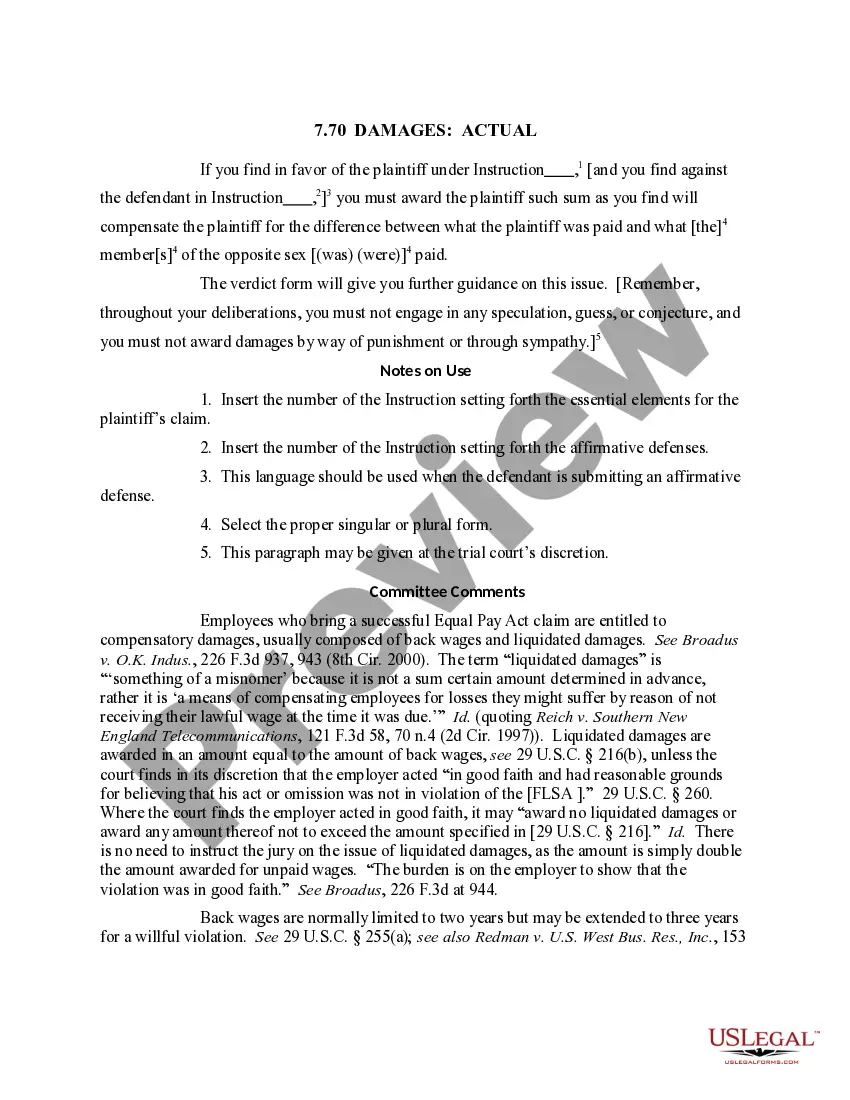
7.70 DAMAGES: ACTUAL
Overview of this form
The 7.70 Damages: Actual form is used to determine the compensatory damages awarded to a plaintiff who has successfully claimed a violation under the Equal Pay Act. This form specifically focuses on the calculation of damages based on the difference between what the plaintiff earned compared to members of the opposite sex in similar roles. This form is essential for ensuring fair compensation and provides clear guidelines for the jury's decision-making process.
Key parts of this document
- Identification of the plaintiff's earnings compared to the opposite sex.
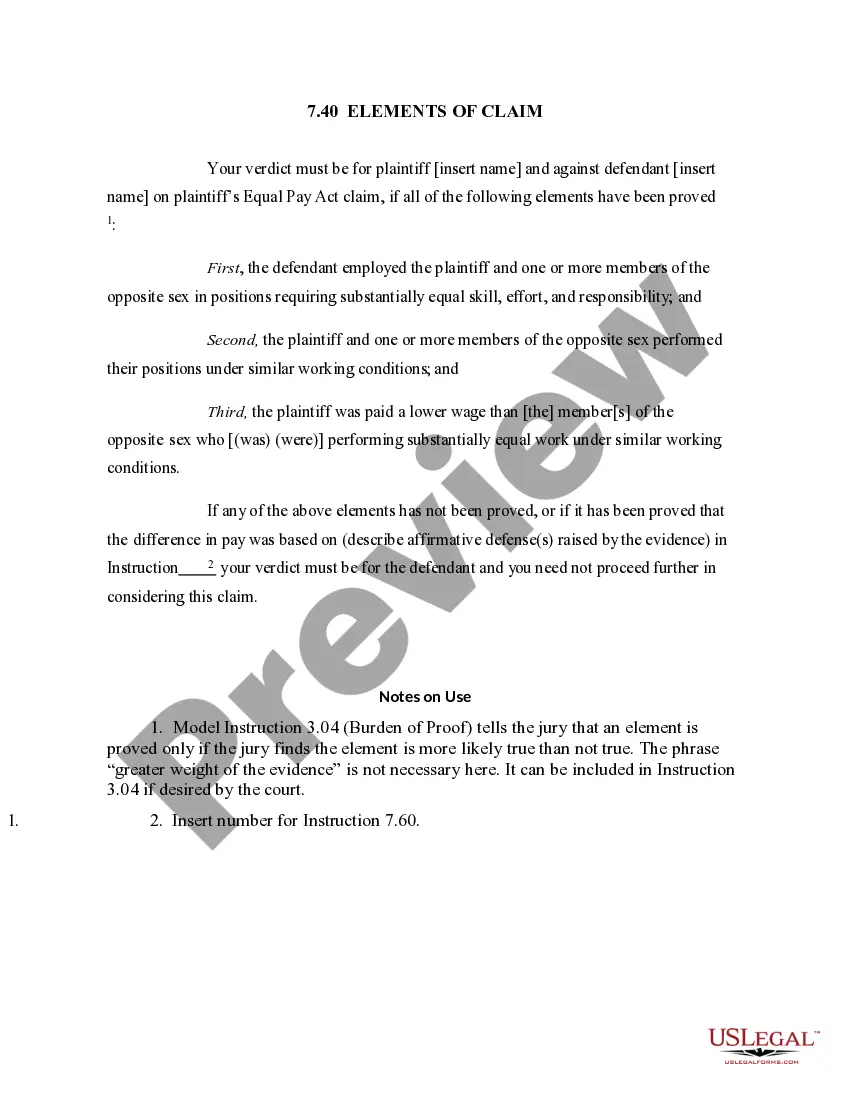
- Inclusion of instruction numbers that outline the essential elements of the claim.
- Clarification on the prohibition against speculation or punitive damages.
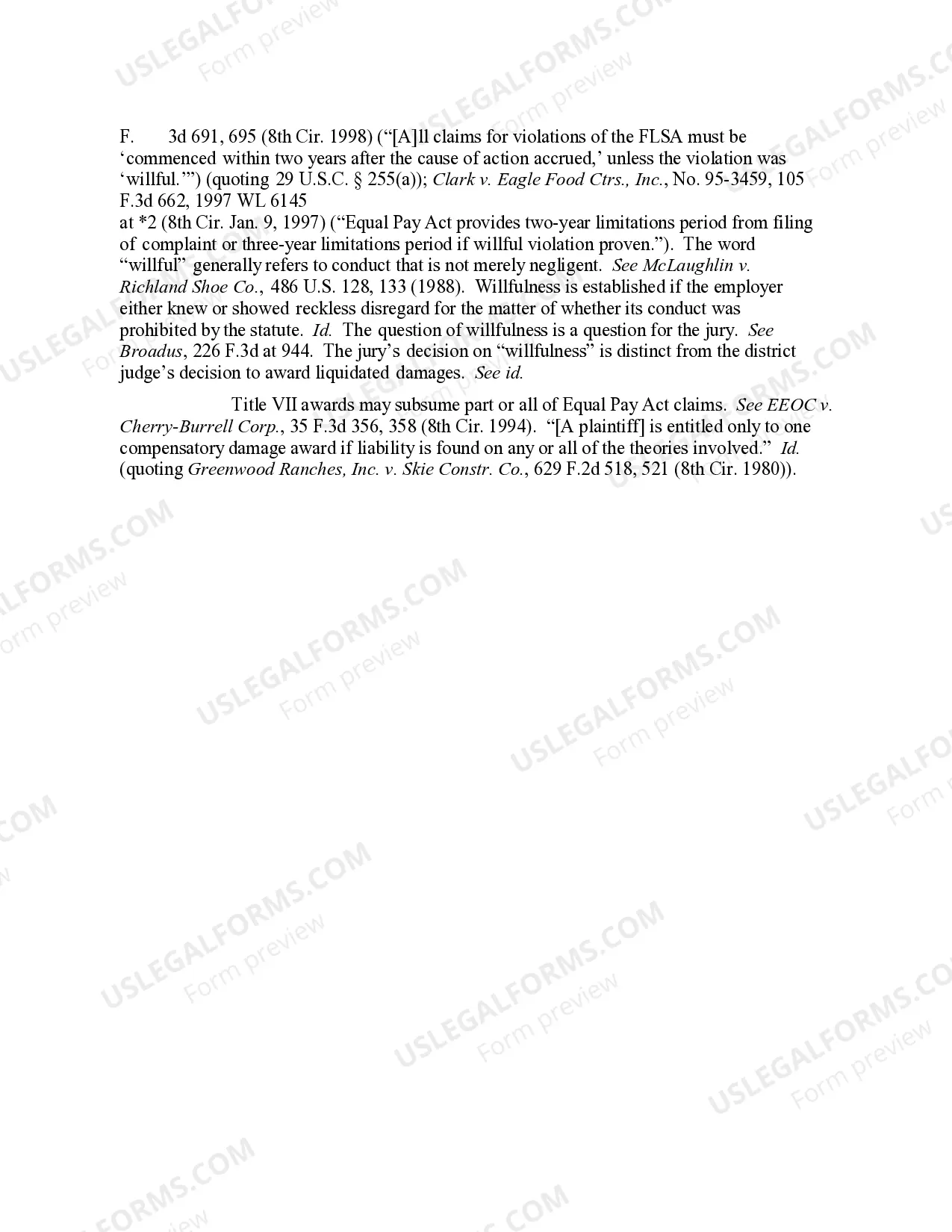
- Guidance on how to calculate liquidated damages based on unpaid wages.
- Discretionary language provided for the trial court regarding jury instructions.
Situations where this form applies
This form should be used in cases where an employee has filed a claim under the Equal Pay Act and successfully argues that they were paid less than their counterparts of the opposite sex for equal work. It is relevant in employment disputes regarding wage equality where a determination of actual damages is needed as part of the jury's verdict.
Who this form is for
- Employees who believe they have been discriminated against in wage compensation based on gender.
- Legal professionals seeking to guide clients through wage discrimination cases.
- Jurors tasked with determining damages in equal pay litigation.
Instructions for completing this form
- Identify the plaintiff and defendant as specified in the case.
- Insert the appropriate instruction numbers for essential claim elements and defenses.
- Calculate the difference in pay between the plaintiff and their counterparts.
- Ensure no speculative figures are included in the damage calculations.
- Review and confirm all figures before submission.
Notarization guidance
This form usually doesn’t need to be notarized. However, local laws or specific transactions may require it. Our online notarization service, powered by Notarize, lets you complete it remotely through a secure video session, available 24/7.
Get your form ready online
Our built-in tools help you complete, sign, share, and store your documents in one place.
Make edits, fill in missing information, and update formatting in US Legal Forms—just like you would in MS Word.
Download a copy, print it, send it by email, or mail it via USPS—whatever works best for your next step.
Sign and collect signatures with our SignNow integration. Send to multiple recipients, set reminders, and more. Go Premium to unlock E-Sign.
If this form requires notarization, complete it online through a secure video call—no need to meet a notary in person or wait for an appointment.
We protect your documents and personal data by following strict security and privacy standards.

Make edits, fill in missing information, and update formatting in US Legal Forms—just like you would in MS Word.

Download a copy, print it, send it by email, or mail it via USPS—whatever works best for your next step.

Sign and collect signatures with our SignNow integration. Send to multiple recipients, set reminders, and more. Go Premium to unlock E-Sign.

If this form requires notarization, complete it online through a secure video call—no need to meet a notary in person or wait for an appointment.

We protect your documents and personal data by following strict security and privacy standards.
Common mistakes to avoid
- Failing to include all relevant wage comparisons.
- Using speculative figures instead of documented wage differences.
- Neglecting to properly cite instruction numbers in the form.
- Overlooking the importance of clear jury guidelines regarding damages.
Benefits of completing this form online
- Convenient access to legally vetted form templates that are easy to download.
- Editability allows users to tailor the form to their specific situation.
- Reliable source of information drafted by licensed attorneys, ensuring accuracy.
Looking for another form?
Form popularity
FAQ
In tort law, actual damages, also known as compensatory damages, are damages awarded by a court equivalent to the loss a party suffered. If a party's right was technically violated but they suffered no harm or losses, a court may instead grant nominal damages.
RCW 7.70. 030(3) provides in relevant part: ?No award shall be made in any action ? for damages for injury occurring as the result of health care, unless the plaintiff establishes ? that injury resulted from health care to which the patient or his representative did not consent.?
Actual damages are intended to provide the monetary amount necessary to replace what was lost and nothing more. Usually, compensatory damages are awarded in civil court cases in order to compensate for damages, injury, or another incurred loss.
There is no specific formula to calculate damages as they are usually determined based on the actual expenses of the victim and compensation for their pain and anguish. Compensation should make the injured person ?whole? again.
In most cases, plaintiffs recover compensatory damages for three things, pain and suffering, medical expenses, and loss of earnings. Compensatory damages for pain and suffering usually make up a substantial part of any personal injury jury verdict.
A compensatory damages example is if a negligent driver hit your 2008 Honda and totaled it; the compensatory damages should equal the market value of your 2008 Honda at the time of its demise, less any scrap or salvage value, and you could be entitled to the fair market value of the vehicle.
Actual damages are meant to directly compensate you for the losses you have experienced due to a defendant's conduct. This includes tangible losses, such as medical bills and lost wages, and intangible losses such as emotional distress.
Compensatory damages are intended to compensate the plaintiff of a lawsuit with enough money to cover the actual amount of the injury or loss. There are two basic types of compensatory damages, actual and general.