8.03 Damages
What this document covers
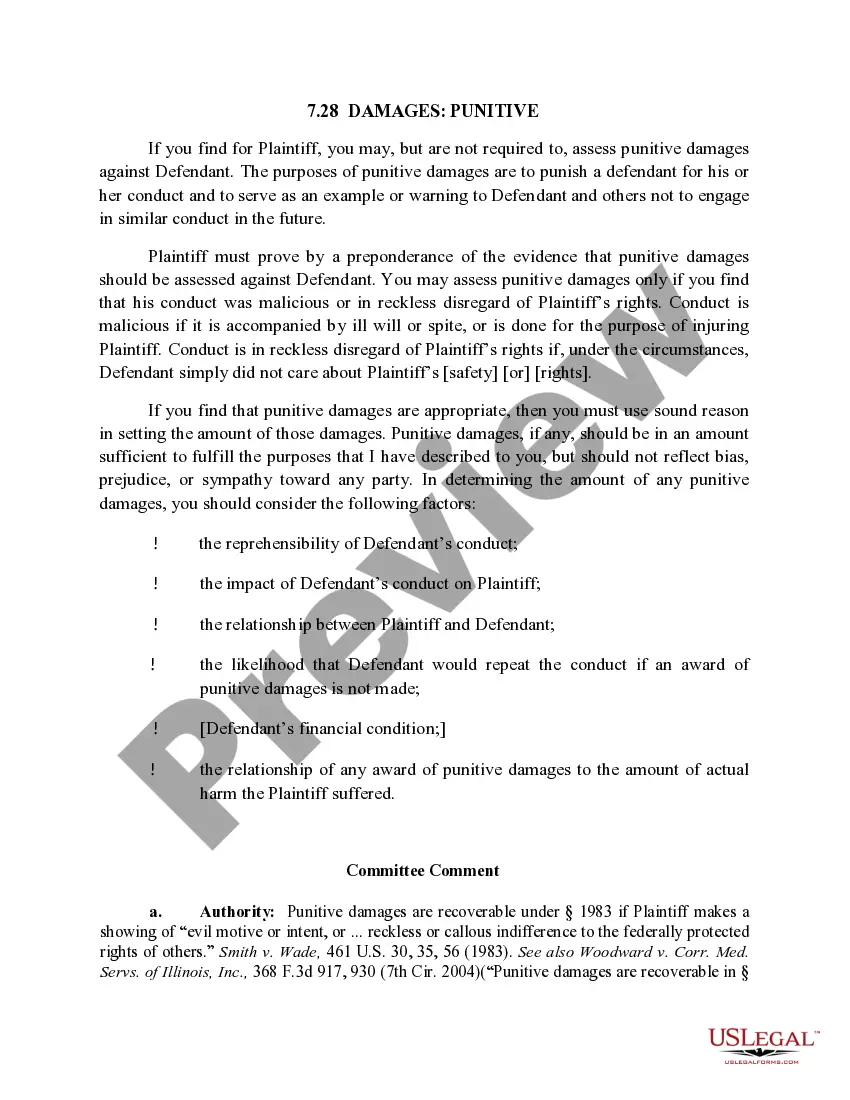
The 8.03 Damages form provides the official pattern jury instructions adopted by the Federal 7th Circuit Court. This legal form is essential for outlining the elements of damages relevant to a case in which a plaintiff's legal claim has been obstructed by the defendant. It differs from other legal forms by specifically addressing compensation values that a plaintiff might have received had their pursuit of justice not been hindered.
Form components explained
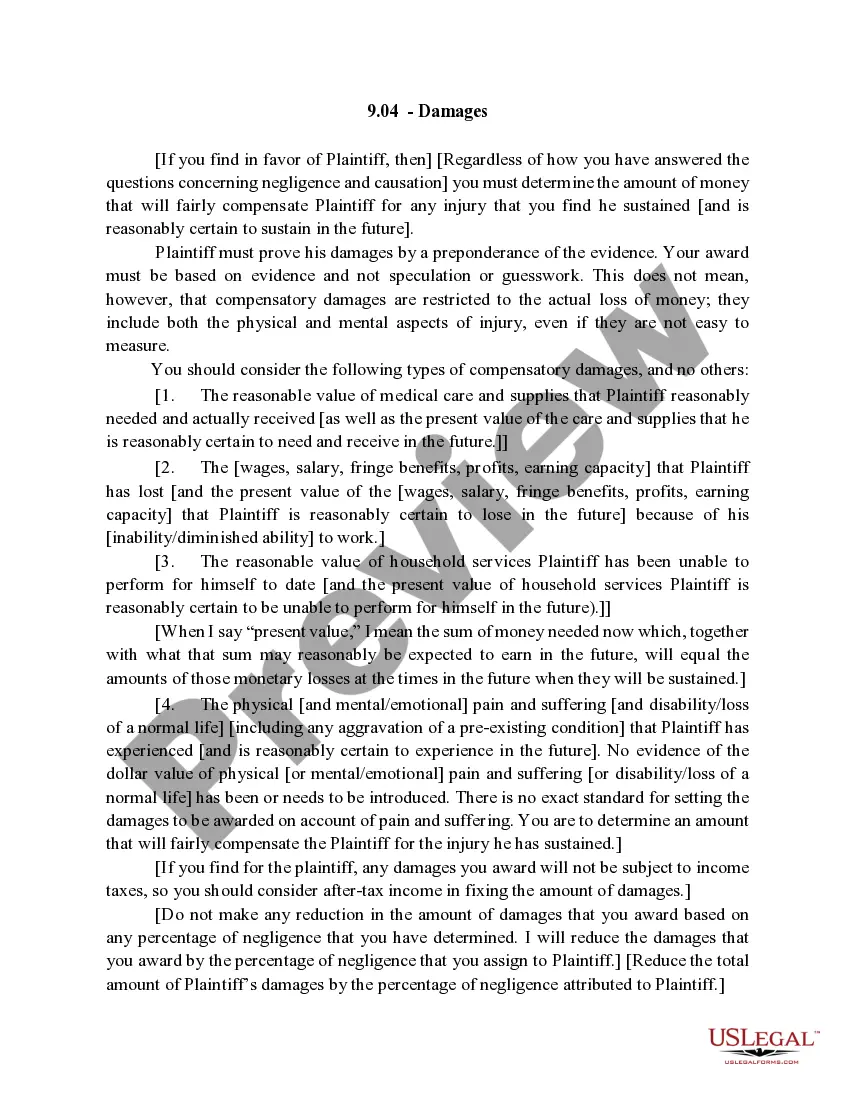
- Instructions to calculate damages using sections 7.22, 7.23, and 7.24.
- Space to list elements of damages specific to the case.
- Field for stating the reasonable value of any judgment or settlement the plaintiff could have received.
Situations where this form applies
This form is typically used in legal cases where the plaintiff has suffered damages due to the actions of the defendant that obstructed their ability to pursue a claim. It is relevant in personal injury cases, contractual disputes, or any situation where damages need to be quantified and presented to a jury.
Who needs this form
- Individuals pursuing a legal claim for damages against another party.
- Attorneys representing clients in civil litigation cases.
- Parties involved in a lawsuit requiring clarification of damages due to obstructions by a defendant.
How to prepare this document
- Identify the parties involved in the case.
- Utilize instructions from sections 7.22, 7.23, and 7.24 to outline relevant elements of damage.
- Specify the reasonable value of judgment or settlement the plaintiff could have received.
- Review the entries for accuracy and completeness before final submission.
Does this document require notarization?
This form does not typically require notarization unless specified by local law. Always check your state requirements to ensure compliance.
Get your form ready online
Our built-in tools help you complete, sign, share, and store your documents in one place.
Make edits, fill in missing information, and update formatting in US Legal Forms—just like you would in MS Word.
Download a copy, print it, send it by email, or mail it via USPS—whatever works best for your next step.
Sign and collect signatures with our SignNow integration. Send to multiple recipients, set reminders, and more. Go Premium to unlock E-Sign.
If this form requires notarization, complete it online through a secure video call—no need to meet a notary in person or wait for an appointment.
We protect your documents and personal data by following strict security and privacy standards.

Make edits, fill in missing information, and update formatting in US Legal Forms—just like you would in MS Word.

Download a copy, print it, send it by email, or mail it via USPS—whatever works best for your next step.

Sign and collect signatures with our SignNow integration. Send to multiple recipients, set reminders, and more. Go Premium to unlock E-Sign.

If this form requires notarization, complete it online through a secure video call—no need to meet a notary in person or wait for an appointment.

We protect your documents and personal data by following strict security and privacy standards.
Common mistakes to avoid
- Failing to list all relevant elements of damages in the case.
- Incorrectly calculating the reasonable value of potential judgments or settlements.
- Omitting important details about the parties involved in the claim.
Advantages of online completion
- Easy access to a professionally drafted legal template that can be customized to your needs.
- Editability allows users to adapt the form to their specific case requirements quickly.
- Reliable source of legal forms drafted by licensed attorneys, ensuring compliance with legal standards.
Legal use & context
- This form is enforceable in civil litigation cases within the jurisdictions it applies to.
- It is crucial for accurately presenting damages to a jury, making it a valuable tool in legal proceedings.
- Understanding how to correctly apply the elements of damages is essential for case effectiveness.
Main things to remember
- The 8.03 Damages form is crucial for detailing damages in a legal claim.
- Using the form accurately can enhance the chances of a favorable legal outcome.
- It is advisable to review state-specific rules to ensure compliance during submission.
Looking for another form?

Form popularity
FAQ
Under Texas Penal Code § 8.06, titled entrapment, it reads as follows: (a) It is a defense to prosecution that the actor engaged in the conduct charged because he was induced to do so by a law enforcement agent using persuasion or other means likely to cause persons to commit the offense.
38.02. FAILURE TO IDENTIFY. (a) A person commits an offense if he intentionally refuses to give his name, residence address, or date of birth to a peace officer who has lawfully arrested the person and requested the information.
8.03. MISTAKE OF LAW. (a) It is no defense to prosecution that the actor was ignorant of the provisions of any law after the law has taken effect.
Section 8.04 - Intoxication (a) Voluntary intoxication does not constitute a defense to the commission of crime. (b) Evidence of temporary insanity caused by intoxication may be introduced by the actor in mitigation of the penalty attached to the offense for which he is being tried.
(a) A person commits an offense if he offers, confers, or agrees to confer any benefit on a public servant that he knows the public servant is prohibited by law from accepting.
Section 8.07 - Age Affecting Criminal Responsibility (a) A person may not be prosecuted for or convicted of any offense that the person committed when younger than 15 years of age except: (1) perjury and aggravated perjury when it appears by proof that the person had sufficient discretion to understand the nature and
When a party has mistakenly designated a defense as a counterclaim or a counterclaim as a defense, the court on terms, if justice so requires, shall treat the pleading as if there had been a proper designation.