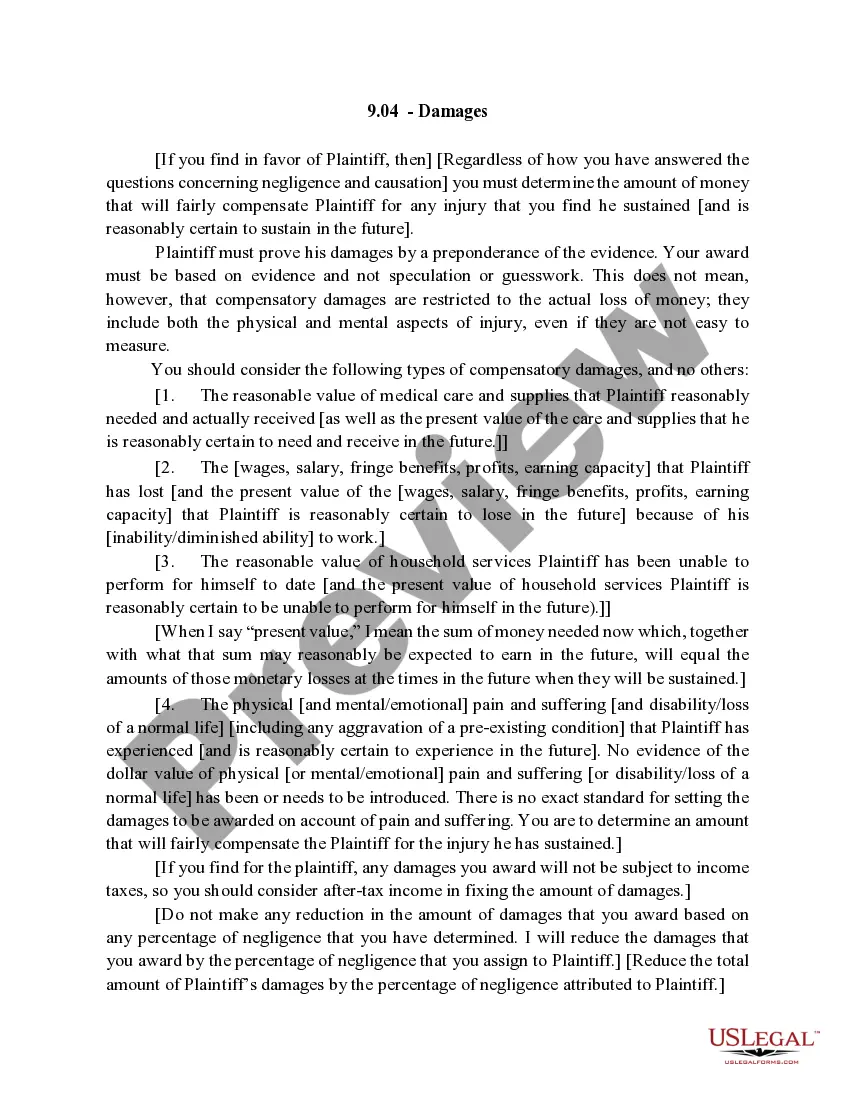
11.1.11 Damages
Understanding this form
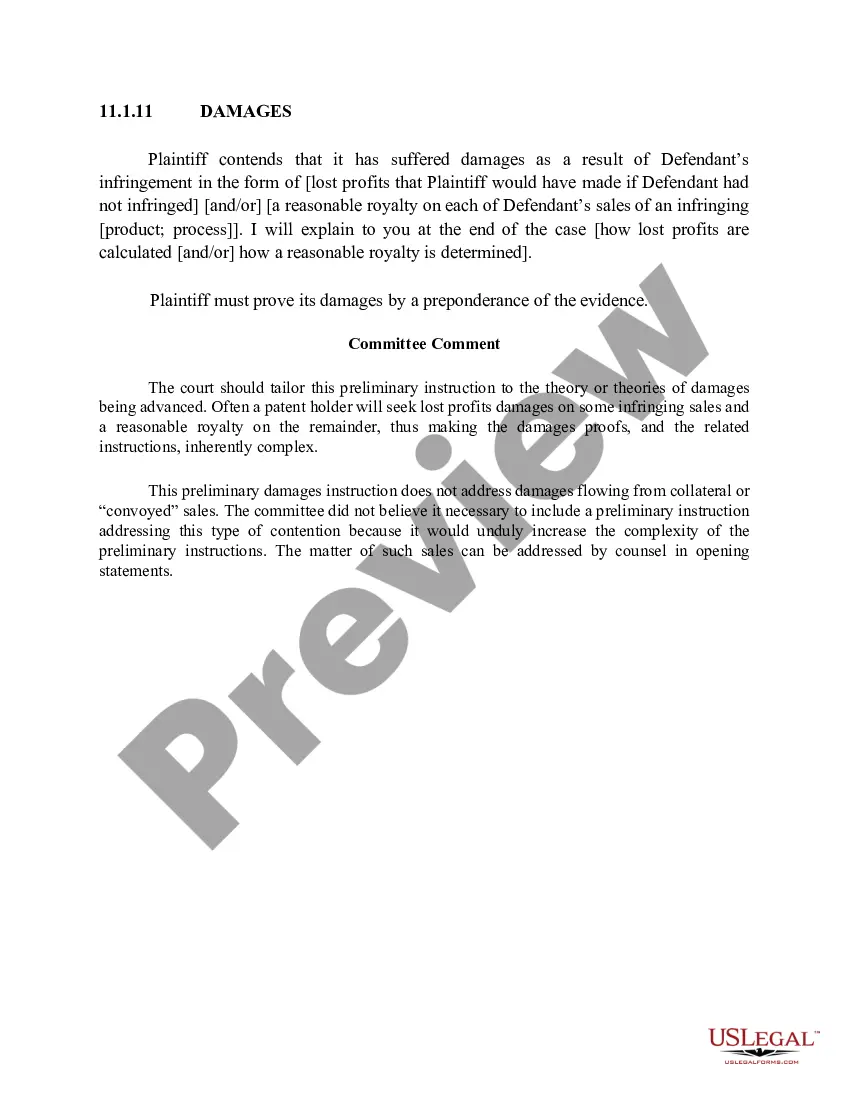
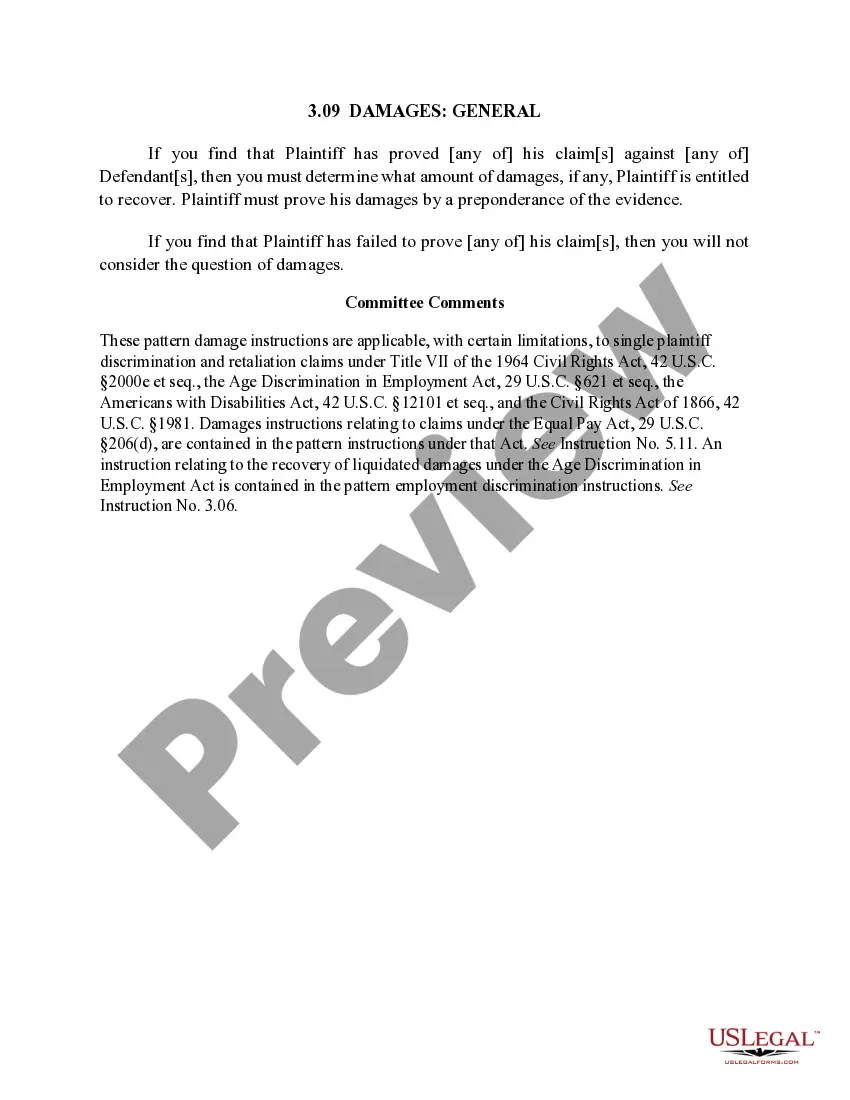
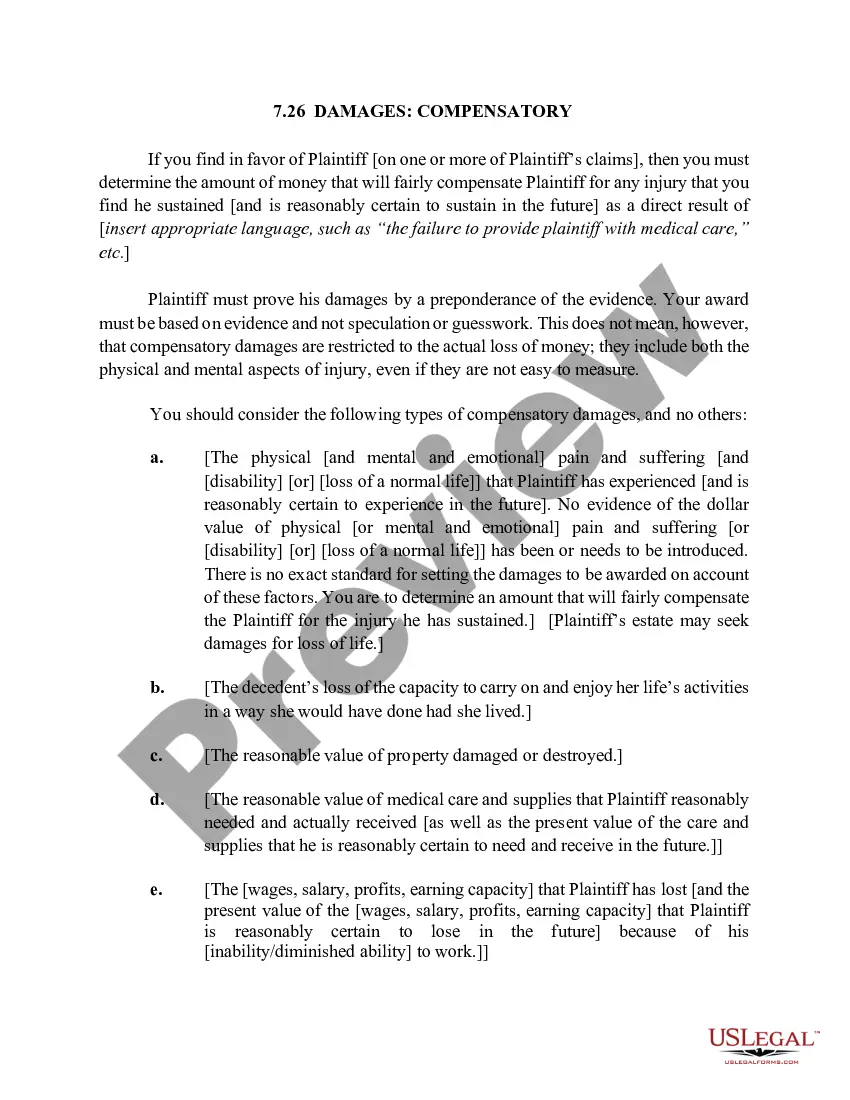
The 11.1.11 Damages form is a legal instruction used in federal court cases, specifically those related to patent infringement. This form outlines how plaintiffs can present their claims for damages, which may include lost profits or a reasonable royalty. Unlike other legal forms, this one focuses specifically on the methods for calculating and proving damages in infringement cases.
Form components explained
- Definitions of damages types: lost profits and reasonable royalties.
- Requirement for plaintiffs to prove damages by a preponderance of the evidence.
- Instructions on how to tailor damage theories to specific cases.
- Exclusion of collateral or convoyed sales in the preliminary damages instruction.
Common use cases
This form should be used in patent infringement cases when the plaintiff alleges they have experienced damages due to the defendant's actions. It is applicable when seeking compensation for lost profits or a reasonable royalty related to the defendant's infringing products or processes.
Who needs this form
- Patent holders seeking to recover damages from infringement cases.
- Attorneys representing clients in federal patent litigation.
- Legal professionals needing a structured way to present damages in court.
How to prepare this document
- Identify the parties involved in the legal dispute.
- Clearly state the types of damages being claimed, such as lost profits or reasonable royalties.
- Provide evidence to support the claims of damages.
- Ensure that all claims meet the standard of preponderance of the evidence.
- Review and tailor the instructions based on the specifics of the case.
Is notarization required?
Notarization is not commonly needed for this form. However, certain documents or local rules may make it necessary. Our notarization service, powered by Notarize, allows you to finalize it securely online anytime, day or night.
Get your form ready online
Our built-in tools help you complete, sign, share, and store your documents in one place.
Make edits, fill in missing information, and update formatting in US Legal Forms—just like you would in MS Word.
Download a copy, print it, send it by email, or mail it via USPS—whatever works best for your next step.
Sign and collect signatures with our SignNow integration. Send to multiple recipients, set reminders, and more. Go Premium to unlock E-Sign.
If this form requires notarization, complete it online through a secure video call—no need to meet a notary in person or wait for an appointment.
We protect your documents and personal data by following strict security and privacy standards.

Make edits, fill in missing information, and update formatting in US Legal Forms—just like you would in MS Word.

Download a copy, print it, send it by email, or mail it via USPS—whatever works best for your next step.

Sign and collect signatures with our SignNow integration. Send to multiple recipients, set reminders, and more. Go Premium to unlock E-Sign.

If this form requires notarization, complete it online through a secure video call—no need to meet a notary in person or wait for an appointment.

We protect your documents and personal data by following strict security and privacy standards.
Mistakes to watch out for
- Failing to provide sufficient evidence for the claimed damages.
- Not specifying the types of damages clearly.
- Overlooking the need to tailor the instruction to the specific case context.
Why use this form online
- Convenience of downloading the form from anywhere at any time.
- Editability allows users to customize the form easily.
- Reliability of using professionally drafted forms by licensed attorneys.
Legal use & context
- This form is intended for use in federal copyright and patent infringement cases.
- It is designed to help plaintiffs present their damage claims efficiently.
- Understanding the legal context is critical to ensuring accurate and enforceable claims.
Looking for another form?
Form popularity
FAQ
Elements of Unclean Hands Defense Has the party in question not performed under the terms of the contract? Has the party in question engaged in any fraudulent act? Has the party in question lied with regard to the contract? Has the party in question coerced or otherwise forced you into a contract?
An equitable defense that bars relief to a party who has engaged in inequitable behavior (including fraud, deceit, unconscionability or bad faith) related to the subject matter of that party's claim.
"The unclean hands doctrine demands that a plaintiff act fairly in the matter for which he seeks a remedy. He must come into court with clean hands, and keep them clean, or he will be denied relief, regardless of the merits of his claim." (Kendall-Jackson Winery, Ltd.
There are thirteen courts of appeals: eleven numbered circuits (First through Eleventh), the United States Court of Appeals for the District of Columbia Circuit and the United States Court of Appeals for the Federal Circuit. Not all circuits have published jury instructions: the Second and Fourth Circuits do not.
An example would be a car accident in which the defendant has been ordered to pay the plaintiff a certain amount of money in order to compensate her for any medical bills or missed wages caused by the crash. An equitable claim asks the court to order a person to do or not do a particular act.