Memorandum of Trust Agreement
About this form
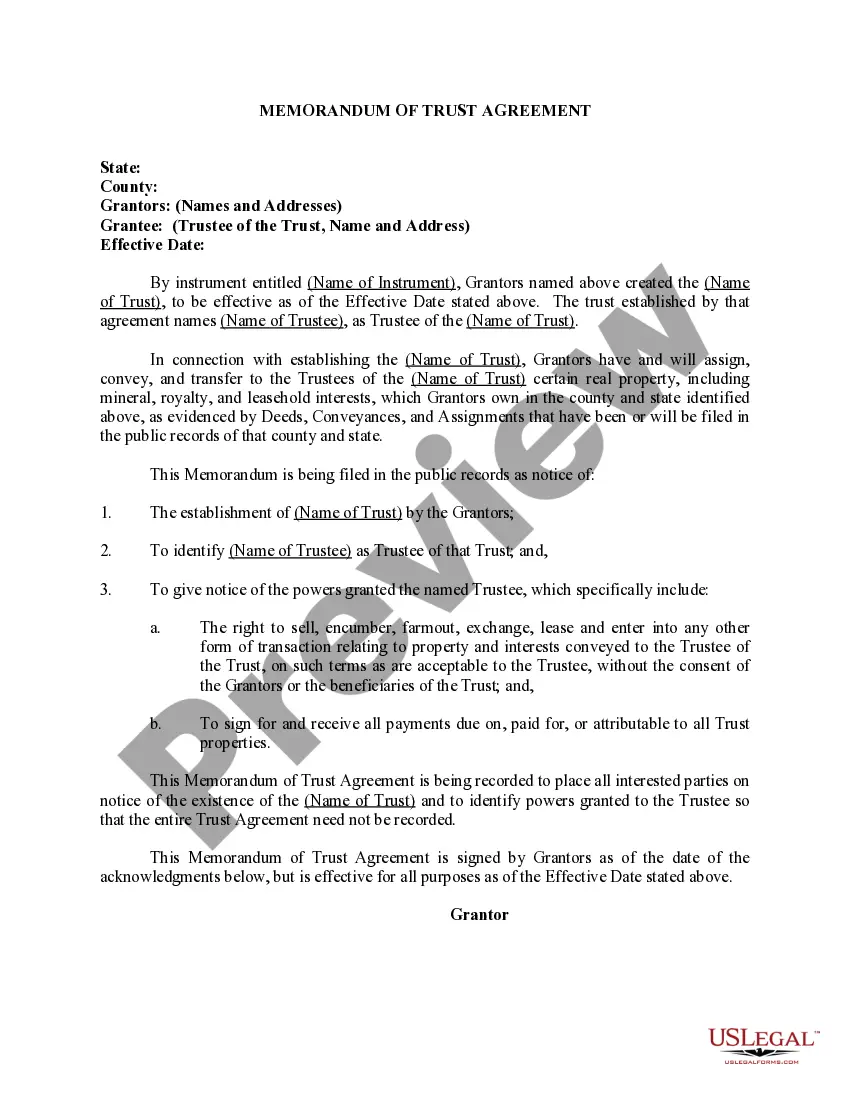
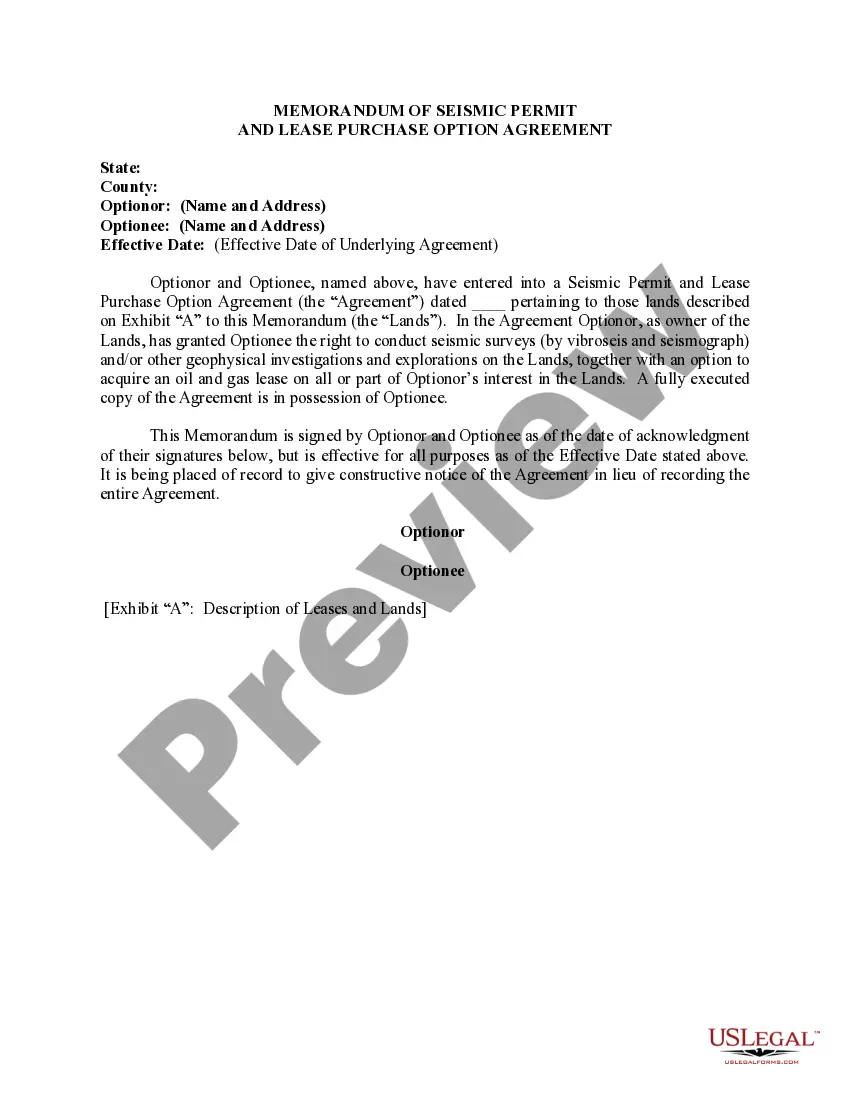
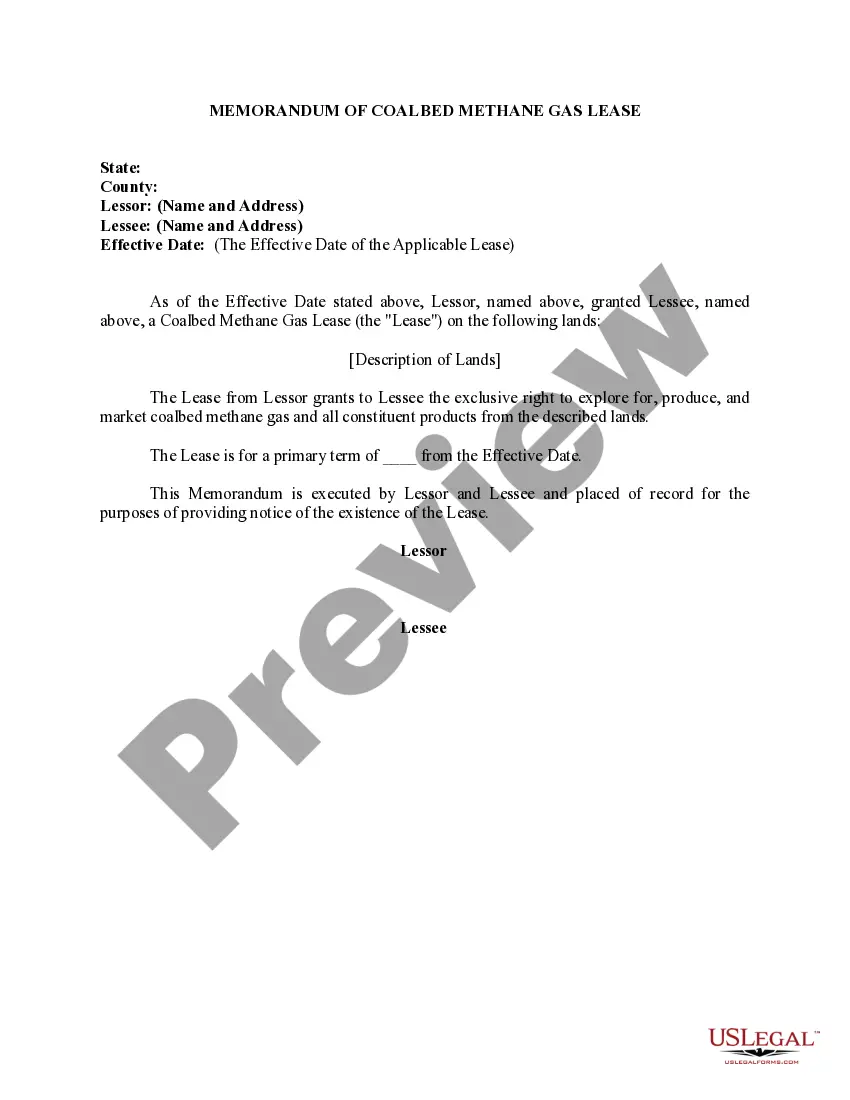
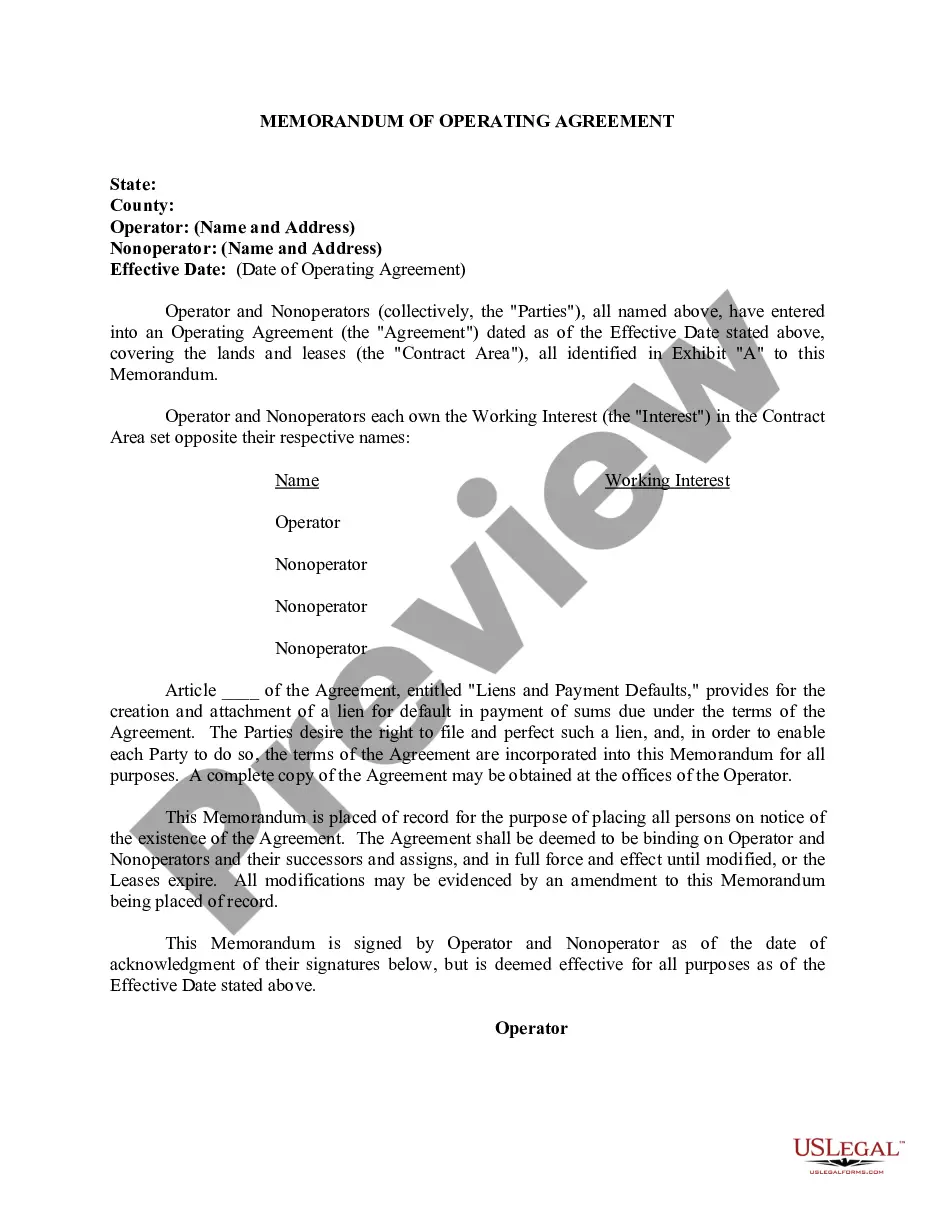
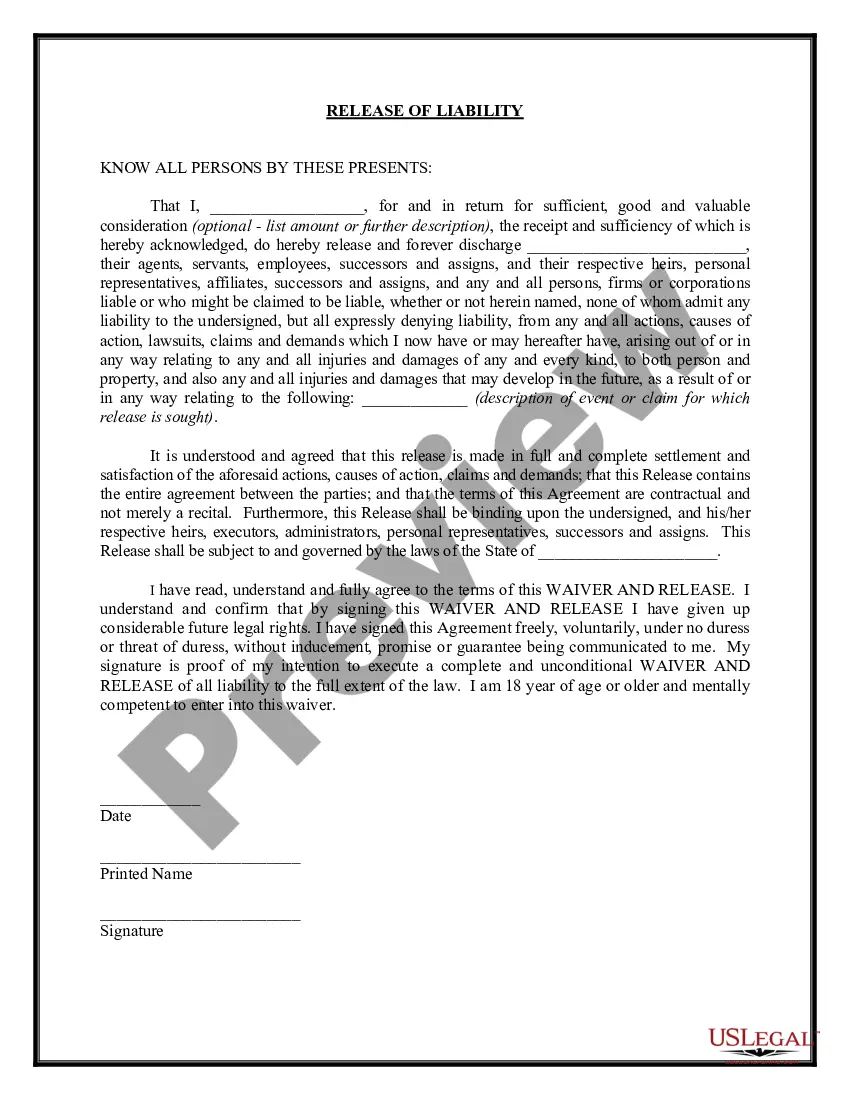
The Memorandum of Trust Agreement is a legal document that serves as a notice regarding the establishment of a trust. This form indicates that grantors have assigned certain real property interests to the trustees of a named trust. It informs interested parties about the trust's existence without requiring the entire trust agreement to be recorded. This form is useful for providing clarity and notice regarding property ownership and trustee powers, differentiating it from other trust-related documents that may not include such a memo.
Form components explained
- Identification of grantors, including names and addresses.
- Details of the grantee, specifically the trustee of the trust.
- Effective date of the trust and the memorandum.
- Description of the property interests being assigned, including real property, mineral, royalty, and leasehold interests.
- Notice of powers granted to the trustee, including the ability to sell and manage the trust property.
- Signature fields for grantors, acknowledging the document.
Situations where this form applies
This form should be used when grantors wish to formally document the establishment of a trust and the assignment of specific real property interests to the trustees. It is particularly useful when the grantors want to notify third parties, such as creditors or potential buyers, about the trust's existence and the authority granted to the trustee. Use this form in situations involving estate planning, property transfers, or trust management.
Who can use this document
- Individuals establishing a trust and transferring property into it.
- Grantors who wish to clearly communicate the authority of the trustee.
- Trustees looking to secure their rights to manage and sell trust property.
- Beneficiaries of the trust who need to understand the structure and terms of the trust.
How to prepare this document
- Identify the parties involved by entering the names and addresses of grantors and the trustee.
- Specify the effective date of the trust and the memorandum.
- Clearly describe the real property interests being assigned to the trustee.
- Complete the notice of powers granted to the trustee, detailing their rights over the property.
- Obtain signatures from all grantors to validate the document.
Does this form need to be notarized?
This form does not typically require notarization unless specified by local law. However, it is advisable to confirm the requirements based on state regulations to ensure all legal requirements are met.
Get your form ready online
Our built-in tools help you complete, sign, share, and store your documents in one place.
Make edits, fill in missing information, and update formatting in US Legal Forms—just like you would in MS Word.
Download a copy, print it, send it by email, or mail it via USPS—whatever works best for your next step.
Sign and collect signatures with our SignNow integration. Send to multiple recipients, set reminders, and more. Go Premium to unlock E-Sign.
If this form requires notarization, complete it online through a secure video call—no need to meet a notary in person or wait for an appointment.
We protect your documents and personal data by following strict security and privacy standards.

Make edits, fill in missing information, and update formatting in US Legal Forms—just like you would in MS Word.

Download a copy, print it, send it by email, or mail it via USPS—whatever works best for your next step.

Sign and collect signatures with our SignNow integration. Send to multiple recipients, set reminders, and more. Go Premium to unlock E-Sign.

If this form requires notarization, complete it online through a secure video call—no need to meet a notary in person or wait for an appointment.

We protect your documents and personal data by following strict security and privacy standards.
Typical mistakes to avoid
- Failing to clearly identify all parties involved can lead to confusion.
- Neglecting to specify or accurately describe the property interests being assigned.
- Not including an effective date or using an incorrect date.
- Omitting signatures from all necessary grantors, which may invalidate the form.
Benefits of using this form online
- Convenience of completing the form at any time without needing to visit a legal office.
- Editable templates that allow for customization according to specific needs.
- Access to professionally drafted materials for increased reliability and accuracy.
Legal use & context
- This memorandum provides a legal basis for notifying interested parties about the trust's properties and the powers granted to the Trustee.
- It helps in preserving the intent of the Grantors and protecting the interests of the beneficiaries.
- The memorandum can be referenced in future legal or property transactions regarding the trust estate.
Key takeaways
- The Memorandum of Trust Agreement serves as a public notice of a trust's existence and its terms.
- It enables efficient property management by designating a Trustee.
- Careful completion of the form is crucial to avoid common mistakes.
Looking for another form?
Form popularity
FAQ
When signing anything on behalf of the trust, always sign as John Smith, Trustee. By signing as Trustee, you will not be personally liable for that action as long as that action is within the scope of your authority under the trust.
Under O.R.C. 5301.255, the memorandum of trust is a document that certifies a trustee has the authority to act on behalf of an existing trust. The trustee is the person or entity who holds title to a trust's assets on behalf of a settlor.
A Memorandum of Trust is a synopsis of a trust that is used when transferring real property into a trust. It's then recorded in county in which the property is owned. The Memorandum of Trust is used in place of the actual trust to identify the grantor and trustees as well as the basic details of the trust.
An estate plan that includes a trust costs $1,000 to $3,000, versus $300 or less for a simple will. What a living-trust promoter may not tell you: You don't need a trust to protect assets from probate. You can arrange for most of your valuable assets to go to your heirs outside of probate.
Houses and other real estate (even if they're mortgaged) stock, bond, and other security accounts held by brokerages (but think about naming a TOD beneficiary instead) small business interests (stock in a closely held corporation, partnership interests, or limited liability company shares)
Qualified retirement accounts 401ks, IRAs, 403(b)s, qualified annuities. Health saving accounts (HSAs) Medical saving accounts (MSAs) Uniform Transfers to Minors (UTMAs) Uniform Gifts to Minors (UGMAs) Life insurance. Motor vehicles.
List Your Assets and Decide Which You'll Include in the Trust. Gather the Paperwork. Decide Whether You Will Be the Sole Grantor. Choose Beneficiaries. Choose a Successor Trustee. Choose Someone to Manage Property for Minor Children. Prepare the Trust Document. Sign and Notarize.
Pick a type of living trust. If you're married, you'll first need to decide whether you want a single or joint trust. Take stock of your property. Choose a trustee. Draw up the trust document. Sign the trust. Transfer your property to the trust.