Insurance Agent Agreement - Self-Employed Independent Contractor
About this form
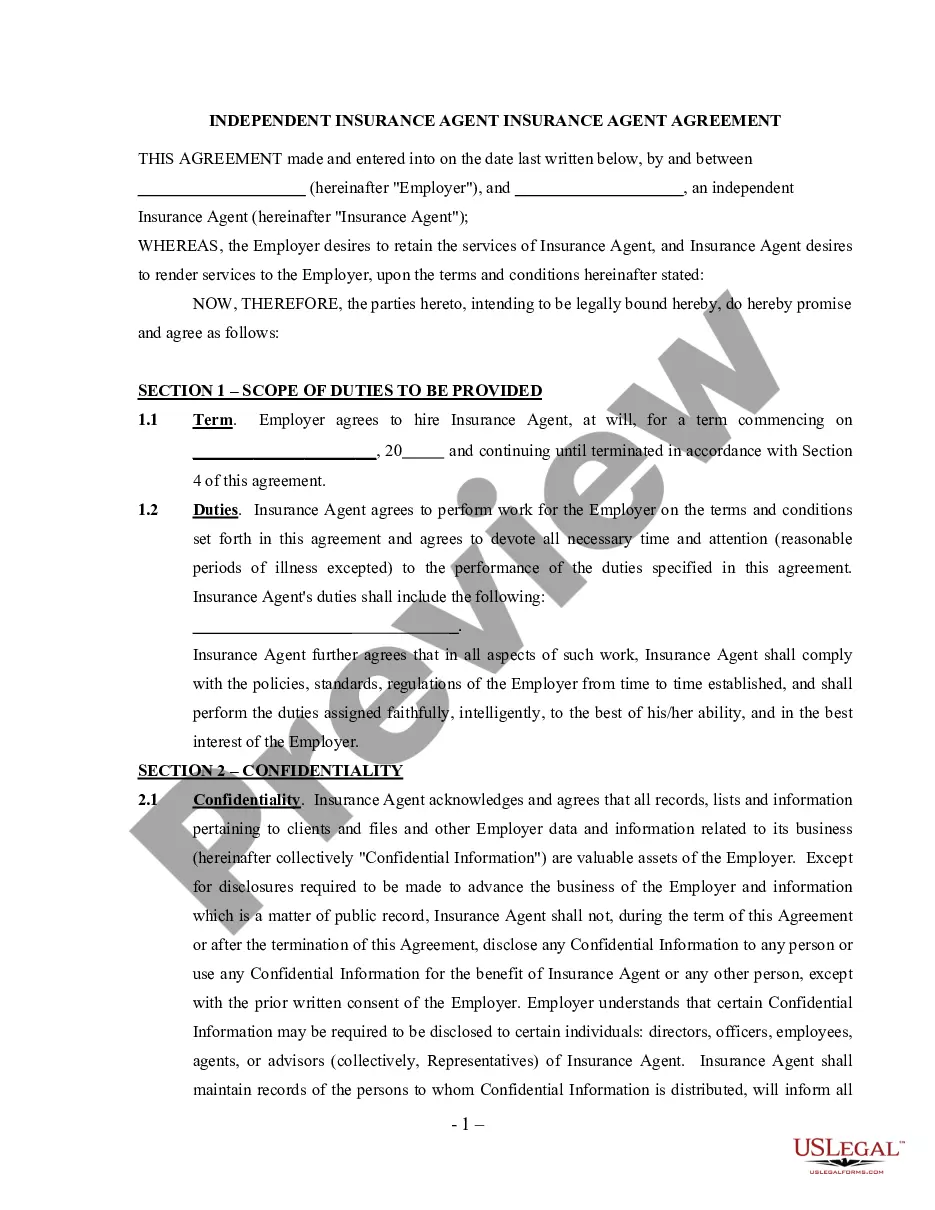
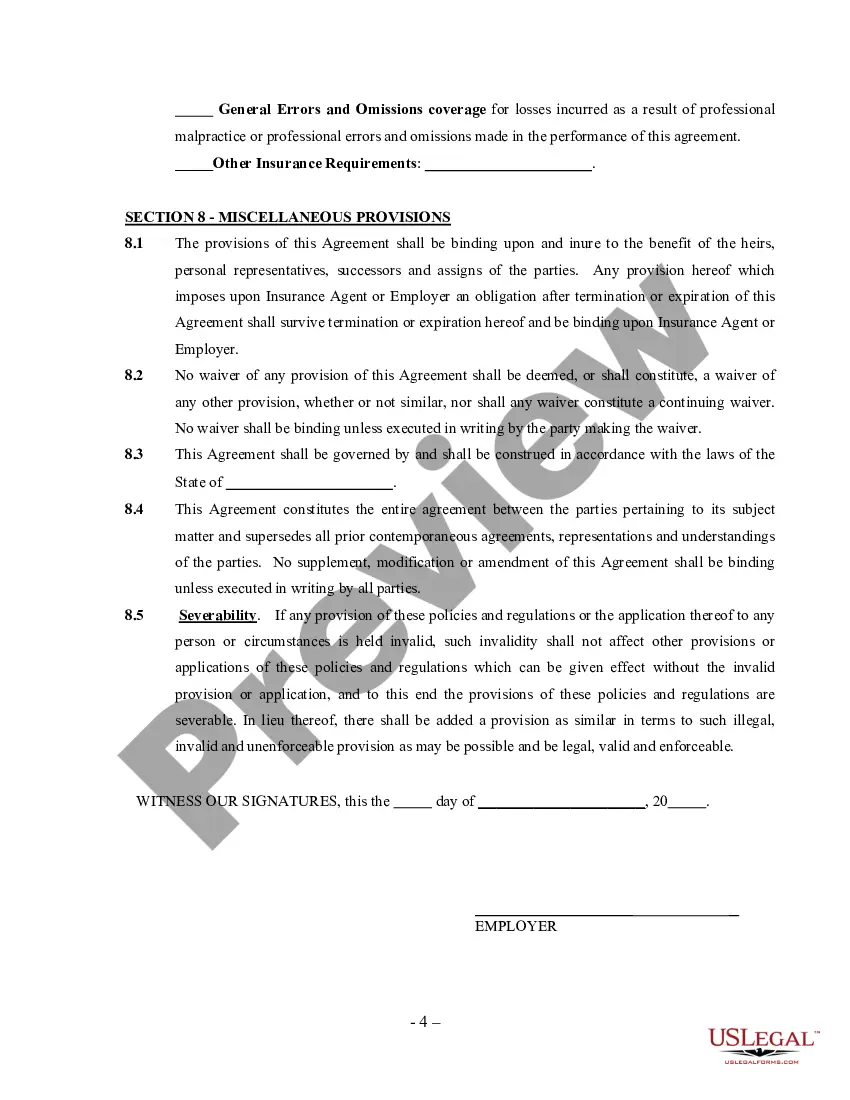
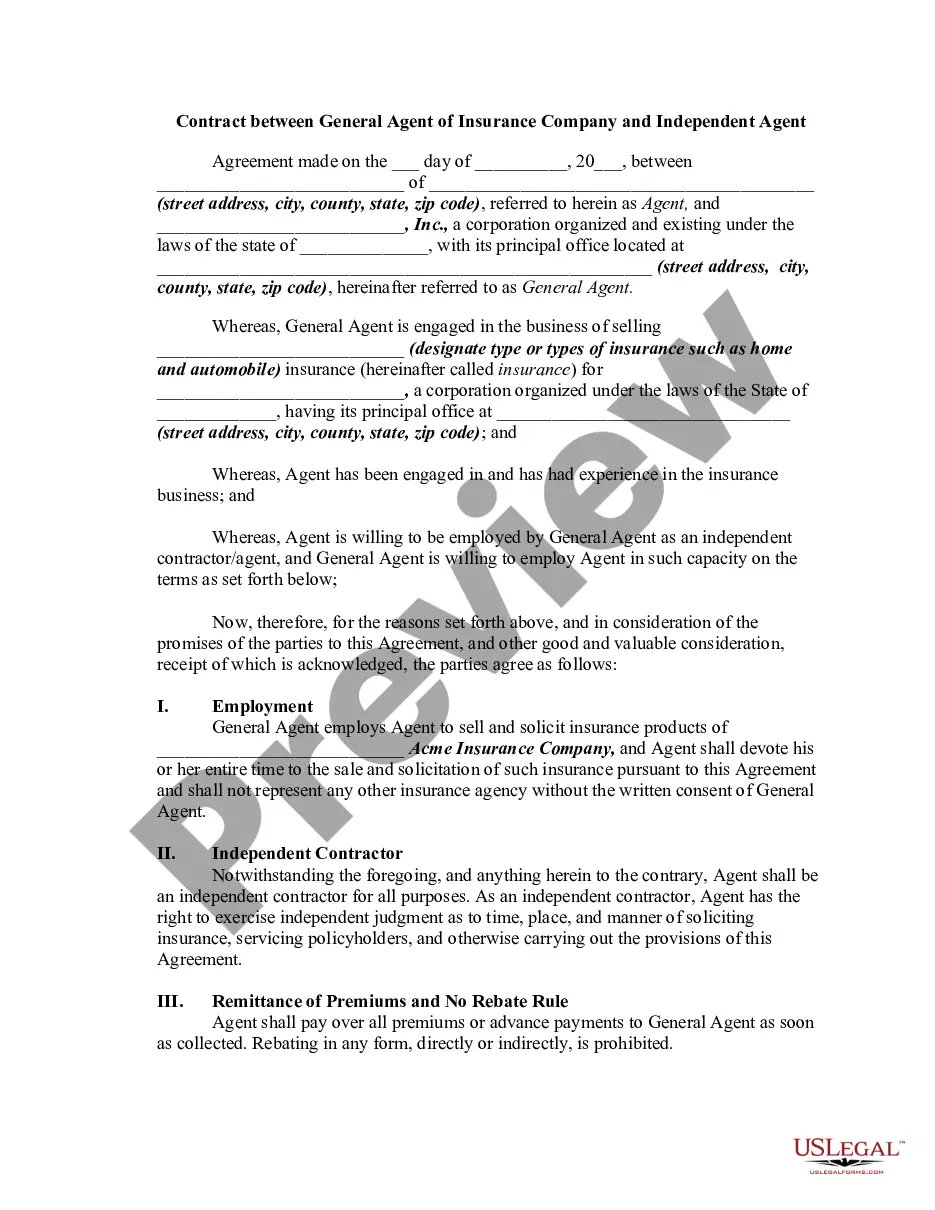
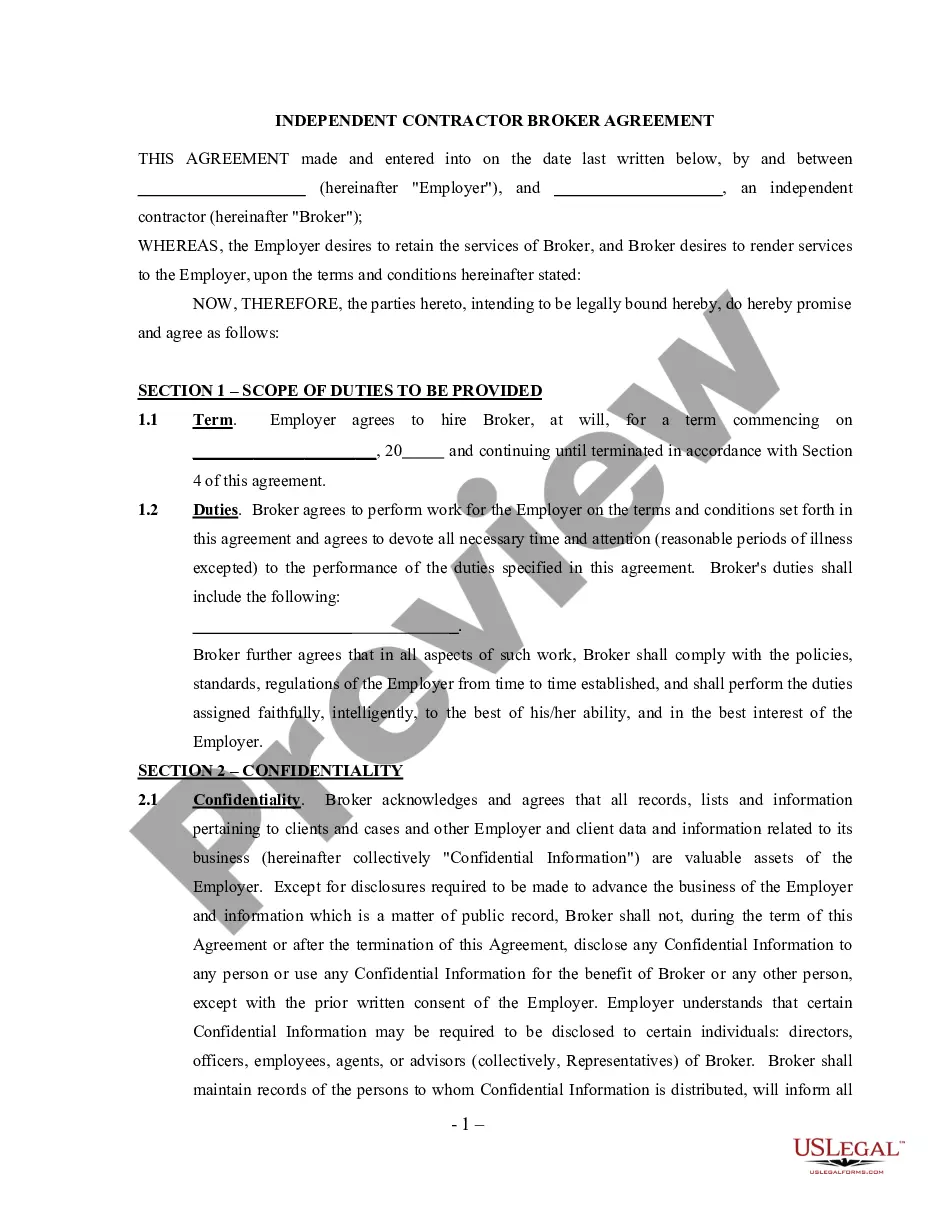
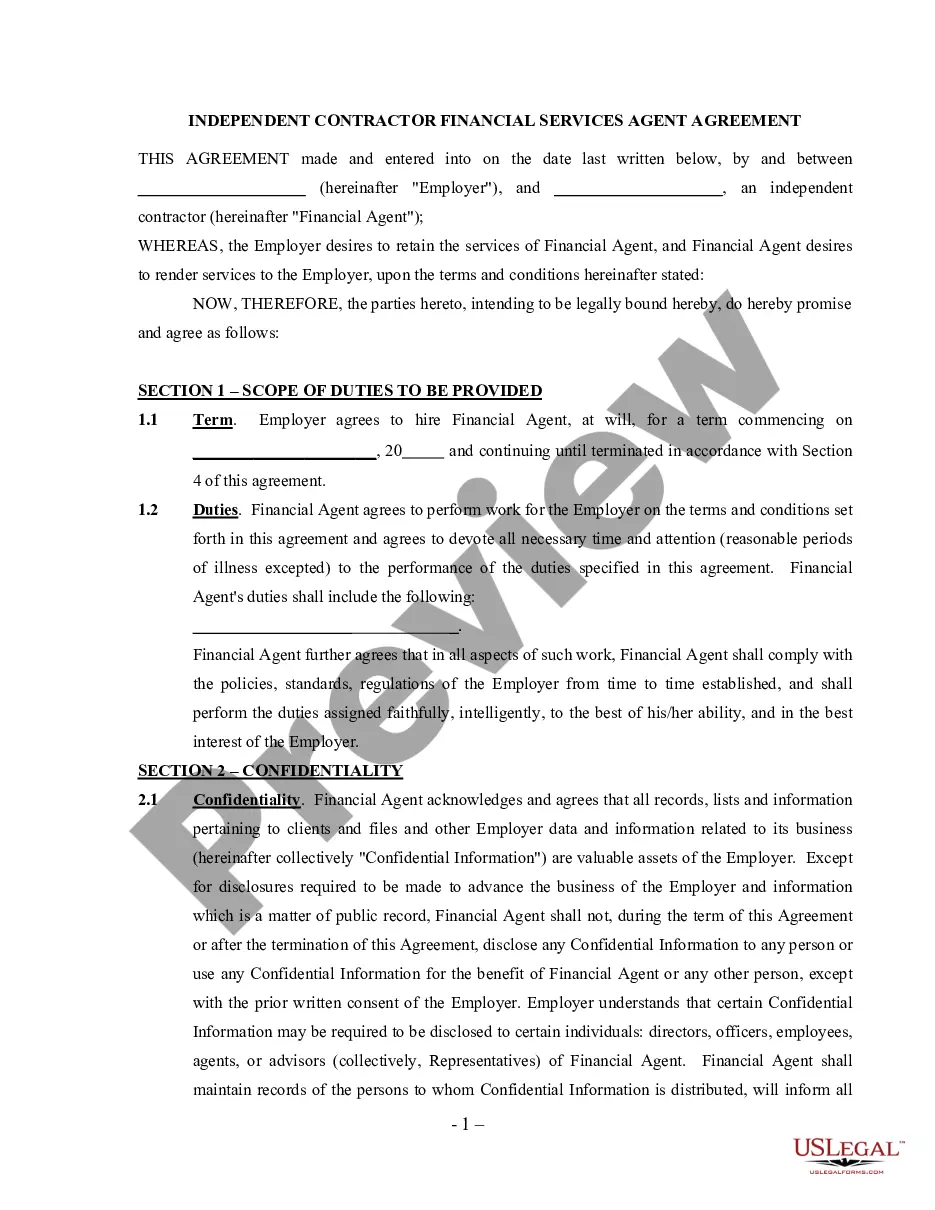
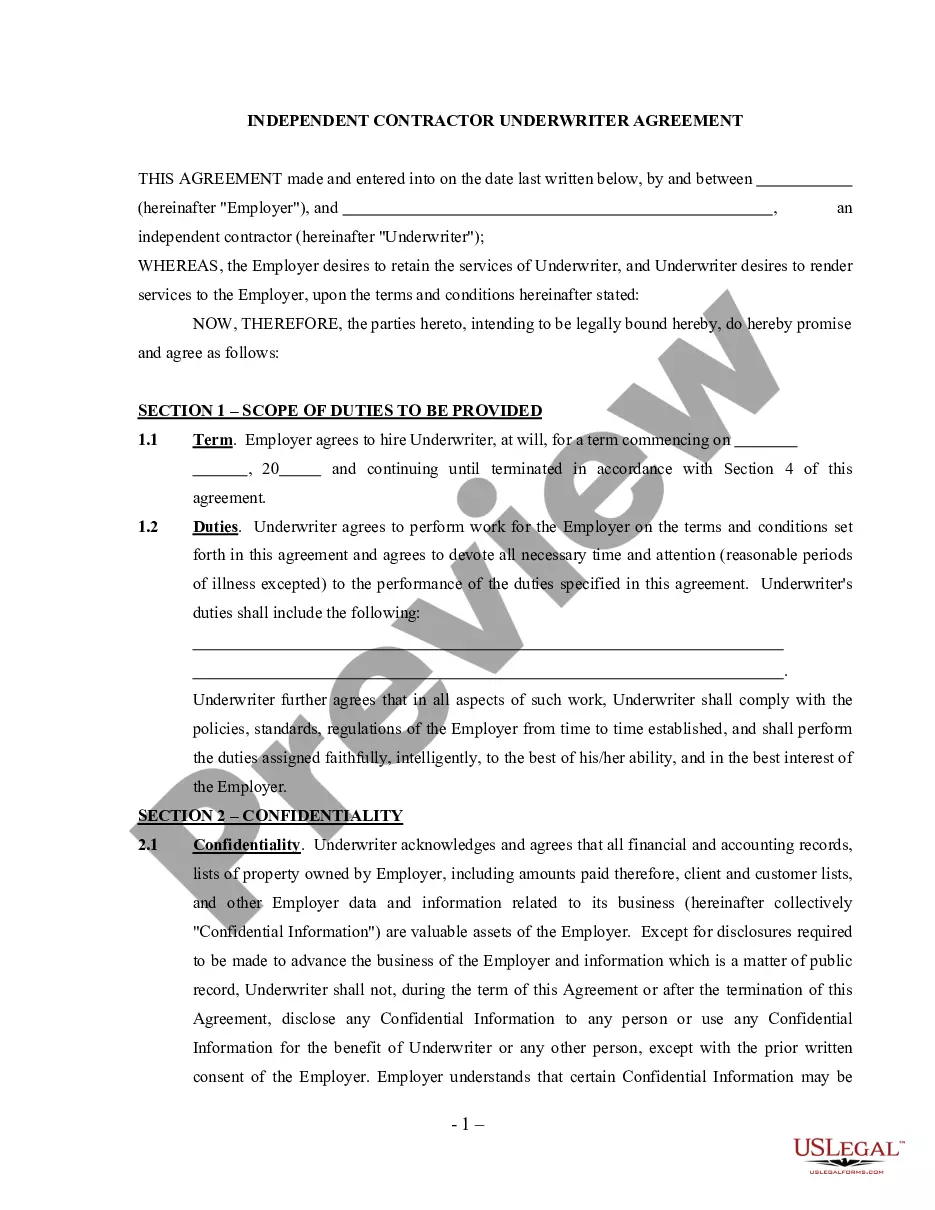
The Insurance Agent Agreement is a legal document that formalizes the relationship between an employer and an independent insurance agent. This agreement outlines the scope of duties, confidentiality obligations, and compensation for services provided. It is essential for establishing the independent contractor relationship, distinguishing it from traditional employment contracts.
Main sections of this form
- Scope of Duties: Details the specific tasks that the insurance agent will perform for the employer.
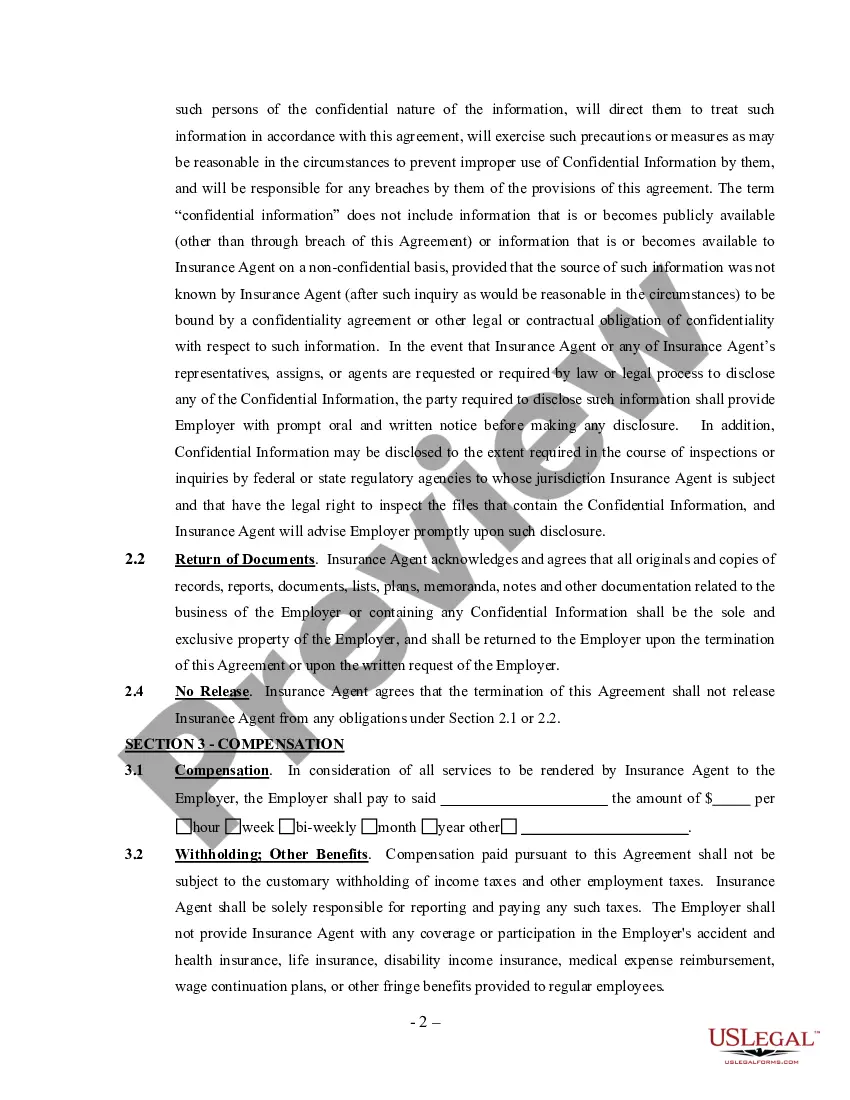
- Confidentiality Clause: Protects sensitive information shared between the employer and the insurance agent.
- Compensation: Specifies the payment structure for the services provided by the agent.
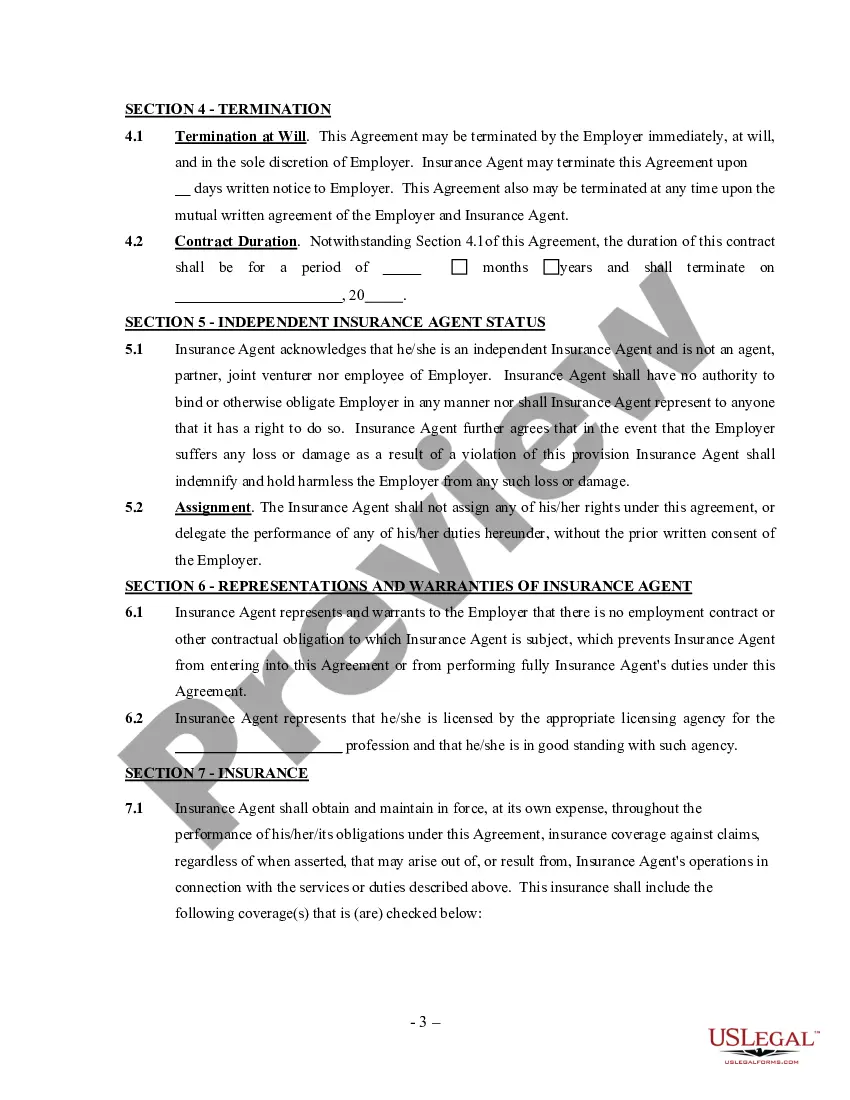
- Termination Conditions: Outlines the terms under which either party may terminate the agreement.
- Representations and Warranties: Ensures the agent is properly licensed and has no conflicting obligations.

When to use this form
This form is useful when an employer wants to engage an insurance agent as an independent contractor rather than an employee. It is commonly used when the employer requires insurance services to manage client relationships and needs the flexibility of an independent contractor arrangement.
Who can use this document
This agreement is designed for:
- Employers looking to hire independent insurance agents.
- Insurance agents seeking to formalize their relationship with employers.
- Businesses in the insurance sector that require specific service arrangements with contractors.
Instructions for completing this form
- Identify the parties involved by entering the employer's name and the insurance agent's name.
- Specify the scope of duties the insurance agent will undertake.
- Include terms related to compensation to clarify payment details.
- Review the confidentiality clause and make necessary adjustments based on your business needs.
- Enter relevant dates and signatures to finalize the agreement.
Does this form need to be notarized?
Notarization is generally not required for this form. However, certain states or situations might demand it. You can complete notarization online through US Legal Forms, powered by Notarize, using a verified video call available anytime.
Get your form ready online
Our built-in tools help you complete, sign, share, and store your documents in one place.
Make edits, fill in missing information, and update formatting in US Legal Forms—just like you would in MS Word.
Download a copy, print it, send it by email, or mail it via USPS—whatever works best for your next step.
Sign and collect signatures with our SignNow integration. Send to multiple recipients, set reminders, and more. Go Premium to unlock E-Sign.
If this form requires notarization, complete it online through a secure video call—no need to meet a notary in person or wait for an appointment.
We protect your documents and personal data by following strict security and privacy standards.

Make edits, fill in missing information, and update formatting in US Legal Forms—just like you would in MS Word.

Download a copy, print it, send it by email, or mail it via USPS—whatever works best for your next step.

Sign and collect signatures with our SignNow integration. Send to multiple recipients, set reminders, and more. Go Premium to unlock E-Sign.

If this form requires notarization, complete it online through a secure video call—no need to meet a notary in person or wait for an appointment.

We protect your documents and personal data by following strict security and privacy standards.
Mistakes to watch out for
- Failing to include all relevant details in the scope of duties.
- Neglecting to clarify the compensation structure.
- Overlooking necessary licensing and regulatory obligations for insurance agents.
- Not specifying confidentiality requirements adequately.
Advantages of online completion
- Convenience: Complete and download the form at your convenience without the need for an in-person visit.
- Editable: Easily modify the form to suit specific requirements tailored to your employer-agent relationship.
- Reliable: Ensure the document is drafted by licensed attorneys, making it legally sound and enforceable.
Looking for another form?


Form popularity
FAQ
The IRS requires contractors to fill out a Form W-9, request for Taxpayer Identification Number and Certification, which you should keep on file for at least four years after the hiring. This form is used to request the correct name and Taxpayer Identification Number, or TIN, of the worker or their entity.
Terms. This is the first section of any agreement or contract and states the names and locations of the parties involved. Responsibilities & Deliverables. Payment-Related Details. Confidentiality Clause. Contract Termination. Choice of Law.
The terms agent and independent contractor are not necessarily mutually exclusive. In fact, by definition, 2026 an independent contractor is an agent in the broad sense of the term in undertaking, at the request of another, to do something for the other.
For most types of projects you hire an independent contractor (IC) to do, the law does not require you to put anything in writing. You can meet with the IC, agree on the terms of your arrangement, and have an oral contract or agreement that is legally binding. Just because you can doesn't mean you should, however.
Generally speaking, independent agents are classified as independent contractors when reporting taxes. Under this type of arrangement, the government considers you as self-employed, meaning you're responsible for reporting your own taxes.
Whether you like to go it alone or work with a team, a career as an independent life insurance agent gives you the option of being self-employed or working for an agency.Independent life insurance agents work primarily with the public, so enjoying meeting new people is a must.
What Is Self-Employment? A self-employed person does not work for a specific employer who pays them a consistent salary or wage. Self-employed individuals, or independent contractors, earn income by contracting with a trade or business directly.
Terms. This is the first section of any agreement or contract and states the names and locations of the parties involved. Responsibilities & Deliverables. Payment-Related Details. Confidentiality Clause. Contract Termination. Choice of Law.
Thousands of insurance agents are employees, not independent contractors, a federal judge has ruled. Nugent agreed, ruling that the company had a level of control over its agents' work that was more in line with regular employees than contractors.