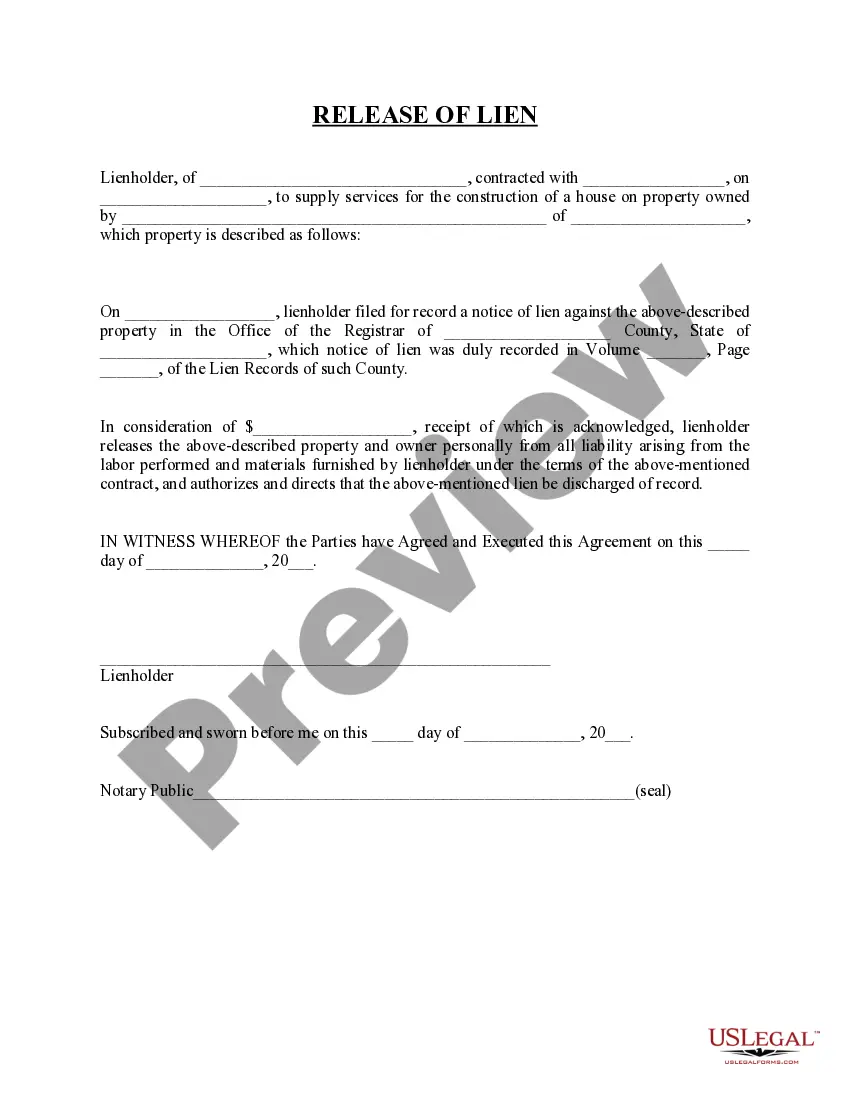
Release of Lien for Car
About this form
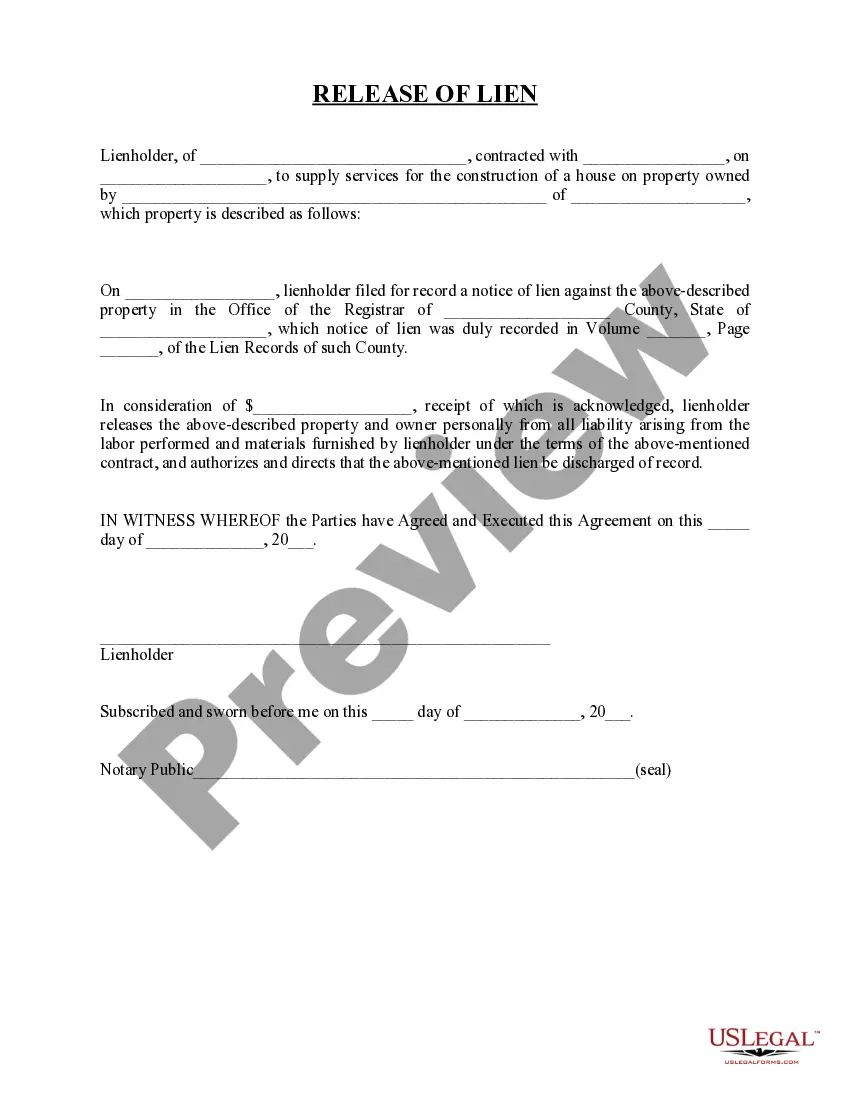
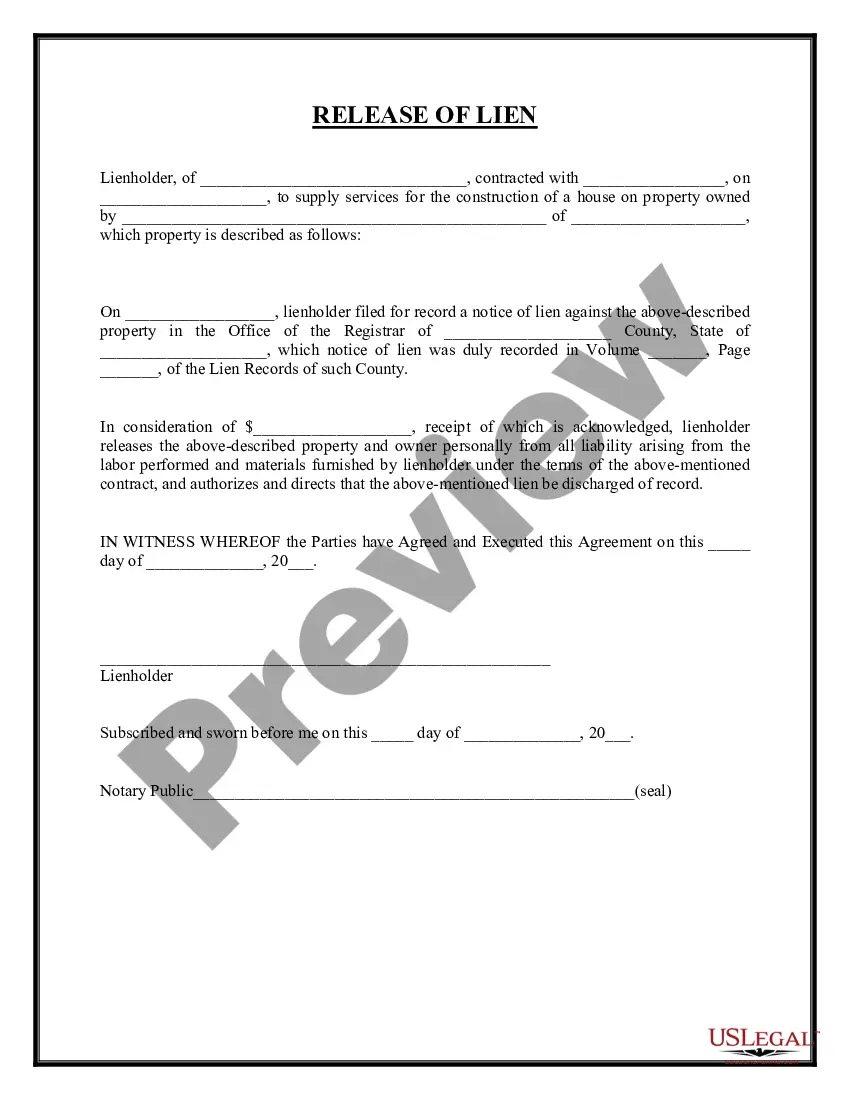
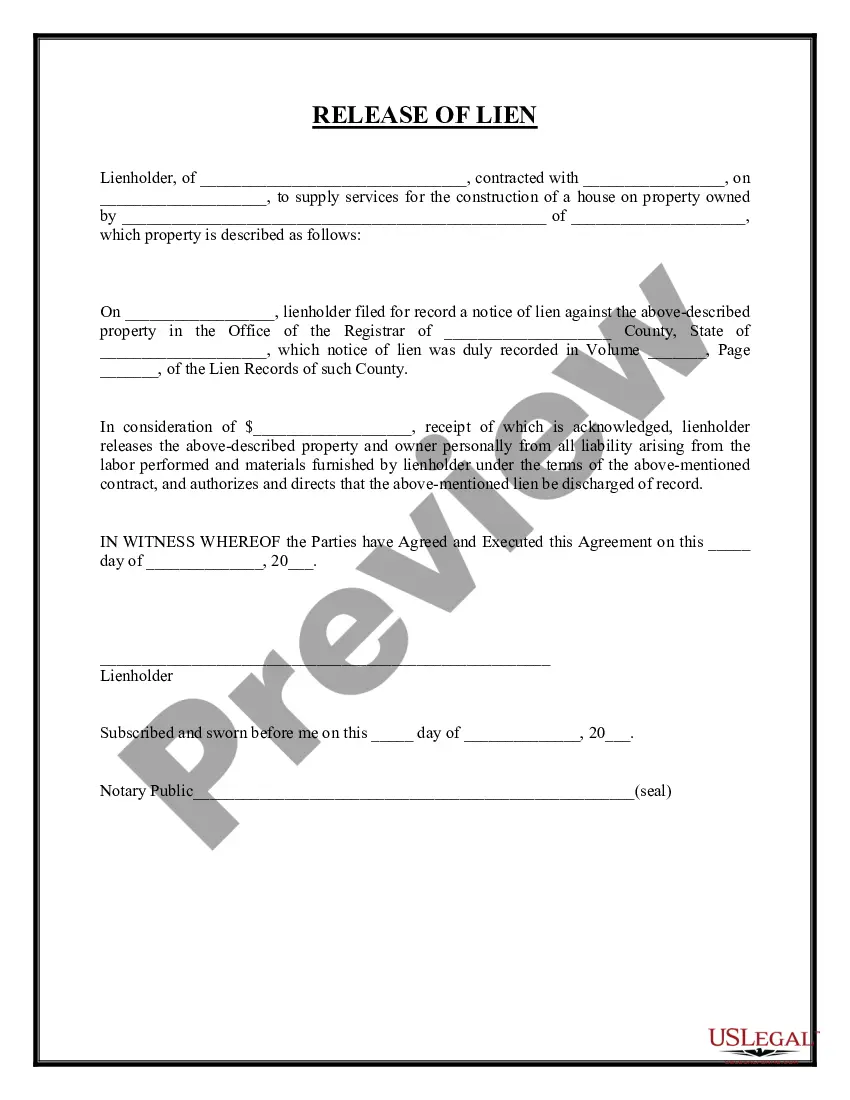
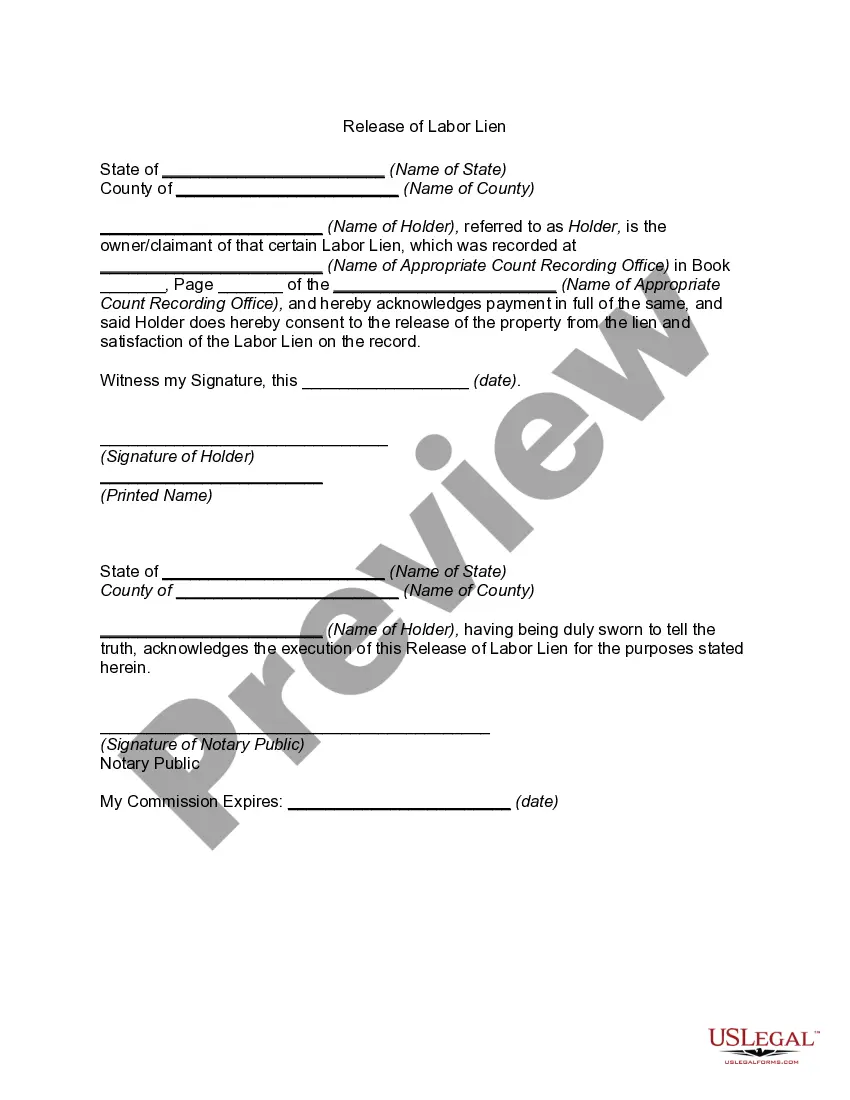
The Release of Lien for Car is a legal document that allows a lienholder to formally release their claim on a vehicle, thereby absolving the owner from any remaining liability related to the contract performed. This form confirms the completion of services and indicates that the lienholder has been compensated and no longer holds any rights to the property based on the labor and materials provided. This is distinct from other lien forms, as it focuses specifically on the release aspect, ensuring clear ownership for the vehicleâs owner.
Key parts of this document
- Certification of the lienholder and property owner details.
- Contract date and description of the services provided.
- Consideration amount received for the release of the lien.
- Legal acknowledgment and signature of the lienholder.
- Notary public acknowledgement for validation.
When to use this form
This form should be used when a lienholder has completed their contractual obligations related to a vehicle and wishes to release their claim on it. Common scenarios include the completion of repairs, renovations, or any service related to the vehicle that resulted in a lien. Using this form will help the vehicle owner regain clear title without residual claims or liabilities associated with the previously contracted services.
Who needs this form
- Lienholders who have completed their obligations.
- Vehicle owners seeking to clear their title from existing liens.
- Attorneys or legal representatives assisting clients with vehicle lien matters.
- Any party involved in a contract that included a lien on a vehicle.
Instructions for completing this form
- Identify the lienholder and provide their full name and address.
- Enter the name of the vehicle owner and their address.
- Specify the date the contract was signed and details of the services provided.
- State the amount received by the lienholder for their services.
- Have the lienholder sign the form in the designated area.
- Complete the notarization section by having a notary public witness the signing.
Notarization guidance
Yes, this form must be notarized to be legally valid. A notary public must witness the signing of the document to ensure its authenticity, providing legal assurance and facilitating its official recognition.
Get your form ready online
Our built-in tools help you complete, sign, share, and store your documents in one place.
Make edits, fill in missing information, and update formatting in US Legal Forms—just like you would in MS Word.
Download a copy, print it, send it by email, or mail it via USPS—whatever works best for your next step.
Sign and collect signatures with our SignNow integration. Send to multiple recipients, set reminders, and more. Go Premium to unlock E-Sign.
If this form requires notarization, complete it online through a secure video call—no need to meet a notary in person or wait for an appointment.
We protect your documents and personal data by following strict security and privacy standards.

Make edits, fill in missing information, and update formatting in US Legal Forms—just like you would in MS Word.

Download a copy, print it, send it by email, or mail it via USPS—whatever works best for your next step.

Sign and collect signatures with our SignNow integration. Send to multiple recipients, set reminders, and more. Go Premium to unlock E-Sign.

If this form requires notarization, complete it online through a secure video call—no need to meet a notary in person or wait for an appointment.

We protect your documents and personal data by following strict security and privacy standards.
Common mistakes
- Failing to include all parties' names correctly can lead to legal complications.
- Not specifying the correct date of the contract or services performed.
- Neglecting to have the form notarized, making it unenforceable.
- Omitting the consideration amount, which must be acknowledged in the document.
Why complete this form online
- Convenient access to legal documents saves time and effort.
- Editable templates allow for easy customization to fit specific needs.
- Reliable forms drafted by licensed attorneys ensure compliance with legal standards.
- Immediate download allows for quick execution of necessary legal documentation.
Looking for another form?



Form popularity
FAQ
The Release of Lien for Car form is a standard document used to record that a lien on a motor vehicle has been released. It is used after a loan is paid off or when a lienholder agrees to release the lien, to help update the vehicle title and reflect ownership free of the lien.
To obtain a lien release using this form, the owner and lienholder complete and sign the document, confirming the lien is released. After execution, submit the form to the appropriate motor vehicle agency to update the title and keep copies for your records.
Processing times vary by state and agency, but once the form is properly completed and filed, the release and title update typically occur within a few days to a few weeks, depending on the agency’s workload.
Commonly required are the Release of Lien for Car form with vehicle details (VIN, year, make, model), names and addresses of the owner and lienholder, signatures and dates, and any payoff statement from the lender. The agency may also request the current title and any applicable fees.
Both the lienholder and the vehicle owner should sign the form, with dates. The document is then filed with the appropriate motor vehicle agency (often the DMV) to update the title. Keep copies for your records.
This form is tailored specifically to motor vehicles and multi-state use, focusing on releasing a car lien and updating the title, whereas more generic lien release forms may apply to different property or lack vehicle-specific fields.