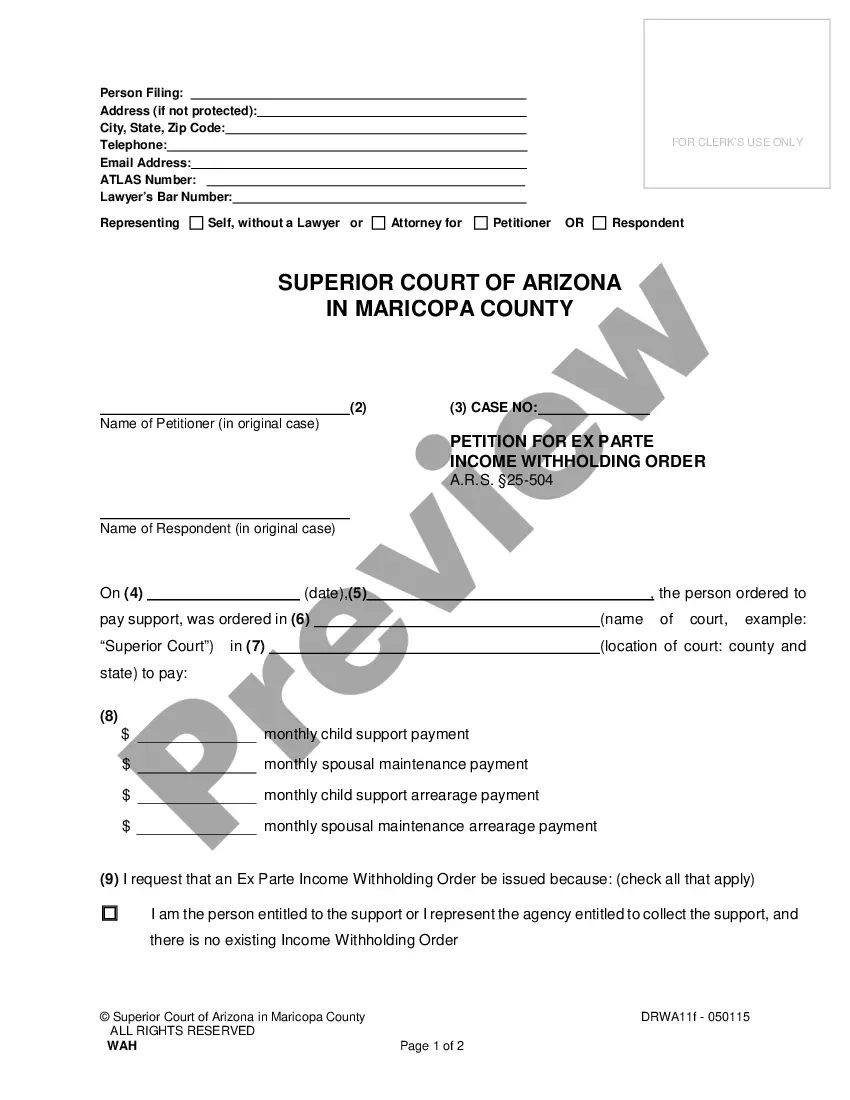
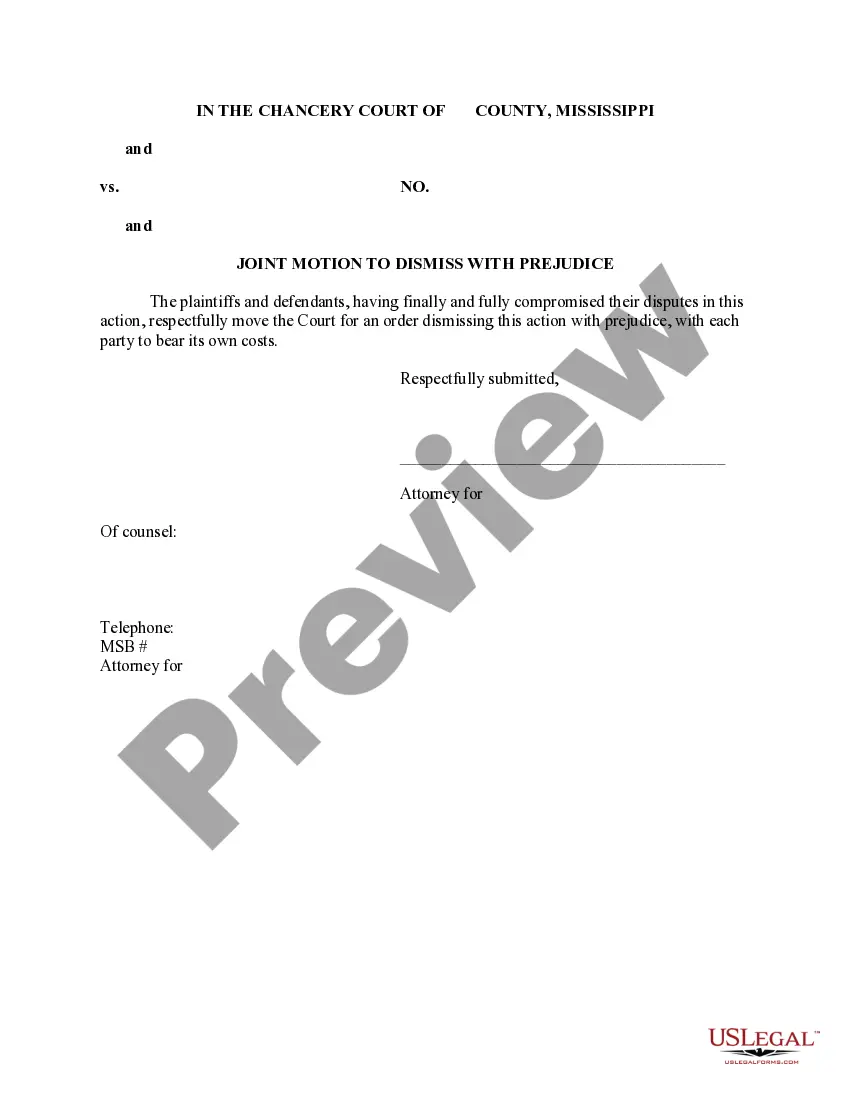
Mississippi Joint Motion to Dismiss with Prejudice
What this document covers
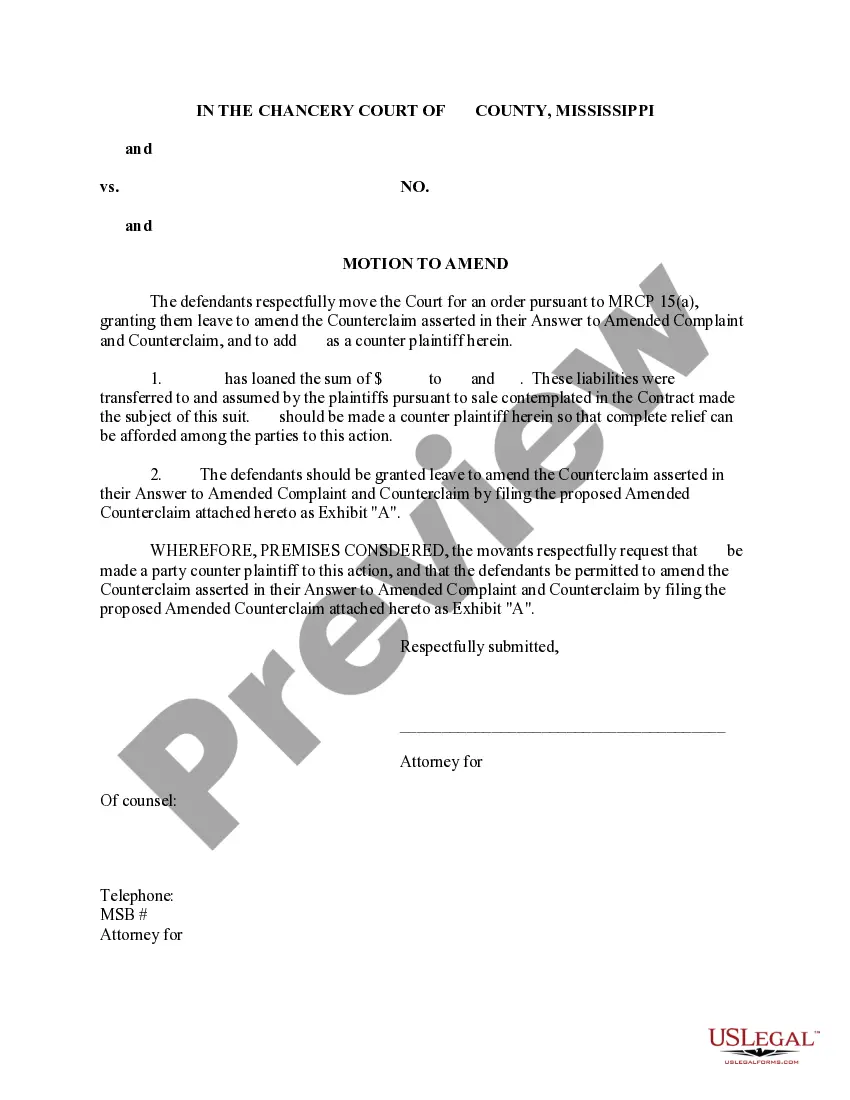
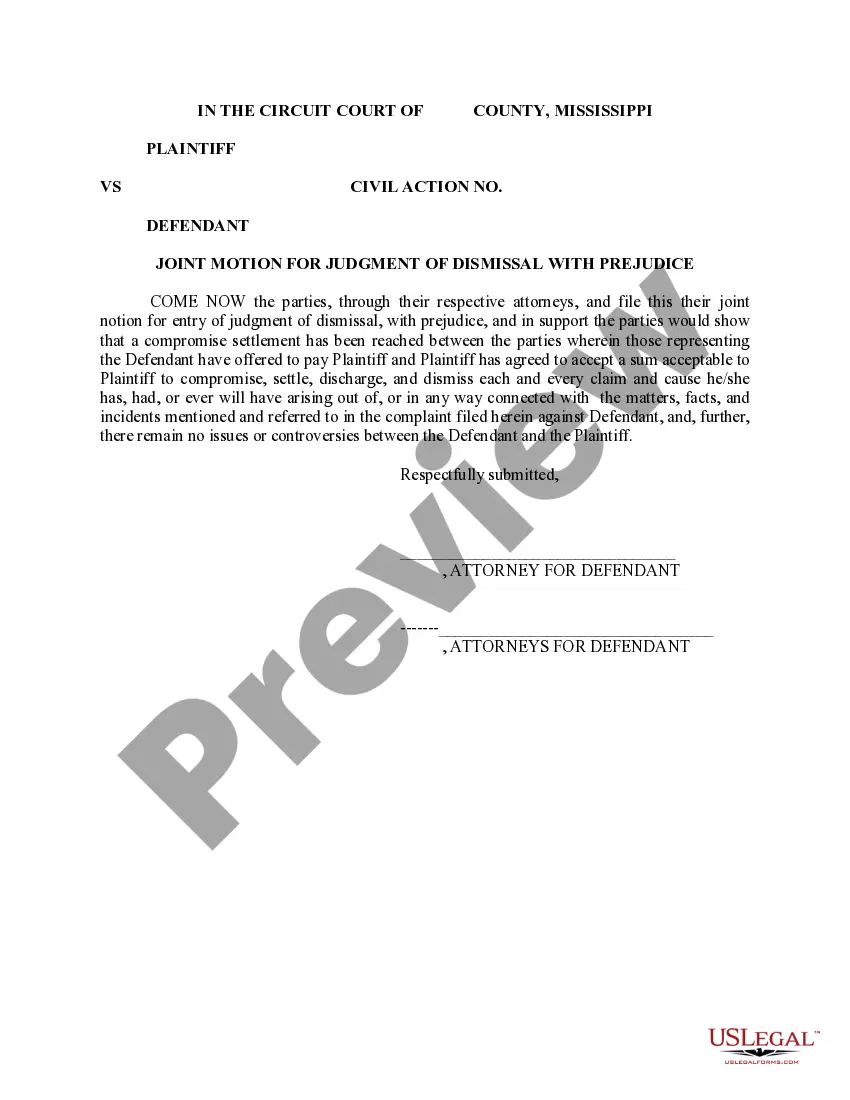
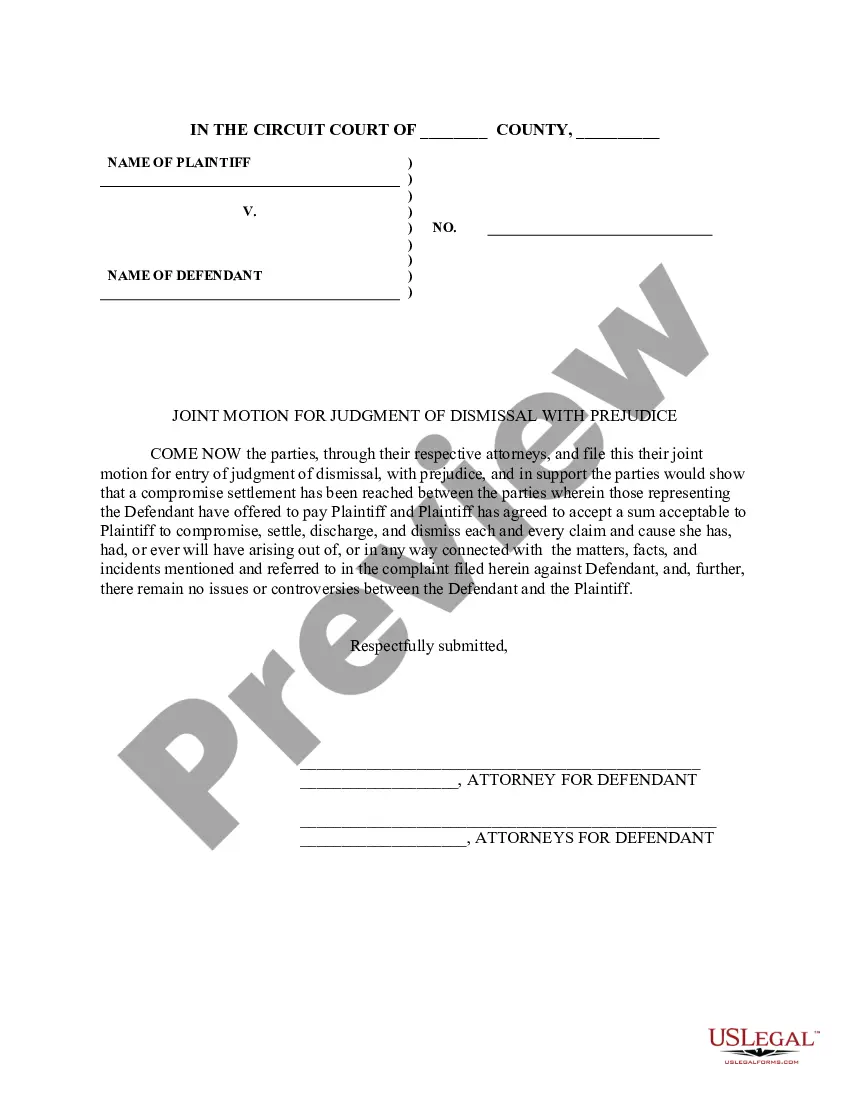
The Joint Motion to Dismiss with Prejudice is a legal document used in court proceedings to request that a case be dismissed permanently. Unlike other motions, this particular form specifies that the dismissal is "with prejudice," meaning the parties involved cannot bring the same claim to court again in the future. This form is particularly useful when both plaintiffs and defendants have reached a settlement and wish to end the legal dispute definitively.
Key parts of this document
- Title identifying the motion as a Joint Motion to Dismiss with Prejudice.
- Identification of all parties involved in the case.
- A statement confirming that the parties have resolved their disputes.
- A request for the court to issue an order for dismissal with prejudice.
- A clause noting that each party will bear its own costs.
- Signature lines for attorneys representing each party.
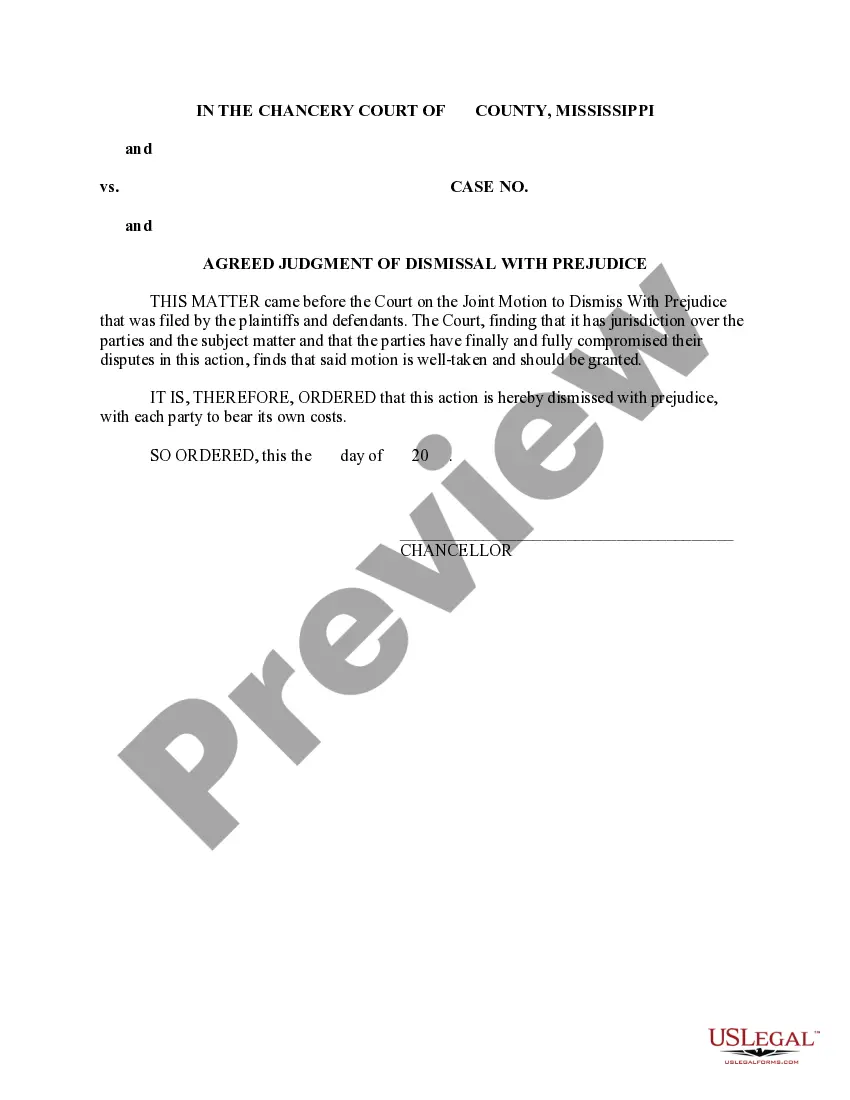
Common use cases
This form is appropriate to use when the parties in a lawsuit have come to an agreement and wish to terminate the legal action without the possibility of it being refiled in the future. Common situations include negotiated settlements or after mediation, where both sides have concluded that further court action is unnecessary.
Who can use this document
- Plaintiffs and defendants involved in a civil lawsuit.
- Parties who have successfully settled their disputes.
- Attorneys representing clients in cases where a court-approved dismissal is sought.
Completing this form step by step
- Identify all parties involved in the case.
- Clearly state that the parties have resolved their disputes.
- Request the court to dismiss the case with prejudice explicitly.
- Include a statement about costs indicating that each party will bear its own.
- Have the attorney representing each party sign the document.
Notarization guidance
In most cases, this form does not require notarization. However, some jurisdictions or signing circumstances might. US Legal Forms offers online notarization powered by Notarize, accessible 24/7 for a quick, remote process.
Get your form ready online
Our built-in tools help you complete, sign, share, and store your documents in one place.
Make edits, fill in missing information, and update formatting in US Legal Forms—just like you would in MS Word.
Download a copy, print it, send it by email, or mail it via USPS—whatever works best for your next step.
Sign and collect signatures with our SignNow integration. Send to multiple recipients, set reminders, and more. Go Premium to unlock E-Sign.
If this form requires notarization, complete it online through a secure video call—no need to meet a notary in person or wait for an appointment.
We protect your documents and personal data by following strict security and privacy standards.

Make edits, fill in missing information, and update formatting in US Legal Forms—just like you would in MS Word.

Download a copy, print it, send it by email, or mail it via USPS—whatever works best for your next step.

Sign and collect signatures with our SignNow integration. Send to multiple recipients, set reminders, and more. Go Premium to unlock E-Sign.

If this form requires notarization, complete it online through a secure video call—no need to meet a notary in person or wait for an appointment.

We protect your documents and personal data by following strict security and privacy standards.
Typical mistakes to avoid
- Failing to include all parties involved in the lawsuit.
- Not stating that the dismissal is with prejudice, which affects the ability to refile the case.
- Omitting the signature of both attorneys, which may invalidate the motion.
Why use this form online
- Convenience of downloading and printing directly from home.
- Editable format allows users to tailor the document to their specific needs.
- Reliability of having documents drafted by licensed attorneys, ensuring legal compliance.
Looking for another form?
Form popularity
FAQ
In consideration of, and consistent with the terms of the Agreement, the Parties jointly move the Court to dismiss the lawsuit without prejudice, subject to retention of jurisdiction and reinstatement upon the United States' motion for the purpose of resolving any claim that Defendant materially breached any provision
Fill out your court forms. Fill out a Request for Dismissal (Form CIV-110 ). File your forms at the courthouse where you filed your case. Serve the other side with a copy of the dismissal papers. File the Notice of Entry of Dismissal and Proof of Service (Form CIV-120)
When a lawsuit is dismissed with prejudice, the court is saying that it has made a final determination on the merits of the case, and that the plaintiff is therefore forbidden from filing another lawsuit based on the same grounds.
When a defendant files a motion to dismiss, he asks the Court to throw out all or part of the plaintiff's case.The parties (well, their lawyers) will come to court, explain their positions on the motion to dismiss, and answer any questions posed by the judge. Finally, the judge will decide to grant or deny the motion.
A case will be dismissed with prejudice if there is reason for the case not to be brought back to court; for example, if the judge deems the lawsuit frivolous or the the matter under consideration is resolved outside of court.
A joint motion is one where you and another party (together) are requesting the Court take some action. A joint motion is much stronger than a consent motion. In a joint motion, all parties are arguing that the Court should grant the requested relief, and the facts alleged are true.
You do not have to file a response. However, you would be wise to do so as a motion to dsmiss , if granted, could end your suit. Motions to dimiss for failure to state a claim are rarely granted.
A motion to dismiss is filed when a party believes that the complaint is legally invalid, which can be based on a variety of grounds.
A stipulated (agreed) dismissal (see s. 799.24(3) of the Wisconsin Statutes) happens when the plaintiff and the defendant agree to have the judge dismiss the action and not enter a judgment against the defendant only if the defendant pays the plaintiff an agreed upon amount by a certain date.