Mississippi Agreed Judgment of Dismissal with Prejudice
What is this form?
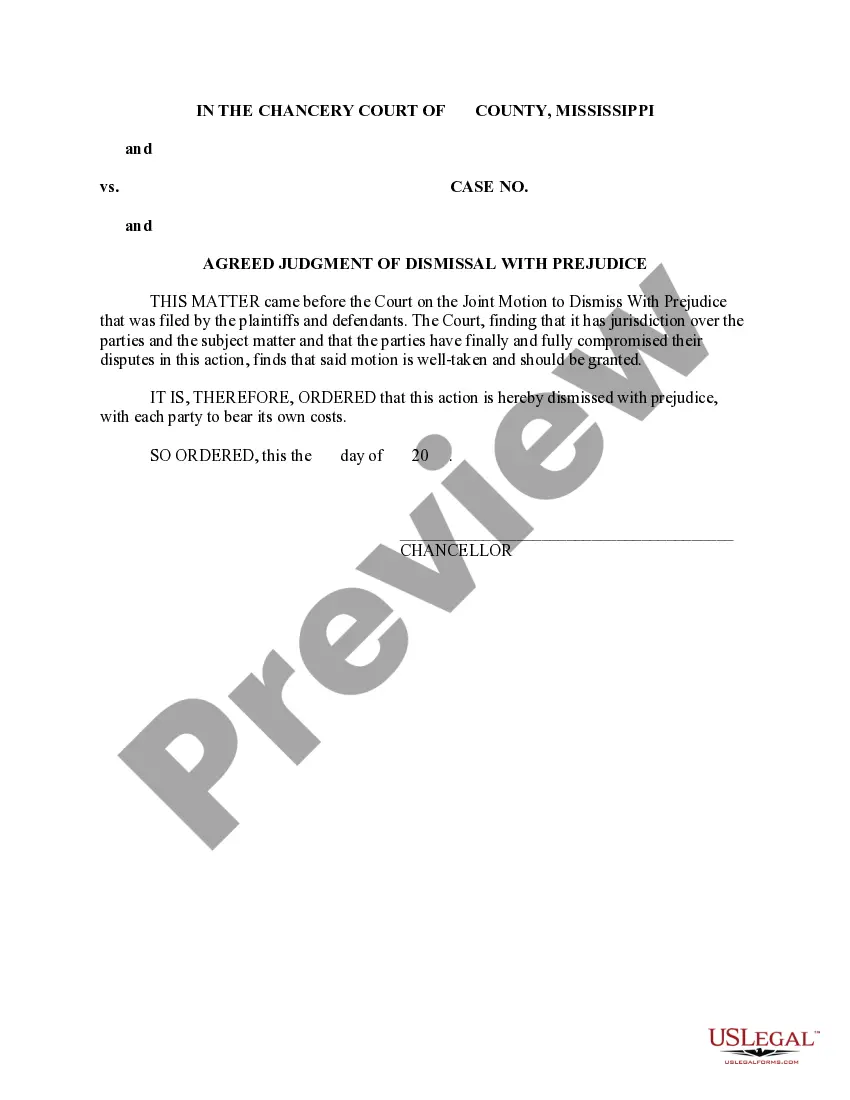
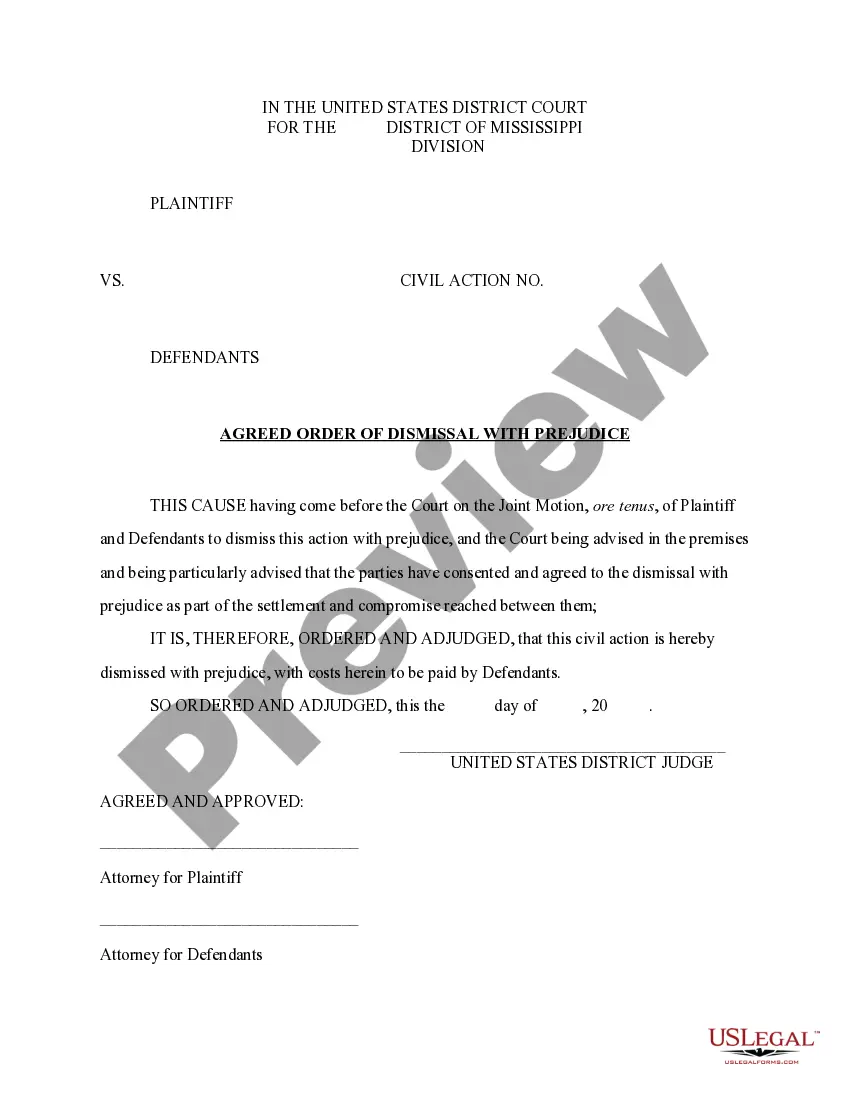
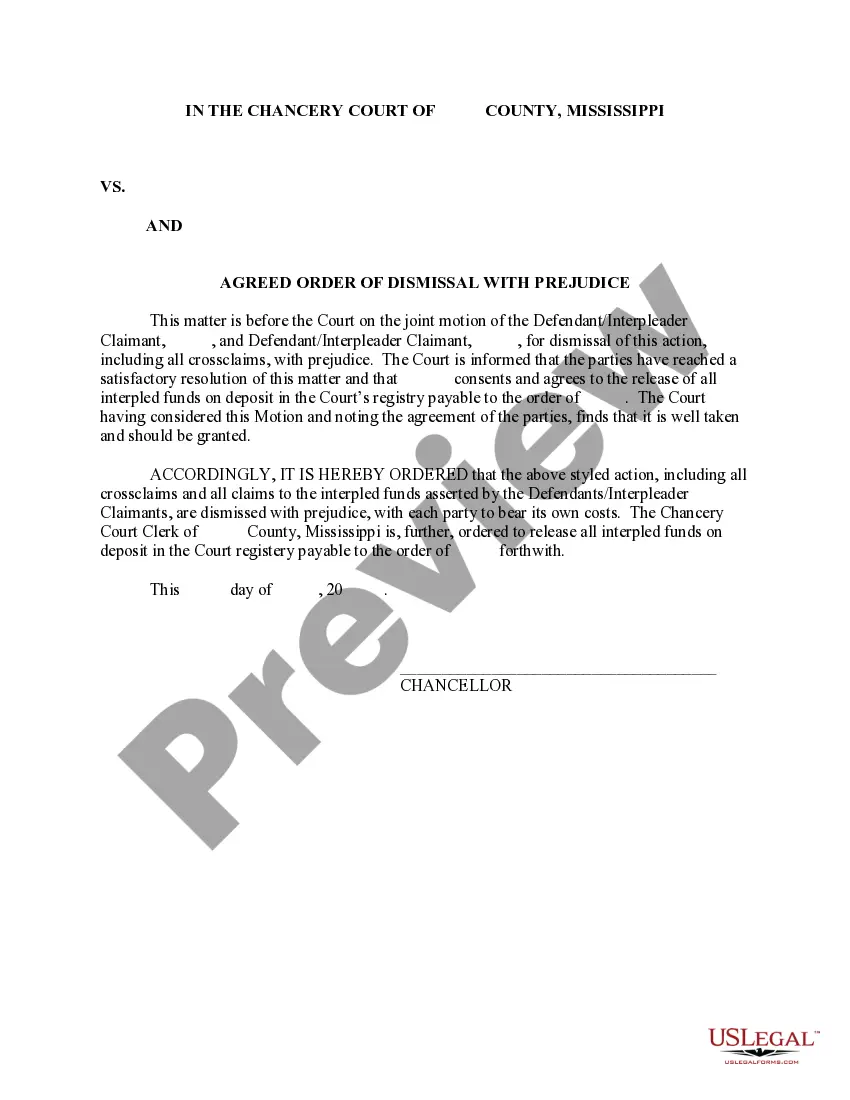
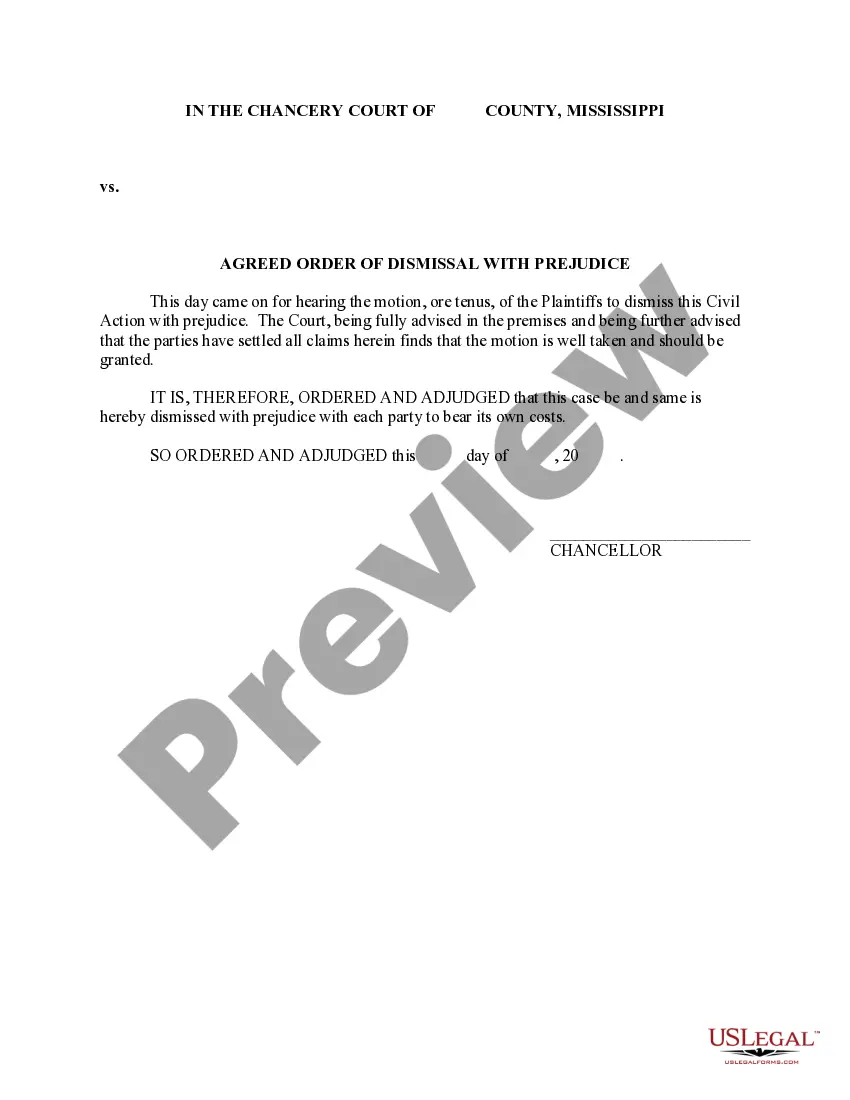
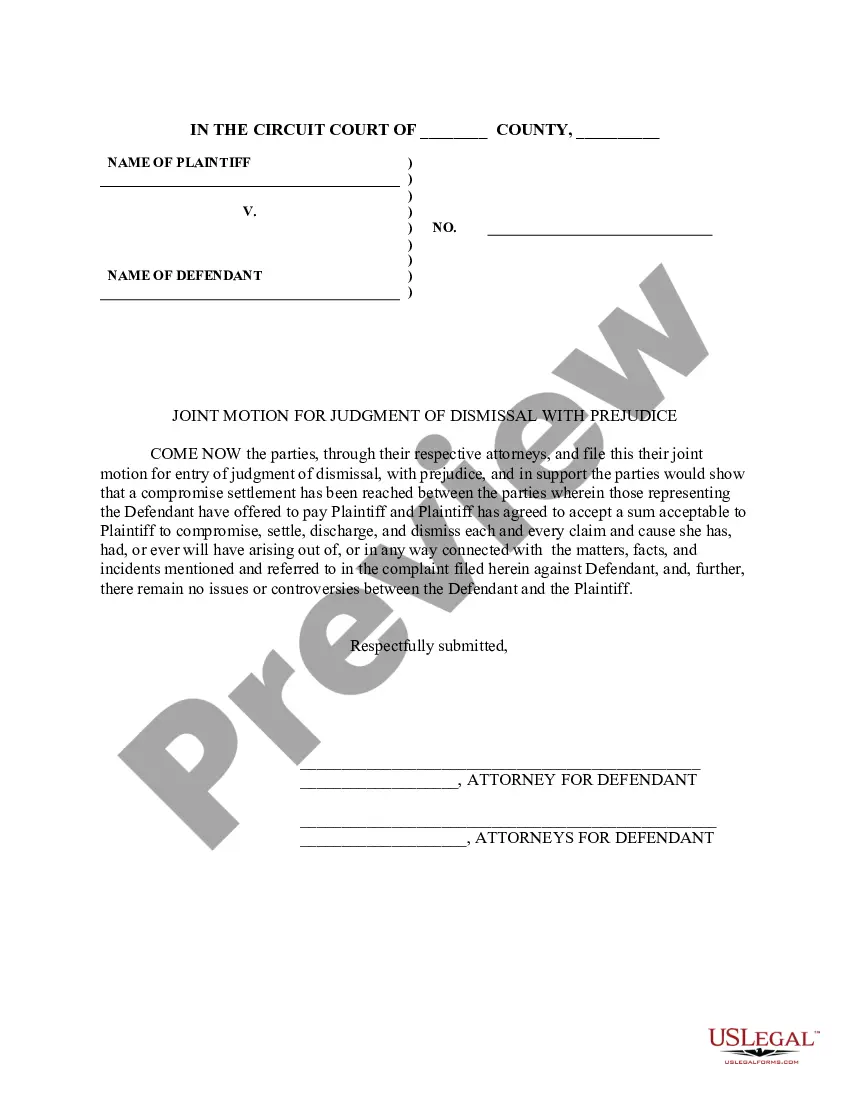
The Agreed Judgment of Dismissal with Prejudice is a legal document used to formally dismiss a lawsuit when both parties have reached a resolution. This form indicates that the case has been settled and cannot be re-filed in the future, distinguishing it from other types of dismissals, such as those without prejudice, which allow for re-filing. It ensures that both parties release each other from any further claims regarding the case.
Key components of this form
- Title and case number: Identifies the case and parties involved.
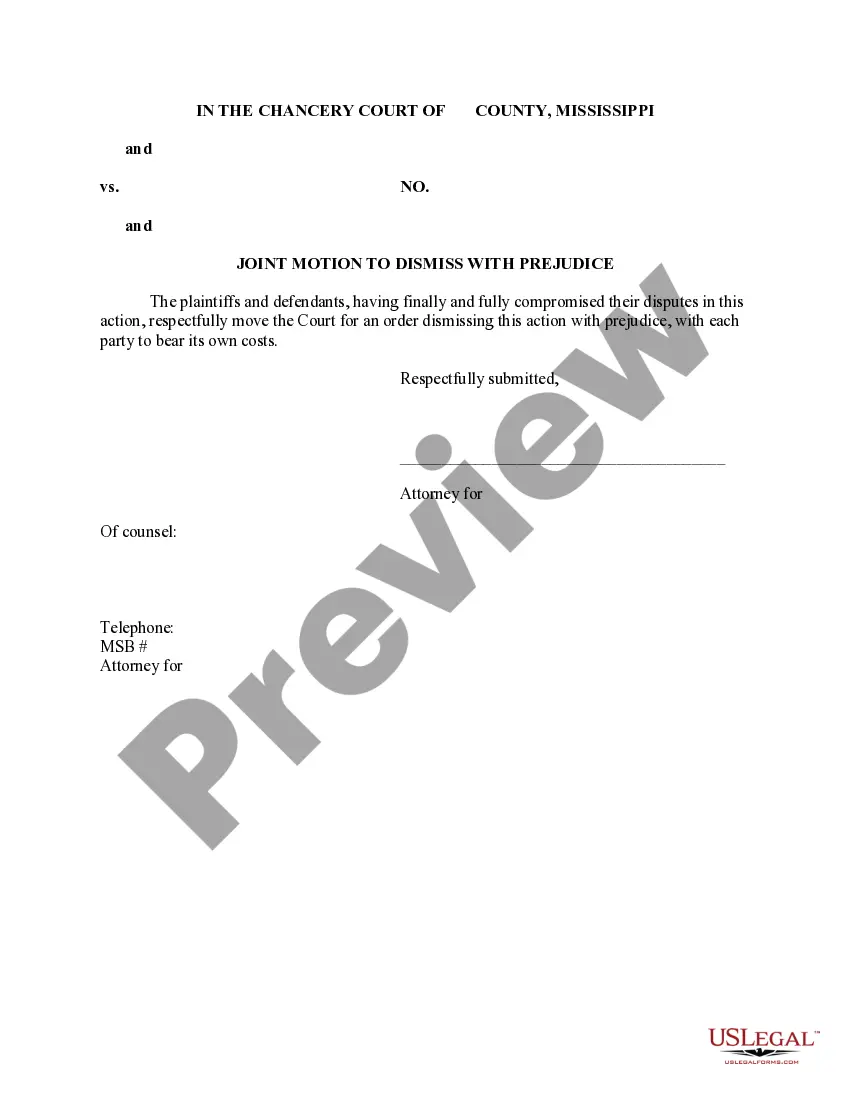
- Joint motion: Indicates agreement between the plaintiff and defendant to dismiss the case.
- Jurisdiction statement: Affirms the court's authority over the matter.
- Order of dismissal: Officially declares that the case is dismissed with prejudice.
- Cost allocation: Specifies that each party will bear its own costs.
- Signature line: For the authorized judge to endorse the judgment.
When this form is needed
This form is used when both parties in a legal dispute agree to dismiss the case after reaching a settlement. It is appropriate in various types of lawsuits, including civil, commercial, or personal injury cases, where a resolution has been mutually accepted, and the parties wish to close the case permanently.
Who should use this form
- Individuals or businesses involved in a legal dispute that has been settled.
- Attorneys representing clients seeking to dismiss a lawsuit with prejudice.
- Defendants and plaintiffs who have mutually agreed upon terms to resolve their differences.
Completing this form step by step
- Identify the parties involved and enter their names along with the case number at the top of the form.
- Fill out the section regarding the joint motion for dismissal, confirming that both sides have agreed to the dismissal.
- Ensure the jurisdiction statement accurately reflects the court's authority over the matter.
- Review and complete the order of dismissal section, specifying that the case is dismissed with prejudice.
- Include a date in the designated area before presenting the form to the judge for signature.
Does this document require notarization?
In most cases, this form does not require notarization. However, some jurisdictions or signing circumstances might. US Legal Forms offers online notarization powered by Notarize, accessible 24/7 for a quick, remote process.
Get your form ready online
Our built-in tools help you complete, sign, share, and store your documents in one place.
Make edits, fill in missing information, and update formatting in US Legal Forms—just like you would in MS Word.
Download a copy, print it, send it by email, or mail it via USPS—whatever works best for your next step.
Sign and collect signatures with our SignNow integration. Send to multiple recipients, set reminders, and more. Go Premium to unlock E-Sign.
If this form requires notarization, complete it online through a secure video call—no need to meet a notary in person or wait for an appointment.
We protect your documents and personal data by following strict security and privacy standards.

Make edits, fill in missing information, and update formatting in US Legal Forms—just like you would in MS Word.

Download a copy, print it, send it by email, or mail it via USPS—whatever works best for your next step.

Sign and collect signatures with our SignNow integration. Send to multiple recipients, set reminders, and more. Go Premium to unlock E-Sign.

If this form requires notarization, complete it online through a secure video call—no need to meet a notary in person or wait for an appointment.

We protect your documents and personal data by following strict security and privacy standards.
Common mistakes to avoid
- Failing to clarify that the dismissal is with prejudice, which impacts the ability to re-file.
- Not including the complete names of all parties involved in the case.
- Omitting the case number or the date, which can delay processing.
- Submitting the form without proper signatures or endorsements from both parties.
Why use this form online
- Immediate access to a professionally drafted document, ensuring legal accuracy.
- Edit and customize the form to fit the specific needs of your case conveniently.
- Downloadable formats allow for easy filing and storage.
- Cost-effective solution compared to hiring an attorney for simple dismissals.
Legal use & context
- This form serves as a formal record of the parties' agreement to dismiss the case.
- It can be enforced in court to prevent future litigation on the same claims.
- Use of this form may have specific implications based on jurisdictional requirements.
Main things to remember
- The Agreed Judgment of Dismissal with Prejudice conclusively resolves a legal dispute.
- Both parties must agree to the dismissal, ensuring there are no further claims allowed.
- It's essential to follow local rules and requirements for proper legal use.
Looking for another form?
Form popularity
FAQ
Dismissal with prejudice is a final judgment and the case becomes res judicata on the claims that were or could have been brought in it; dismissal without prejudice is not.
Fill out your court forms. Fill out a Request for Dismissal (Form CIV-110 ). File your forms at the courthouse where you filed your case. Serve the other side with a copy of the dismissal papers. File the Notice of Entry of Dismissal and Proof of Service (Form CIV-120)
Fill out your court forms. Fill out a Request for Dismissal (Form CIV-110 ). File your forms at the courthouse where you filed your case. Serve the other side with a copy of the dismissal papers. File the Notice of Entry of Dismissal and Proof of Service (Form CIV-120)
Dismissal. A civil matter which is "dismissed with prejudice" is over forever.The dismissal itself may be appealed. If it is a "voluntary dismissal with prejudice", it is the result of an out of court agreement or settlement between parties that they agree is final.
In the formal legal world, a court case that is dismissed with prejudice means that it is dismissed permanently. A case dismissed with prejudice is over and done with, once and for all, and can't be brought back to court. A case dismissed without prejudice means the opposite.
A stipulated (agreed) dismissal (see s. 799.24(3) of the Wisconsin Statutes) happens when the plaintiff and the defendant agree to have the judge dismiss the action and not enter a judgment against the defendant only if the defendant pays the plaintiff an agreed upon amount by a certain date.
When a lawsuit is dismissed with prejudice, the court is saying that it has made a final determination on the merits of the case, and that the plaintiff is therefore forbidden from filing another lawsuit based on the same grounds. See also: dismiss, dismissal without prejudice. courts.
A case dismissed with prejudice is over and done with, once and for all, and can't be brought back to court. A case dismissed without prejudice means the opposite. It's not dismissed forever. The person whose case it is can try again.
A case will be dismissed with prejudice if there is reason for the case not to be brought back to court; for example, if the judge deems the lawsuit frivolous or the the matter under consideration is resolved outside of court.