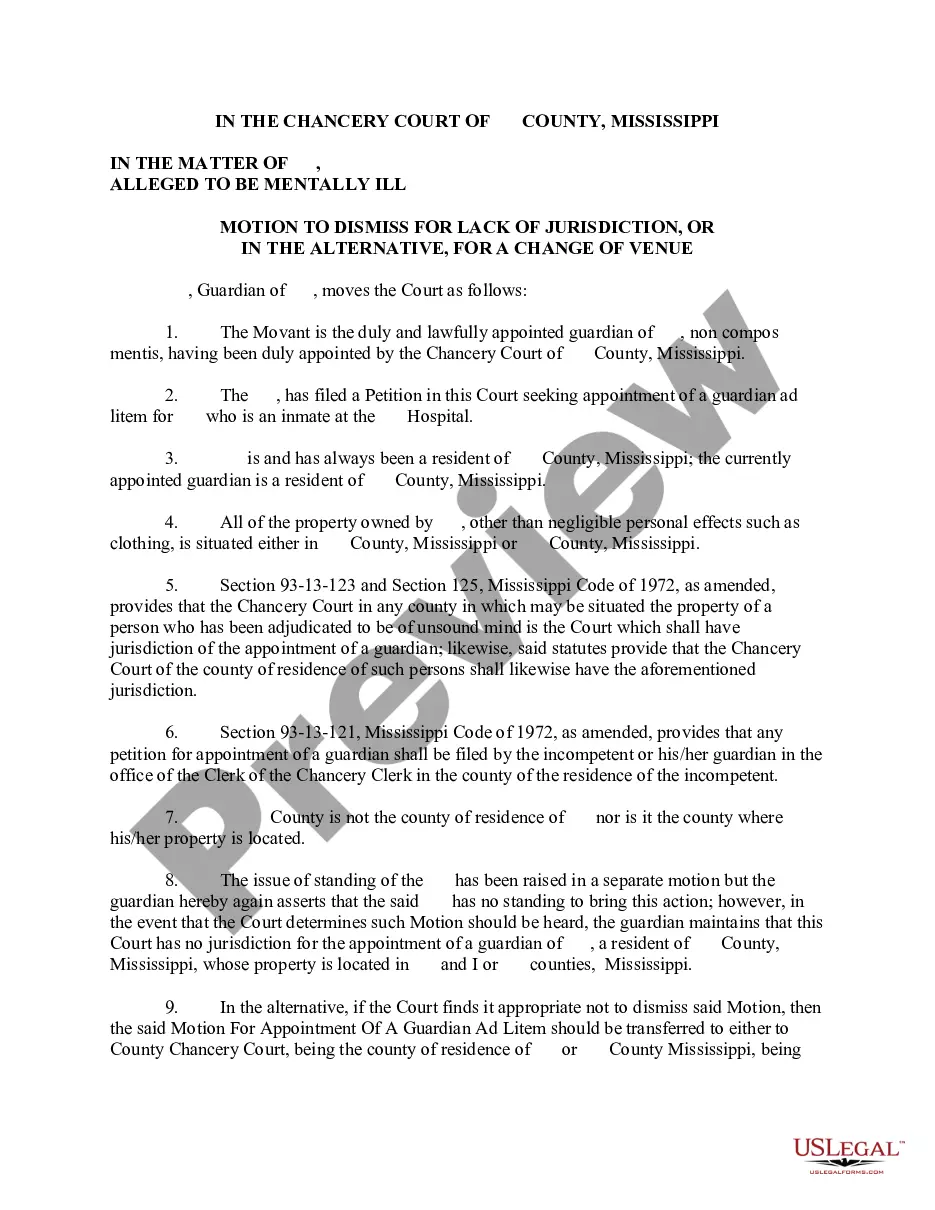
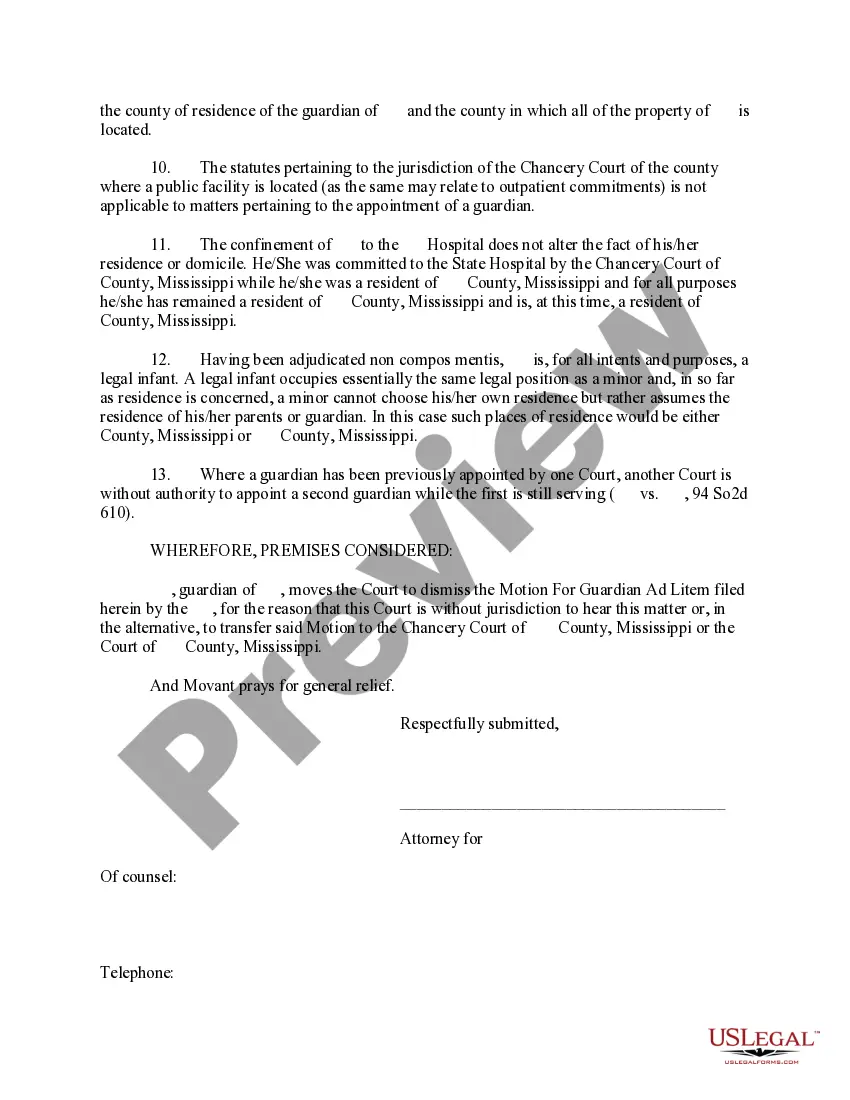
Mississippi Motion to Dismiss for Lack of Jurisdiction or in the Alternative, For a Change of Venue
Description

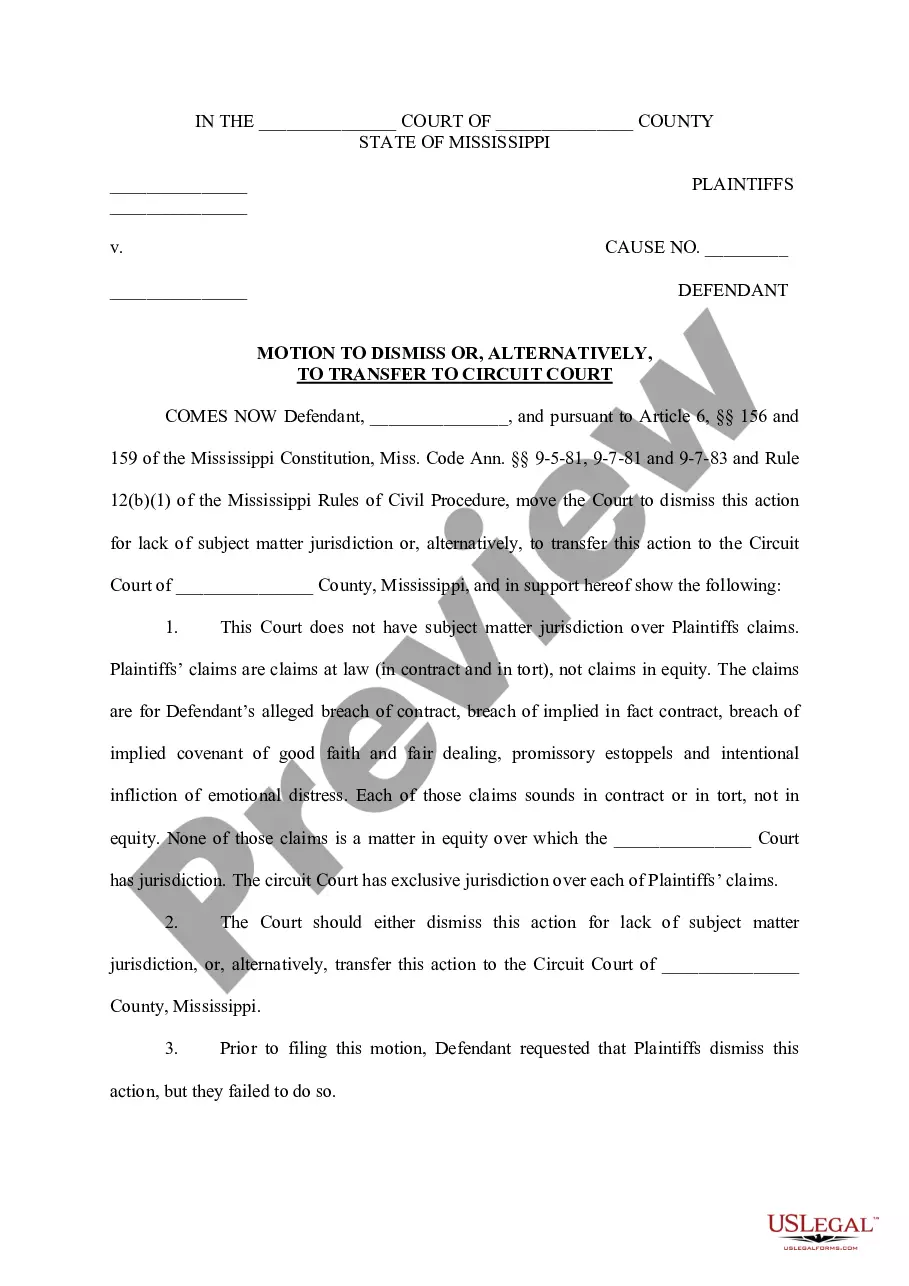
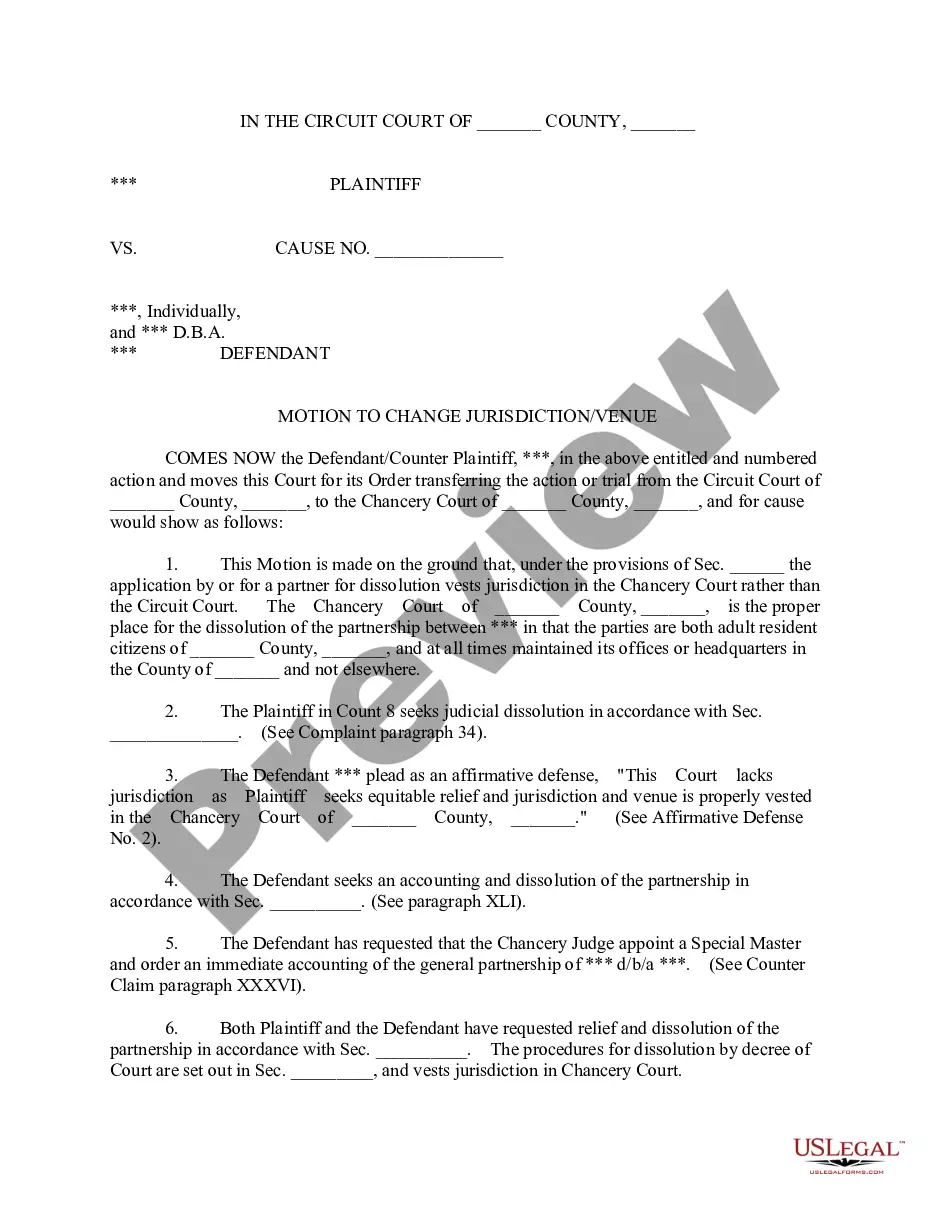
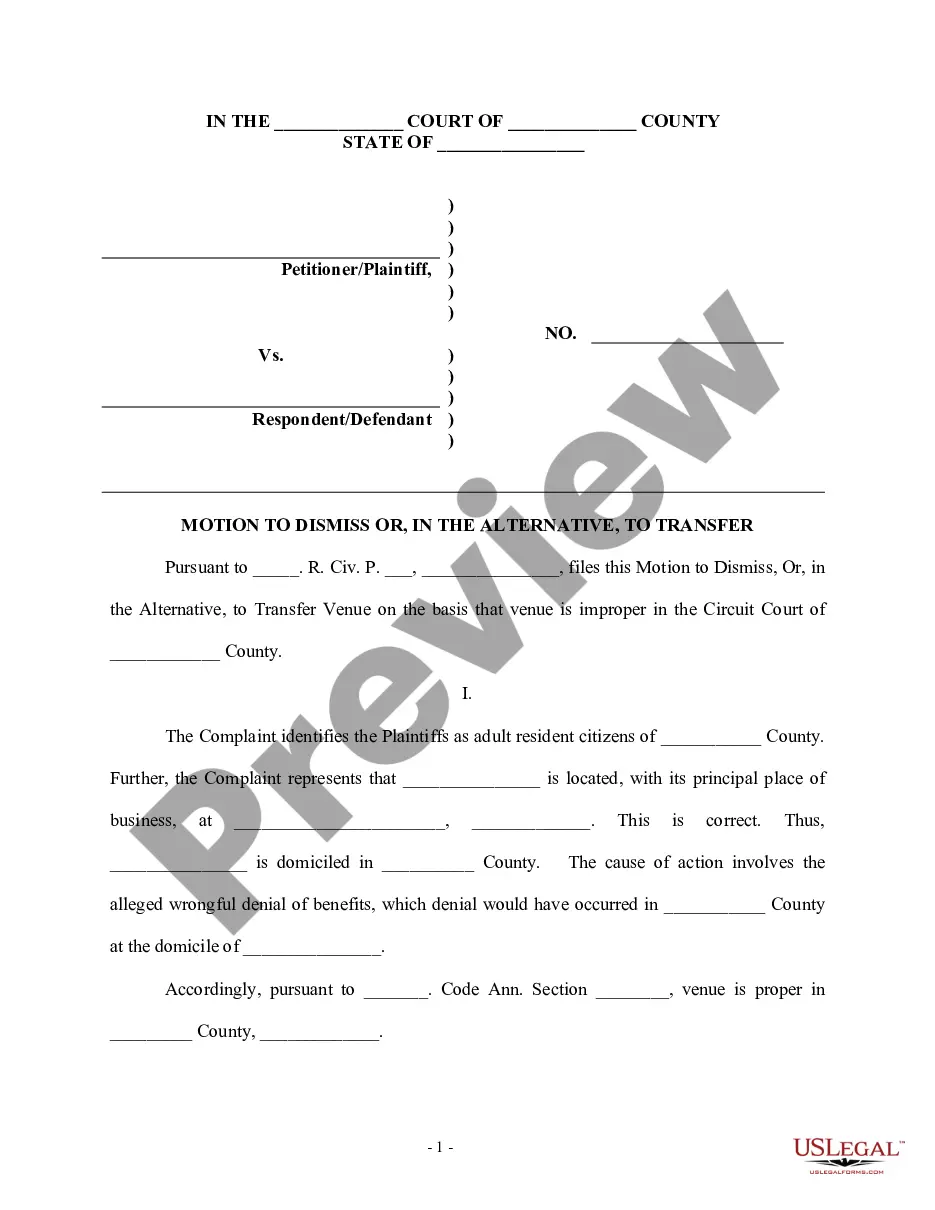
How to fill out Mississippi Motion To Dismiss For Lack Of Jurisdiction Or In The Alternative, For A Change Of Venue?
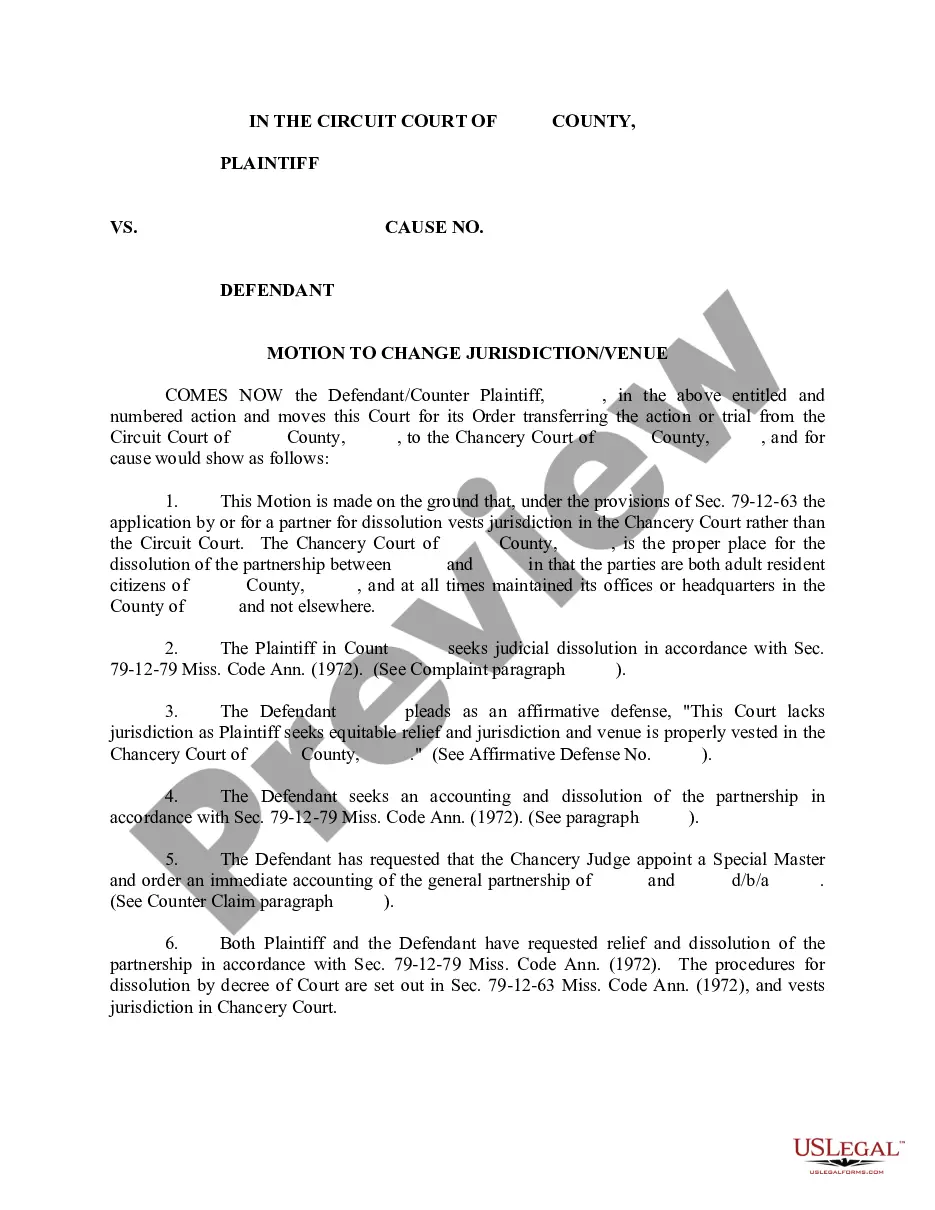
Obtain a printable Mississippi Motion to Dismiss for Lack of Jurisdiction or in the Alternative, For a Change of Venue in only several mouse clicks from the most extensive catalogue of legal e-forms. Find, download and print professionally drafted and certified samples on the US Legal Forms website. US Legal Forms has been the #1 supplier of affordable legal and tax templates for US citizens and residents on-line starting from 1997.
Customers who have already a subscription, must log in in to their US Legal Forms account, get the Mississippi Motion to Dismiss for Lack of Jurisdiction or in the Alternative, For a Change of Venue see it saved in the My Forms tab. Customers who do not have a subscription are required to follow the tips listed below:
- Make certain your template meets your state’s requirements.
- If provided, read the form’s description to find out more.
- If accessible, review the shape to see more content.
- Once you’re confident the form is right for you, simply click Buy Now.
- Create a personal account.
- Pick a plan.
- through PayPal or visa or mastercard.
- Download the form in Word or PDF format.
As soon as you have downloaded your Mississippi Motion to Dismiss for Lack of Jurisdiction or in the Alternative, For a Change of Venue, it is possible to fill it out in any web-based editor or print it out and complete it by hand. Use US Legal Forms to to access 85,000 professionally-drafted, state-specific documents.
Form popularity
FAQ
In federal proceedings, a motion to dismiss the case is proper when the court lacks subject matter or personal jurisdiction, when venue is improper, when process (the summons) or service of process is insufficient, when the complaint fails to state a claim upon which relief can be granted, or when a necessary party has
A motion for summary judgment asks the court to decide the case or specific claims in the case in the moving party's favor.The main difference between a motion to dismiss and a motion for summary judgment is that the court actually gets to evaluate the meat of the claims on a motion for summary judgment.
Failure to state a claim upon which relief can be granted is a defense to a legal claim. It means that the claimant has failed to present sufficient facts which, if taken as true, would indicate that a violation of law had occurred or that the claimant was entitled to a legal remedy.
The court shall grant summary judgment if the movant shows that there is no genuine dispute as to any material fact and the movant is entitled to judgment as a matter of law. The court should state on the record the reasons for granting or denying the motion. (b) Time to File a Motion.
Rule 12(b)(6), permitting a motion to dismiss for failure of the complaint to state a claim on which relief can be granted, is substantially the same as the old demurrer for failure of a pleading to state a cause of action.
What happens during a motion for summary judgment hearing?At the hearing, each party will be given a certain amount of time to reiterate their argument in front of the judge. The judge may ask some questions and at the end of the hearing the judge will grant or deny the motion.
The Rule 81 Summons is used when directing a person to appear in court on a date and time certain, like. a scheduled court hearing. It is used to provide notice to the Defendants in a lawsuit.
For example in the state of California, a motion to dismiss for failure to state a claim is called a demurrer.
FRCP Rule 12(b) pertains to pretrial motions, and 12(b)(6) specifically deals with motions to dismiss for failure to state a claim upon which relief can be granted. As a practical matter, Rule 12(b)(6) motions are rarely successful, and when they are, their success usually has more to do with the judge than the law.