Mississippi Motion to Amend
Understanding this form
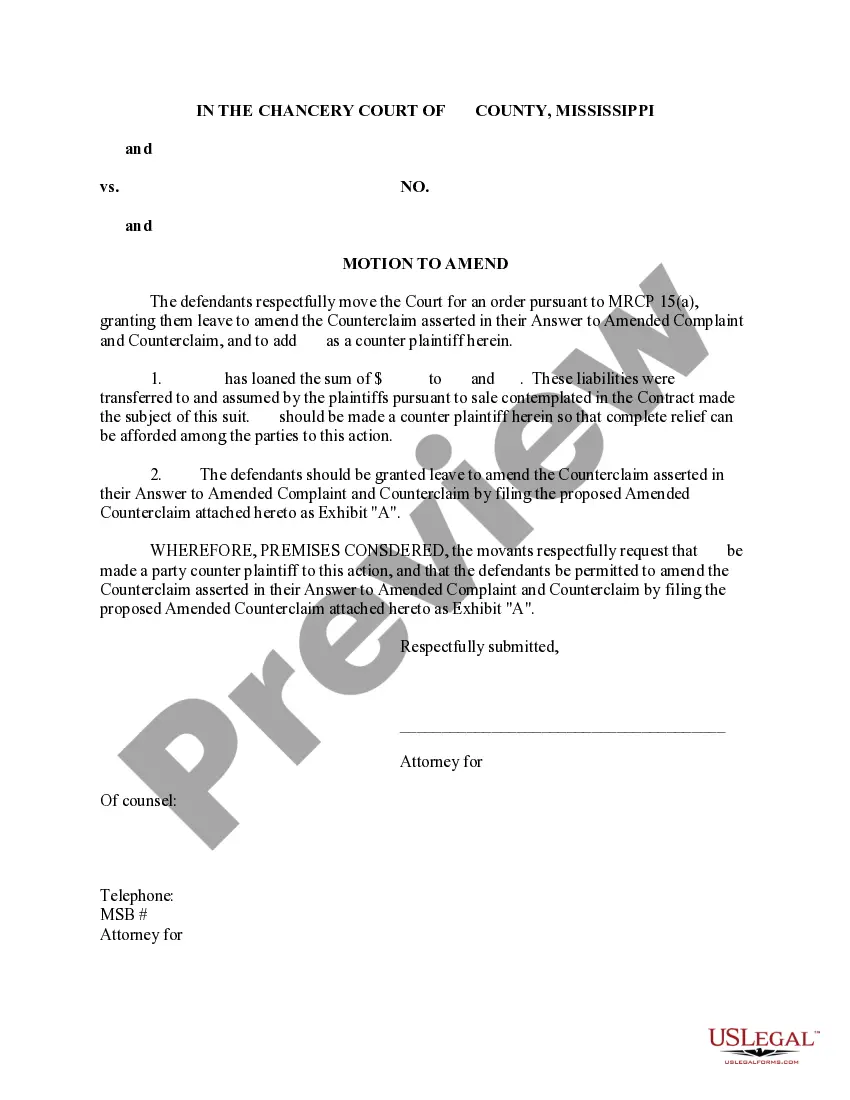
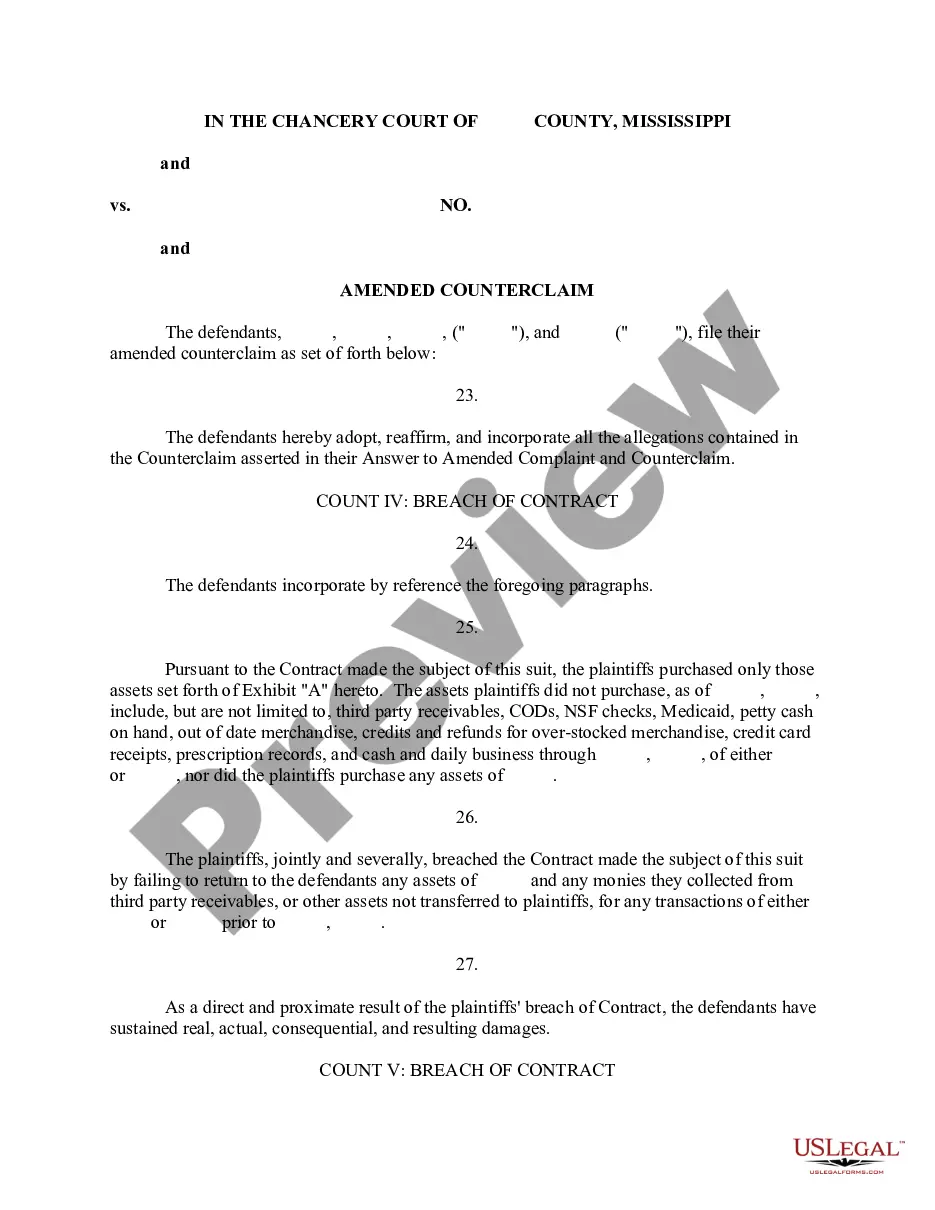
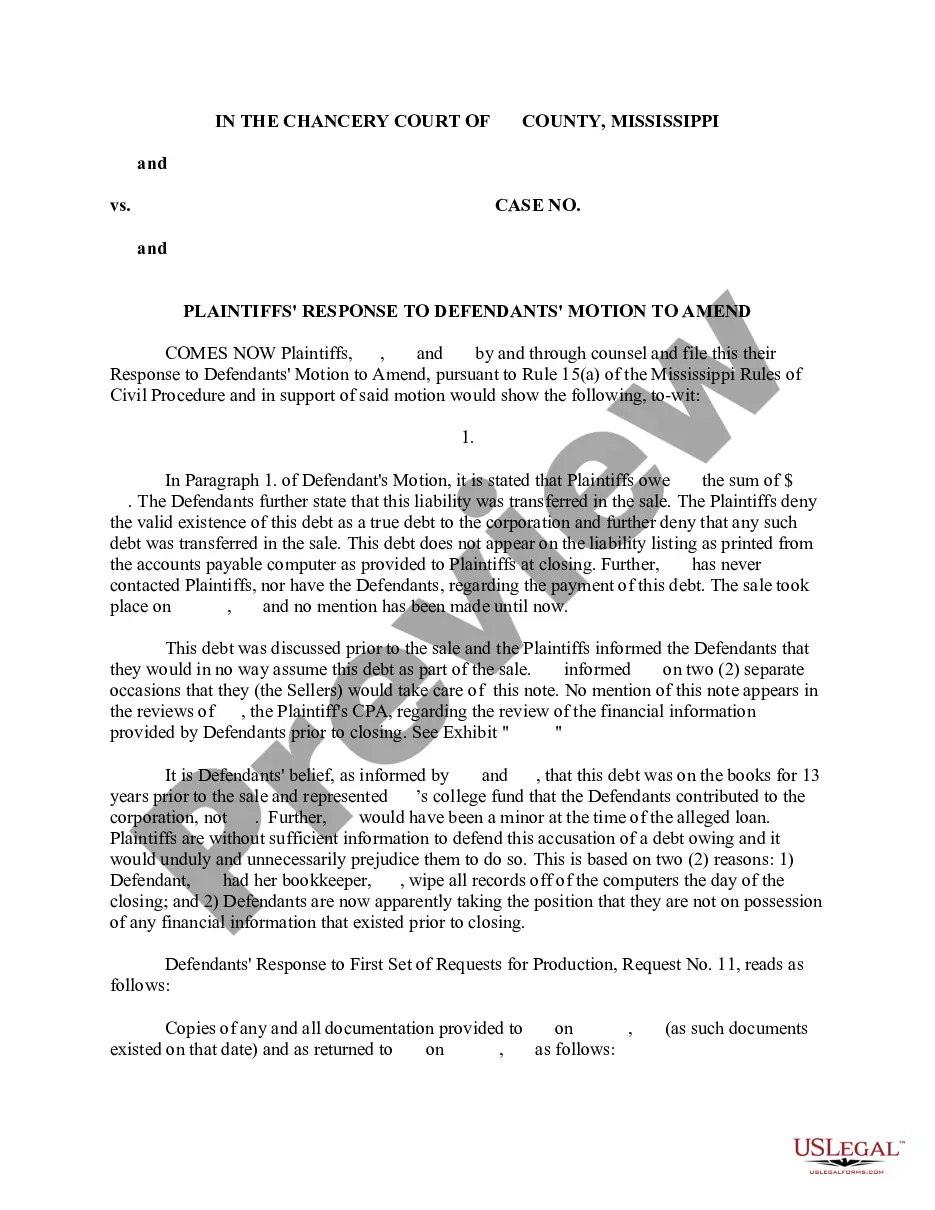
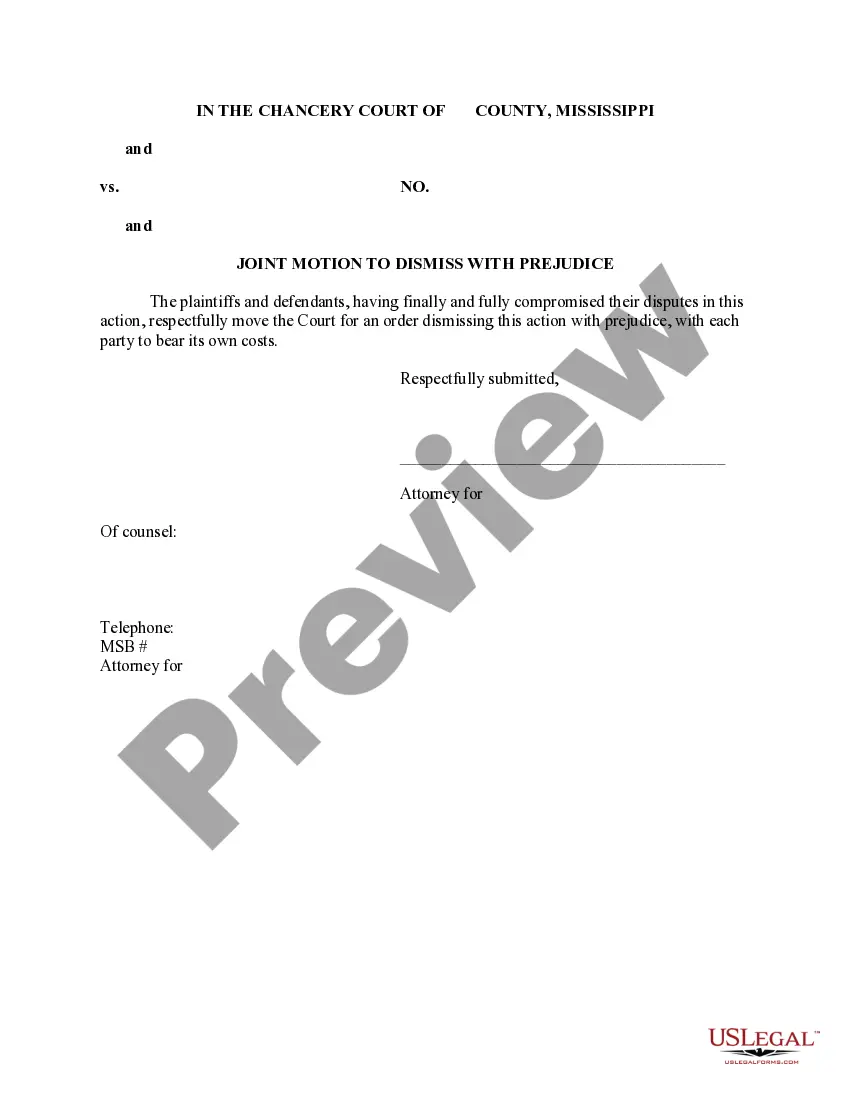
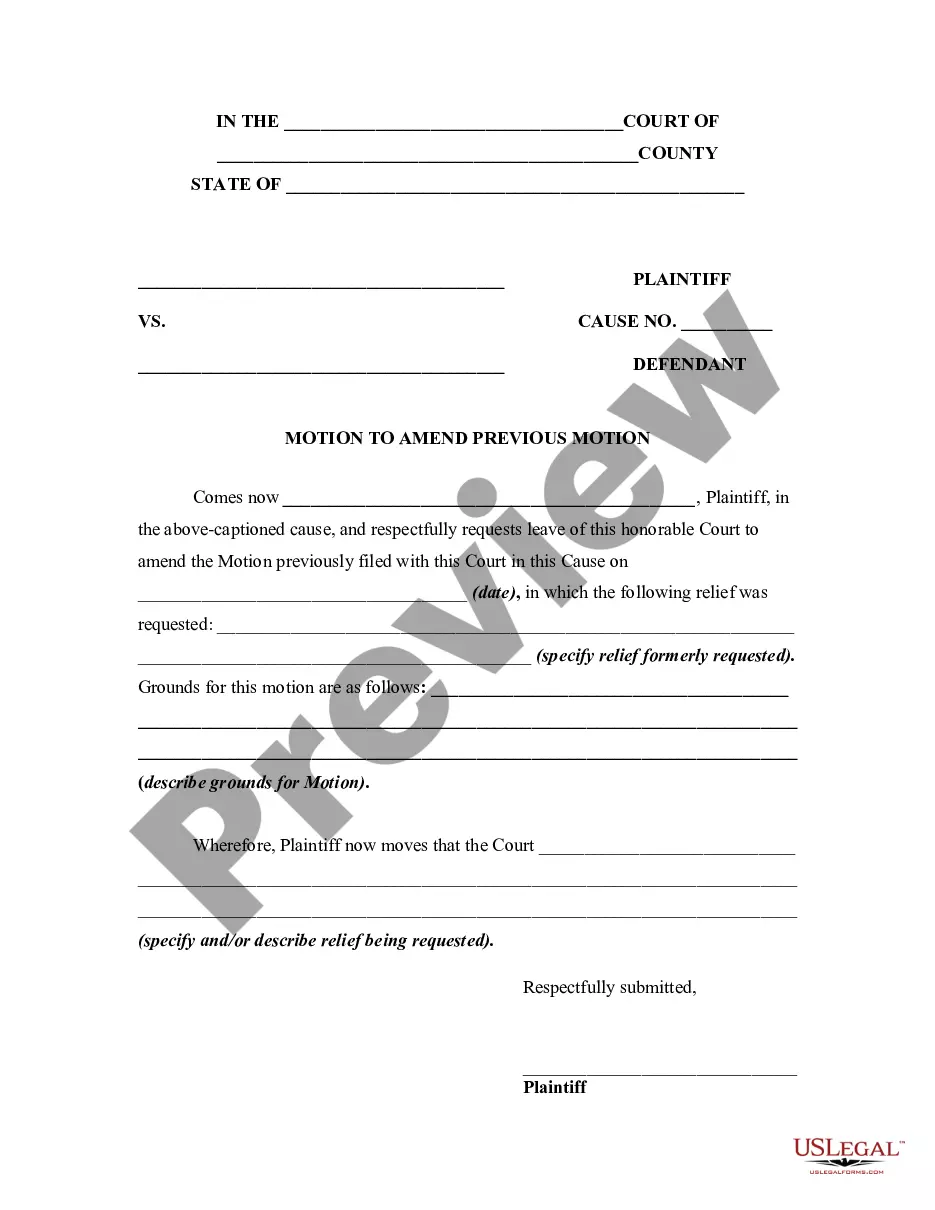
A Motion to Amend is a legal document that requests the court to modify an existing pleading or claim. This form specifically allows parties to seek permission from the court to amend their Counterclaim, ensuring that any necessary changes can be made to accurately reflect the facts or legal arguments. Unlike other motions, this document focuses on revising previously filed claims rather than introducing entirely new ones.
Main sections of this form
- The title of the motion, specifying it as a Motion to Amend.
- Identification of the parties involved in the case.
- A request for the court to grant leave to amend the Counterclaim.
- Reference to the proposed Amended Counterclaim as an exhibit.
- Signature lines for the parties to authenticate the motion.
When to use this document
This form should be used when a party in a legal case wishes to amend their previously filed Counterclaim. Situations may include the need to add new evidence, correct errors, or clarify legal arguments after the initial filing has been made. Filing a Motion to Amend can be essential for ensuring that all necessary information is presented to the court, maximizing the chances of a favorable outcome.
Who needs this form
- Defendants in legal cases who have previously submitted a Counterclaim.
- Individuals seeking to modify their legal submissions due to new information or corrections.
- Attorneys representing clients in need of amending claims in court.
Completing this form step by step
- Identify the parties involved, including the defendant and plaintiff.
- Clearly state the request for leave to amend the Counterclaim.
- Attach the proposed Amended Counterclaim as an exhibit.
- Include the date and location where the motion is filed.
- Sign the document to validate the motion.
Notarization requirements for this form
Notarization is generally not required for this form. However, certain states or situations might demand it. You can complete notarization online through US Legal Forms, powered by Notarize, using a verified video call available anytime.
Get your form ready online
Our built-in tools help you complete, sign, share, and store your documents in one place.
Make edits, fill in missing information, and update formatting in US Legal Forms—just like you would in MS Word.
Download a copy, print it, send it by email, or mail it via USPS—whatever works best for your next step.
Sign and collect signatures with our SignNow integration. Send to multiple recipients, set reminders, and more. Go Premium to unlock E-Sign.
If this form requires notarization, complete it online through a secure video call—no need to meet a notary in person or wait for an appointment.
We protect your documents and personal data by following strict security and privacy standards.

Make edits, fill in missing information, and update formatting in US Legal Forms—just like you would in MS Word.

Download a copy, print it, send it by email, or mail it via USPS—whatever works best for your next step.

Sign and collect signatures with our SignNow integration. Send to multiple recipients, set reminders, and more. Go Premium to unlock E-Sign.

If this form requires notarization, complete it online through a secure video call—no need to meet a notary in person or wait for an appointment.

We protect your documents and personal data by following strict security and privacy standards.
Common mistakes
- Failing to attach the proposed Amended Counterclaim as required.
- Not signing the motion before submission to the court.
- Using outdated or incorrect legal terminology applicable to the jurisdiction.
Why complete this form online
- Easy access and convenience to download and complete the form at your own pace.
- The form is formatted according to legal standards, reducing the risk of errors.
- Editability allows users to tailor the form based on their specific circumstances.
Looking for another form?

Form popularity
FAQ
A Motion for Leave to Amend is used to request permission from the court to change something in the original petition. Often times this type of motion is used to fix errors or omissions within the paperwork.
What happens during a motion for summary judgment hearing?At the hearing, each party will be given a certain amount of time to reiterate their argument in front of the judge. The judge may ask some questions and at the end of the hearing the judge will grant or deny the motion.
When a motion for summary judgement is granted, it indicates there is sufficient evidence to declare one party the clear winner.The judge will then rule on the case based on the facts and evidence. A summary judgement can often be beneficial as it potentially skips a lengthy (and costly) court trial.
A motion for summary judgment filed by an opposing party claims that you cannot prevail in the case because there is no legal dispute or your claim is without merit or a defense. Failure to respond to a motion for summary judgment can result in your case being dismissed or a judgment being rendered against you.
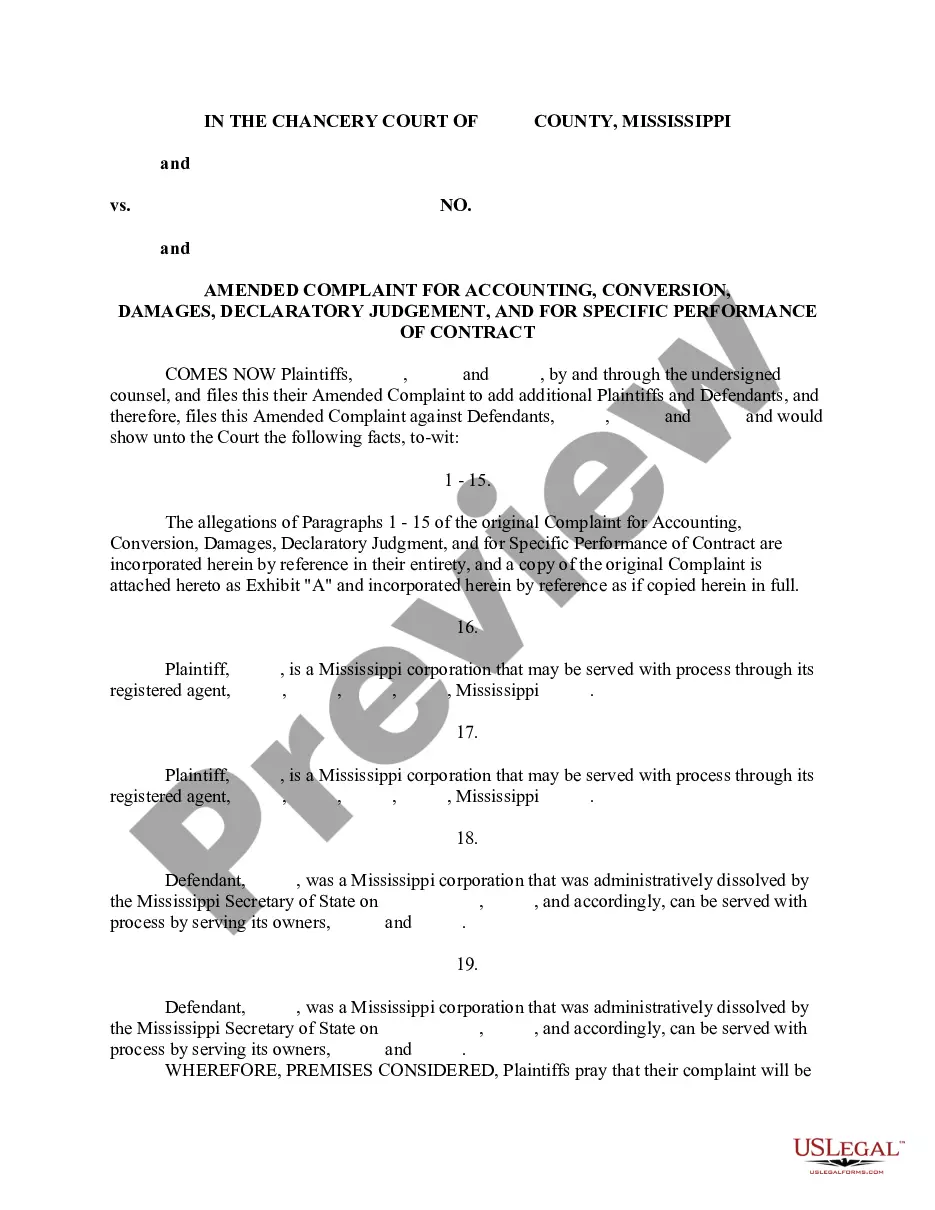
Amended complaint. n. what results when the party suing (plaintiff or petitioner) changes the complaint he/she has filed. It must be in writing, and can be done before the complaint is served on any defendant, by agreement between the parties (usually their lawyers), or upon order of the court.
It means to change the basis for the case in some way. A motion to amend a complaint is the formal way of asking the court for permission to change the original complaint.
The grant of summary judgment usually results in a final judgment only if the grant resolves all issues as to all parties. An order for summary judgment is interlocutory if it does not entirely end the proceedings before the trial court.
The court should freely give leave when justice so requires. (3) Time to Respond. Unless the court orders otherwise, any required response to an amended pleading must be made within the time remaining to respond to the original pleading or within 14 days after service of the amended pleading, whichever is later.
The court shall grant summary judgment if the movant shows that there is no genuine dispute as to any material fact and the movant is entitled to judgment as a matter of law. The court should state on the record the reasons for granting or denying the motion. (b) Time to File a Motion.