Release of Lien
Understanding this form
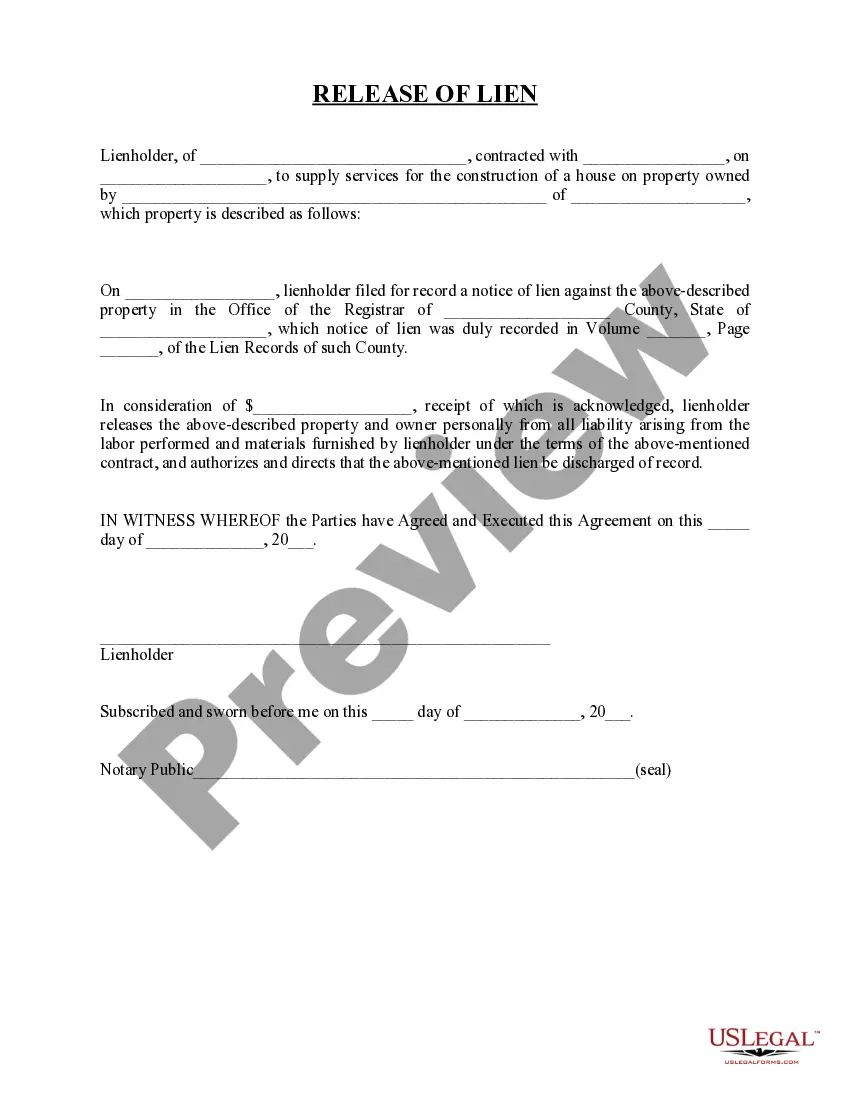
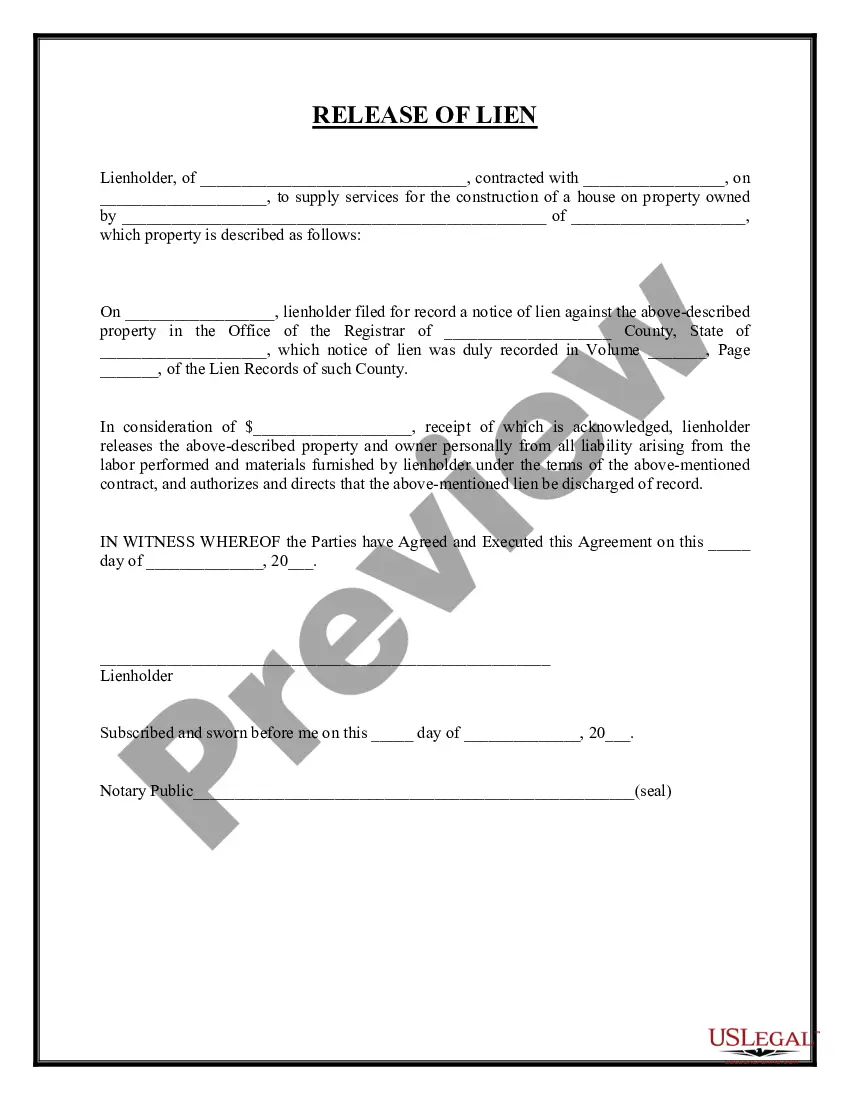
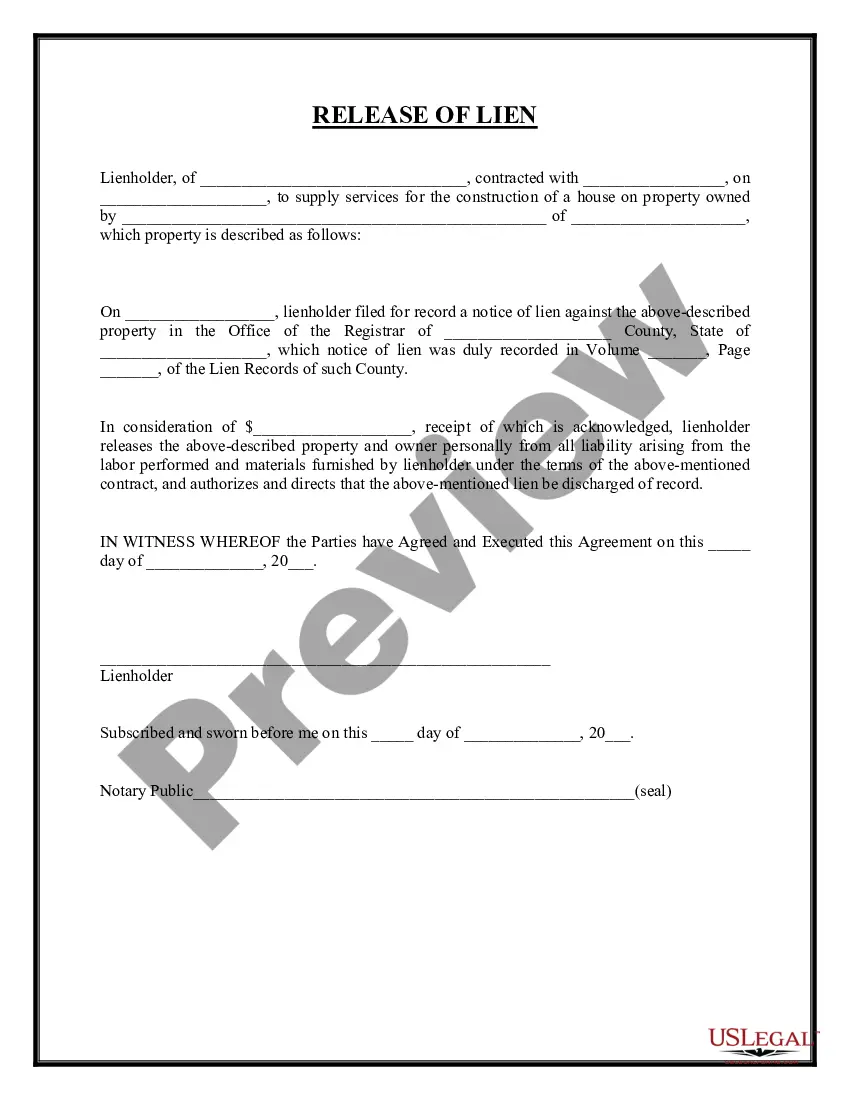
The Release of Lien form is a legal document used by lienholders to formally release their claim or lien on a property. This form ensures that the property owner is no longer liable for the debts associated with the labor and materials provided by the lienholder under a specific contract. Unlike other legal documents that may establish liens, this form specifically serves to discharge any claims previously made against the property, offering a clear pathway for the owner to attain full ownership without encumbrances.
Key components of this form
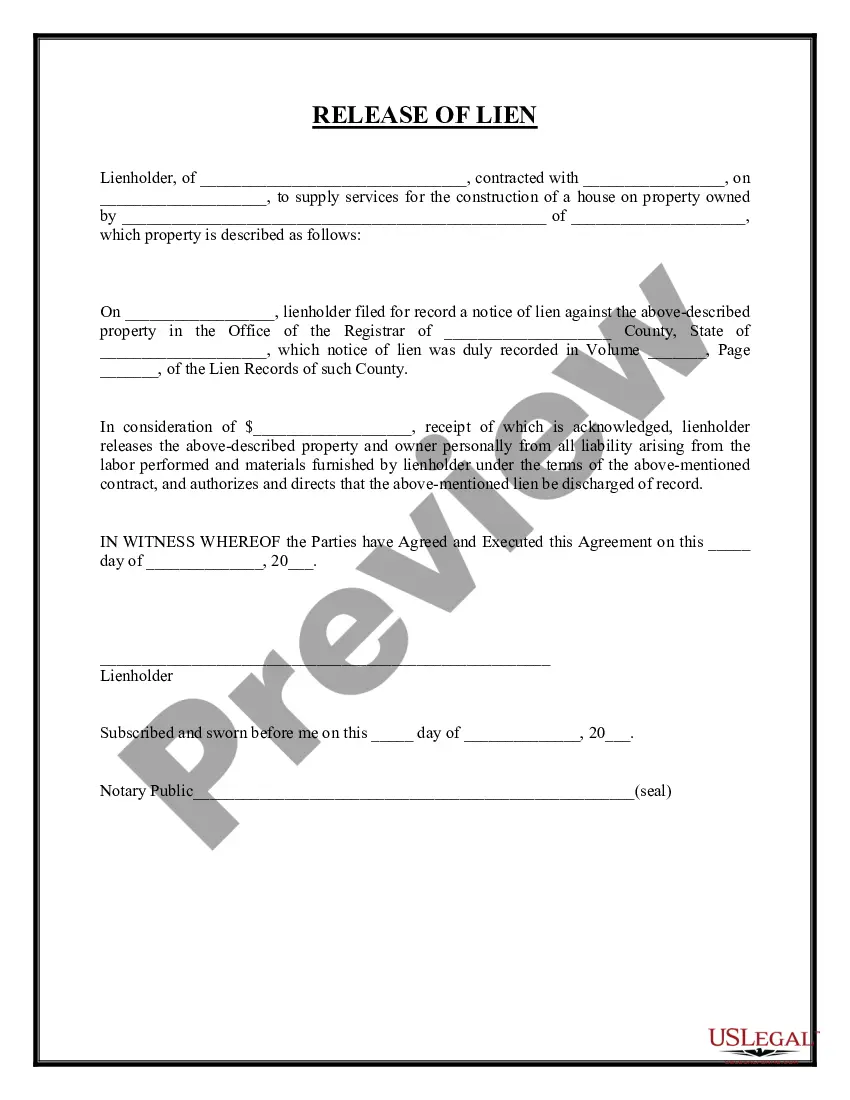
- The names and details of the lienholder and property owner
- Date of the original contract and services provided
- Description of the property subject to the lien
- Consideration amount received for the release
- Notary acknowledgment section for verification
When to use this form
This form is typically used when a lienholder has completed services on a property and wishes to officially relinquish any claims associated with the unpaid amounts. It is applicable after payment has been received or when an agreement has been reached that nullifies the lien. Homeowners should use this form to clarify their ownership and alleviate any financial burdens tied to construction or improvement work.
Who this form is for
- Contractors who have provided services and want to release a lien
- Property owners wishing to clear their title from any outstanding liens
- Real estate professionals facilitating transactions involving properties under lien
- Attorneys handling the release of liens on behalf of clients
Instructions for completing this form
- Identify the lienholder by filling in their name and details.
- Enter the name of the property owner who is being released from liability.
- Specify the date when the contract for services was established.
- Provide a detailed description of the property involved in the lien.
- Indicate the agreed amount received as consideration for the lien release.
- Have both parties sign and date the document, and ensure it is notarized.
Is notarization required?
Notarization is required for this form to take effect. Our online notarization service, powered by Notarize, lets you verify and sign documents remotely through an encrypted video session, available 24/7.
Get your form ready online
Our built-in tools help you complete, sign, share, and store your documents in one place.
Make edits, fill in missing information, and update formatting in US Legal Forms—just like you would in MS Word.
Download a copy, print it, send it by email, or mail it via USPS—whatever works best for your next step.
Sign and collect signatures with our SignNow integration. Send to multiple recipients, set reminders, and more. Go Premium to unlock E-Sign.
If this form requires notarization, complete it online through a secure video call—no need to meet a notary in person or wait for an appointment.
We protect your documents and personal data by following strict security and privacy standards.

Make edits, fill in missing information, and update formatting in US Legal Forms—just like you would in MS Word.

Download a copy, print it, send it by email, or mail it via USPS—whatever works best for your next step.

Sign and collect signatures with our SignNow integration. Send to multiple recipients, set reminders, and more. Go Premium to unlock E-Sign.

If this form requires notarization, complete it online through a secure video call—no need to meet a notary in person or wait for an appointment.

We protect your documents and personal data by following strict security and privacy standards.
Avoid these common issues
- Failing to include complete property descriptions, which may lead to confusion.
- Not having the document notarized, rendering it potentially unenforceable.
- Omitting signatures from both the lienholder and property owner.
- Leaving out the consideration amount, which is essential for the validity of the release.
Benefits of completing this form online
- Convenience of downloading and completing the form at your own pace.
- Access to templates created by licensed attorneys, ensuring legal compliance.
- Ability to easily edit and customize the form for your specific situation.
- Immediate availability without needing to visit an attorney's office.
Looking for another form?
Form popularity
FAQ
It basically states that you've paid the subcontractor what is owed, they accept the payment in full, and they waive the right to put a lien on your property. Simply present this form to the subcontractor with your payment and ask them to sign it. Make sure you get their signature!
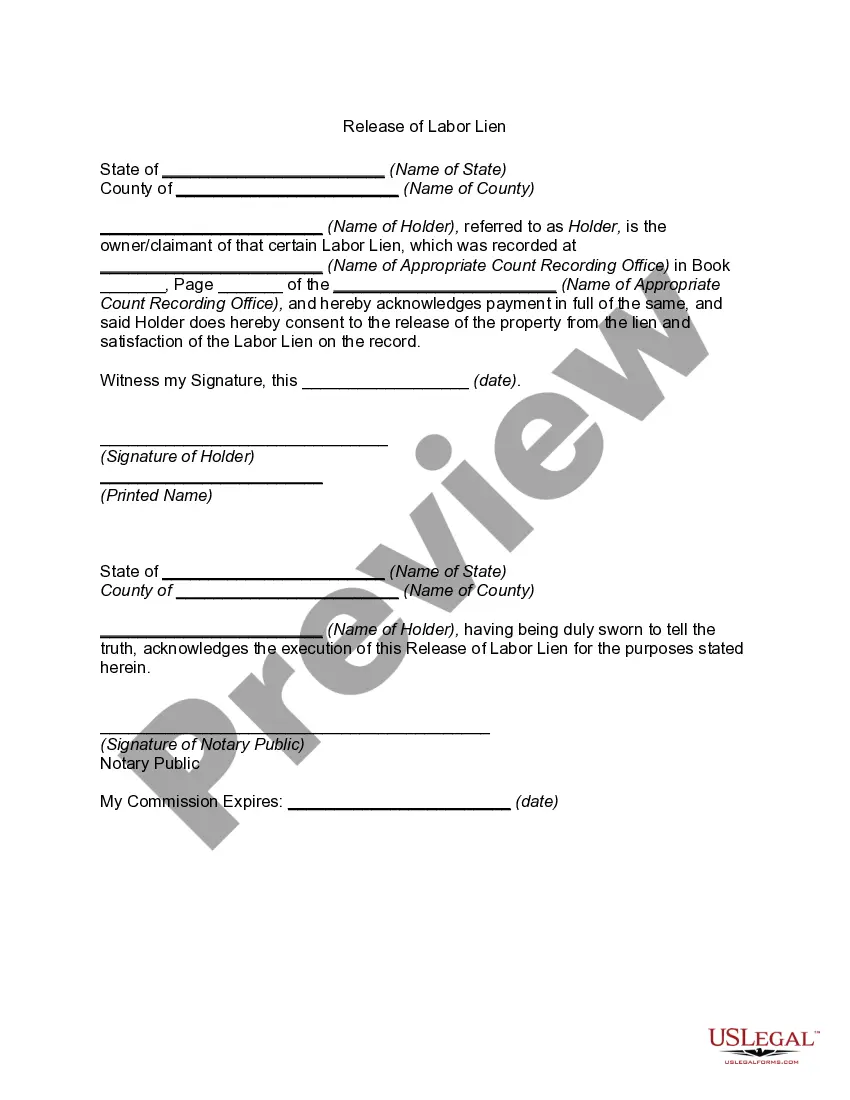
A lien release is used to cancel a lien that has already been filed. Lien releases are also referred to as a release of lien, cancellation of lien, or a lien cancellation. These are typically used to cancel the filed claim from public records.
A claim against, limitation on, or liability against real estate is an encumbrance. Encumbrances include liens, deed restrictions, easements, encroachments, and licenses. An encumbrance can restrict the owner's ability to transfer title to the property or lessen its value.
The main purpose of a lien waiver is to provide protection to the paying party. In exchange for such payment, the lien waiver waives the payee's right to file a lien for the exact value of the payment they have received.
This release of mortgage is recorded or filed and gives notice to the world that the lien is no more. On the other hand, when you have a trust deed or deed of trust, the lender files a release deed.When you call the lender, ask for the release of lien department.
It basically states that you've paid the subcontractor what is owed, they accept the payment in full, and they waive the right to put a lien on your property. Simply present this form to the subcontractor with your payment and ask them to sign it. Make sure you get their signature!
A deed of trust or mortgage is a contract that places a lien on your property. Both provide a way for your lender to take back your home through foreclosure. Deeds of trust and mortgages both serve the same basic purpose.
In a lien theory state, the buyer holds the deed to the property during the mortgage term The buyer promises to make all payments to the lender and the mortgage becomes a lien on the property, but title remains with the buyer.The Deed of Reconveyance removes the lender's interest in the property.
Satisfy the terms of the loan by paying the balance of the loan back to the lender, including any interest incurred. If you don't receive the lien release, submit a request to your lender for proof that the loan has been satisfied.