7.26 Damages: Compensatory
Overview of this form
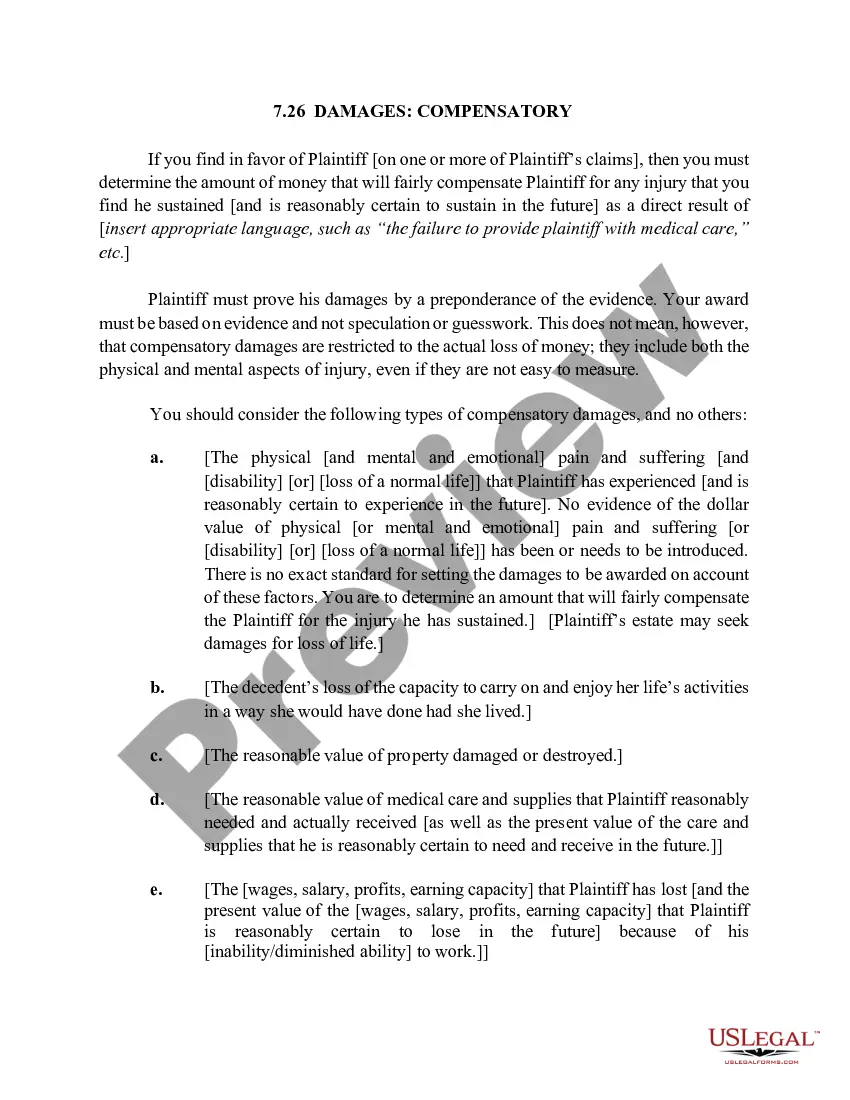
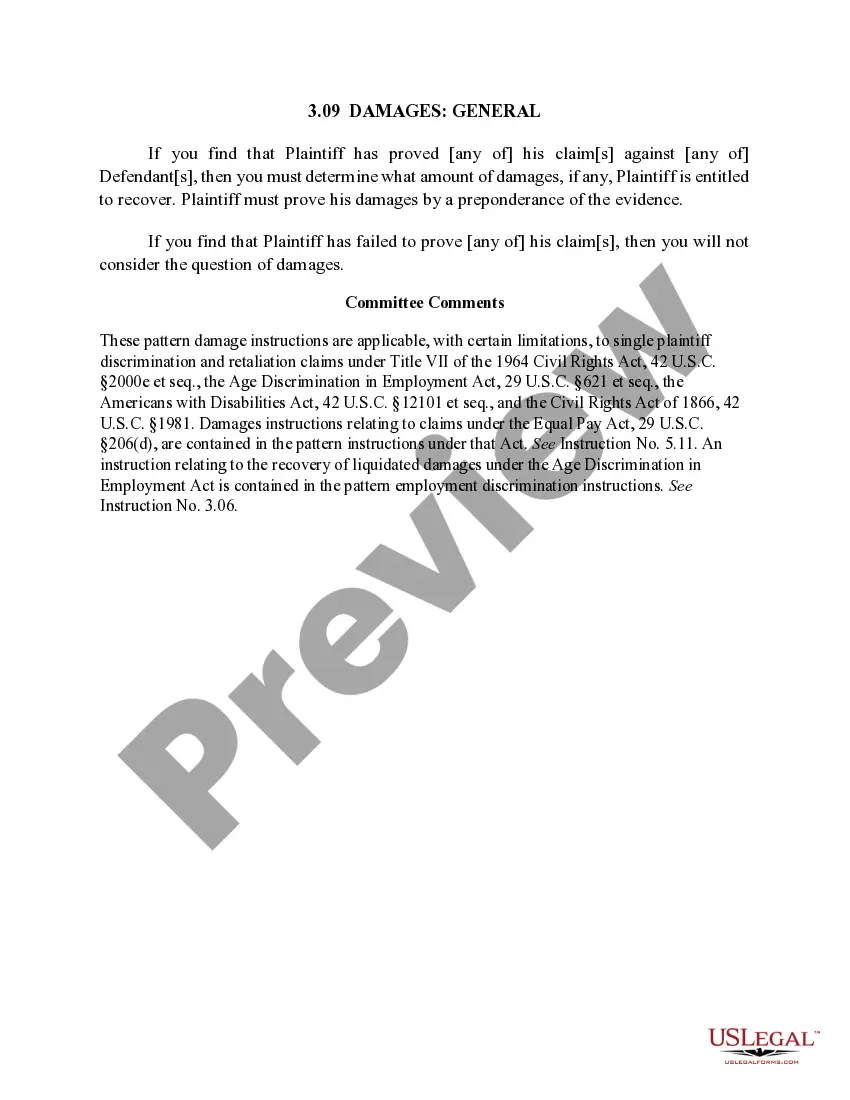
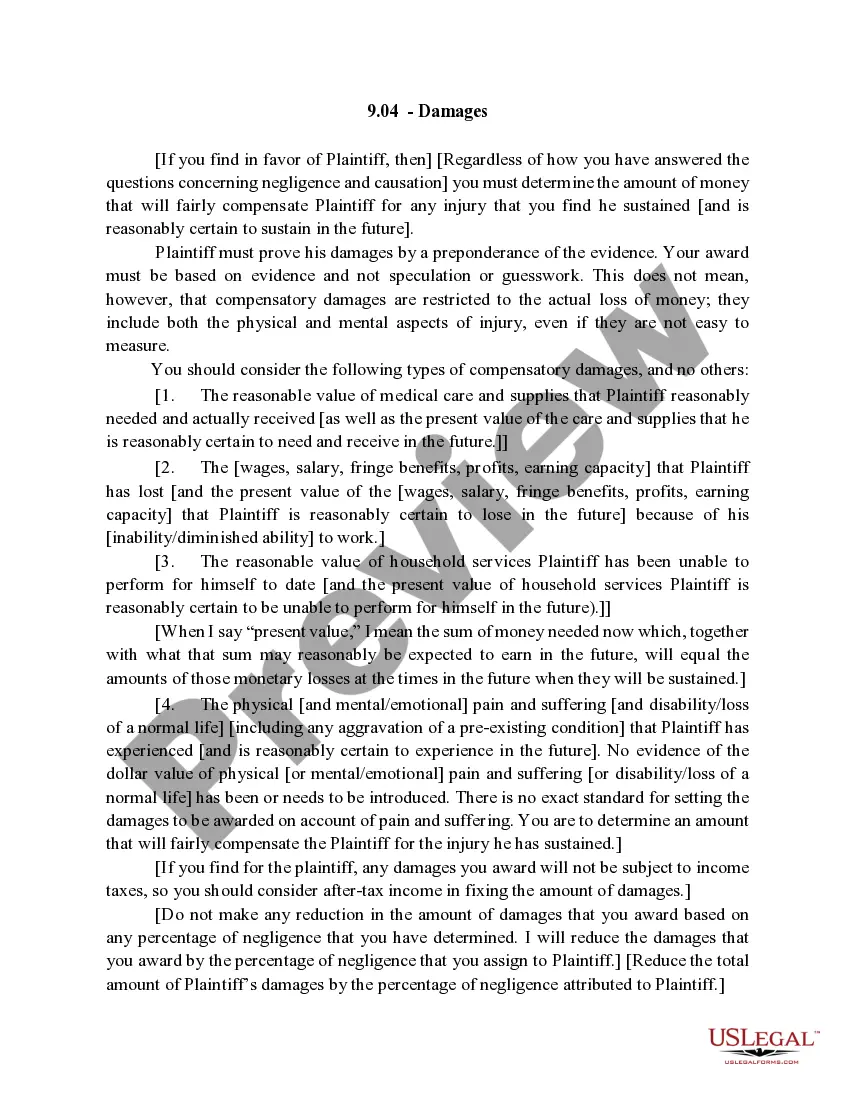
The 7.26 Damages: Compensatory form is an official pattern jury instruction adopted by the Federal 7th Circuit Court. This form provides guidance on how juries should determine the amount of compensatory damages owed to a plaintiff in civil cases. Unlike other legal forms, this specific instruction focuses on the types of damages available, including physical, mental, and emotional suffering resulting from the defendant's actions, thus ensuring a fair compensation based on evidence rather than speculation.
Key components of this form
- Clear definition of compensatory damages and their purpose.
- Instructions on types of damages to consider, including pain and suffering, loss of life, and loss of earnings.
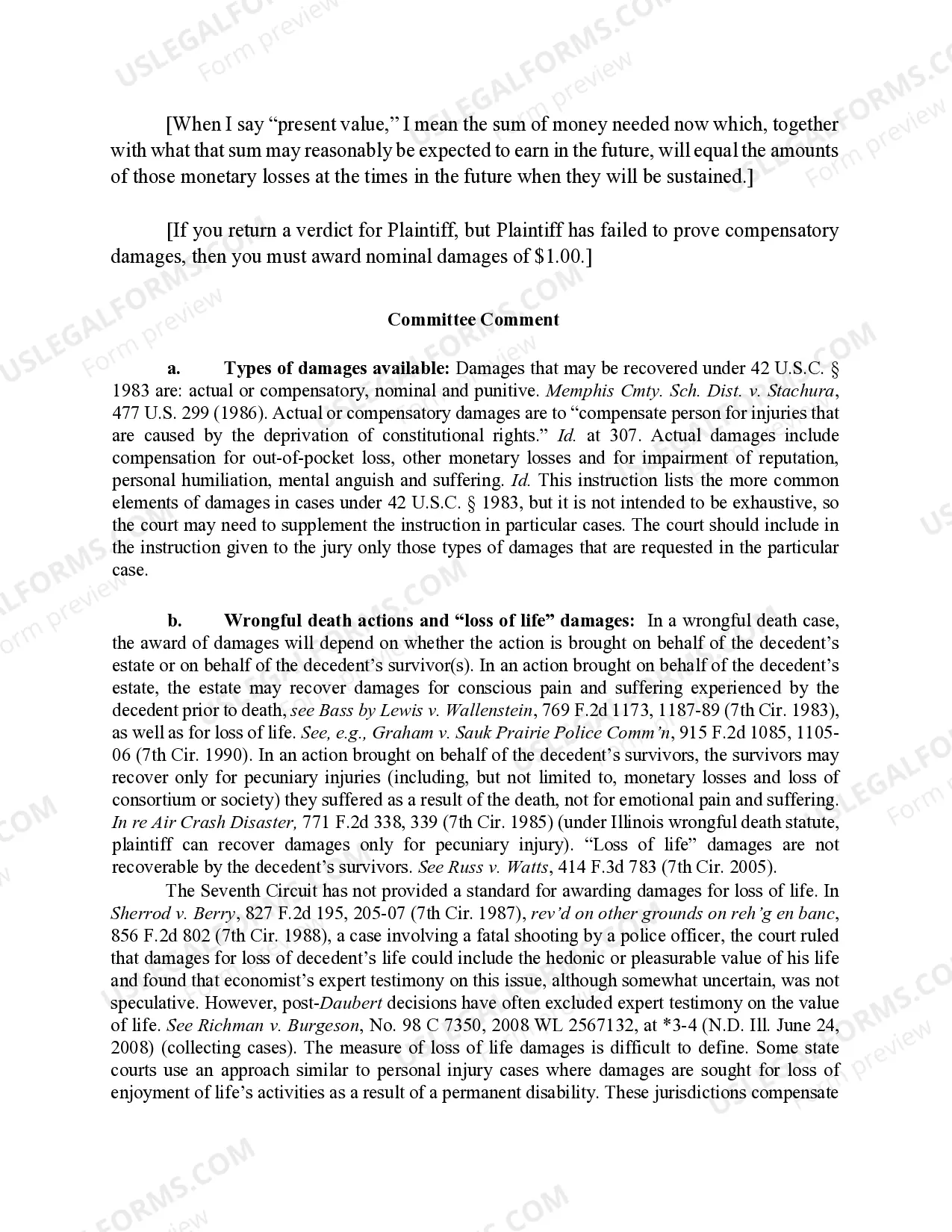
- Guidelines for determining present value and future losses.
- Specification that damages must be proven by a preponderance of the evidence.
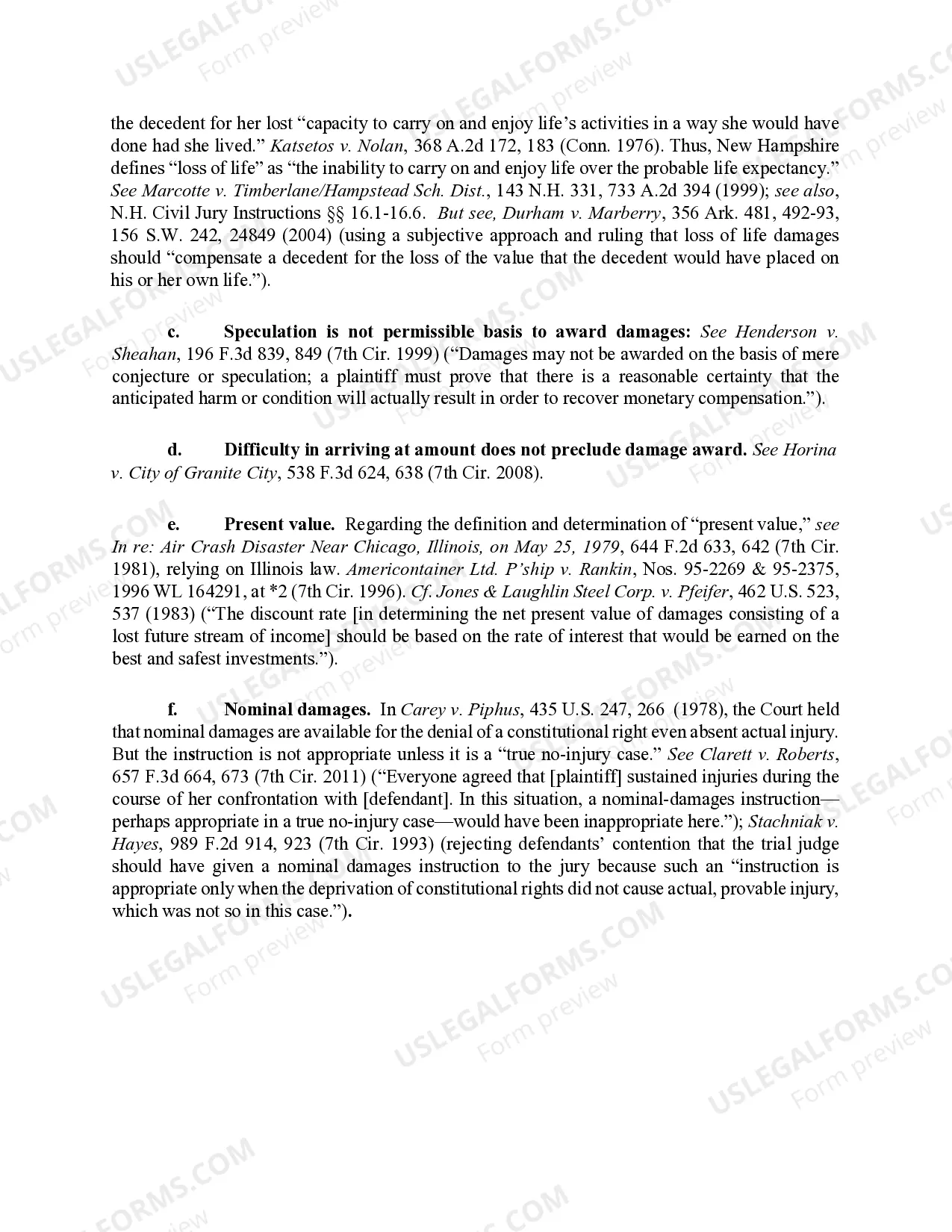
- Instructions for juries on nominal damages if compensatory damages are not proven.

When this form is needed
This form is used during civil trials where a plaintiff seeks compensation for damages caused by a defendant's actions. Common scenarios include personal injury cases, medical malpractice, wrongful death actions, and civil rights violations under federal statutes. When a jury must decide on the monetary compensation owed to a plaintiff for the injuries they suffered, this form provides the necessary framework for their decision-making process.
Who this form is for
This form is intended for:
- Courts handling civil cases involving compensatory damages.
- Jury members who are responsible for making decisions regarding damages in a trial.
- Legal professionals involved in preparing jury instructions in civil litigation.
- Parties involved in litigation who want to understand the damages calculations relevant to their case.
Completing this form step by step
- Identify the plaintiff and the defendant involved in the case.
- Determine the nature of the claim and the legal basis for the compensation being sought.
- Evaluate the evidence to establish the plaintiff's injuries and losses.
- Calculate the types of damages, including any anticipated future suffering or loss of income.
- Complete the instruction by providing the jury with clear guidelines for deliberation.
Does this document require notarization?
In most cases, this form does not require notarization. However, some jurisdictions or signing circumstances might. US Legal Forms offers online notarization powered by Notarize, accessible 24/7 for a quick, remote process.
Get your form ready online
Our built-in tools help you complete, sign, share, and store your documents in one place.
Make edits, fill in missing information, and update formatting in US Legal Forms—just like you would in MS Word.
Download a copy, print it, send it by email, or mail it via USPS—whatever works best for your next step.
Sign and collect signatures with our SignNow integration. Send to multiple recipients, set reminders, and more. Go Premium to unlock E-Sign.
If this form requires notarization, complete it online through a secure video call—no need to meet a notary in person or wait for an appointment.
We protect your documents and personal data by following strict security and privacy standards.

Make edits, fill in missing information, and update formatting in US Legal Forms—just like you would in MS Word.

Download a copy, print it, send it by email, or mail it via USPS—whatever works best for your next step.

Sign and collect signatures with our SignNow integration. Send to multiple recipients, set reminders, and more. Go Premium to unlock E-Sign.

If this form requires notarization, complete it online through a secure video call—no need to meet a notary in person or wait for an appointment.

We protect your documents and personal data by following strict security and privacy standards.
Avoid these common issues
- Failing to provide sufficient evidence to support claims for damages.
- Overestimating the value of non-economic damages, like pain and suffering, without proper justification.
- Neglecting to account for future losses in earnings or care needs.
- Using vague language that may confuse jurors during deliberation.
Advantages of online completion
- Convenient access to a reliable legal document prepared by licensed attorneys.
- Editable format allows for customization based on case specifics.
- Instant downloads ensure quick availability for immediate use in legal settings.
- Reduced need for physical storage with electronic copies easily organized.
Legal use & context
- This form provides a standardized approach to calculating compensatory damages within the Federal 7th Circuit.
- Understanding the guidance can enhance fairness in jury decision-making regarding damages.
- Fulfilling procedural requirements in civil cases requires proper use of the form in jury instructions.
Looking for another form?


Form popularity
FAQ
There are three types of damage that form the foundation of most civil lawsuits: compensatory, nominal, and punitive.
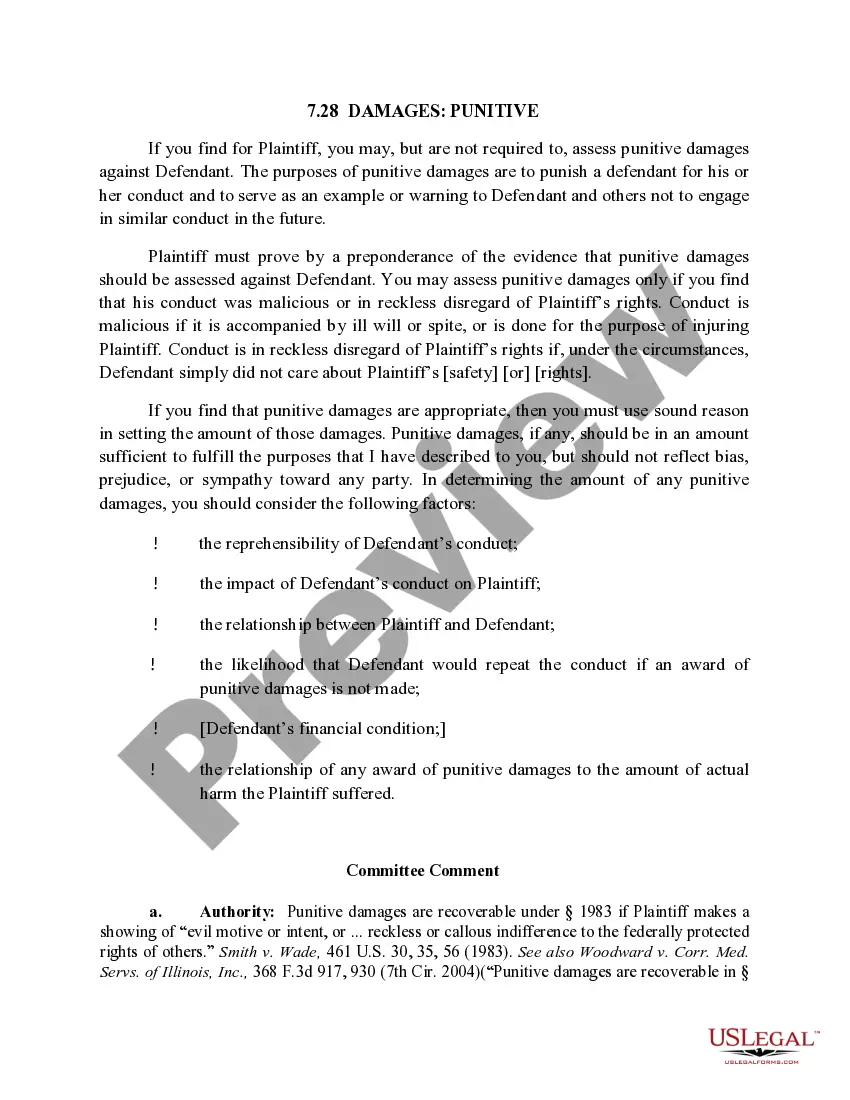
These are (1) how reprehensible the defendant's conduct was, (2) the disparity between the harm experienced by the plaintiff and the punitive damages award, and (3) the difference between the punitive damages award and the civil penalties and remedies imposed in similar cases.
The primary difference between compensatory and punitive damages is their intended effects on the two opposing sides of a personal injury claim. Compensatory damages are intended to help the injured victim, while punitive damages are meant to penalize the at-fault party.
It must be proven by clear and convincing evidence that a defendant acted with oppression, fraud, or malice. Clear and convincing evidence means that there must be a very high degree of probability that something is true.
Actual damages are intended to provide the monetary amount necessary to replace what was lost and nothing more. Usually, compensatory damages are awarded in civil court cases in order to compensate for damages, injury, or another incurred loss.
To support an award of punitive damages you must find that plaintiff has proved, by clear and convincing evidence, that the harm suffered by plaintiff was the result of defendant's conduct21 and that either (1) defendant's conduct was malicious or (2) defendant acted in wanton and willful disregard of
Punitive damages are given on top of compensatory damages when the misconduct was deemed grossly negligent, intentional, or malicious. These are designed to deter the defendant from repeating harm or misconduct in the future.
Compensatory damages are designed to compensate plaintiffs for the actual losses they've experienced. This type of award can be to reimburse them for medical treatments, medical bills, or any future expenses they may have due to an injury they sustained due to the negligence of another person or entity.