Minnesota Statutory Uniform Short Form Mortgage - UCBC Form 100-M
Understanding this form
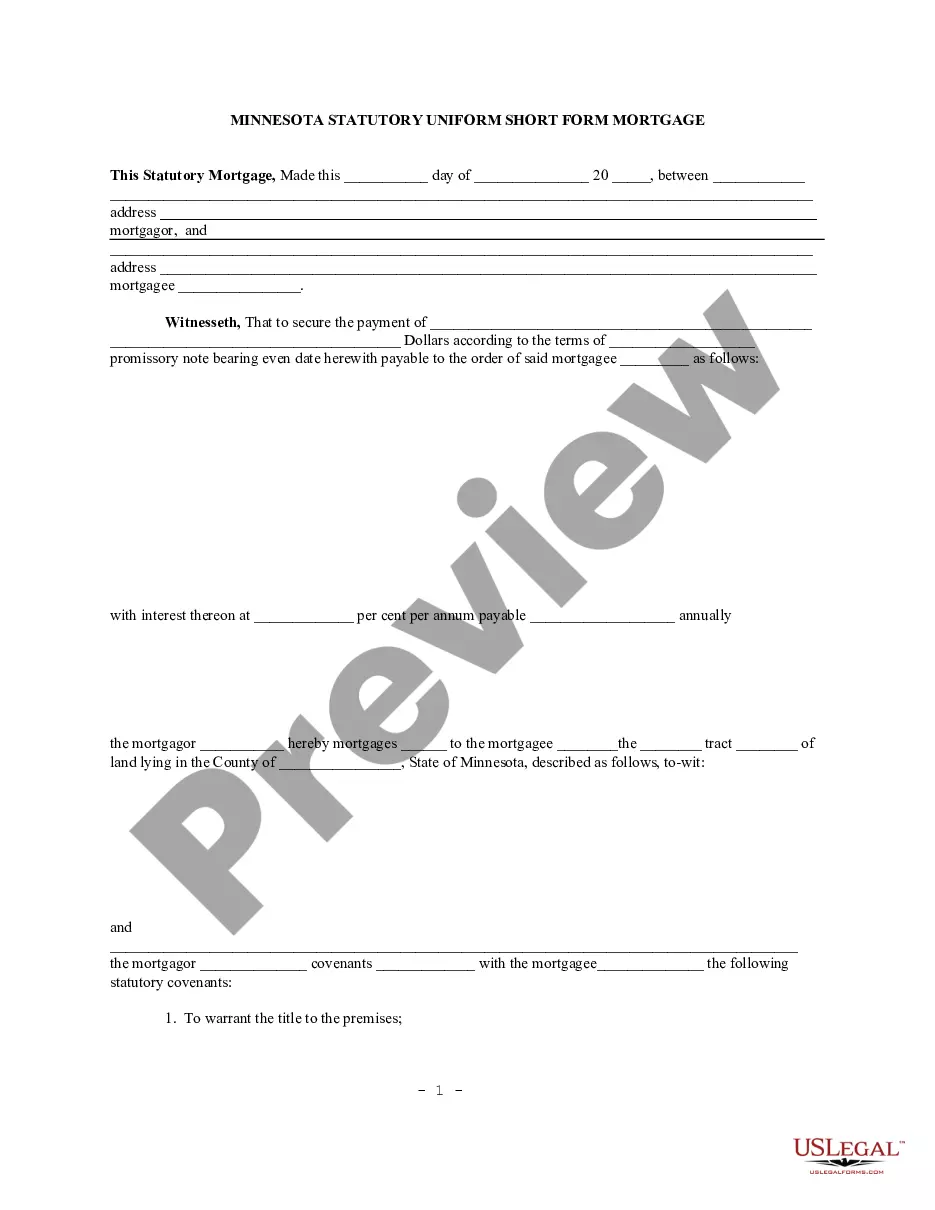
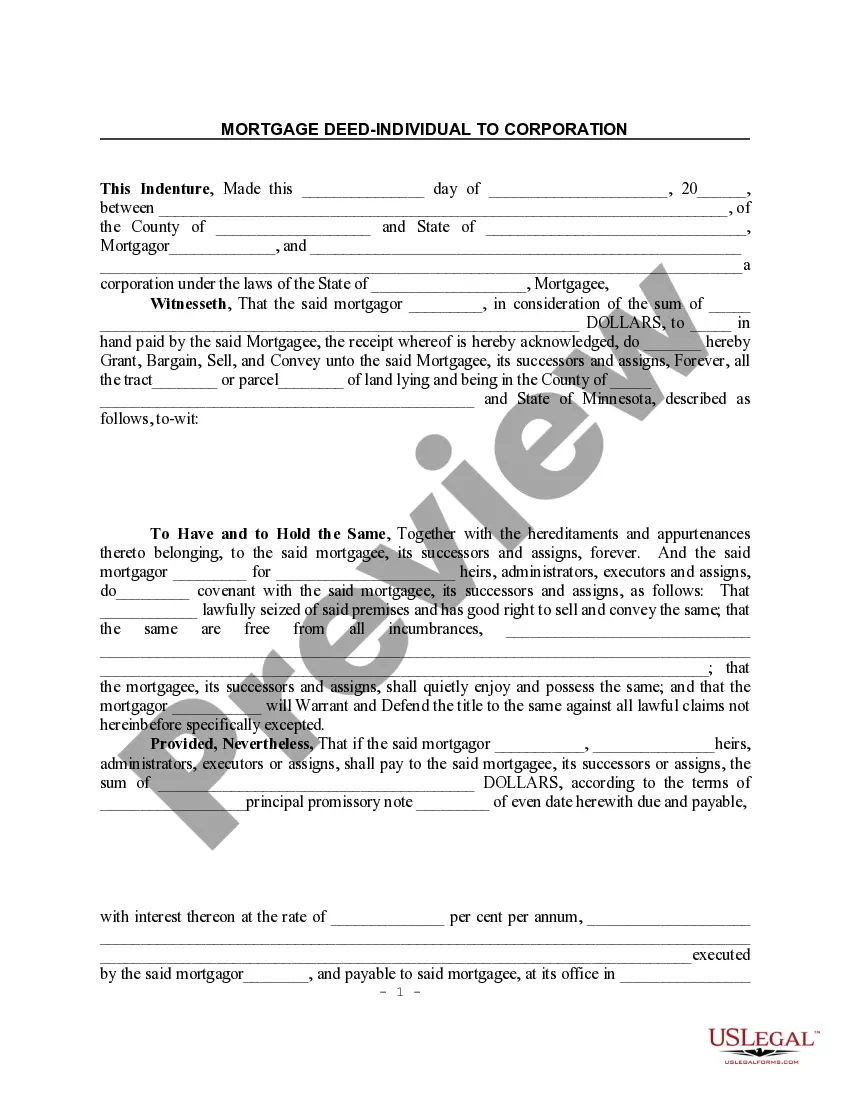
The Minnesota Statutory Uniform Short Form Mortgage is a legal document that secures a loan using real estate as collateral. It is designed to protect the lender's rights while providing a clear outline of the borrower's obligations. This form is specifically drafted based on the guidelines set by the Minnesota Uniform Conveyancing Blanks Commission, making it distinct from other mortgage forms. Unlike generic templates, this form incorporates specific statutory covenants recognized in Minnesota law.
Form components explained
- Identifies the mortgagor (borrower) and mortgagee (lender) with their respective addresses.
- Specifies the loan amount and interest rate, along with repayment terms.
- Details the property being mortgaged, including the legal description.
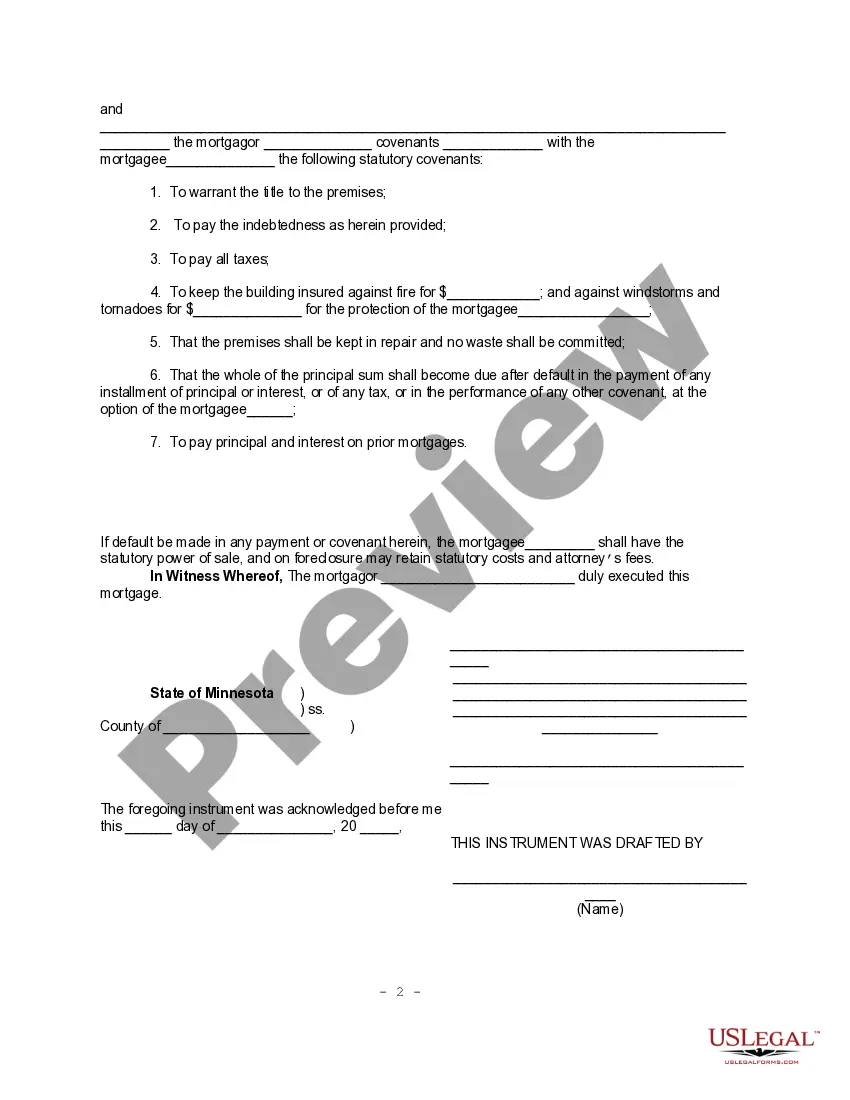
- Lists statutory covenants, such as title warranty and maintenance obligations.
- Outlines conditions under which the mortgagee can enforce the mortgage through foreclosure.
Situations where this form applies
This form should be used when a borrower seeks to secure a loan with real property in Minnesota as collateral. It is ideal for homeowners or real estate investors who need to formalize a loan agreement with a lender. This form is essential in situations where clear legal documentation is required to protect both the mortgagor and mortgagee's interests.
Who this form is for
This form is intended for:
- Individuals or parties looking to obtain a mortgage in Minnesota.
- Lenders who require security over the borrower's real estate to ensure loan repayment.
- Real estate professionals handling property financing transactions.
How to complete this form
- Identify the parties involved: Enter the names and addresses of the mortgagor and mortgagee.
- Specify the property: Provide a legal description of the real estate being mortgaged.
- Enter the loan details: Fill in the loan amount, interest rate, and payment schedule.
- Complete the statutory covenants: Identify each party's obligations and rights as outlined in the form.
- Sign and date: Ensure that the mortgagor and witness sign the document where indicated.
Is notarization required?
This form does not typically require notarization unless specified by local law. However, having the mortgage notarized can provide an additional layer of authenticity and legal protection.
Get your form ready online
Our built-in tools help you complete, sign, share, and store your documents in one place.
Make edits, fill in missing information, and update formatting in US Legal Forms—just like you would in MS Word.
Download a copy, print it, send it by email, or mail it via USPS—whatever works best for your next step.
Sign and collect signatures with our SignNow integration. Send to multiple recipients, set reminders, and more. Go Premium to unlock E-Sign.
If this form requires notarization, complete it online through a secure video call—no need to meet a notary in person or wait for an appointment.
We protect your documents and personal data by following strict security and privacy standards.

Make edits, fill in missing information, and update formatting in US Legal Forms—just like you would in MS Word.

Download a copy, print it, send it by email, or mail it via USPS—whatever works best for your next step.

Sign and collect signatures with our SignNow integration. Send to multiple recipients, set reminders, and more. Go Premium to unlock E-Sign.

If this form requires notarization, complete it online through a secure video call—no need to meet a notary in person or wait for an appointment.

We protect your documents and personal data by following strict security and privacy standards.
Typical mistakes to avoid
- Failing to accurately describe the property being mortgaged.
- Not including the necessary signatures or dates on the form.
- Neglecting to specify the correct loan terms and interest rates.
Why complete this form online
- Convenience of downloading and completing the form at your own pace.
- Editable formats allow for easy customization to fit specific needs.
- Access to forms drafted by licensed attorneys ensures legal accuracy and compliance.
Legal use & context
- This form serves as a legally binding agreement once completed and signed by both parties.
- Enforcement of the mortgage terms is upheld under Minnesota law, ensuring lender rights are protected.
- In the event of a default, the lender can initiate foreclosure as per the statutory covenants included.
Quick recap
- The Minnesota Statutory Uniform Short Form Mortgage is crucial for securing loans against real property.
- Accurate completion of the form ensures clear obligations for both the borrower and lender.
- Users should follow Minnesota legal requirements to ensure enforceability of the mortgage.
Looking for another form?



Form popularity
FAQ
To fill out a Minnesota quit claim deed, start by entering the names of the grantor and grantee, along with the property description. It’s vital to ensure that the deed complies with state requirements, such as including the Minnesota Statutory Uniform Short Form Mortgage - UCBC Form 100-M for clarity. After completing the details, sign the deed in front of a notary. Finally, record the quit claim deed with the county recorder to make the transfer official.
Filling out an affidavit of identity and survivorship in Minnesota involves providing essential details about the property and the individuals involved. You will need to include information such as names, addresses, and the relationship between the parties. Using the Minnesota Statutory Uniform Short Form Mortgage - UCBC Form 100-M can streamline this process. After completing the affidavit, ensure it is signed in front of a notary public before submitting it to the appropriate authority.
To transfer ownership of a property in Minnesota, you need to execute a deed that conveys the property to the new owner. Commonly used forms include the Minnesota Statutory Uniform Short Form Mortgage - UCBC Form 100-M, which simplifies the process. It's important to ensure the deed is properly signed and notarized. After that, you must record the deed with the county recorder's office to finalize the transfer.
To properly fill out a quitclaim deed, gather all necessary information about the property and the parties. Use the Minnesota Statutory Uniform Short Form Mortgage - UCBC Form 100-M to ensure compliance with state requirements. Clearly state the grantor’s and grantee’s names, provide a thorough description of the property, and make sure to sign in front of a notary. For additional help, check out resources like US Legal Forms to ensure your document is filled out correctly and efficiently.
Completing a quit claim deed in Minnesota involves filling out the correct form with information about the property and the parties involved. You can find the Minnesota Statutory Uniform Short Form Mortgage - UCBC Form 100-M on platforms like US Legal Forms, which ensures you have the right details. Make sure to include the legal description of the property, the exact names of the grantor and grantee, and the signing of the document before a notary. Once completed, file it with the county to make it official.
To file a quit claim deed in Minnesota, you first need to complete the necessary paperwork accurately. You can obtain the forms from your local county recorder’s office or use resources like US Legal Forms for guidance. After filling out the form, you must sign it in front of a notary public. Finally, submit the completed quit claim deed to your county recorder along with the required fees.
Most states offer simple forms to help you create a power of attorney for finances. Generally, the document must be signed, witnessed and notarized by an adult. If your agent will have to deal with real estate assets, some states require you to put the document on file in the local land records office.
A statutory form is a form created by a government, usually designed to serve as a model form or a free form for the public. The text of the form resides within the government's statutes. For example, many states have statutory durable powers of attorney forms written into their laws.
Under the Minnesota power of attorney statutes, the principal's signature on a Minnesota Power of Attorney document need not be acknowledged before a notary public. However, third parties may require it, and a Minnesota Statutory Short Form Power of Attorney document will look incomplete without such an acknowledgment.
1. Durable Power of Attorney. A durable power of attorney, or DPOA, is effective immediately after you sign it (unless stated otherwise), and allows your agent to continue acting on your behalf if you become incapacitated.