Mutual Release - Escrow Money
What this document covers
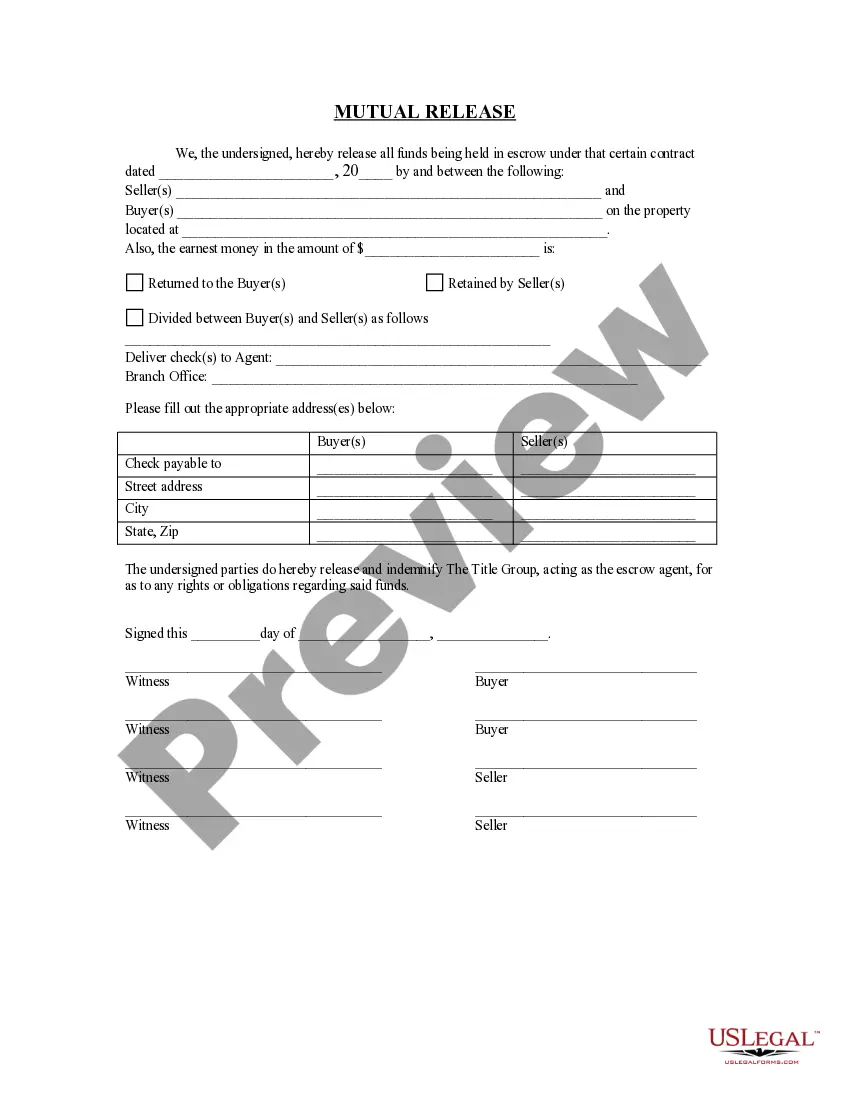
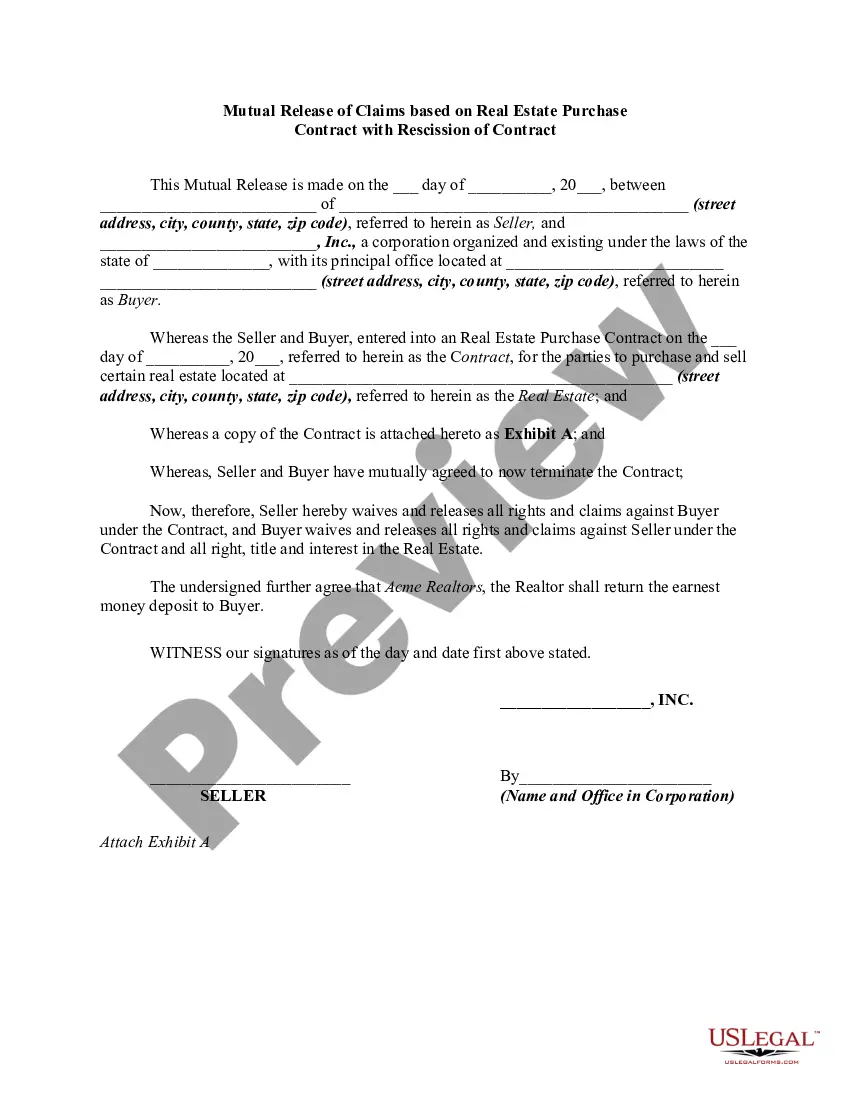
The Mutual Release - Escrow Money form is a legal document used in real estate transactions to officially release all funds held in escrow. This form is signed by both the buyer and seller, indicating their agreement on how to allocate the earnest money. Unlike similar forms, this mutual release clarifies the parties' intentions regarding the disposition of escrow funds, ensuring that all parties are released from any future claims related to the funds in question.
Key components of this form
- Identification of seller(s) and buyer(s) involved in the transaction.
- Details about the real estate property, including its address.
- Specification of the earnest money amount and its distribution: returned to buyer, retained by seller, or divided.
- Instructions for delivering checks to agents or parties involved.
- Signature lines for witnesses and parties to confirm their agreement.

When to use this document
This form should be used when both the buyer and seller have reached an agreement regarding the release of escrow funds in a real estate transaction. It is particularly useful in scenarios where the deal is canceled, concludes successfully, or where the funds must be divided. The mutual release ensures that there are no disputes over the handling of the earnest money, providing clarity and security for both parties.
Who can use this document
This form is intended for:
- Real estate buyers and sellers who have entered into a contract requiring an escrow deposit.
- Agents representing either party in the transaction.
- Escrow agents who need formal documentation to process the release of funds.
Completing this form step by step
- Identify the parties involved by filling in the names of the seller(s) and buyer(s).
- Specify the property address where the real estate transaction took place.
- Enter the date of the contract and the date of signing this mutual release.
- Indicate the amount of earnest money, and how it should be disbursed.
- Provide the necessary details for delivering the checks such as names and addresses.
- Ensure all parties sign and date the form in the designated areas, including any witnesses required.
Is notarization required?
This form does not typically require notarization unless specified by local law. It's advisable to check specific regulations in your jurisdiction to confirm if notarization is needed.
Get your form ready online
Our built-in tools help you complete, sign, share, and store your documents in one place.
Make edits, fill in missing information, and update formatting in US Legal Forms—just like you would in MS Word.
Download a copy, print it, send it by email, or mail it via USPS—whatever works best for your next step.
Sign and collect signatures with our SignNow integration. Send to multiple recipients, set reminders, and more. Go Premium to unlock E-Sign.
If this form requires notarization, complete it online through a secure video call—no need to meet a notary in person or wait for an appointment.
We protect your documents and personal data by following strict security and privacy standards.

Make edits, fill in missing information, and update formatting in US Legal Forms—just like you would in MS Word.

Download a copy, print it, send it by email, or mail it via USPS—whatever works best for your next step.

Sign and collect signatures with our SignNow integration. Send to multiple recipients, set reminders, and more. Go Premium to unlock E-Sign.

If this form requires notarization, complete it online through a secure video call—no need to meet a notary in person or wait for an appointment.

We protect your documents and personal data by following strict security and privacy standards.
Avoid these common issues
- Failing to complete all party names and signatures, which can render the form invalid.
- Not providing the correct property address, which can lead to legal confusion.
- Omitting witness signatures when required.
- Incorrectly stating the distribution of earnest money, leading to disputes later on.
Advantages of online completion
- Convenience of instant download allows for quick and efficient processing.
- Editability enables users to accurately fill in specific details as required.
- Access to forms drafted by licensed attorneys assures legal validity and compliance with current laws.
Legal use & context
- The Mutual Release form is legally binding once all necessary parties have signed it.
- The form protects all parties from future claims related to the disbursed escrow funds.
- It is important to use this form in compliance with any state-specific escrow release laws.
Quick recap
- The Mutual Release - Escrow Money form is crucial for clearly defining the disbursement of escrow funds.
- Both buyer and seller must agree and sign to ensure the form's validity.
- Understanding and completing this form accurately helps prevent future disputes regarding earnest money.
Looking for another form?
Form popularity
FAQ
In most cases, the earnest money, once released, is applied as part of the down payment or used to pay closing costs. Potential homebuyers are discouraged from giving earnest money in cash directly to a seller, for multiple reasons, namely, it may be harder to get your money back if the deal falls apart.
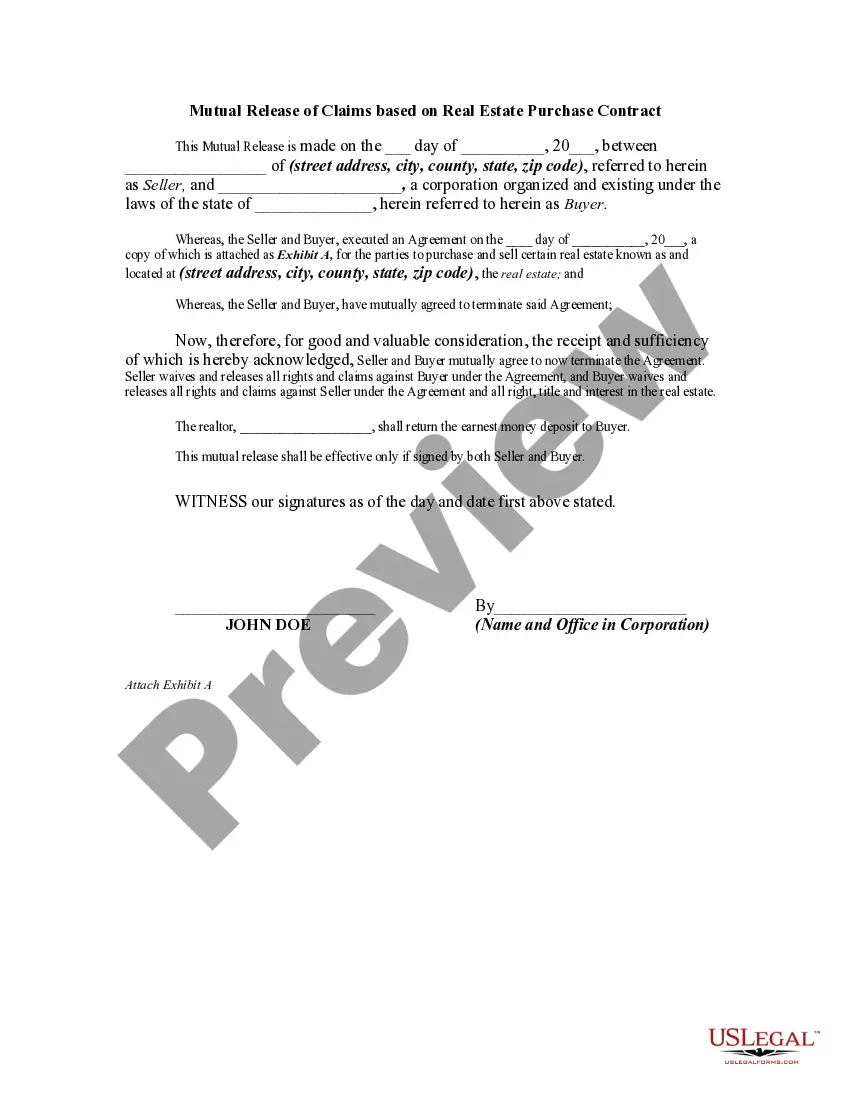
What is a Mutual Release Agreement? A mutual release agreement is a legal contract that effectively "releases" both parties from claims, obligations, and/or liabilities between them.
A mutual release agreement occurs between two parties that are involved in a legal dispute. By agreeing to mutually release, each party agrees to give up any claims against the other. This includes known claims as well as those that aren't yet known.
A mutual release is a document designed to be signed by both the buyers and sellers to cancel an agreement of purchase and sale. When executed, this document cancels the agreement and ?releases? all parties from any future liabilities or claims.
Money from the buyer is held in an escrow account until the transaction is complete, or the buyer is able to receive or verify the condition of the product. Once the buyer approves the transaction, the money is released to the seller from the escrow account.
A Mutual Release Agreement is a straightforward document that allows you to settle disputes quickly and professionally. No matter what your dispute, a Mutual Release Agreement allows both parties to agree to drop all claims and get out of the contract.
Some examples include: ? Business Disputes: Two parties may have a disagreement regarding a contract, payment, or different business matter, and they may use a Mutual Release form to resolve the matter and release one another from further claims or liability.