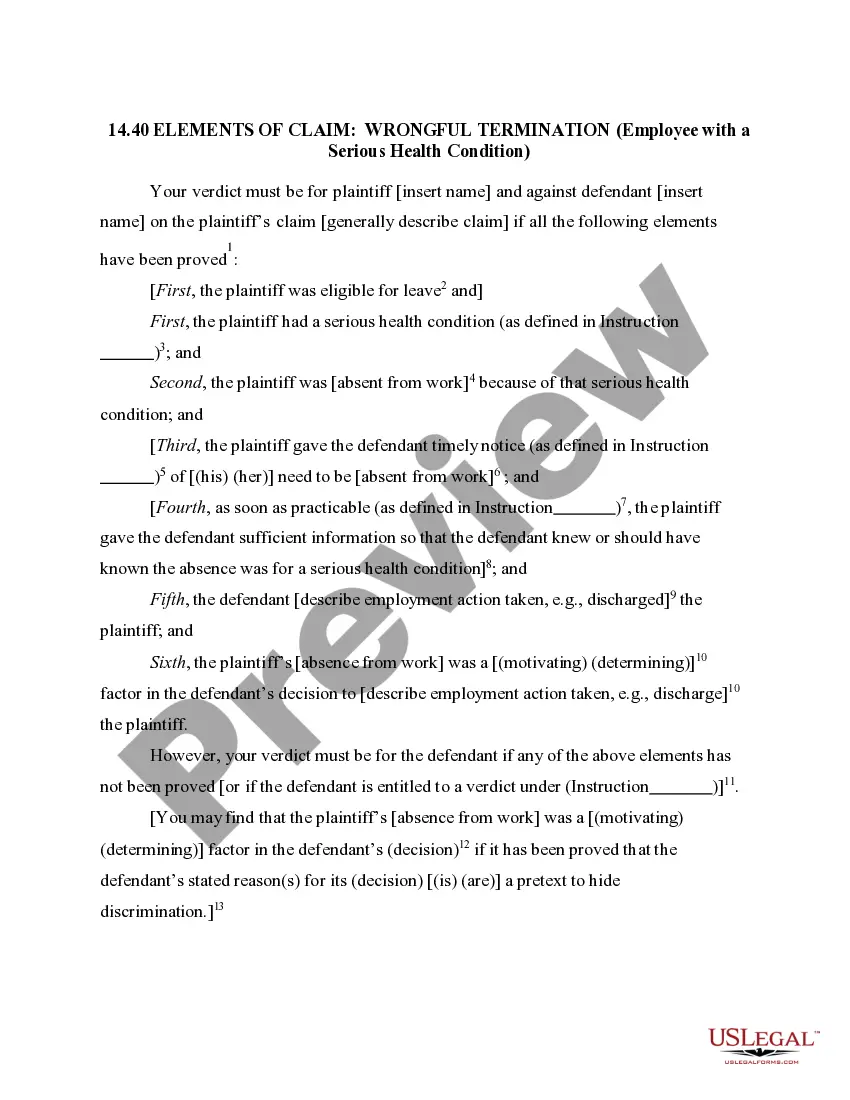
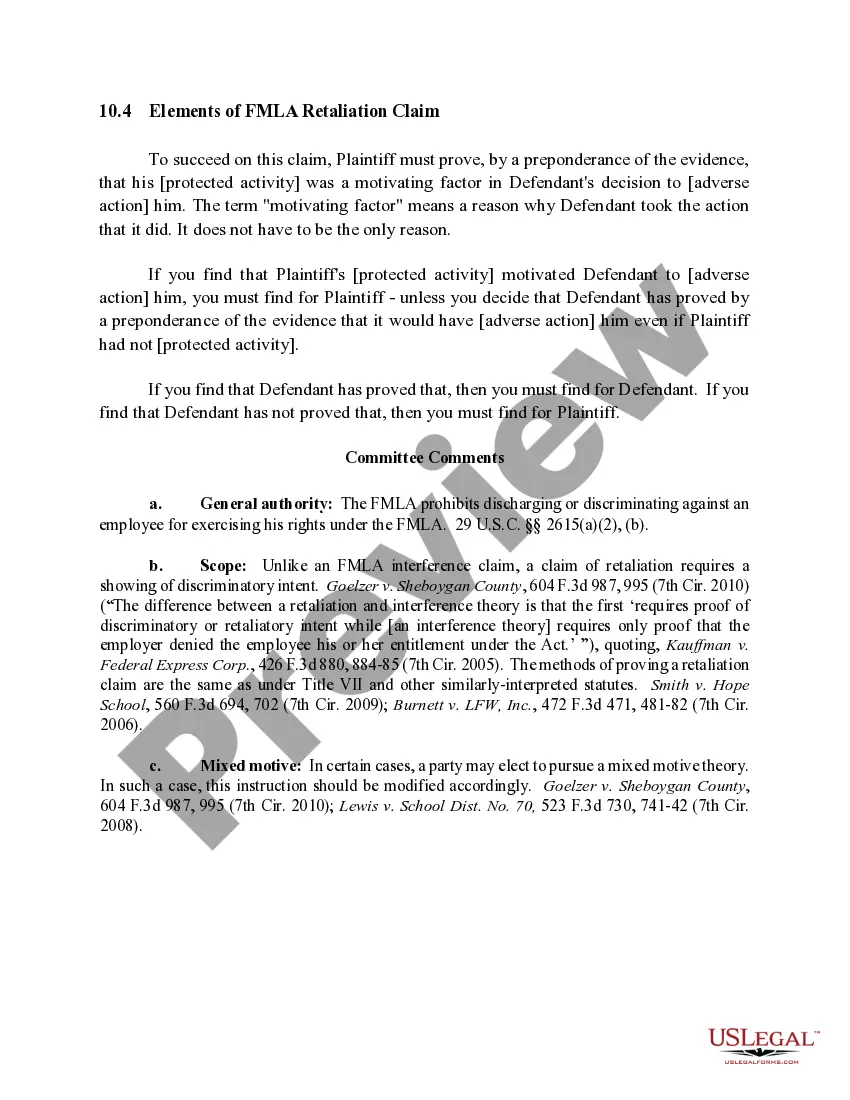
14.40 ELEMENTS OF CLAIM: WRONGFUL TERMINATION (Employee with a Serious Health Condition)
Understanding this form
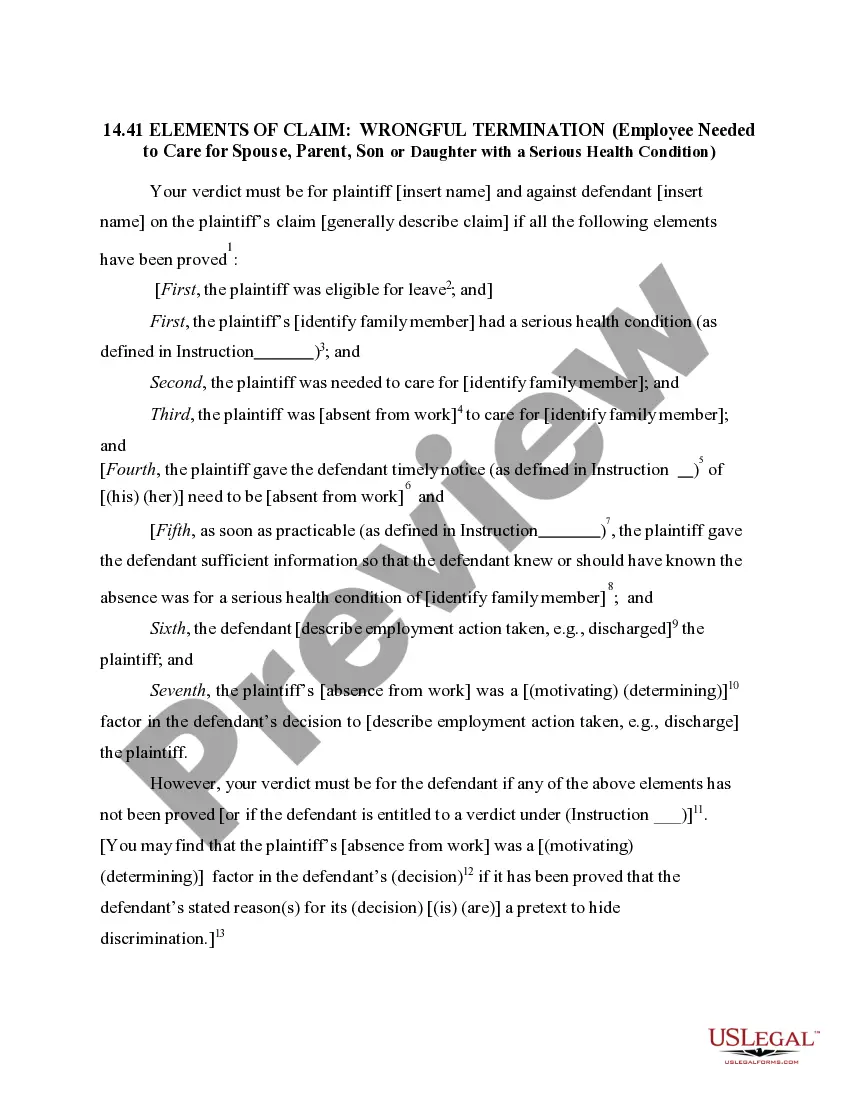
The 14.40 Elements of Claim: Wrongful Termination form is a legal document designed to guide employees claiming they were wrongfully terminated due to a serious health condition. This form outlines the necessary elements that must be established to support such a claim under the Family and Medical Leave Act (FMLA). Understanding this form is crucial for employees who believe their rights were violated following a health-related absence from work.
Form components explained
- Criteria for establishing a serious health condition.
- Requirements for timely notice to the employer.
- Details on the plaintiff's work absence and employer actions.
- Factors determining if the termination was related to the health condition.
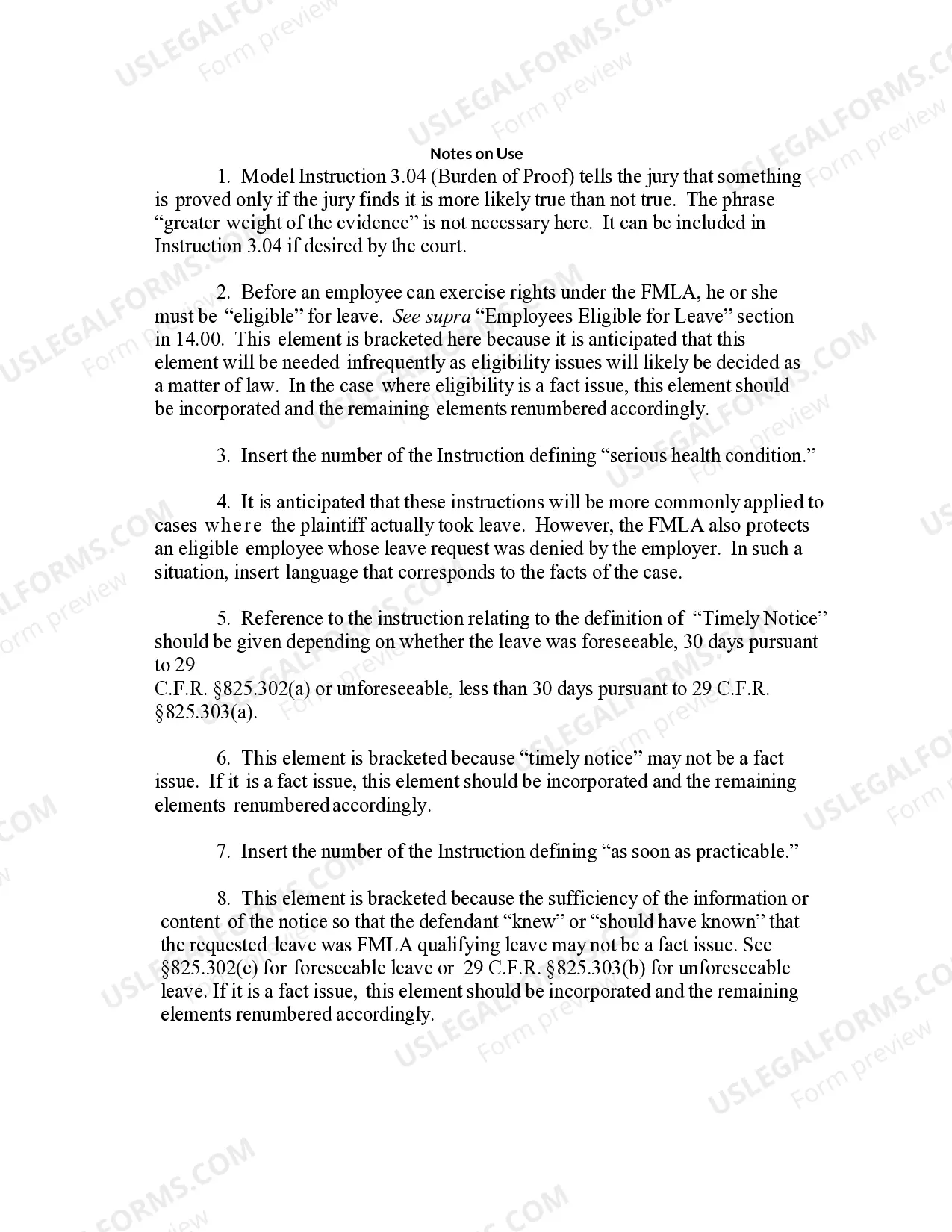
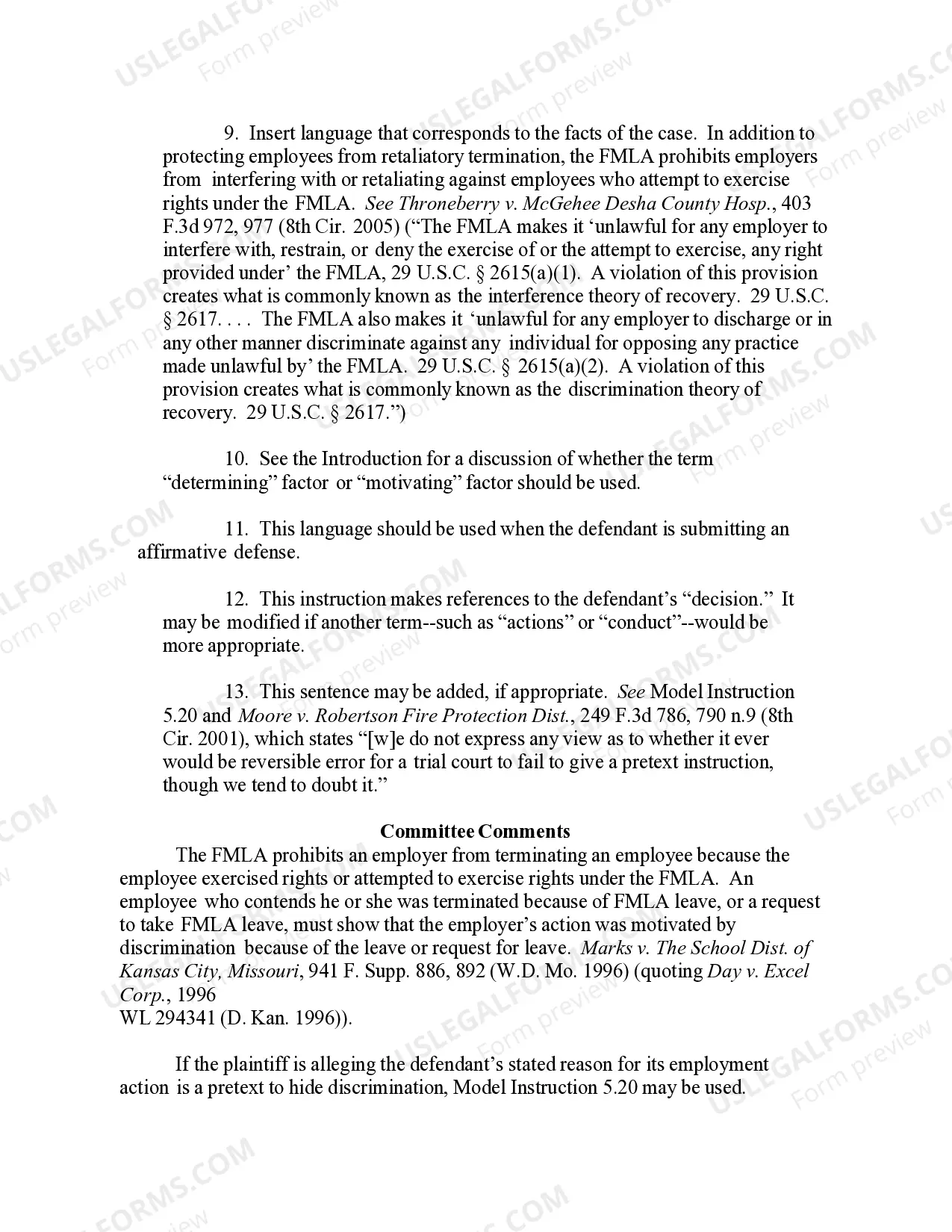
- Guidelines addressing the burden of proof in these cases.
When to use this document
This form is utilized when an employee believes they have been wrongfully terminated after taking leave for a serious health condition. It is applicable in situations where an employee needs to assert their rights under the FMLA, particularly if they feel their job was jeopardized due to their health-related absence from work.
Who needs this form
- Employees who have serious health conditions and believe their termination is linked to their medical leave.
- Individuals seeking to file a claim for wrongful termination under the FMLA.
- Workers who have provided timely notice and proper documentation regarding their health condition to their employer.
How to prepare this document
- Identify the parties involved by inserting the names of the plaintiff and defendant.
- Clearly state the claim and the nature of the health condition.
- Document the absence from work, including dates and reasons related to the health condition.
- Provide timely notice details, describing how and when the employer was informed.
- Describe the termination or adverse action taken by the employer and how it relates to the absence.
Notarization requirements for this form
This form does not typically require notarization to be legally valid. However, some jurisdictions or document types may still require it. US Legal Forms provides secure online notarization powered by Notarize, available 24/7 for added convenience.
Get your form ready online
Our built-in tools help you complete, sign, share, and store your documents in one place.
Make edits, fill in missing information, and update formatting in US Legal Forms—just like you would in MS Word.
Download a copy, print it, send it by email, or mail it via USPS—whatever works best for your next step.
Sign and collect signatures with our SignNow integration. Send to multiple recipients, set reminders, and more. Go Premium to unlock E-Sign.
If this form requires notarization, complete it online through a secure video call—no need to meet a notary in person or wait for an appointment.
We protect your documents and personal data by following strict security and privacy standards.

Make edits, fill in missing information, and update formatting in US Legal Forms—just like you would in MS Word.

Download a copy, print it, send it by email, or mail it via USPS—whatever works best for your next step.

Sign and collect signatures with our SignNow integration. Send to multiple recipients, set reminders, and more. Go Premium to unlock E-Sign.

If this form requires notarization, complete it online through a secure video call—no need to meet a notary in person or wait for an appointment.

We protect your documents and personal data by following strict security and privacy standards.
Typical mistakes to avoid
- Failing to provide sufficient evidence that the health condition meets the serious health condition criteria.
- Not giving timely notice of the need for leave to the employer.
- Neglecting to document all communications and documentation regarding the health issue and absence.
- Not understanding the appropriate standards for proving discrimination based on health-related termination.
Advantages of online completion
- Convenience of filling out the form at your own pace without the need for physical paperwork.
- Editability allows for easy adjustments or updates to the form as needed.
- Reliable access to legal templates drafted by licensed attorneys, ensuring compliance with current legal standards.
- Immediate download options provide faster access to necessary documentation.
Looking for another form?
Form popularity
FAQ
Tort claims for wrongful discharge under California law typically arise when an employer retaliates against an employee for (1) refusing to violate a statute, (2) performing a statutory obligation, (3) exercising a statutory right or privilege, or (4) reporting an alleged violation of a statute of public importance.
Examples of wrongful termination could include violating anti-discrimination laws, breach of contract, or retaliation against an employee acting as a whistleblower.
Wrongful Termination Examples Sexual Harassment and/or a Hostile Work Environment. Race Discrimination. Retaliation Over Workers' Compensation Claims. Violations Of The Family And Medical Leave Act (FMLA) Wage And Hour Violations. Whistleblower Retaliation. Fair Housing and Employment Act violations during firing process.
Employee First Name, as you know, your continuing has prevented you from performing work since Date Employee Absent From, and you have been absent from work for Duration Employee Absent For. Company Name feels it has made a significant effort to accommodate your Medical Issue.
An action for wrongful termination (or discharge) in violation of public policy gives a terminated employee the right to action against their former employer for wrongful termination.
The legal consequences may include court-ordered payment of lost wages, expenses and even punitive damages. In some cases, wrongful termination may also result in statutory penalties such as fines.
The employer discharged the worker, the violation of public policy was a substantial motivating reason for the worker's discharge, the worker was harmed, and. the discharge was a substantial factor in causing that harm.
Employees may generally assert this claim after being terminated for (1) exercising a legal right, (2) refusing to do something illegal, or (3) reporting illegal conduct.