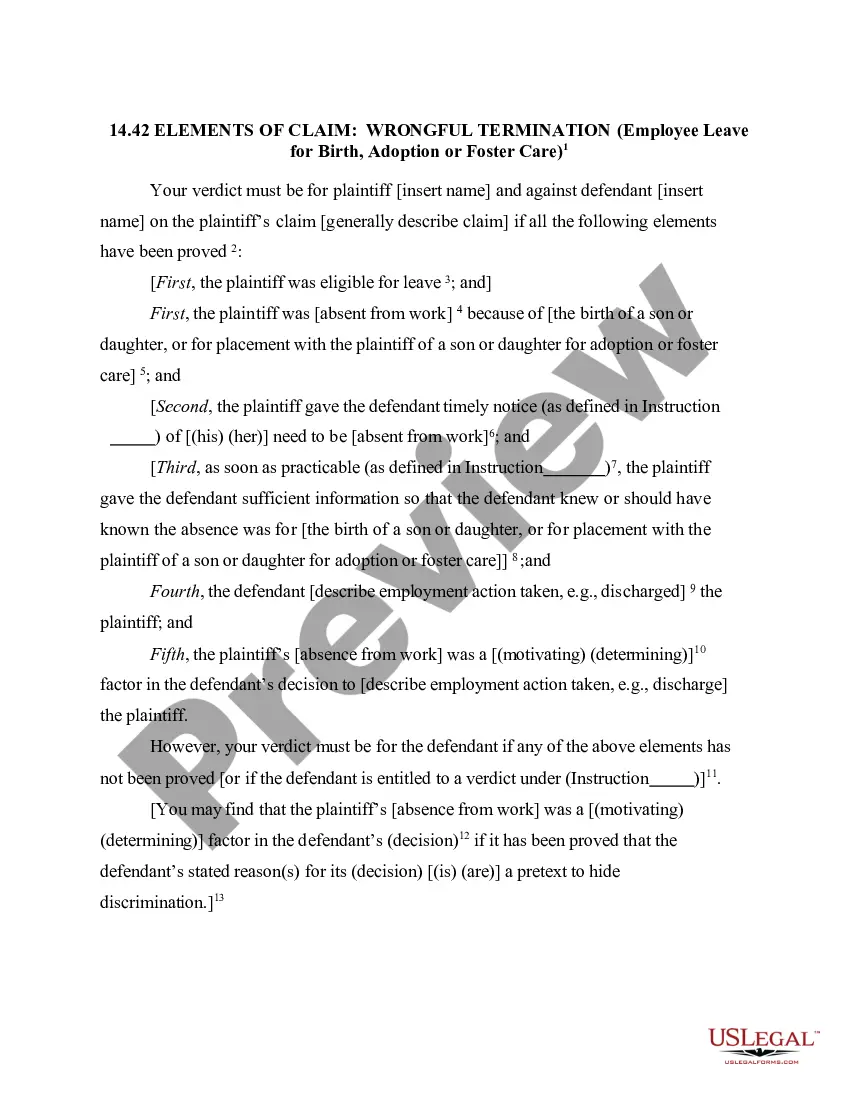
14.42 ELEMENTS OF CLAIM: WRONGFUL TERMINATION (Employee Leave for Birth, Adoption or Foster Care)
What is this form?
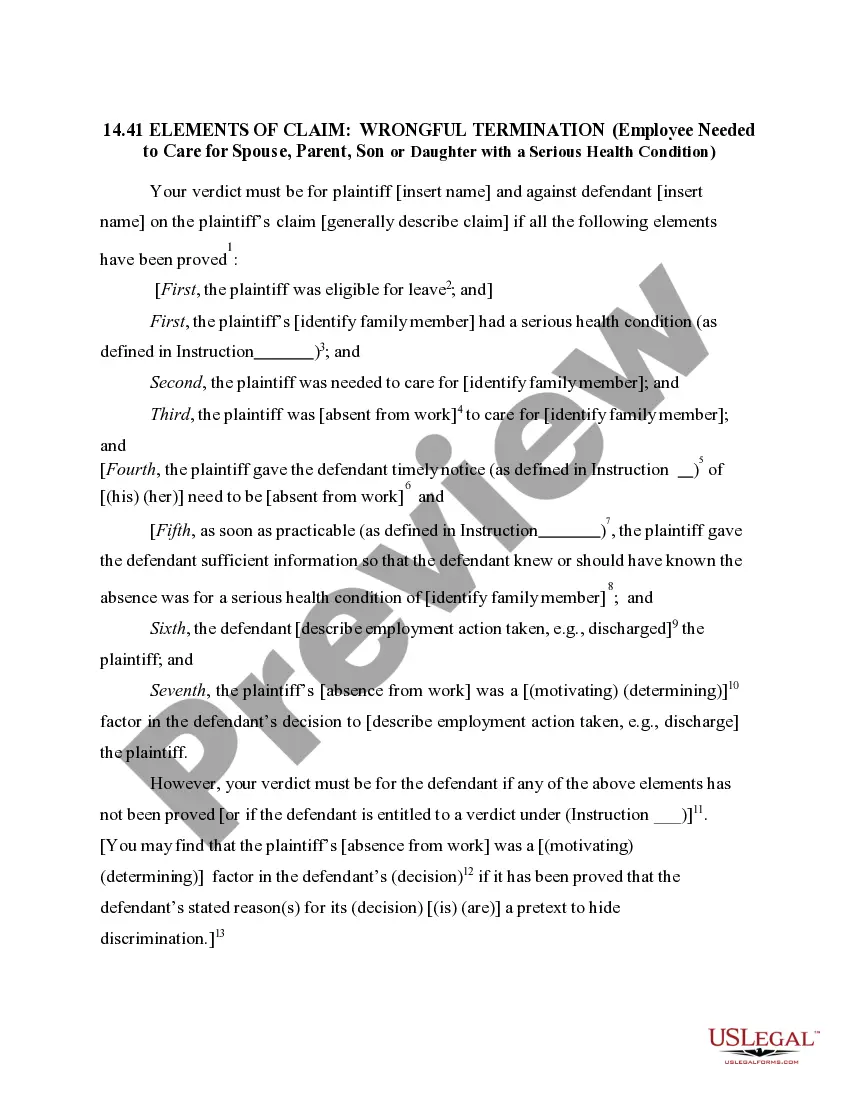
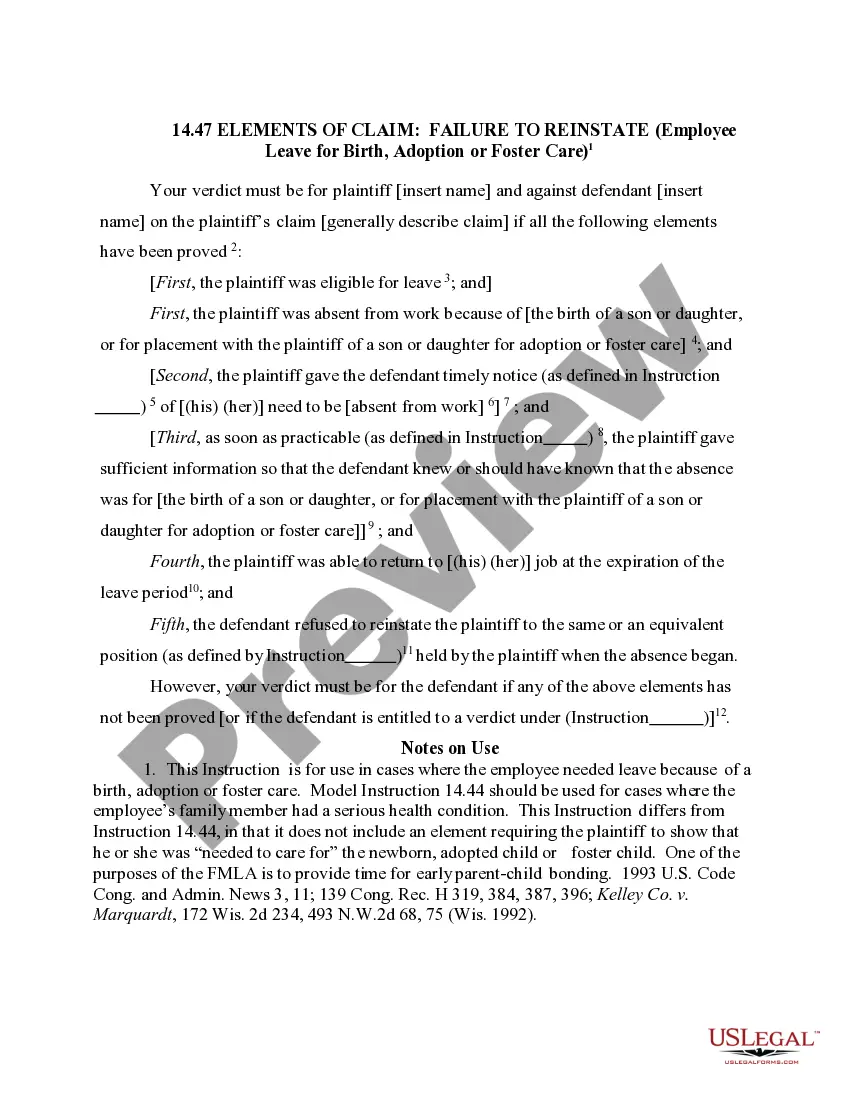
The 14.42 Elements of Claim: Wrongful Termination form serves to outline the necessary criteria for an employee to establish a valid claim against their employer for wrongful termination related to leave taken for the birth, adoption, or foster care of a child. This specialized form focuses specifically on instances of leave granted under the Family and Medical Leave Act (FMLA), ensuring that employees are protected from retaliation by their employers when exercising their rights to family leave. It is distinct from other wrongful termination claims that may arise from different circumstances or types of leave.
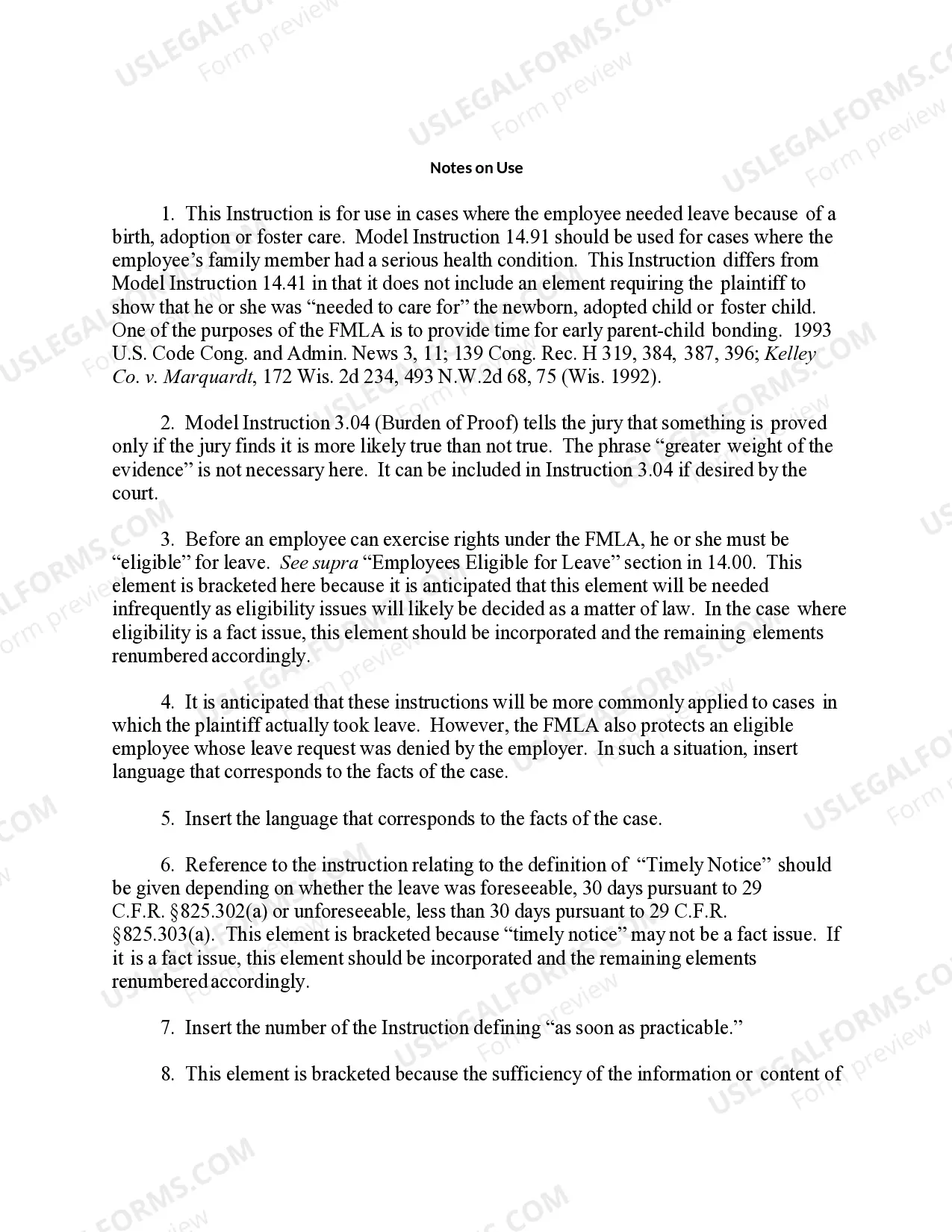
Key components of this form
- Eligibility of the plaintiff for FMLA leave.
- Definition of the absence from work due to childbirth, adoption, or foster care placement.
- Timely notice requirements provided by the employee to the employer.
- Sufficient information given to the employer regarding the reason for leave.
- Description of the employment action taken by the employer against the employee.
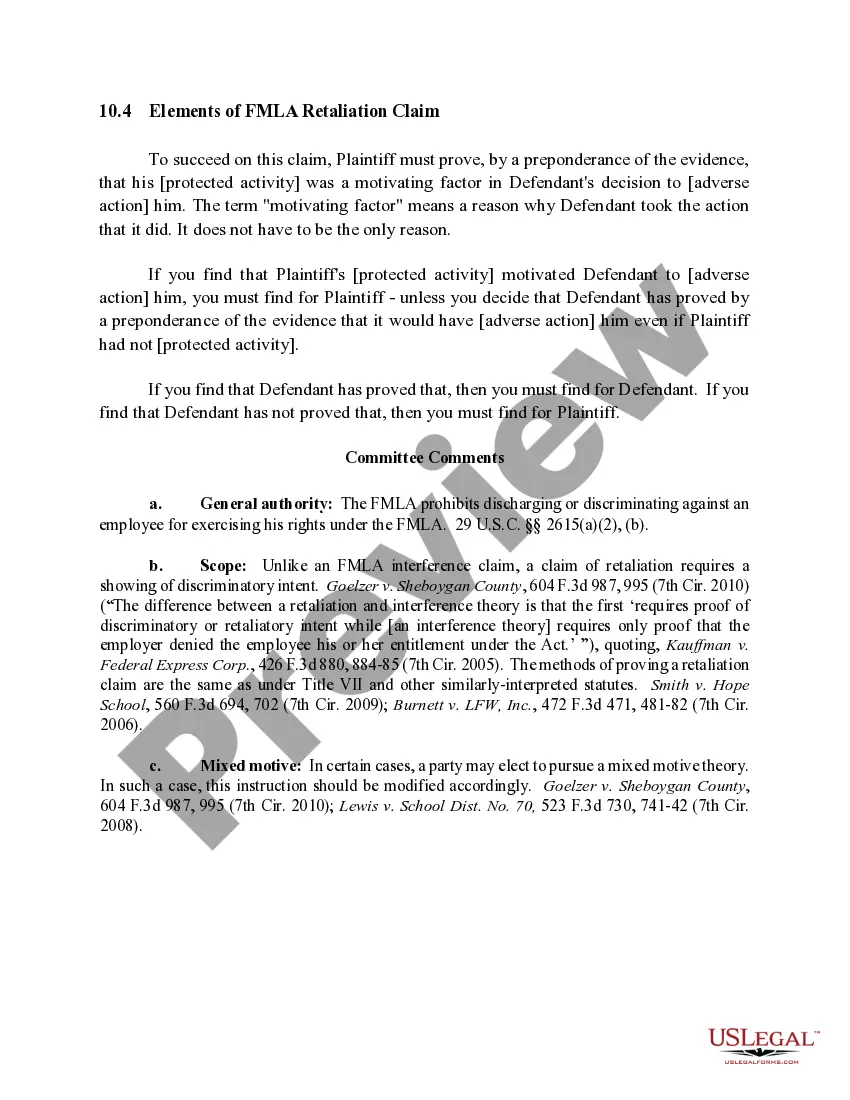
- Assessment of whether the absence from work was a determining factor in the employer's decision.
Common use cases
This form should be used when an employee intends to file a wrongful termination claim due to their employer's retaliatory actions after they took or requested leave under the FMLA for the birth of a child, adoption, or foster care placement. It is crucial in scenarios where the employee believes their rights were violated, particularly after being discharged or discriminated against for their absence related to family leave.
Intended users of this form
- Employees who have taken family leave under the FMLA for childbirth, adoption, or foster care.
- Individuals who believe they have been wrongfully terminated due to their exercise of FMLA rights.
- Anyone seeking to understand their legal rights concerning family leave and wrongful termination.
How to complete this form
- Identify and enter the names of the plaintiff (employee) and defendant (employer).
- Clearly articulate the basis of your claim, describing the nature of the wrongful termination.
- Provide details about the leave taken, including dates and the reason for the absence.
- Indicate whether you provided timely notice to the employer regarding your leave needs.
- Document the action taken by the employer in response to your absence.
- State how your leave was a factor in the employer's decision-making process.
Does this form need to be notarized?
In most cases, this form does not require notarization. However, some jurisdictions or signing circumstances might. US Legal Forms offers online notarization powered by Notarize, accessible 24/7 for a quick, remote process.
Get your form ready online
Our built-in tools help you complete, sign, share, and store your documents in one place.
Make edits, fill in missing information, and update formatting in US Legal Forms—just like you would in MS Word.
Download a copy, print it, send it by email, or mail it via USPS—whatever works best for your next step.
Sign and collect signatures with our SignNow integration. Send to multiple recipients, set reminders, and more. Go Premium to unlock E-Sign.
If this form requires notarization, complete it online through a secure video call—no need to meet a notary in person or wait for an appointment.
We protect your documents and personal data by following strict security and privacy standards.

Make edits, fill in missing information, and update formatting in US Legal Forms—just like you would in MS Word.

Download a copy, print it, send it by email, or mail it via USPS—whatever works best for your next step.

Sign and collect signatures with our SignNow integration. Send to multiple recipients, set reminders, and more. Go Premium to unlock E-Sign.

If this form requires notarization, complete it online through a secure video call—no need to meet a notary in person or wait for an appointment.

We protect your documents and personal data by following strict security and privacy standards.
Typical mistakes to avoid
- Failing to provide sufficient evidence of eligibility for FMLA leave.
- Not documenting timely notice to the employer regarding the need for leave.
- Overlooking the importance of specifying how the absence relates to the wrongful termination.
- Neglecting to identify all relevant dates associated with leave and employment actions.
Why complete this form online
- Convenience of downloading and completing the form at your own pace.
- Editability of the form, allowing for easy customization to fit your specific case.
- Access to legal forms drafted by licensed attorneys, ensuring reliability and accuracy.
Legal use & context
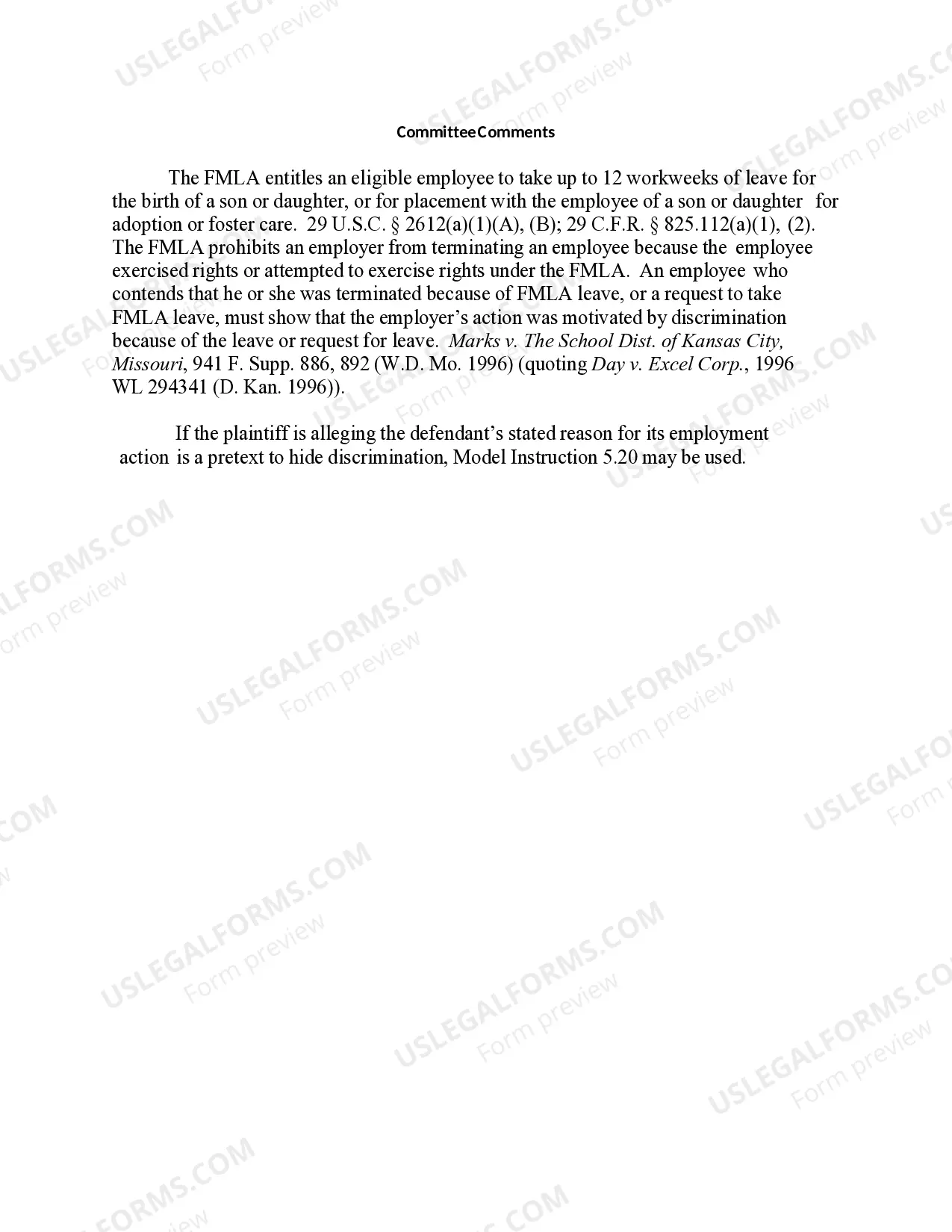
- The FMLA allows eligible employees to take up to 12 weeks of unpaid leave for family-related events.
- Employers are prohibited from retaliating against employees for taking FMLA leave.
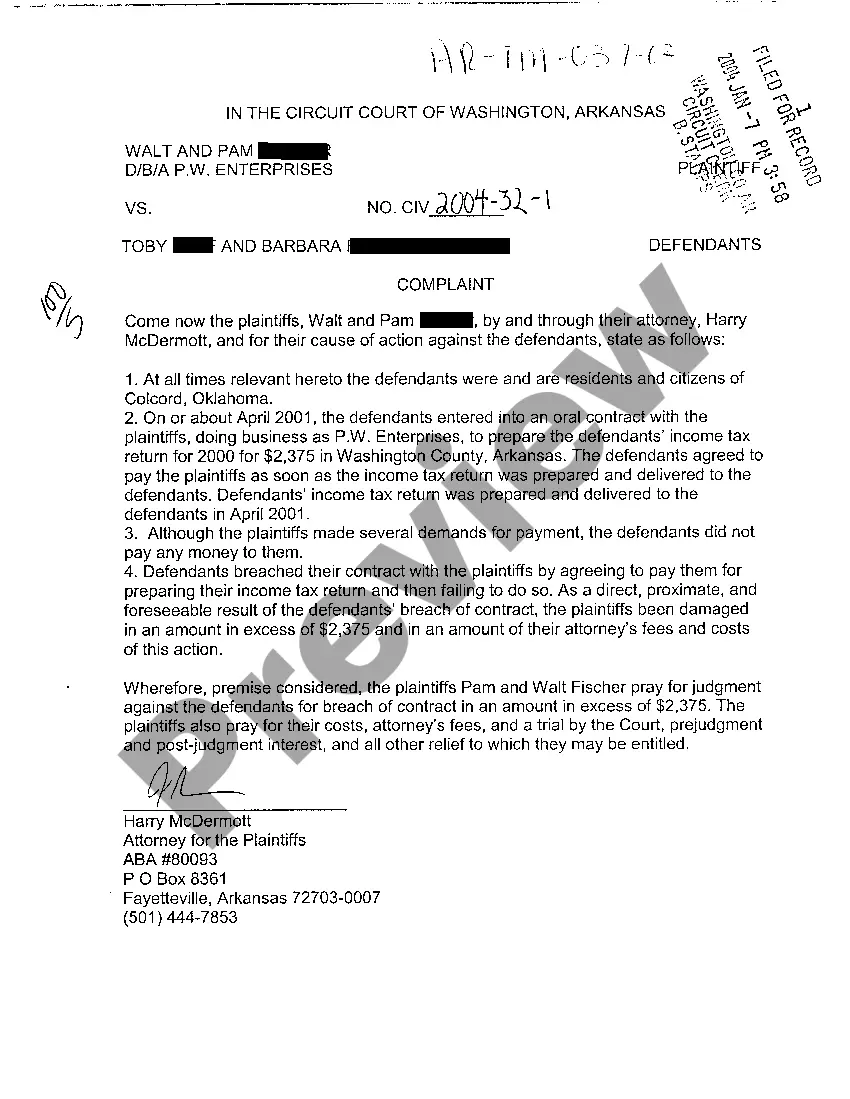
- This form serves as a basis for legal claims if an employee believes their termination was unlawful.
Looking for another form?
Form popularity
FAQ
Common differences include: FMLA is a federal program, while CFRA is state based in California. Simply being pregnant under FMLA qualifies, while CFRA only covers time off for pregnancy complications. It is more difficult to be covered as a domestic partner by FMLA than by CFRA.
LEAVE FOR THE BIRTH OF A CHILD AND BONDING Parents may use FMLA leave when their child is born and to bond with their child during the 12-month period beginning on the date of birth. Both mothers and fathers have the same right to take FMLA leave for the birth of a child and bonding.
An employee's ability to use FMLA leave during pregnancy or after the birth of a child has not changed. Under the regulations, a mother can use 12 weeks of FMLA leave for the birth of a child, for prenatal care and incapacity related to pregnancy, and for her own serious health condition following the birth of a child.
Family Leave The federal Family Medical Leave Act (FMLA) provides up to 12 weeks of unpaid leave during a 12-month period to care for a newborn, adopted or foster child, or to care for a family member, or to attend to the employee's own serious medical health condition.
The Family and Medical Leave Act (FMLA) provides certain employees with up to 12 weeks of unpaid, job-protected leave per year. It also requires that their group health benefits be maintained during the leave.
New Parent Leave Act (NPLA) ? The NPLA provides eligible. employees 12 weeks of unpaid, job-protected leave to bond with a new child within one year of the child's birth, adoption, or foster care placement.