4.15. Special Verdict Form
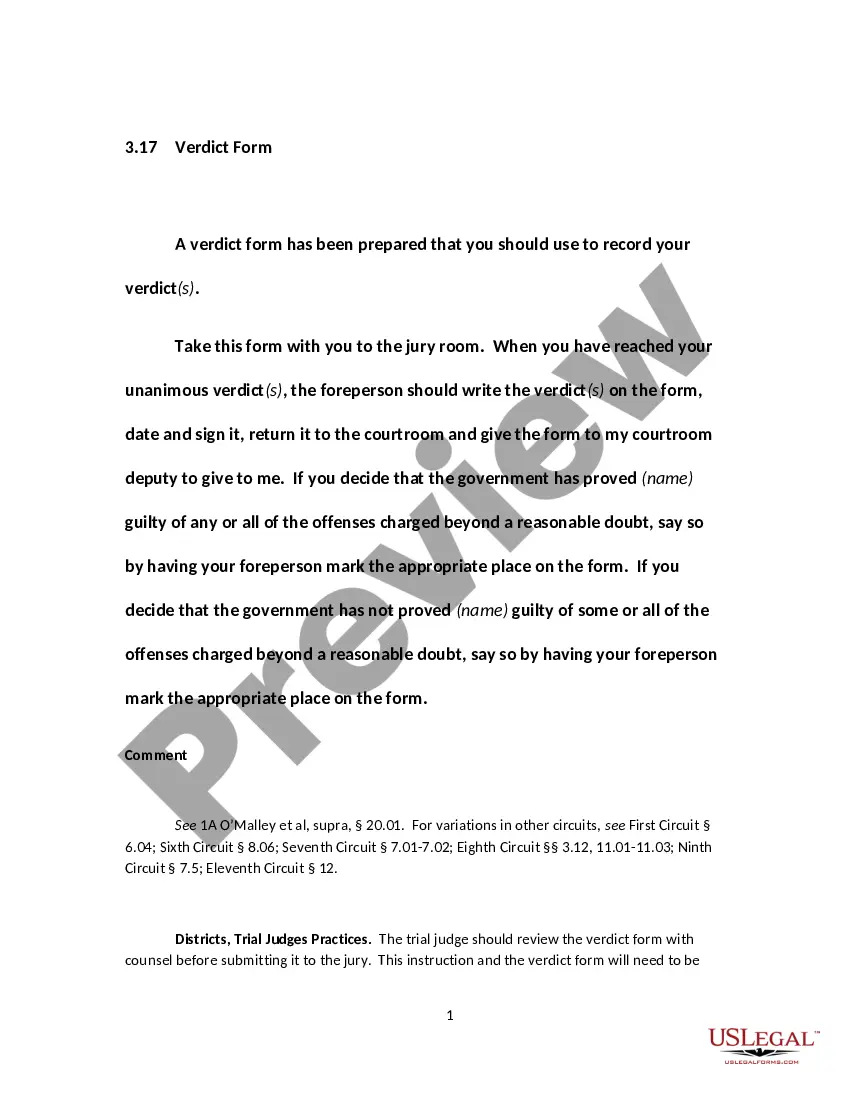
What is this form?
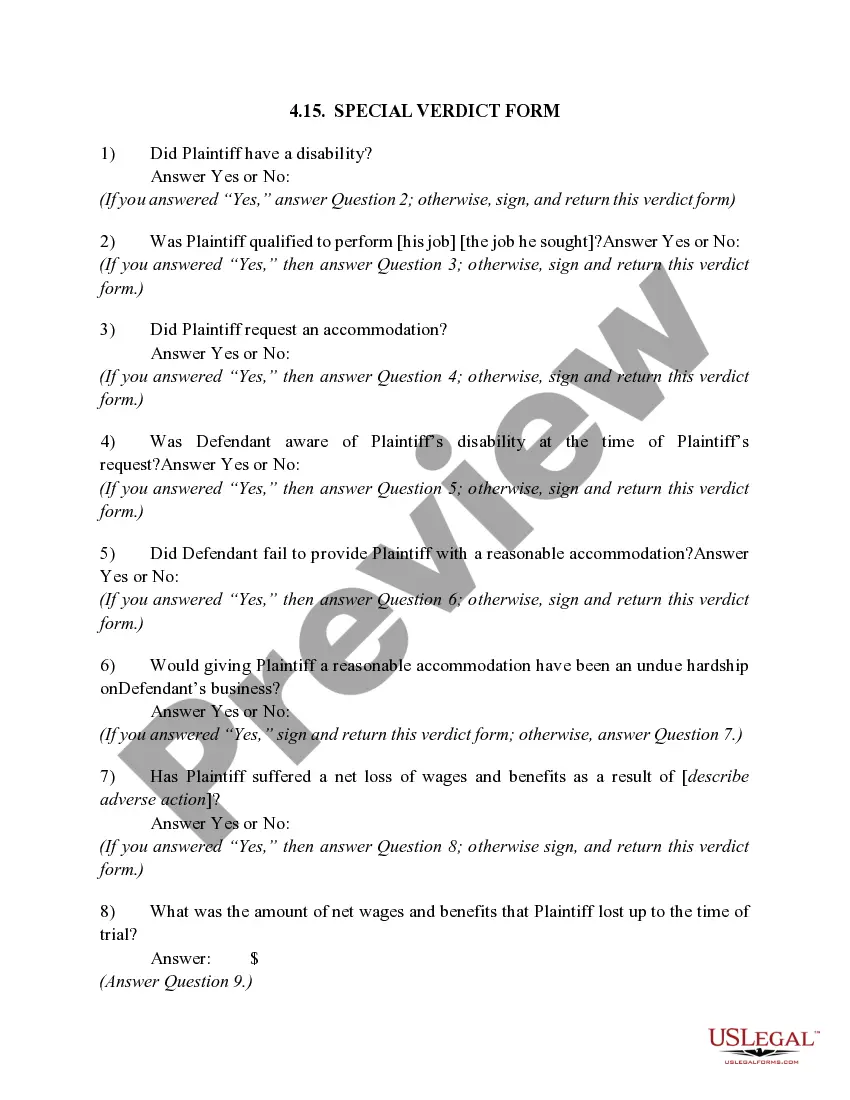
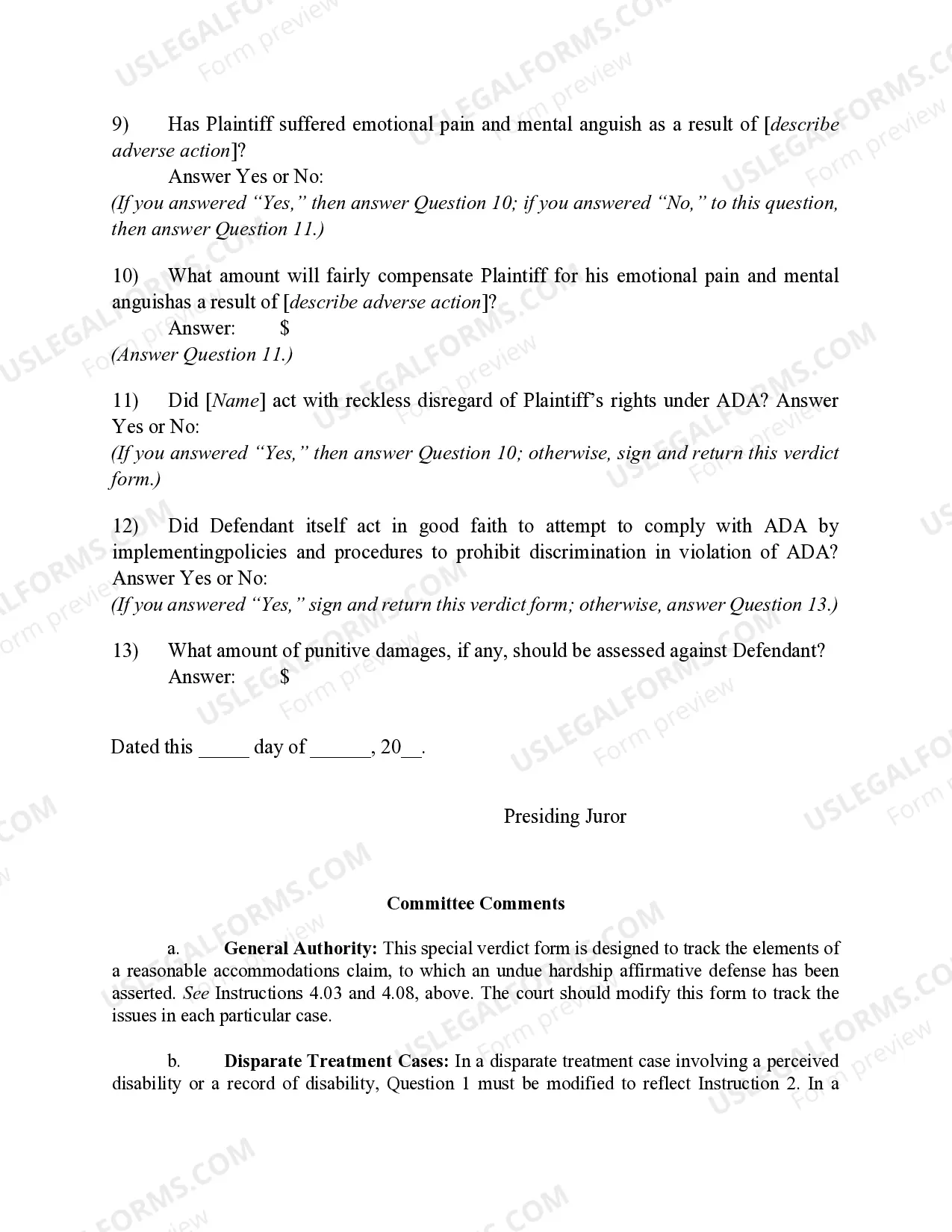
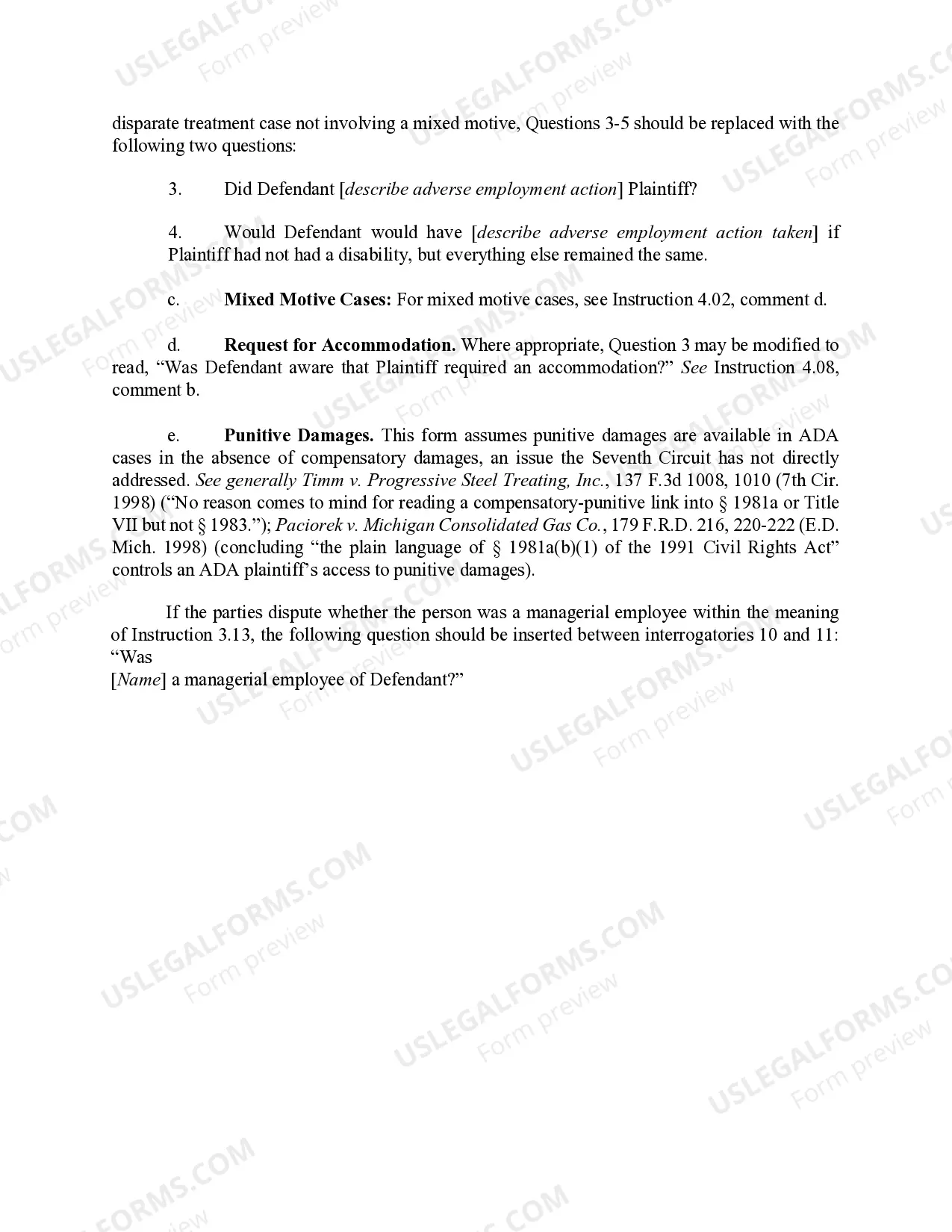
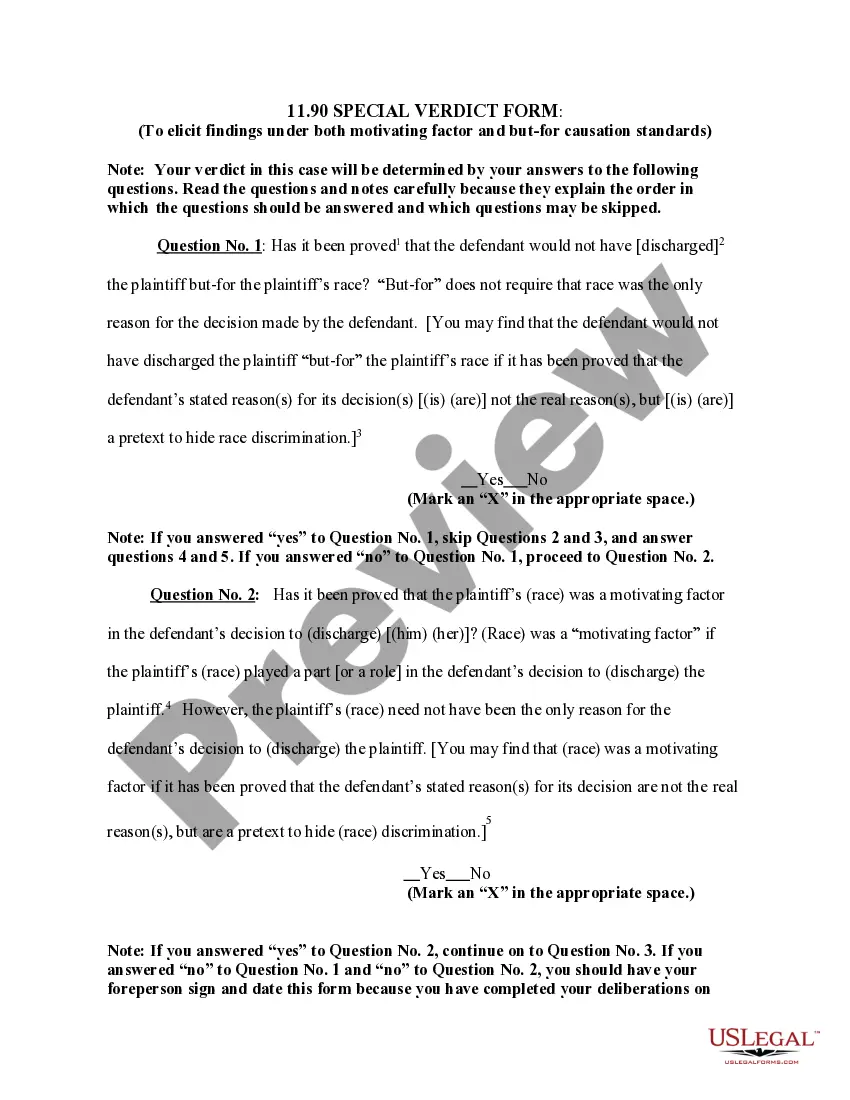
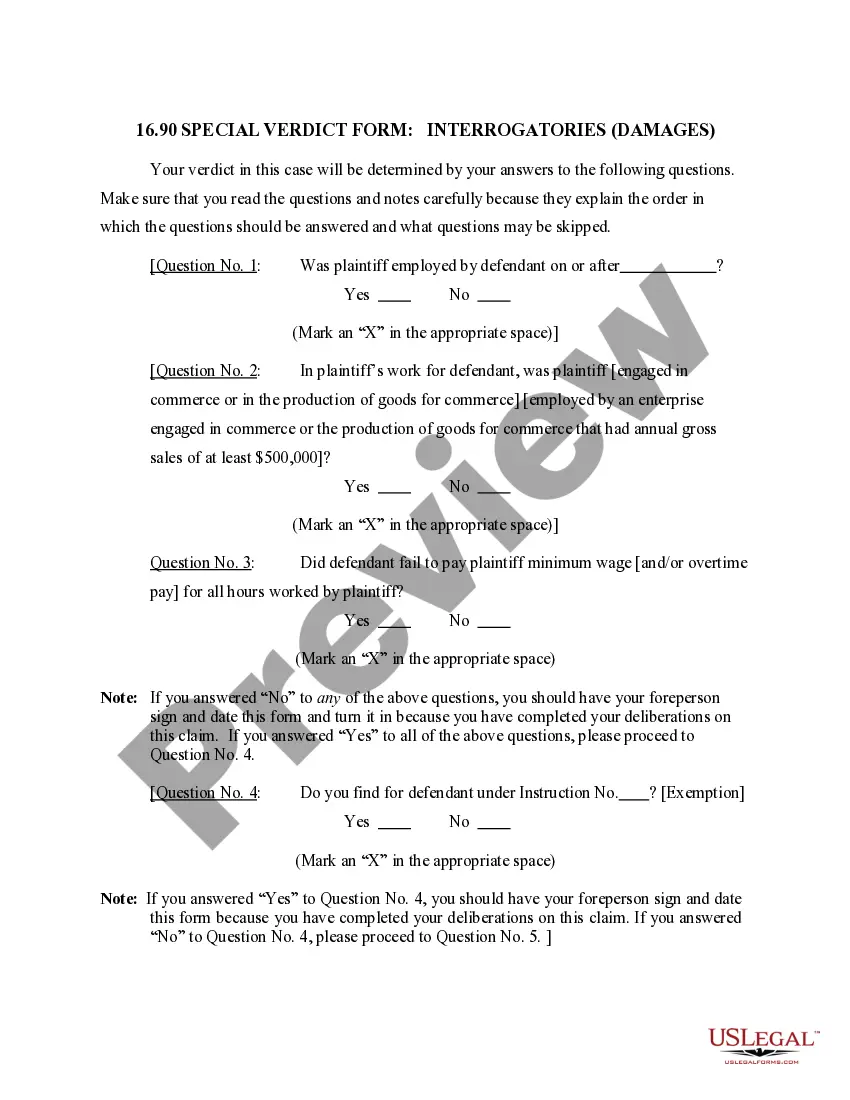
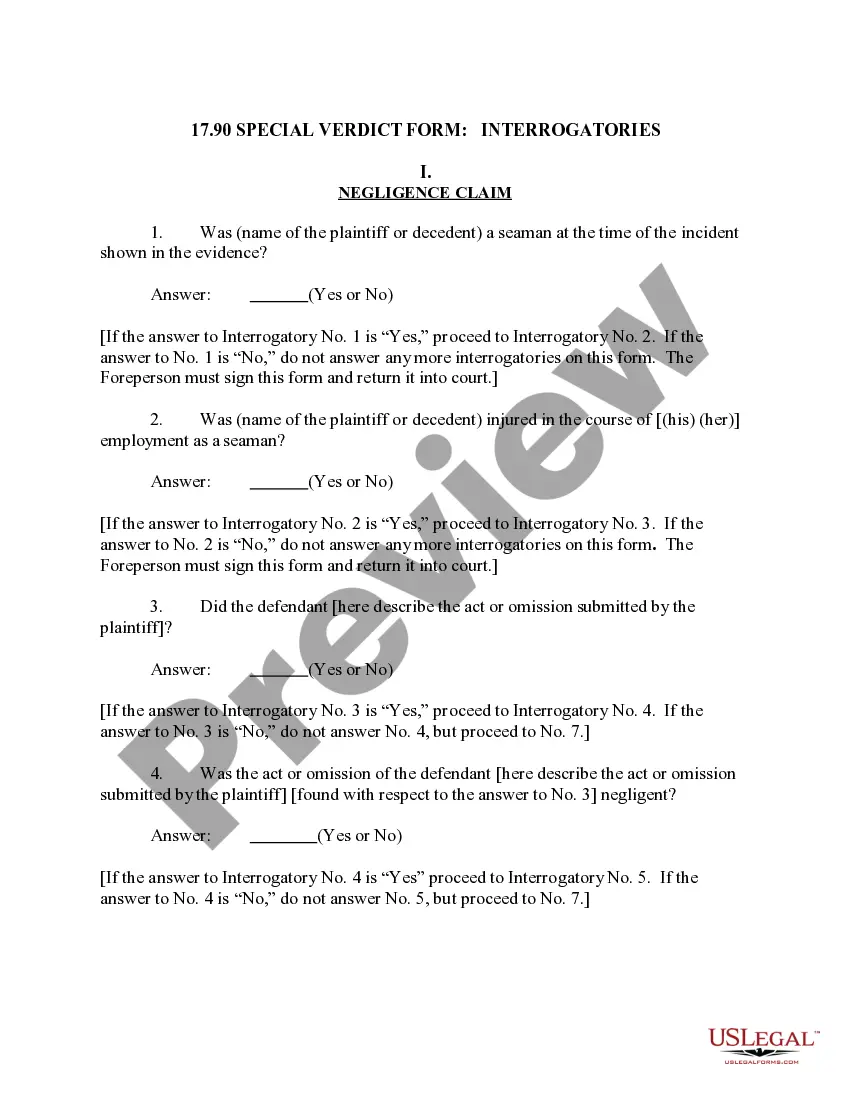
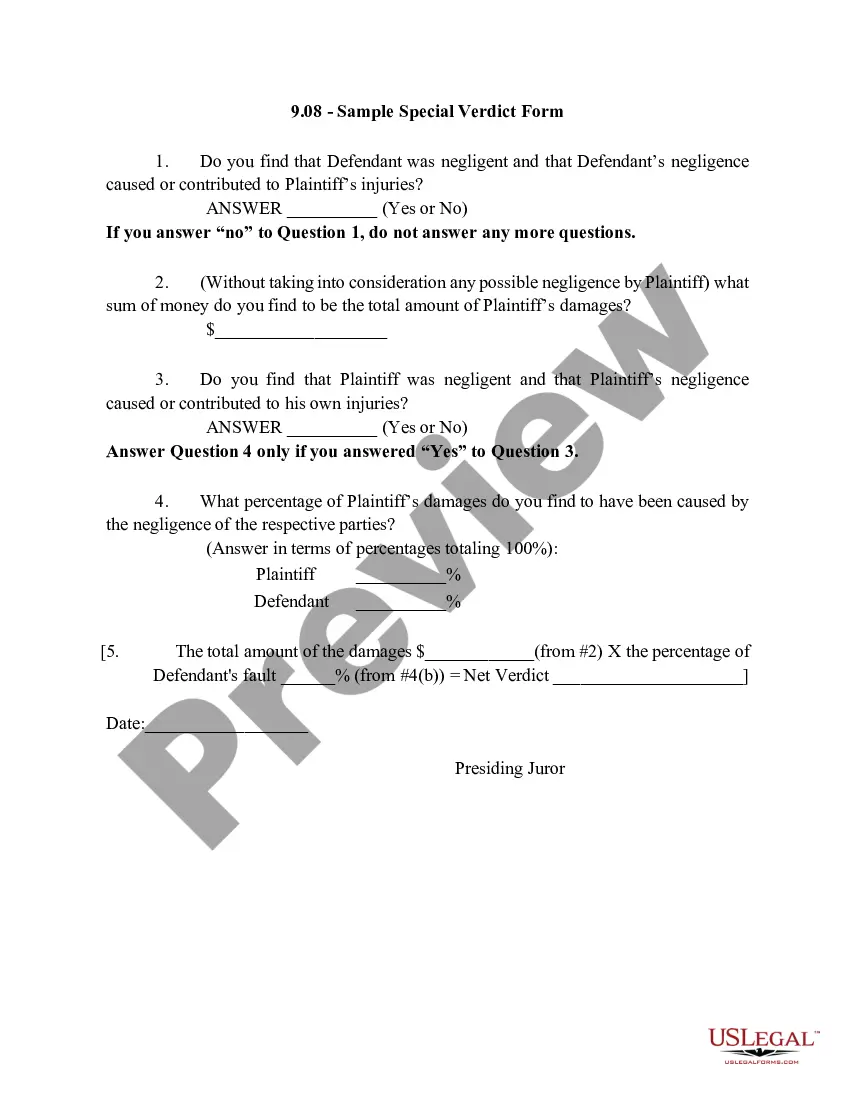
The Special Verdict Form is a legal document used in court to help jurors deliver specific answers to questions regarding disability discrimination under the Americans with Disabilities Act (ADA). It simplifies the verdict process by guiding jurors through a series of yes-or-no questions, which details whether a plaintiff has a disability and whether reasonable accommodations were provided. This form is tailored for cases asserting claims related to disability accommodations and differs from other jury forms in its focus on specific obligations under the ADA.
Key components of this form
- Question about the plaintiff's disability status.
- Inquiry into the plaintiff's qualifications for their job.
- Verification of any requested accommodations by the plaintiff.
- Assessment of the defendant's awareness of the plaintiff's disability.
- Evaluation of whether reasonable accommodations were provided.
- Determination of punitive damages in cases of reckless disregard.
Common use cases
This Special Verdict Form is used during jury trials where allegations of disability discrimination have been made under the ADA. It is particularly applicable in cases where a plaintiff claims that their employer failed to provide reasonable accommodations or discriminated against them due to their disability. This form helps to clarify juror decisions on specific legal issues and ensures that all necessary aspects of the case are considered in their verdict.
Who needs this form
- Jurors involved in ADA discrimination cases.
- Legal professionals guiding juries through the deliberation process.
- Court personnel overseeing jury evaluations.
Instructions for completing this form
- Begin by determining if the plaintiff has a disability; answer Yes or No.
- If applicable, assess whether the plaintiff was qualified to perform their job; answer Yes or No.
- Next, confirm if the plaintiff requested an accommodation; answer Yes or No.
- Evaluate the defendant's awareness of the disability at the time of the request; answer Yes or No.
- Finally, address whether the defendant failed to provide reasonable accommodations; answer Yes or No, and provide any associated details.
Does this document require notarization?
Notarization is not commonly needed for this form. However, certain documents or local rules may make it necessary. Our notarization service, powered by Notarize, allows you to finalize it securely online anytime, day or night.
Get your form ready online
Our built-in tools help you complete, sign, share, and store your documents in one place.
Make edits, fill in missing information, and update formatting in US Legal Forms—just like you would in MS Word.
Download a copy, print it, send it by email, or mail it via USPS—whatever works best for your next step.
Sign and collect signatures with our SignNow integration. Send to multiple recipients, set reminders, and more. Go Premium to unlock E-Sign.
If this form requires notarization, complete it online through a secure video call—no need to meet a notary in person or wait for an appointment.
We protect your documents and personal data by following strict security and privacy standards.

Make edits, fill in missing information, and update formatting in US Legal Forms—just like you would in MS Word.

Download a copy, print it, send it by email, or mail it via USPS—whatever works best for your next step.

Sign and collect signatures with our SignNow integration. Send to multiple recipients, set reminders, and more. Go Premium to unlock E-Sign.

If this form requires notarization, complete it online through a secure video call—no need to meet a notary in person or wait for an appointment.

We protect your documents and personal data by following strict security and privacy standards.
Mistakes to watch out for
- Failing to completely understand and answer each question based on evidence presented during the trial.
- Overlooking the need for a clear definition of terms related to disability and accommodations.
- Not consulting legal instructions provided by the court regarding the interpretation of the questions.
Why complete this form online
- Easy access to an official form drafted by licensed attorneys.
- Convenient downloading and editing capabilities to tailor the form as needed.
- Reliable, as it is based on standardized legal instructions recognized in the Federal 7th Circuit.
Legal use & context
- This form is designed to ensure that jurors can effectively address the specific elements of ADA disability claims.
- It emphasizes the legal obligations of employers regarding reasonable accommodations for employees with disabilities.
- The form supports the narrow focus on the legal standards outlined under relevant ADA statutes.
Looking for another form?


Form popularity
FAQ
If it makes factual findings in addition to the ultimate legal conclusions, it returns a general verdict with interrogatories. (Ibid.) ?If it returns only factual findings, leaving the court to determine the ultimate legal result, it returns a special verdict.? (Ibid.)
The verdict form, in turn, formalizes the jury's decisions on the case, telling us how it will answer the claims and defenses. Its structure and language could influence the jury's ultimate answers. It may also control what issues may be raised on appeal.
Types of Verdicts General Verdict. Special Verdict. Directed Verdict. Judgment Notwithstanding the Verdict.
A verdict in which the jury gives its findings on factual issues in the case, without necessarily stating which party should win.
The formal decision issued by a jury on the issues of fact that were presented at trial. VERDICT. The formal decision issued by a jury on the issues of fact that were presented at trial.Privy Verdict.Public Verdict.General Verdict.Partial Verdict.Special Verdict.
A general verdict is one that decides which party should win but does not make findings on any specific factual issues. A special verdict is one in which the jury provides its findings on specific factual issues.
A general verdict with special interrogatories is sort of an amalgam of both a general and special verdict. It instructs the jury to return a general verdict, while also answering specific questions of fact.