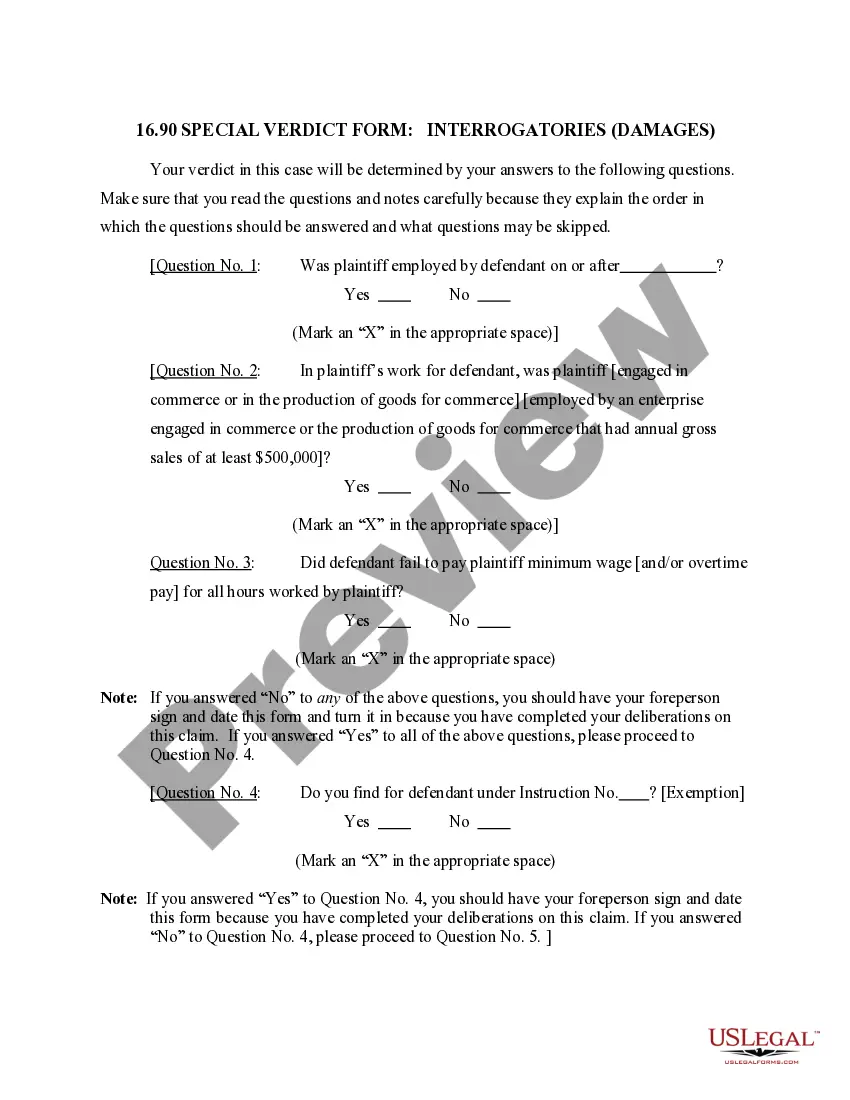
16.90 SPECIAL VERDICT FORM: INTERROGATORIES (DAMAGES)
What this document covers
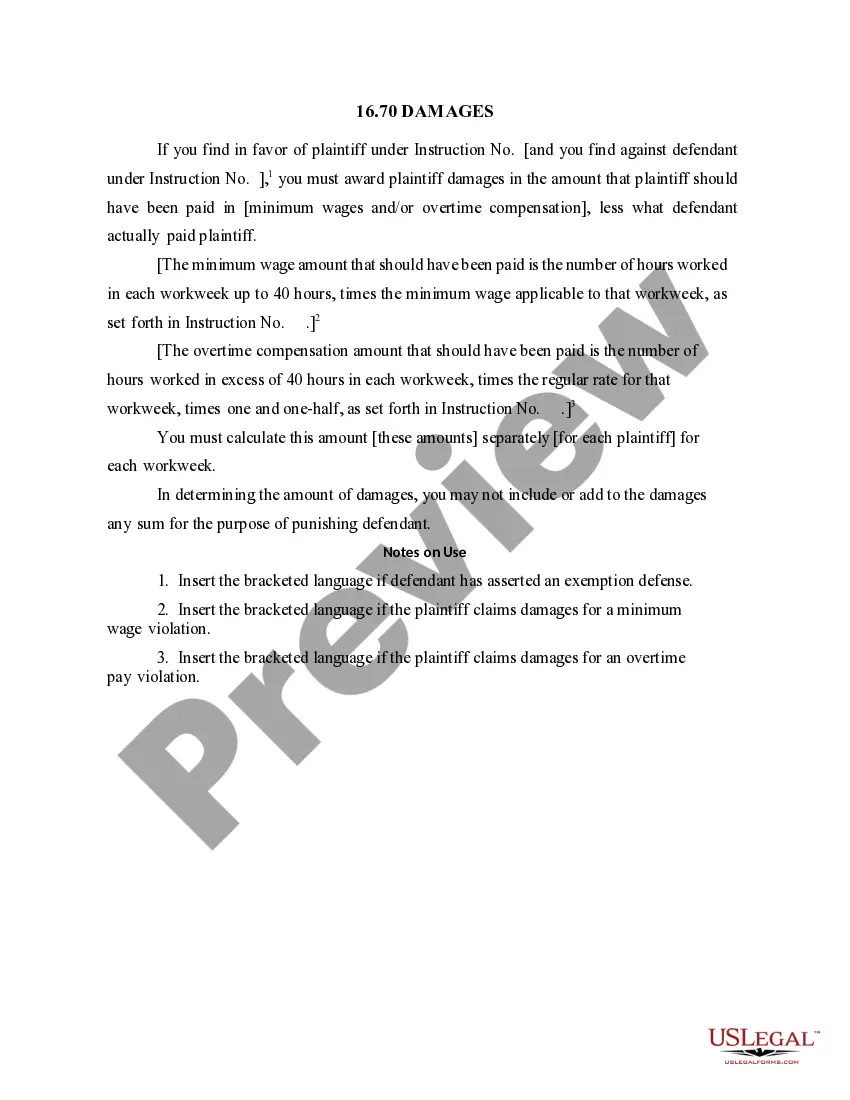
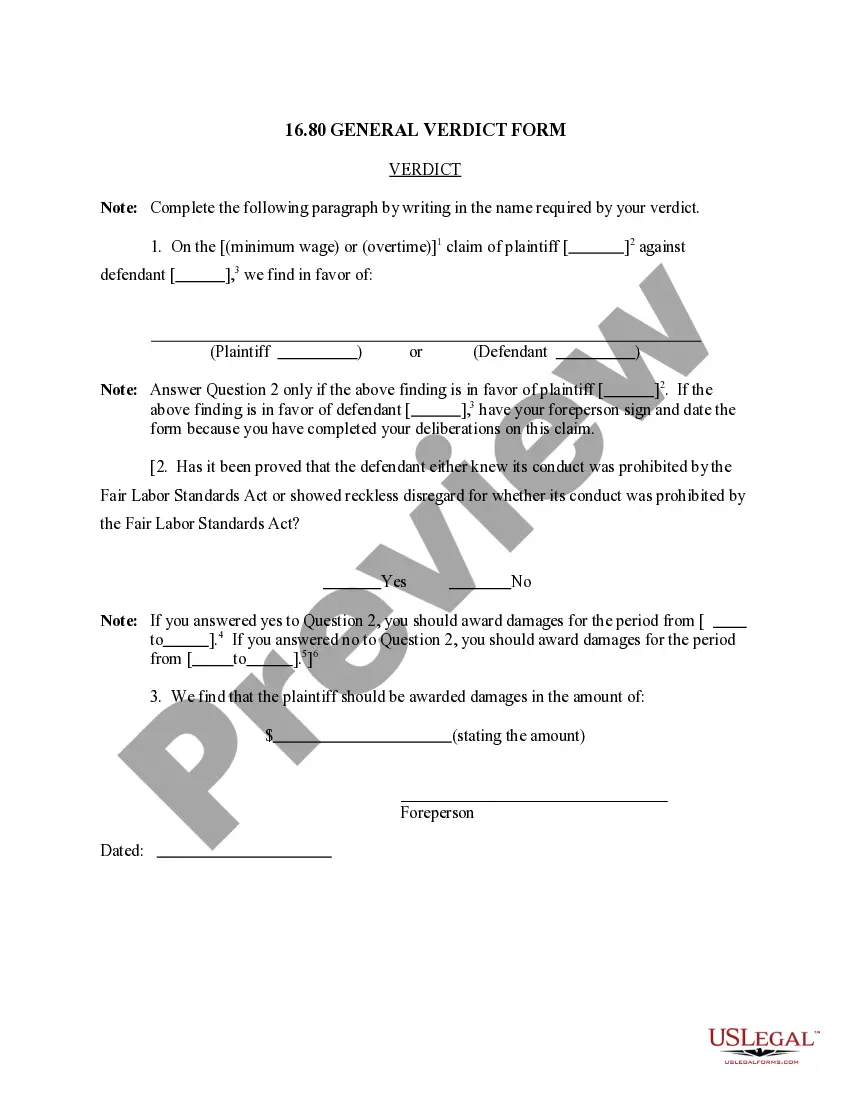
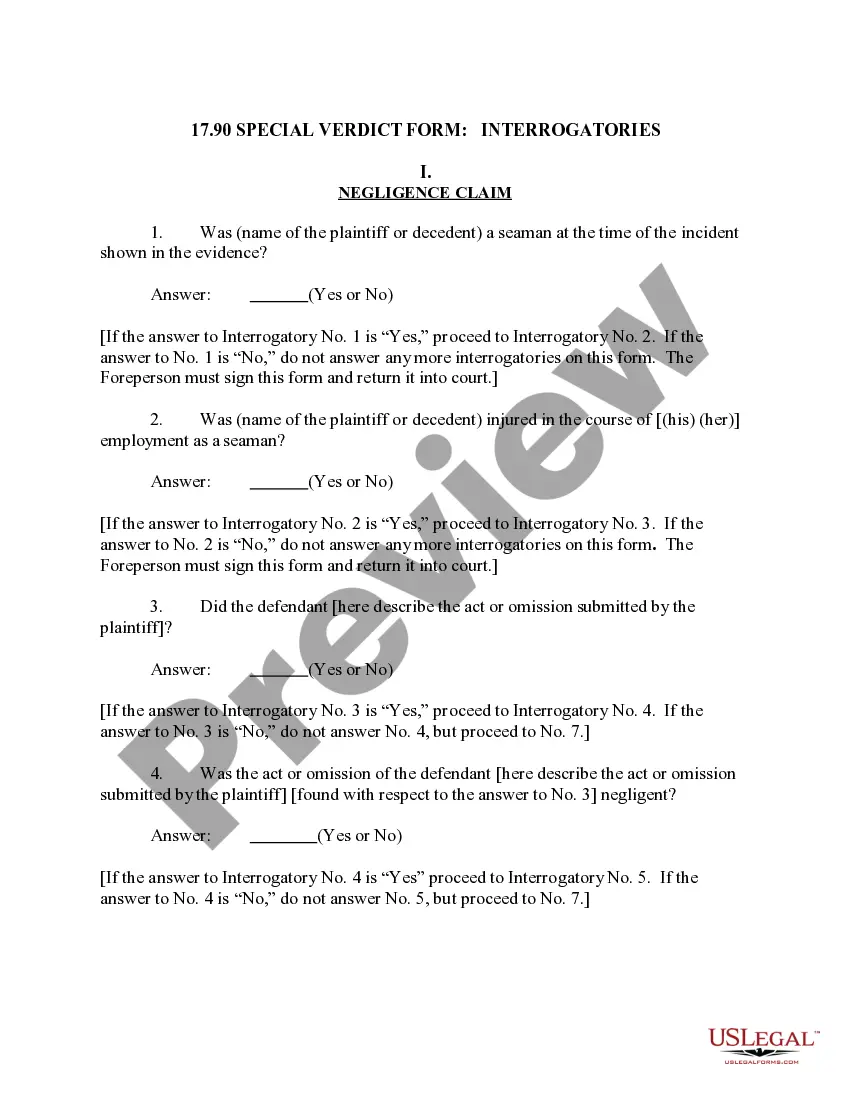
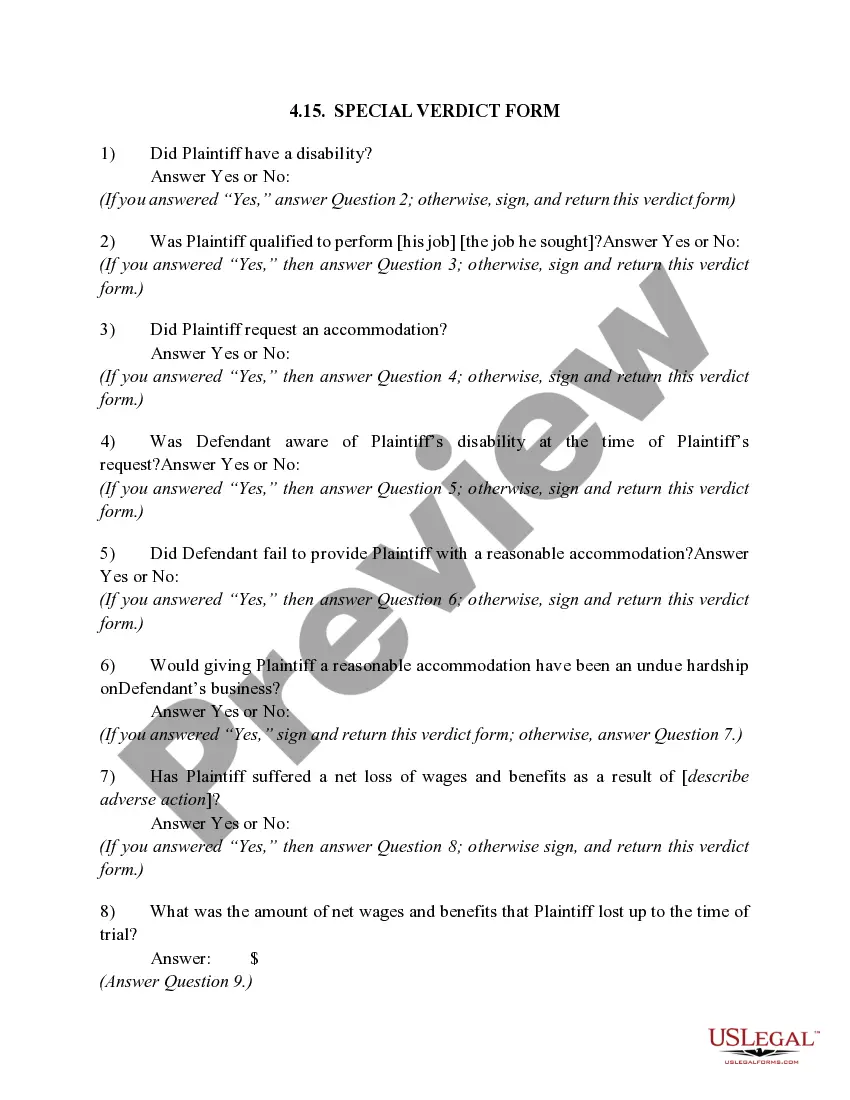
The 16.90 Special Verdict Form: Interrogatories (Damages) is a legal document utilized by juries to determine damages in cases involving wage disputes. This form guides jurors in answering specific questions related to compensation owed to the plaintiff, including minimum wage and overtime pay. It facilitates a clear and structured approach to assessing damages based on the evidence presented during a trial, differing from standard verdict forms by focusing specifically on inquiries about financial redress.
Form components explained
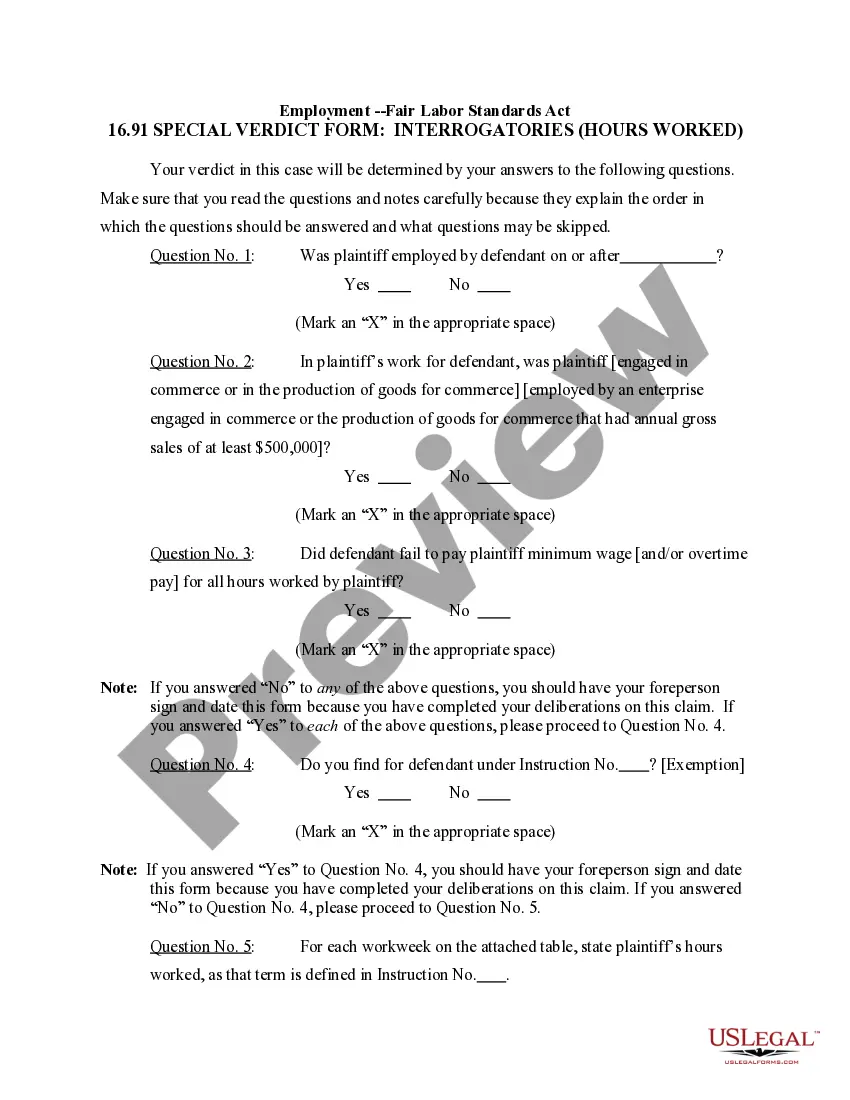
- Answers to fundamental questions regarding the plaintiff's employment and wage claims.
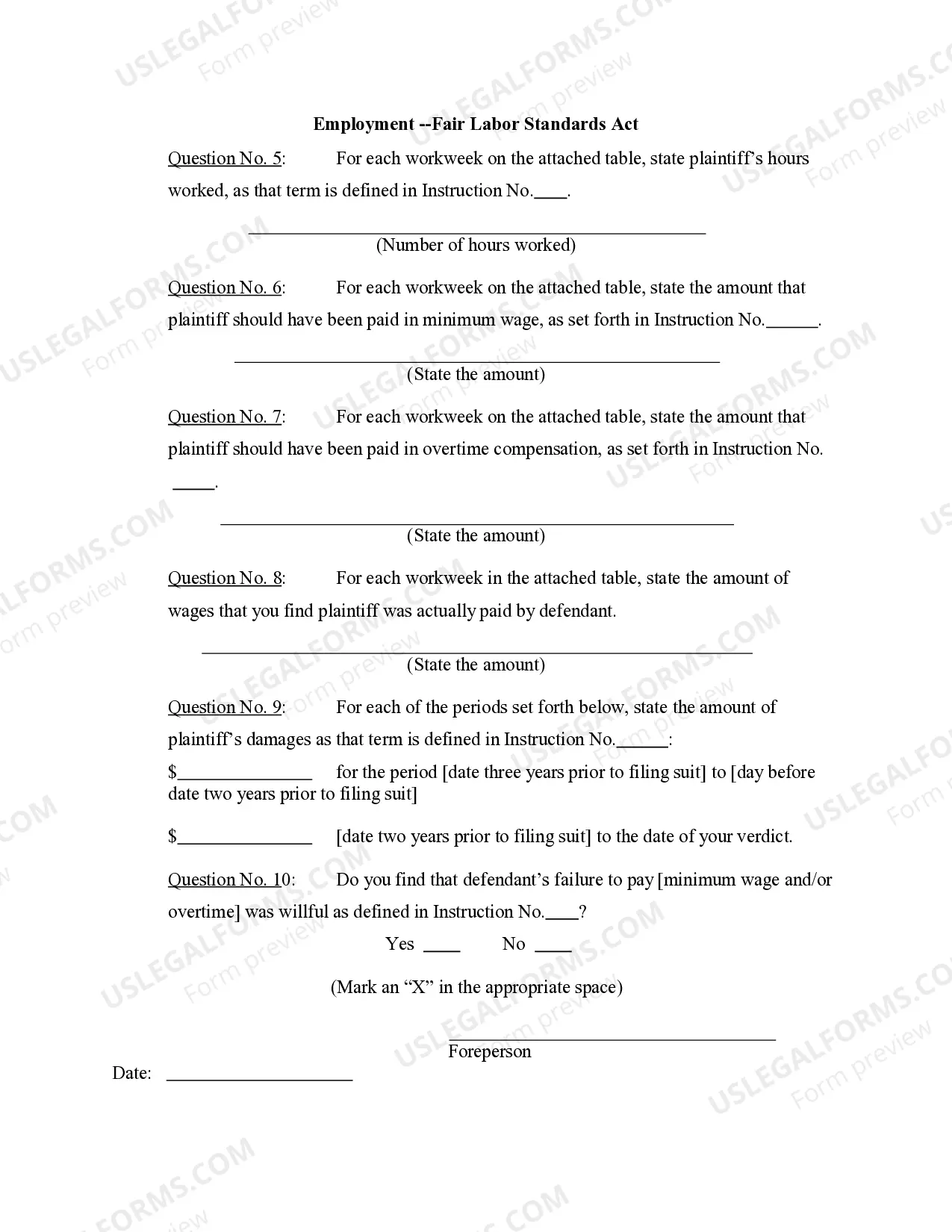
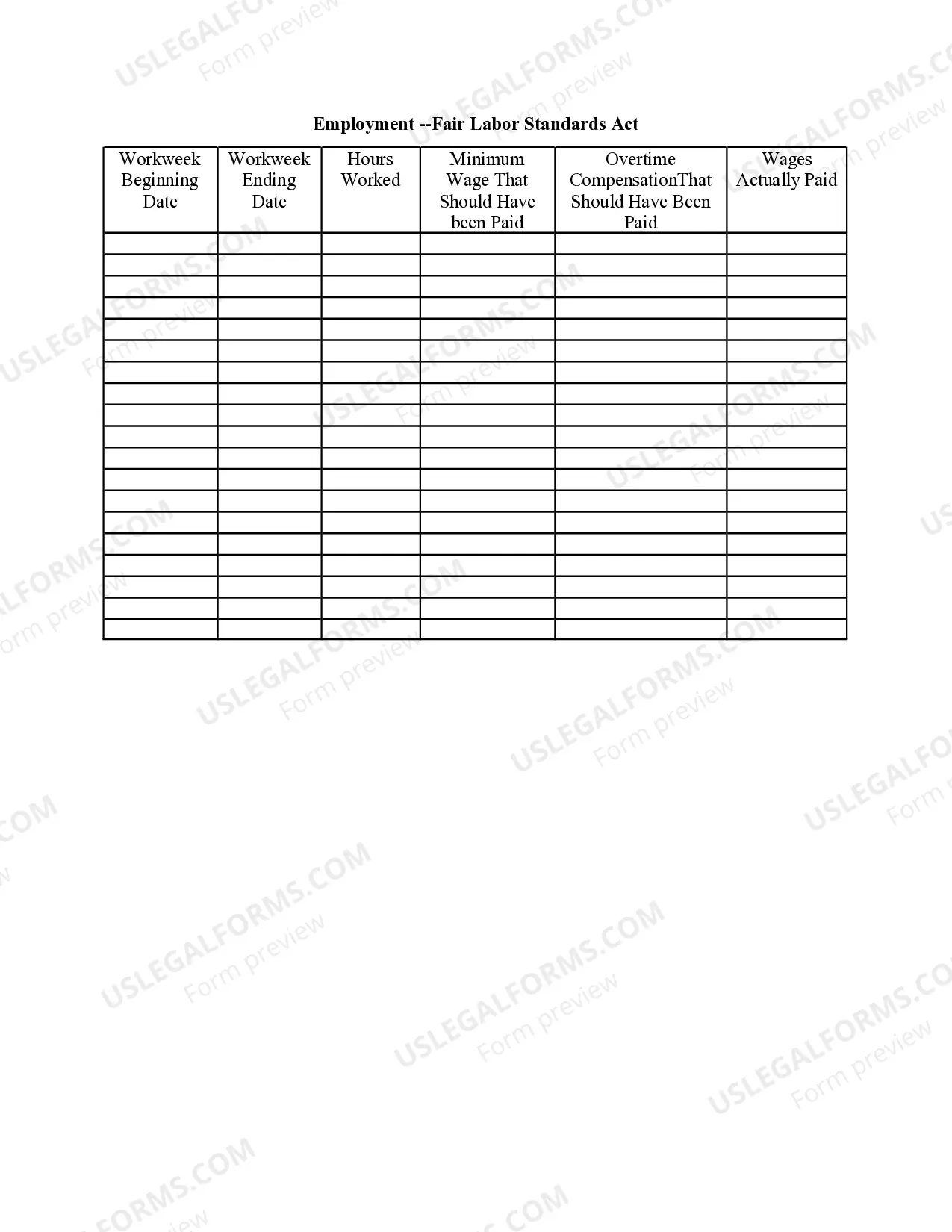
- Sections for noting hours worked and wage amounts owed for each workweek.
- Guidelines for determining if the defendant's actions were willful in denying wages.
- A space for the foreperson to sign after deliberations are completed.
- Instructions clarifying which questions to skip based on prior answers.
When to use this form
This form should be used during jury deliberations in civil cases where a plaintiff alleges that the defendant has failed to pay minimum wage or overtime pay. It is crucial when the jury must determine the extent of damages owed to the plaintiff as a result of wage violations under labor law. Utilizing this form ensures that jurors accurately assess all financial aspects of the claims.
Who should use this form
- Jurors involved in civil trials that address wage discrepancies.
- Legal practitioners looking to instruct juries on assessing damages in wage-related cases.
- Individuals serving on a jury who need clear guidelines for delivering a verdict on damages.
Steps to complete this form
- Begin by confirming the plaintiff's employment status with the defendant by answering the first question.
- Proceed to verify the nature of the plaintiff's work and whether it falls under commerce regulations.
- Determine if the defendant failed to pay minimum wage or overtime by indicating "Yes" or "No" for the relevant questions.
- For each workweek, diligently document the hours worked, minimum wage owed, overtime compensation owed, and wages actually received.
- Finally, calculate the total damages for specified periods and confirm the willfulness of the defendant's actions as required.
Does this document require notarization?
This form usually doesn’t need to be notarized. However, local laws or specific transactions may require it. Our online notarization service, powered by Notarize, lets you complete it remotely through a secure video session, available 24/7.
Get your form ready online
Our built-in tools help you complete, sign, share, and store your documents in one place.
Make edits, fill in missing information, and update formatting in US Legal Forms—just like you would in MS Word.
Download a copy, print it, send it by email, or mail it via USPS—whatever works best for your next step.
Sign and collect signatures with our SignNow integration. Send to multiple recipients, set reminders, and more. Go Premium to unlock E-Sign.
If this form requires notarization, complete it online through a secure video call—no need to meet a notary in person or wait for an appointment.
We protect your documents and personal data by following strict security and privacy standards.

Make edits, fill in missing information, and update formatting in US Legal Forms—just like you would in MS Word.

Download a copy, print it, send it by email, or mail it via USPS—whatever works best for your next step.

Sign and collect signatures with our SignNow integration. Send to multiple recipients, set reminders, and more. Go Premium to unlock E-Sign.

If this form requires notarization, complete it online through a secure video call—no need to meet a notary in person or wait for an appointment.

We protect your documents and personal data by following strict security and privacy standards.
Avoid these common issues
- Failing to accurately record hours worked for each workweek.
- Not following the instructions on which questions to skip.
- Misunderstanding or overlooking the definitions of wages and damages as provided in the form instructions.
Legal use & context
- This form is enforceable in civil court as part of the jury's verdict in wage-related disputes.
- Users must ensure compliance with state-specific labor laws applicable to wage disputes.
- Proper completion facilitates clarity in the jury's findings and promotes fair outcomes in wage claims.
What to keep in mind
- The form facilitates structured jury deliberations on wage disputes.
- Each question guides jurors in assessing liability and determining damages.
- Accurate completion of this form is essential for fair and enforceable verdicts.
Looking for another form?
Form popularity
FAQ
A verdict in which the jury gives its findings on factual issues in the case, without necessarily stating which party should win. The judge decides what questions the jury should answer, and the judge can draw legal implications from the jury's answers.
The verdict form, in turn, formalizes the jury's decisions on the case, telling us how it will answer the claims and defenses. Its structure and language could influence the jury's ultimate answers. It may also control what issues may be raised on appeal.
There are several types of verdicts that are imposed in a civil trial: General Verdict. Special Verdict. Directed Verdict.
624. The verdict of a jury is either general or special. A general verdict is that by which they pronounce generally upon all or any of the issues, either in favor of the plaintiff or defendant; a special verdict is that by which the jury find the facts only, leaving the judgment to the Court.
A general verdict with special interrogatories is sort of an amalgam of both a general and special verdict. It instructs the jury to return a general verdict, while also answering specific questions of fact.
A general verdict is one that decides which party should win but does not make findings on any specific factual issues. A special verdict is one in which the jury provides its findings on specific factual issues.
If it makes factual findings in addition to the ultimate legal conclusions, it returns a general verdict with interrogatories. (Ibid.) ?If it returns only factual findings, leaving the court to determine the ultimate legal result, it returns a special verdict.? (Ibid.)
A general verdict is one that decides which party should win but does not make findings on any specific factual issues. A special verdict is one in which the jury provides its findings on specific factual issues.