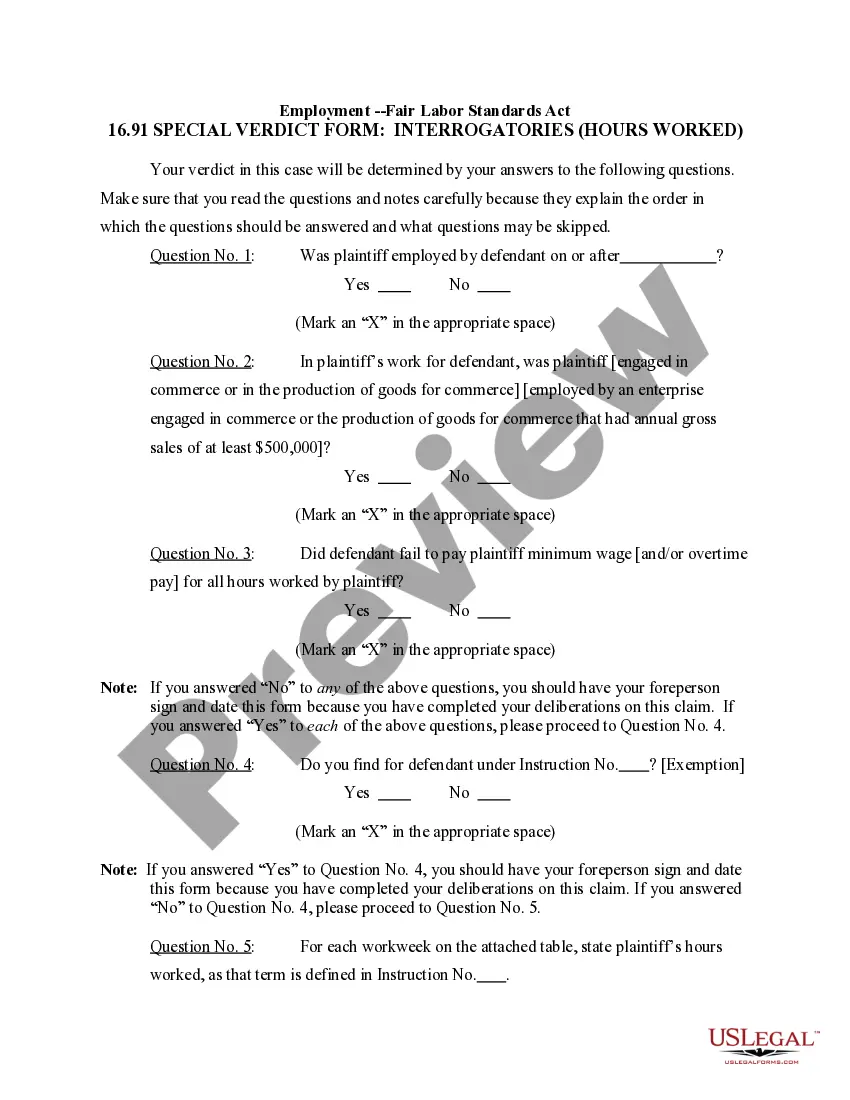
16.91 SPECIAL VERDICT FORM: INTERROGATORIES (HOURS WORKED)
Understanding this form
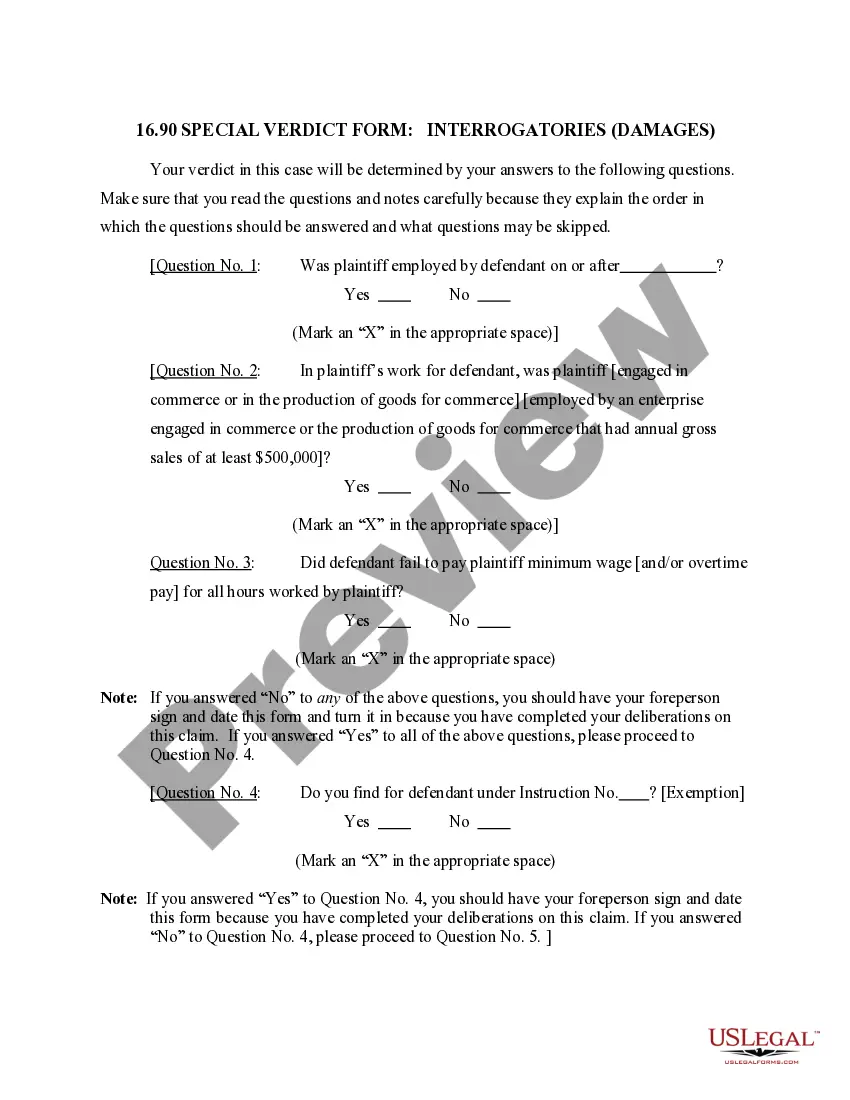
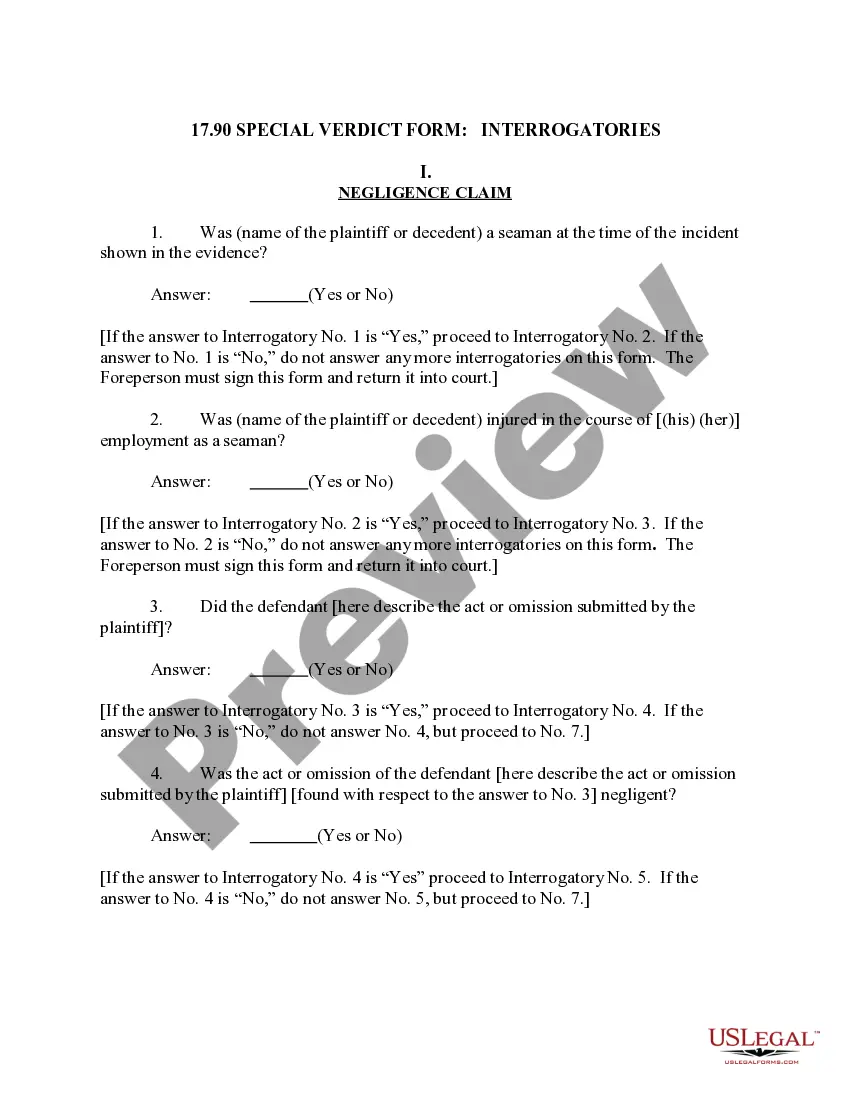
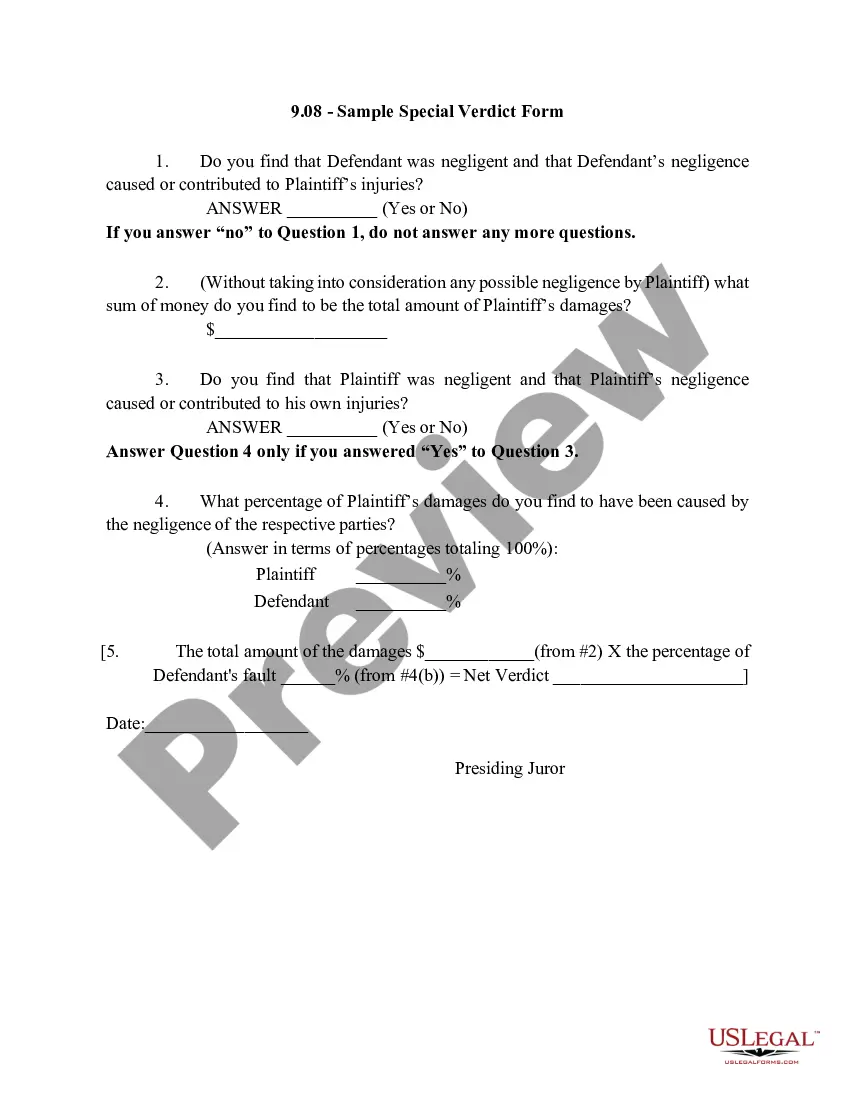
The 16.91 Special Verdict Form: Interrogatories (Hours Worked) is a legal document used by jurors to determine the outcome of cases related to employment disputes, particularly those involving claims of failure to pay minimum wage or overtime. This form guides the jury through a series of questions to arrive at a verdict based on specific answers regarding hours worked and employment status, ensuring a fair resolution of the case.
Form components explained
- Question 1: Employment verification of the plaintiff with the defendant.
- Question 2: Confirmation of the plaintiff's engagement in commerce.
- Question 3: Inquiry into the defendant's failure to pay minimum wage or overtime.
- Question 4: Determination of the defendant's exemption status.
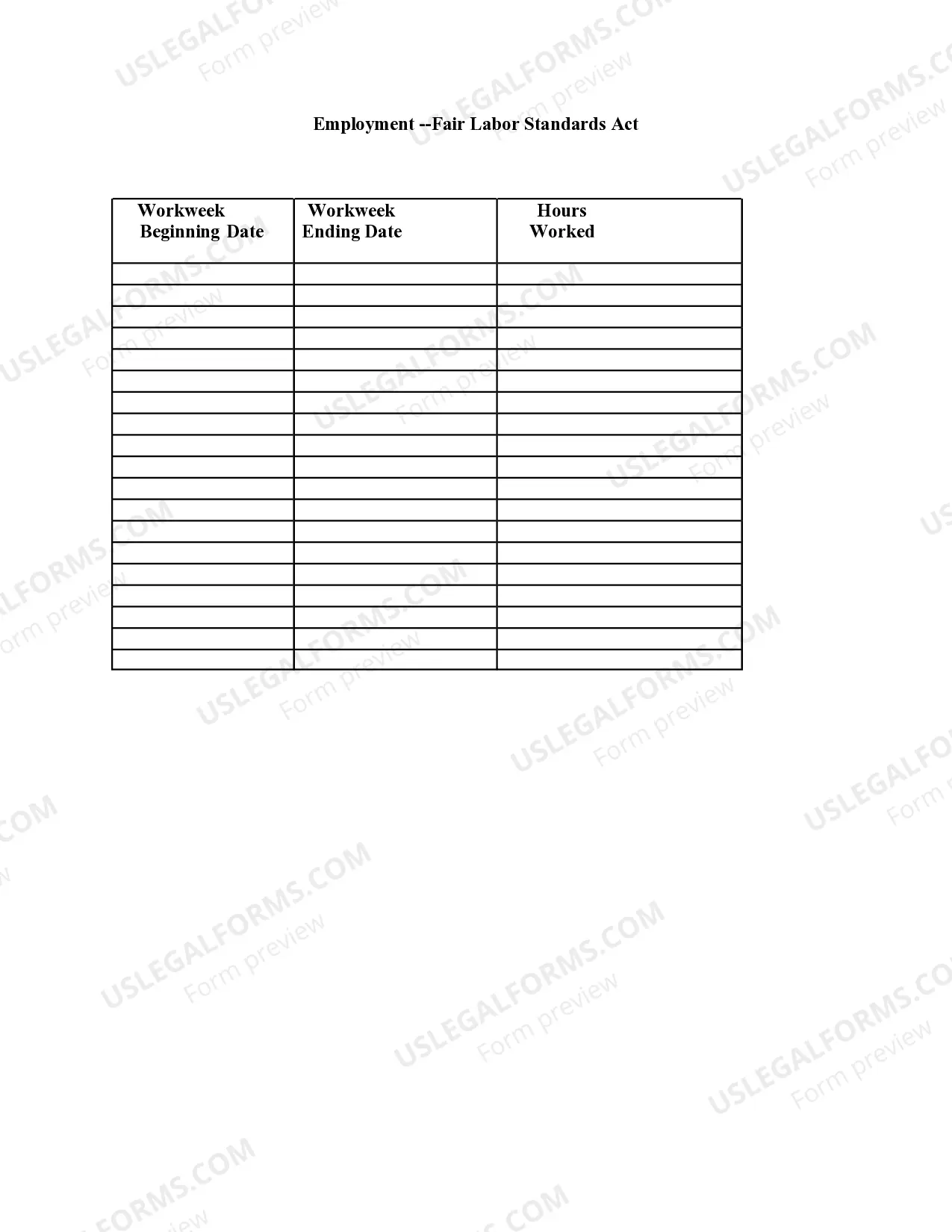
- Question 5: Reporting of hours worked in designated workweeks.
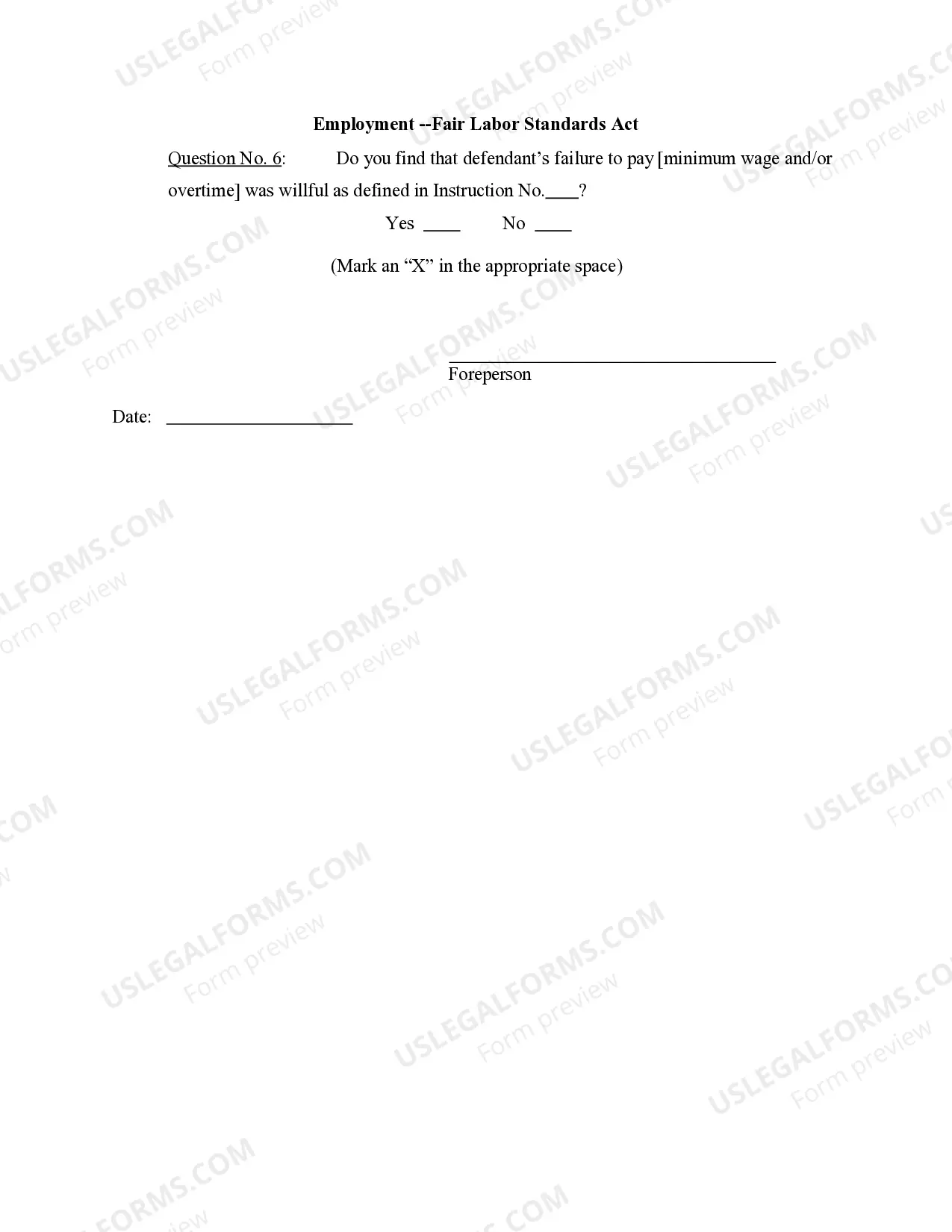
- Question 6: Assessment of willfulness regarding unpaid wages.
When to use this document
This form is used during a jury trial when the plaintiff has brought a claim against an employer for failing to pay minimum or overtime wages. It ensures jurors can systematically evaluate the evidence presented regarding hours worked and the employer's obligations, thus facilitating a clear and informed verdict.
Intended users of this form
- Jurors tasked with deliberating on employment law cases.
- Attorneys representing plaintiffs or defendants in wage-related disputes.
- Court personnel managing employment litigation cases.
Completing this form step by step
- Begin by reading each question carefully to understand the requirements.
- Respond to each question with "Yes" or "No" by marking an "X" in the appropriate space.
- Proceed through the questions sequentially, skipping to the end if any answer is "No".
- For hours worked, fill in the respective weekly hours in the attached table.
- Ensure the foreperson signs and dates the form to finalize the jury's verdict.
Notarization guidance
Notarization is generally not required for this form. However, certain states or situations might demand it. You can complete notarization online through US Legal Forms, powered by Notarize, using a verified video call available anytime.
Get your form ready online
Our built-in tools help you complete, sign, share, and store your documents in one place.
Make edits, fill in missing information, and update formatting in US Legal Forms—just like you would in MS Word.
Download a copy, print it, send it by email, or mail it via USPS—whatever works best for your next step.
Sign and collect signatures with our SignNow integration. Send to multiple recipients, set reminders, and more. Go Premium to unlock E-Sign.
If this form requires notarization, complete it online through a secure video call—no need to meet a notary in person or wait for an appointment.
We protect your documents and personal data by following strict security and privacy standards.

Make edits, fill in missing information, and update formatting in US Legal Forms—just like you would in MS Word.

Download a copy, print it, send it by email, or mail it via USPS—whatever works best for your next step.

Sign and collect signatures with our SignNow integration. Send to multiple recipients, set reminders, and more. Go Premium to unlock E-Sign.

If this form requires notarization, complete it online through a secure video call—no need to meet a notary in person or wait for an appointment.

We protect your documents and personal data by following strict security and privacy standards.
Common mistakes to avoid
- Failing to follow the designated order of questions can lead to confusion.
- Not providing clear answers which may hinder the understanding of the jury's verdict.
- Leaving sections incomplete, especially the hours worked table.
Benefits of completing this form online
- Easy access to the form allows for quick download and printing.
- Editable fields let jurors personalize their responses directly.
- Clear formatting reduces errors and enhances understanding.
Looking for another form?
Form popularity
FAQ
A party waives the right to a jury trial on any issue of fact raised by the pleadings or evidence but not submitted to the jury unless, before the jury retires, the party demands its submission to the jury. If the party does not demand submission, the court may make a finding on the issue.
A general verdict is one that decides which party should win but does not make findings on any specific factual issues. A special verdict is one in which the jury provides its findings on specific factual issues.
A verdict in which the jury gives its findings on factual issues in the case, without necessarily stating which party should win. The judge decides what questions the jury should answer, and the judge can draw legal implications from the jury's answers.
A general verdict is one that decides which party should win but does not make findings on any specific factual issues. A special verdict is one in which the jury provides its findings on specific factual issues.
624. The verdict of a jury is either general or special. A general verdict is that by which they pronounce generally upon all or any of the issues, either in favor of the plaintiff or defendant; a special verdict is that by which the jury find the facts only, leaving the judgment to the Court.
A general verdict with special interrogatories is sort of an amalgam of both a general and special verdict. It instructs the jury to return a general verdict, while also answering specific questions of fact.
There are several types of verdicts that are imposed in a civil trial: General Verdict. Special Verdict. Directed Verdict.
If it makes factual findings in addition to the ultimate legal conclusions, it returns a general verdict with interrogatories. (Ibid.) ?If it returns only factual findings, leaving the court to determine the ultimate legal result, it returns a special verdict.? (Ibid.)