Critical Incidents Form
Overview of this form
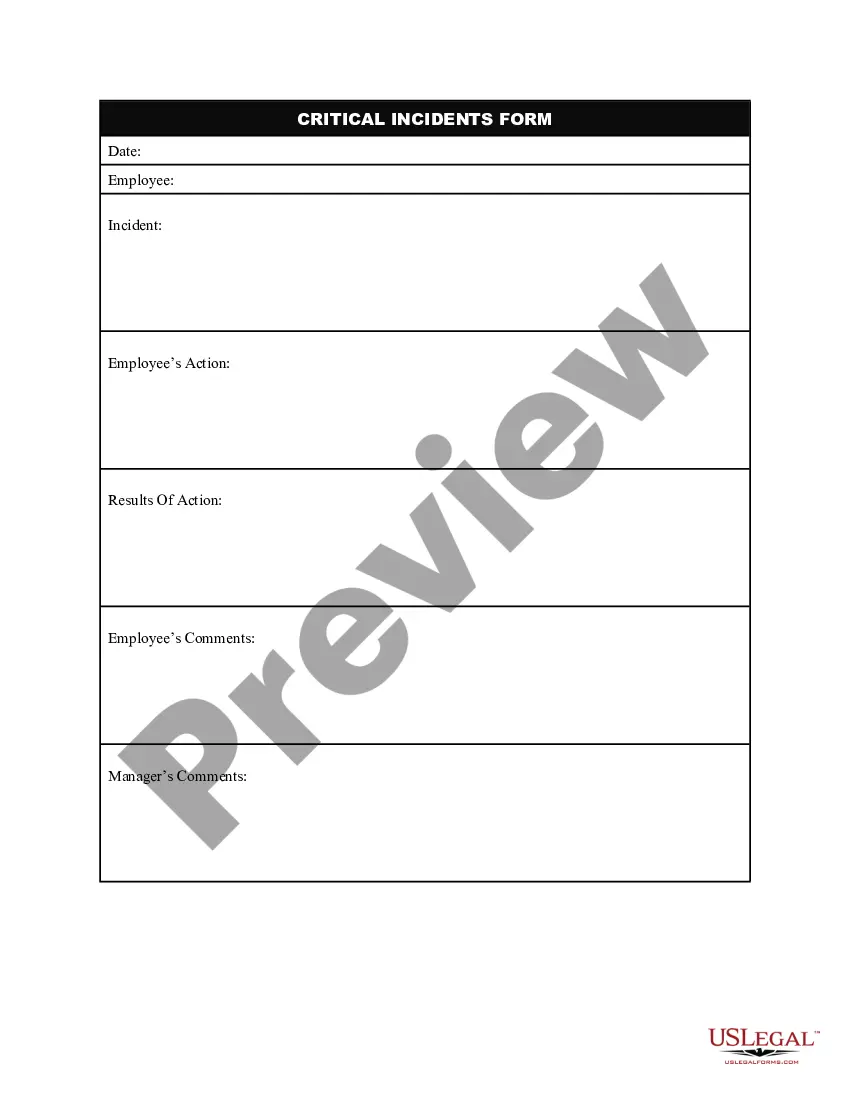
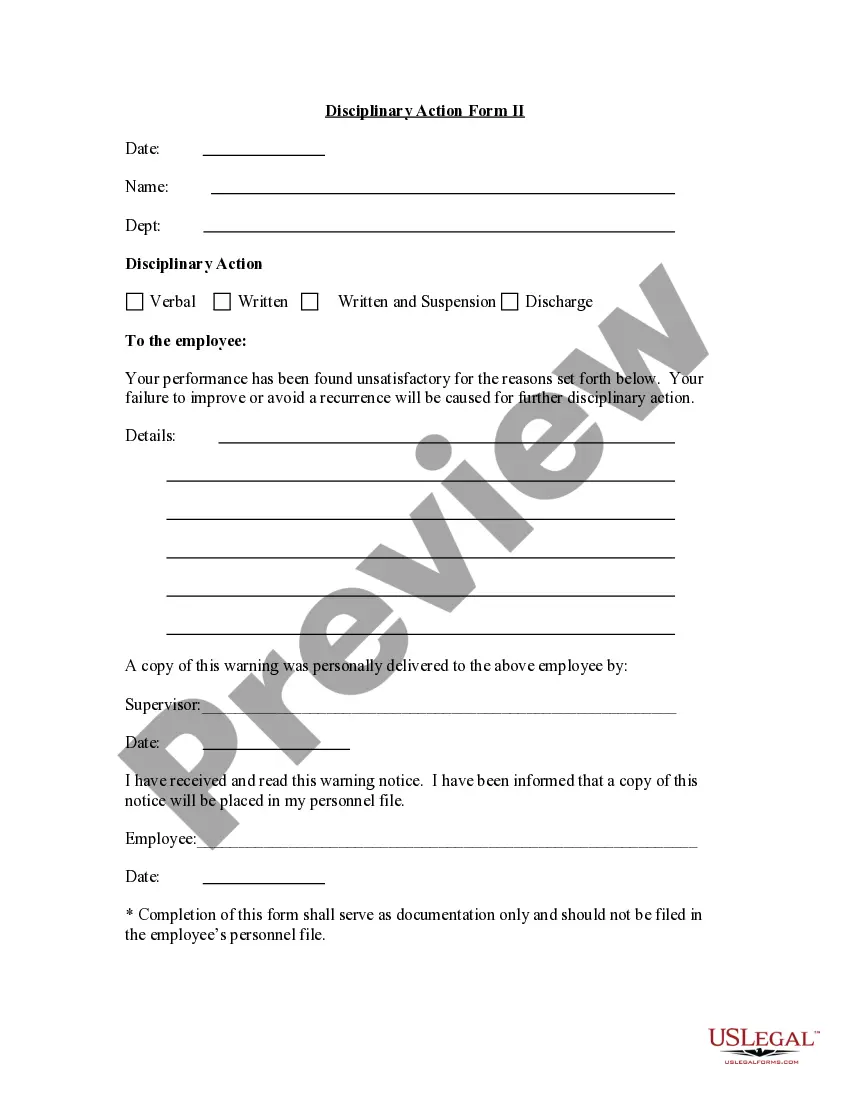
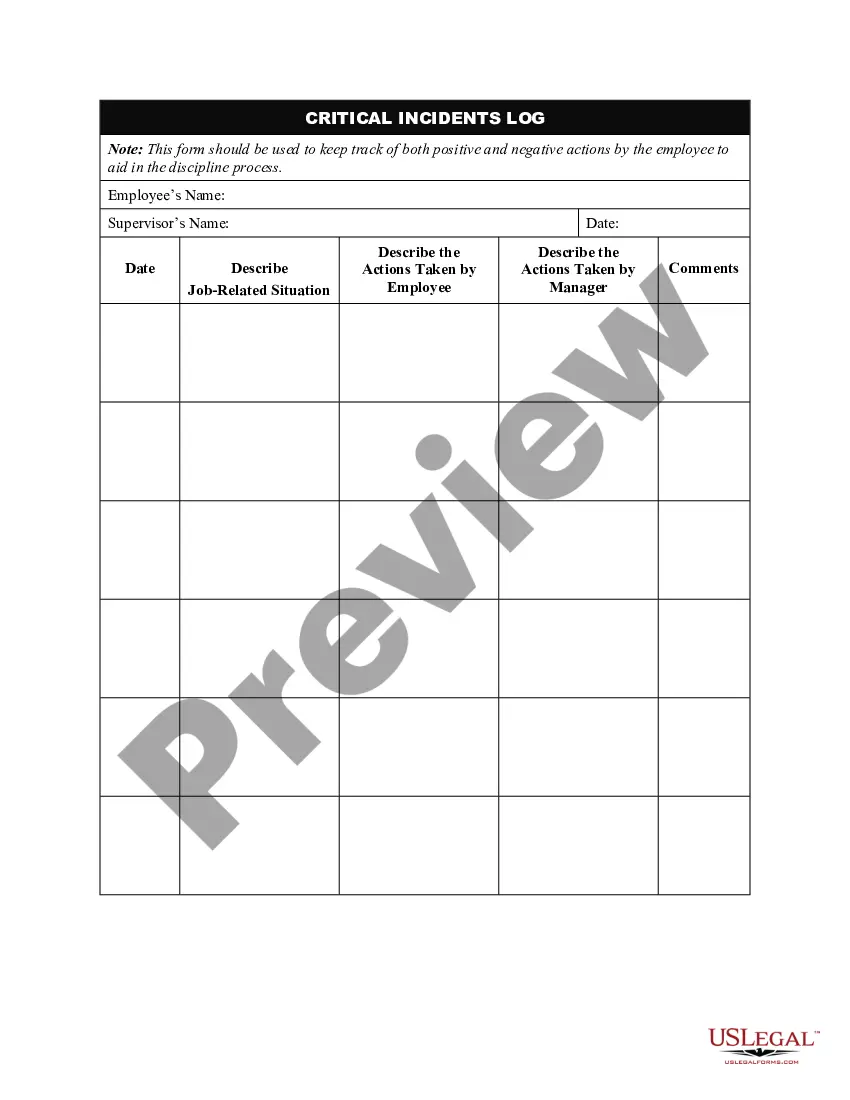
The Critical Incidents Form is a legal document designed to record critical incidents within an organization. This form is essential for documenting the details of an incident, the actions taken by employees involved, and the outcomes of these actions. It differs from other incident reporting forms by focusing specifically on critical incidents, ensuring that crucial data is captured for assessment and improvement of safety and procedural processes within the workplace.
What’s included in this form
- Date of the incident
- Details of the incident
- Actions taken by the employee(s)
- Results of the employee's actions
- Comments from the management or observers
When this form is needed
This form should be used in various situations, such as when a workplace incident occurs that could affect employee safety, performance, or company protocols. Examples include workplace accidents, emergency evacuations, or breaches of safety procedures. Using this form helps organizations track incidents systematically for future reference and improvement.
Who can use this document
- Human resources personnel
- Team leaders or managers
- Safety officers
- Any employee involved in the incident reporting process
How to complete this form
- Identify and enter the date of the incident.
- Provide a detailed description of the incident, including what occurred.
- Document the actions taken by the involved employee(s) during the incident.
- Record the results of those actions and any immediate outcomes.
- Include comments or additional insights from team leaders or management.
Does this document require notarization?
This form does not typically require notarization to be legally valid. However, some jurisdictions or document types may still require it. US Legal Forms provides secure online notarization powered by Notarize, available 24/7 for added convenience.
Get your form ready online
Our built-in tools help you complete, sign, share, and store your documents in one place.
Make edits, fill in missing information, and update formatting in US Legal Forms—just like you would in MS Word.
Download a copy, print it, send it by email, or mail it via USPS—whatever works best for your next step.
Sign and collect signatures with our SignNow integration. Send to multiple recipients, set reminders, and more. Go Premium to unlock E-Sign.
If this form requires notarization, complete it online through a secure video call—no need to meet a notary in person or wait for an appointment.
We protect your documents and personal data by following strict security and privacy standards.

Make edits, fill in missing information, and update formatting in US Legal Forms—just like you would in MS Word.

Download a copy, print it, send it by email, or mail it via USPS—whatever works best for your next step.

Sign and collect signatures with our SignNow integration. Send to multiple recipients, set reminders, and more. Go Premium to unlock E-Sign.

If this form requires notarization, complete it online through a secure video call—no need to meet a notary in person or wait for an appointment.

We protect your documents and personal data by following strict security and privacy standards.
Typical mistakes to avoid
- Failing to include the date of the incident.
- Providing vague descriptions of the incident without sufficient detail.
- Not documenting all actions taken by employees involved.
- Leaving comments section blank, which can provide valuable context.
Advantages of online completion
- Convenience of accessing and filling out the form at any time.
- Easy editing capabilities to correct or update information.
- Secure storage and retrieval of documents.
- Immediate availability for team reference and review.
Legal use & context
- Utilizing this form helps establish a legal record of incidents that can be referenced for compliance and regulatory purposes.
- It provides protection for the organization in case of disputes or required investigations.
- Using this form effectively can enhance the organization's response protocols and safety measures moving forward.
Summary of main points
- The Critical Incidents Form is essential for documenting significant workplace incidents.
- This form aids in evaluating incidents and improving safety measures.
- Complete the form promptly for accurate and reliable documentation.
Looking for another form?
Form popularity
FAQ
Describe the context of the incident. Describe the actual incident in detail. Explain why the incident was critical or significant for you. Explain your concerns at the time. Describe what you were thinking and feeling as it was taking place, and afterwards.
Critical incident method or critical incident technique is a performance appraisal tool in which analyses the behavior of employee in certain events in which either he performed very well and the ones in which he could have done better. Critical incident technique is used to collect data using a set of procedures.
A Critical Incident is any event that poses a serious risk to the life, health or safety, of an individual who is receiving services from your organisation. It can include incidents where staff, clients and third parties feel unsafe and under stress.
Examples of critical incidents include events such as: disasters. wars. death (actual or threatened)
A critical incident is defined in Regulation 965 of the Public Hospitals Act as: Any unintended event that occurs when a patient receives treatment in the hospital, a) that results in death, or serious disability, injury or harm to the patient, and.
The Critical Incident Journal Technique Second in a 'critical incident' journal the writer chooses incidents from his or her field experience according to the change they produce in his/her perspective in terms of the learning objectives.
A Critical Incident is any actual or alleged event or situation that creates a significant risk of substantial or serious harm to the physical or mental health, safety or well being of a waiver participant. Reportable Critical Incidents Defined. 1.
A critical incident is any event or series of events that is sudden, overwhelming, threatening or protracted. This may be an assault, threats, severe injury, death, fire or a bomb threat.
Describe the context of the incident. Describe the actual incident in detail. Explain why the incident was critical or significant for you. Explain your concerns at the time. Describe what you were thinking and feeling as it was taking place, and afterwards.