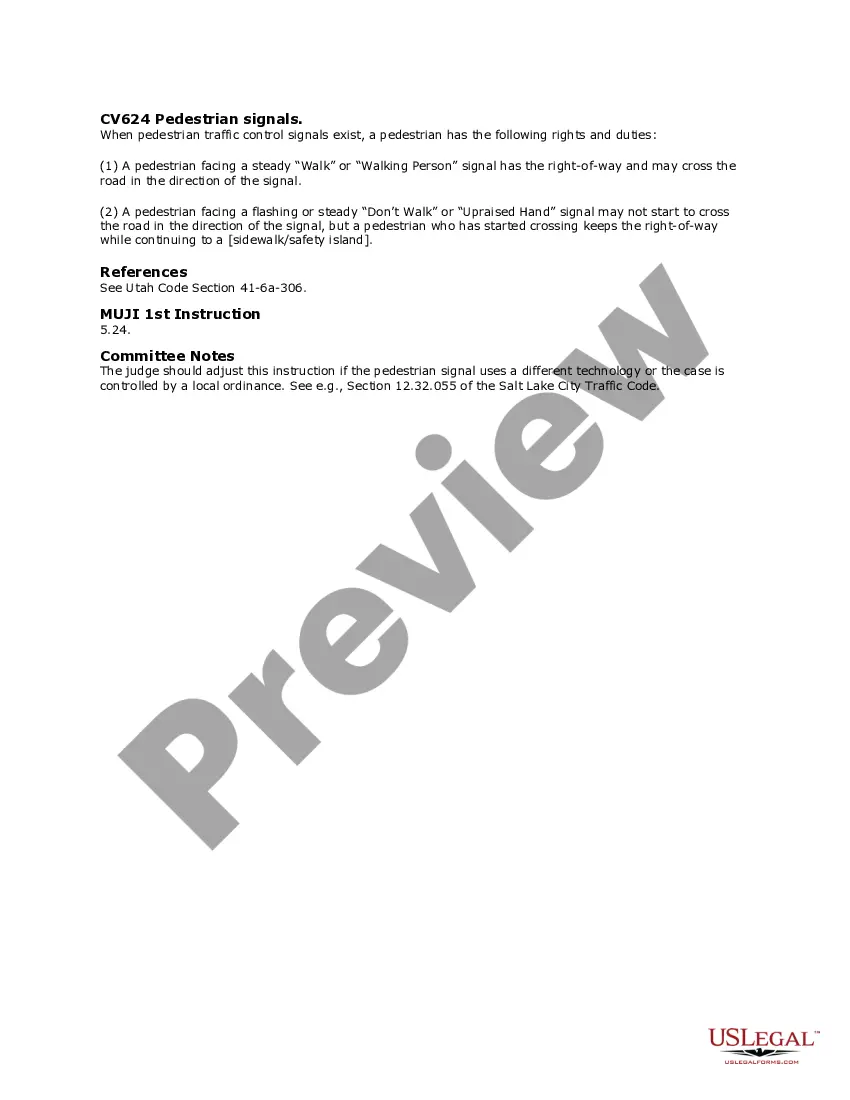
Planning Essentials for Special Needs Families
Overview of this form
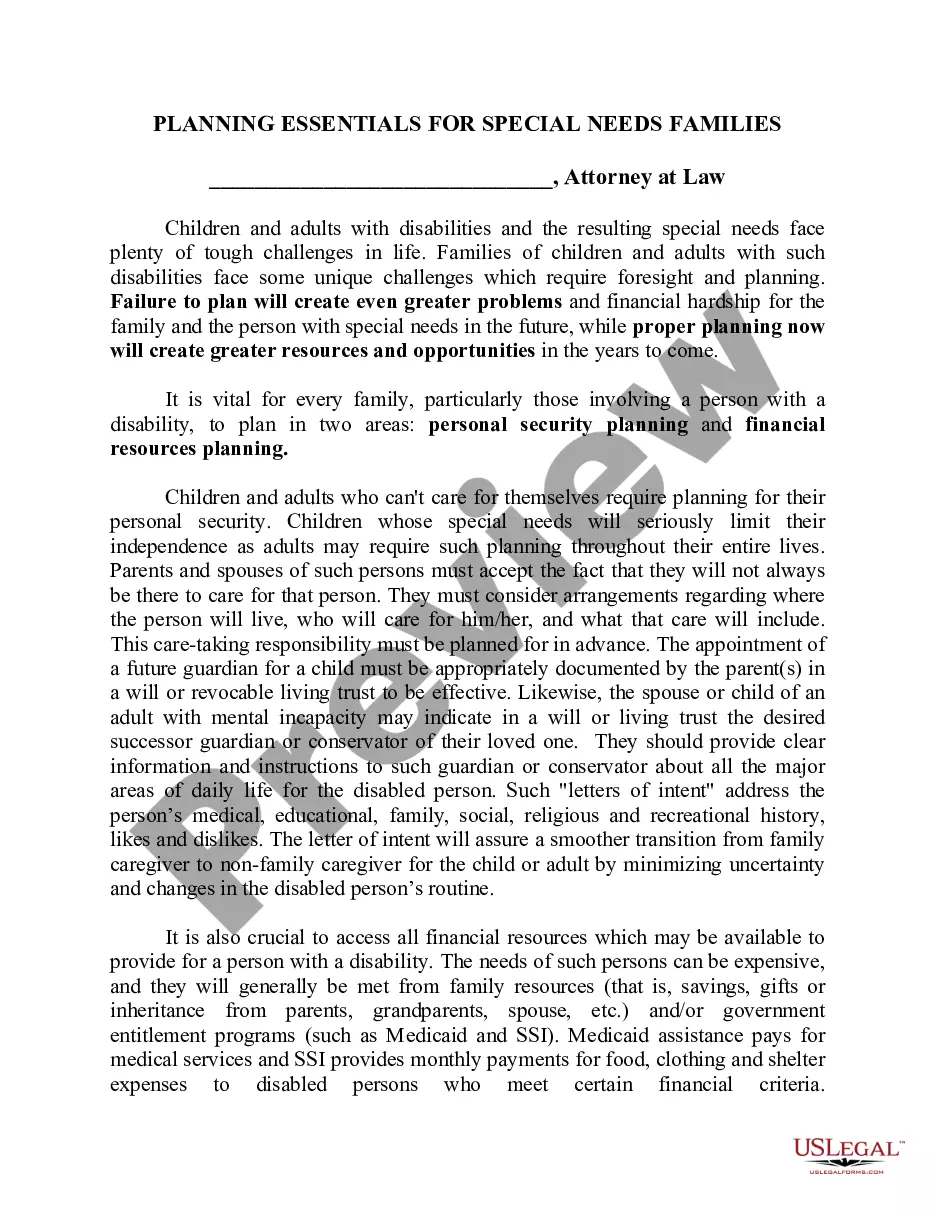
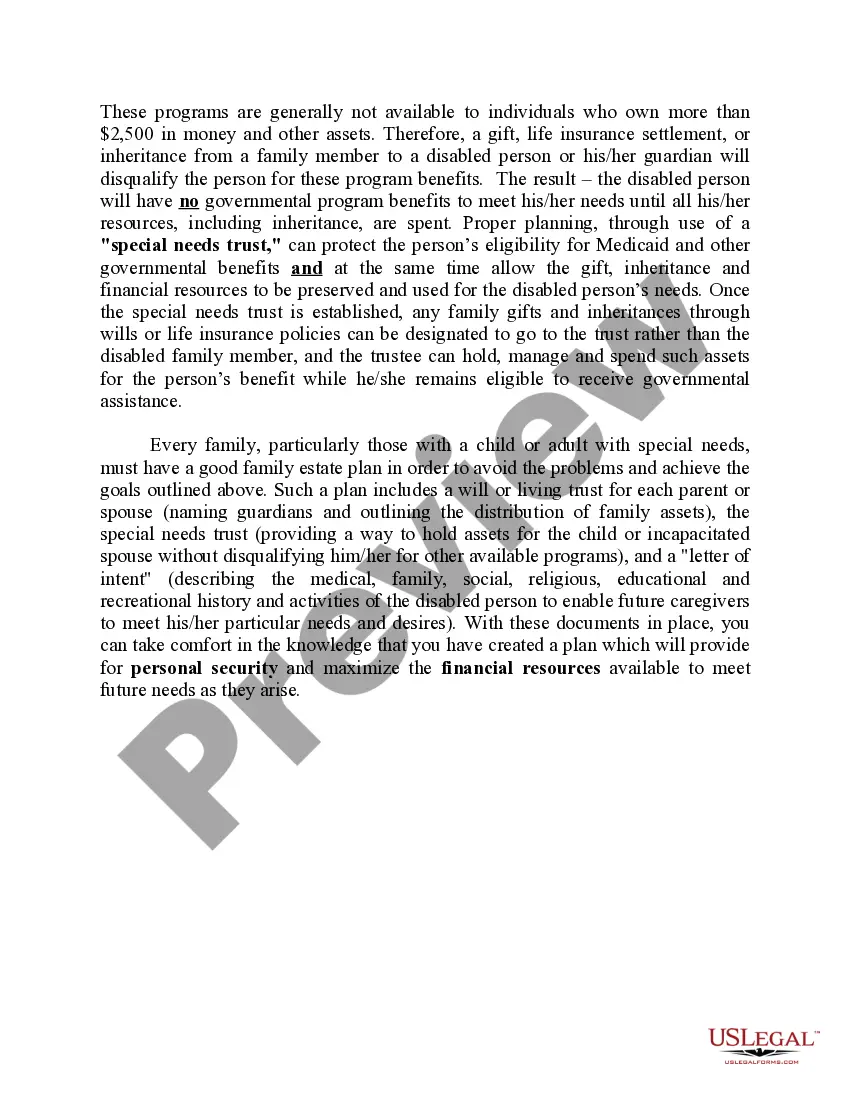
This handout, titled "Planning Essentials for Special Needs Families," provides families with essential guidance on planning for the care of a person with special needs. It highlights the importance of personal security and financial resources planning, making it distinct from other legal forms. This form differs in its focus on facilitating the long-term care and support arrangements that families of individuals with disabilities specifically require.
Main sections of this form
- Information on appointing guardians or conservators for individuals with special needs.
- Guidelines for preparing a letter of intent outlining the person's medical, social, and educational history.
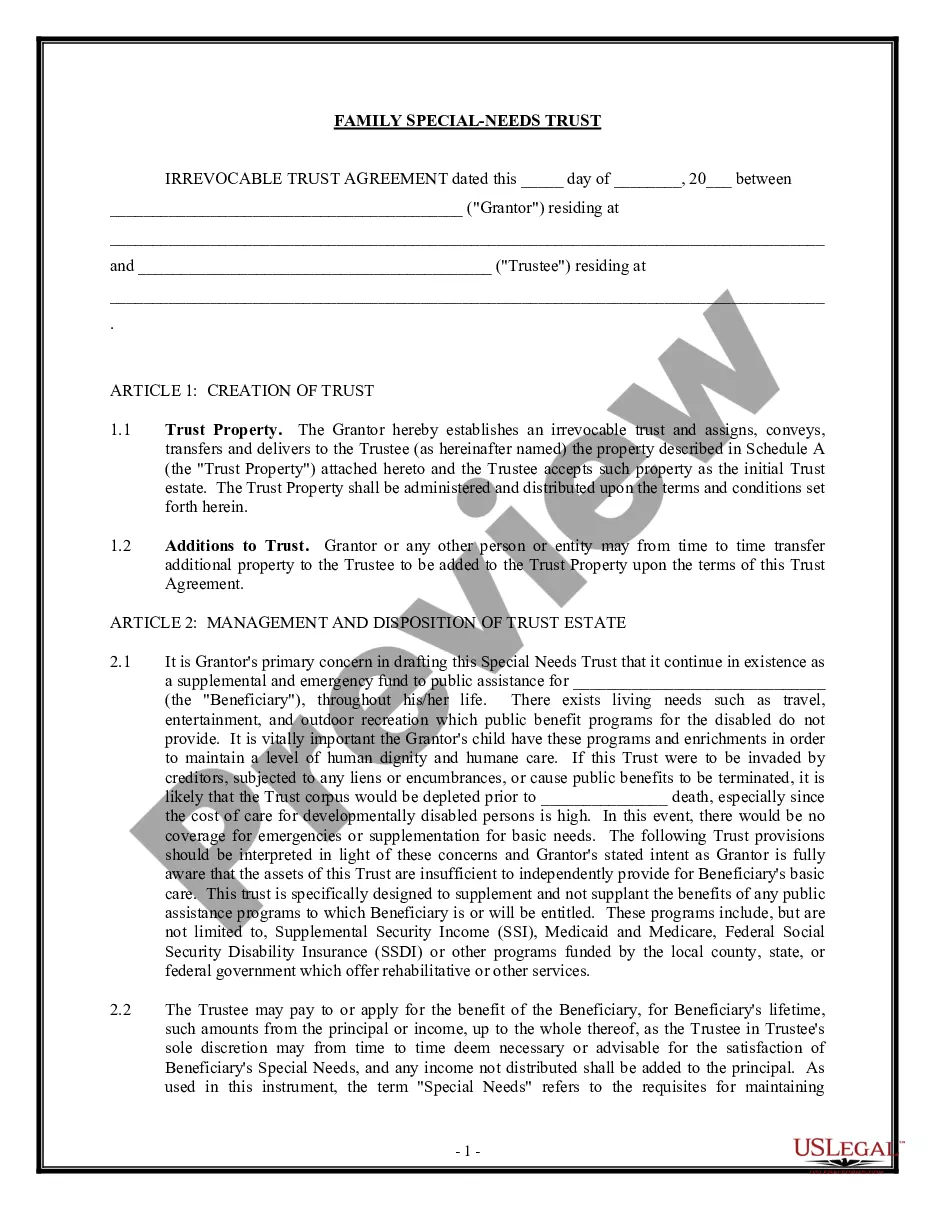
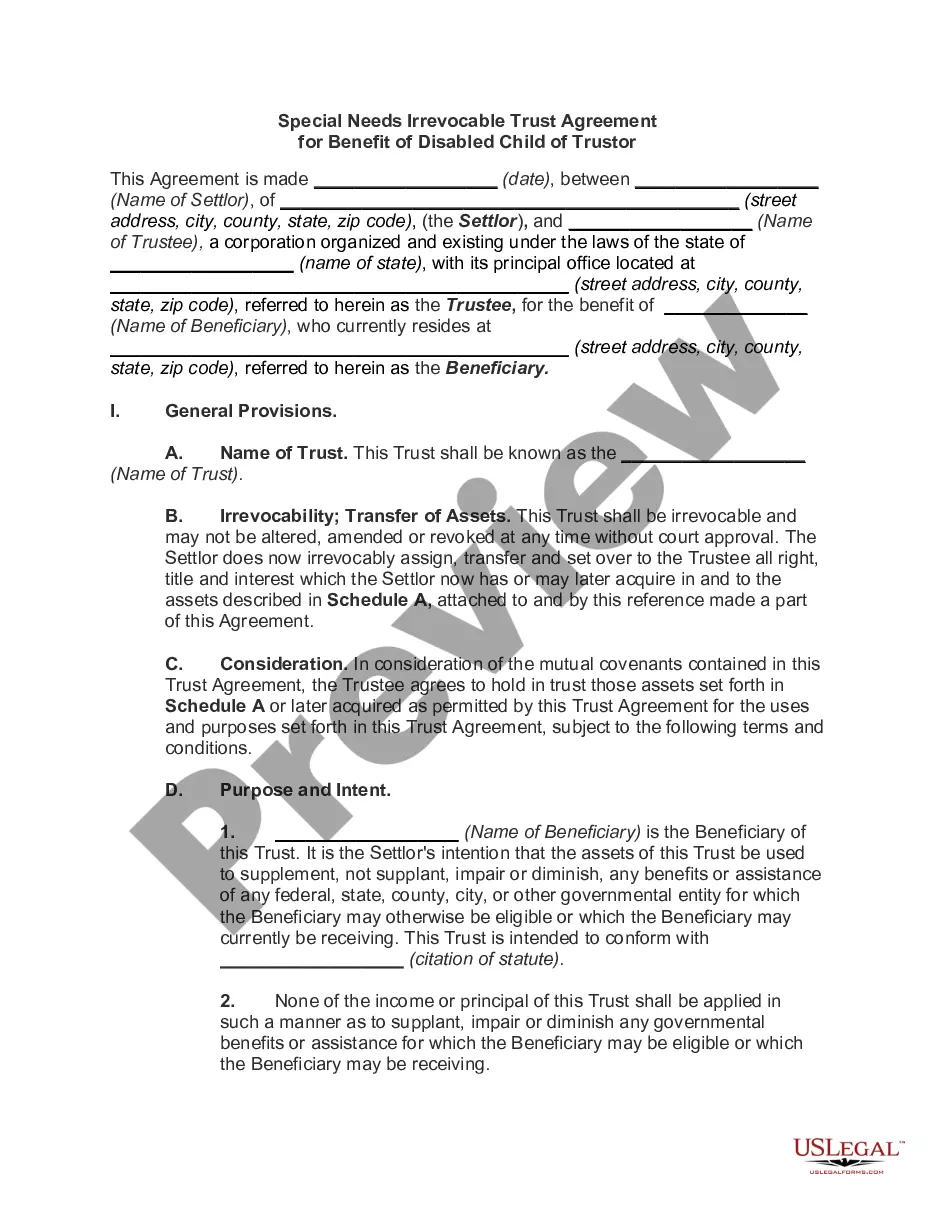
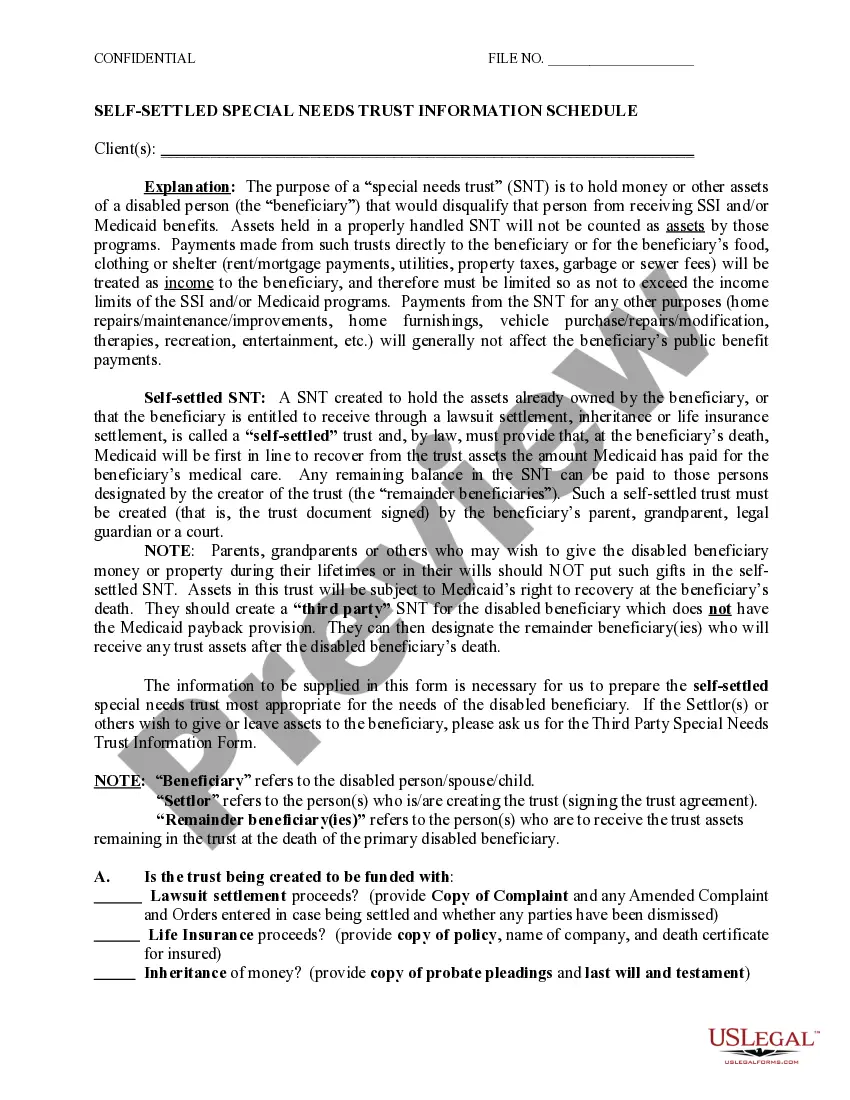
- Details on establishing a special needs trust to protect eligibility for government assistance.
- Important tips for integrating family assets into financial planning for special needs individuals.
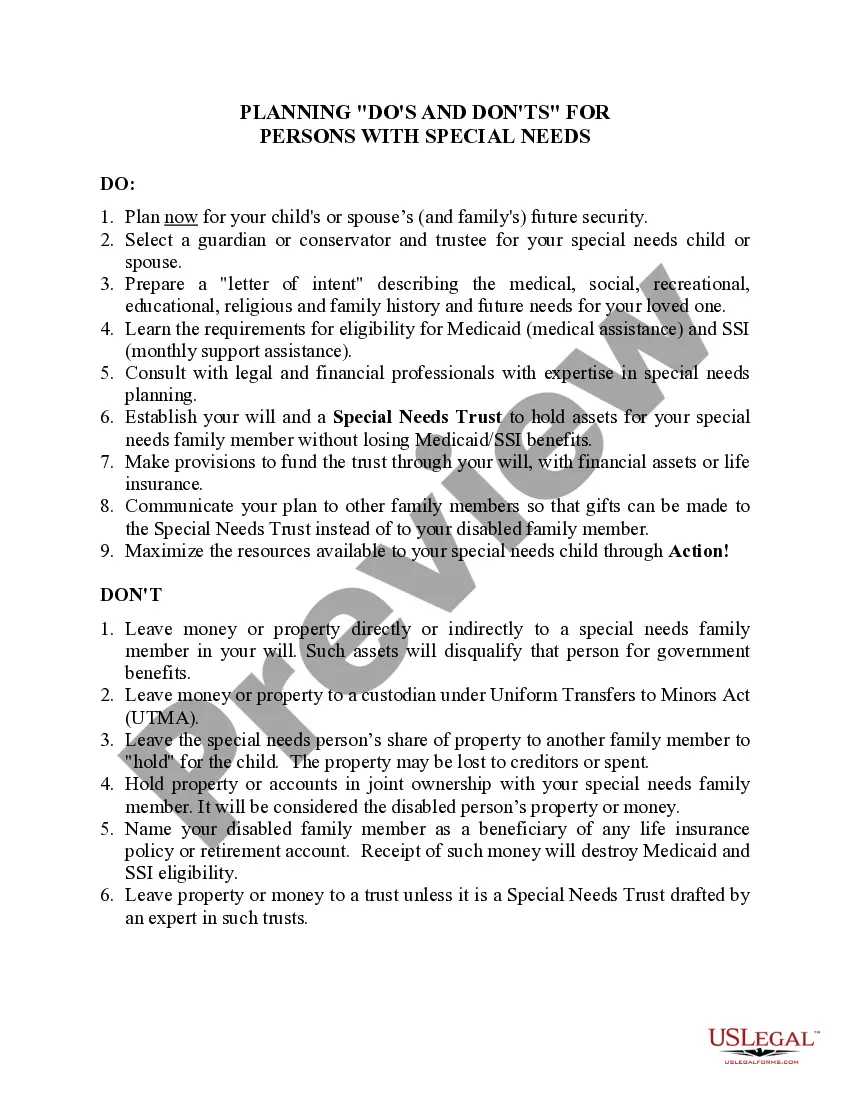
- A list of dos and don'ts for planning to ensure the well-being of the person with special needs.

Common use cases
This form is essential for families that include a child or adult with disabilities who may require lifelong support. You should use this form when planning is needed for the ongoing care, financial resources, and legal guardianship of your loved one with special needs. It is especially relevant when you want to ensure that governmental benefits are not jeopardized due to inheritances or gifts.
Who can use this document
- Families with children or adults who have disabilities requiring specialized care.
- Parents planning for the future wellbeing of their special needs child.
- Spouses of individuals with mental incapacity needing legal guidance for support arrangements.
- Legal guardians seeking to establish clear plans for the future care of their charge.
- Individuals looking to create or update their estate plans to include special needs considerations.
How to complete this form
- Identify the individual with special needs and the family members involved in the planning.
- Designate a guardian or conservator for your loved one, ensuring proper legal documentation.
- Prepare a letter of intent detailing the individual's preferences and care requirements.
- Consult with financial professionals to establish a special needs trust, if necessary.
- Discuss your plan with family members to ensure everyone understands and supports the arrangements.
Does this document require notarization?
This form usually doesn’t need to be notarized. However, local laws or specific transactions may require it. Our online notarization service, powered by Notarize, lets you complete it remotely through a secure video session, available 24/7.
Get your form ready online
Our built-in tools help you complete, sign, share, and store your documents in one place.
Make edits, fill in missing information, and update formatting in US Legal Forms—just like you would in MS Word.
Download a copy, print it, send it by email, or mail it via USPS—whatever works best for your next step.
Sign and collect signatures with our SignNow integration. Send to multiple recipients, set reminders, and more. Go Premium to unlock E-Sign.
If this form requires notarization, complete it online through a secure video call—no need to meet a notary in person or wait for an appointment.
We protect your documents and personal data by following strict security and privacy standards.

Make edits, fill in missing information, and update formatting in US Legal Forms—just like you would in MS Word.

Download a copy, print it, send it by email, or mail it via USPS—whatever works best for your next step.

Sign and collect signatures with our SignNow integration. Send to multiple recipients, set reminders, and more. Go Premium to unlock E-Sign.

If this form requires notarization, complete it online through a secure video call—no need to meet a notary in person or wait for an appointment.

We protect your documents and personal data by following strict security and privacy standards.
Common mistakes
- Failing to prepare a letter of intent, leaving caregivers without crucial information.
- Directly gifting money or property to the individual with special needs, which could affect their benefit eligibility.
- Not consulting a legal professional when establishing a special needs trust.
- Neglecting to inform family members about the special needs trust and its purpose.
Benefits of using this form online
- Convenient access to essential legal planning documents directly from your home.
- Editable templates that allow for individual customization to meet unique family needs.
- Reliable and validated content, drafted by licensed attorneys with expertise in special needs planning.
Main things to remember
- Advance planning is critical for the care and financial support of individuals with disabilities.
- A special needs trust protects eligibility for government assistance while allowing the preservation of funds.
- Clear communication with family members is essential to ensure understanding and alignment on the care plan.
Looking for another form?
Form popularity
FAQ
Within a family, a child can receive up to half of the parent's full retirement or disability benefits. If a child receives survivors benefits, they can get up to 75% of the deceased parent's basic Social Security benefit. There is a limit, however, to the amount of money we can pay to a family.
The most important thing to say is I'm here for you. Call/text me anytime. Offer to bring food to the hospital and ask what else they need which might include helping with other children at home, taking care of their pets temporarily, etc.
People with physical and mobility impairments need decent canes, walkers, wheelchairs, and above all, barrier free homes and neighborhoods. Some also need everyday personal help to do everyday self-care tasks.
Planning to secure your autistic child's future Put your estate in order.Determine if you need to establish guardianship or supported decision-making.Consider a special needs trust and/or ABLE account.Develop a Letter of Intent.Understand the rules of government assistance.Plan for housing.
How Parents Can Teach Children About Peers With Special Needs Educate Your Kids and Share the Basics With Them.You Don't Have to Explain Every Last Detail.Teach Your Child That Everyone Is Different.Emphasize That Just Because Someone Has a Physical Disability Doesn't Mean They Can't Do Something.Teach Patience.
Get started on some of these now, so you'll have peace of mind down the road. Create a Special Needs Trust.Write a Will.Name a Guardian.Name a Trustee.Build Your Savings.Write a Letter of Intent.Plan for Your Child's Independence.Apply for Guardianship or Power of Attorney.
Here are some ideas to help you set the stage for a great year for everyone. Try basic modifications.See the child as a child first.Reexamine your beliefs and knowledge.Tap into the expertise of special education professionals.Make simple changes.Strategies to try.Determine where individual children need more support.