Self-Settled Special Needs Trust Information Schedule
About this form
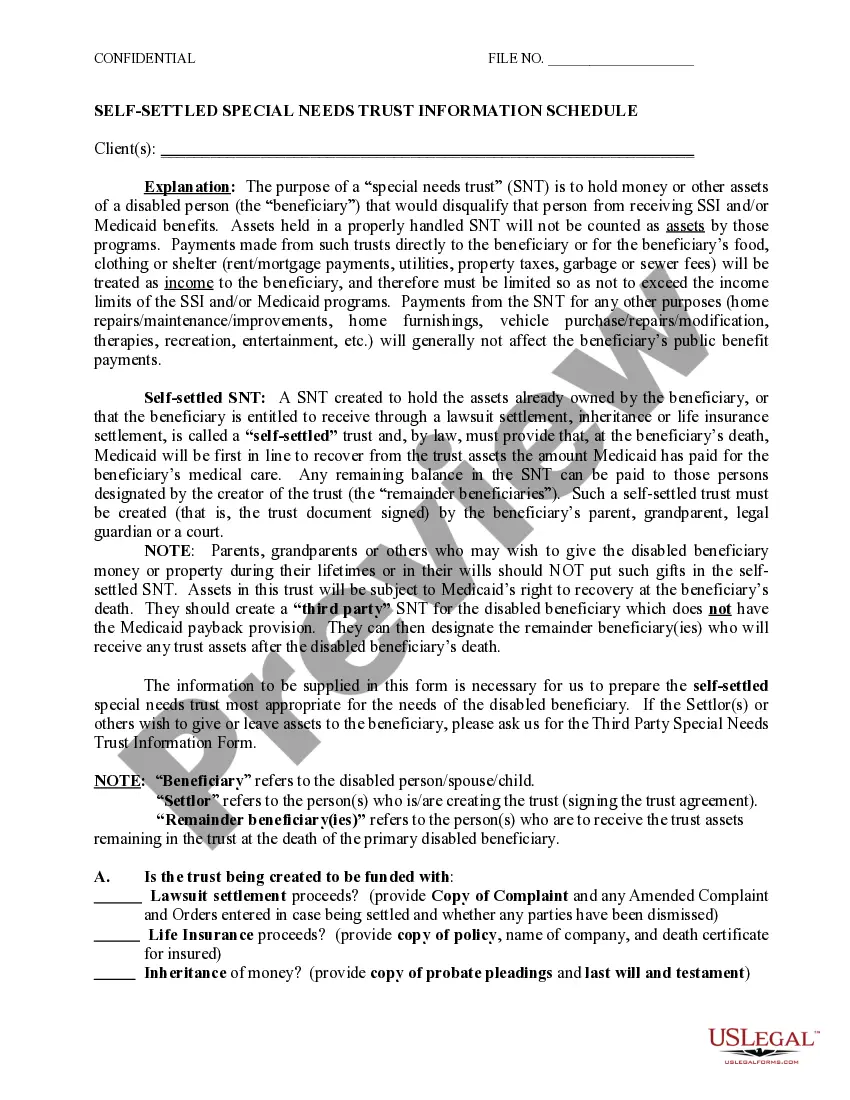
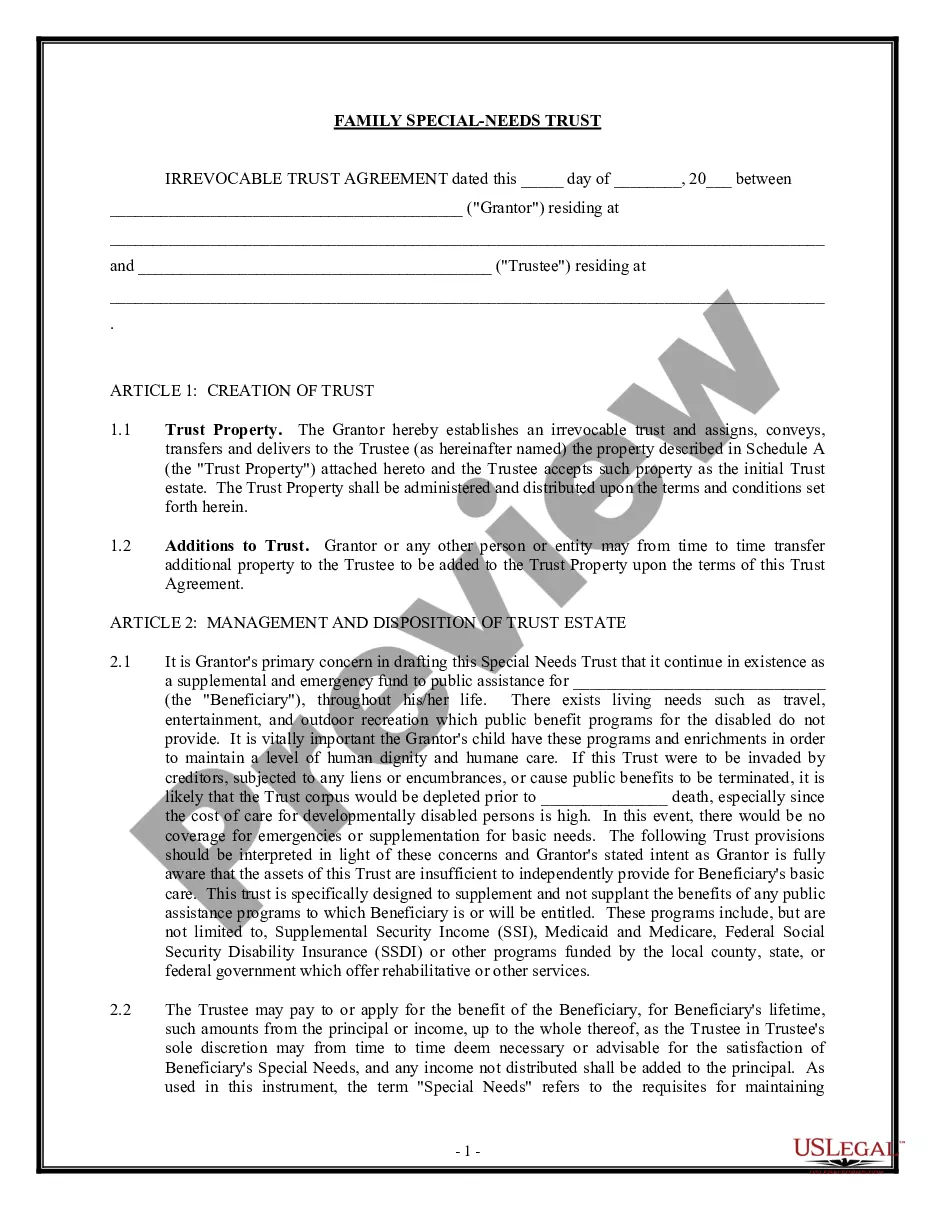
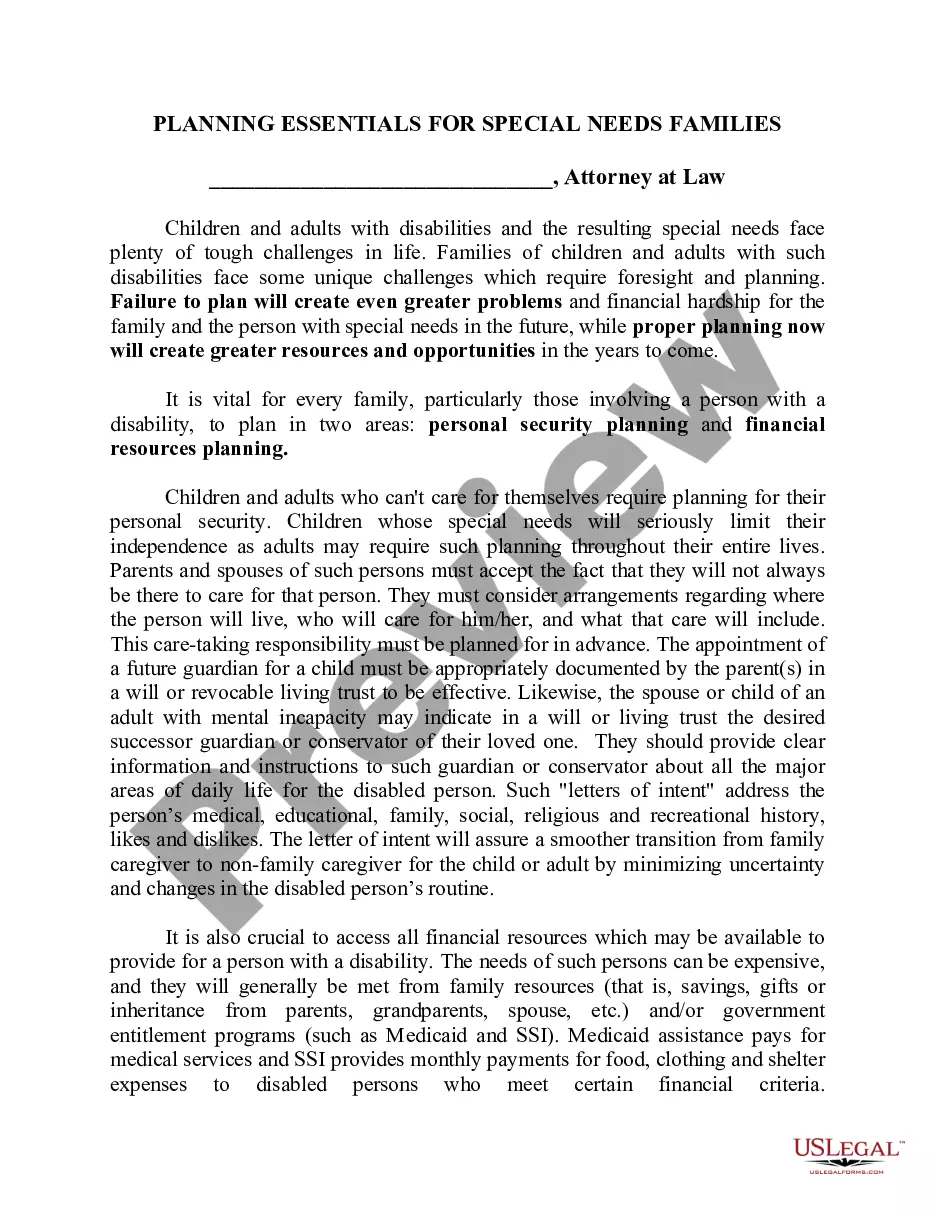
The Self-Settled Special Needs Trust Information Schedule is a legal document designed to summarize important information that assists an attorney in preparing and advising clients regarding self-settled special needs trusts (SNTs). Unlike third-party special needs trusts, which are established by individuals who wish to benefit a disabled person without affecting their public benefits, this form specifically caters to trusts funded by the disabled personâs own assets. Its primary purpose is to enable beneficiaries to maintain eligibility for essential government benefits while allowing for funds to be used for additional needs and comforts.
Key components of this form
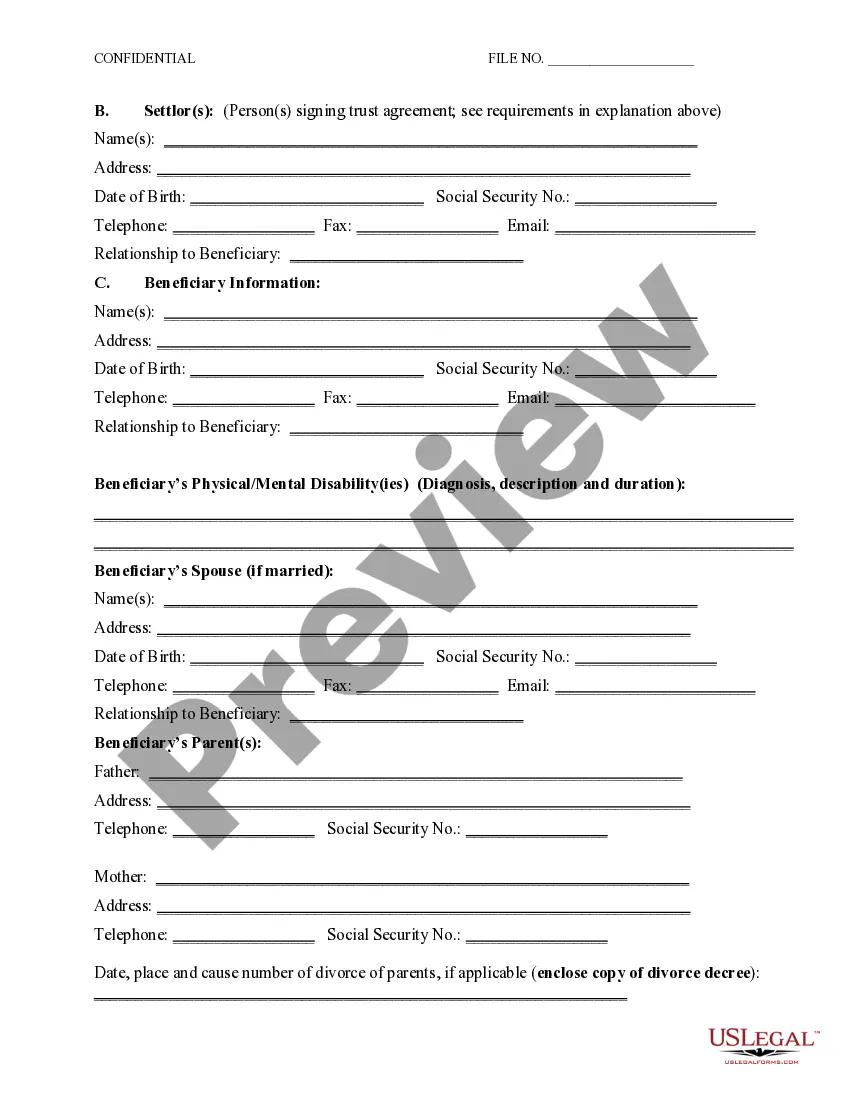
- Client and beneficiary identification.
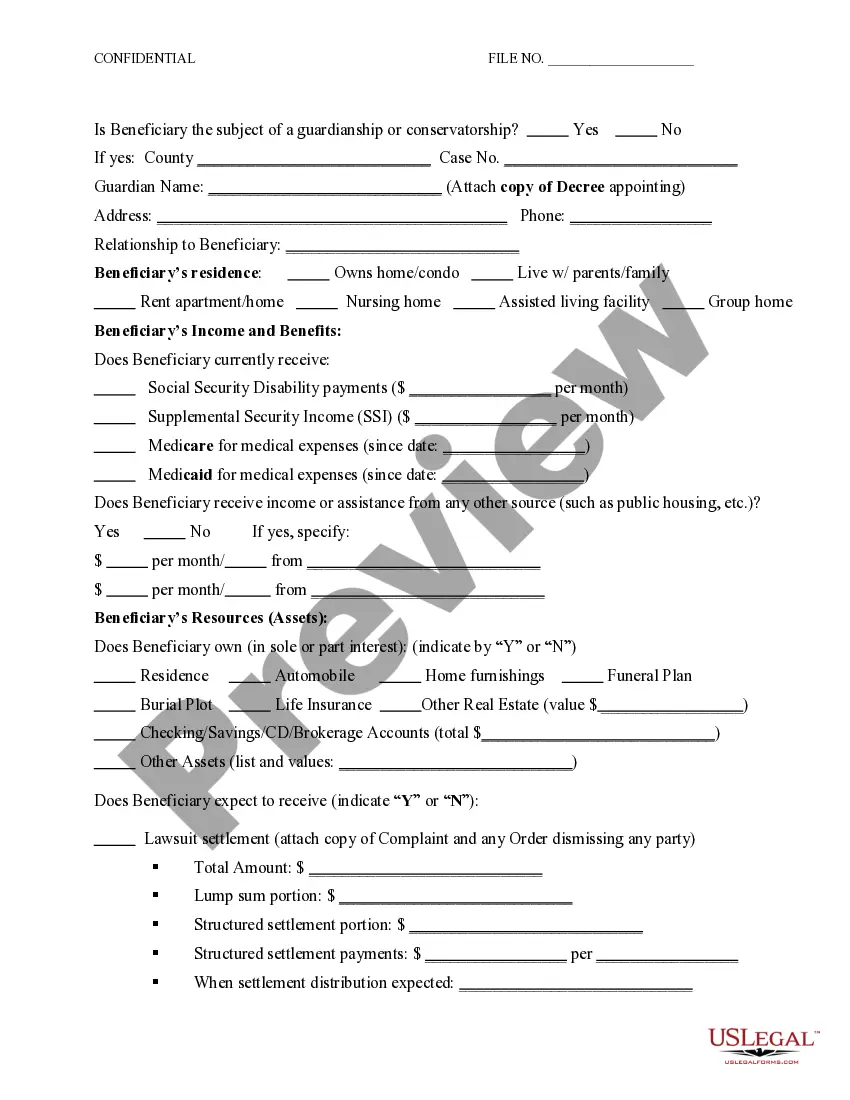
- Details on funding sources, such as lawsuit settlements, life insurance proceeds, or inheritance.
- Information regarding the settlor, who establishes the trust.
- Beneficiary's details and any relevant disabilities.
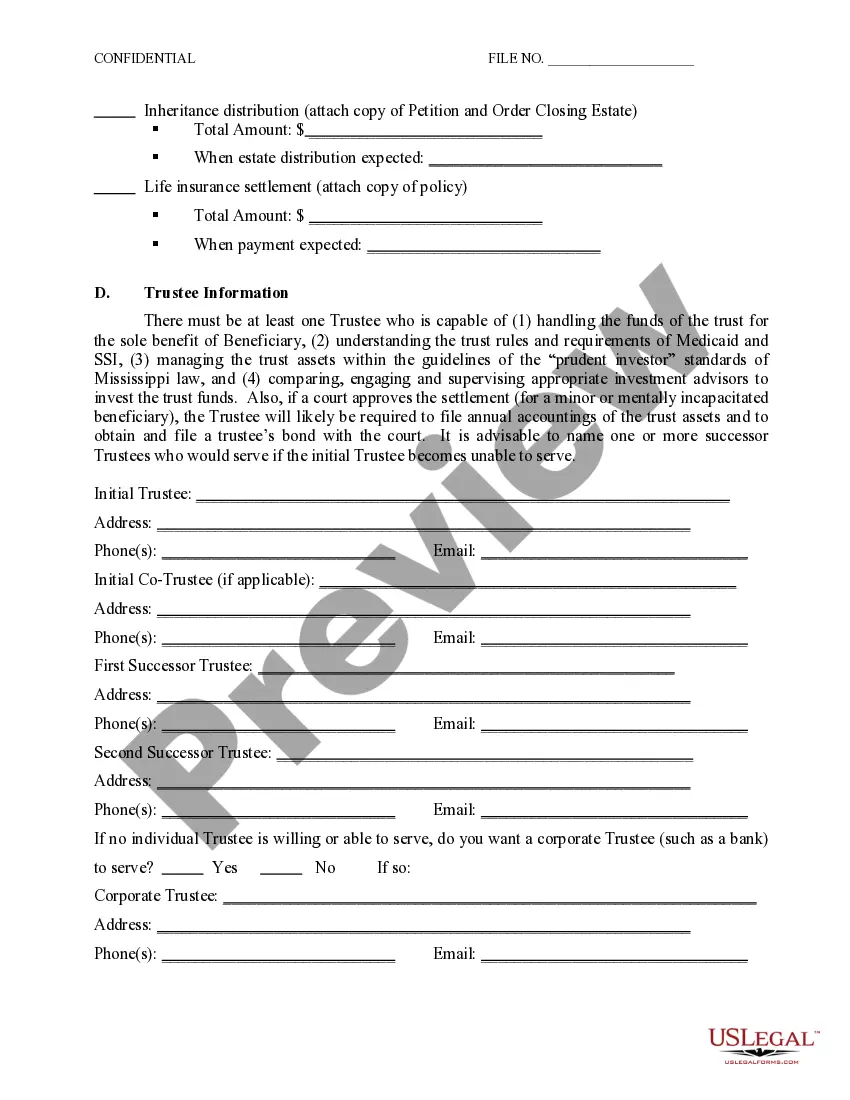
- Trustee information, with requirements for managing the trust.
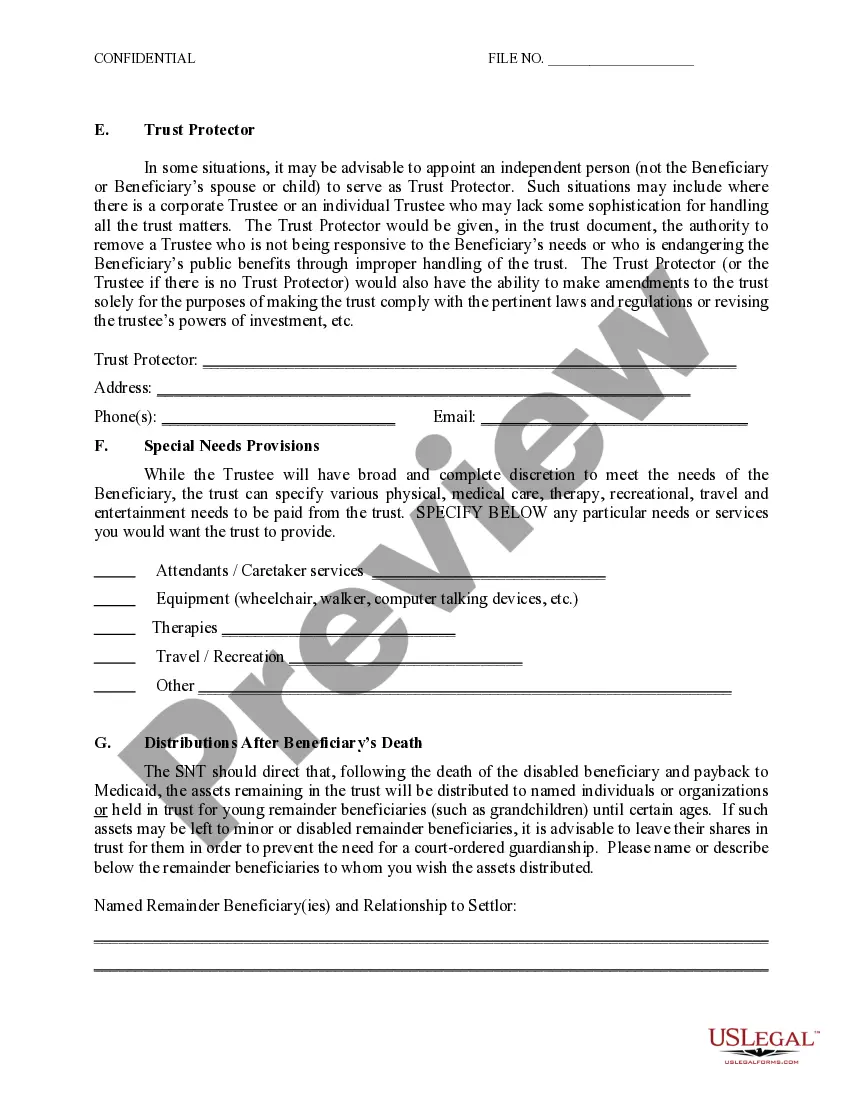
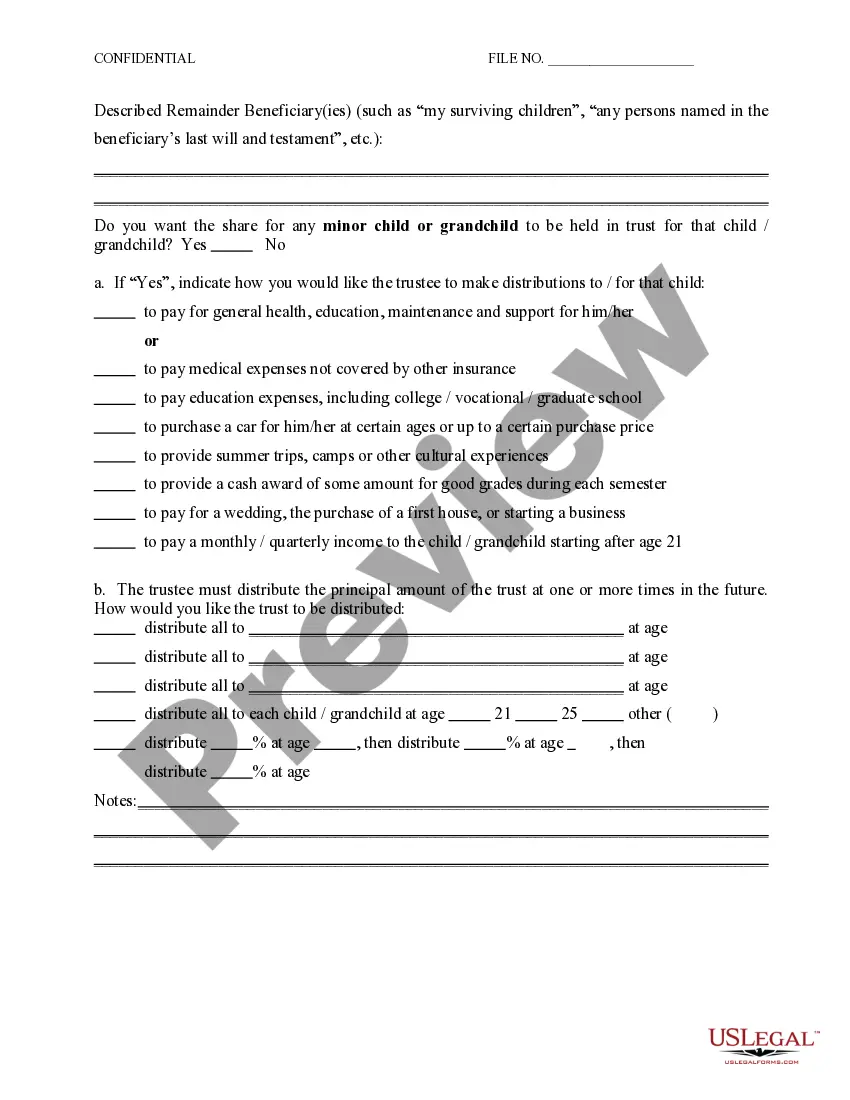
- Provisions for distributions after the beneficiary's death.
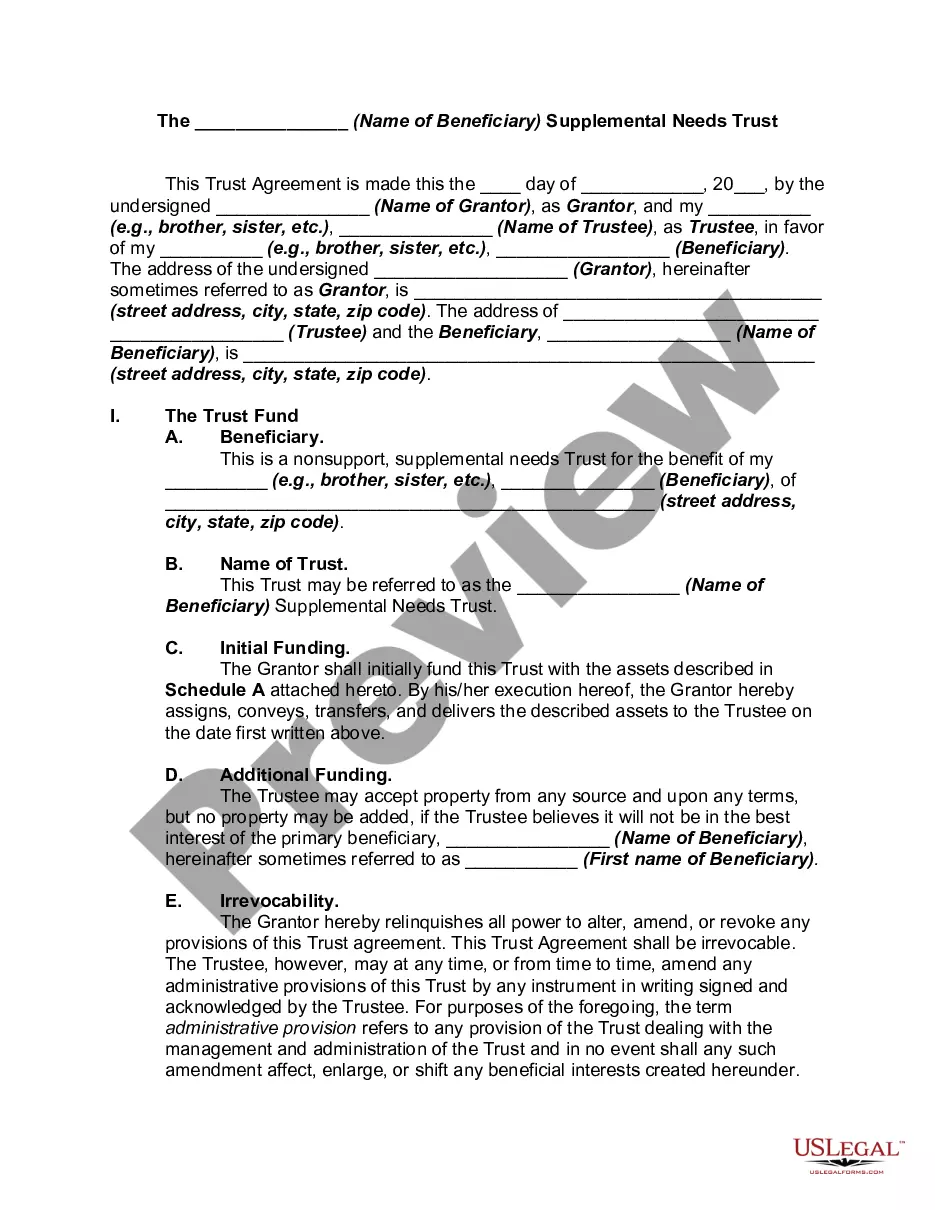

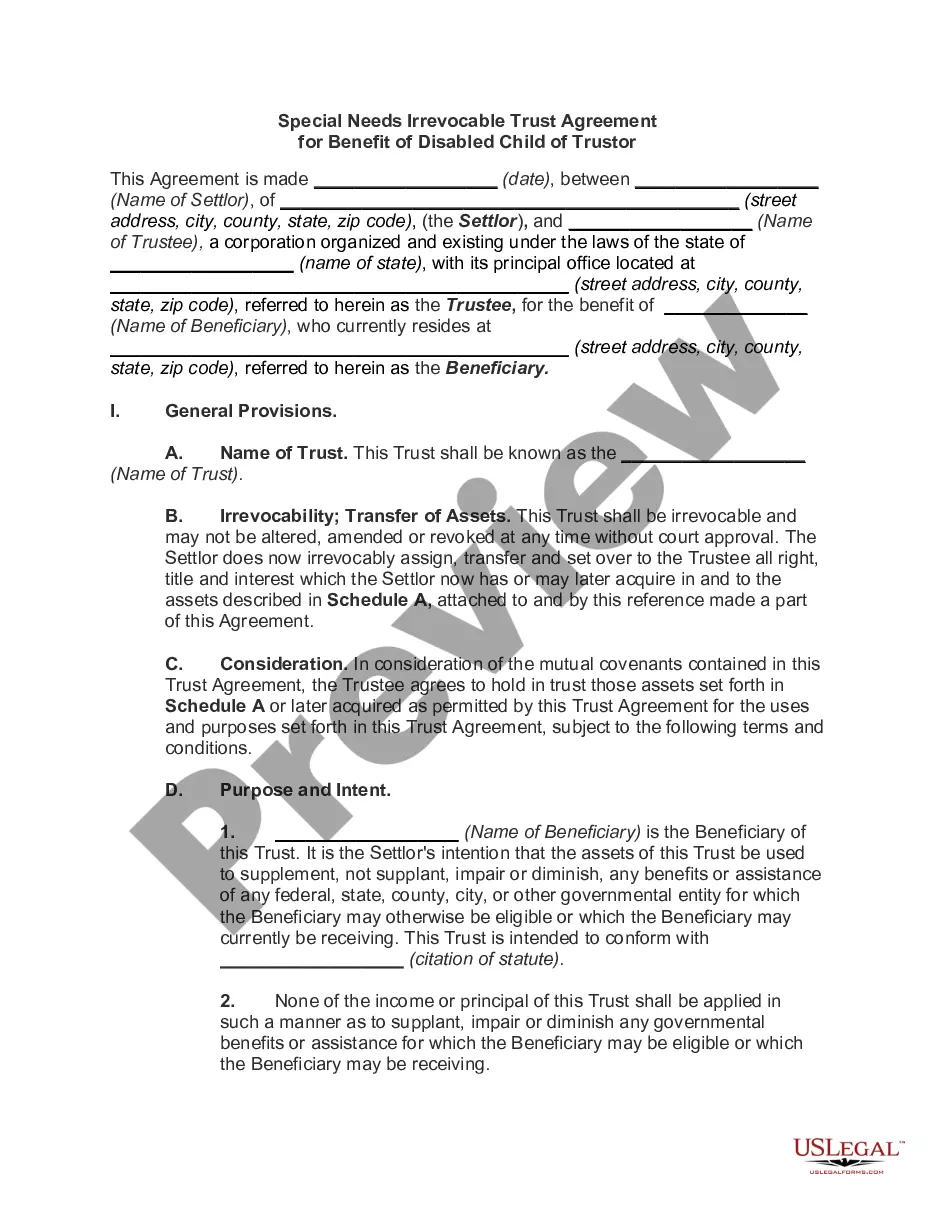
When to use this form
This form is necessary when establishing a self-settled special needs trust for a disabled beneficiary. It is particularly relevant in situations where the beneficiary has received assets from a lawsuit settlement, an inheritance, or life insurance benefits, which could otherwise jeopardize their eligibility for Supplemental Security Income (SSI) and Medicaid benefits. Using this form can help ensure that the trust meets legal requirements and is structured correctly to protect the beneficiary's government assistance.
Who can use this document
- Parents or grandparents of a disabled person looking to manage assets without impacting their public benefits.
- Legal guardians who need to create a trust for the benefit of an individual with disabilities.
- Individuals who have received a lawsuit settlement, inheritance, or life insurance payment and want to protect those assets in a trust.
- Attorneys advising clients on special needs financial planning.
Steps to complete this form
- Gather necessary information about the client, beneficiary, and sources of fund for the trust.
- Complete the sections detailing the settlor, beneficiary information, and disability specifics.
- Identify the trustee(s) and, if needed, a trust protector to ensure proper management of trust assets.
- Specify the needs and purposes for which trust funds can be utilized.
- Detail the distribution plan for any remaining assets following the beneficiary's death.
Notarization guidance
This form does not typically require notarization unless specified by local law. However, having the trust agreement notarized can provide additional validation and security for the documents, especially in legal proceedings.
Get your form ready online
Our built-in tools help you complete, sign, share, and store your documents in one place.
Make edits, fill in missing information, and update formatting in US Legal Forms—just like you would in MS Word.
Download a copy, print it, send it by email, or mail it via USPS—whatever works best for your next step.
Sign and collect signatures with our SignNow integration. Send to multiple recipients, set reminders, and more. Go Premium to unlock E-Sign.
If this form requires notarization, complete it online through a secure video call—no need to meet a notary in person or wait for an appointment.
We protect your documents and personal data by following strict security and privacy standards.

Make edits, fill in missing information, and update formatting in US Legal Forms—just like you would in MS Word.

Download a copy, print it, send it by email, or mail it via USPS—whatever works best for your next step.

Sign and collect signatures with our SignNow integration. Send to multiple recipients, set reminders, and more. Go Premium to unlock E-Sign.

If this form requires notarization, complete it online through a secure video call—no need to meet a notary in person or wait for an appointment.

We protect your documents and personal data by following strict security and privacy standards.
Common mistakes to avoid
- Failing to provide complete and accurate information about beneficiary's income and assets.
- Neglecting to consult with an attorney regarding specific state laws and requirements.
- Inadequately describing the uses of the trust funds, which can lead to misuse and impact eligibility for benefits.
Benefits of completing this form online
- Convenience of completing the form from anywhere with an internet connection.
- Editable format allows for seamless modifications to cater to specific needs.
- Access to templates drafted by licensed attorneys which ensures legal compliance.
Looking for another form?
Form popularity
FAQ
Disadvantages of a Special Needs Trust The beneficiary lacks control of the funds. The trustee is in charge of the trust, and the person the trust is created to benefit has little say in how their own money is spent.The trust must pay back Medicaid.
What is a self-settled trust? These trusts, also known as domestic asset protection trusts, self-designated trusts, or spendthrift self-settled trusts, are irrevocable trusts that allow the grantor to also be a beneficiary of the trust.
Self-settled trust (also called a spendthrift trust) is a type of trust allowed in a small number of states where a person that creates the trust is also the beneficiary of the trust. The assets are permanently in the trust and controlled by the trustee which keeps the assets from the reach of most creditors.
settled asset protection trust allows for a grantor to convey her own assets into a trust where she is also the sole beneficiary. This differs from a typical trust where the grantor conveys her own assets into a trust for the benefit of others?often her family members or charitable organizations.
settled spendthrift trust is an irrevocable trust in which the settlor is a beneficiary and the settlor's creditors generally can't reach the trust property. Several states ?including Delaware, Nevada, New Hampshire, South Dakota, Tennessee, and Wyoming?recognize selfsettled spendthrift trusts.
Social Security must be paid directly to the beneficiary. It cannot be paid to a trust. If you are receiving Social Security by direct deposit, you should leave the account that receives the payments outside of your trust.
Forming a holding company and subsidiaries protects properties from one another, and the self-settled trust protects the properties from any personal risks such as car accidents, divorces, the IRS and bankruptcy. Other Examples: Personal assets cannot be protected with a limited liability company.
SSDI does not depend upon having limited assets, and it is not affected by distributions from a Disability Trust.