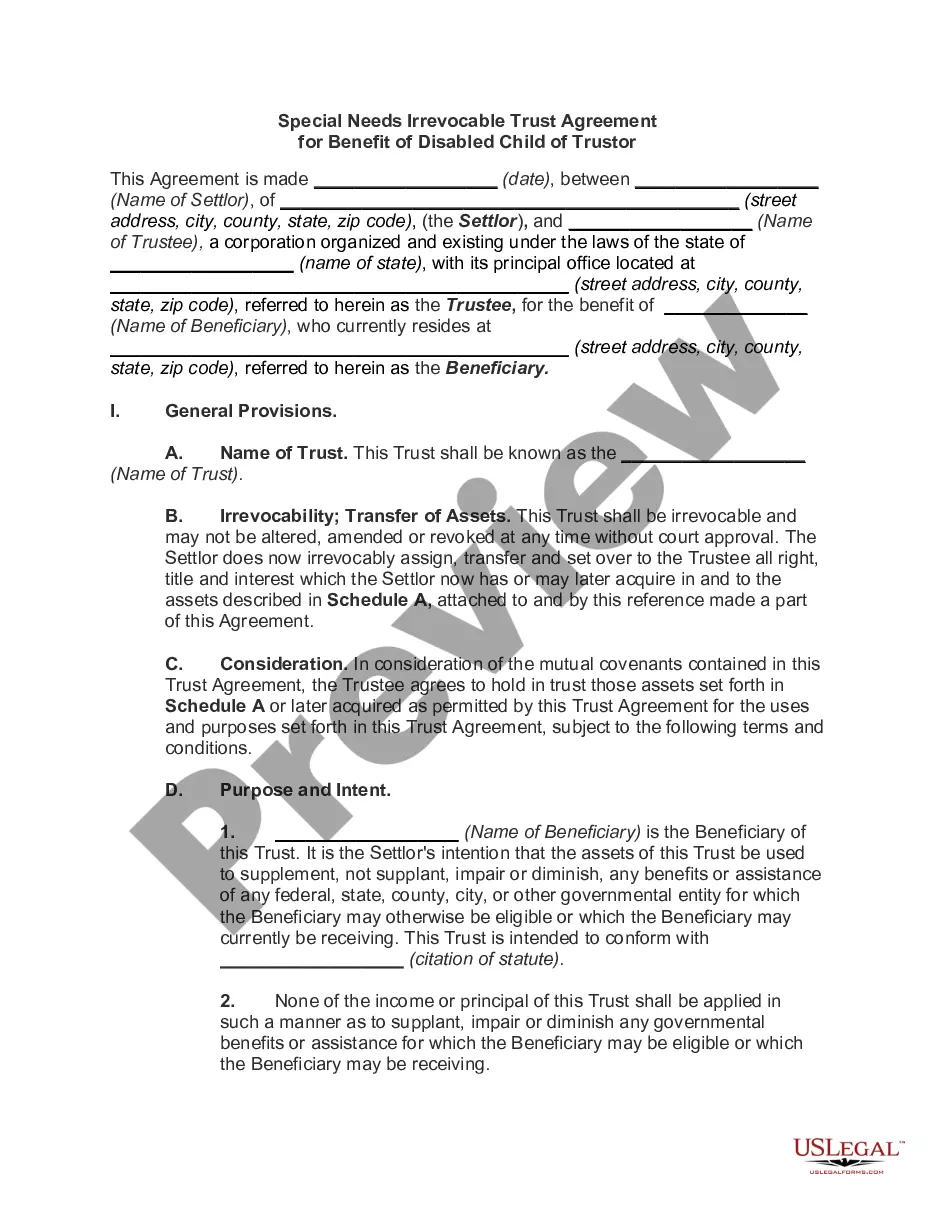
Special Needs Irrevocable Trust Agreement for Benefit of Disabled Child of Trustor
About this form
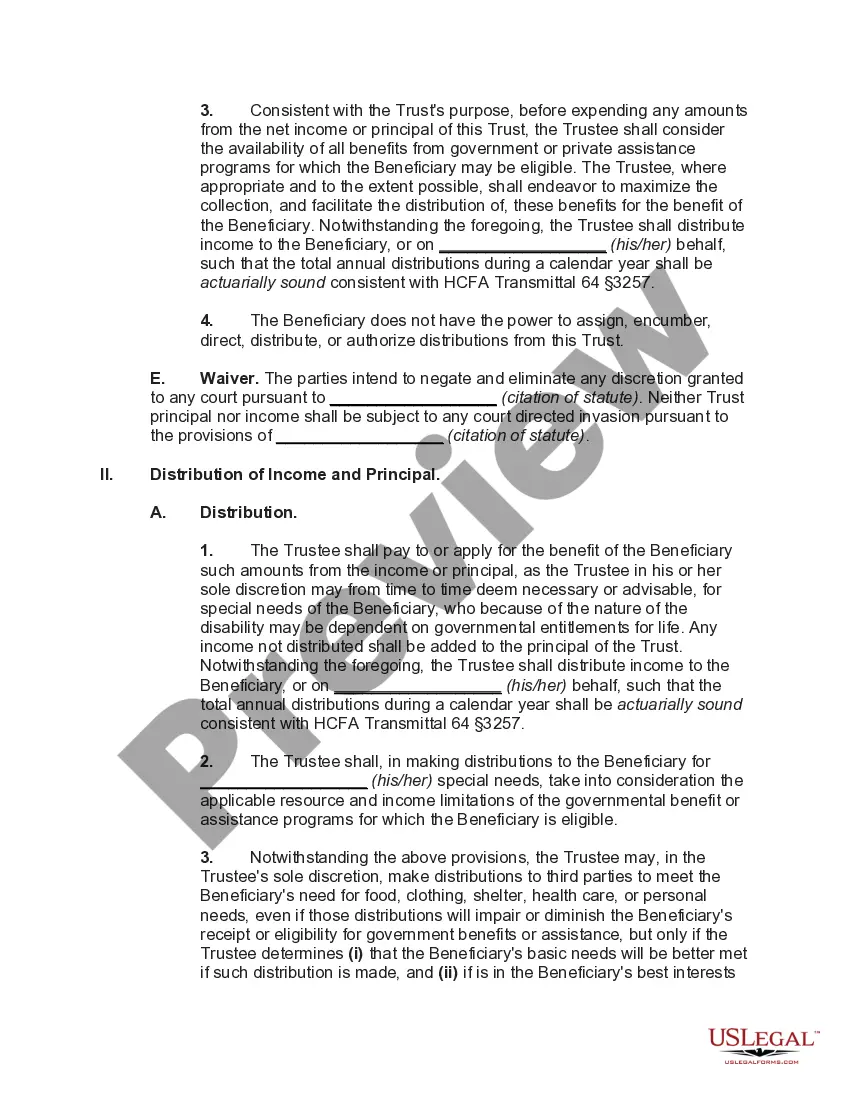
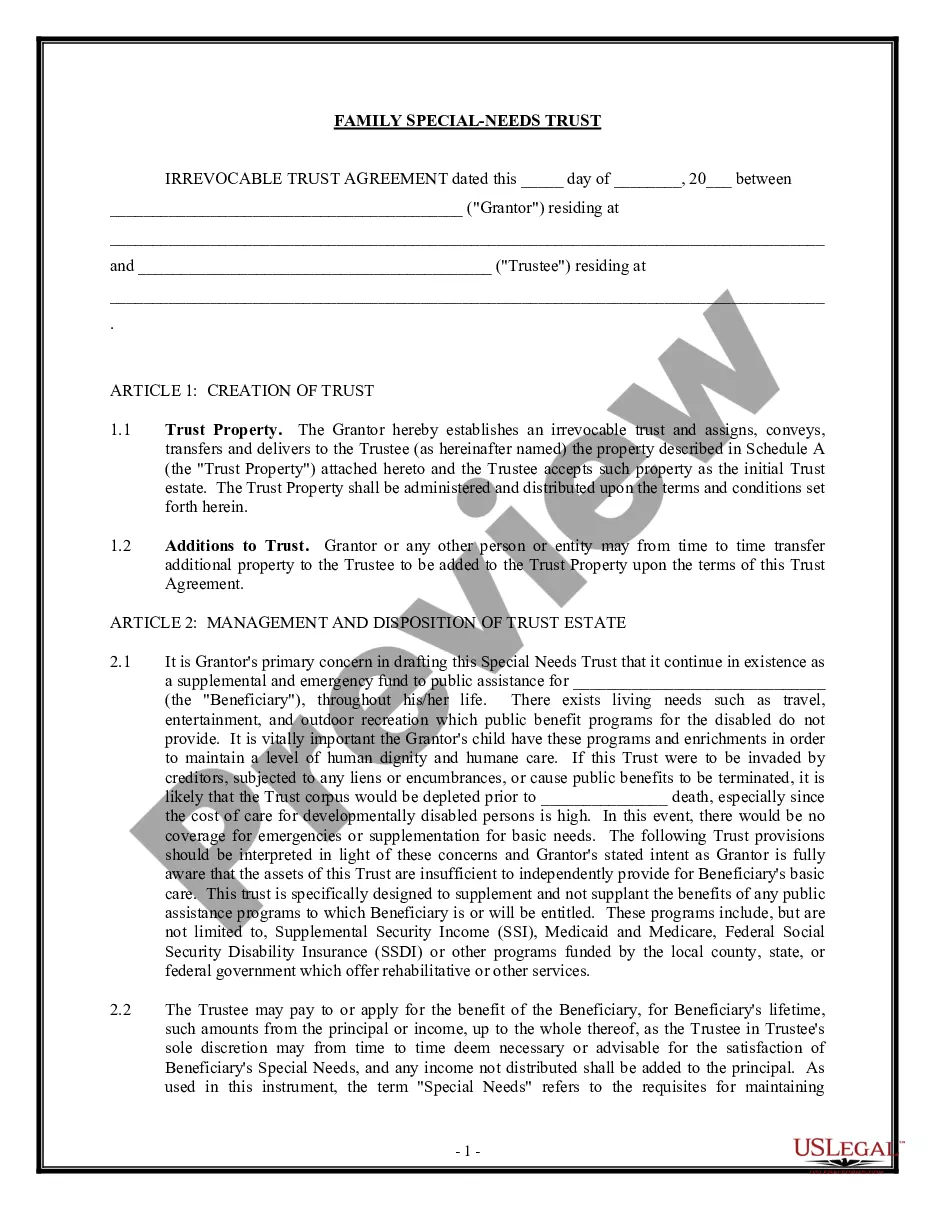
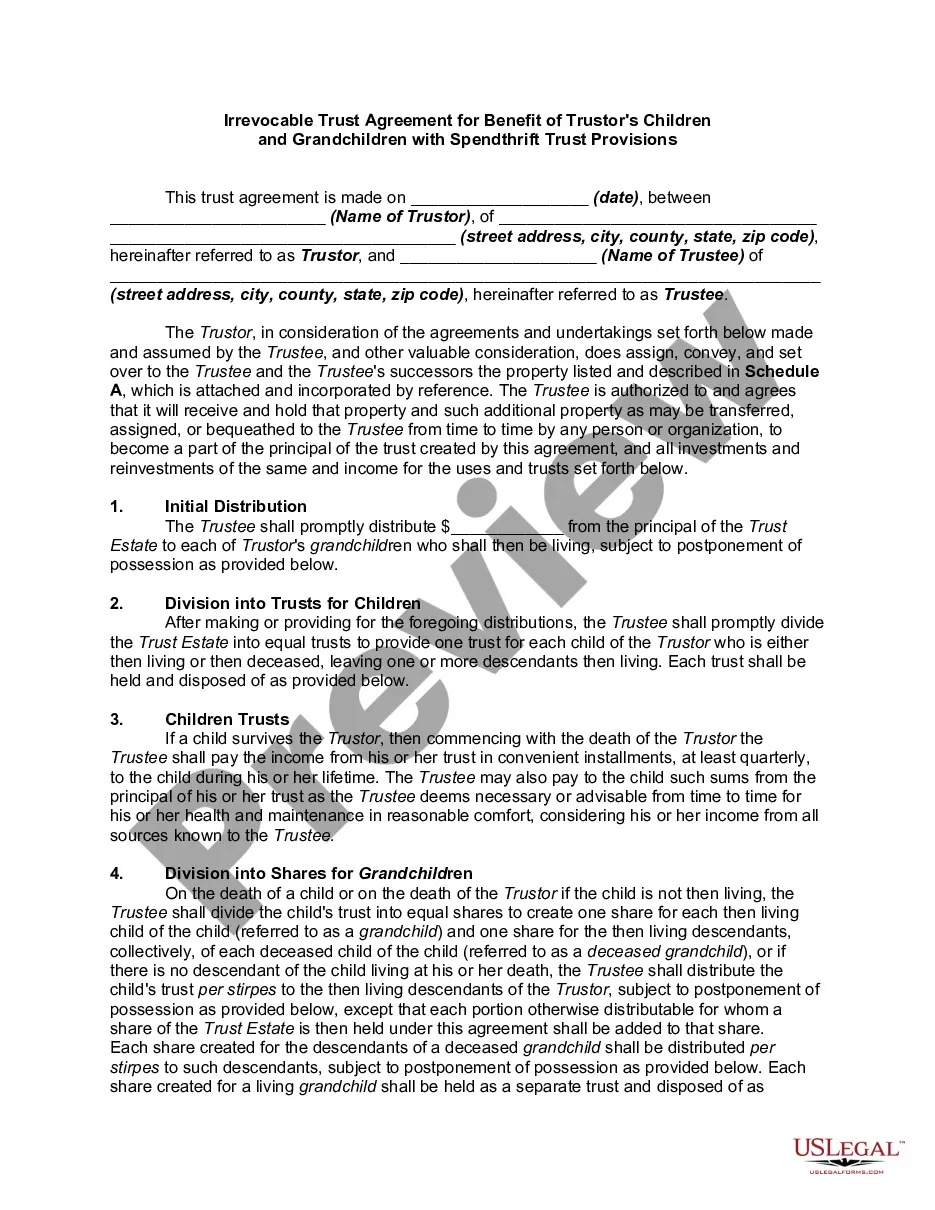
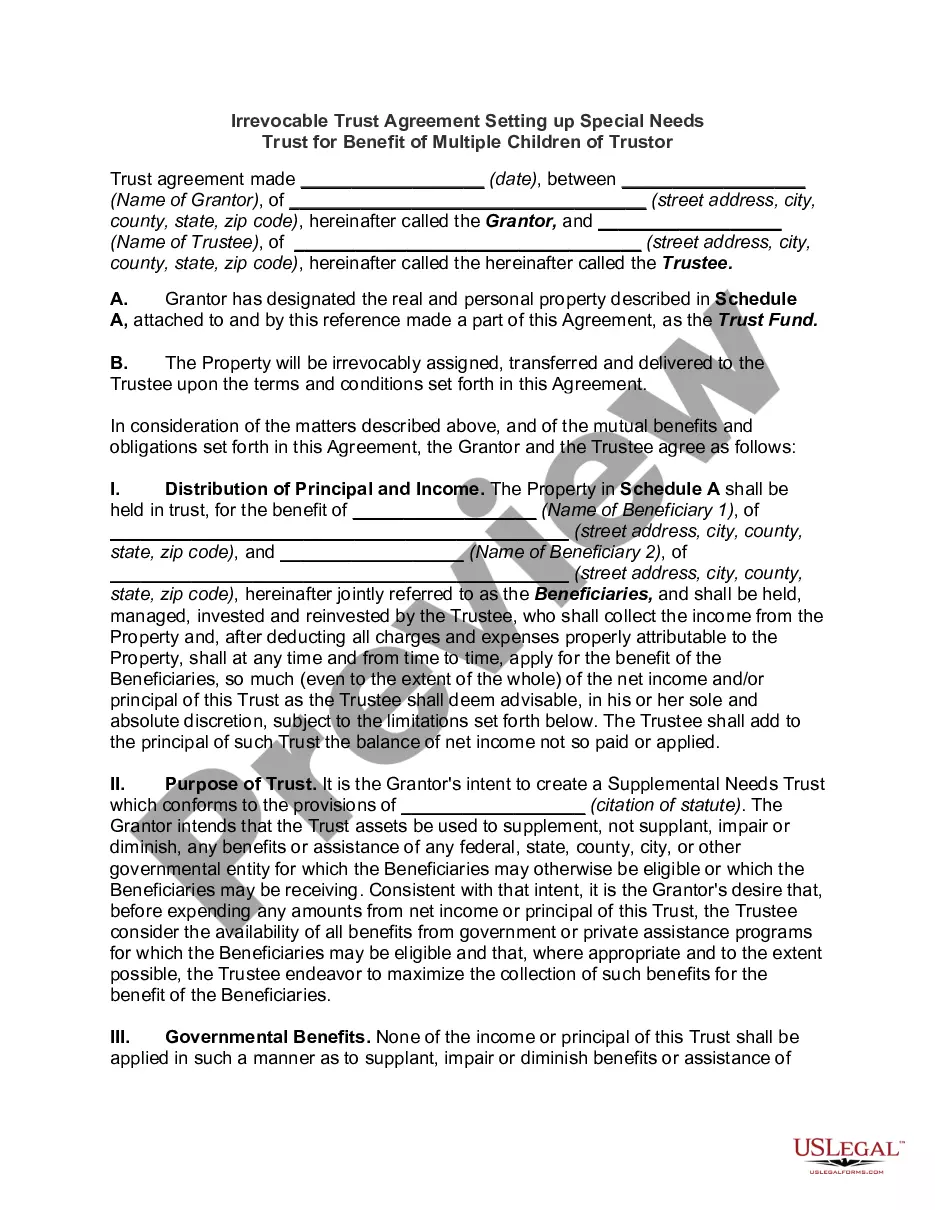
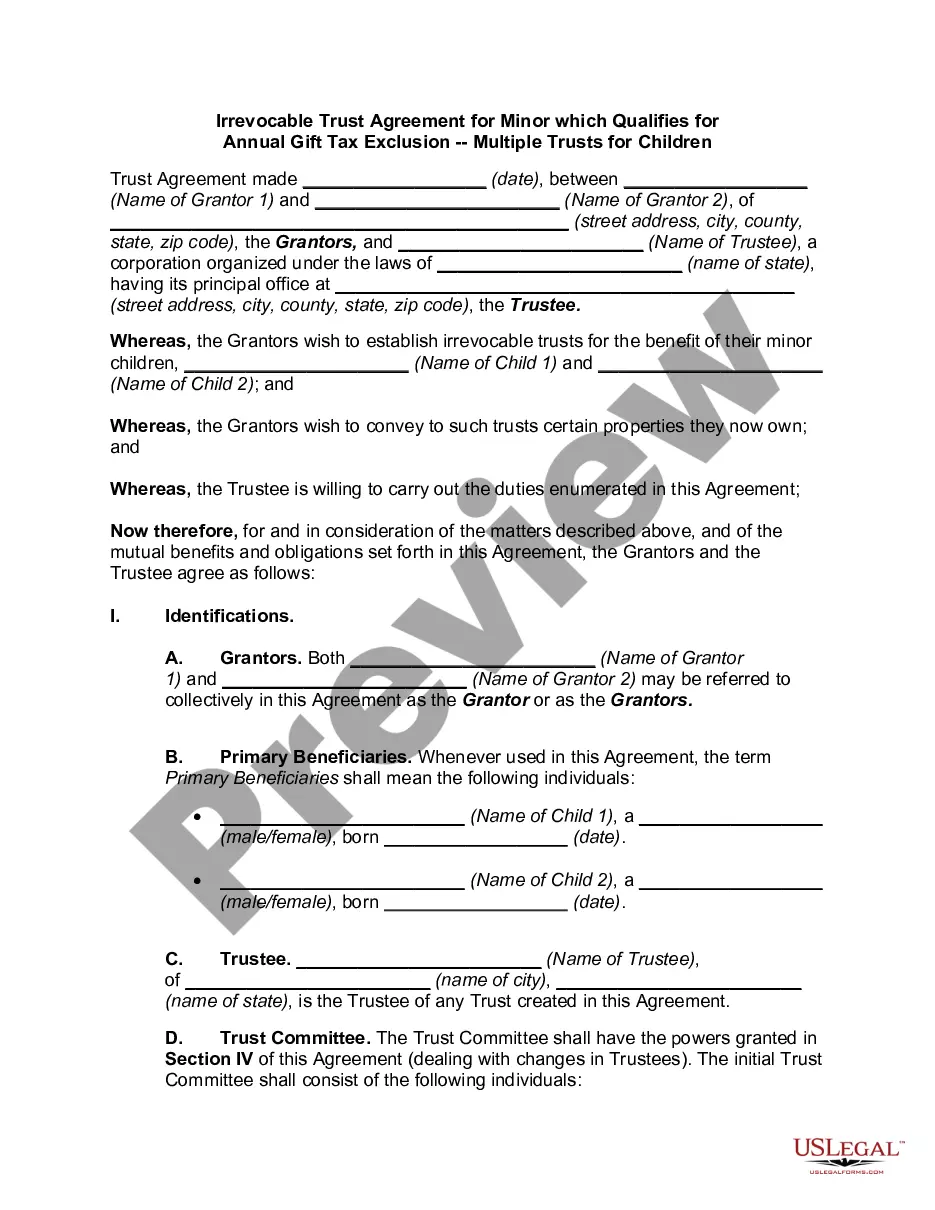
This Special Needs Irrevocable Trust Agreement for Benefit of Disabled Child of Trustor establishes a trust specifically designed to manage assets for the benefit of a disabled child. The primary purpose of this form is to create an irrevocable trust that supplements, rather than substitutes, government benefits the child may be receiving. This trust ensures that assets are preserved while still allowing for necessary services and support, distinguishing it from other types of trusts that may not have specific provisions regarding special needs beneficiaries.
Form components explained
- Name of Trust: Indicates the official title of the trust.
- Irrevocability Clause: Specifies that the trust cannot be altered or revoked without court approval.
- Beneficiary Information: Identifies the disabled child who will benefit from the trust.
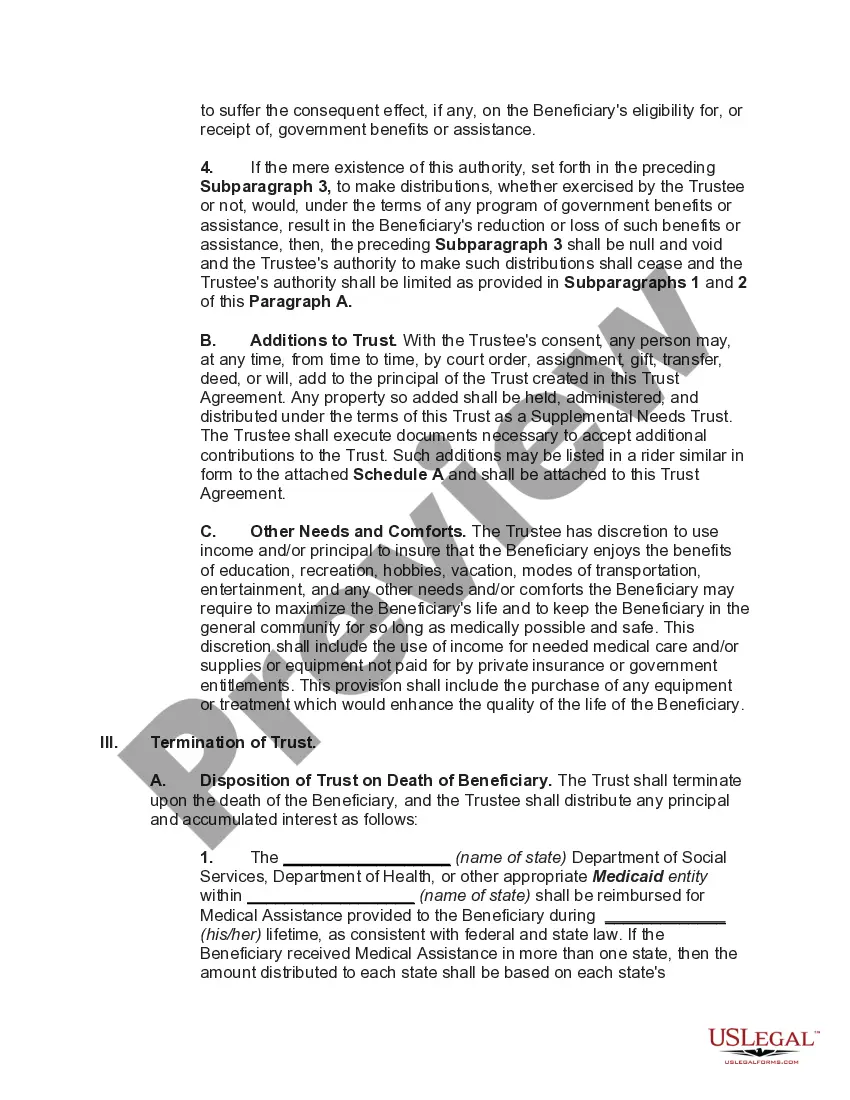
- Distribution Terms: Outlines how and when the trustee may distribute income or principal to the beneficiary.
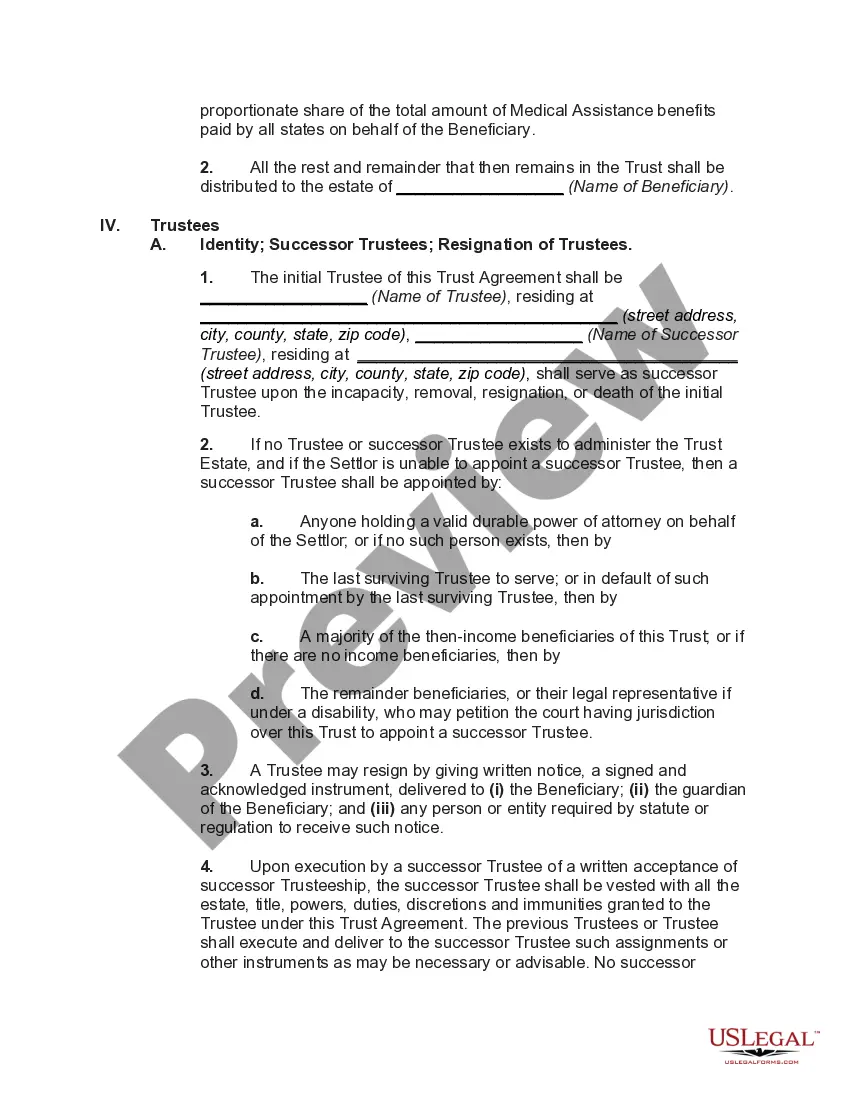
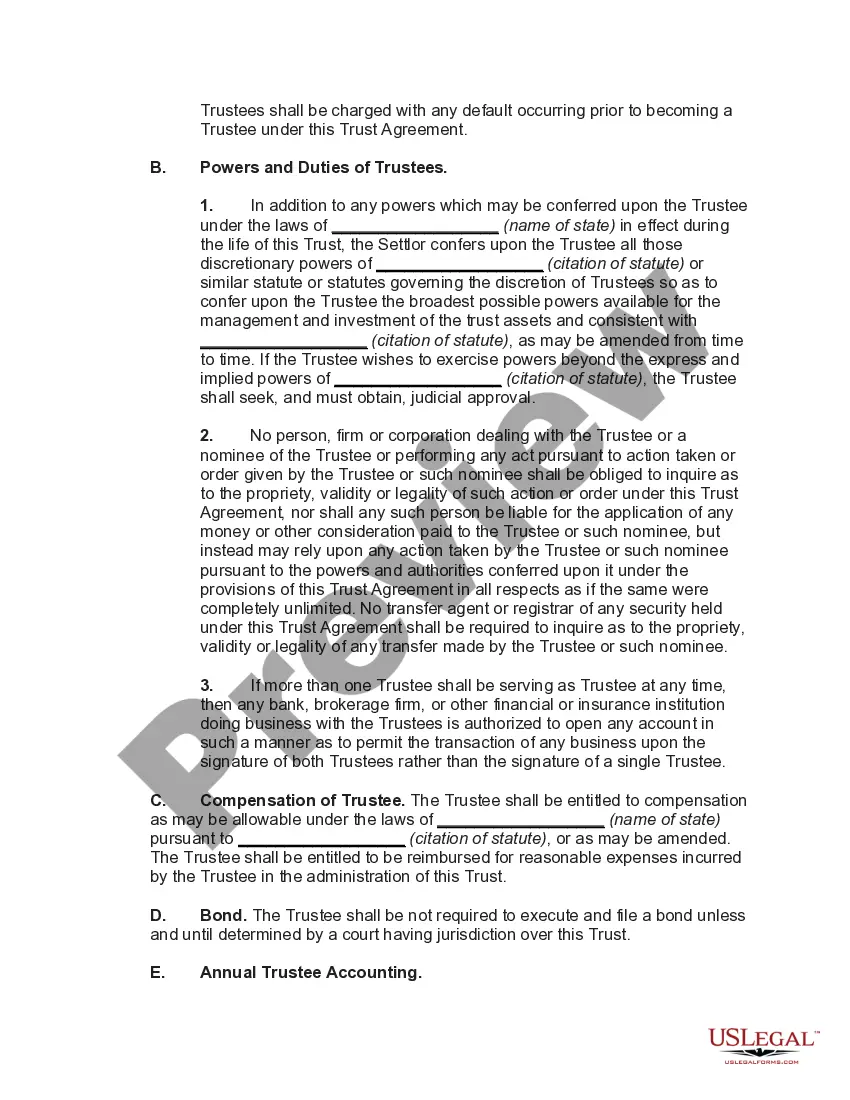
- Trustee's Powers: Details the powers granted to the trustee in managing the trust.
- Termination Conditions: Specifies what happens to the assets in the trust upon the death of the beneficiary.

When to use this form
This form is essential when a parent or guardian wants to establish a special needs trust for a disabled child, ensuring that the child's financial stability is maintained without jeopardizing eligibility for government assistance programs. It is particularly relevant when parents are planning for their child's future care and financial needs, especially if the child relies on government benefits that may be affected by additional income or assets.
Who needs this form
- Parents or guardians of a disabled child seeking to create a financial support mechanism.
- Individuals looking to manage specific assets for a disabled child's benefit while safeguarding eligibility for aid.
- Trustees appointed to manage such trusts on behalf of the beneficiaries.
Completing this form step by step
- Identify the parties involved: Settlor (parent/guardian), Trustee, and Beneficiary (disabled child).
- Specify the name of the trust and provide accurate addresses for all parties.
- Complete the irrevocability clause by understanding its implications and citing relevant statutes.
- Detail the distribution provisions, aligning them with governmental benefit regulations to avoid jeopardizing eligibility.
- Include a termination clause regarding the assets upon the beneficiary's death.
Does this form need to be notarized?
In most cases, this form does not require notarization. However, some jurisdictions or signing circumstances might. US Legal Forms offers online notarization powered by Notarize, accessible 24/7 for a quick, remote process.
Get your form ready online
Our built-in tools help you complete, sign, share, and store your documents in one place.
Make edits, fill in missing information, and update formatting in US Legal Forms—just like you would in MS Word.
Download a copy, print it, send it by email, or mail it via USPS—whatever works best for your next step.
Sign and collect signatures with our SignNow integration. Send to multiple recipients, set reminders, and more. Go Premium to unlock E-Sign.
If this form requires notarization, complete it online through a secure video call—no need to meet a notary in person or wait for an appointment.
We protect your documents and personal data by following strict security and privacy standards.

Make edits, fill in missing information, and update formatting in US Legal Forms—just like you would in MS Word.

Download a copy, print it, send it by email, or mail it via USPS—whatever works best for your next step.

Sign and collect signatures with our SignNow integration. Send to multiple recipients, set reminders, and more. Go Premium to unlock E-Sign.

If this form requires notarization, complete it online through a secure video call—no need to meet a notary in person or wait for an appointment.

We protect your documents and personal data by following strict security and privacy standards.
Typical mistakes to avoid
- Failing to accurately cite relevant state statutes that govern irrevocable trusts.
- Overlooking the importance of how trust distributions may affect government benefits.
- Not updating the trust upon the change of circumstances for the beneficiary or new laws.
Why use this form online
- Convenience of easily filling out and downloading the document at your own pace.
- Editability allows for corrections or updates before finalizing the document.
- Reliable templates drafted by licensed attorneys ensure legal compliance and completeness.
Legal use & context
- This trust is legally binding and provides asset protection while maintaining eligibility for government benefits.
- It is crucial to follow the specific guidelines for trust management and distributions as outlined in the agreement.
Main things to remember
- This special needs irrevocable trust is designed to benefit a disabled child without impacting their eligibility for certain government assistance.
- Consult with a licensed attorney for state-specific legal advice and to ensure that the trust is set up correctly.
- Carefully manage distributions to maximize benefits for the child while complying with applicable laws.
Key terms explained
- Settlor: The person creating the trust.
- Trustee: The individual or entity responsible for managing the trust.
- Beneficiary: The person who benefits from the trust, in this case, a disabled child.
- Irrevocable Trust: A trust that cannot be modified or dissolved without approval from a court.
Looking for another form?

Form popularity
FAQ
Special needs trusts pay for comforts and luxuries -- "special needs" -- that could not be paid for by public assistance funds. This means that if money from the trust is used for food or shelter costs on a regular basis or distributed directly to the beneficiary, such payments will count as income to the beneficiary.
Since most special needs trusts will be funded with the parents' own assets, including perhaps life insurance proceeds and gifts from other family members, they can be established and treated as qualified disability trusts.
A special needs trust is a trust tailored to a person with special needs that is designed to manage assets for that person's benefit while not compromising access to important government benefits. There are three main types of special needs trusts: the first-party trust, the third-party trust, and the pooled trust.
Special needs trust are trusts designed to improve the quality of life of a person with special needs, without affecting that person's eligibility for government benefits. To be effective, a special needs trust must be irrevocable.
In general, trust structures are intended to provide a legal way to title and hold assets to be used to support one or more beneficiaries. Special needs trusts are similar and are used to benefit someone who has physical or mental disabilities.
The person serving as trustee of the special needs trust can usually pay for anything for the person with special needs, as long as the purchase is not against public policy or illegal and does not violate the terms of the trust.
Failure to set up a special needs trust might affect them, even if not as much as another person who receives, say, SSI and Medicaid. Even someone receiving Medicare will have some effect from having a higher income.
People with Disabilities Can Now Create Their Own Special Needs Trusts. The Special Needs Trust Fairness Act, federal legislation that allows people with disabilities to create their own special needs trusts instead of having to rely on others, is now law.