Living Trust with Provisions for Disability
What this document covers
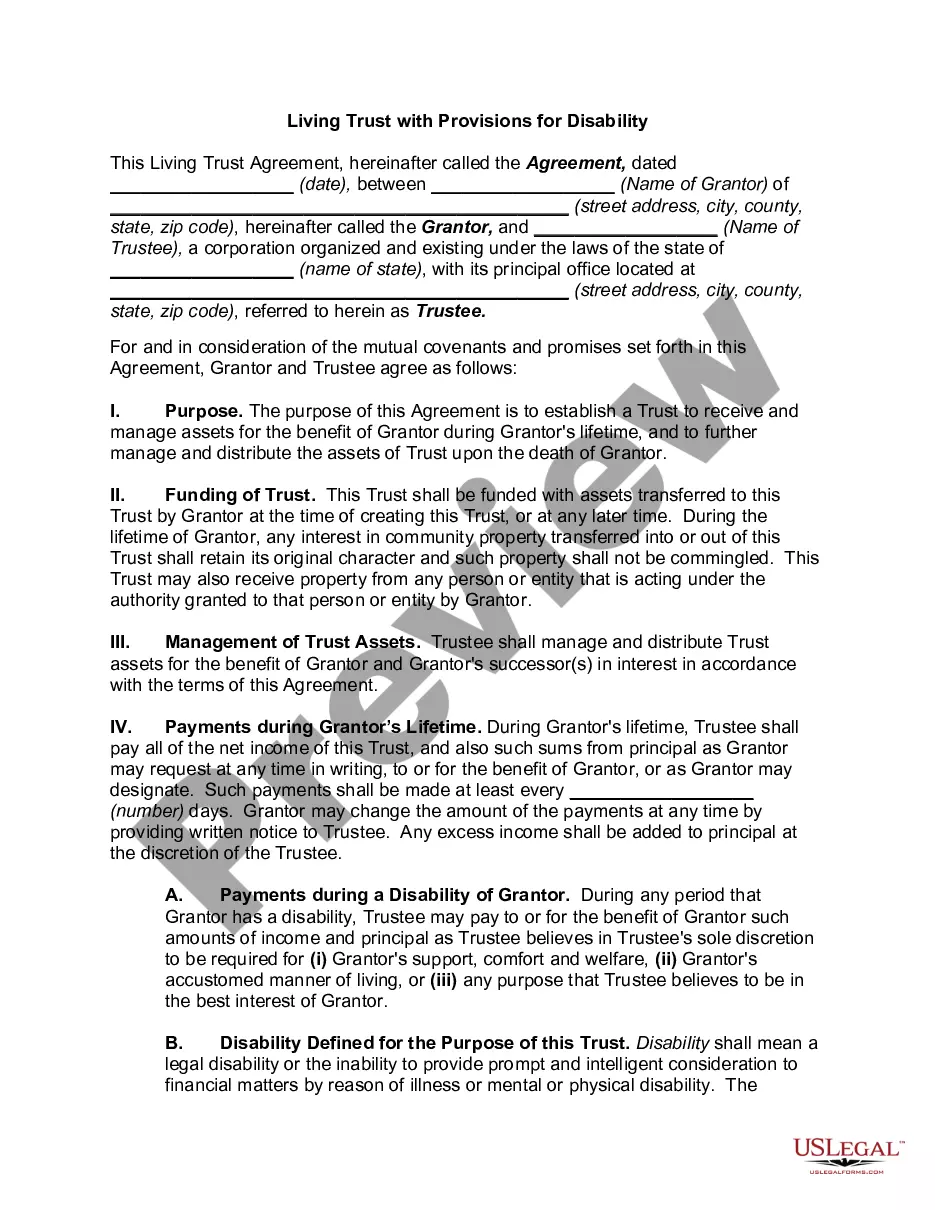
A Living Trust with Provisions for Disability is a legal document created during a person's lifetime that holds their assets. This trust allows the grantor, who also acts as the trustee, to manage their property for their benefit while alive and ensures a smooth transfer upon their death without the need for probate. It includes specific provisions for managing assets in the event of the grantor's disability, allowing for continued support and care of the grantor's needs, distinguishing it from simple wills or traditional trusts.
What’s included in this form
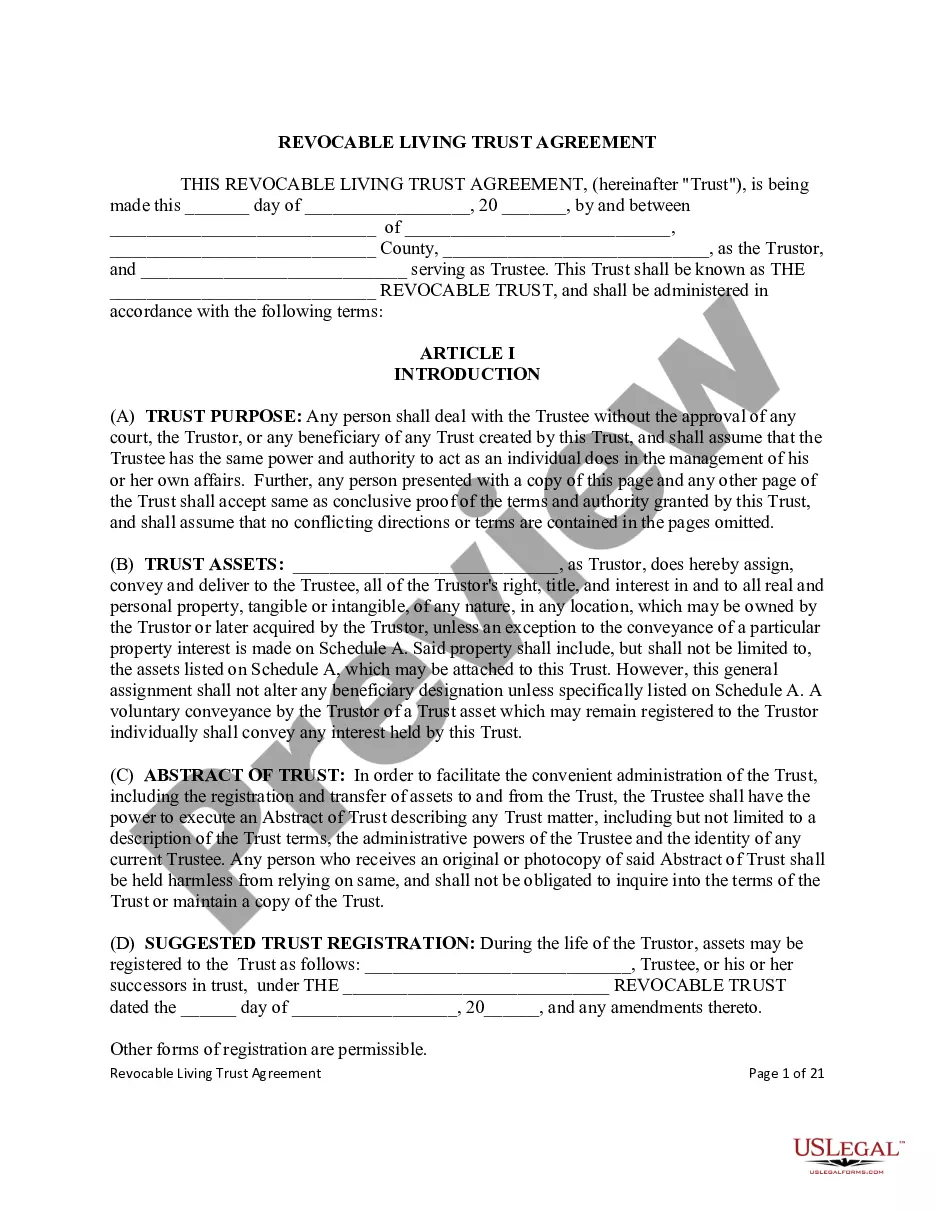
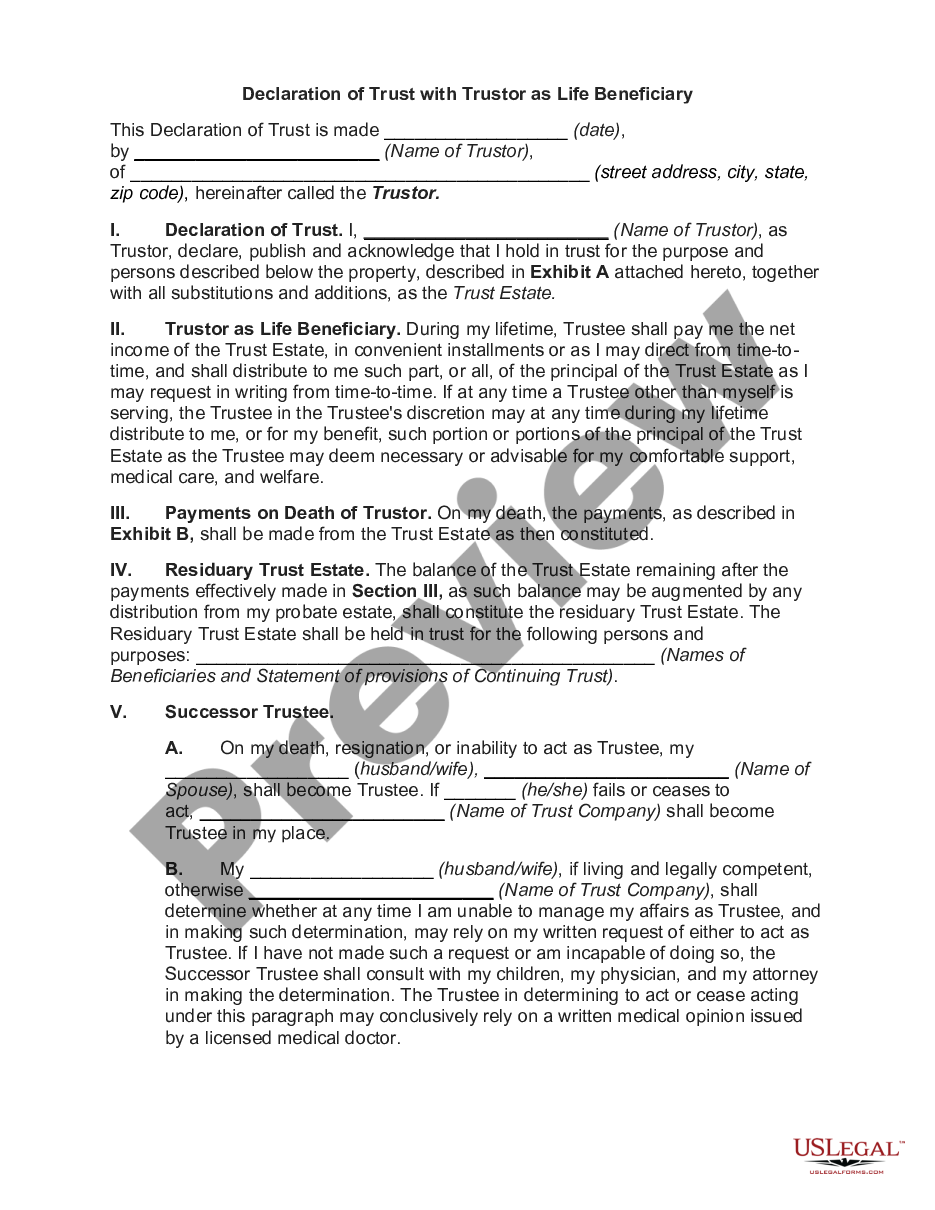
- Introduction of the Grantor and Trustee, along with their addresses.
- Purpose outlining the establishment of the trust for asset management.
- Funding provisions detailing how the trust is funded by the grantor.
- Management section describing how trust assets are to be handled.
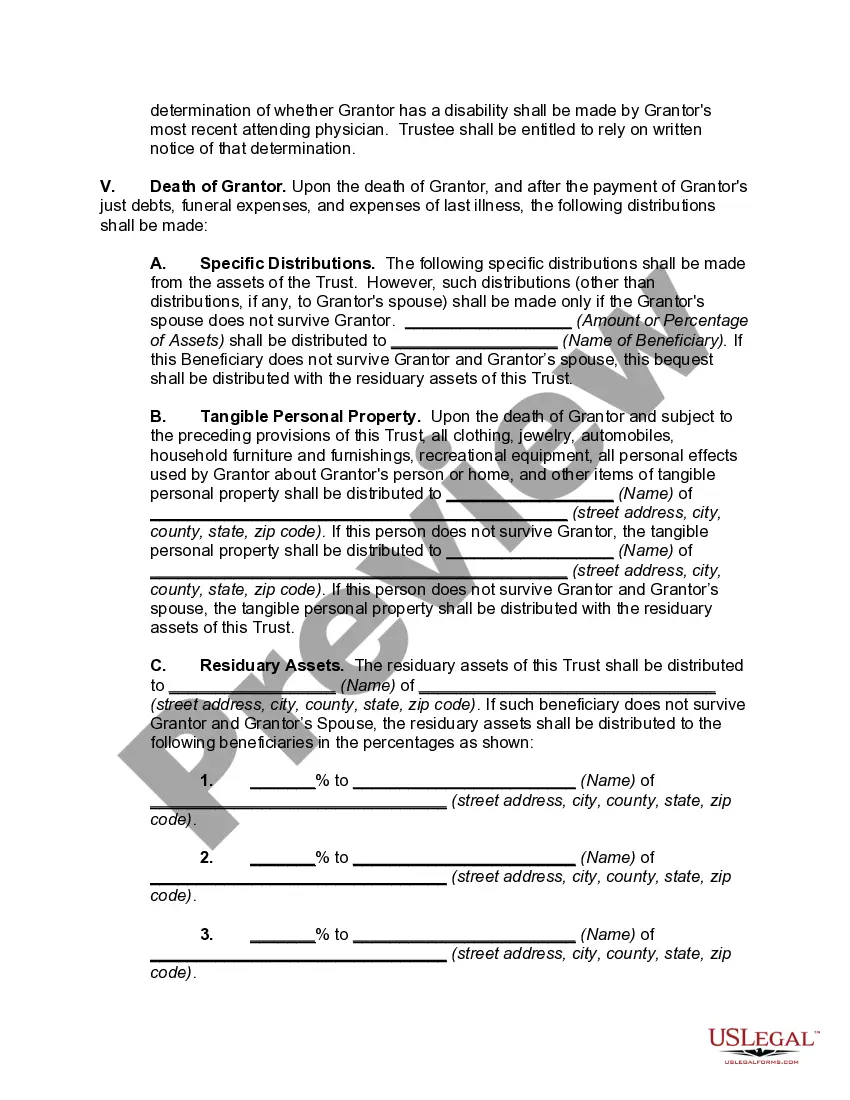
- Specific distributions upon the death of the grantor and provisions for personal property.
- Definitions related to disability and how it affects trust management.
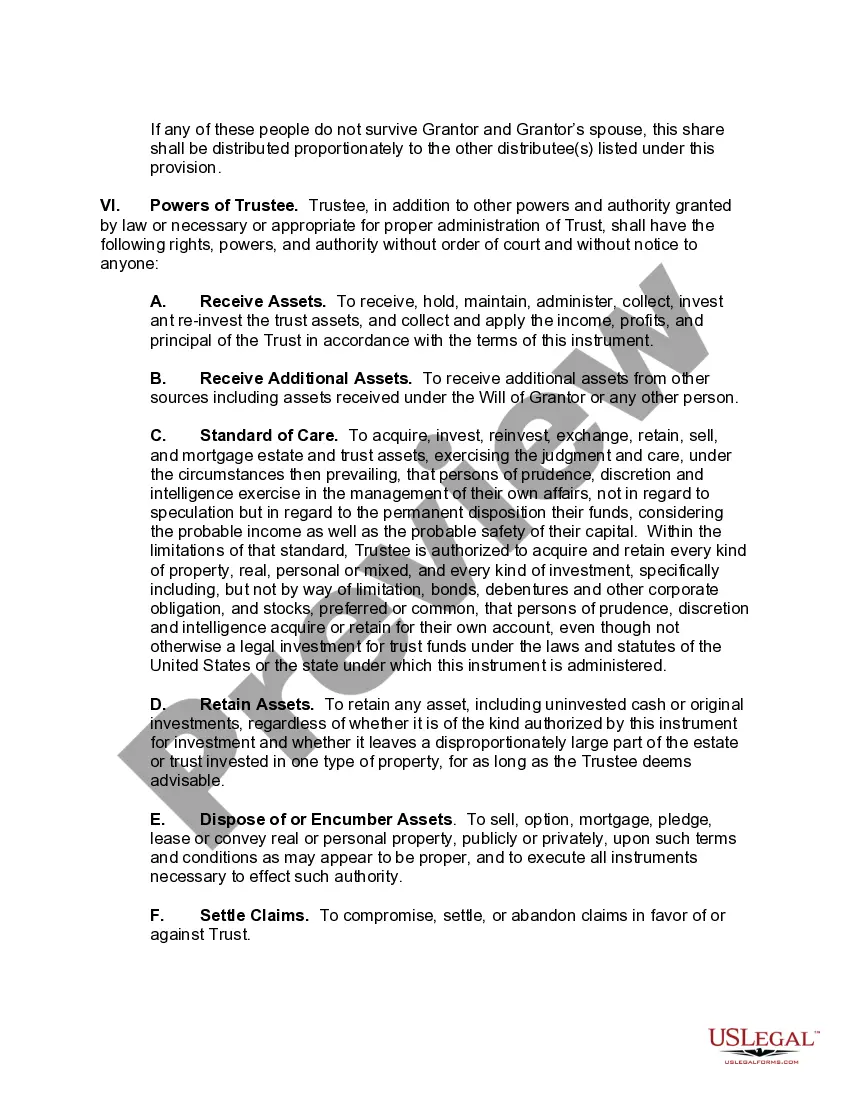
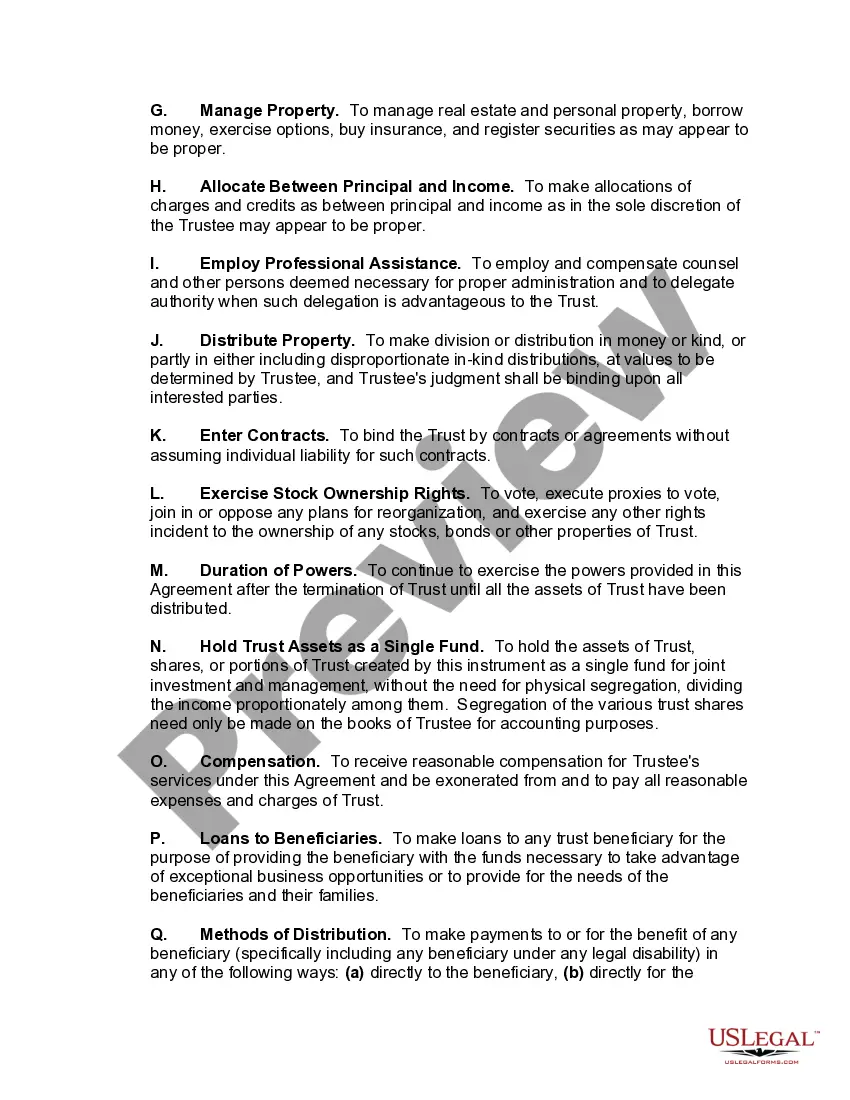
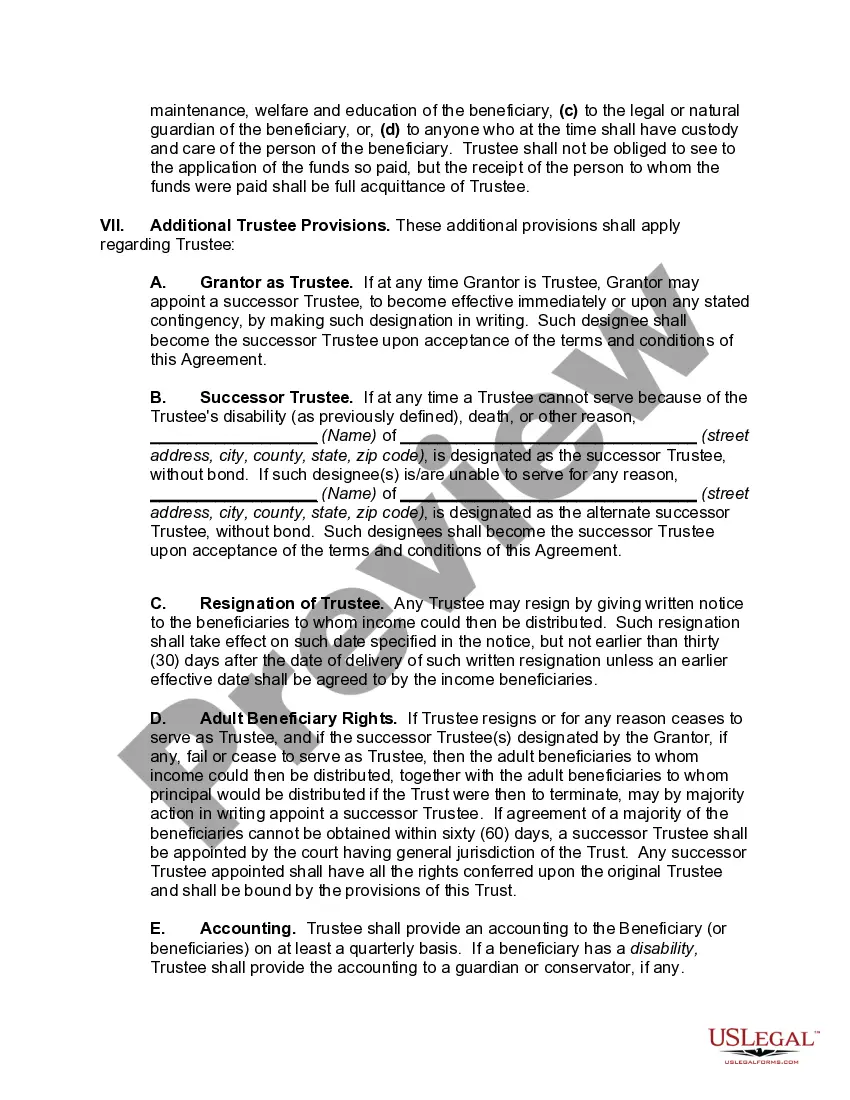
- Trustee powers outlining the authority granted in managing trust assets.
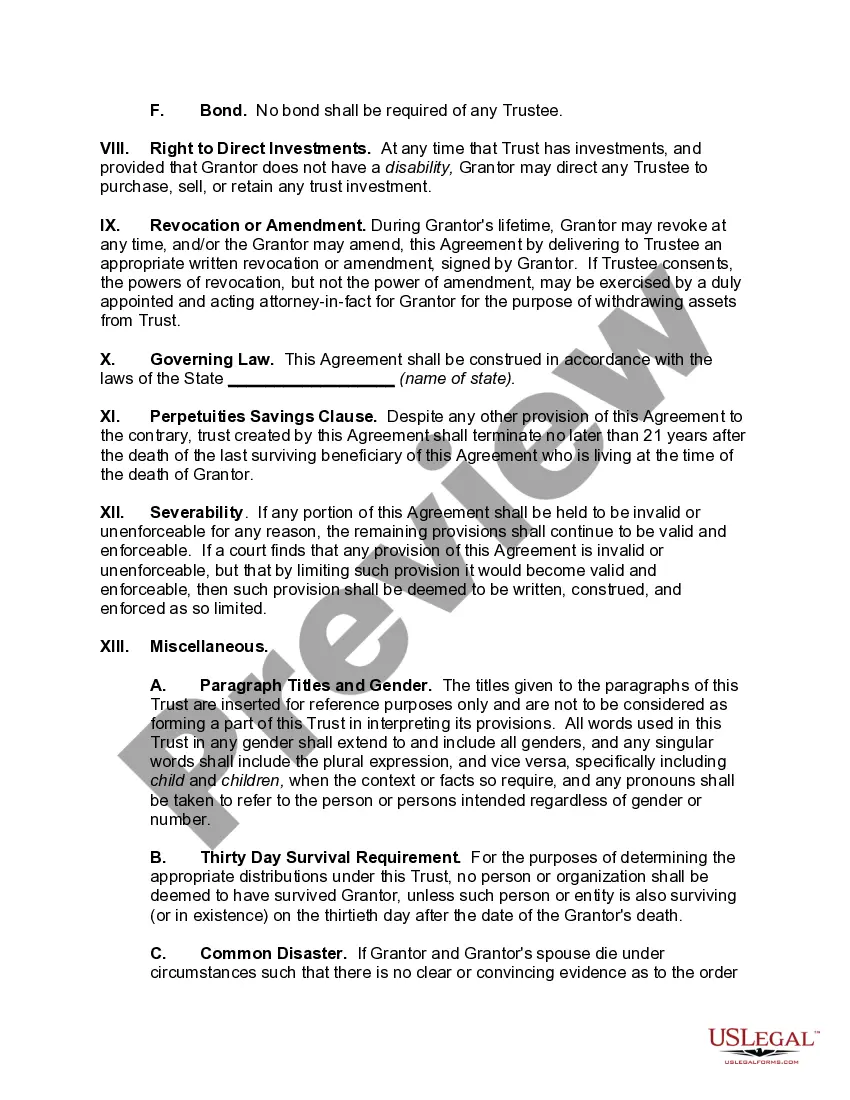
- Revocation or amendment terms allowing changes to trust during the grantor's lifetime.
When this form is needed
This form is useful when an individual wishes to manage their assets during their lifetime, maintain control over property, and provide for a seamless transfer to beneficiaries upon death. It is particularly important for those who want to set up provisions that ensure management of their affairs in the event of their disability, which is essential for safeguarding the interests of both the grantor and their beneficiaries.
Who needs this form
- Individuals who want to establish a living trust for estate planning purposes.
- Grantors looking to ensure their assets are managed during periods of incapacity.
- People seeking to avoid probate and streamline the distribution of their estate.
- Those with specific beneficiaries they wish to provide for after their passing.
Completing this form step by step
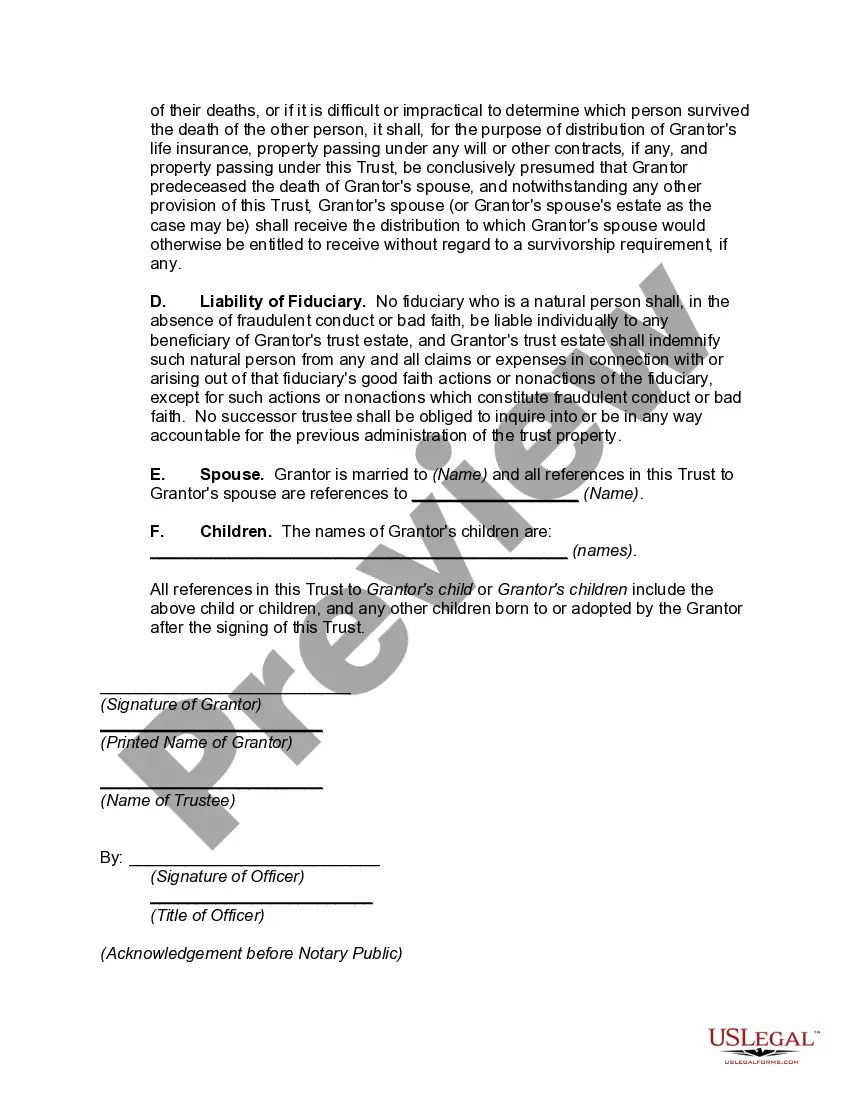
- Identify and enter the names and addresses of the grantor and trustee.
- Specify the purpose of the trust and outline the assets to be placed in the trust.
- Define disability and stipulate how it will be determined.
- Fill out provisions regarding payment during the grantor's lifetime, including during disability.
- Complete sections detailing specific distributions upon the grantor's death, including tangible property and fiduciary powers.
- Sign the document in the presence of a notary public, if required by local law.
Notarization requirements for this form
This form does not typically require notarization unless specified by local law. However, having the document notarized can add an additional layer of validity and security.
Get your form ready online
Our built-in tools help you complete, sign, share, and store your documents in one place.
Make edits, fill in missing information, and update formatting in US Legal Forms—just like you would in MS Word.
Download a copy, print it, send it by email, or mail it via USPS—whatever works best for your next step.
Sign and collect signatures with our SignNow integration. Send to multiple recipients, set reminders, and more. Go Premium to unlock E-Sign.
If this form requires notarization, complete it online through a secure video call—no need to meet a notary in person or wait for an appointment.
We protect your documents and personal data by following strict security and privacy standards.

Make edits, fill in missing information, and update formatting in US Legal Forms—just like you would in MS Word.

Download a copy, print it, send it by email, or mail it via USPS—whatever works best for your next step.

Sign and collect signatures with our SignNow integration. Send to multiple recipients, set reminders, and more. Go Premium to unlock E-Sign.

If this form requires notarization, complete it online through a secure video call—no need to meet a notary in person or wait for an appointment.

We protect your documents and personal data by following strict security and privacy standards.
Typical mistakes to avoid
- Not clearly defining the assets to be placed in the trust.
- Failing to specify how disability will be determined.
- Omitting essential details about beneficiary distributions.
- Not updating the trust after significant life changes.
Why use this form online
- Convenience of accessing and completing the document at your own pace.
- Editability allows customization to fit your specific needs.
- Reliability of using professionally drafted templates by licensed attorneys.
Quick recap
- The Living Trust with Provisions for Disability provides essential management of assets for individuals.
- This form includes specific guidance on handling assets during disability and upon death.
- It is important to ensure that the trust is managed according to state laws and to regularly review its contents.
- Using an online form can save time and reduce confusion compared to traditional paper methods.
Looking for another form?
Form popularity
FAQ
Make a List of All Your Assets. Be sure to include make a list of your assets that includes everything you own. Find the Paperwork for Your Assets. Choose Beneficiaries. Choose a Successor Trustee. Choose a Guardian for Your Minor Children.
Failure to set up a special needs trust might affect them, even if not as much as another person who receives, say, SSI and Medicaid. Even someone receiving Medicare will have some effect from having a higher income.
Qualified retirement accounts 401ks, IRAs, 403(b)s, qualified annuities. Health saving accounts (HSAs) Medical saving accounts (MSAs) Uniform Transfers to Minors (UTMAs) Uniform Gifts to Minors (UGMAs) Life insurance. Motor vehicles.
Special Needs Trusts can also pay for home and vehicle maintenance along with a variety of other items like a vacation, a computer, electronic equipment, educational expenses, and ongoing monthly bills such as phone, cable, and internet services.
The child cannot accumulate more than $2,000 in assets or risk losing important and life-sustaining public assistance benefits. For that reason, a special needs trust must to be set up carefully and by an experienced special needs planning attorney. Regardless, once you set up the trust, it must be funded.
To establish a Third Party Special Needs Trust, the family member needs to sign the trust document and then transfer the assets to the Trustee. The trust document is provided by an attorney who provides legal representation and writes all the necessary documents.
This may be the case if the special needs individual receives an inheritance or a legal settlement. When that occurs, the beneficiary is considered to be the owner of the assets. If these assets are paid into a special needs trust, then they are excluded from government aid calculations.
A special needs trust is a legal arrangement and fiduciary relationship that allows a physically or mentally disabled or chronically ill person to receive income without reducing their eligibility for the public assistance disability benefits provided by Social Security, Supplemental Security Income, Medicare or
When you create a DIY living trust, there are no attorneys involved in the process. You will need to choose a trustee who will be in charge of managing the trust assets and distributing them.You'll also need to choose your beneficiary or beneficiaries, the person or people who will receive the assets in your trust.