Copyright - Infringement - Vicarious Infringement
Overview of this form
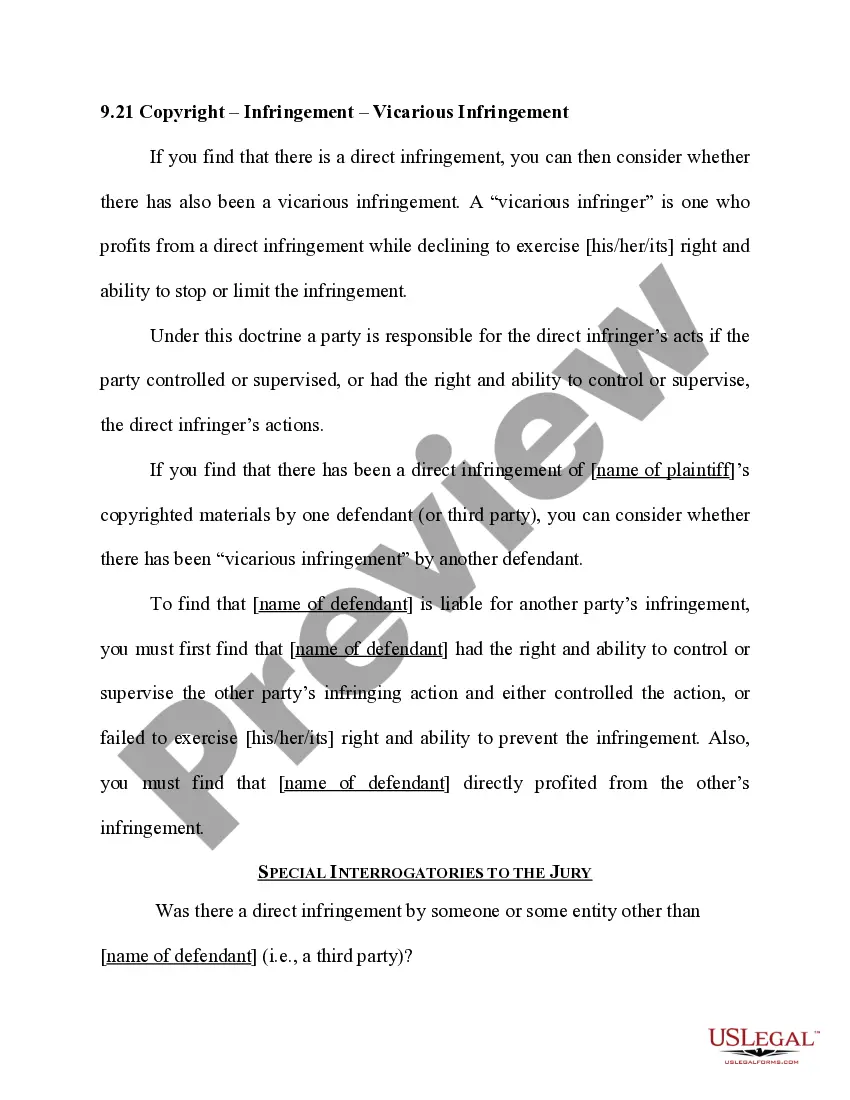
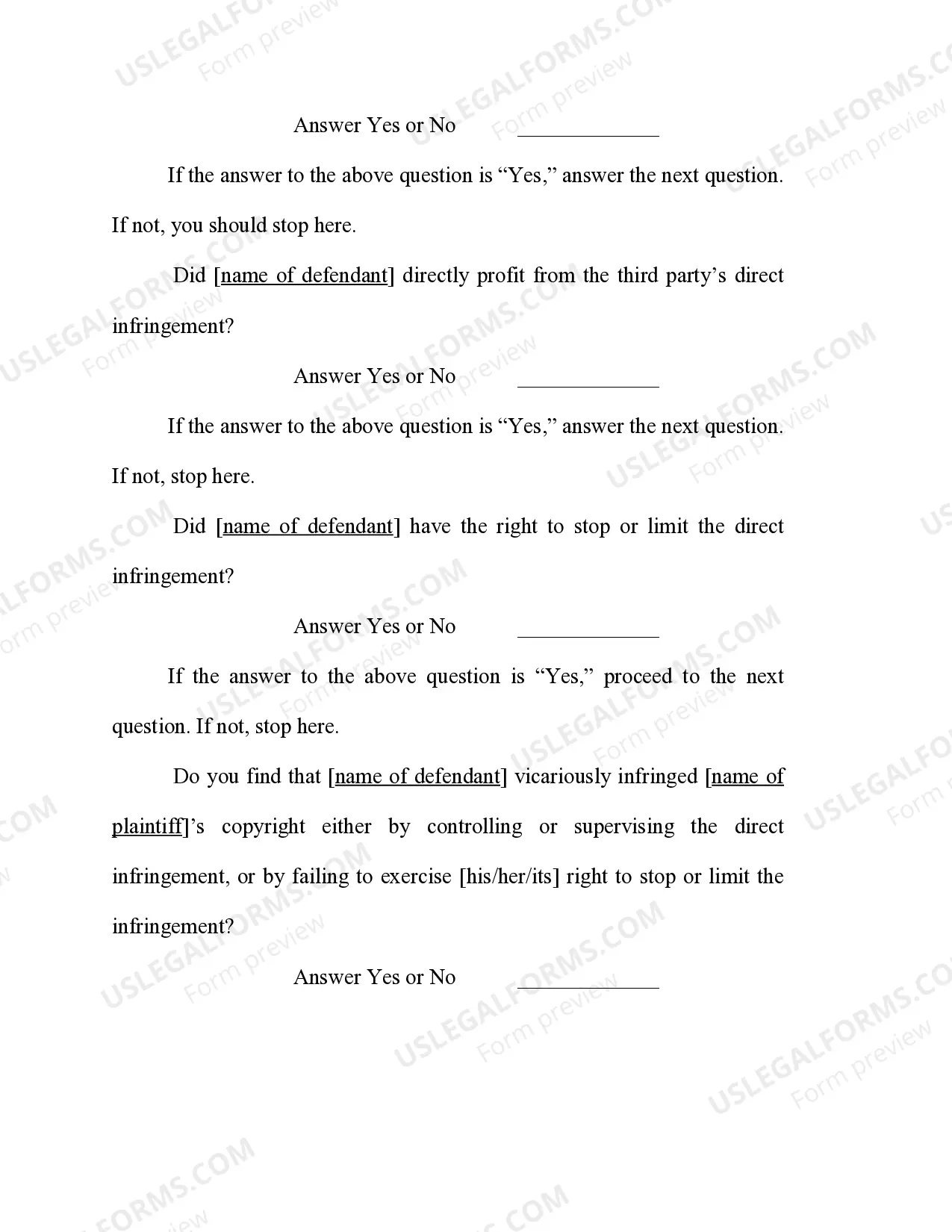
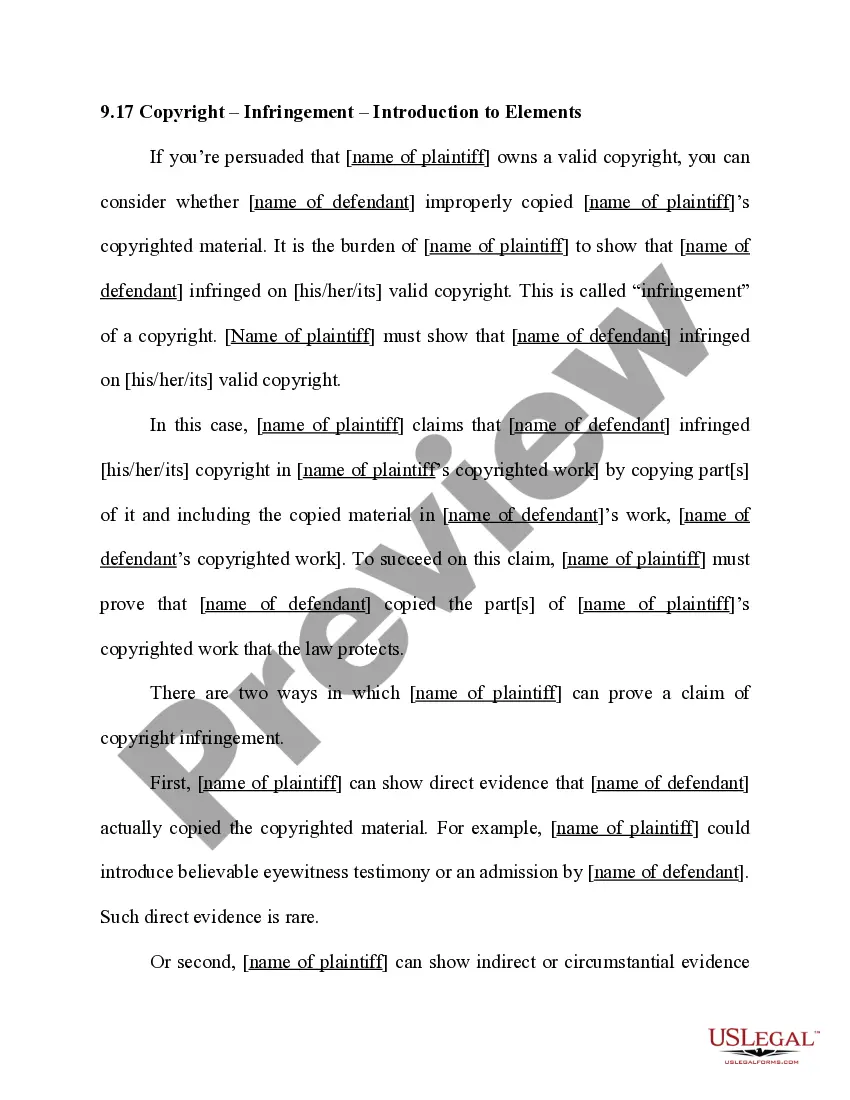
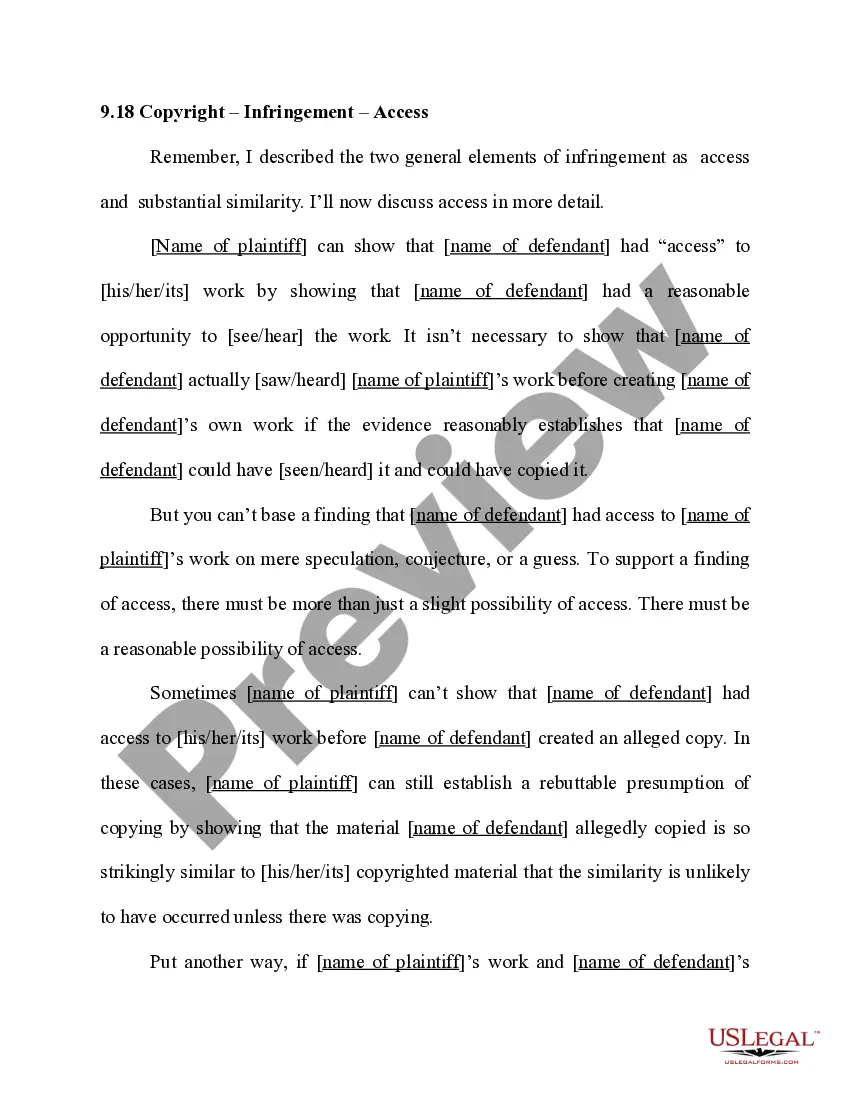
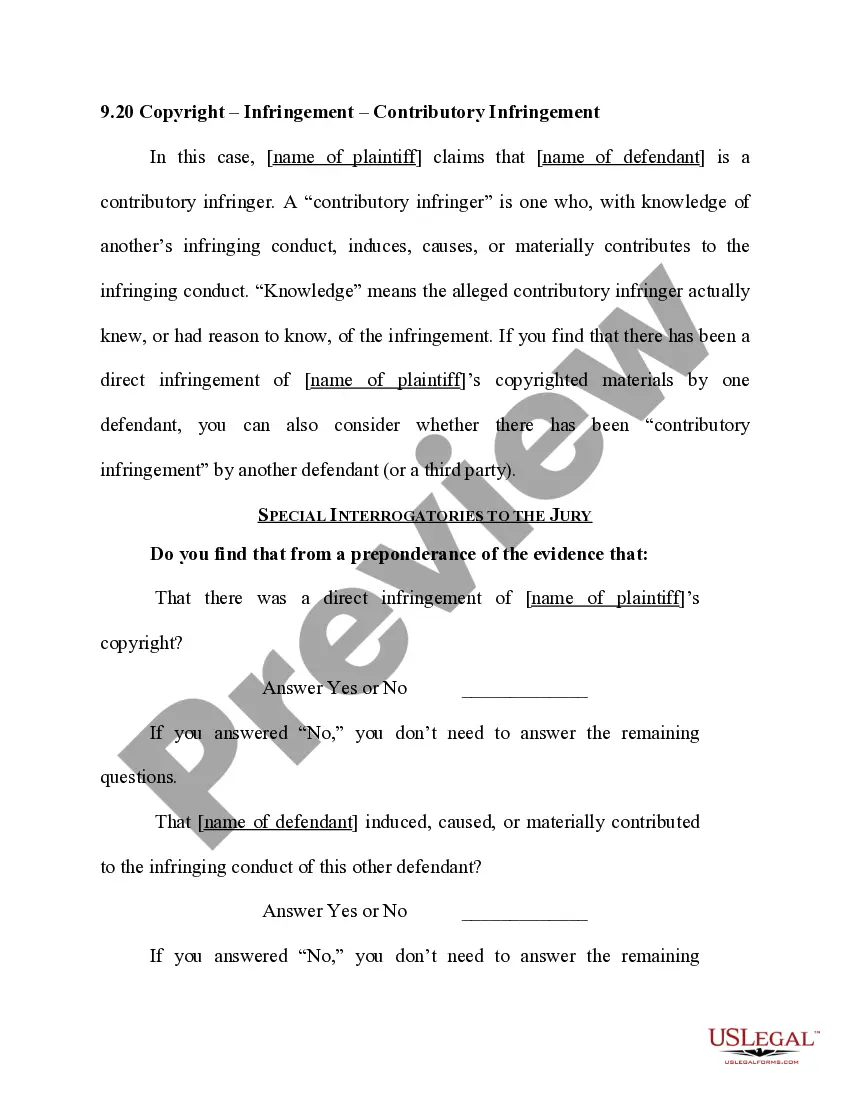
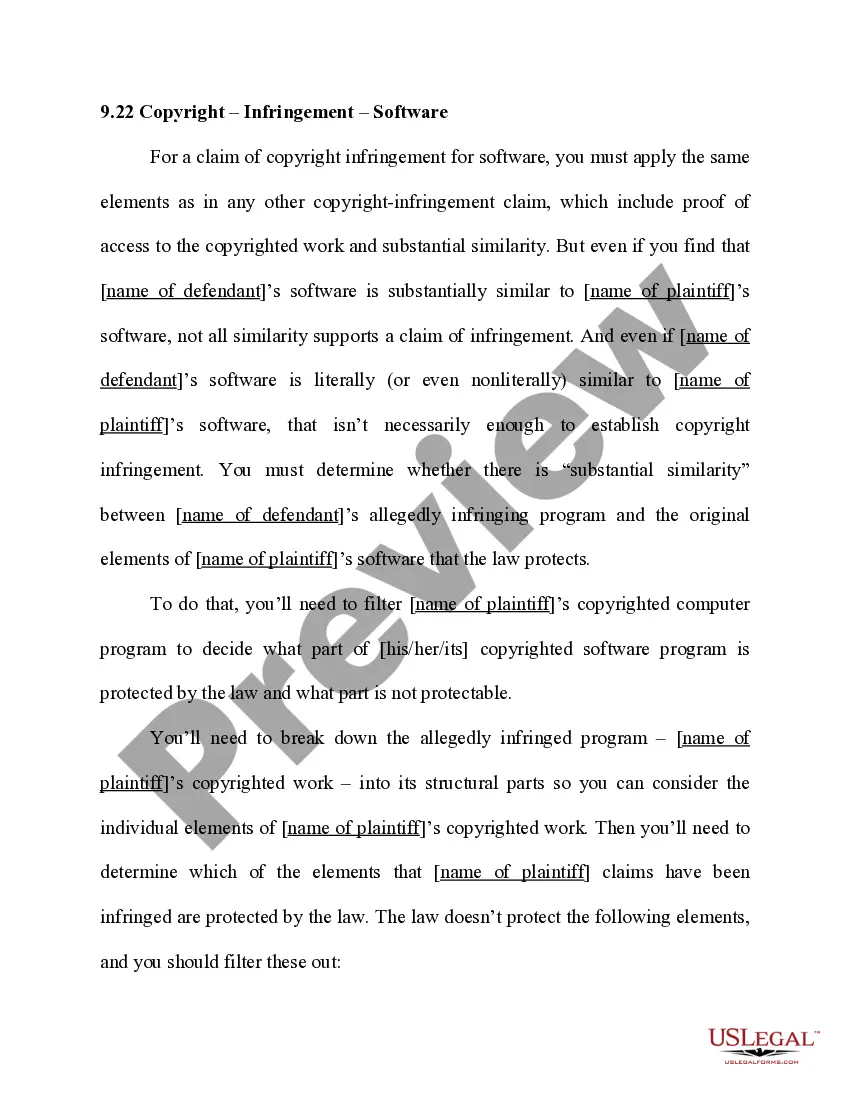
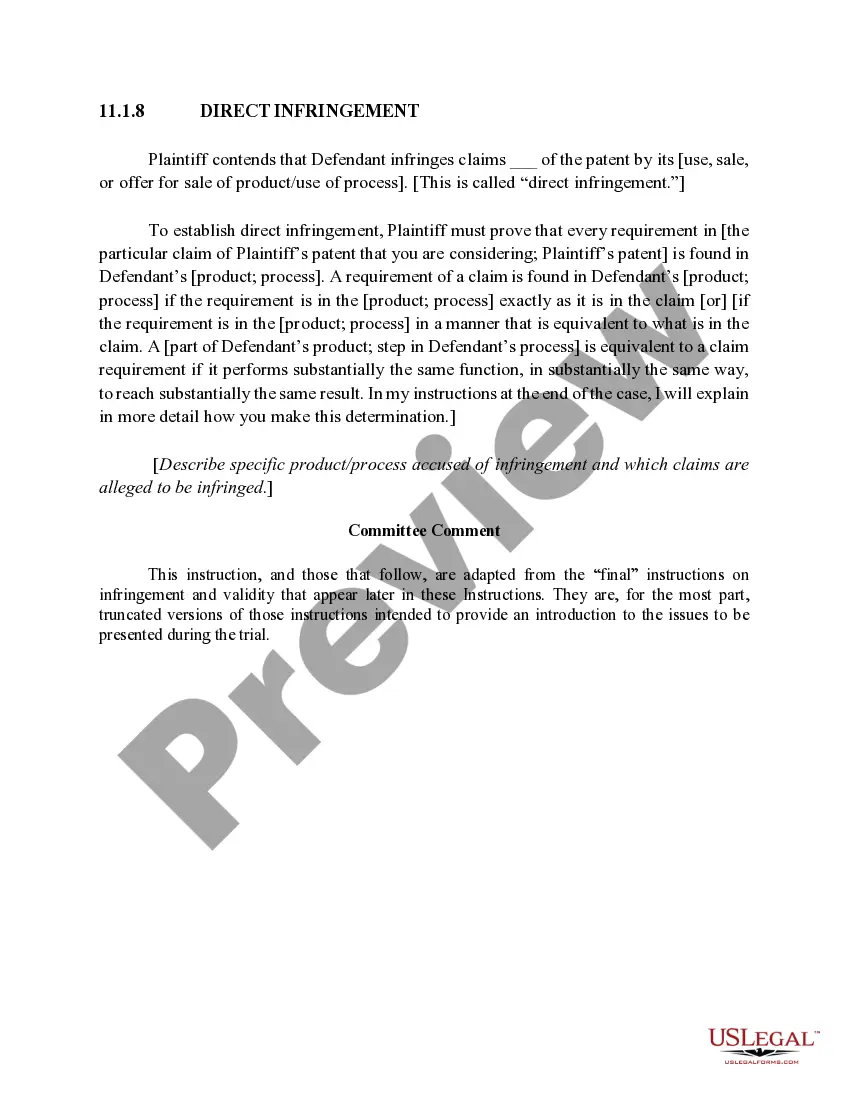
The Copyright - Infringement - Vicarious Infringement form addresses issues related to copyright law, specifically focusing on the liability of a party for infringing another's copyrighted materials through vicarious infringement. This form is essential for determining whether a defendant can be held responsible for another partyâs infringement by either profiting from it or failing to control it, distinguishing it from other copyright forms that may not address the interplay between direct and vicarious infringement.
Form components explained
- Definition of direct and vicarious infringement.
- Jury instructions tailored to assessing vicarious liability.
- Special interrogatories to guide the jury's decision-making.
- Clarification on the defendant's rights and abilities regarding control over the infringing actions.
- Conditions under which a party can be deemed liable for copyright infringement.
When to use this document
This form is applicable in legal claims where a copyright holder seeks to establish that a party is liable for vicarious infringement of their copyrighted work. It is typically used in cases where a direct infringement has occurred by a third party, and the plaintiff aims to hold another party accountable for not preventing or controlling that infringement, thereby profiting from it.
Who can use this document
- Copyright holders seeking redress against infringers.
- Attorneys representing clients in copyright infringement cases.
- Parties involved in litigation where vicarious liability for copyright infringement is a central issue.
Instructions for completing this form
- Identify the parties involved: the plaintiff and the defendant.
- Determine if a direct infringement has occurred by a third party.
- Assess if the defendant profited from the third partyâs infringement.
- Evaluate whether the defendant had the right to control or limit the direct infringement.
- Answer the special interrogatories regarding the findings on vicarious infringement.
Does this document require notarization?
This form does not typically require notarization unless specified by local law. It is important to check whether any state-specific regulations apply to ensure the form's legal validity.
Get your form ready online
Our built-in tools help you complete, sign, share, and store your documents in one place.
Make edits, fill in missing information, and update formatting in US Legal Forms—just like you would in MS Word.
Download a copy, print it, send it by email, or mail it via USPS—whatever works best for your next step.
Sign and collect signatures with our SignNow integration. Send to multiple recipients, set reminders, and more. Go Premium to unlock E-Sign.
If this form requires notarization, complete it online through a secure video call—no need to meet a notary in person or wait for an appointment.
We protect your documents and personal data by following strict security and privacy standards.

Make edits, fill in missing information, and update formatting in US Legal Forms—just like you would in MS Word.

Download a copy, print it, send it by email, or mail it via USPS—whatever works best for your next step.

Sign and collect signatures with our SignNow integration. Send to multiple recipients, set reminders, and more. Go Premium to unlock E-Sign.

If this form requires notarization, complete it online through a secure video call—no need to meet a notary in person or wait for an appointment.

We protect your documents and personal data by following strict security and privacy standards.
Common mistakes
- Failing to clearly identify the direct infringer.
- Not establishing the link between profit and infringement.
- Overlooking the necessity for the ability to control infringement.
- Inaccurately answering the special interrogatories.
Benefits of using this form online
- Instant access to professionally drafted legal templates.
- Easy to fill out and customize to your specific situation.
- Convenient download and storage options for future reference.
- Assured reliability since templates are created by licensed attorneys.
Looking for another form?

Form popularity
FAQ
Secondary copyright infringement is a legal theory that permits a person to be held responsible for copyright infringement, even though they didn't engage in the actual infringement activities themselves. It involves the defendant causing, compelling, or contributing to material copyright infringement activities.
A quick definition of Vicarious Infringement: Vicarious infringement is when someone is held responsible for someone else's actions of copyright or trademark infringement. This happens when the person had the power to control the infringing activity and had a financial interest in it.
Contributory infringement is based on tort law principles of enterprise liability and imputed intent, while vicarious infringement is based on agency principles of respondeat superior. Both forms of liability require proof of an underlying direct infringement claim.
Difference from vicarious liability The requirements for attracting vicarious liability under copyright law are: The defendant had the right to control the infringing activity; and. The defendant derives a financial or commercial benefit from the infringement.
Vicarious Liability To be found vicariously liable the party must have both the right and ability to supervise or control the infringing action of the direct infringer, and a direct financial benefit from the infringing activity. Actual knowledge of the infringement is irrelevant in a vicarious liability determination.
Vicarious infringement is most commonly identified as having two elements: the defendant must have had both (1) the ?right and ability to supervise the infringing activity? and (2) ?a direct financial interest? in the activity. A&M Records, Inc. v. Napster, Inc., 239 F.