Copyright - Infringement - Access
Overview of this form
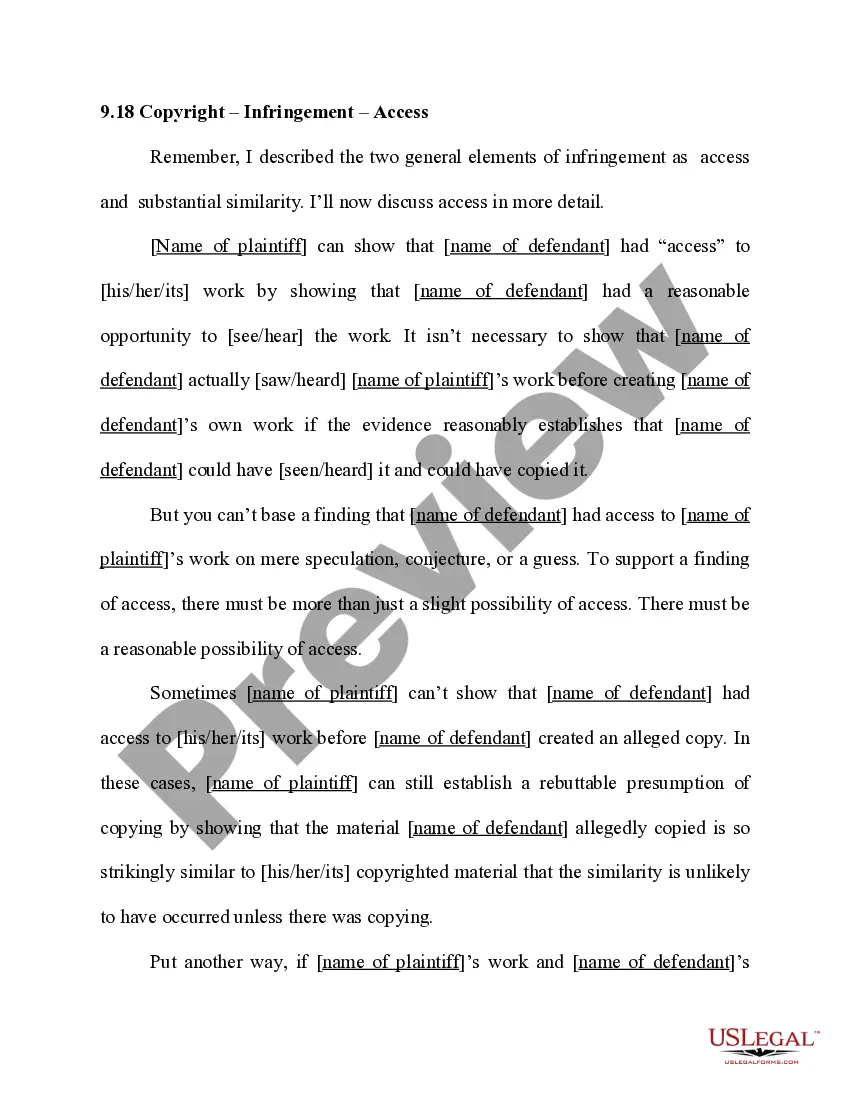
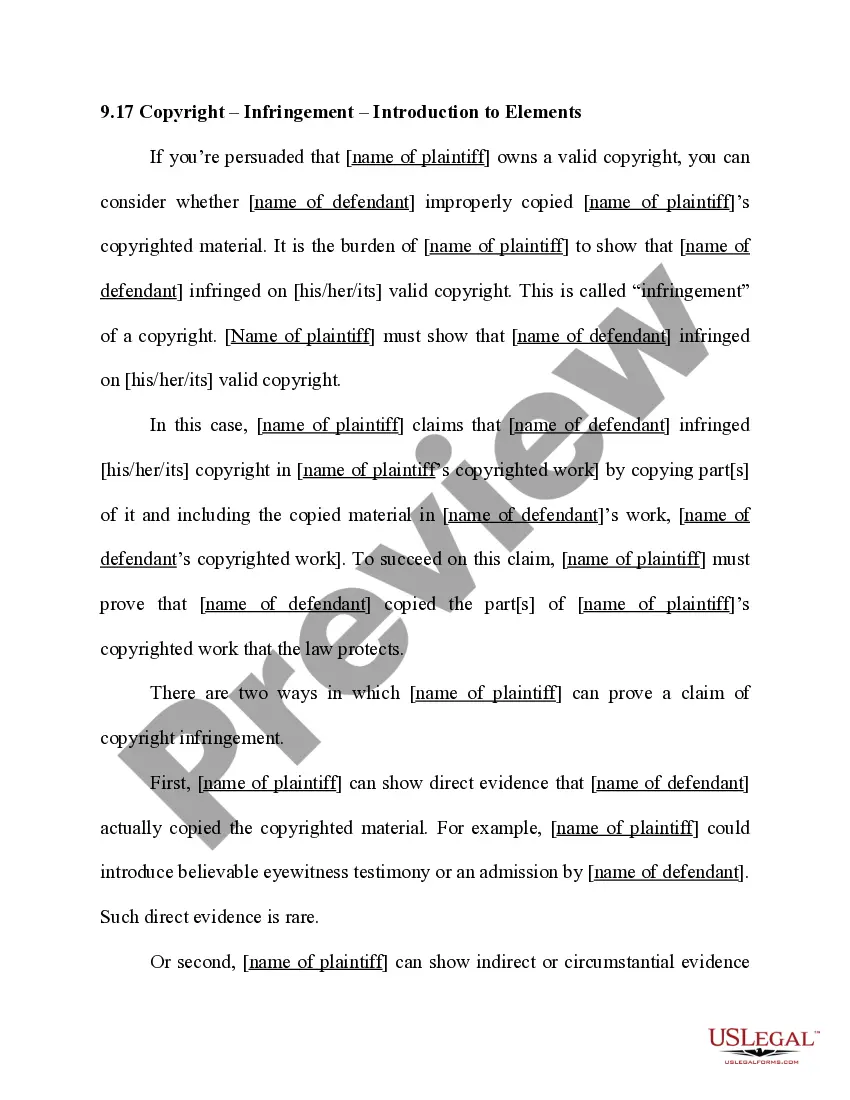
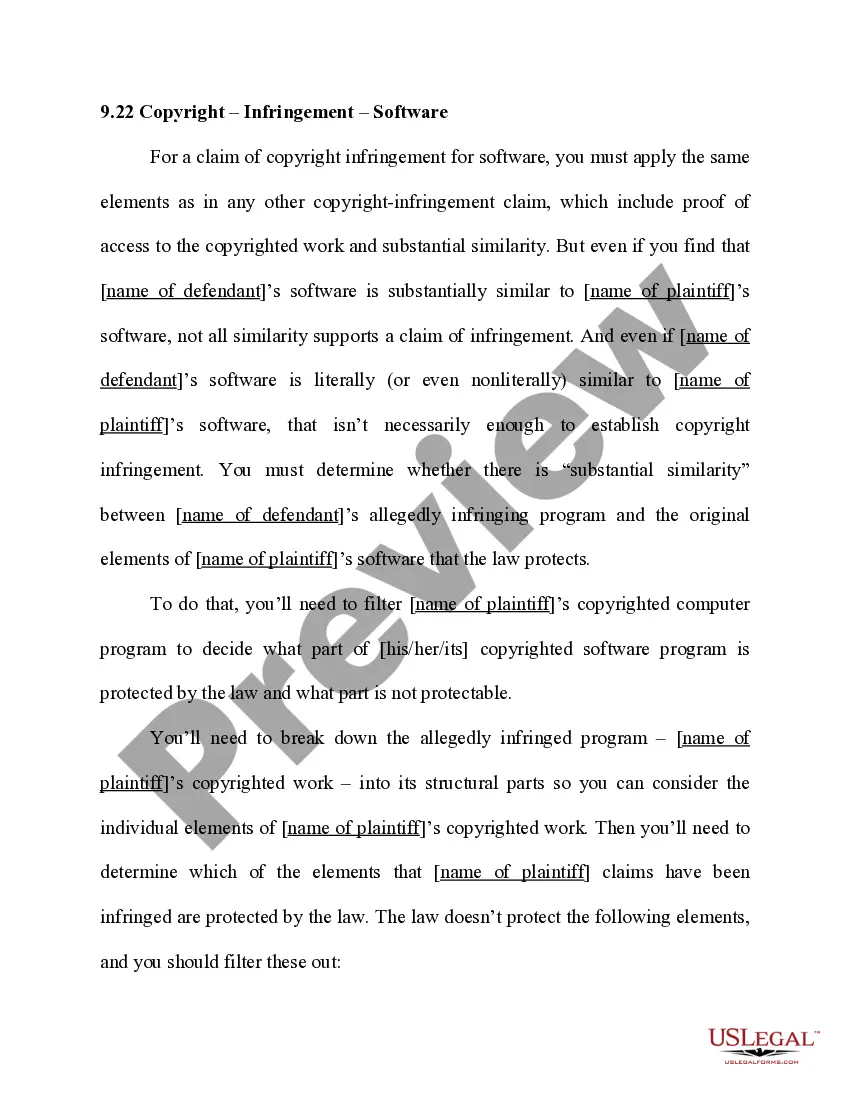
The Copyright - Infringement - Access form is a legal document used to establish whether a defendant had access to a plaintiff's copyrighted work, a crucial element in copyright infringement cases. This form assists in clarifying the legal standards for proving access and similarity regarding alleged copying of original works. It is designed for use in the context of federal copyright law and helps guide jurors in determining key elements of a copyright infringement claim.
Key components of this form
- Definition of access: Explains how a plaintiff can demonstrate a defendant had a reasonable opportunity to view or hear their work.
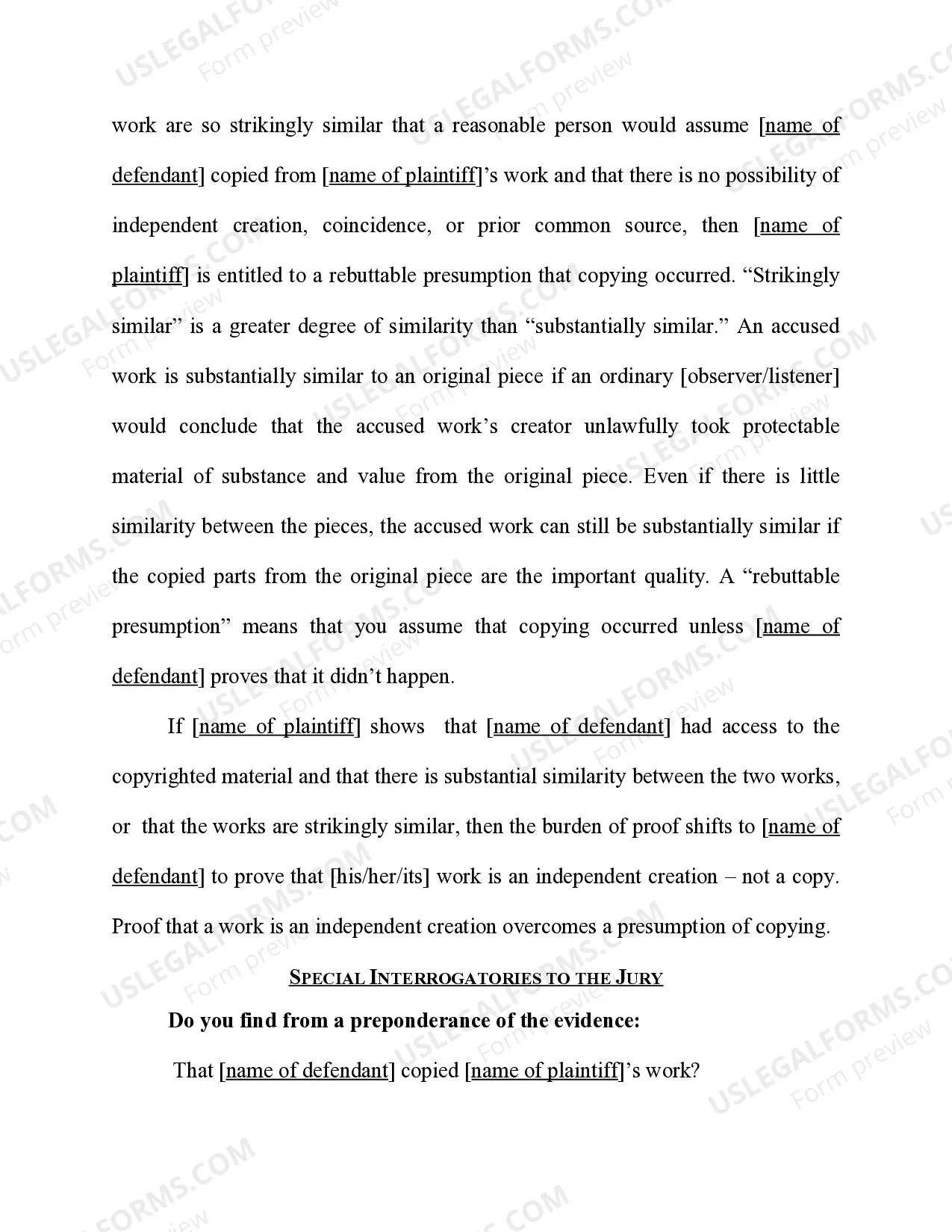
- Substantial similarity: Details the criteria for determining if the works in question are similarly related enough to suggest copying.
- Rebuttable presumption: Outlines conditions that allow a plaintiff to presume copying occurred, shifting the burden of proof to the defendant.
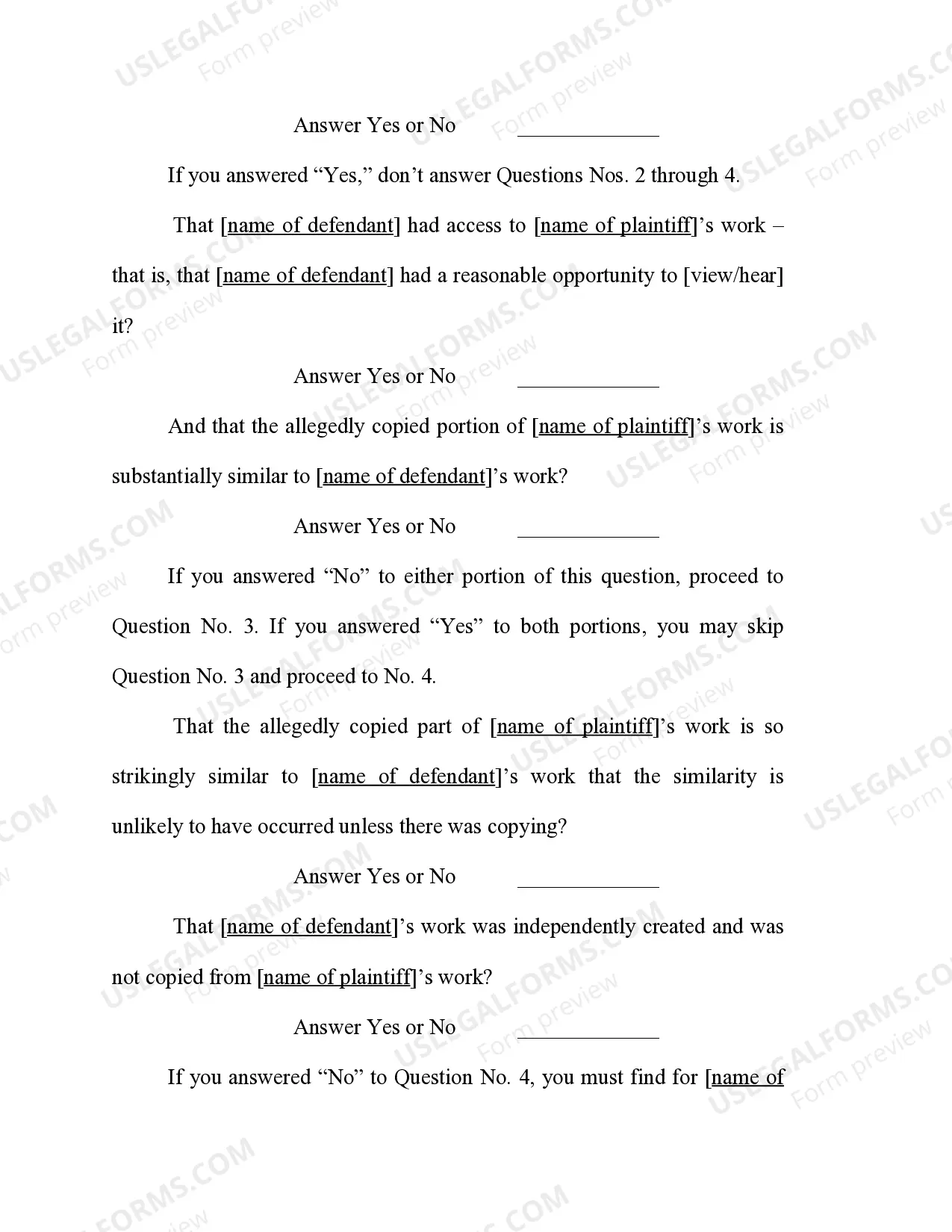
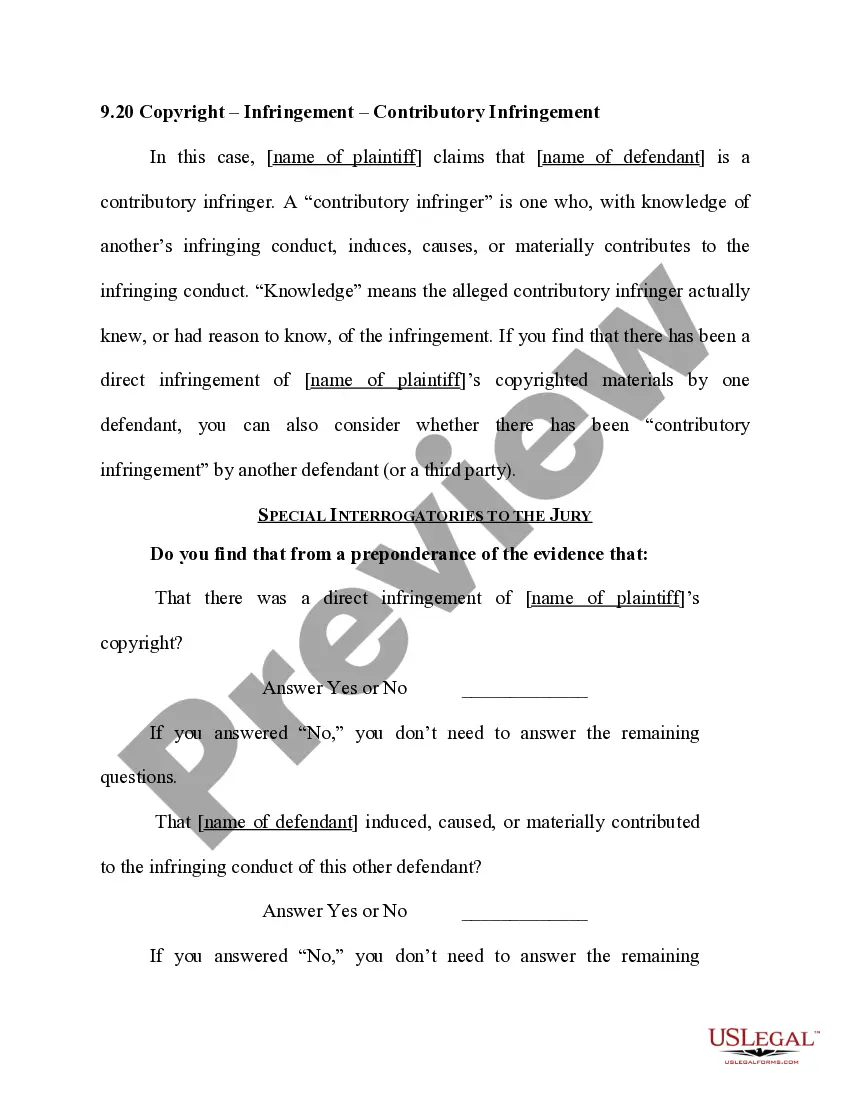
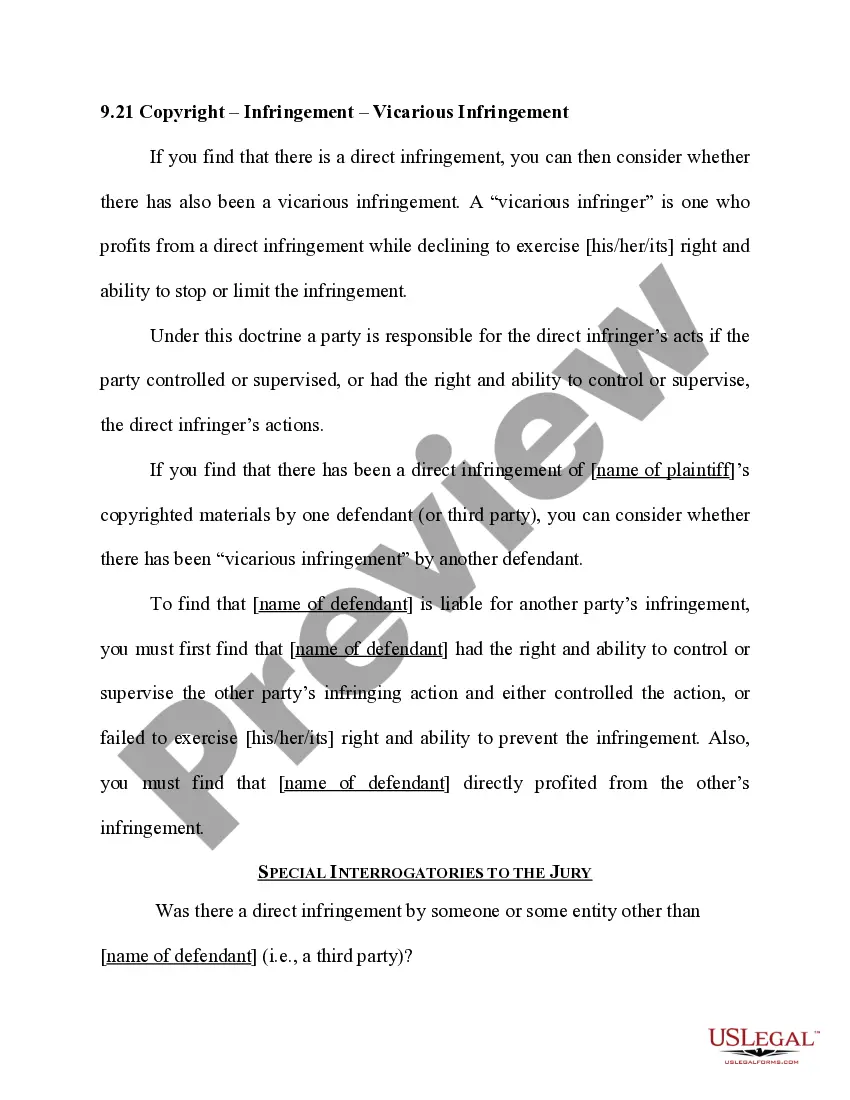
- Special interrogatories: Lists the specific questions that the jury must answer based on the evidence presented.
- Judicial instructions: Includes instructions relevant to juror conduct and considerations during deliberation.
When this form is needed
This form is used in legal cases involving allegations of copyright infringement when a plaintiff believes their work has been copied. It is applicable during trials when the jury must evaluate evidence related to a defendantâs access to the original work and the similarities between the two works in question. Utilizing this form can clarify the legal standards that the jury should apply while making their judgments.
Who should use this form
- Copyright holders who believe their work has been infringed.
- Legal professionals representing clients in copyright disputes.
- Jurors who need clear guidance on evaluating access and substantial similarity in copyright cases.
How to prepare this document
- Identify the parties: Clearly state the names of the plaintiff and defendant involved in the case.
- Establish access: Present evidence that suggests the defendant had a reasonable opportunity to access the plaintiffâs work.
- Evaluate similarity: Assess and articulate the substantial or striking similarity between the two works in question.
- Answer jury interrogatories: Complete the special interrogatories by addressing each question based on the evidence in the trial.
- Sign and date: Ensure proper signatures are affixed where required, indicating agreement with the findings.
Does this form need to be notarized?
This form does not typically require notarization unless specified by local law. Always verify the requirements in your specific jurisdiction to ensure compliance.
Get your form ready online
Our built-in tools help you complete, sign, share, and store your documents in one place.
Make edits, fill in missing information, and update formatting in US Legal Forms—just like you would in MS Word.
Download a copy, print it, send it by email, or mail it via USPS—whatever works best for your next step.
Sign and collect signatures with our SignNow integration. Send to multiple recipients, set reminders, and more. Go Premium to unlock E-Sign.
If this form requires notarization, complete it online through a secure video call—no need to meet a notary in person or wait for an appointment.
We protect your documents and personal data by following strict security and privacy standards.

Make edits, fill in missing information, and update formatting in US Legal Forms—just like you would in MS Word.

Download a copy, print it, send it by email, or mail it via USPS—whatever works best for your next step.

Sign and collect signatures with our SignNow integration. Send to multiple recipients, set reminders, and more. Go Premium to unlock E-Sign.

If this form requires notarization, complete it online through a secure video call—no need to meet a notary in person or wait for an appointment.

We protect your documents and personal data by following strict security and privacy standards.
Avoid these common issues
- Failing to provide sufficient evidence of access to the copyrighted work.
- Confusing substantial similarity with strikingly similar, which could affect the burden of proof.
- Leaving jury interrogatories incomplete, leading to confusion about the jury's findings.
Why use this form online
- Convenience: Easily download and complete the form from your own device.
- Editability: Modify the form as needed to fit specific circumstances of the case.
- Reliability: Access professionally drafted legal templates that provide clear guidance on copyright issues.
Legal use & context
- This form is used for establishing claims in copyright infringement cases.
- It provides clear legal standards for proving access and substantial similarity.
- Correct completion may help streamline the litigation process in federal court.
Looking for another form?
Form popularity
FAQ
In the context of copyright, the term ?access? refers to the ability of a potential infringer to see or obtain the copyrighted material. Access is important in determining whether a potential infringer has in fact illicitly copied the copyrighted material.
In order to establish ?access? a plaintiff must show that the defendant had a ?reasonable? opportunity to view or copy the plaintiff's work. Access can be established by way of circumstantial evidence.
In order to bring a copyright infringement claim, the plaintiff must prove that they hold the copyright interest through creation, assignment, or license. The plaintiff must also plead that the complaint is of an unlawful copy of the original element of the copyrighted work.
How much of someone else's work can I use without getting permission? Under the fair use doctrine of the U.S. copyright statute, it is permissible to use limited portions of a work including quotes, for purposes such as commentary, criticism, news reporting, and scholarly reports.
The three basic elements of copyright: originality, creativity, and fixation. There are three basic elements that a work must possess in order to be protected by copyright in the US: Originality: To get a copyright, a work must be the original work of the author.
Proof of access requires ?an opportunity to view or to copy plaintiff's work.? See Sid & Marty Krofft Television Prods., Inc. v. McDonald's Corp., 562 F. 2d 1157, 1172 (9th Cir.
At 361 (?To establish infringement, two elements must be proven: (1) ownership of a valid copyright, and (2) copying of constituent elements of the work that are original.?); see also Seven Arts Filmed Entm't Ltd. v. Content Media Corp., 733 F.
At 361 (?To establish infringement, two elements must be proven: (1) ownership of a valid copyright, and (2) copying of constituent elements of the work that are original.?); see also Seven Arts Filmed Entm't Ltd. v. Content Media Corp., 733 F.