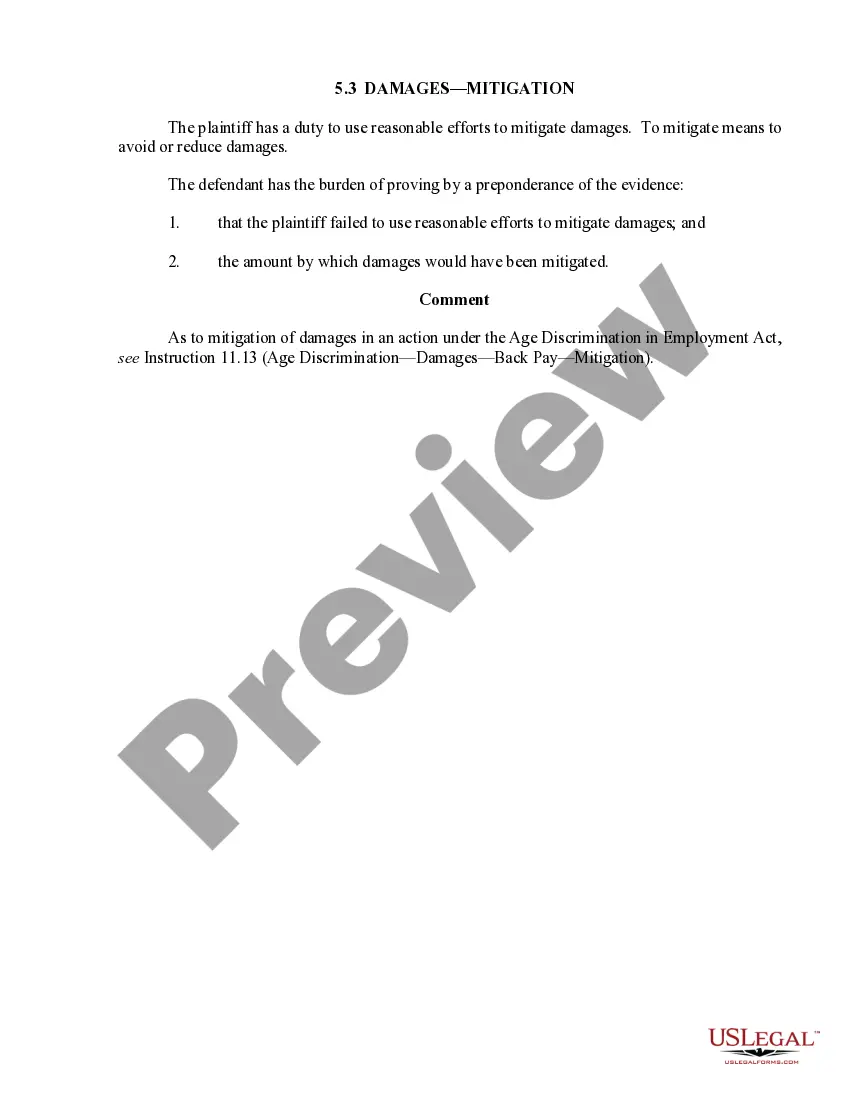
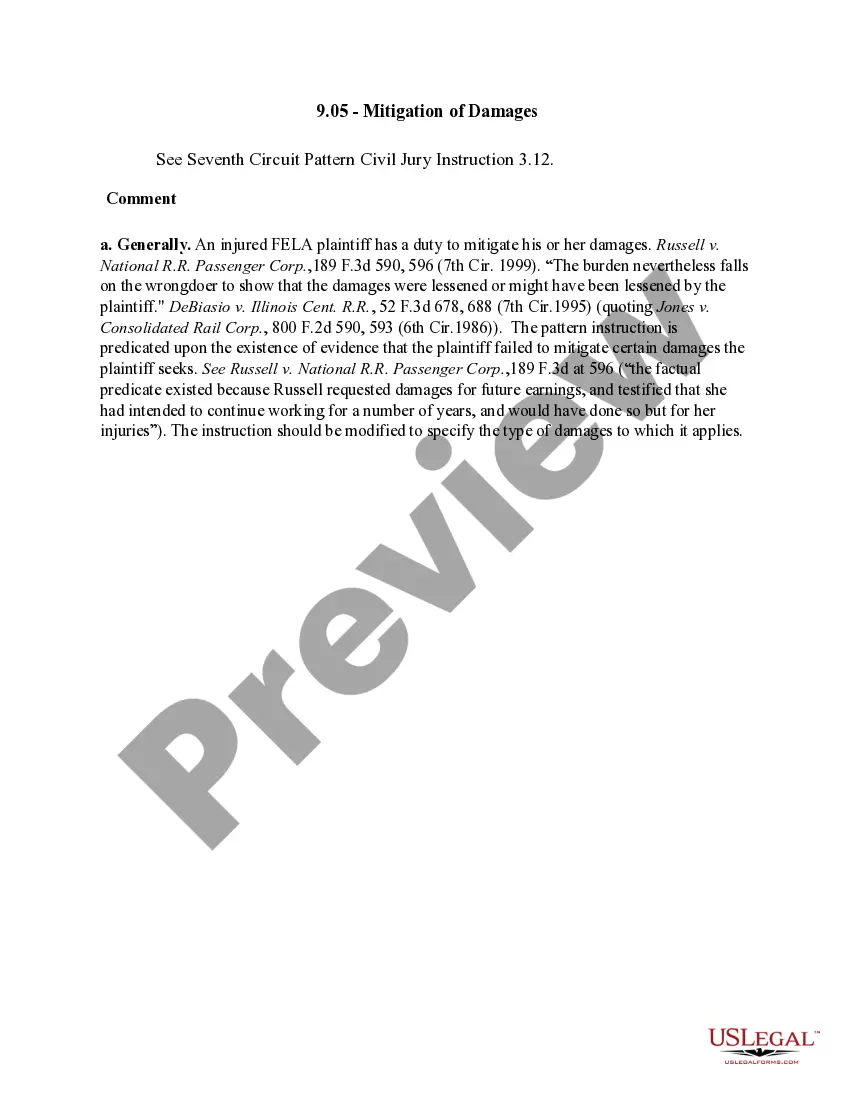
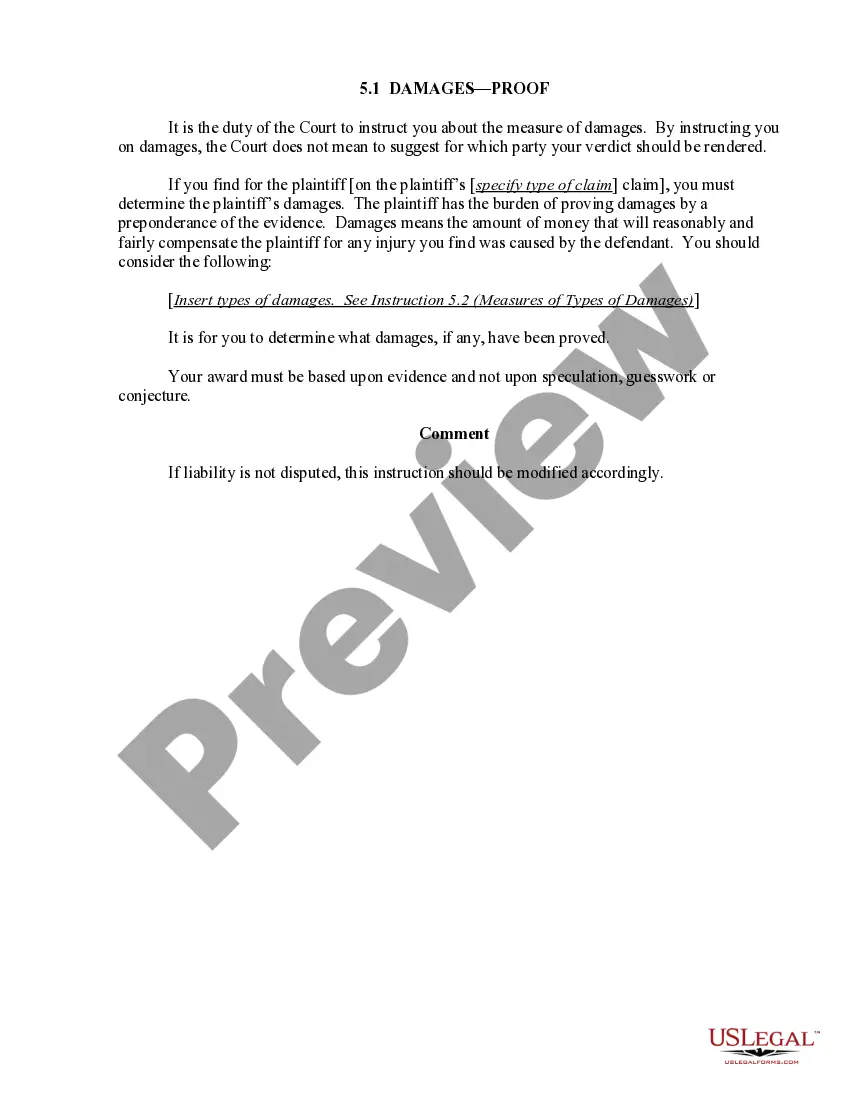
5.3 Damages-Mitigation

Does this form need to be notarized?
This form usually doesn’t need to be notarized. However, local laws or specific transactions may require it. Our online notarization service, powered by Notarize, lets you complete it remotely through a secure video session, available 24/7.
Get your form ready online
Our built-in tools help you complete, sign, share, and store your documents in one place.
Make edits, fill in missing information, and update formatting in US Legal Forms—just like you would in MS Word.
Download a copy, print it, send it by email, or mail it via USPS—whatever works best for your next step.
Sign and collect signatures with our SignNow integration. Send to multiple recipients, set reminders, and more. Go Premium to unlock E-Sign.
If this form requires notarization, complete it online through a secure video call—no need to meet a notary in person or wait for an appointment.
We protect your documents and personal data by following strict security and privacy standards.

Make edits, fill in missing information, and update formatting in US Legal Forms—just like you would in MS Word.

Download a copy, print it, send it by email, or mail it via USPS—whatever works best for your next step.

Sign and collect signatures with our SignNow integration. Send to multiple recipients, set reminders, and more. Go Premium to unlock E-Sign.

If this form requires notarization, complete it online through a secure video call—no need to meet a notary in person or wait for an appointment.

We protect your documents and personal data by following strict security and privacy standards.
Looking for another form?
Form popularity
FAQ
The duty to mitigate refers to a party's obligation to make reasonable efforts to limit the harm they suffer from another party's actions. Parties have a duty to mitigate in both torts and breaches of contracts.
Failure to mitigate damages is an affirmative defense in a personal injury case. This means the defendant admits (or affirms) they were negligent, but points out that the fact the plaintiff failed to take steps to prevent or minimize injury should be considered.
If you have a tenant who breaks the lease early, for example, you have a duty to mitigate losses by finding another tenant. In another instance, you may be a homeowner, and your plumber replaced your piping rather than fixing a leak, which was what you originally hired them to do.
The duty to mitigate damages is the idea that an injured party must take reasonable action to limit the extent of the harm they suffered due to a defendant. For example, in a car accident, you should pull off to the side of the road if possible to avoid being hit by another vehicle.
The most common example of a failure to mitigate damages is a person's decision to forego medical care after an accident. In such cases, the defendant will claim that the plaintiff accrued unreasonable damages due to their failure to seek prompt medical care.
What Does Mitigate Damages Mean? Mitigation means that a victim must take reasonable steps to minimize their losses related to an injury accident. An injured person does not have to take every step to mitigate their damages, especially if such steps are inconvenient or costly.
The victim is legally bound to behave to mitigate both the consequences of the breach and their losses. This is true even if the victim who suffers personal injury through no fault of their own must take reasonable steps to avoid further loss and minimize the loss consequences of the injury.
Failure to mitigate damages can impact a personal injury claim because it may reduce the amount of compensation that you receive. If there is a genuine issue of whether you failed to mitigate damages, you may receive a lower settlement or a lower award at trial.