Indemnity Agreement for an Event
Understanding this form
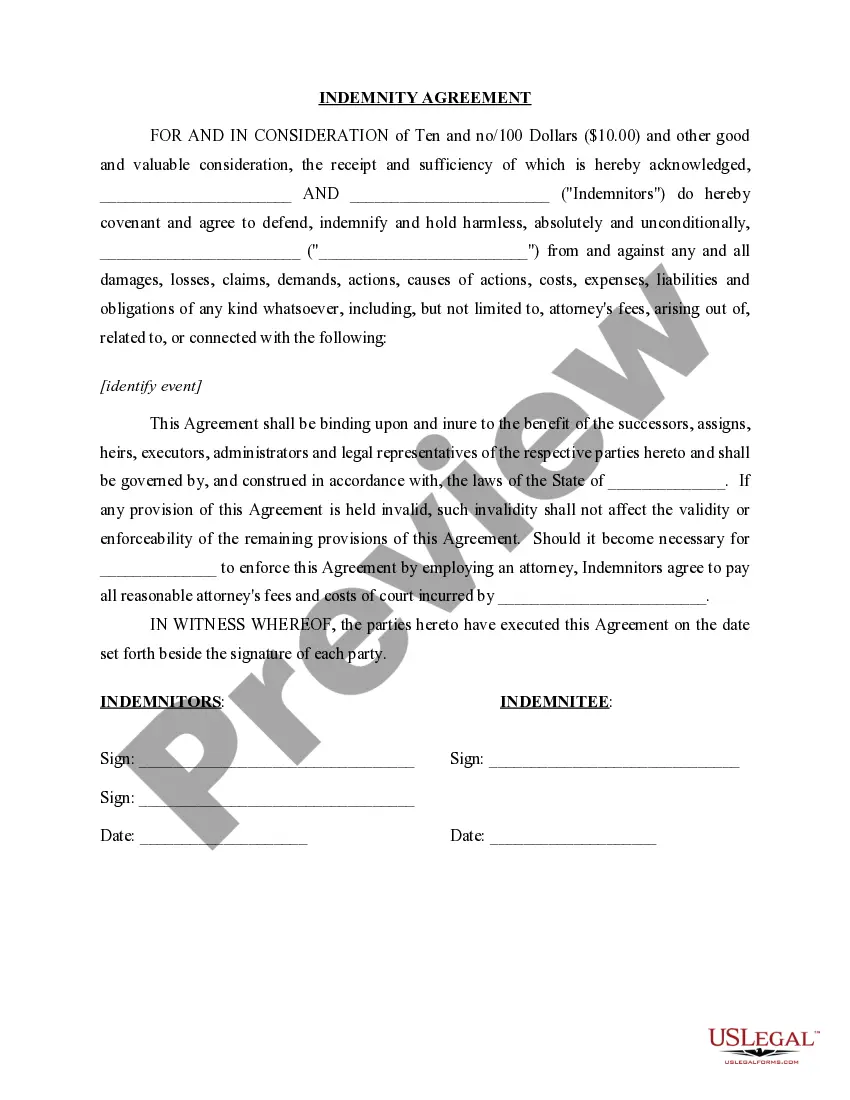
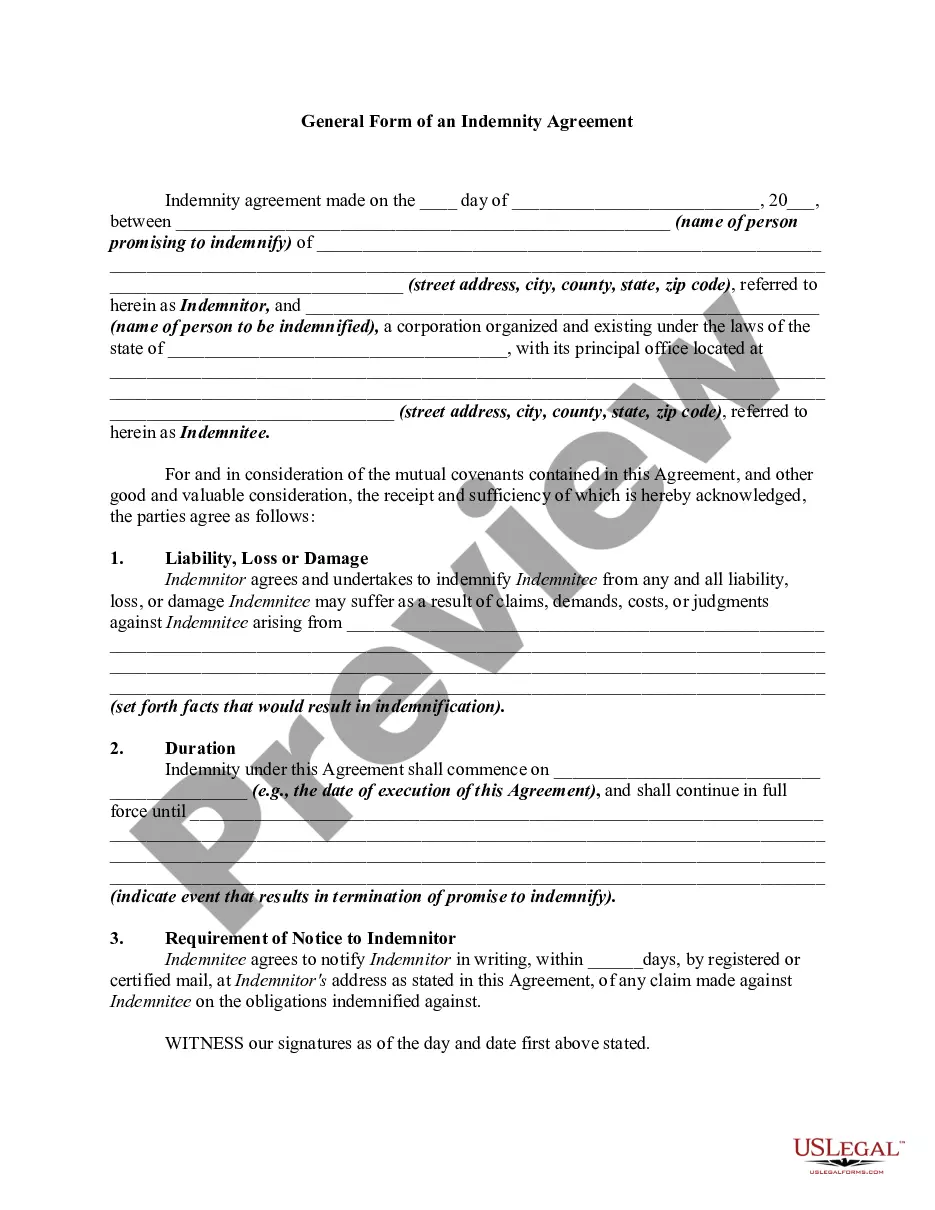
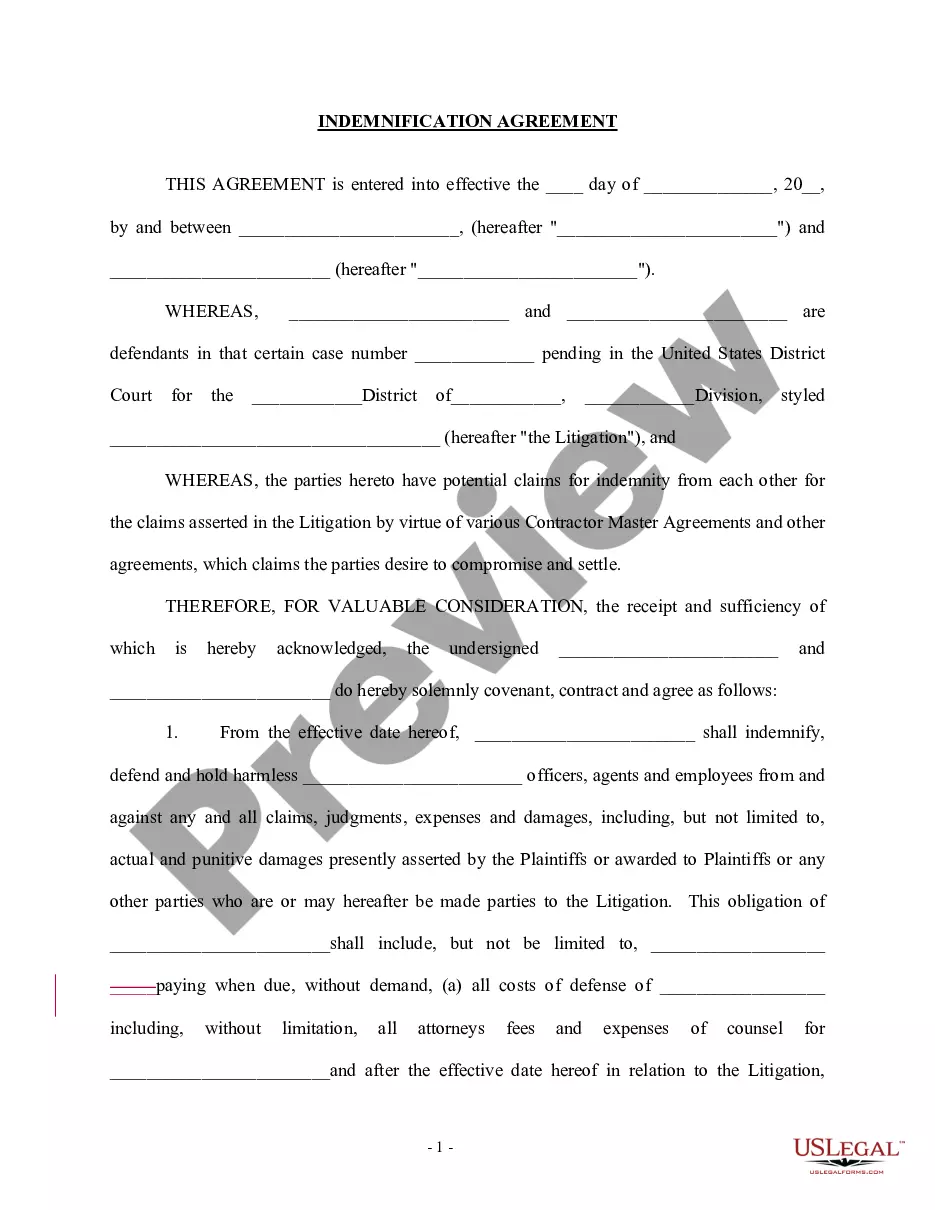
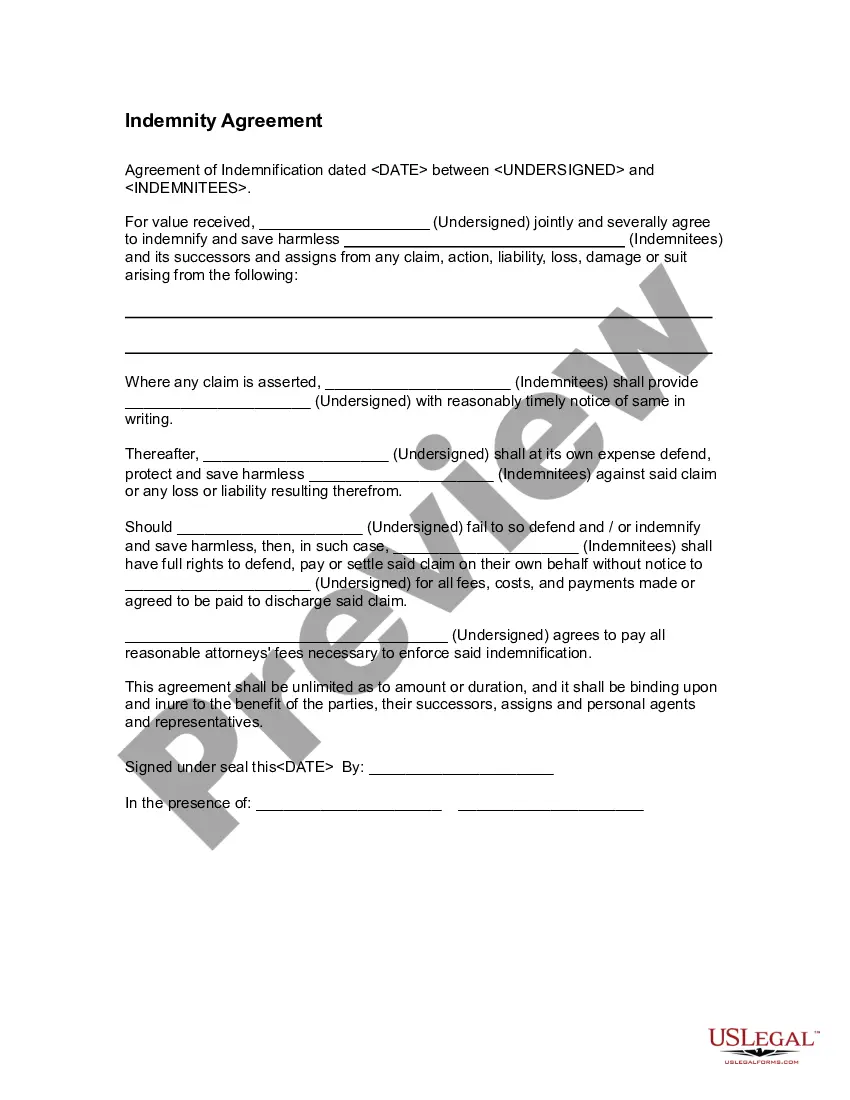
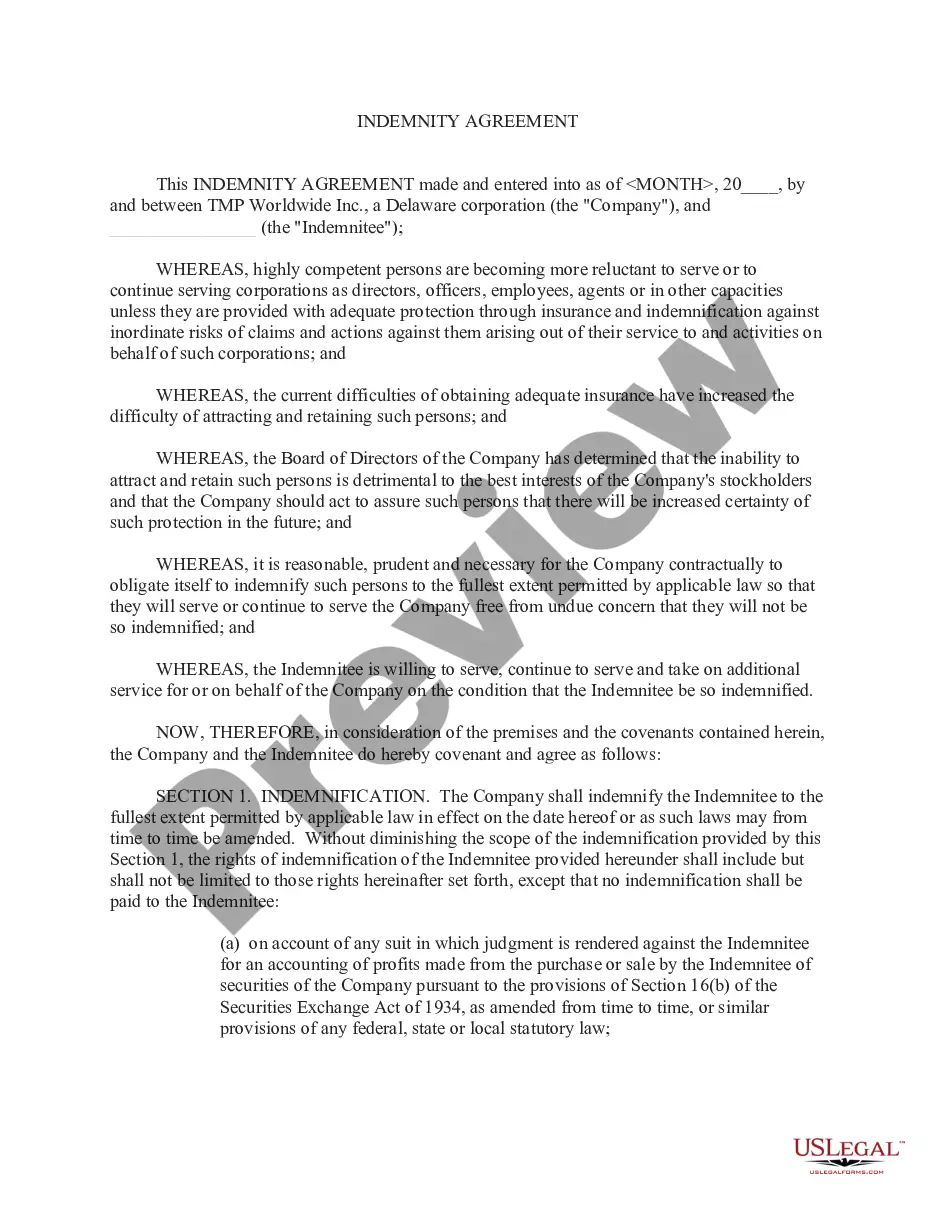
The Indemnity Agreement for an Event is a legal document where one party (the indemnitor) agrees to protect another party (the indemnitee) from potential losses, damages, or legal claims arising from a specific event. This form is essential for event organizers who seek to ensure legal protection for themselves against claims that may occur during an event, differentiating it from other agreements that may not specifically focus on indemnification.
Key components of this form
- Parties involved: Names and roles of the indemnitors and indemnitee.
- Indemnity clause: Agreement for indemnification of the indemnitee from specified losses.
- Consideration: Acknowledgment of the exchange of value (e.g., ten dollars).
- Governing law: Jurisdiction under which the agreement will be interpreted.
- Signatures: Required signatures of all parties involved to validate the agreement.
Situations where this form applies
This form should be used when organizing events where there may be risks of accidents or claims from participants or third parties. Common scenarios include sporting events, festivals, conferences, and any gatherings where liability could arise due to injuries or damages. By employing this indemnity agreement, event organizers can safeguard their interests and mitigate potential financial losses.
Who should use this form
- Event organizers seeking liability protection.
- Businesses hosting events for customers, clients, or the public.
- Individuals planning private events with potential risk factors.
- Non-profit organizations conducting activities that involve public participation.
How to complete this form
- Identify and enter the names of the indemnitors and the indemnitee.
- Specify the event in question where the indemnity will apply.
- Enter the consideration amount (e.g., ten dollars).
- Provide the governing state law for the agreement.
- Ensure all parties sign and date the agreement to validate it.
Does this document require notarization?
This form does not typically require notarization unless specified by local law. However, having it notarized can provide additional legal validity and may be preferred by some parties for added assurance.
Get your form ready online
Our built-in tools help you complete, sign, share, and store your documents in one place.
Make edits, fill in missing information, and update formatting in US Legal Forms—just like you would in MS Word.
Download a copy, print it, send it by email, or mail it via USPS—whatever works best for your next step.
Sign and collect signatures with our SignNow integration. Send to multiple recipients, set reminders, and more. Go Premium to unlock E-Sign.
If this form requires notarization, complete it online through a secure video call—no need to meet a notary in person or wait for an appointment.
We protect your documents and personal data by following strict security and privacy standards.

Make edits, fill in missing information, and update formatting in US Legal Forms—just like you would in MS Word.

Download a copy, print it, send it by email, or mail it via USPS—whatever works best for your next step.

Sign and collect signatures with our SignNow integration. Send to multiple recipients, set reminders, and more. Go Premium to unlock E-Sign.

If this form requires notarization, complete it online through a secure video call—no need to meet a notary in person or wait for an appointment.

We protect your documents and personal data by following strict security and privacy standards.
Avoid these common issues
- Not specifying the exact event, which can lead to ambiguity.
- Failing to include all relevant parties' names and signatures.
- Omitting the governing law clause, which can affect enforceability.
- Using incorrect terminology or ignoring local legal requirements.
Why complete this form online
- Easy access to a professionally drafted legal document.
- Immediate download and print options to expedite completion.
- Editability to customize to specific needs or circumstances.
- Cost-effective compared to hiring an attorney for a basic indemnity agreement.
Legal use & context
- Indemnity agreements are often enforced in courts provided they are clear and reasonable.
- Ensure the agreement aligns with applicable state laws regarding liability.
- Consider consulting with an attorney for complex events or high-risk situations.
Key takeaways
- An Indemnity Agreement protects event organizers from liability claims.
- It is essential to clearly define the event and participating parties.
- Using this form can help mitigate risks associated with hosting events.
Looking for another form?

Form popularity
FAQ
A typical example is an insurance company wherein the insurer or indemnitor agrees to compensate the insured or indemnitee for any damages or losses he/she may incur during a period of time.
Indemnify and Indemnification To indemnify someone is to absolve that person from responsibility for damage or loss arising from a transaction. Indemnification is the act of not being held liable for or being protected from harm, loss, or damages, by shifting the liability to another party.
Drafting of the indemnity clause An indemnifier must limit the amount of indemnities that is given while entering into a contract. An express obligation must be imposed so as to minimize the loss, and the duration of time in which the claim can be brought must be limited.
Indemnity is compensation paid by one party to another to cover damages, injury or losses.An example of an indemnity would be an insurance contract, where the insurer agrees to compensate for any damages that the entity protected by the insurer experiences.
Indemnification clauses are clauses in contracts that set out to protect one party from liability if a third-party or third entity is harmed in any way. It's a clause that contractually obligates one party to compensate another party for losses or damages that have occurred or could occur in the future.
Indemnity is compensation paid by one party to another to cover damages, injury or losses.An example of an indemnity would be an insurance contract, where the insurer agrees to compensate for any damages that the entity protected by the insurer experiences.
When the term indemnity is used in the legal sense, it may also refer to an exemption from liability for damages. Indemnity is a contractual agreement between two parties. In this arrangement, one party agrees to pay for potential losses or damages caused by another party.
Company/Business/Individual Name shall fully indemnify, hold harmless and defend _______ and its directors, officers, employees, agents, stockholders and Affiliates from and against all claims, demands, actions, suits, damages, liabilities, losses, settlements, judgments, costs and expenses (including but not
It's still your business decision whether you sign them or not, but you should do so only where it is a critical contract that you have no way of modifying or negotiating changes. In contrast, the best kind of Indemnity Agreement is commonly called a Mutual Indemnity Agreement or a Mutual Hold Harmless Provision.