Revocable Living Trust for Single Person

Understanding this form
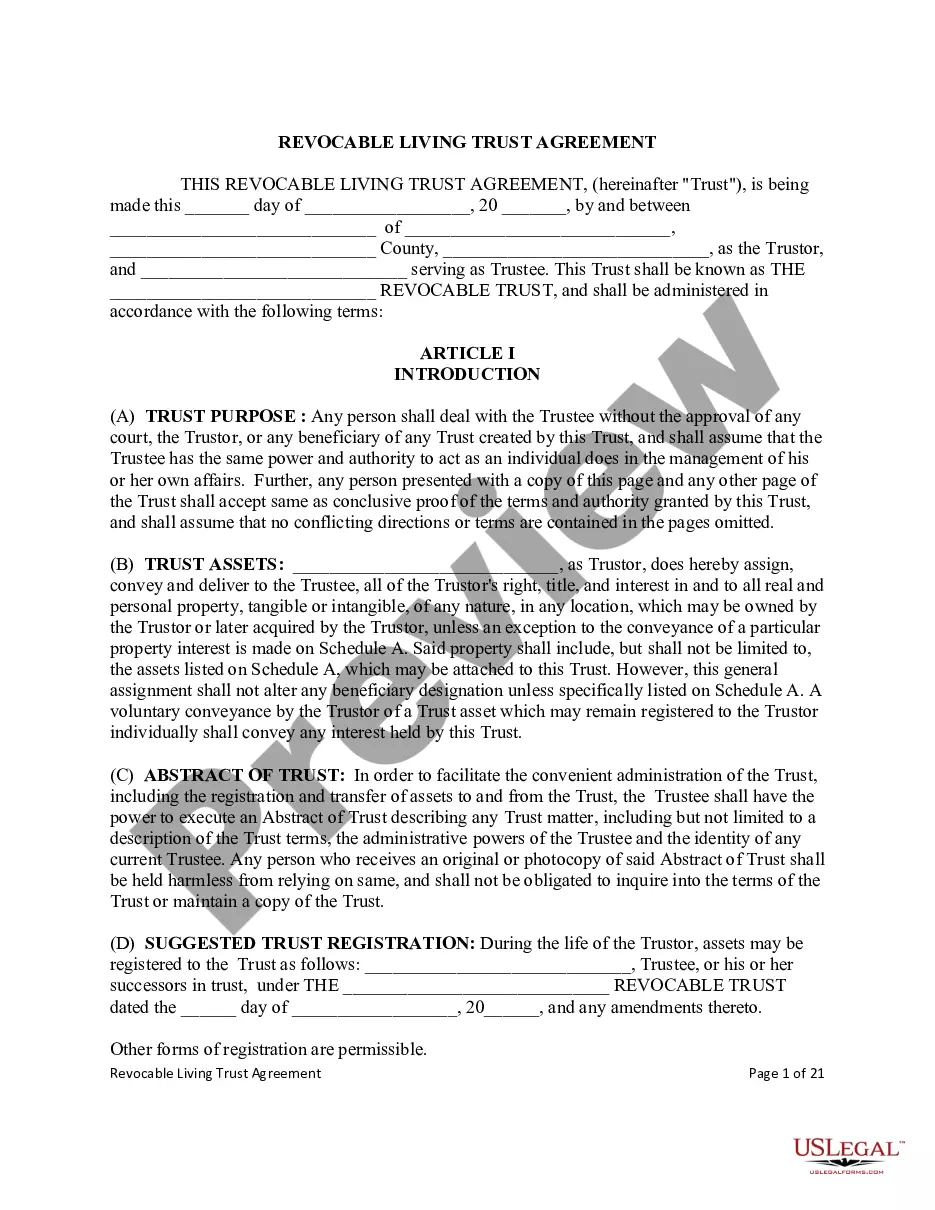
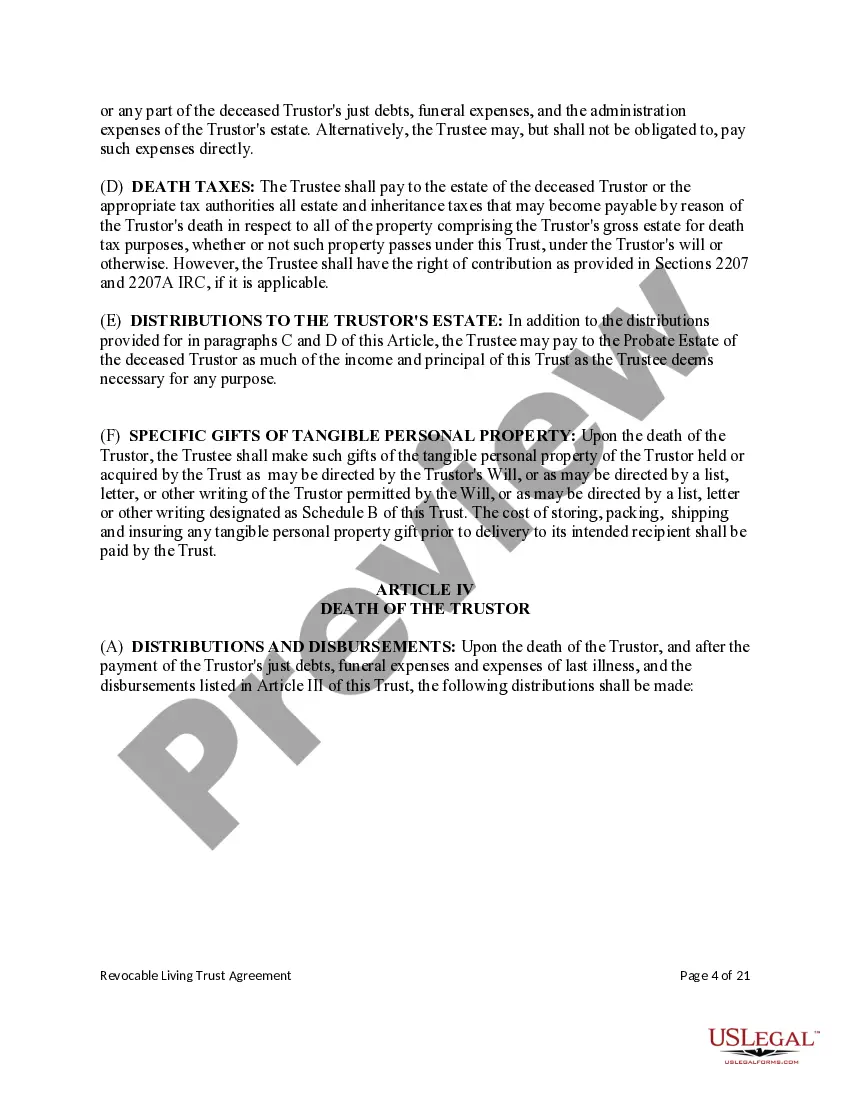
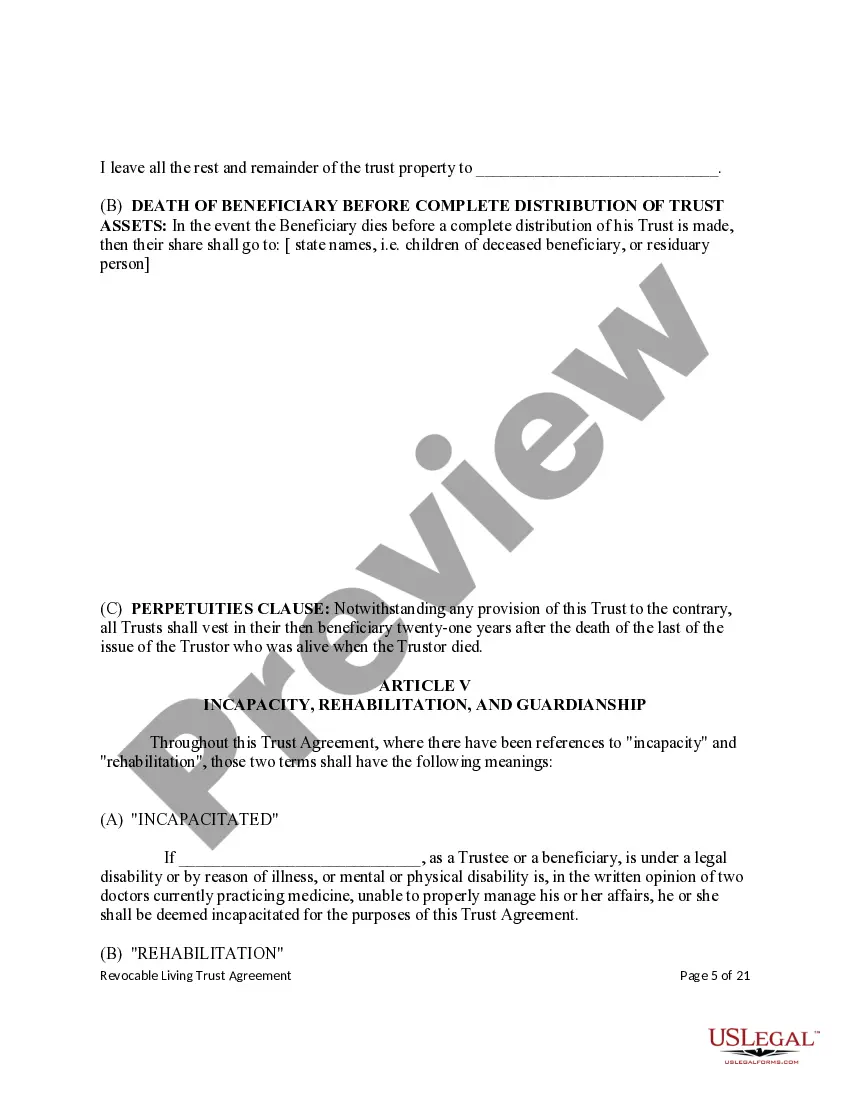
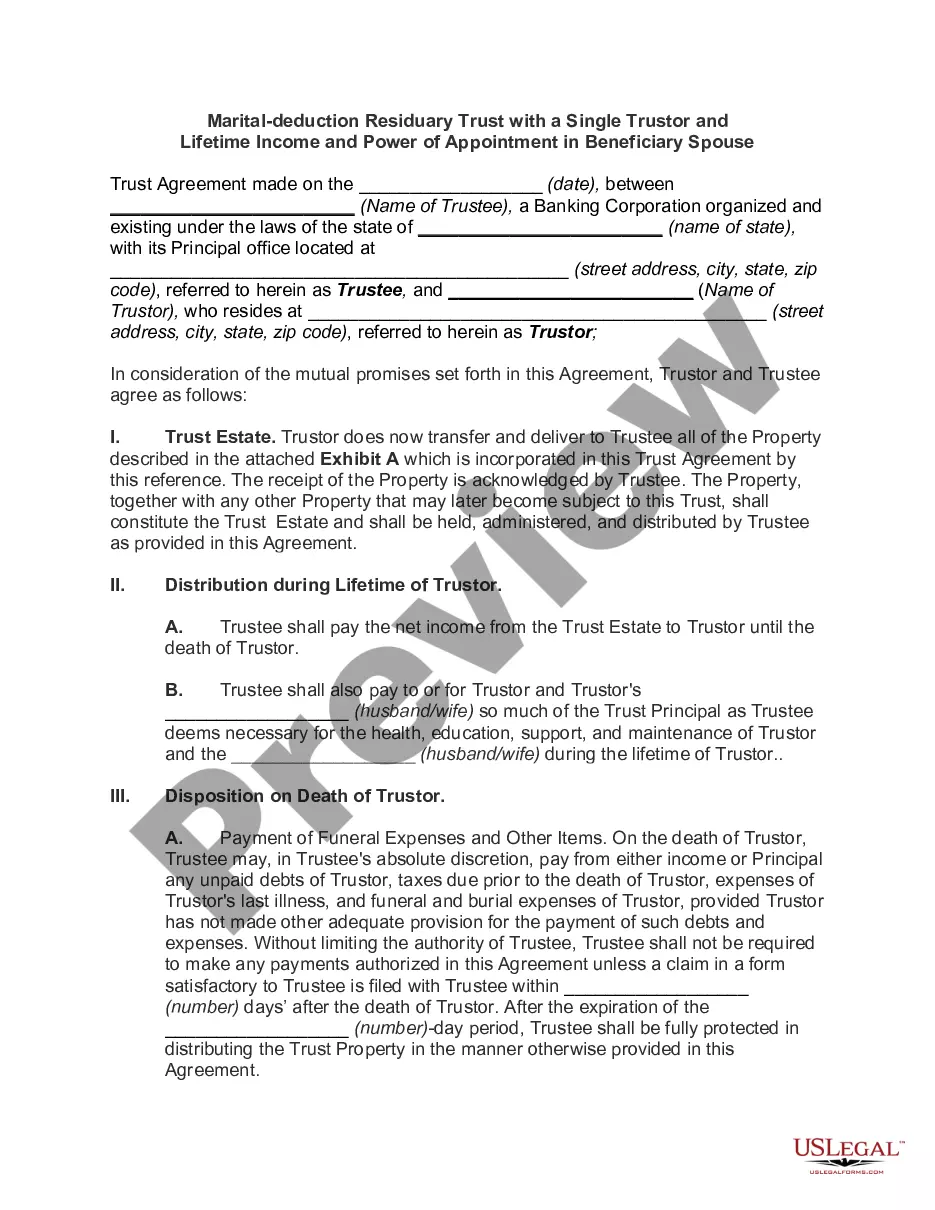
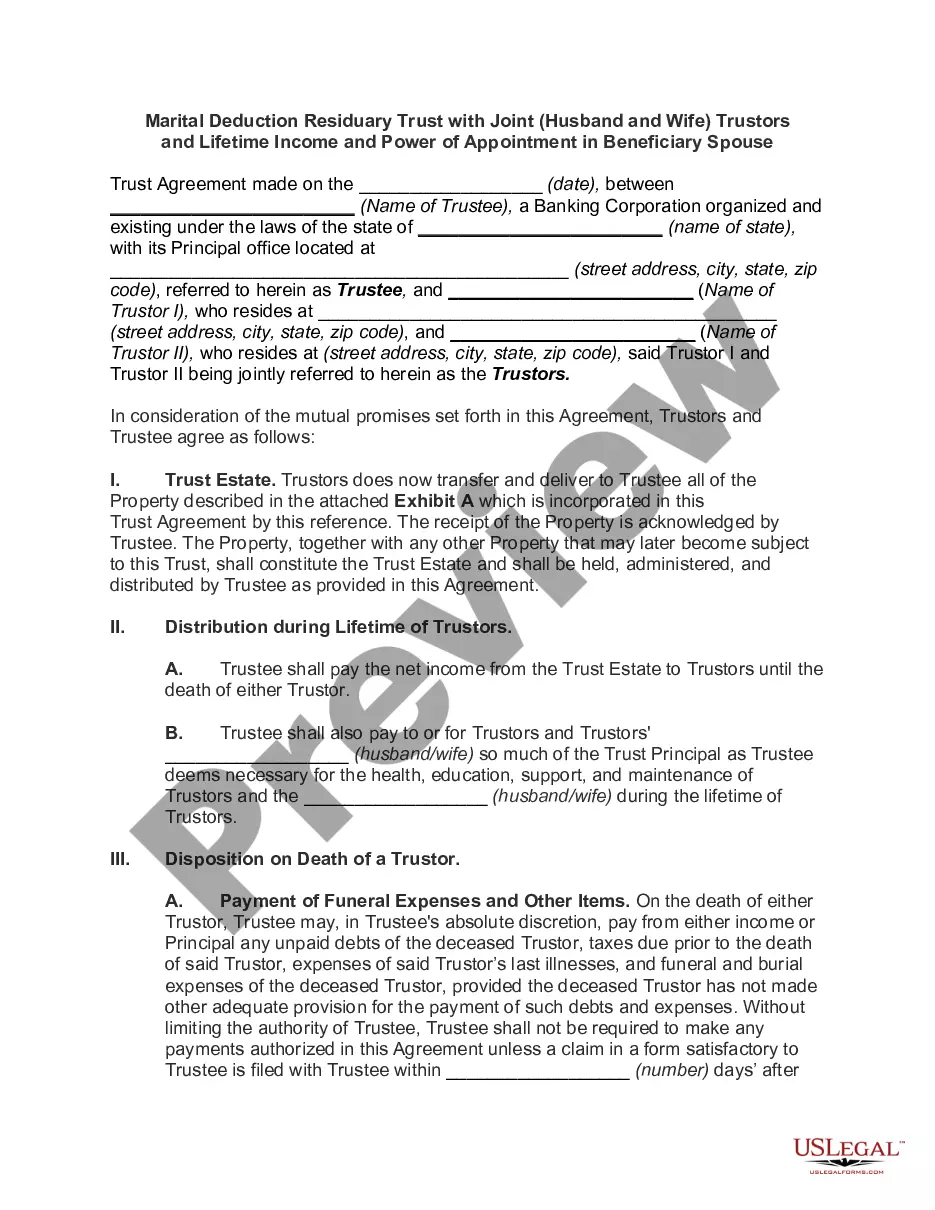
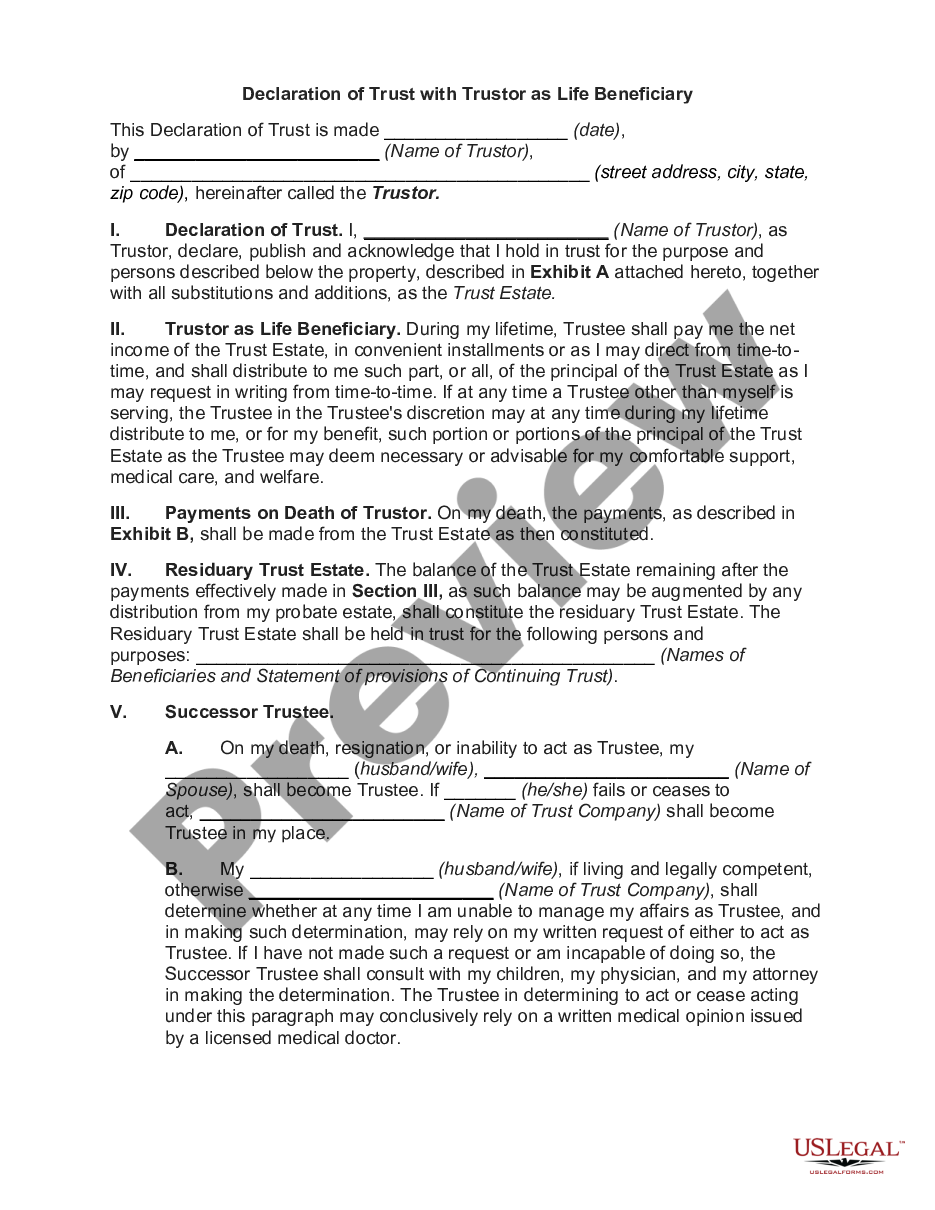
The Revocable Living Trust for a Single Person is a legal document that establishes a trust wherein an individual (the Trustor) transfers assets to a Trustee while retaining control over the assets during their lifetime. This form is particularly useful for estate planning, allowing the Trustor to manage assets without the need for court supervision during periods of incapacity or upon death. Unlike a Last Will and Testament, which only takes effect after death, a living trust can be activated during the Trustor's lifetime, ensuring smoother management and distribution of assets.
Key parts of this document
- Introduction outlining the purpose of the trust and roles of the Trustor and Trustee.
- Provisions regarding the assignment of assets to the trust and terms of management.
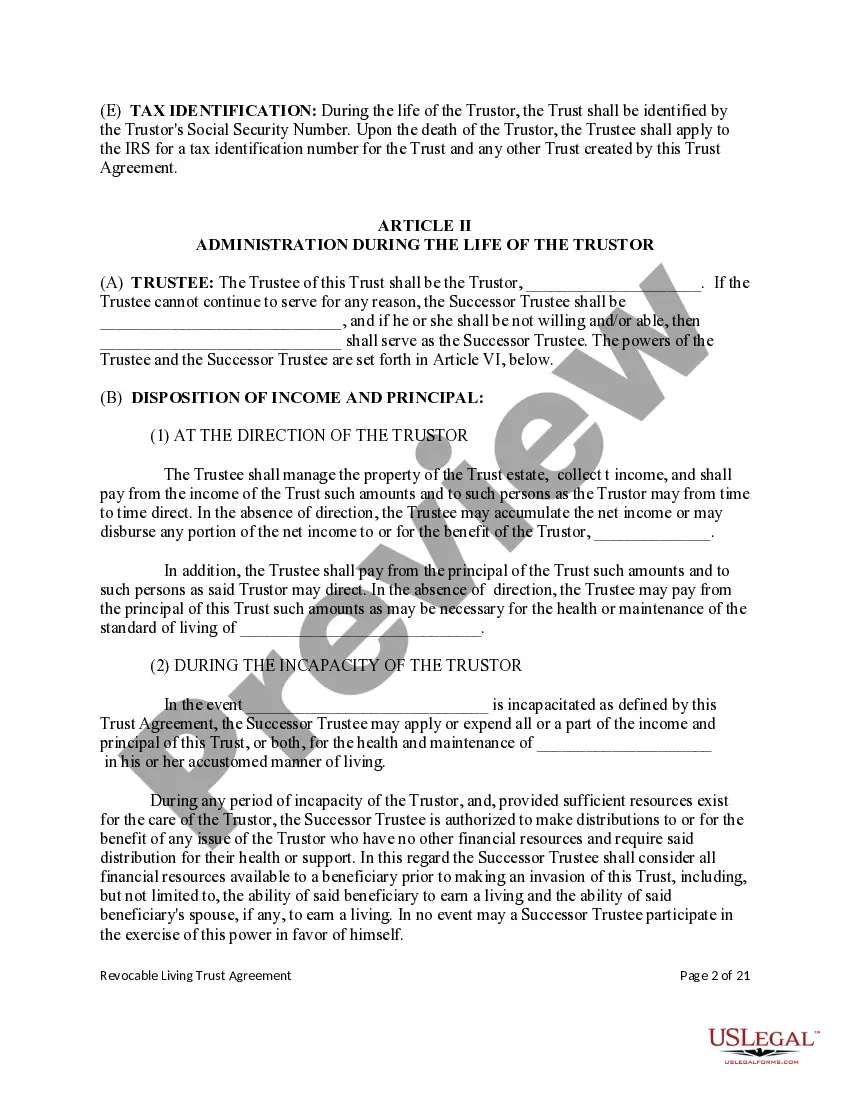
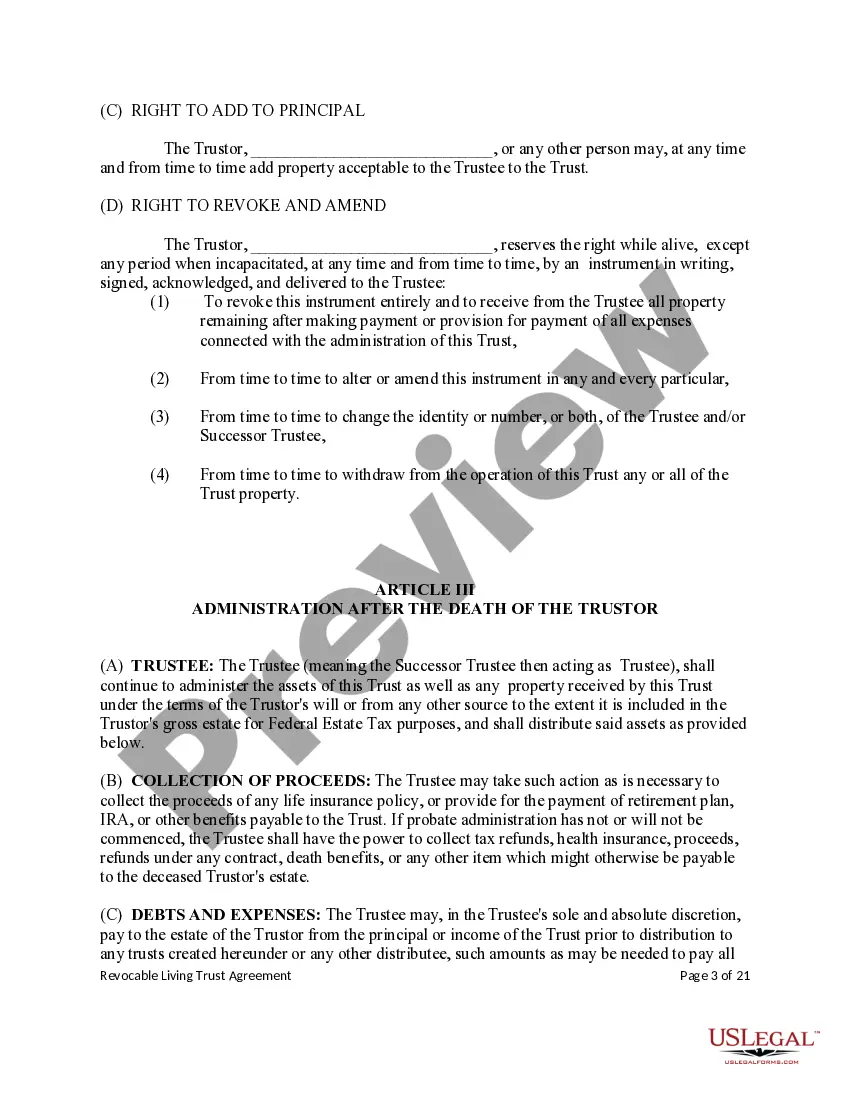
- Clauses detailing the administration of the trust during the Trustor's life and upon their death.
- Rights reserved for the Trustor to amend or revoke the trust.
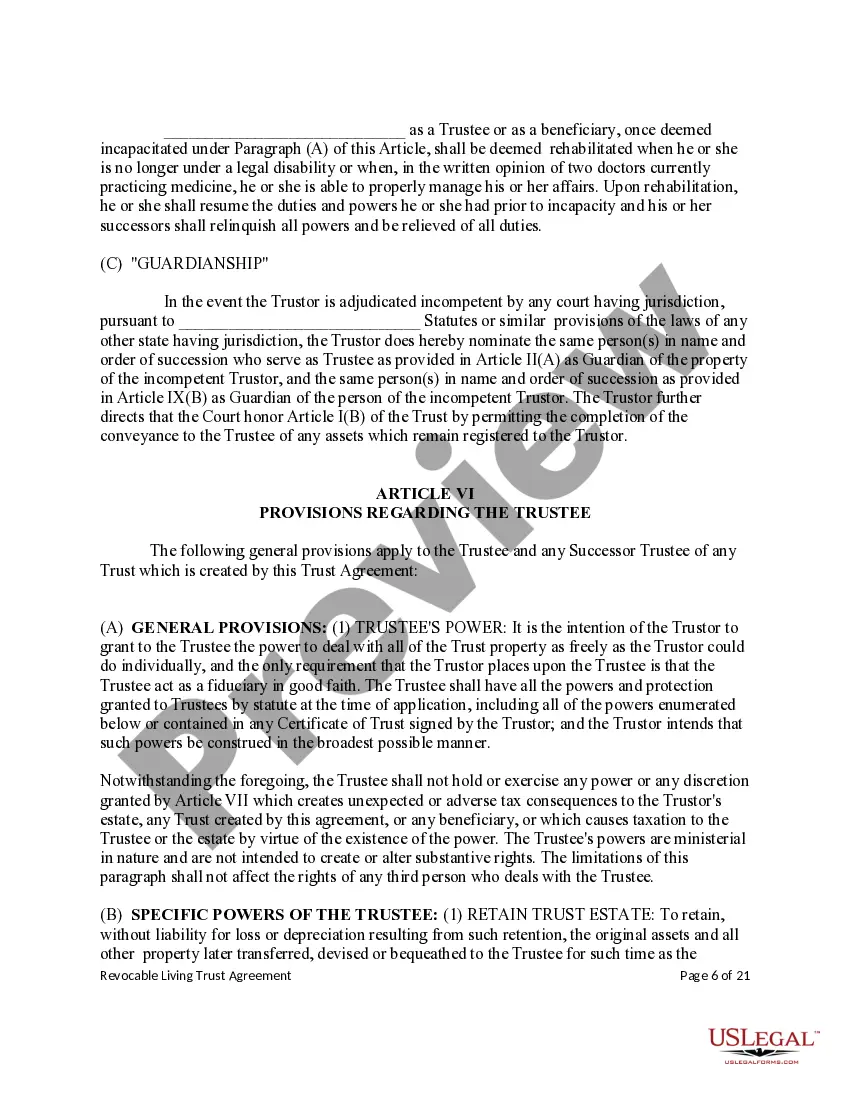
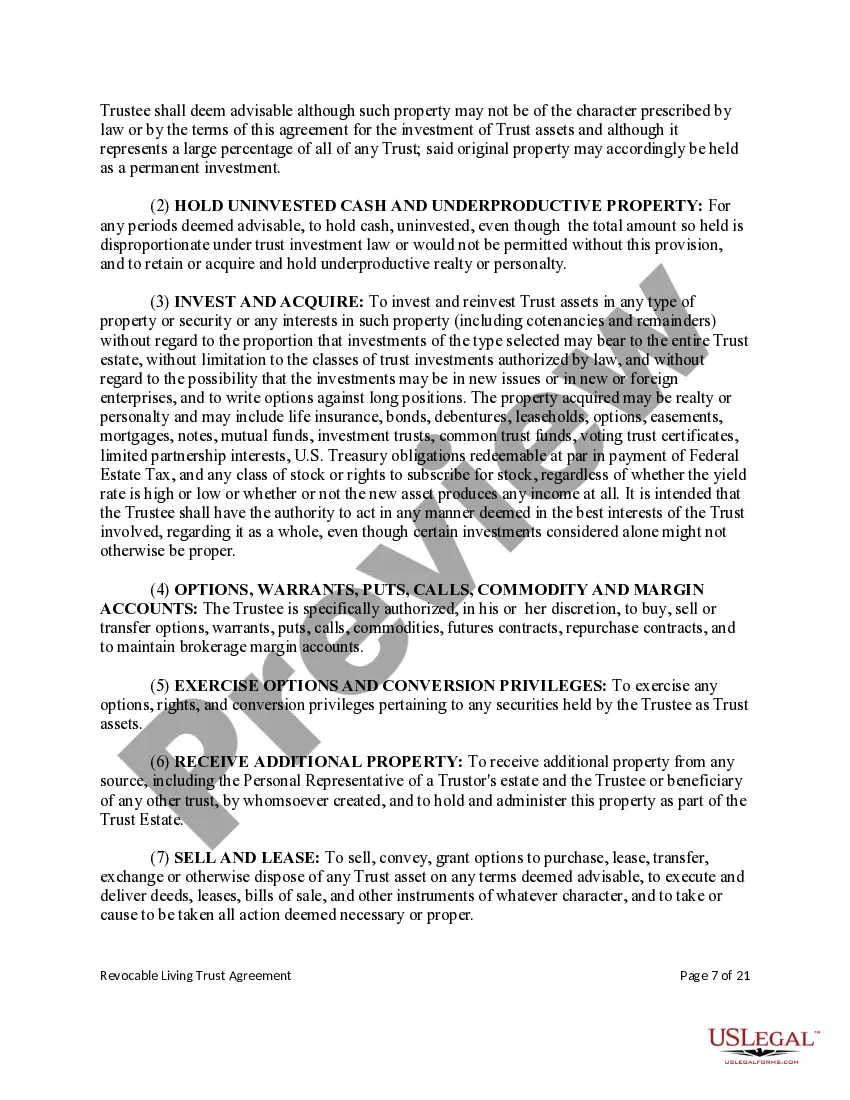
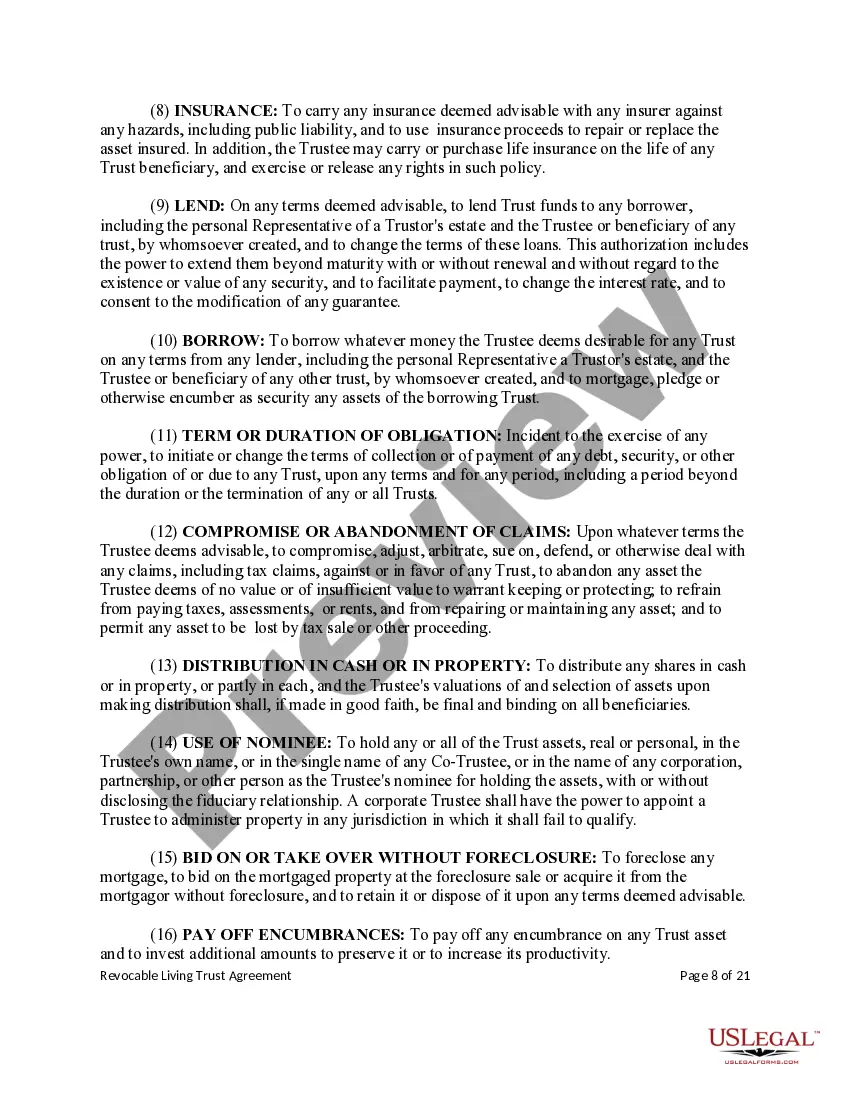
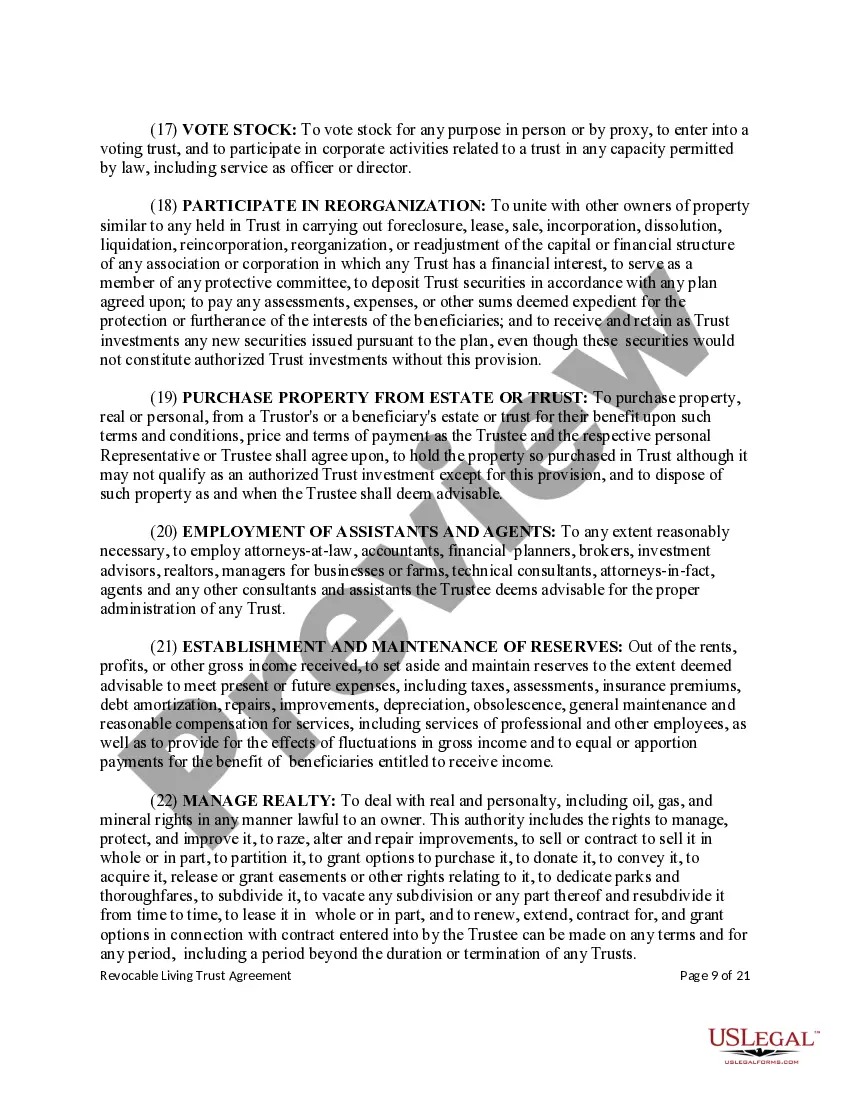
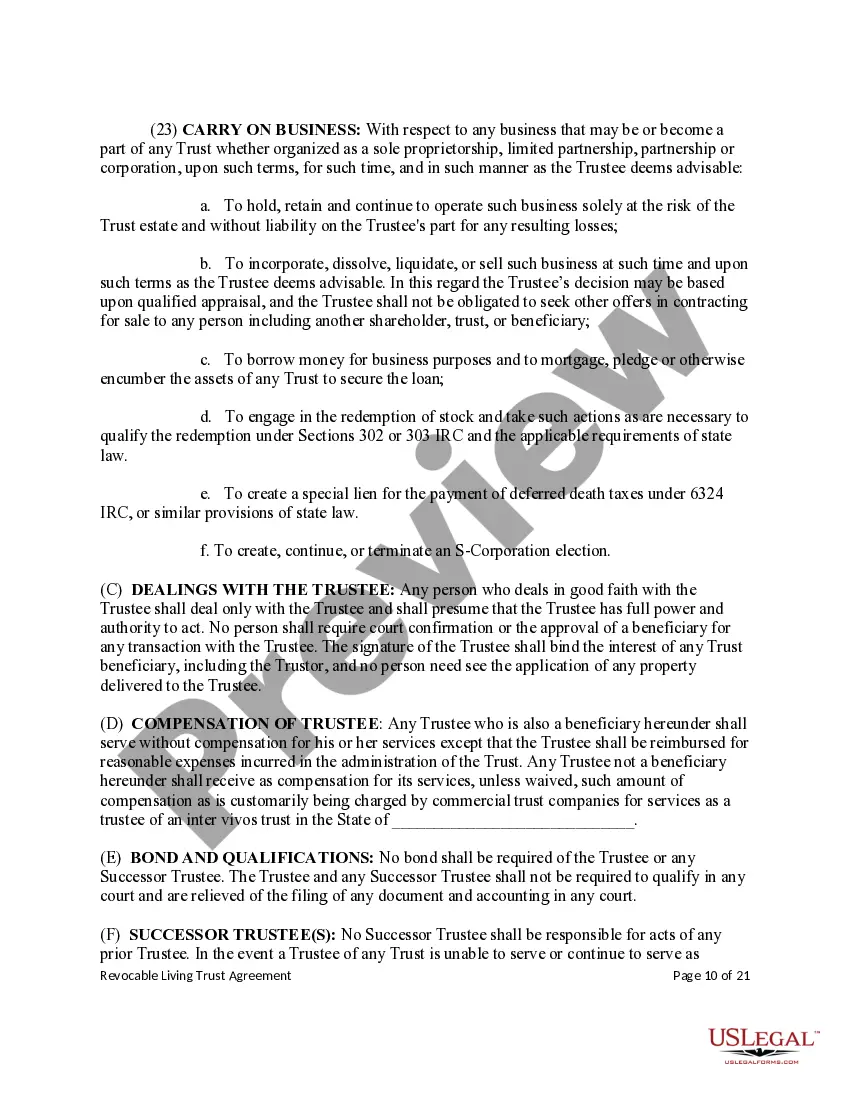
- Comprehensive powers granted to the Trustee for effective management of trust assets.

Common use cases
This form is ideal for individuals who want to maintain control over their estate while ensuring a smooth transition of assets in the event of incapacity or death. It is particularly useful for those wishing to avoid probate, expedite the transfer of assets to beneficiaries, or manage their assets flexibly during their lifetime.
Who this form is for
- Individuals planning their estate and wanting to retain control of assets during their lifetime.
- Those looking to simplify the management and distribution of assets upon incapacity or death.
- People seeking to avoid the lengthy probate process.
- Anyone who incurs significant assets or property and desires clear directives for asset distribution.
Instructions for completing this form
- Identify the parties involved, including the Trustor and Trustee, and provide their names and addresses.
- Outline the assets to be included in the trust, specifying details in Schedule A.
- Define any conditions regarding the management of income and principal during the Trustorâs life.
- Include instructions for the disposition of assets after the Trustor's death.
- Sign and date the document in the presence of a notary public, if required by your state.
Is notarization required?
Yes, this form must be notarized to be legally valid. Utilizing US Legal Formsâ integrated online notarization services offers 24/7 availability, secure video calls, and ensures legal equivalence without requiring travel.
Get your form ready online
Our built-in tools help you complete, sign, share, and store your documents in one place.
Make edits, fill in missing information, and update formatting in US Legal Forms—just like you would in MS Word.
Download a copy, print it, send it by email, or mail it via USPS—whatever works best for your next step.
Sign and collect signatures with our SignNow integration. Send to multiple recipients, set reminders, and more. Go Premium to unlock E-Sign.
If this form requires notarization, complete it online through a secure video call—no need to meet a notary in person or wait for an appointment.
We protect your documents and personal data by following strict security and privacy standards.

Make edits, fill in missing information, and update formatting in US Legal Forms—just like you would in MS Word.

Download a copy, print it, send it by email, or mail it via USPS—whatever works best for your next step.

Sign and collect signatures with our SignNow integration. Send to multiple recipients, set reminders, and more. Go Premium to unlock E-Sign.

If this form requires notarization, complete it online through a secure video call—no need to meet a notary in person or wait for an appointment.

We protect your documents and personal data by following strict security and privacy standards.
Common mistakes
- Failing to list all intended assets in Schedule A, leading to confusion about whatâs included in the trust.
- Not updating the trust to reflect significant life changes, such as marriage, divorce, or the birth of a child.
- Neglecting to sign the document in front of a notary if required, rendering the trust invalid.
Advantages of online completion
- Convenience of filling out the form from home at any time.
- Editability to customize the trust terms according to individual needs.
- Access to legally drafted templates by licensed attorneys, ensuring reliability and compliance.
Looking for another form?
Form popularity
FAQ
The need for a lawyer to help with your estate has nothing to do with a Revocable Living Trust. If your executor could handle your estate alone, then there is no need for a lawyer even if you had no Revocable Living Trust.For example, with filing inheritance and estate tax returns or obtaining beneficiary releases.
Paperwork. Setting up a living trust isn't difficult or expensive, but it requires some paperwork. Record Keeping. After a revocable living trust is created, little day-to-day record keeping is required. Transfer Taxes. Difficulty Refinancing Trust Property. No Cutoff of Creditors' Claims.
When you create a DIY living trust, there are no attorneys involved in the process. You will need to choose a trustee who will be in charge of managing the trust assets and distributing them.You'll also need to choose your beneficiary or beneficiaries, the person or people who will receive the assets in your trust.
While many people can make a living trust without the help of an attorney, there are some situations require individualized legal advice. For example, don't try to make your own living trust if: You don't have anyone to name as trustee.See a lawyer for advice.
The process of funding your living trust by transferring your assets to the trustee is an important part of what helps your loved ones avoid probate court in the event of your death or incapacity. Qualified retirement accounts such as 401(k)s, 403(b)s, IRAs, and annuities, should not be put in a living trust.
A Revocable Living Trust DefinedAssets can include real estate, valuable possessions, bank accounts and investments. As with all living trusts, you create it during your lifetime.
Establishing a trust requires serious legal help, which is not cheap. A typical living trust can cost $2,000 or more, while a basic last will and testament can be drawn up for about $150 or so.
Sure you can write your own revocable living trust. In fact, you can do it better than a lot of the attorneys. First you have to ascertain that you really want a trust.
As these family members are the ones who receive the benefit of the assets, they are called the beneficiaries.A will only applies to the assets of an estate. The assets of a family trust do not form part of your estate and, therefore, you cannot pass trust assets under a will.